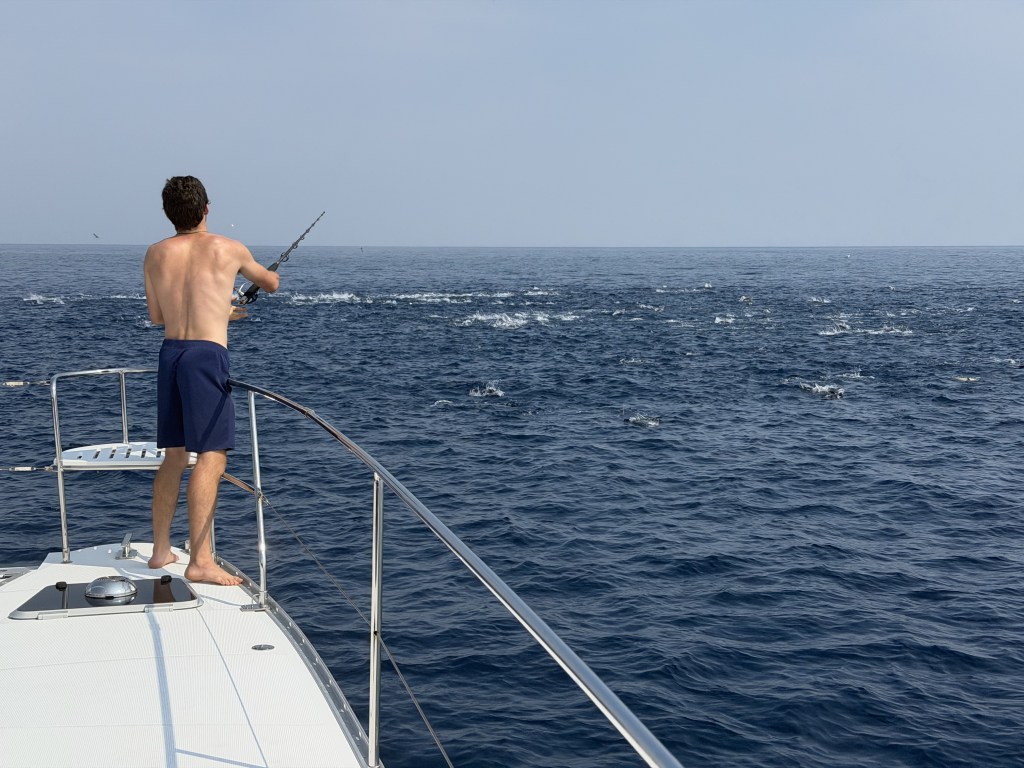
Up and underway by 6 a.m., saying goodbye to wonderful Biak, so thankful for our time there. We spotted splashing in the water: hundreds of yellowfin tuna churning the surface in a feeding frenzy. Lines cast directly into the ball, and Chris told me to be ready for chaos…but we caught nary a one. They didn’t like what we were serving!
Our fishing luck has been poor lately, and we tire of beans and chicken, trying to figure out what we did to anger Neptune. We had three hours of unexpected wonderful downwind sailing under asym. We wound our way through the reefs, made easier by our friends on SV Witwat leading the way, and anchored off Sowak Village.
We are still in the Indonesian province of West Papua, which feels wild, with strong tribal traditions and a distinctly Melanesian culture that sets it apart from other parts of Indonesia. There are six distinct provinces on the Indonesian side of the enormous island of New Guinea. This is often described as the “last frontier” of Indonesia, one of the country’s newest administrative regions, yet home to tribal traditions that span thousands of years and more than 400 distinct mother tongues. Indonesia is made up of 38 provinces, each with its own distinct cultures, languages, traditions, foods, and landscapes, making the country feel less like one place and more like an extraordinary collection of worlds within a single nation. It would take years to explore it all, and with our limited time here, we will be spending most of it in the province of Papua.
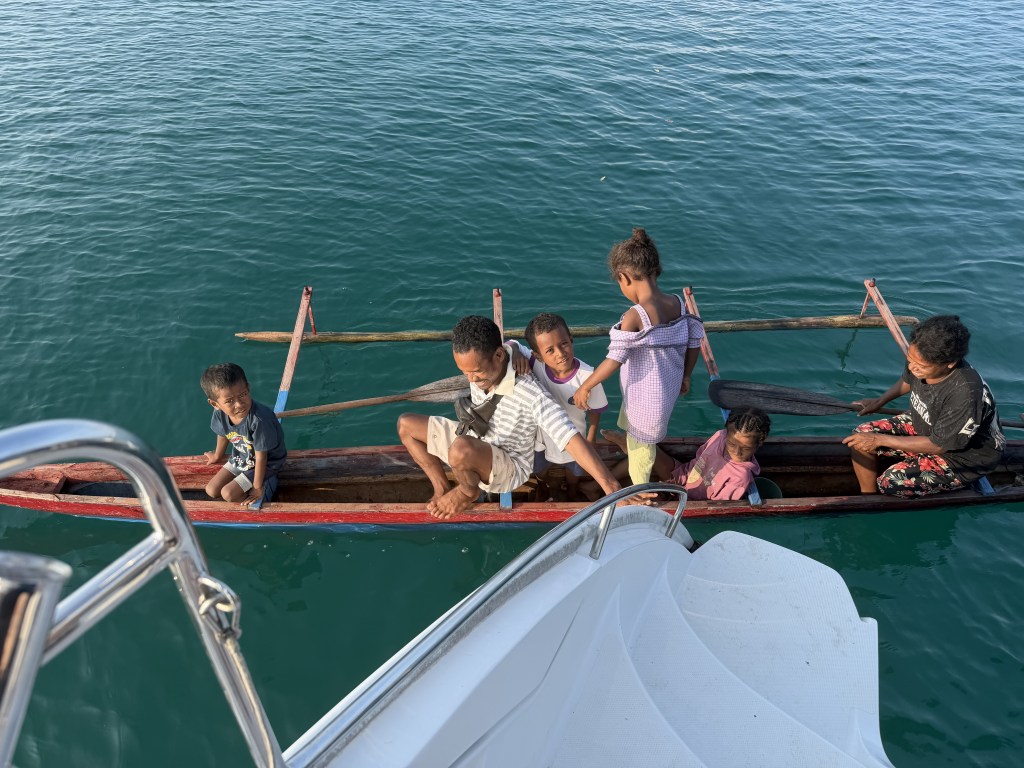
At times, I feel we are on an expedition, with a clear goal: sailing the Pacific Ocean loop back home to Alaska, with all the logistics, weather, routing, and preparations that go into a successful expedition. At other times, I feel I’m on a pilgrimage. These are the moments when I pause and become fully present, listening for the ways the divine is speaking through the world in which Terikah finds herself anchored, oftentimes in ways that challenge our norms. This morning, the divine presented itself as a subtle bump of a canoe against our hull, followed by some shuffling at 6:20 a.m. On our swim step sat a lovely, smiling family: Darius and Abigail, with their four children, Einstein, Jennifer, Blandina, and Alfonz. We shared a few moments laughing, pantomiming, and communicating through a mix of broken English and Indonesian. After a while, with plans to meet again at noon in their village on pilings, all six piled into their canoe and headed off to school.
Finding a shady spot on the boat in the already hot Equatorial morning, I drank my coffee and listened to the cacophony of birdsong. Calder was up doing school, Cora was reading, and Chris was wrapping his head around the day’s projects. Our traditional Biak feathered headdresses sat in a row on the cabinet. Our table, benches, and fridge were loaded with fresh fruits and vegetables.
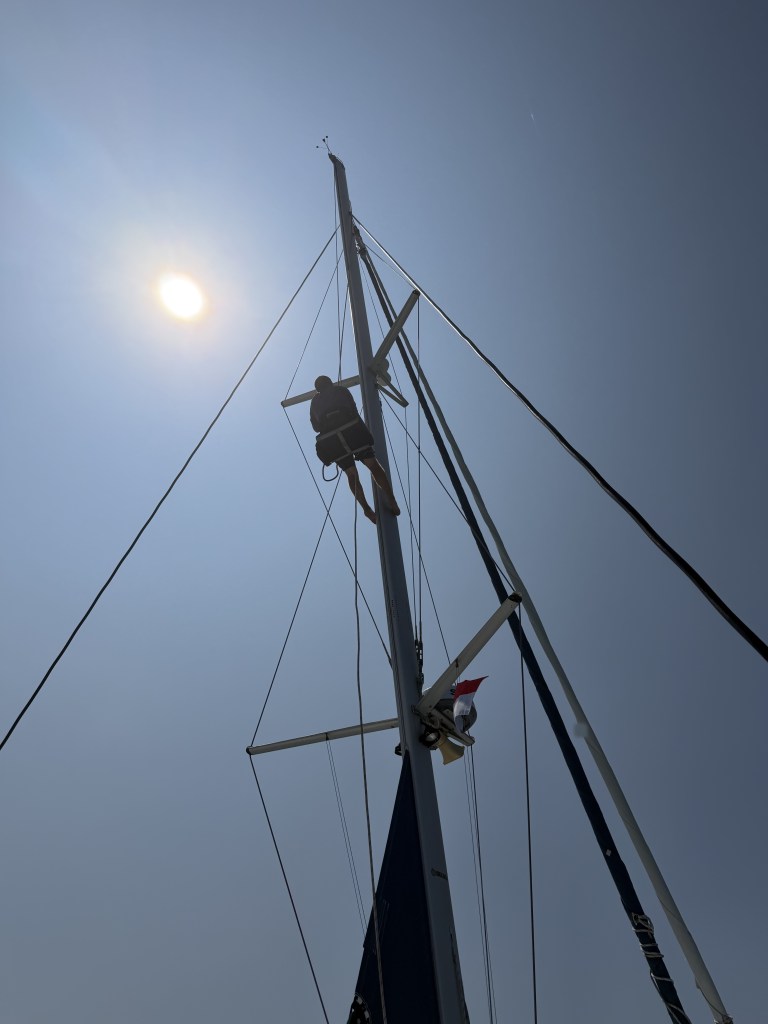
After breakfast, Chris went up the mast to fix the block and pad-eye for the asym, only to discover he needed a different bolt. Chris is known for being overly prepared, often giving away random bits and parts to other boats along the way. This time, it was a “dinghy ride of shame” over to a friend’s boat to collect the part he needed. We were very thankful they had it! Back up the mast he went, and the repair was soon complete.
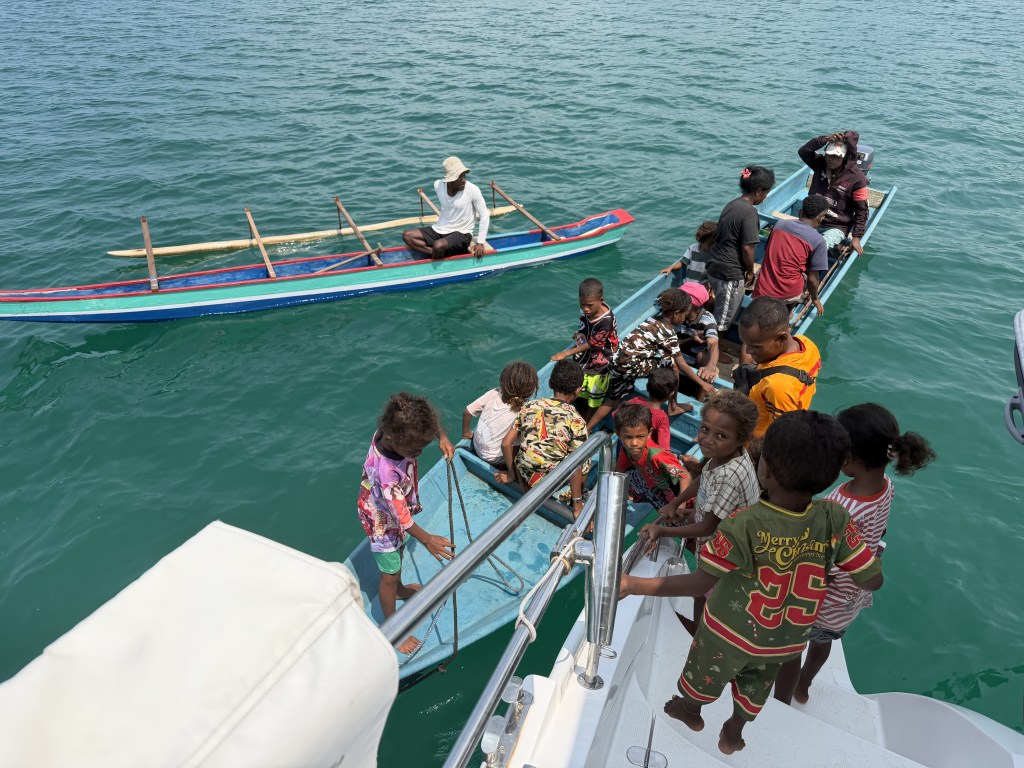
I had reached out to Junet, a local from a nearby village who works with the tourism department, about visiting the water village of Sowek, and he had helped arrange everything. Soon, Darius arrived at our boat with a gaggle of kids who wanted to see the boat, then announced, “They’re ready for you to come over.” So off we went to the village.
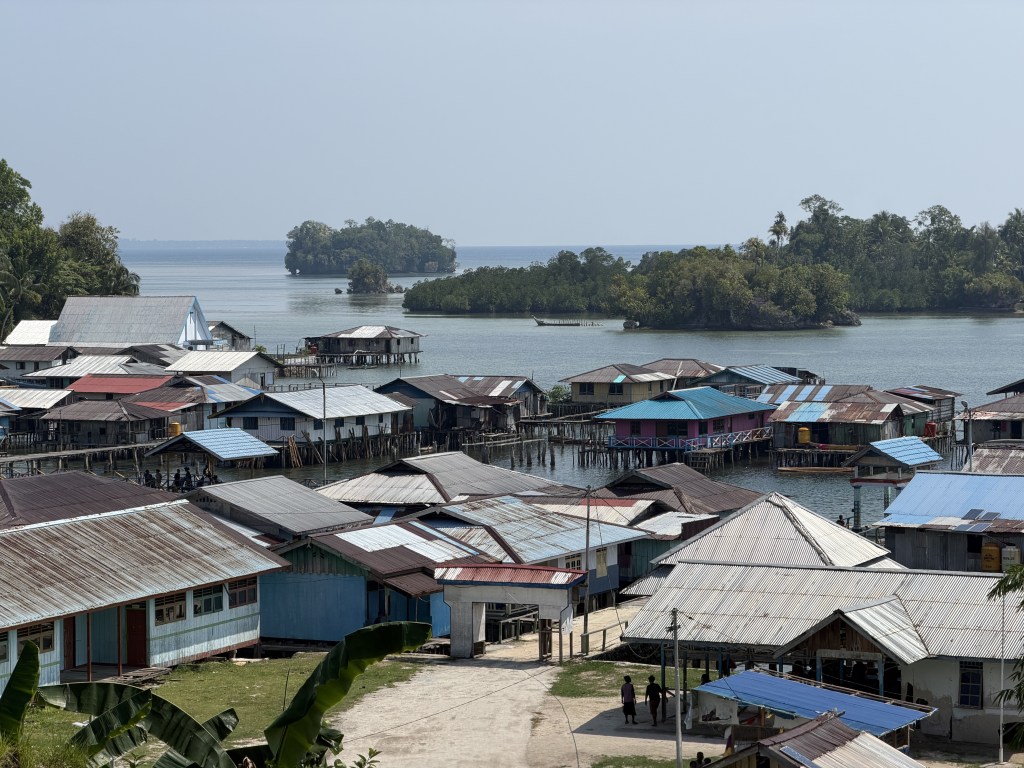
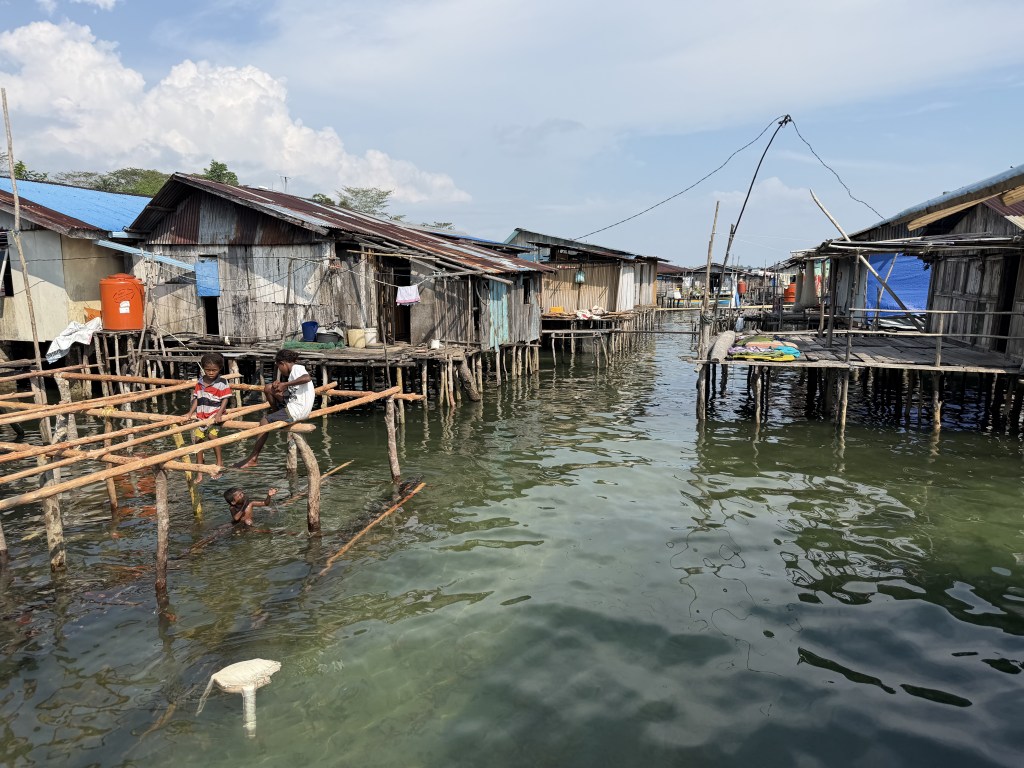
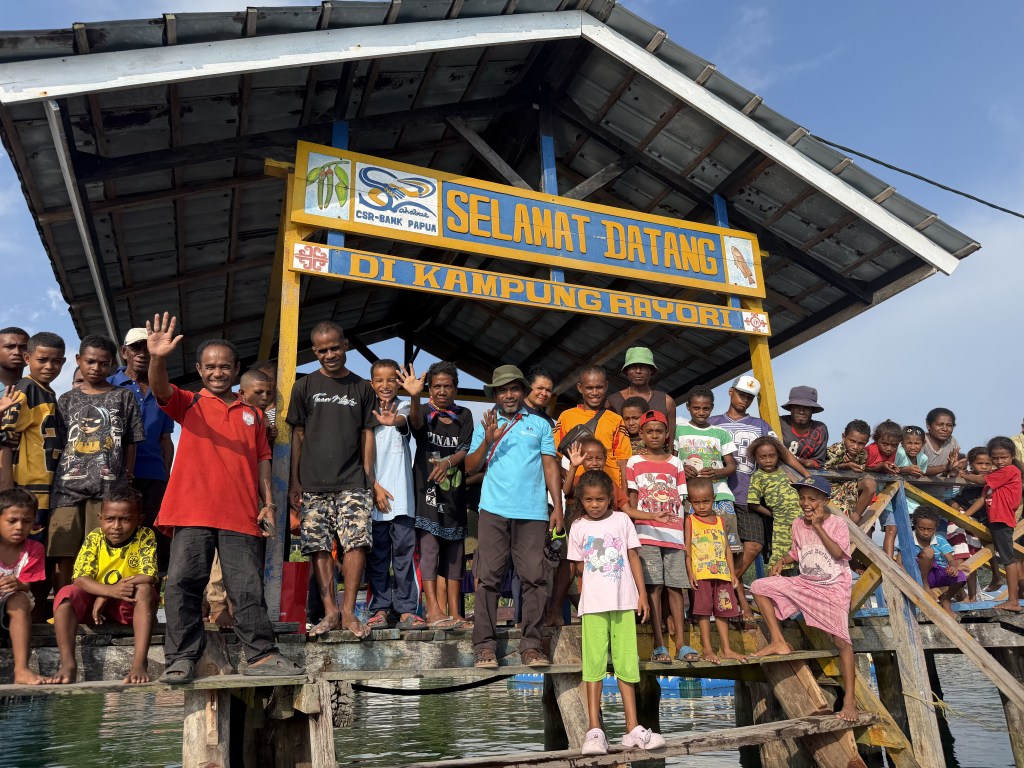
Rayori, Sowek, is an extraordinary water village on Supiori Island, where generations of Biak people have built their wooden homes on stilts directly over the sea. The village stretches roughly three kilometers along the shoreline, with a community deeply connected to the ocean. Fishing, traditional boatbuilding, and maritime trade remain at the heart of daily life.
As we climbed the steep steps from our dinghy onto the village’s main walkway, we noticed the children were much shyer than those we’d encountered elsewhere. Many spoke primarily their traditional language, and some had limited understanding of Indonesian. Needless to say, very little English was spoken in the village. Junet became our essential translator.
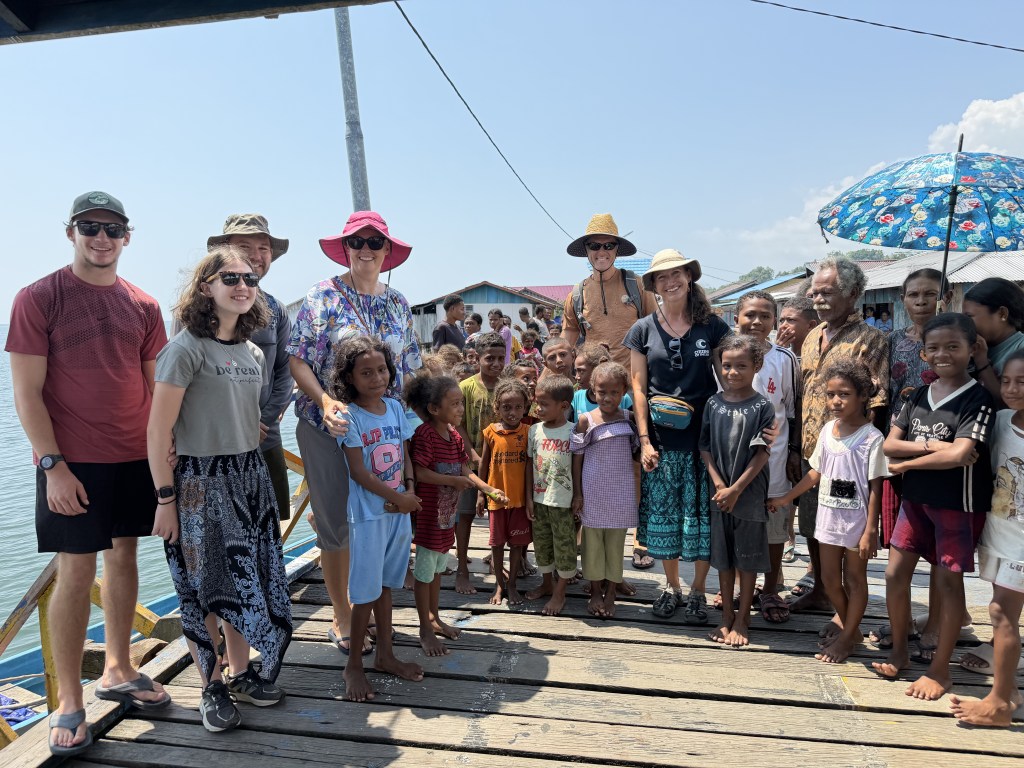
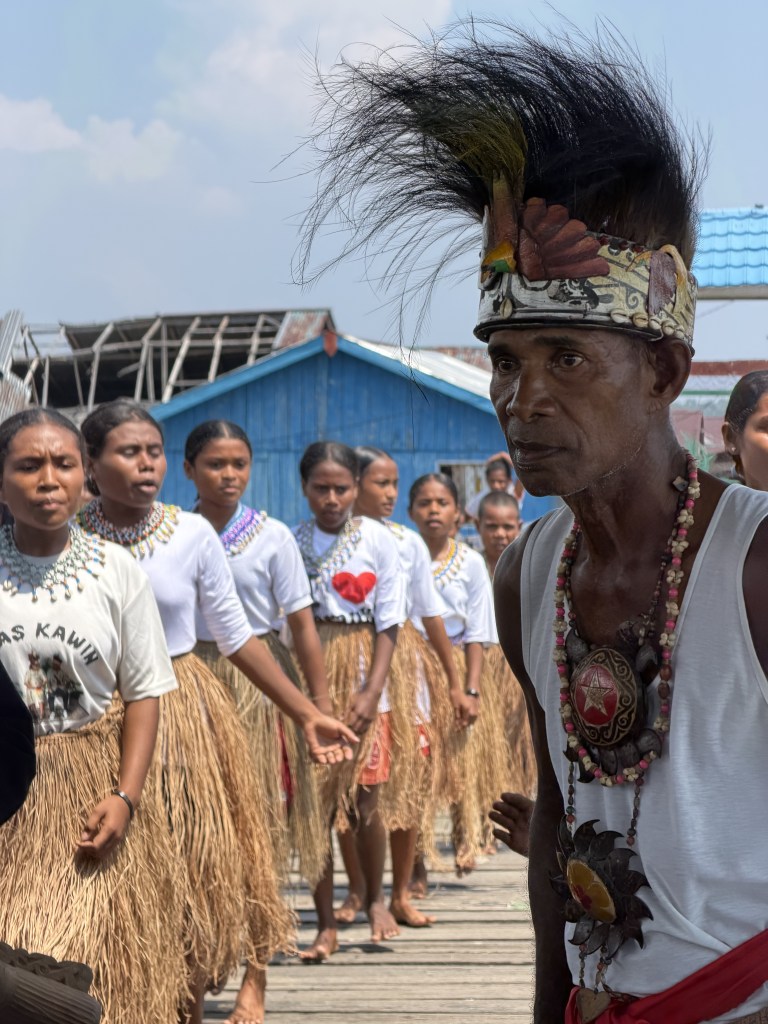
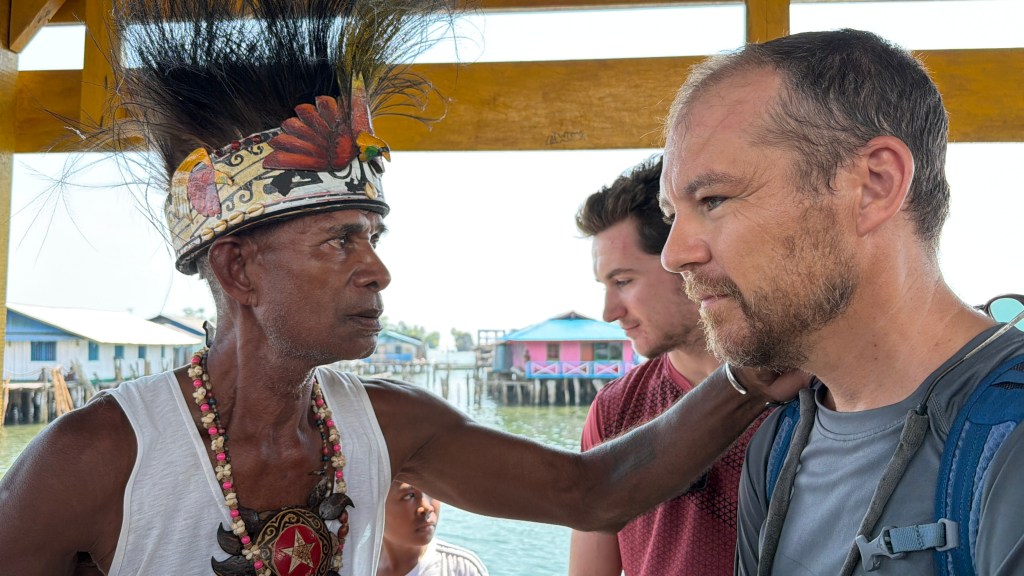
We were welcomed with a traditional dance and purification ceremony, with the chief sprinkling water on our faces and feet and placing a stainless-steel bracelet on the women’s wrists.
We walked up to the massive village church, which was getting a fresh coat of paint. Inside, the floors were tiled and decorated with beautiful gold details. The large Protestant church in Sowek stands within a remarkable history of resistance. Angganeta Menufandu, a local woman and spiritual leader, operated extensively in the Sowek area in the late 1930s and early 1940s, leading the Koreri movement against Dutch colonial rule and missionary authority. Her resistance continued through the Japanese occupation, and her story remains an important part of this region’s history and the village’s identity.
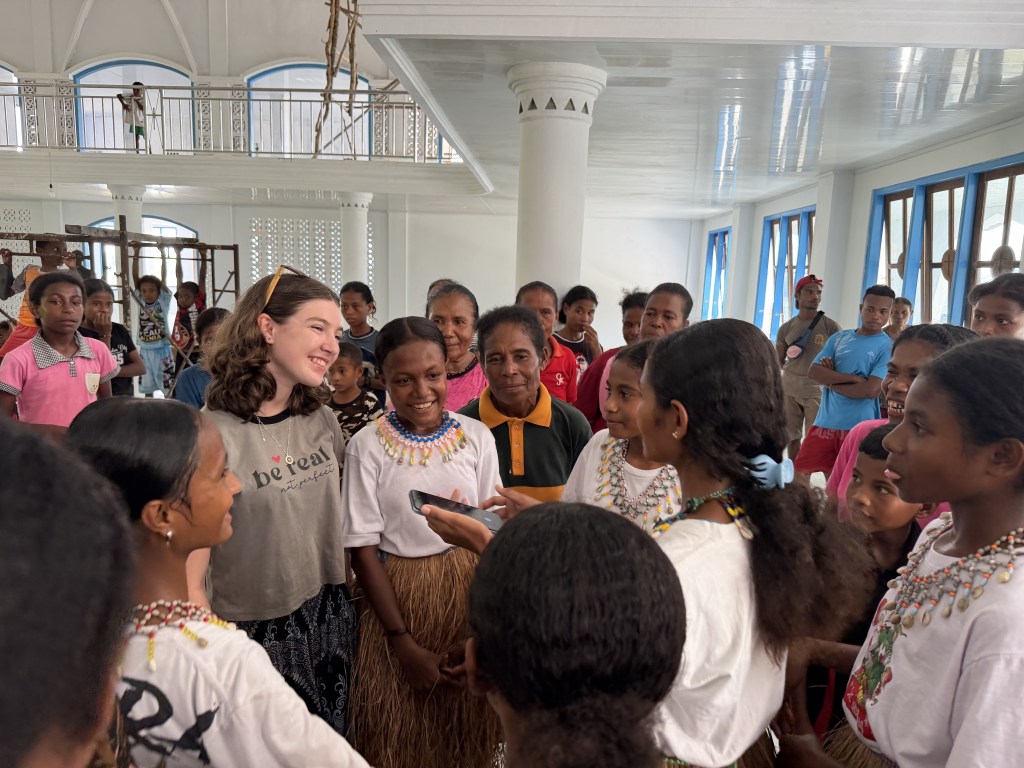
After walking through the church (and taking even more photos with the locals!), we were taken to the place where they planned to serve us a traditional lunch of papeda and fish soup. Chris and I had already tried this gelatinous material, papeda, in Biak, and were secretly grateful when they apologized that they didn’t have any prepared, nor any fish! They offered to have us return for dinner later, but we graciously declined.
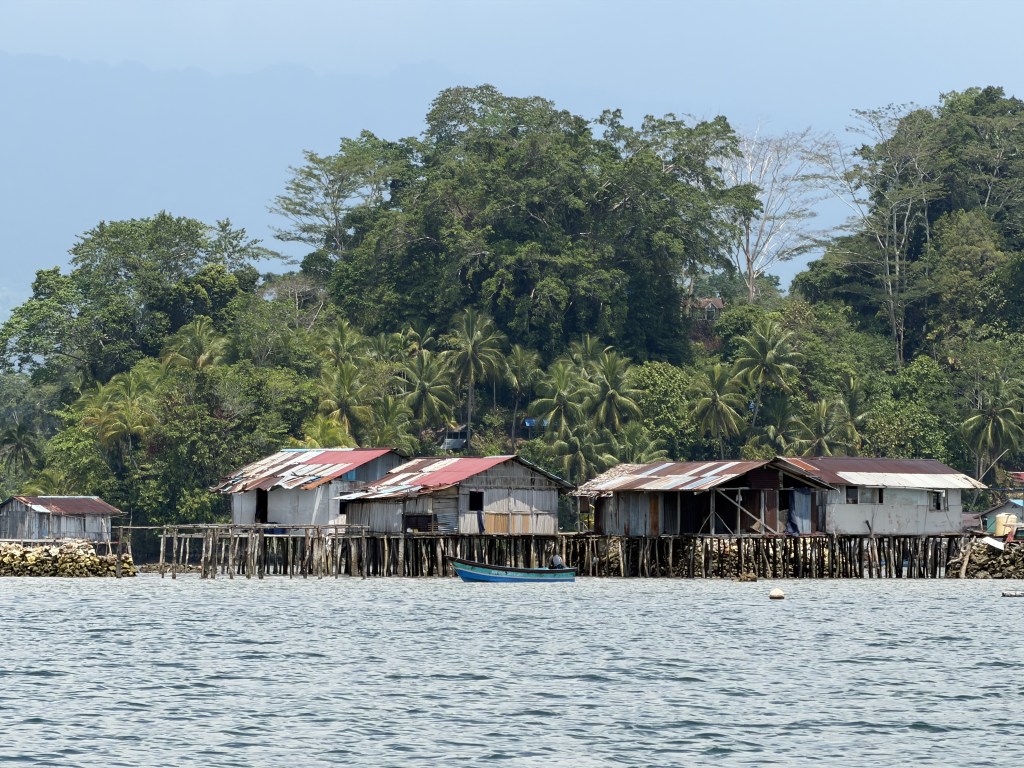
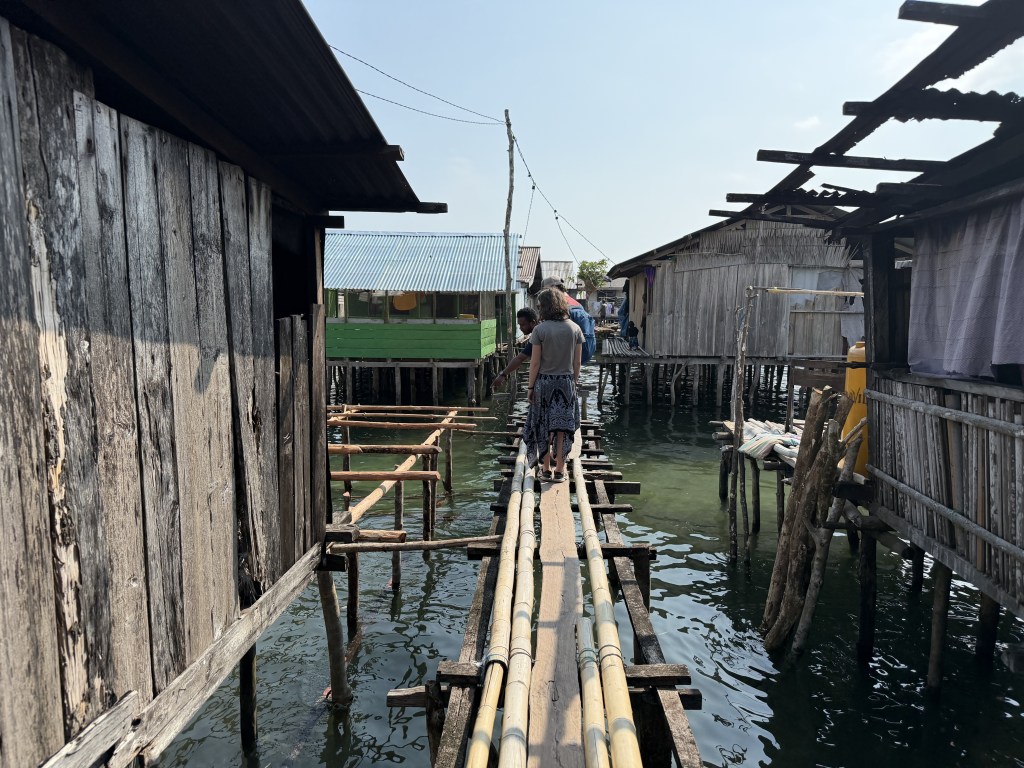
The main reason we had stopped here was simply to walk through this amazing village perched over the water. Houses were held up by an assortment of planks and driftwood, with walkways made of wood scraps and bamboo, all pieced together to create a life on the water. Children jumped from their homes into the water to swim, while people moved freely throughout the village. The construction of these homes was incredibly complex, and we found ourselves marveling at how it all came together.
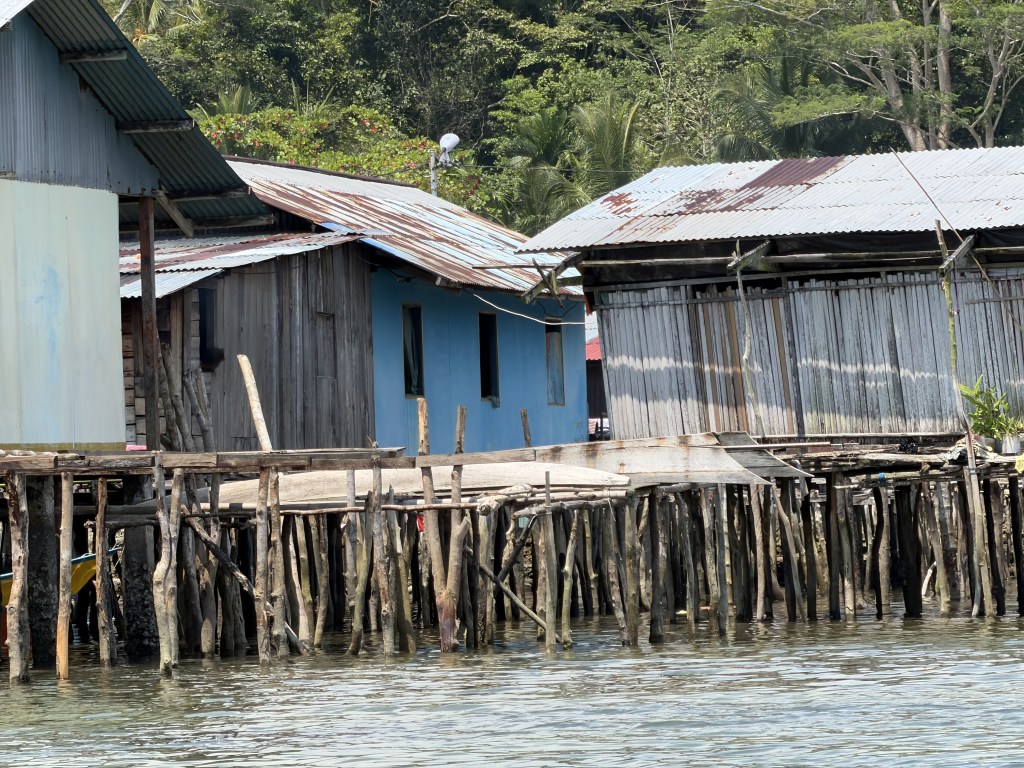
We had a chance to walk down some narrow, rickety bamboo planks to an elevated shed where men were making machetes. One man worked a homemade bellows made of metal pipes with two plungers, occasionally lubricating them as he fanned a small fire.
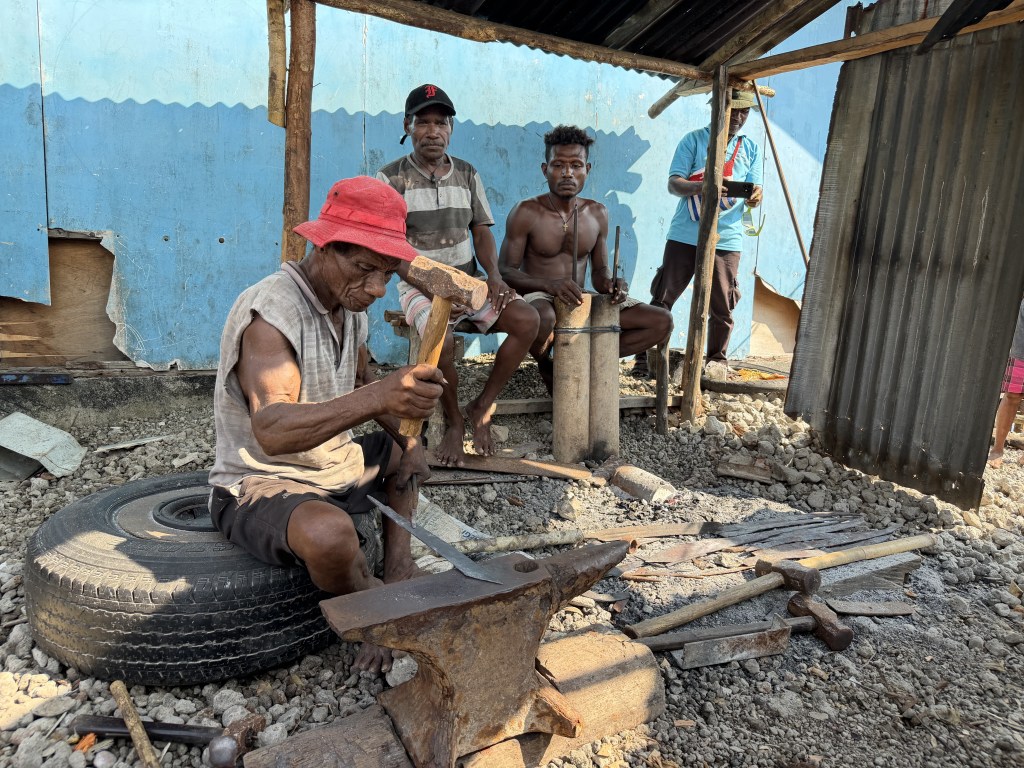
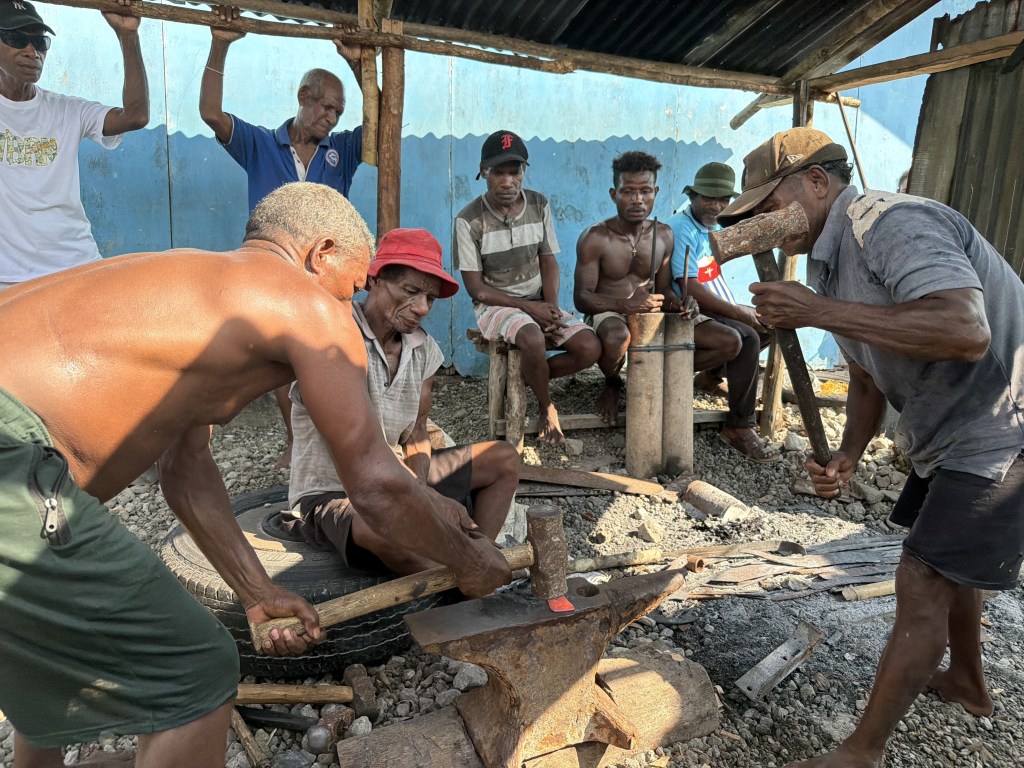
A piece of metal was placed in the fire, then removed with tongs once it glowed red and laid on a large anvil. Two men used sledgehammers to flatten the metal, working it over and over again, gradually shaping it into a sharp machete blade.
The next morning, Chris dug into some maintenance and issues with our port engine, while I hosted the various local guests who stopped by. In the morning, three boys (Nico, Victor, and Breon) hung out in the cockpit, eating cookies and looking around. The one English word that everyone seems to use is “yes,” though it’s almost always said in a questioning, sing-song fashion and doesn’t necessarily mean yes.
Are you going fishing today? “Yes.”
In your own boat? “Yes.”
Do you have school today? “Yes.”
You should probably leave then? “Yes.”
Okay, we need to get back to work. Time to leave. “Yes.”
And then they’d just look at us.
Justin and baby Fiona stopped by to take a few quick photos with us on the boat.
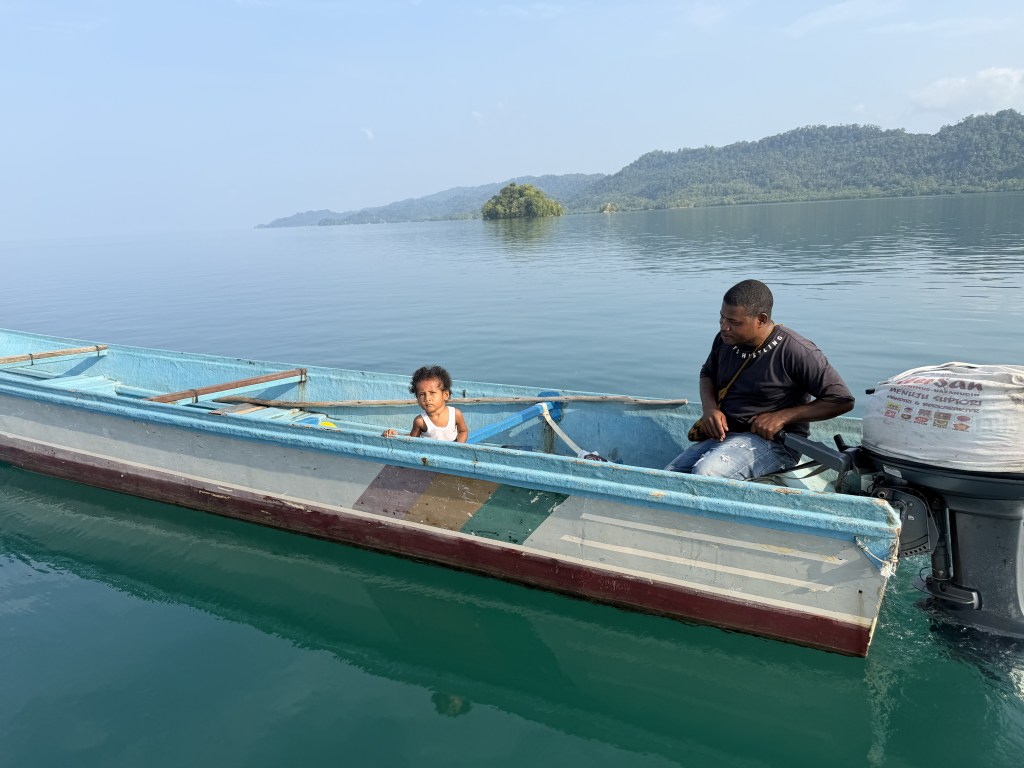
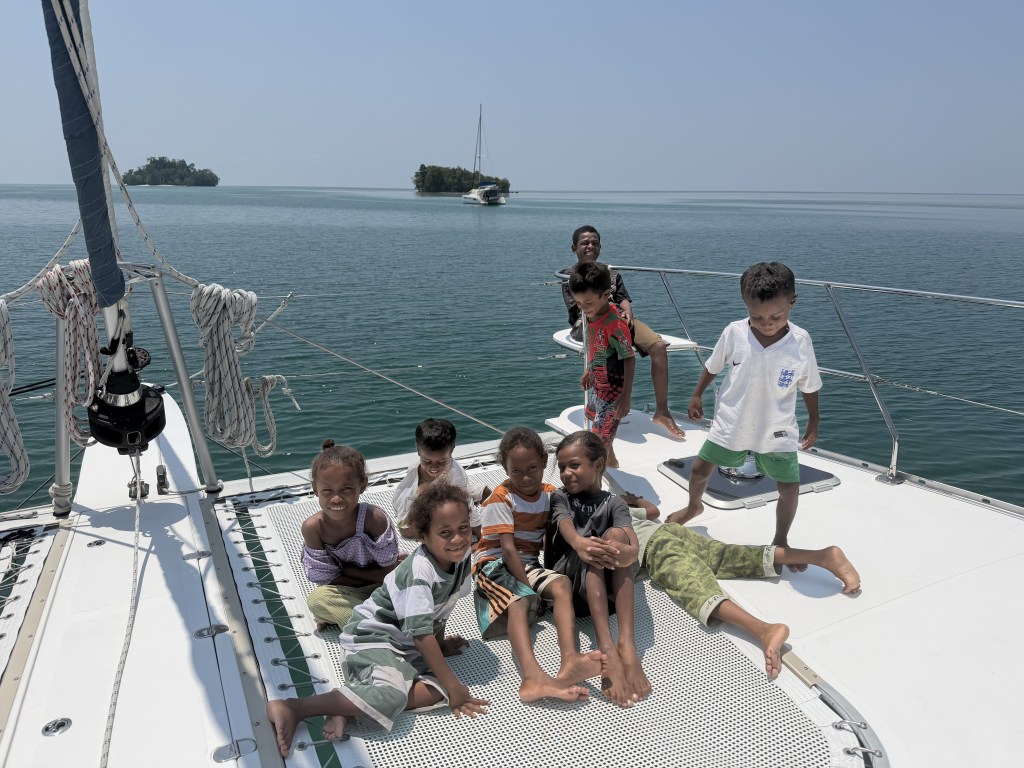
Julia, a local secondary school teacher with excellent English, insisted she make us lunch (she would drop it by later) and offered us her carrier pigeon (as a pet, not eat!). I paused, thinking seriously about Terikah having her own carrier pigeon, but politely passed. A couple of hours later, her son Johnny brought lunch for all of us: rice, noodles, fish, and chicken. Darius also stopped by with a group of elementary-age kids, who all climbed aboard, laughing as they piled onto the trampolines.
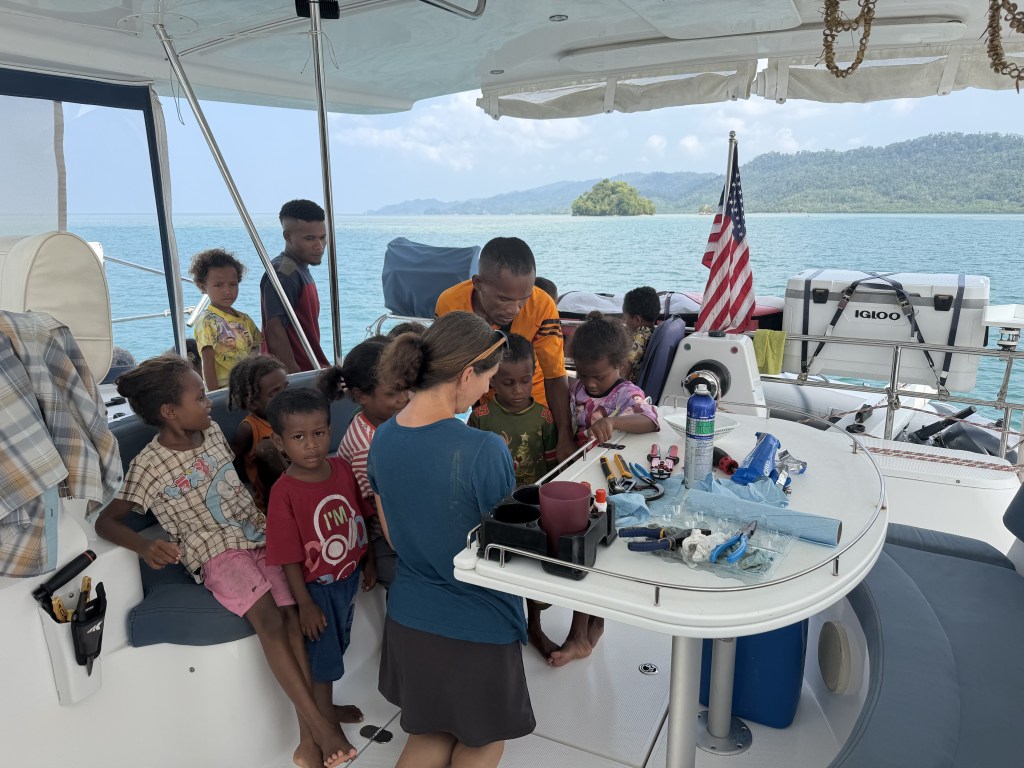
I pulled out an English-language book about ocean life and started reading to the kids, pointing to the various animals and saying their names in English, while they taught me the names in their Indigenous language. I gifted the book to Jennifer, Darius’s daughter, who wants to learn English along with her dad.
We received gifts, too, ranging from massive shells to a stalactite from a nearby cave (“Don’t worry, there are lots of them in the cave!”), as we tried to calculate how long it must have taken to grow.
Four particularly curious kids climbed up the side of the boat and couldn’t quite take the hint (or my rather obvious miming) that it was time to leave. They traded us pineapple and bush apples, and took turns massaging my arms and legs. I gave them a package of crackers, which they promptly devoured before tossing the wrapper straight into the ocean. The tide would make it go “away.” They tried on a shirt, opened up a pocketknife, then carefully put everything back. Just curious.
Eventually, they moved on as we were supposed to be picked up for our mangrove tour at 3 p.m. But 3 p.m. came and went, and soon we had a few pangas alongside, carrying some of the community leaders and the few people from the nearby tourism agency. It seemed there wasn’t enough fuel to ensure we could make it back out of the mangroves, so it felt wise not to risk it. Instead, we all visited and talked about cultural and ecotourism.
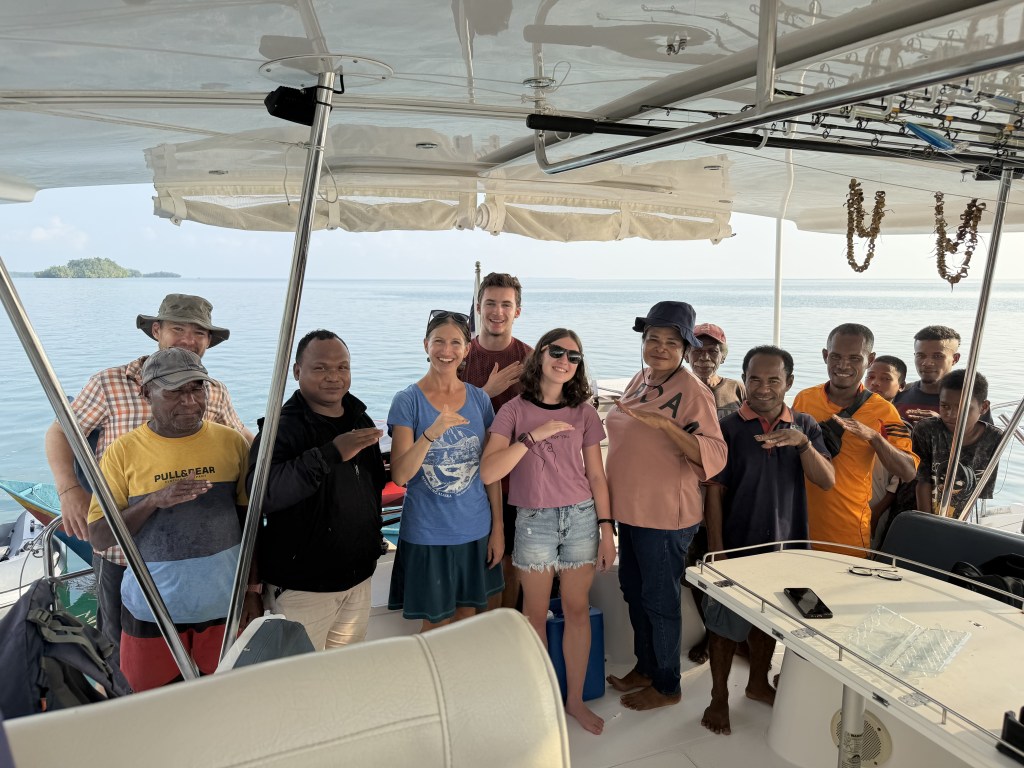
It was a lovely visit, and they enjoyed seeing the boat and spending time together. Many smiles and goodbyes as they headed back to their village.
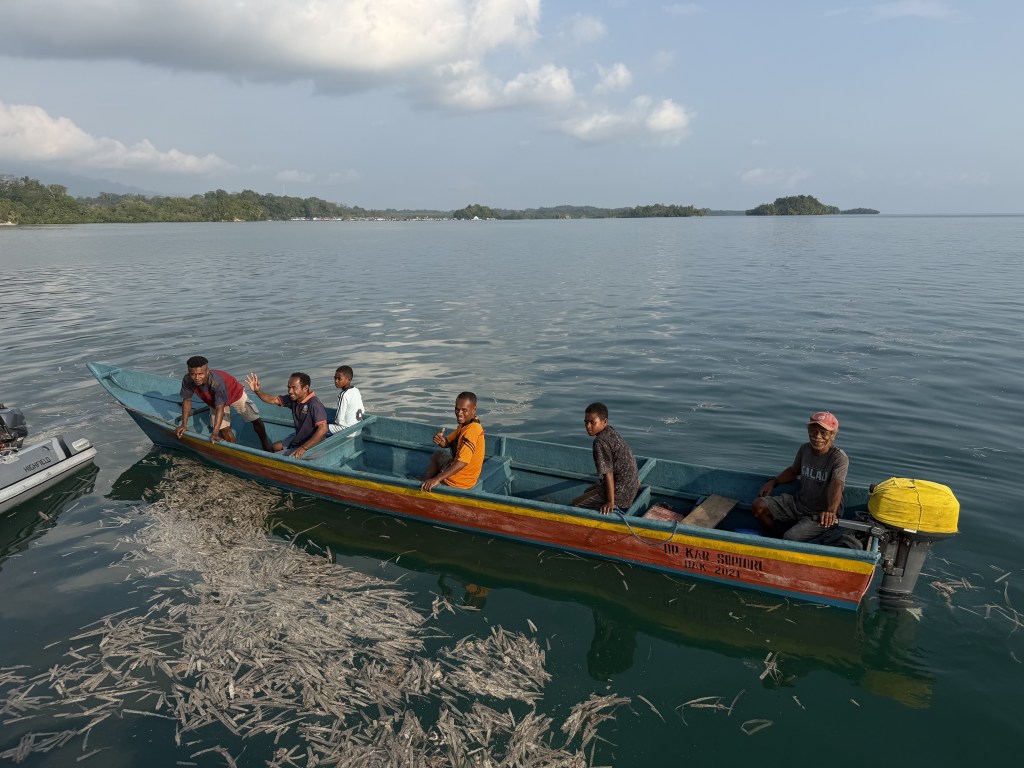
Wait, there are still kids on our bow! Where did they come from? Our cultural norms of our homes (boats) being private spaces, and their norms of living closely together in a tightly knit water community with few boundaries, bumped up against each other. We were exhausted, but finally they paddled off and we had the boat to ourselves. We settled in to enjoy a beautiful sunset on deck.
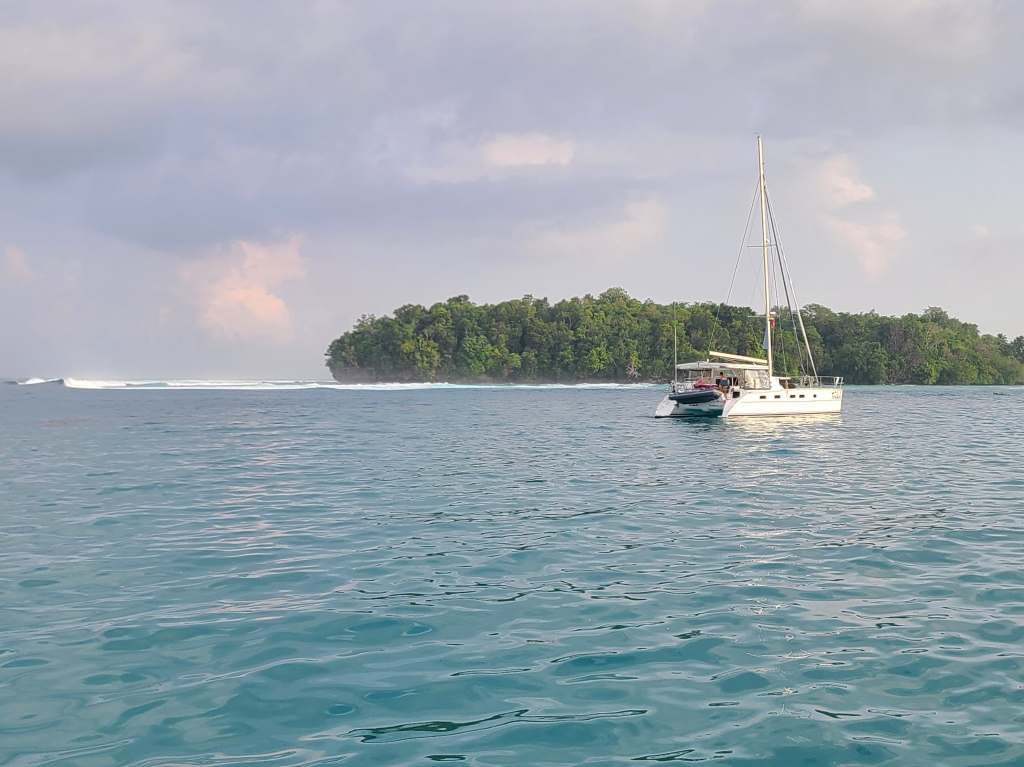
Underway in the morning, weaving through and over reefs, with 23 feet of crystal-clear water beneath us, revealing an aquarium of fish and coral below. We covered 48.6 miles to Numfor Island, where we tucked in for the night. Waves curled on either side of the anchorage, but overall, it was a surprisingly comfortable night.
The next day, I officially checked out of the Terikah crew for about a week. Being sick and febrile at the Equator is a cruel joke. My symptoms piled up, and it was difficult to tease out what was what, as so many tropical illnesses share flu-like prodromes. Could it be malaria, influenza, dengue, yellow fever, or some other tropical illness? I slept and slept, drank Oral Rehydration Salts, and tried to get some food in, though I lost quite a bit of weight over the week. The remaining three of Team Terikah took care of both the boat and me. We turned out to be malaria home-test flunkees, first using too much blood, then not enough (oh, that’s what the pipette is for?), then putting the reagent in the wrong spot. Finally, we got it right and confirmed that it wasn’t malaria.
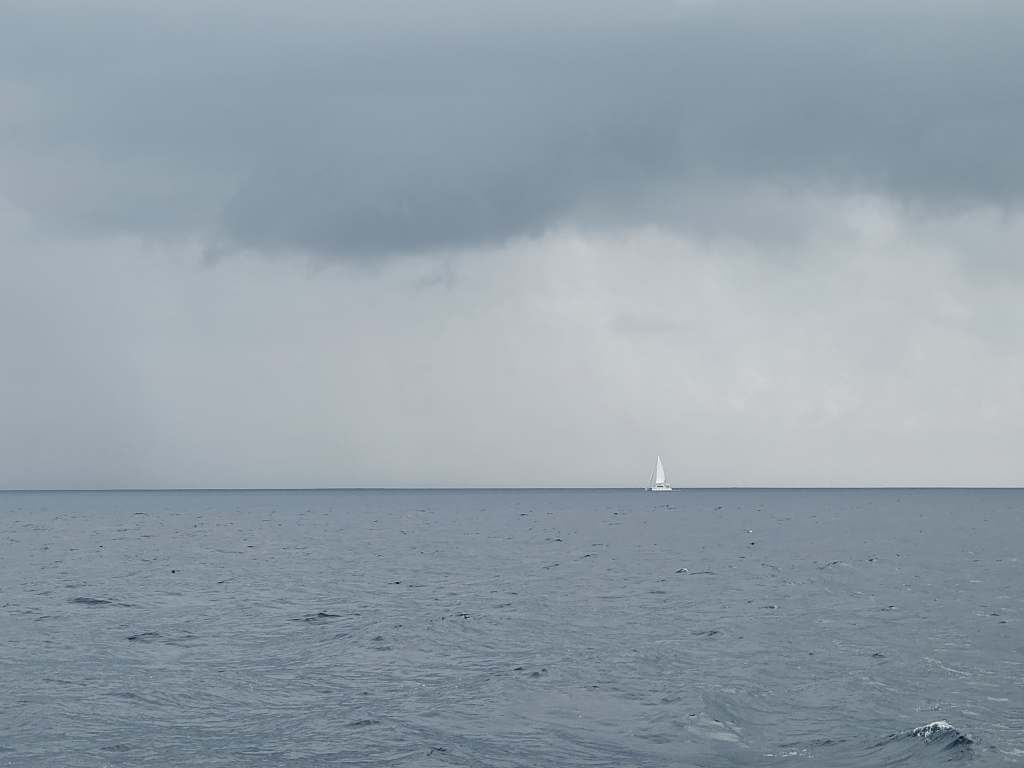
Meanwhile, the Terikah crew had a daytime motorsail with an unexpected squall and winds up to 35 knots on the way to Mansinam Island, near Manokwari, the capital city of West Papua province.
We anchored off a very large white cross with 2 statues of the first German missionaries standing guard. Mansinam Island is highly celebrated as the birthplace of Christianity in Papua, where German missionaries first arrived in 1855. On arrival, there were many people celebrating and playing in the water, boats full of people waving, and loud Indonesian Christian music playing.
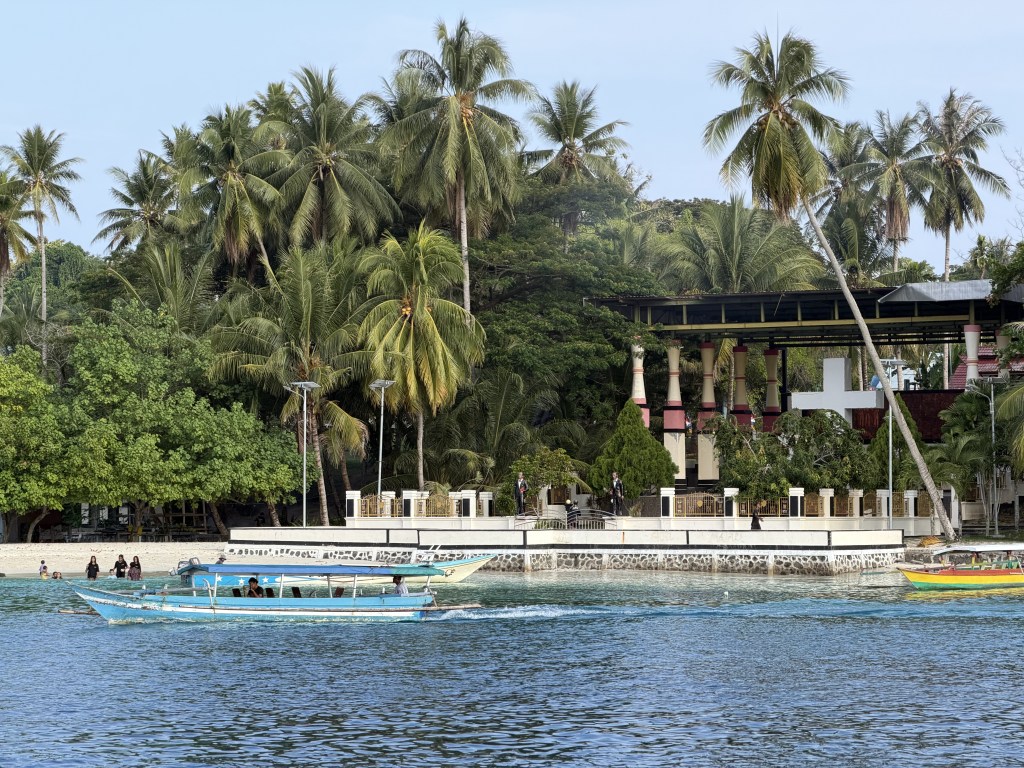
Unfortunately, there were lines of garbage in water, mostly single use plastics and wrappers. The next night I stayed in, as others went out for dinner. After a few nights, we were underway with plans to stop that evening, but I was feeling worse and we decided to push on through the night to get closer to a health care facility for testing and treatment. We didn’t make it to Sorong by the next night, so anchored off Kuadas Village to rest with plans to head to Sorong the next morning. However, the next day came and there were huge thunderstorms predicted, namely over Sorong. Was I sick enough to warrant heading directly into a thunderstorm? We decided no and Chris set up our lightening grounding system that goes from the mast to our anchor chain.
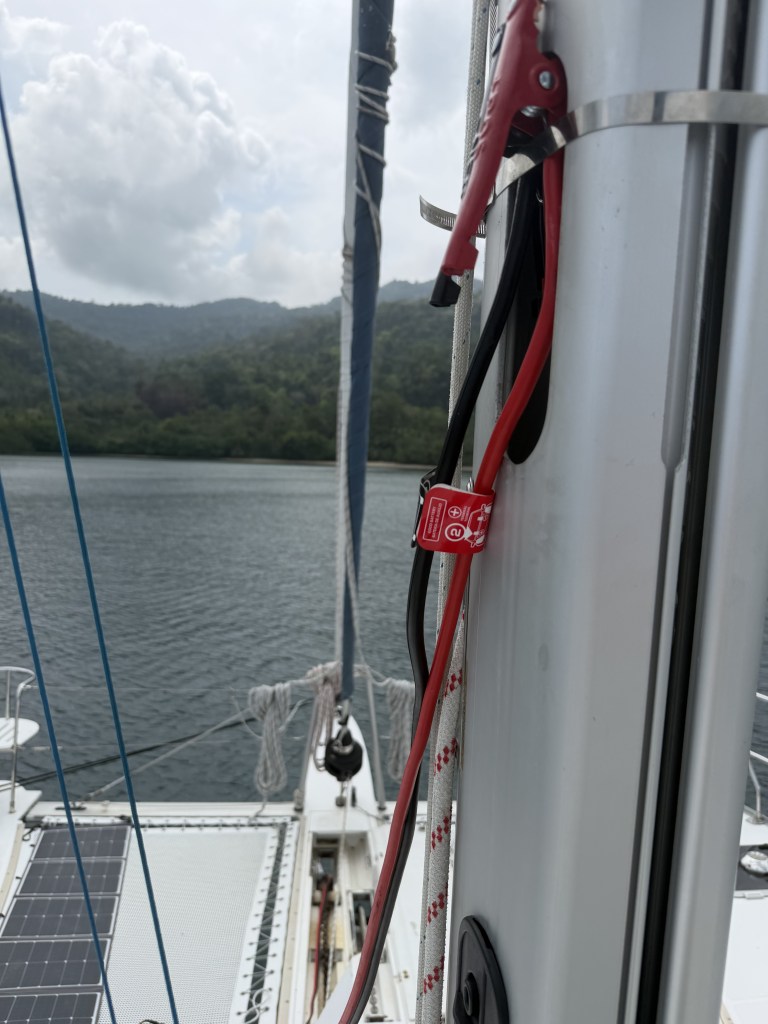
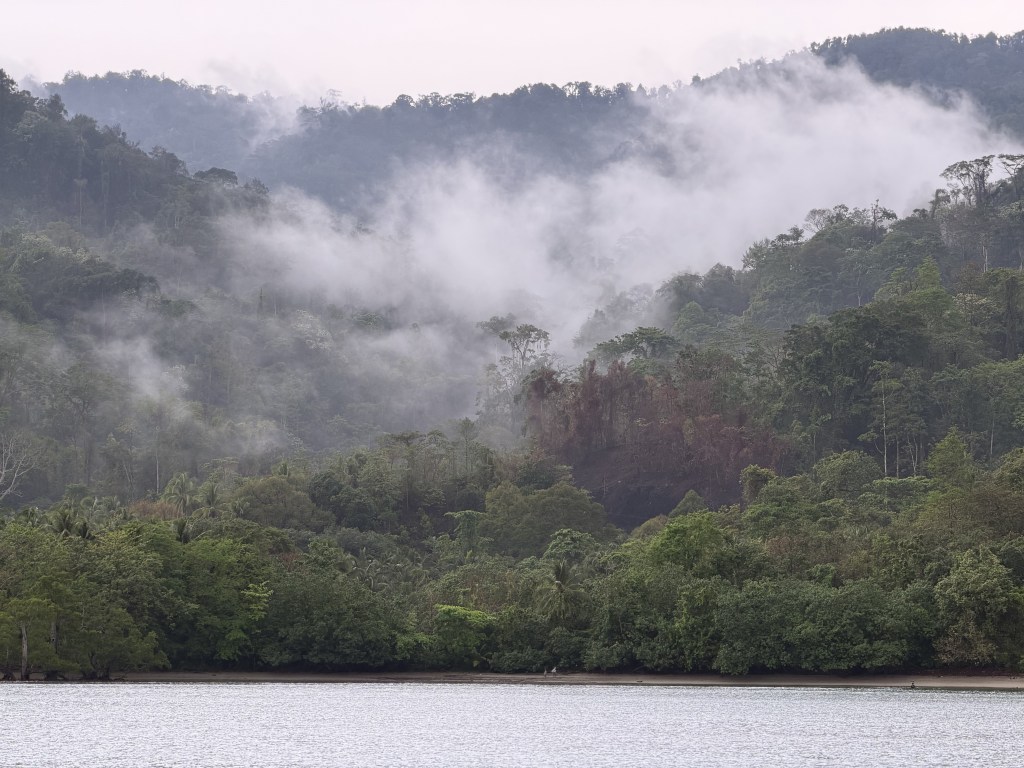
Thankfully, even though we had lightning all around, our system did not get tested. The anchorage was full of birdsong and the clouds nestled in the jungle folds.
The next morning, we decided to head toward Raja Ampat rather than Sorong, as I was finally feeling better and there was a reportedly good health care facility located on the island of Waigeo where I could get testing and treatment if needed. So, November 1, and off we go to Raja Ampat!


7 responses to “Rayori Water Village, Supiori Island, Papua (Indonesia)”
I hope you are feeling better by the time you see this. Please take care. You have taken care of so many others – I truly want you to be well. Not just you – but your whole family. I’ll be thinking of you and hoping to hear good news soon.
I have been to Raja Ampat and I hope you are well enough to enjoy what an amazing place it is. But more importantly, please heal.
Patti Hackney
former owner of M/V Oz, your neighbor
LikeLike
“Fish jumping but won’t bite…” sounds like coho fishing in Salt Chuck! Patti, M/V Oz is spending the winter on the hard in my yard. I will give her a pat for you. John
LikeLike
Jennifer, Wishing you a clean bill of health. I always enjoy the newsletter and eagerly await the next one. I wanted to thank you for this long, beautiful post
LikeLike
Oh Jen, hope you are feeling better and that you have no lingering effects. Must be alarming to be sick in you remote location. Good thing you are a doc. Hope all is now well.
LikeLike
Doing well now! Thank you!
LikeLike
I love the look on Cora’s face in the church with all the girls surrounding her. It says so much about her, you all, your journey, ALL our neighbors and our shared humanity. Thank you, thank you, thank you. Your comments, Jen, brought tears to my eyes regarding expedition and pilgrimage. You all have not missed a moment. With love and appreciation, Ellyn
LikeLike
Thank you so much.
LikeLike