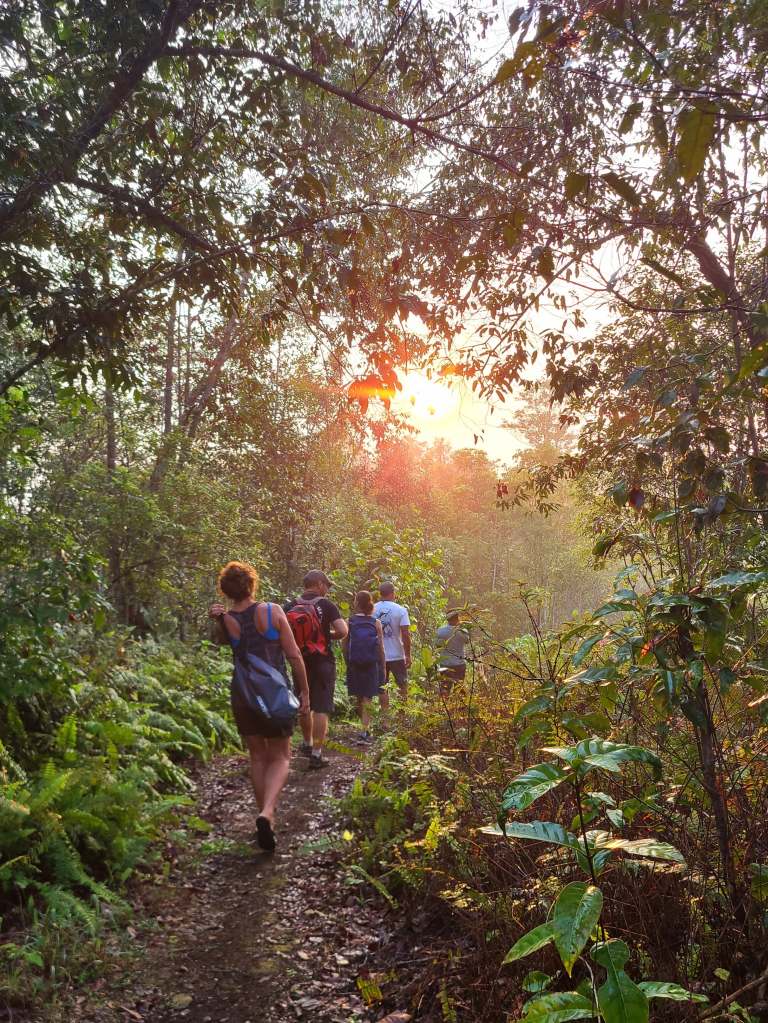
Anchored off Nirmala Dive Resort as our homebase here, the incredibly welcoming owners Ahmed and Yulia, coordinated a week in Biak for us cruisers that we will never forget. We were up at 4 a.m. to catch a van for a jungle birdwatching adventure with our cruising friends and local guide, Edison. As we drove through the early morning darkness, we passed stretches of forest scorched by fires during the dry heat, and houses perched improbably on rough outcrops of limestone, their foundations somehow finding a foothold in the rugged terrain. An hour later, we arrived and slowly made our way down a jungle trail as the sun rose, listening carefully for birdsong.
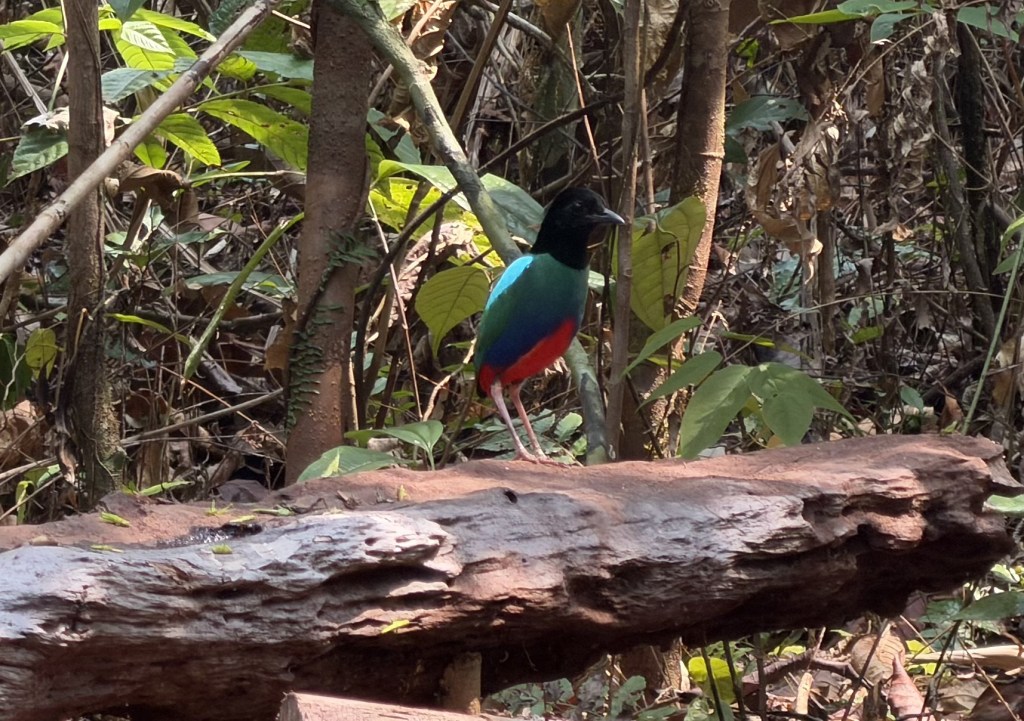
Edison would coax the birds into view, using a combination of recorded calls played through a speaker and his own voice. We were rewarded with sightings of two endemic species: the Biak triller and the Biak black flycatcher. Next, we drove to Edison’s home, where he showed us his traditional wood carvings, including a beautifully carved canoe. Then we followed another jungle path to a concealed birdwatching blind, where Edison called in a stunning Biak hooded pitta, another species found only on Biak.
Back at the boat, Customs stopped by to finish our check-in. It felt so strange to be out and about before we were officially cleared into the country, but apparently, that was how things worked here!
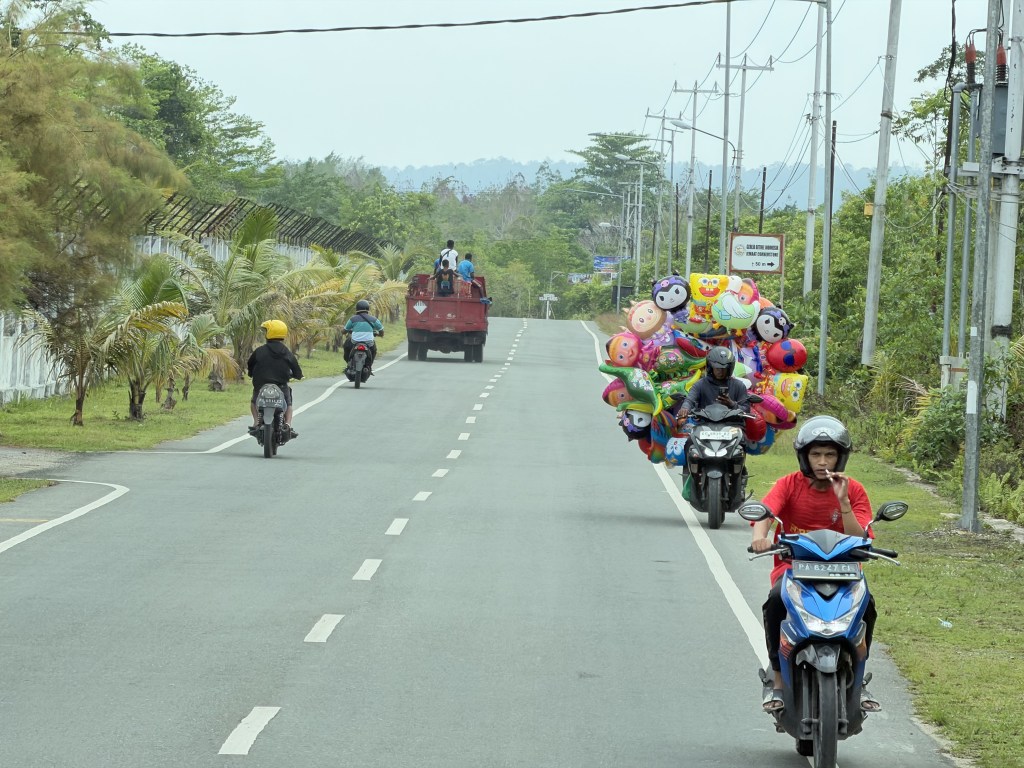
That evening, we enjoyed a feast of fresh whole fish, octopus, and coconut crab at the resort. They also had the most delicious freshly made juices — our favorites were the brilliantly colored dragon fruit and mango.
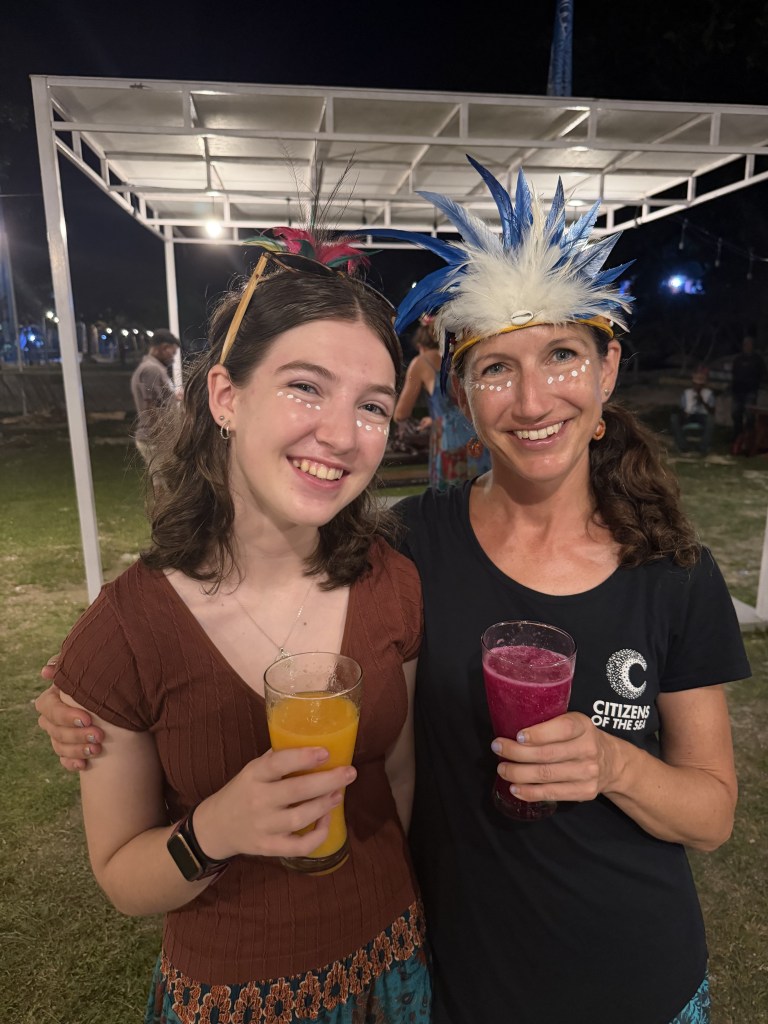
The resort has a row of food stalls where local people prepare and sell their own dishes, with the money going directly back to them. Locals often wandered over to shyly practice their English with us, and Cora made a new friend. I love the idea that her Instagram friends now include someone from Biak! I’ve also started learning Indonesian on Duolingo, and I’m finding it surprisingly fun with easy pronunciation and no grammatical gender to worry about.
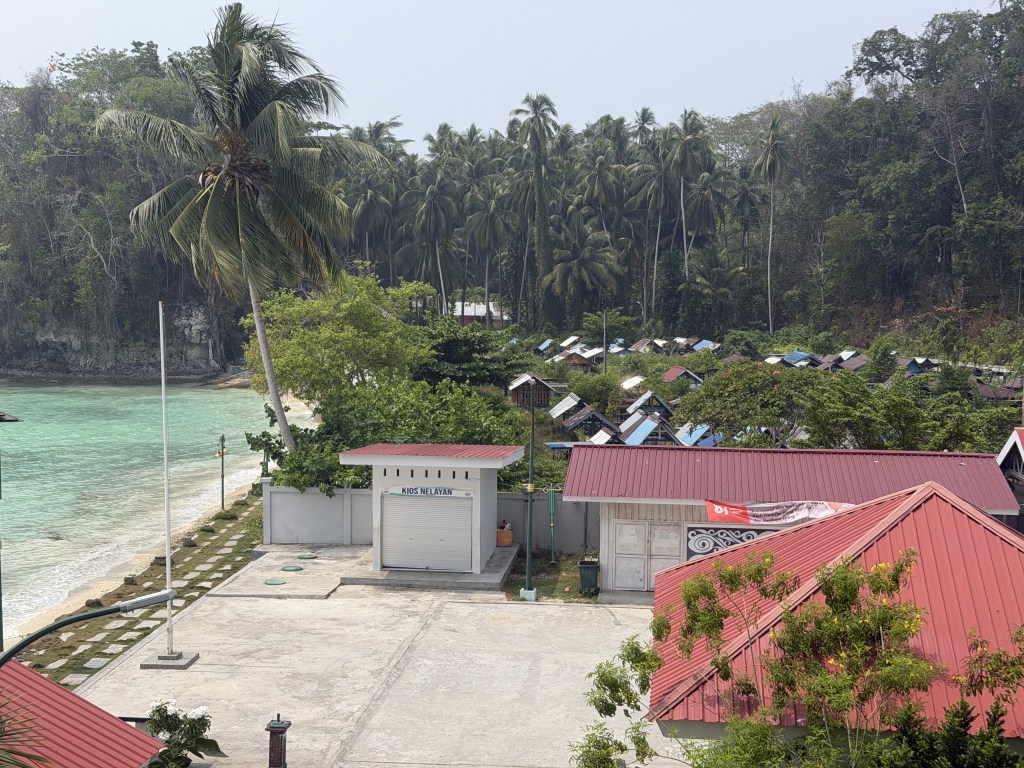
Biak’s main industries include fishing, agriculture, forestry, and trade, with tourism also an important part of its future potential. Their intentional inviting us in for the Biak Festival, as well as the lavish attention they paid to us as VIPs was testimony to this goal of expanding tourism.
The Biak Melanesian Cultural Festival celebrates the traditional dances, music, food, arts, and heritage of Biak and the wider Melanesian world, bringing together communities from across Papua, Indonesia, and Pacific nations to share their cultures and strengthen regional connections. Nine cruising boats had arrived in Biak for the festival, and the welcome we received was unlike anything we’d ever experienced. As we approached the dock, we were greeted by a group of traditional dancers who performed just for us.
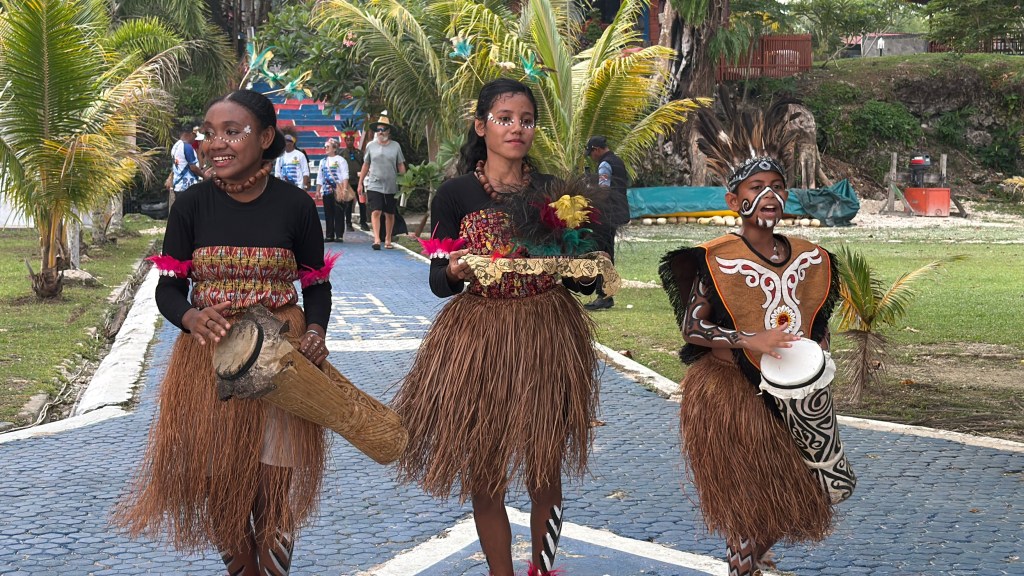
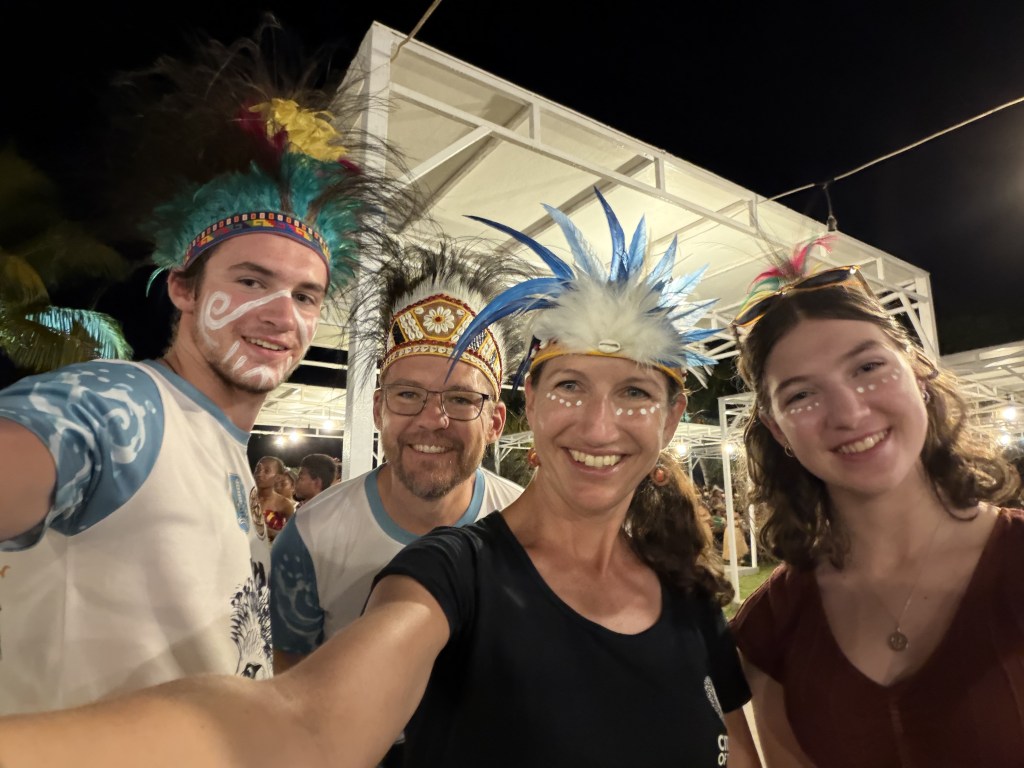
Calder and Cora were chosen to represent our group, and a local political leader and his wife presented them with traditional feathered headdresses.
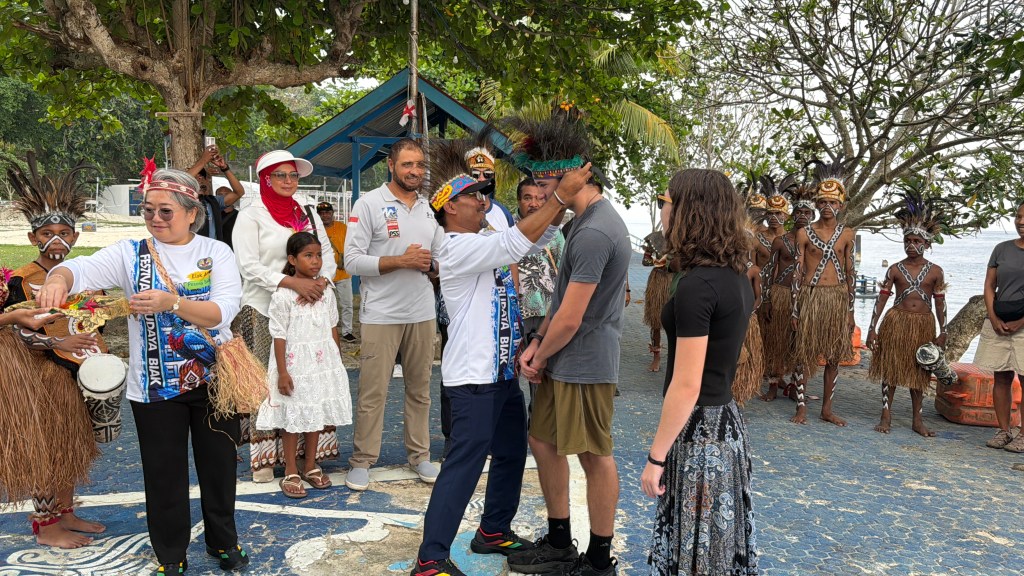
The dancers then led us up the hill to a row of vans, which whisked us straight through the beautiful chaos of the festival to the main entrance.
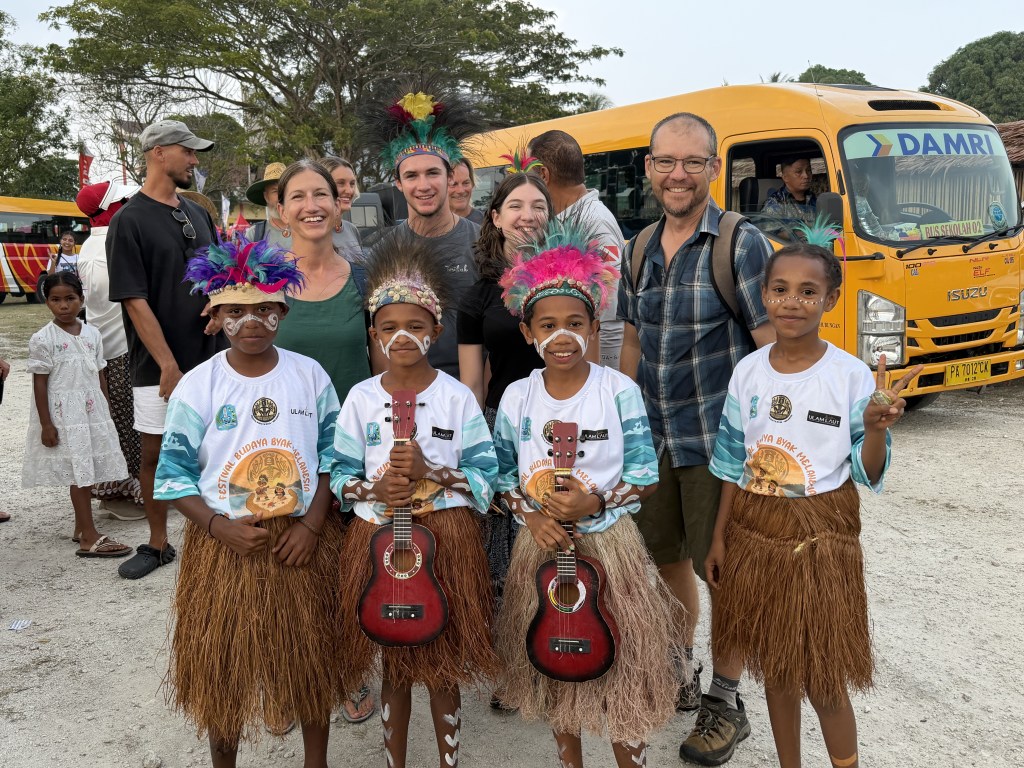
From there, we were escorted across the field and right onto the stage itself, where VIP seating awaited us alongside Biak’s leaders and dignitaries from other Indonesian and Pacific nations.
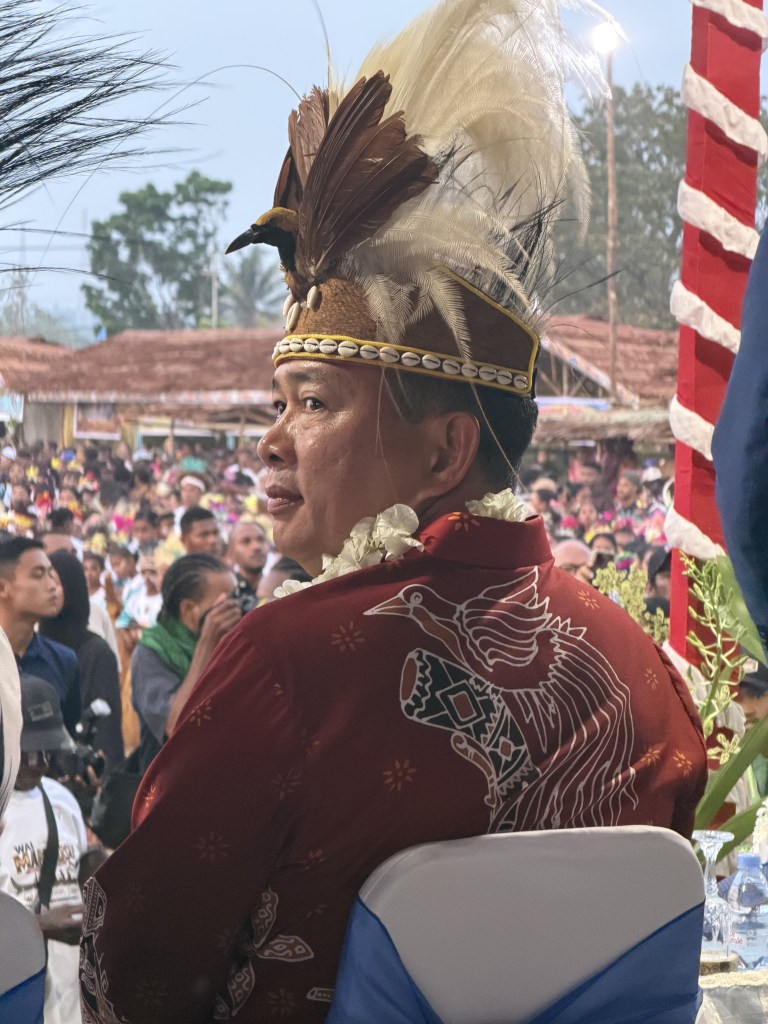
We settled in with local snacks and drinks as the opening speeches began, taking it all in. One minute we were a group of motley cruising sailors arriving by boat; the next, we were being welcomed as honored guests at a major cultural celebration. The warmth and generosity were extraordinary.
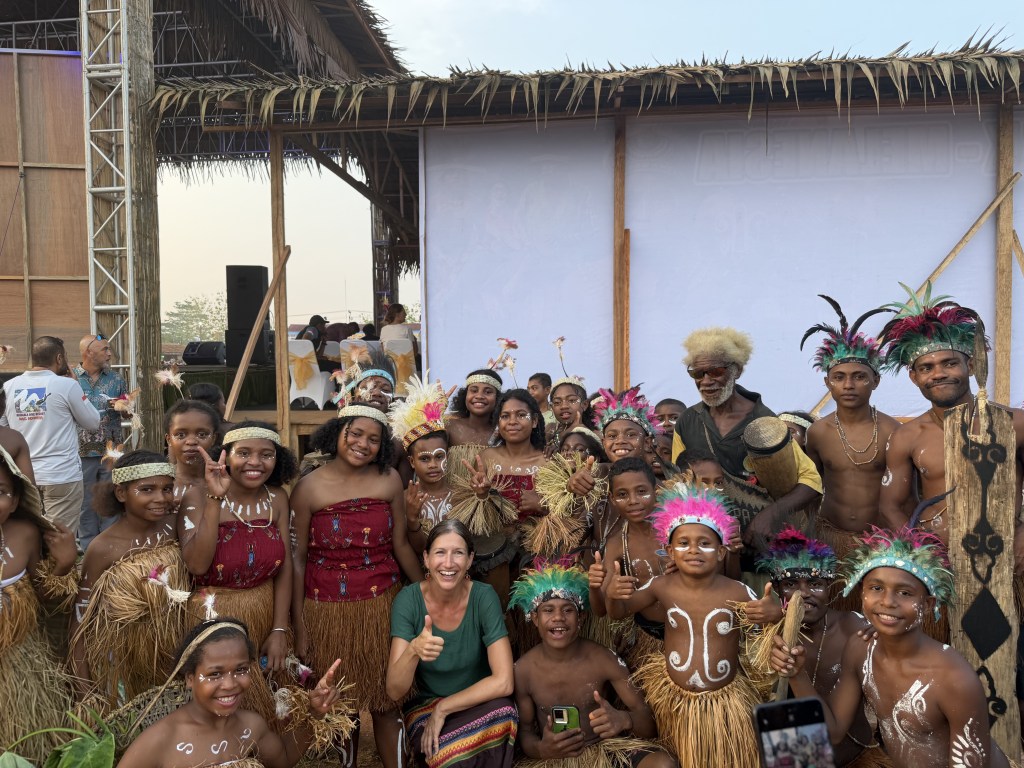
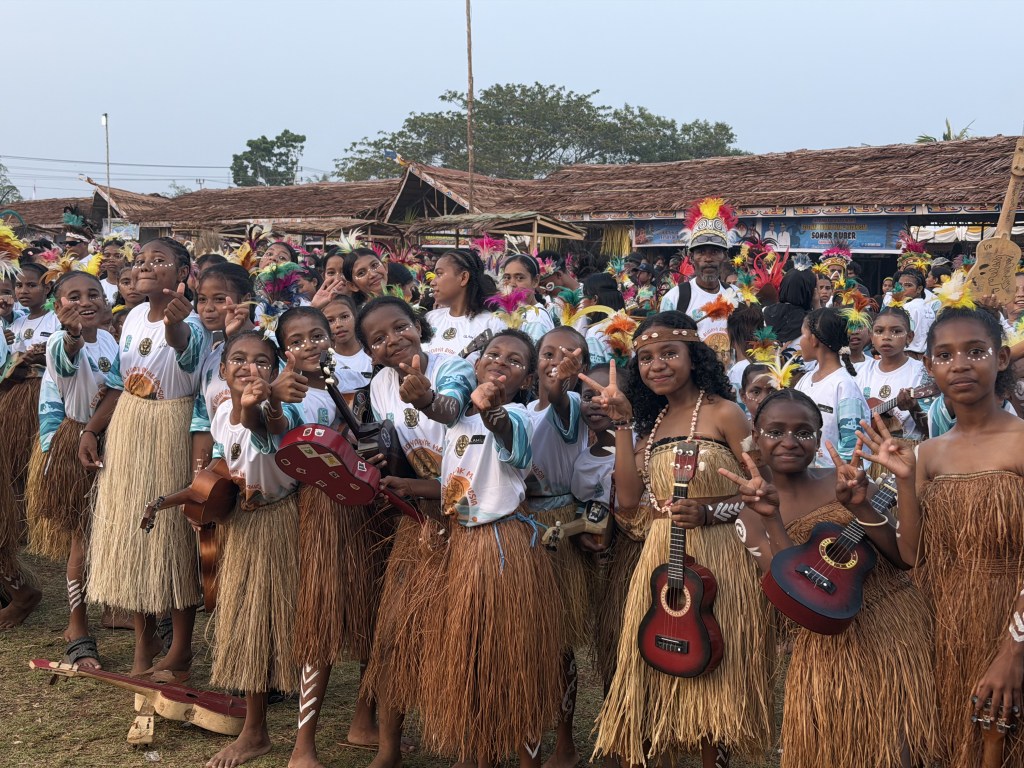
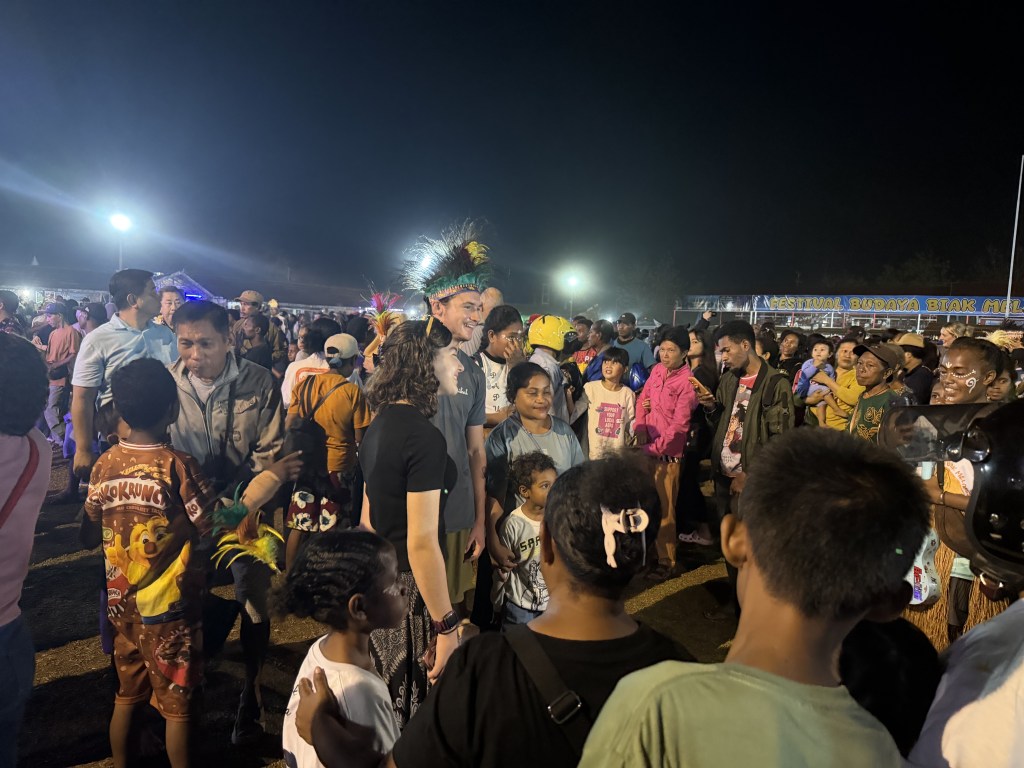
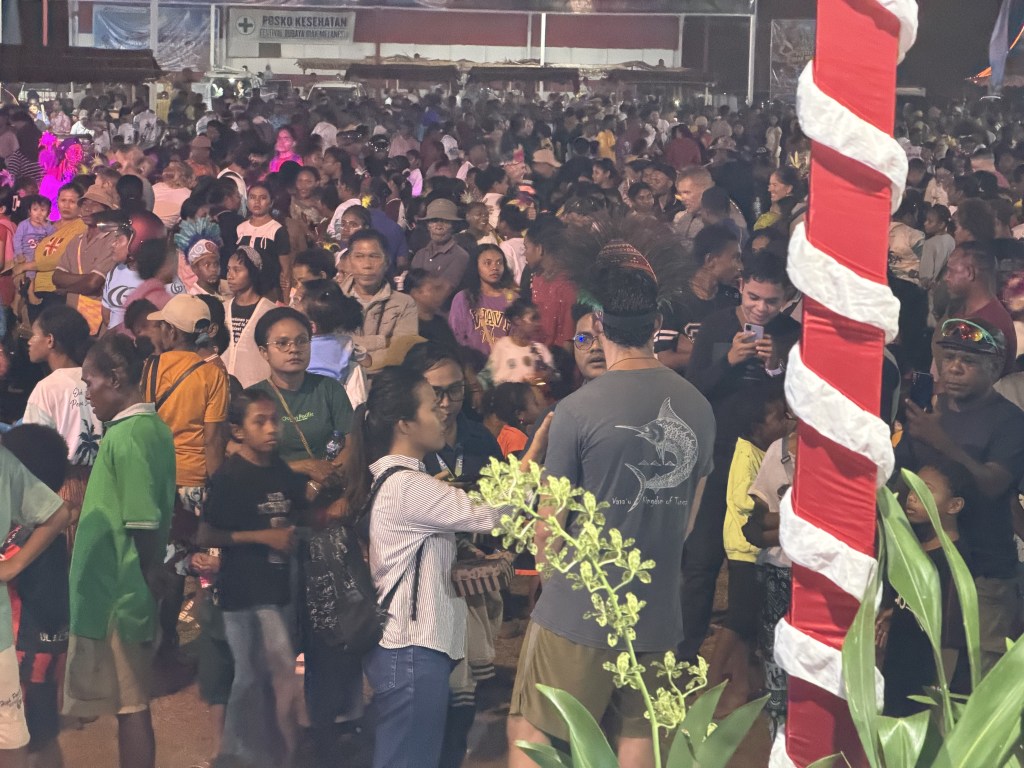
Next a group of more than 500 students all played and sang together on their ukuleles in a display of coordination. The instruments had been donated by a local benefactor, and seeing so many children making music together was beautiful. After a drumming performance, we were invited down from the stage and into the crowd of ukulele-playing children. They gathered around us with enormous smiles, giving hugs and asking for photos. We were often greeted with a lovely gesture of respect called salim, as people gently took our hands and pressed them to their foreheads. It was like being followed by the paparazzi!
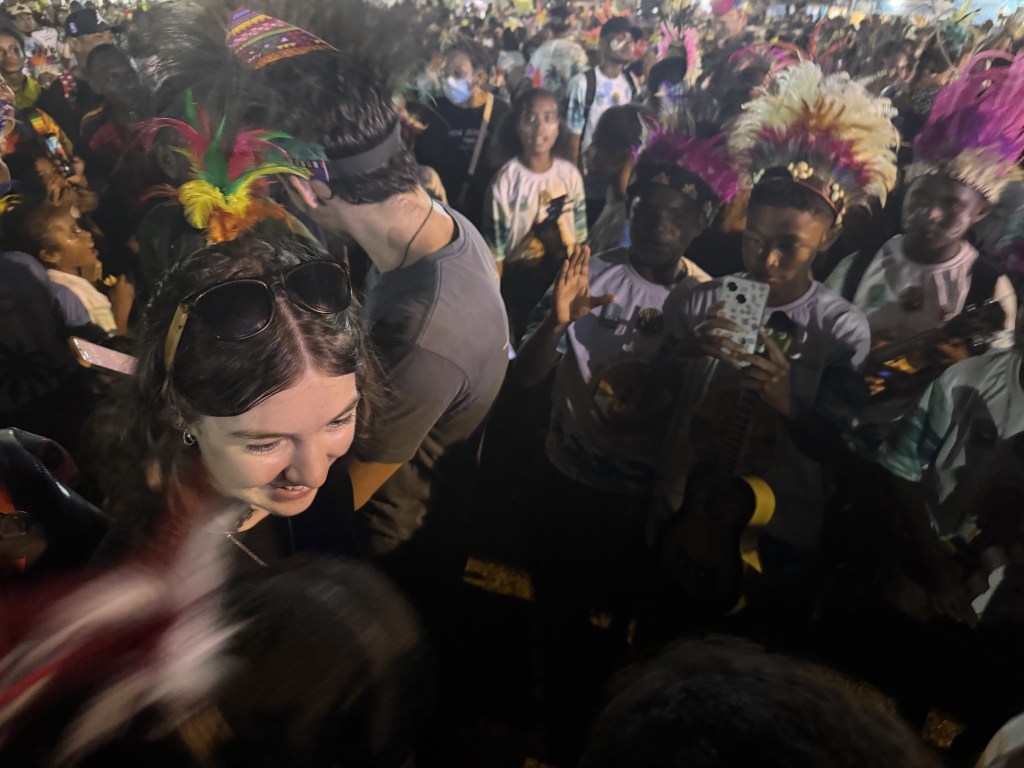
Calder counted more than 300 photos taken of him that night and was even interviewed by the local press. Such an overwhelming, joyful outpouring of curiosity, affection, and hospitality. Being photographed became a thing — a combination of the novelty of white foreigners, (adults explaining that the children “want to see the white skin”) the spirit of rame-rame (shared fun and togetherness), a warm way of welcoming us, with a photo to share on social media as a bonus. But there was a deeper historical layer, too: Biak was a major theater of World War II and remained under Dutch administration until 1962, so for some locals, we may have represented a living bridge to stories passed down through grandparents’ photographs and family histories — a connection between the past and the immense hospitality they extended to us.
To conclude the Opening Ceremony, an impressive fireworks display shot out almost directly over us, Cora remarking that this was the closest best fireworks she has ever seen.
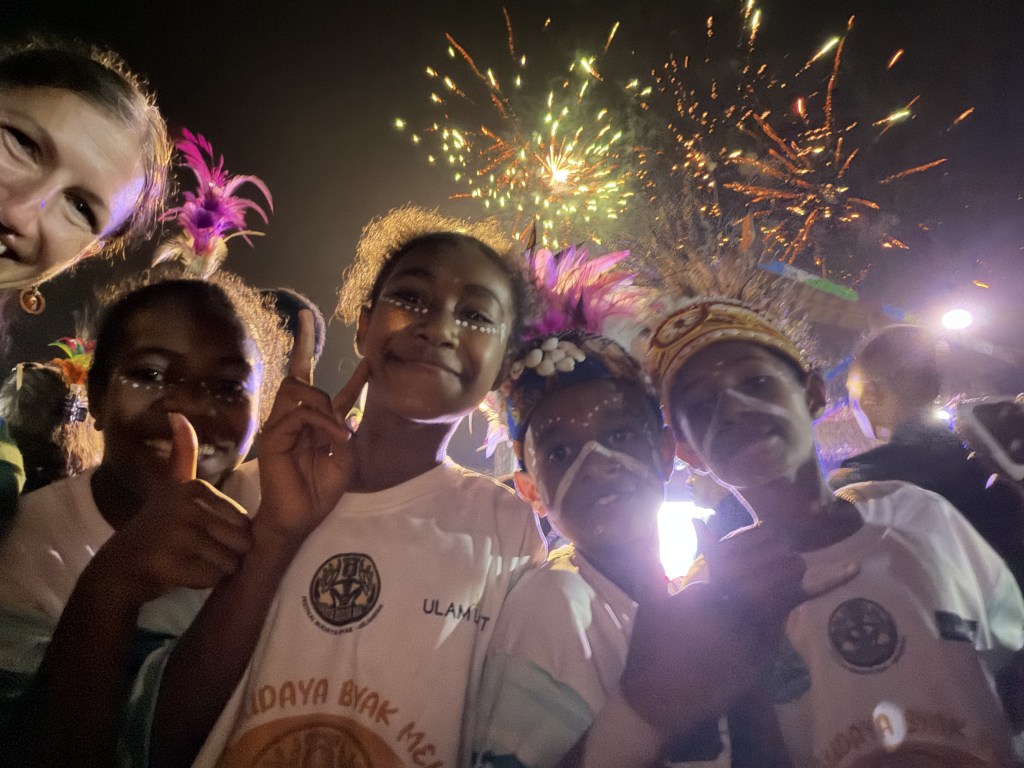
We went back to our boats, exhausted, exhilarated, and smiling.
The next afternoon, all of us now wearing new cassowary feather headdresses and white Festival t-shirts gifted to us, we stood out more than ever! We returned to the festival for “Food Day,” finding ourselves dropped off right in the middle of the main street lined with booths offering traditional foods. The organizers had announced that all the food would be free for everyone. Amazing! We mingled with various groups for photographs before being handed small baskets woven from leaves. The food was then uncovered, and we realized they had been waiting to serve us before everyone else began eating.
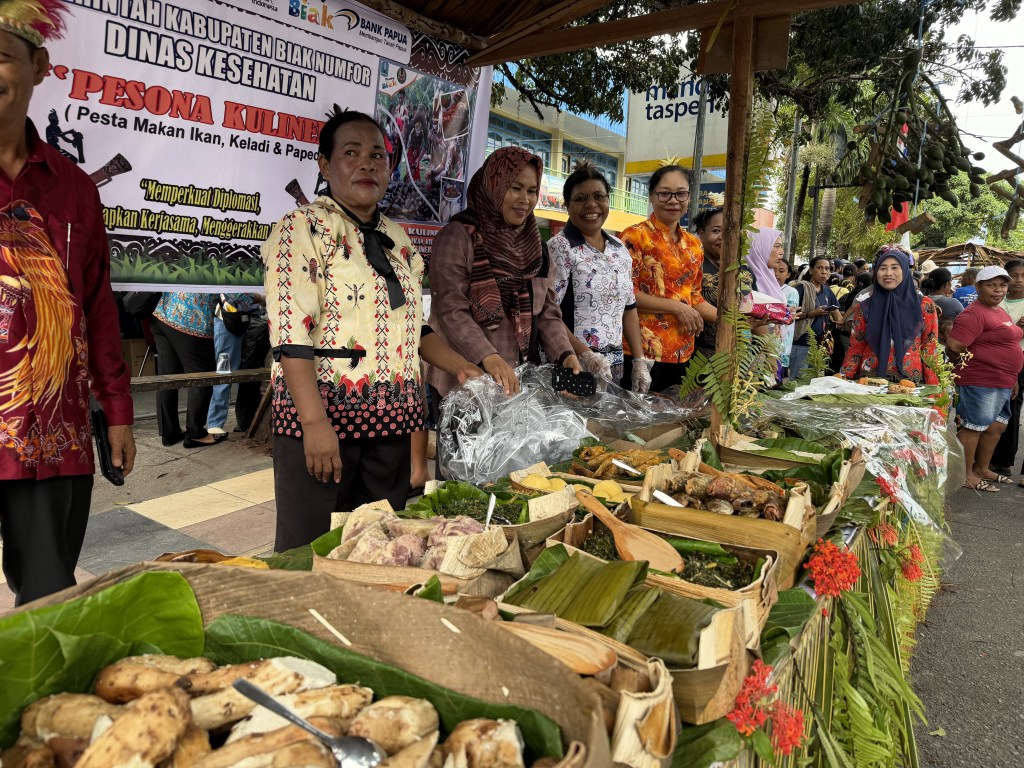
The tuna satay was especially delicious! But we were soon ushered farther down the road, stopping every few steps for yet more photos. We’d all assumed our little baskets of food were meant to be dinner, but apparently not! Up ahead in the street stretched two long tables covered in tablecloths, set for the festival’s leaders, politicians, and… us?
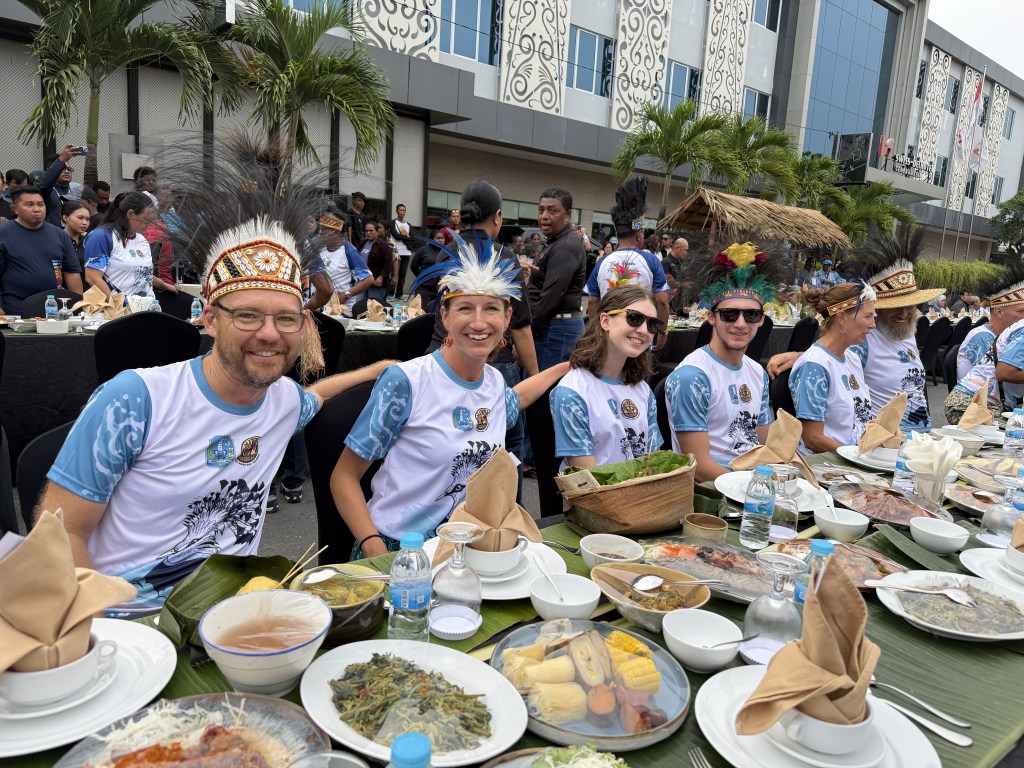
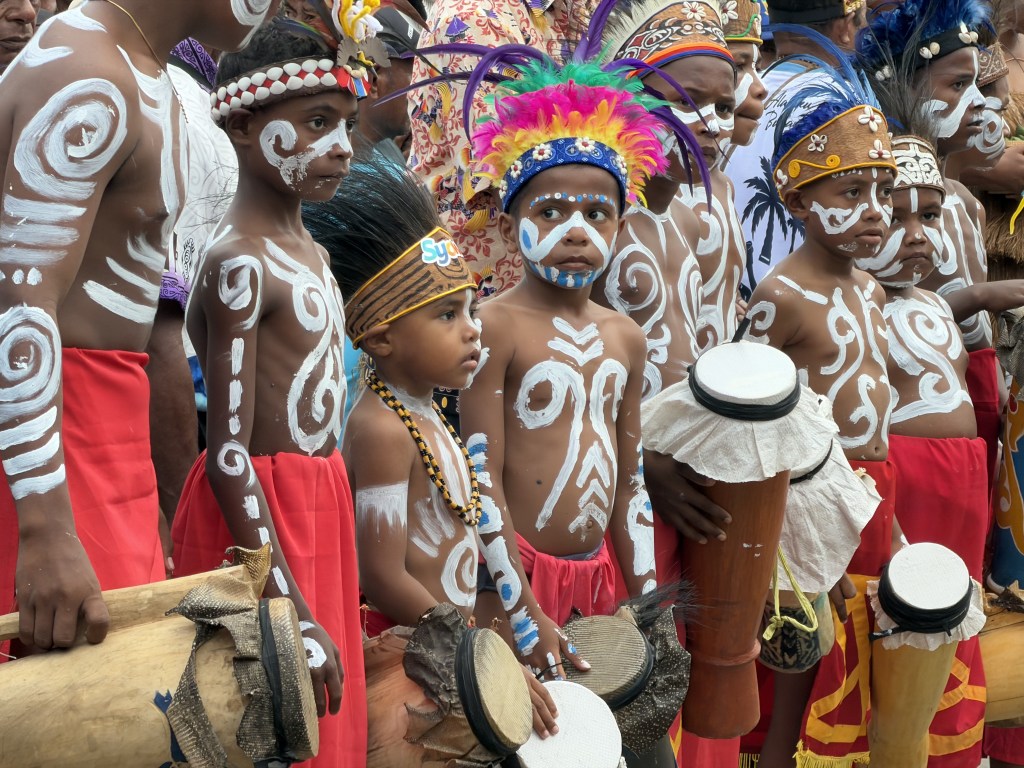
It was becoming clear that we were being treated as rather special guests. Before the feast began, we enjoyed a traditional singing and dancing performance from front-row seats.
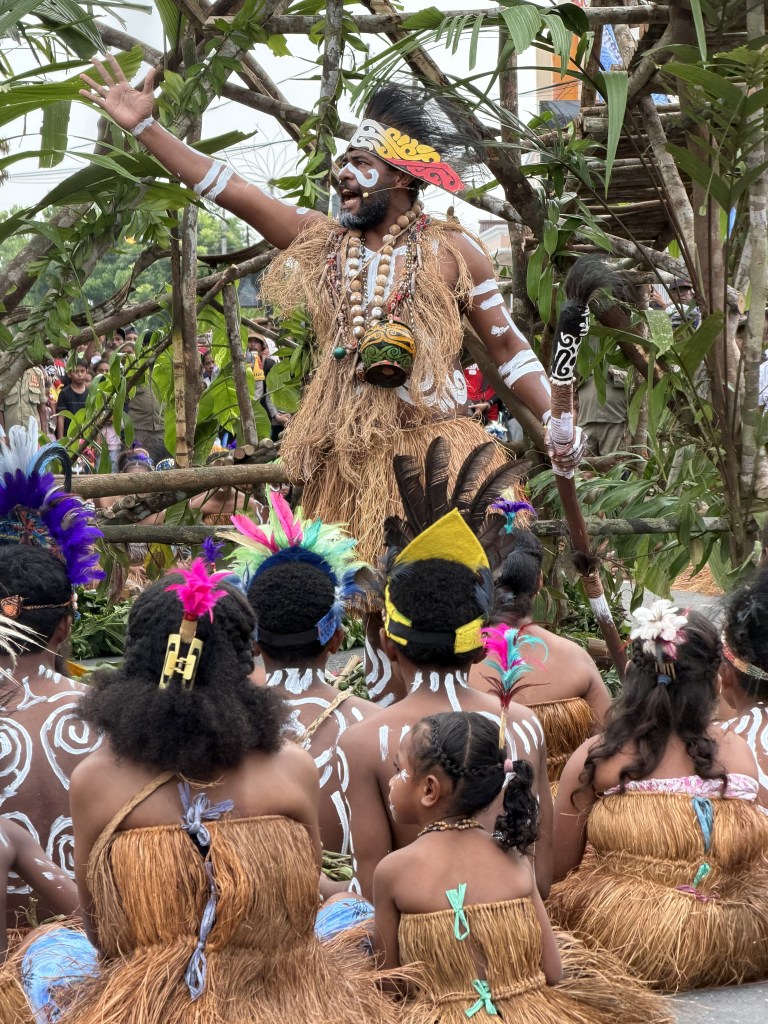
Then came dinner, a huge spread of local dishes. One news station seemed particularly amused by Chris and me attempting to eat papeda, a traditional Papuan staple made from sago starch. Translucent, incredibly sticky, stretchy, and gloopy, it’s usually eaten with fish soup. We clearly provided some entertainment, and the station even posted a video of us wrestling with it!
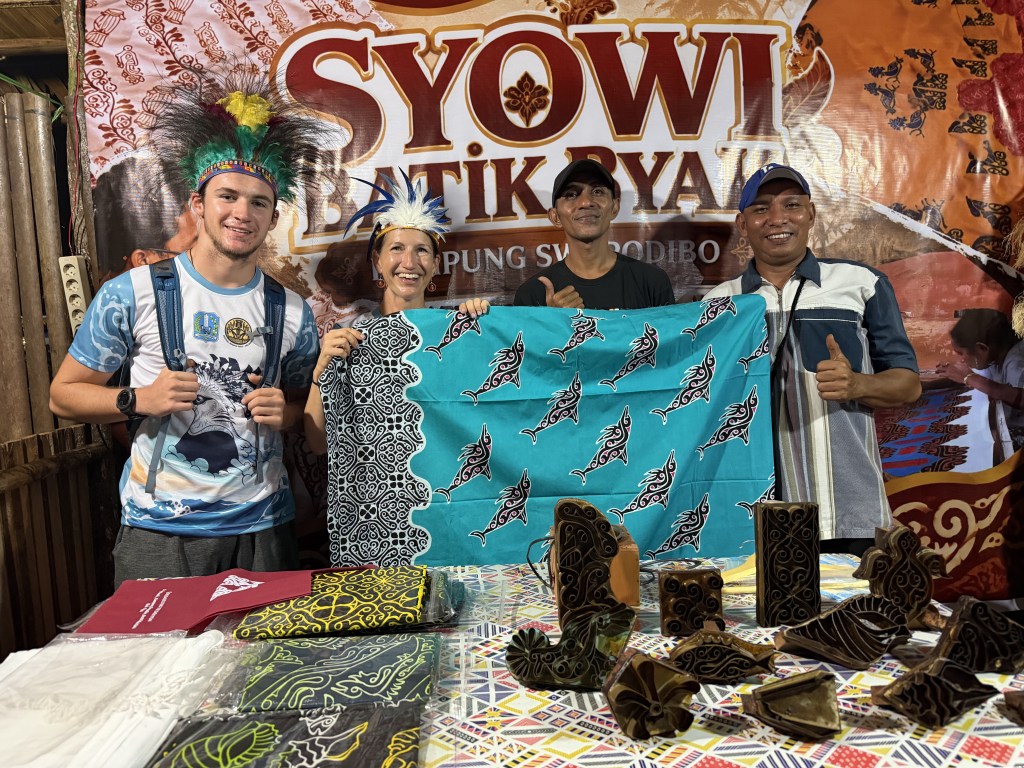
After dinner, we wandered through the festival marketplace, browsing the craft stalls. We came away with a pair of earrings and a beautiful hand-batiked cloth featuring dolphins — lovely reminders of our time here.
Not everything went perfectly smoothly, though. Calder had the unfortunate experience of a teenage boy trying on his favorite pair of fishing sunglasses and then running off with them. We didn’t have any spares on board; we’d given away so much during our time in the Solomons and Papua New Guinea, and these were Calder’s best pair. I had a photograph of the boy with Calder, so I reached out to Ahmed to see if we could simply get the glasses back. I wasn’t looking to get anyone in trouble — we just wanted the sunglasses returned. But what I thought would be a small, straightforward request somehow turned into a thing! The glasses were eventually recovered, and everyone agreed that the incident had most likely been a cultural and language misunderstanding. Theft wasn’t something people here commonly associated with their community, and with Biak working to welcome more visitors, the situation seemed to take on a life of its own. The next morning, the principal of the boy’s school, his teacher, and members of the press arrived to return the glasses to Calder.
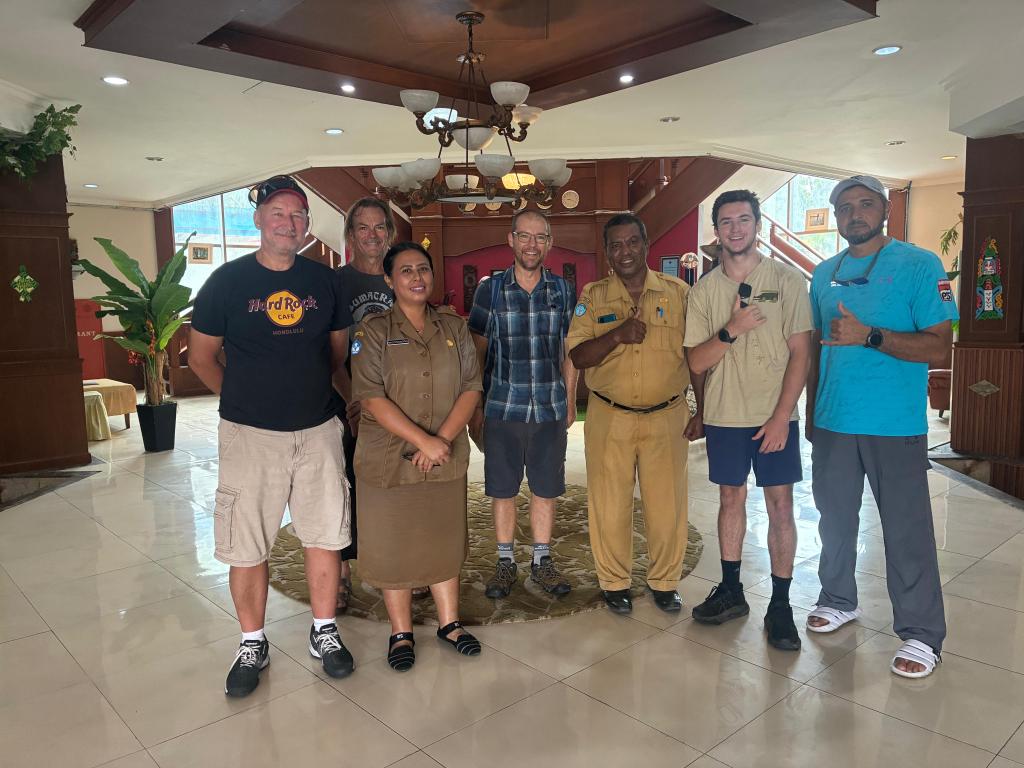
Later that day, we stopped at a fishing shop, where the owner took one look at Calder and said, “Oh, you are the sunglasses guy!” Clearly, word had spread. And just when we thought the story was over, the boy himself arrived at the resort that evening with his teacher to apologize. Naturally, there were more photos! It was quite an experience for something that began with a missing pair of sunglasses. In the end, Calder had his favorite glasses back, the boy had a chance to make things right, and we all moved on in good spirits.
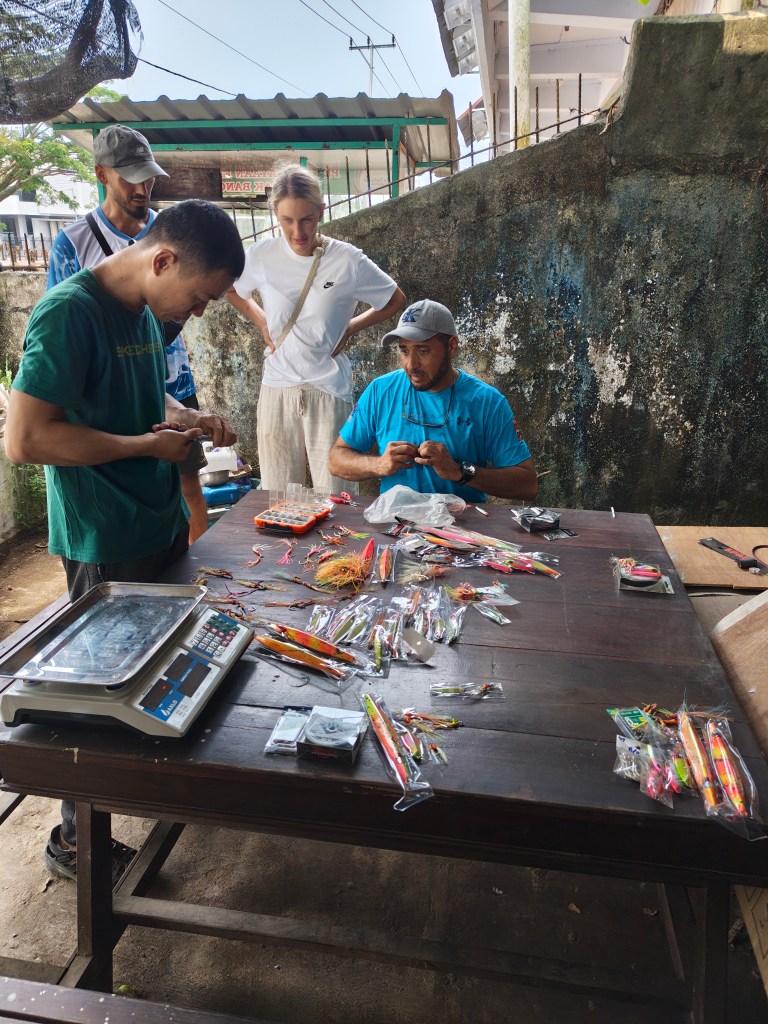
Chris and Calder had a fun morning with Ahmed, the owner of Nirmala Resort. It began with a tour of Ahmed’s “man cave,” complete with long lines of displayed fishing lures, rod collection and photos of his catches, before they headed to a local fishing supply shop. Ahmed advised them on the best lures to use and even had the jigs made up on the spot. Chris and Calder had assumed they were simply going to browse a fishing tackle store, but somehow, as so often happens here, the outing turned into something far more interesting.
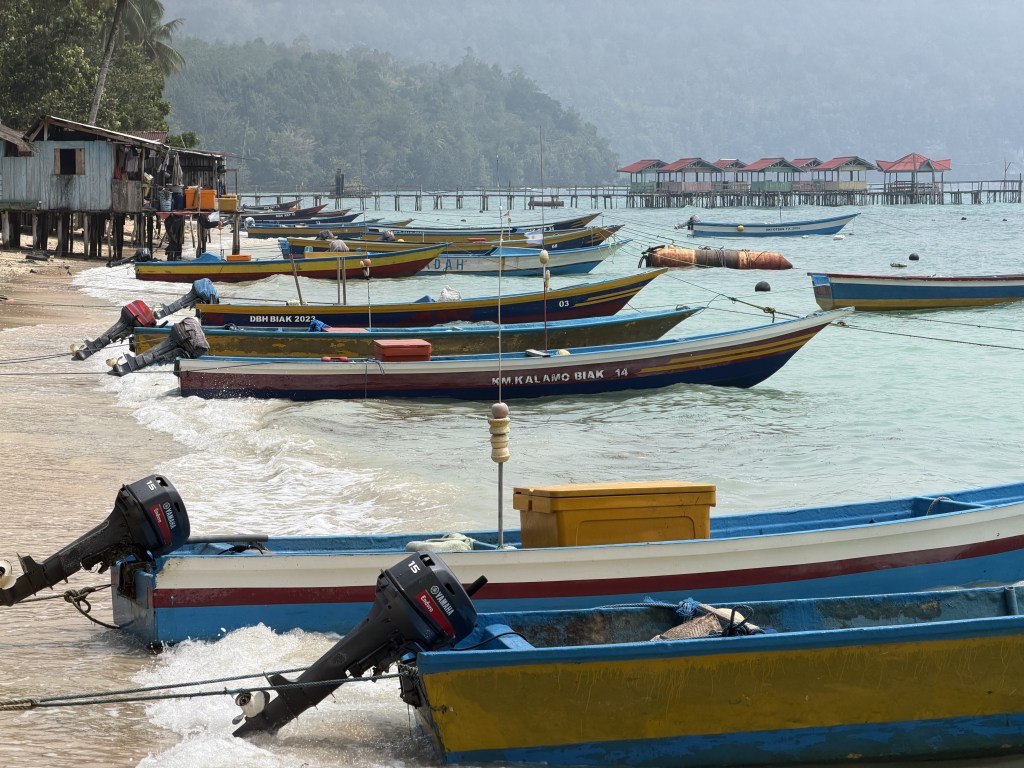
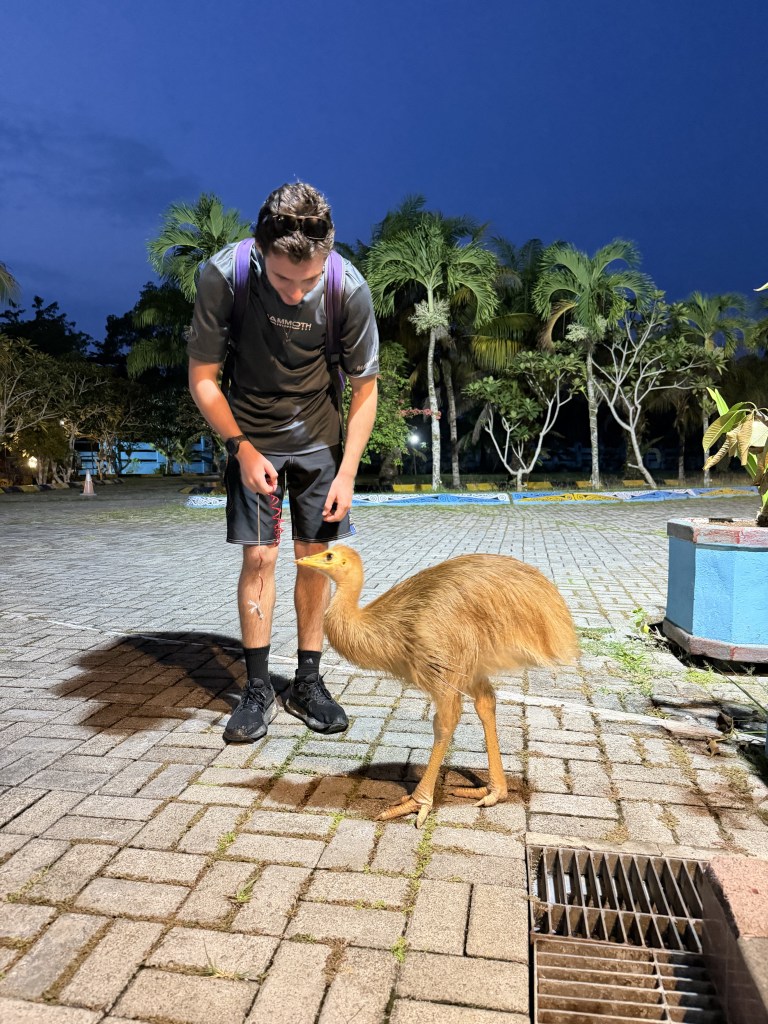
Afterward, Chris decided to take advantage of the transportation and buy some beer, only to discover that the store wasn’t selling it that day due to the festival. What happened next was a little unexpected. The store manager and a security guard were summoned, and Chris was escorted around to the back of the store. Oh, no! Was he about to be arrested for trying to buy beer? Not at all. They simply wanted to make sure he got what he needed. The beer was discreetly packaged in a box and taken back to front for a secret checkout. We also managed to coordinate the delivery of our diesel, with cans collected and transported with a 3 wheeled motorbike, and delivered later that day. Nirmala Resort has its own menagerie of wildlife, too. There’s Barry the otter, Cassie, a baby cassowary with a beak deformity that would prevent her from surviving in the wild, and a flock of turkeys wandering freely around the grounds. There’s even a full-grown cassowary, which Calder had the opportunity to feed a whole banana.
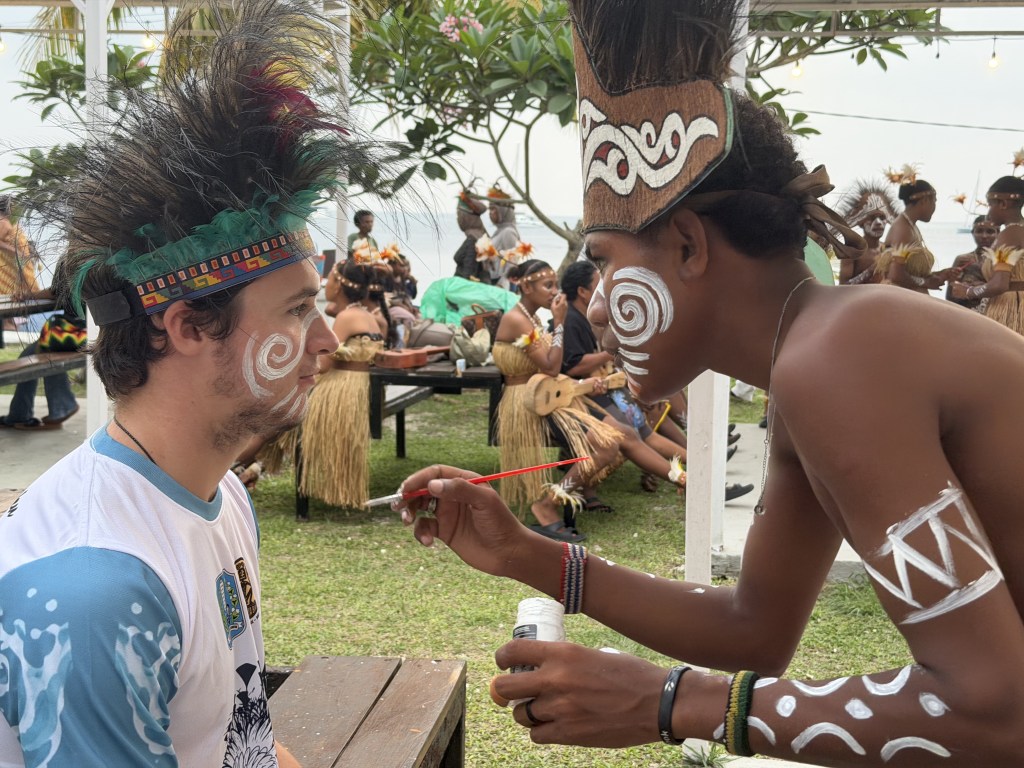
That evening, the Biak Festival continued where we ate dinner together and had traditional face painting done.
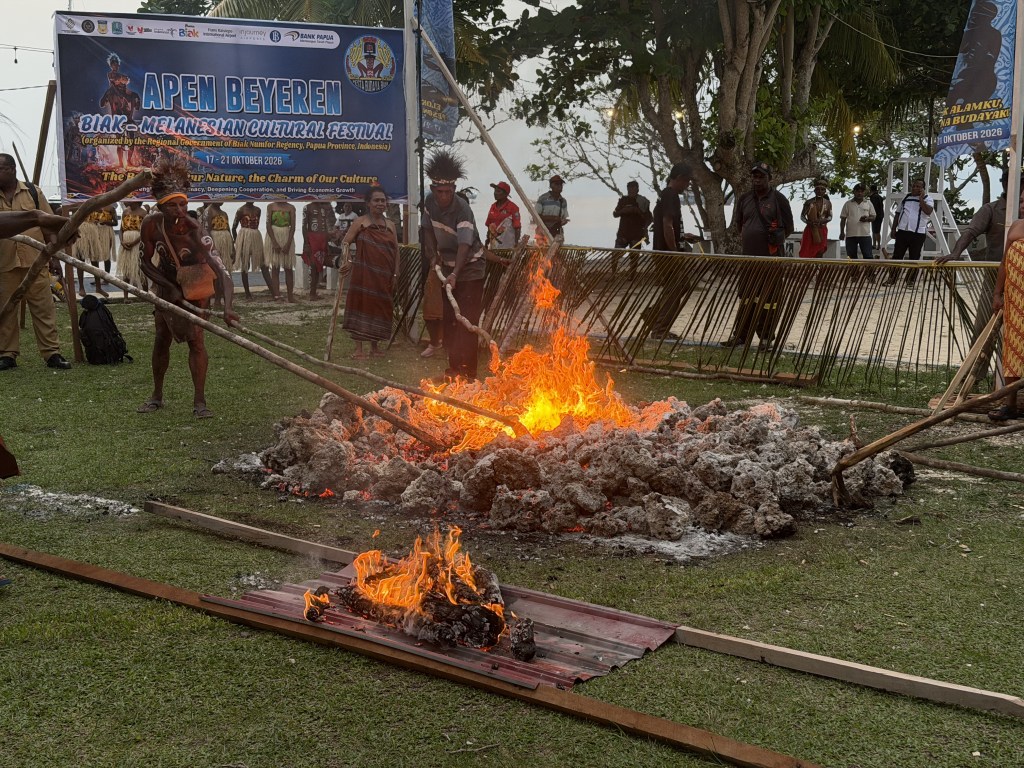
Then the highlight once dark: Apen Beyeren, a sacred traditional ceremony of the Biak people in which selected members of certain families walk and dance barefoot across stones heated until glowing red, accompanied by prayers and traditional music, as an expression of cultural heritage, spiritual strength, and respect for honored guests. The huge fire was prepared, with wood and limestone rocks; then the wood was removed and the glowing hot rocks remained.
The music began and then a person would walk up, spit out the betal nut being chewed into their hands and rub it on their feet before walking across on the hot rocks. The reddish mixture rubbed onto the feet combines betel-nut preparation with daun sindia (traditional leaves), which local practitioners say helps protect their soles from burns as they cross stones heated to approximately 360°C (680°F).
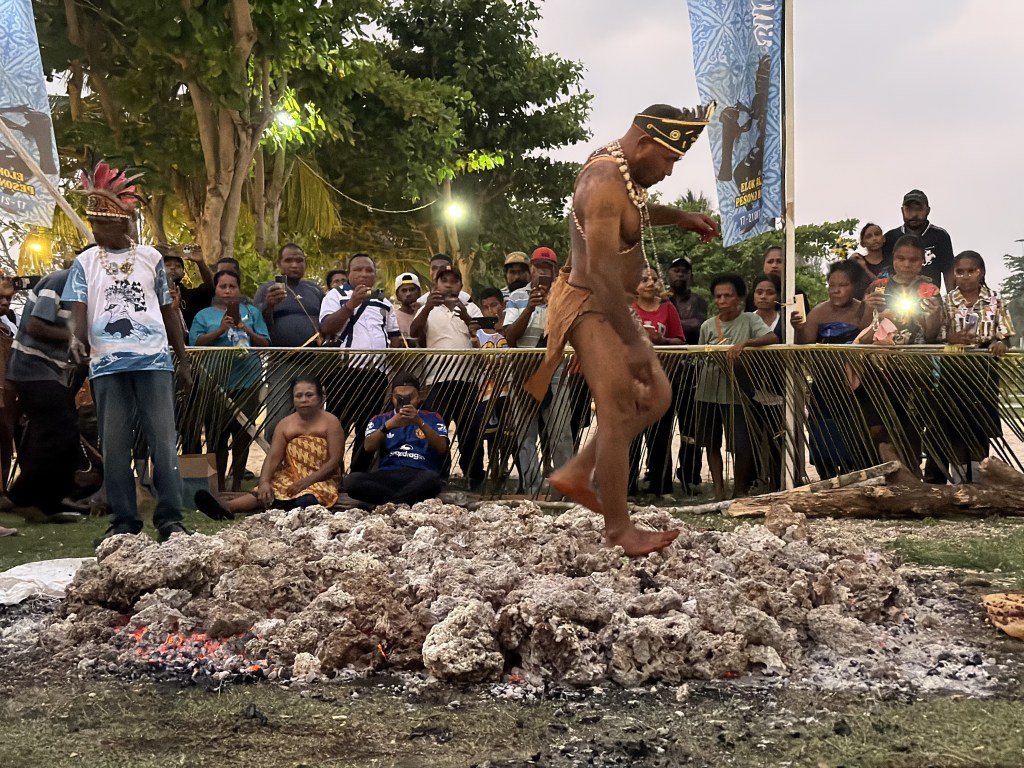
Both men and women walked across.
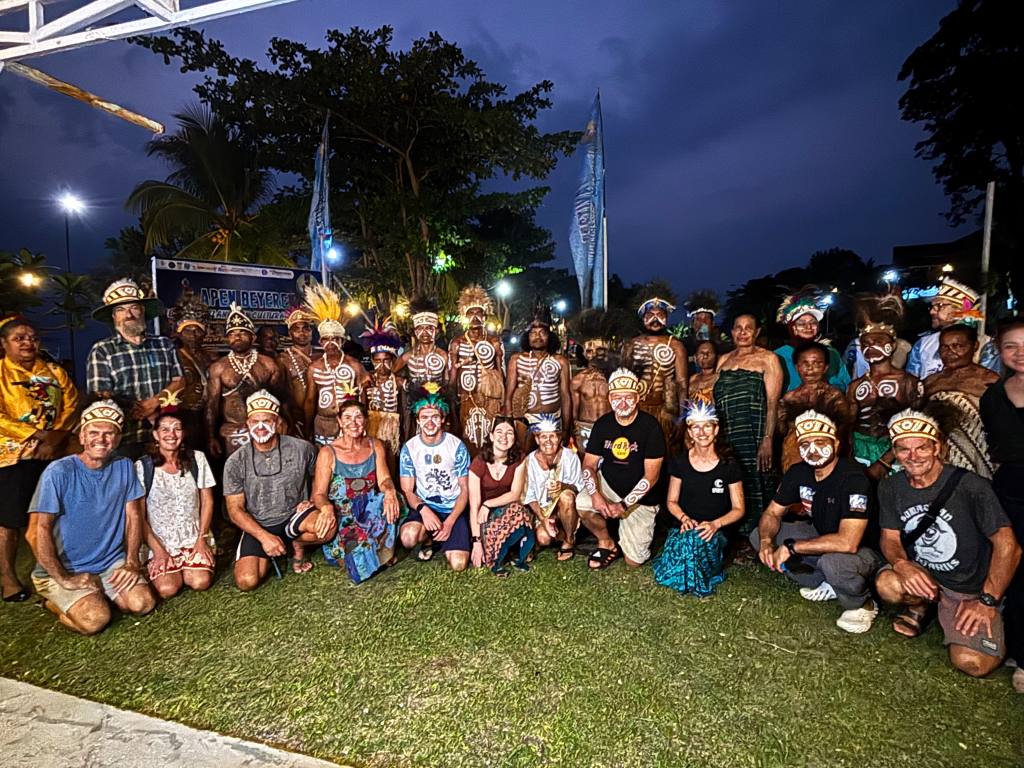
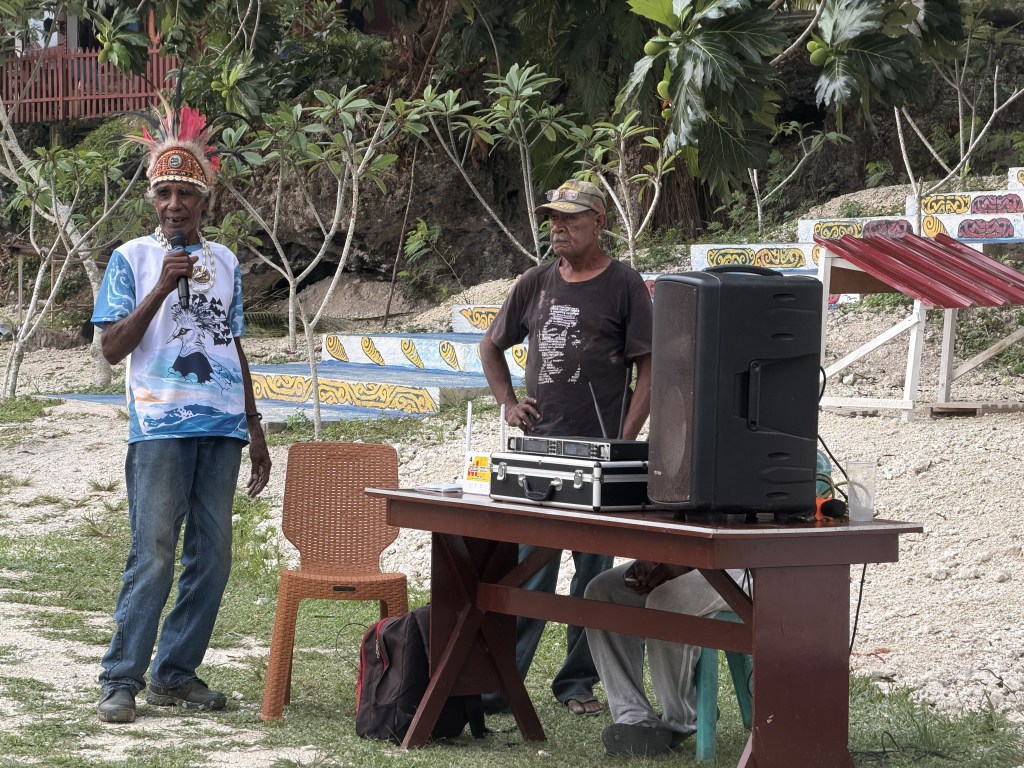
As the night continued, we found it awesome that the traditional chief of the village was singing English karaoke.
The next day, a group of seven of us set off on a day trip to explore some of Biak’s highlights. We started at the beautiful yet sobering Japanese Cave (Binsari Cave), where around 3,000 Japanese soldiers died during World War II when American forces bombed the cave and set fuel alight inside.
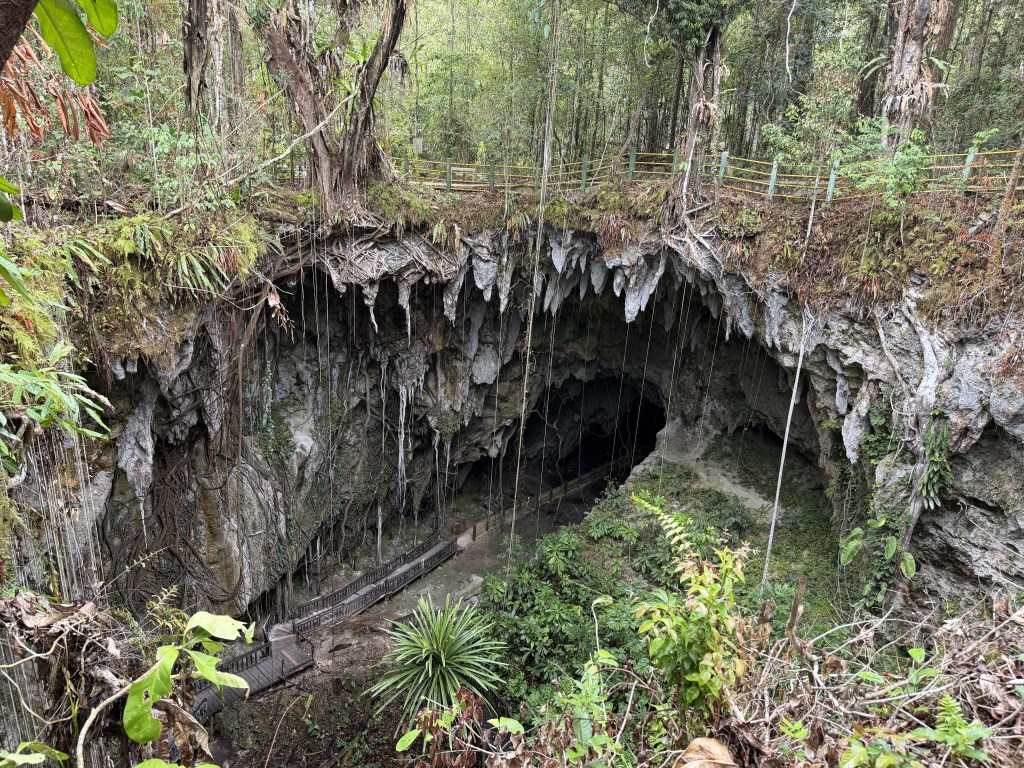
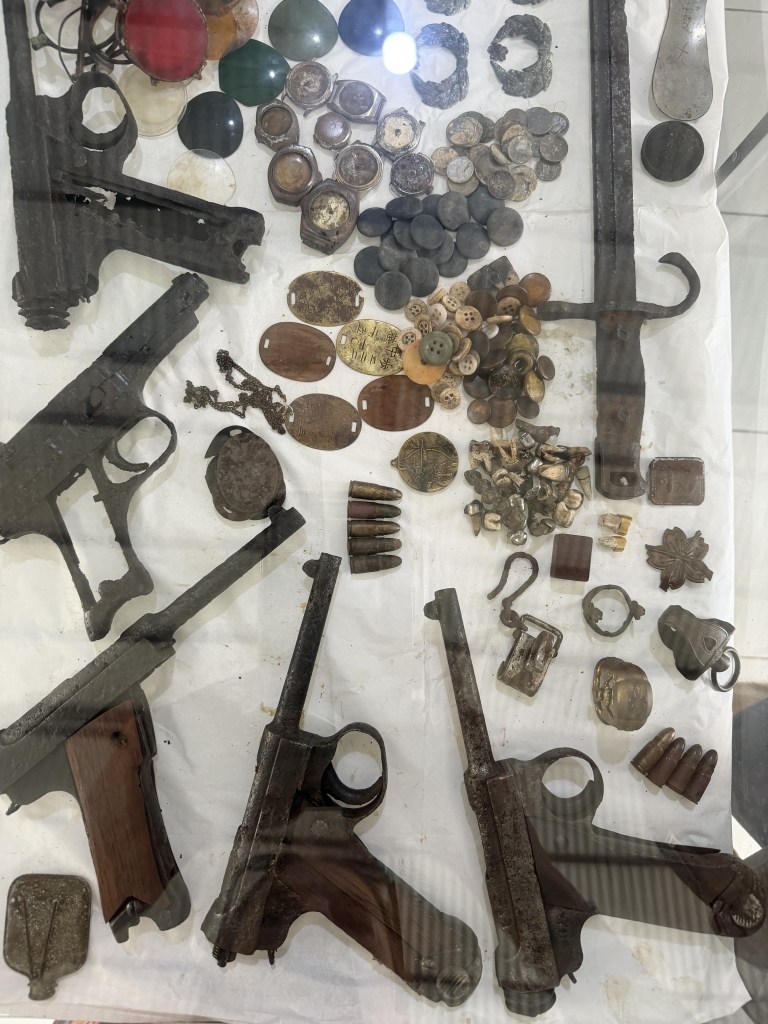
Today, it serves as a sobering memorial and an open-air museum, with artifacts ranging from teeth and spoons to ammunition, artillery, and even a Japanese kamikaze aircraft.
We descended the steep, narrow steps into the cavern, imagining the terrifying events that had unfolded here in 1944.
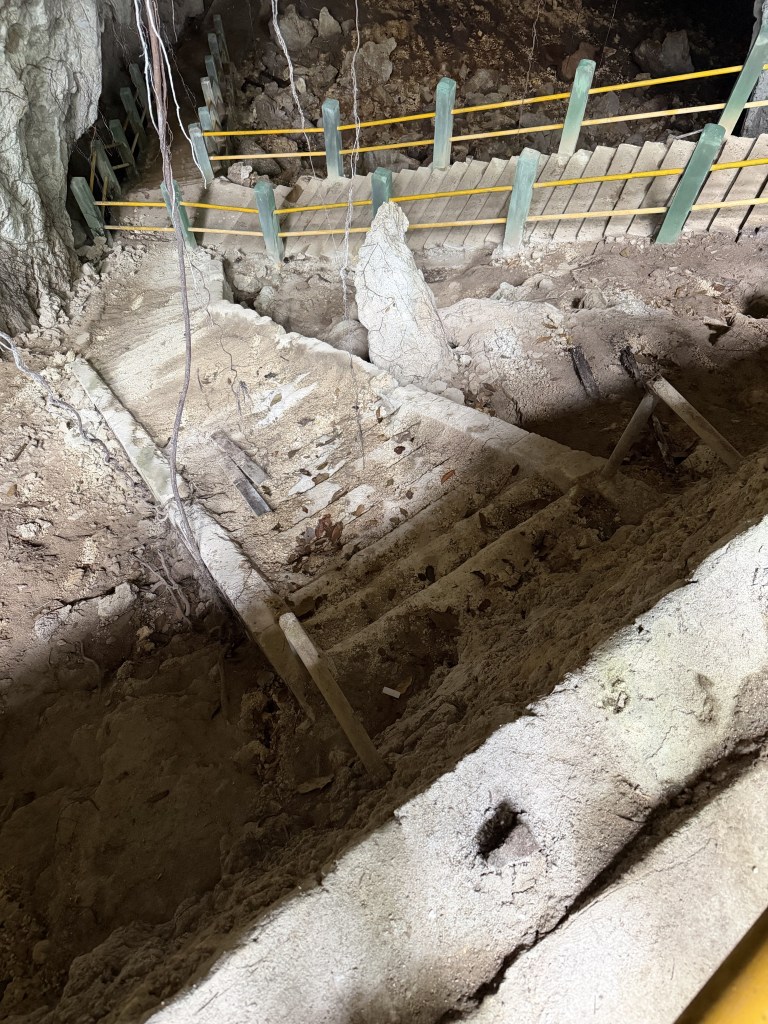
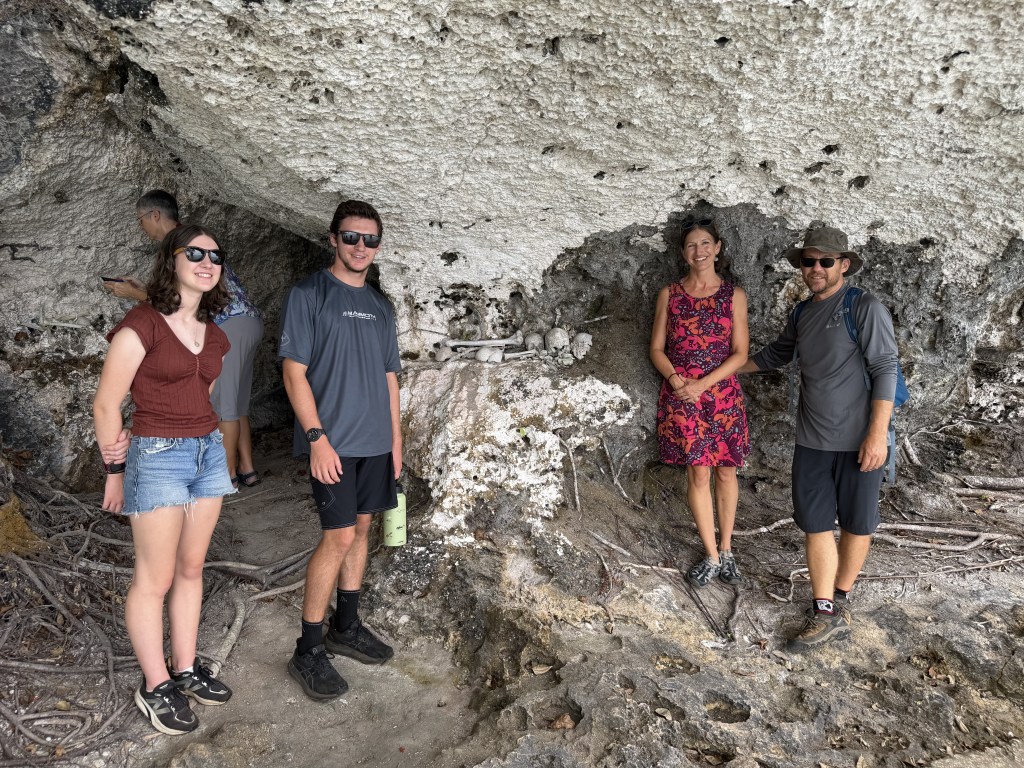
It was a moving experience to feel such compassion for those who had lost their lives — people who, at the time, had been our mortal enemies. Standing there, we also felt a deep sense of hope for the future, noting that Japan and the United States have since become such strong allies and it was a powerful reminder that even the deepest wounds of war can, with time, give way to reconciliation, peace, and even friendship. Our next stop was Padwa’s Old Cemetery, where the remains of ancestors were traditionally placed within natural crevices and caves in the coastal limestone cliffs.
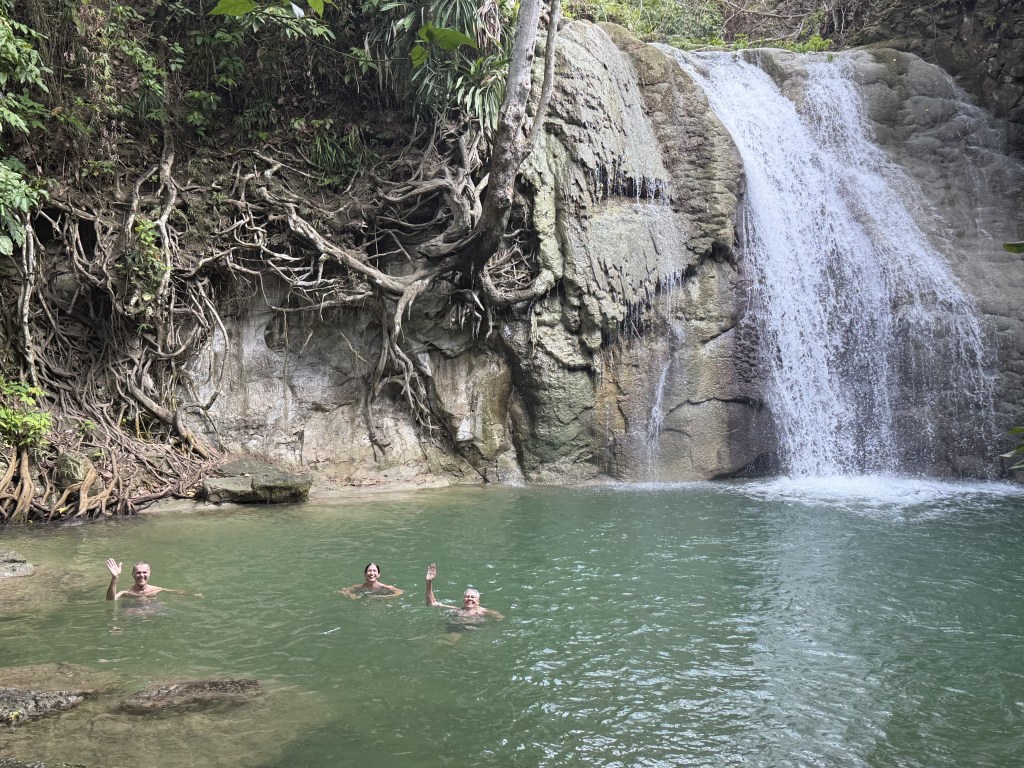
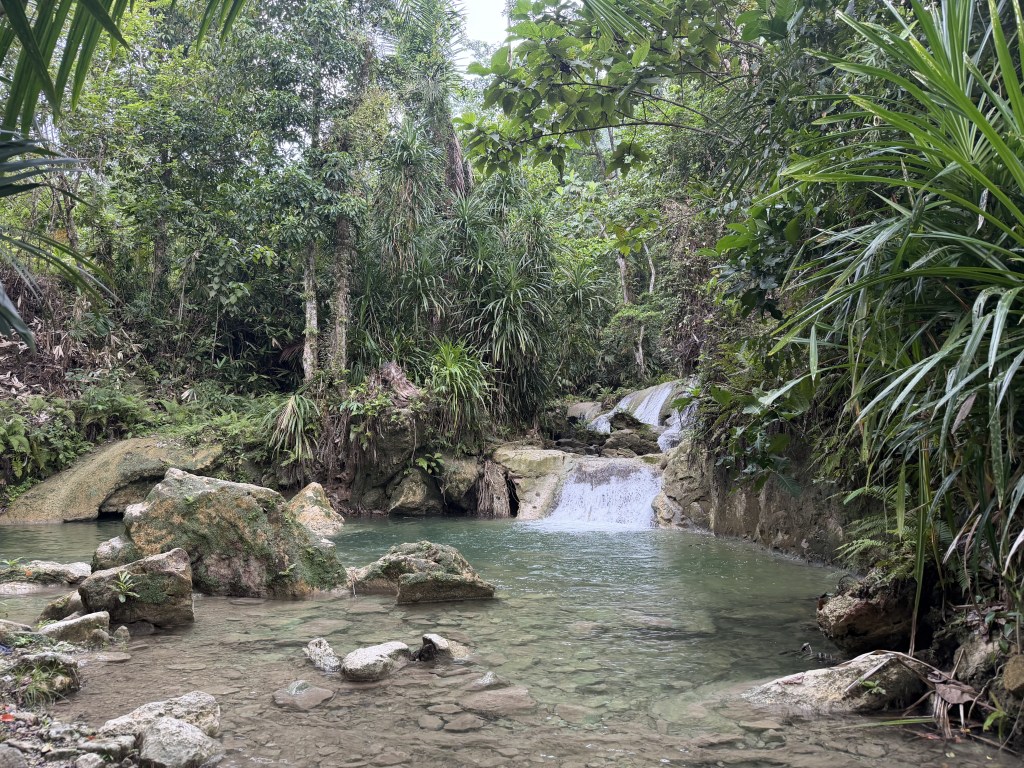
From there, we made the long drive north across the island to Wafsarak Waterfall, where we cooled off with a swim in the refreshing pool beneath the falls before hiking farther uphill to another spectacular viewpoint.
It’s been a week, and it’s time to move on. Stephen took us all over town, helping us navigate the many stops required to officially clear out of Biak: biosecurity for our Green Book, customs, and the Harbormaster. At customs, we had a hilarious conversation about the sensations of chewing betel nut — not exactly your usual customs office small talk! At the Harbormaster’s office, one woman pulled out her phone and announced, “Oh, you have a picture with my daughter!” And sure enough, there we were, right there on her phone. Our little celebrity tour continued through grocery stores, lunch spots, bakeries, and vegetable stands. Whew! The air-conditioned mall was quite the culture shock after the rural Ninigos, with its noisy video arcade, shops, and café. After months of village life, Biak felt like stepping into a completely different world.
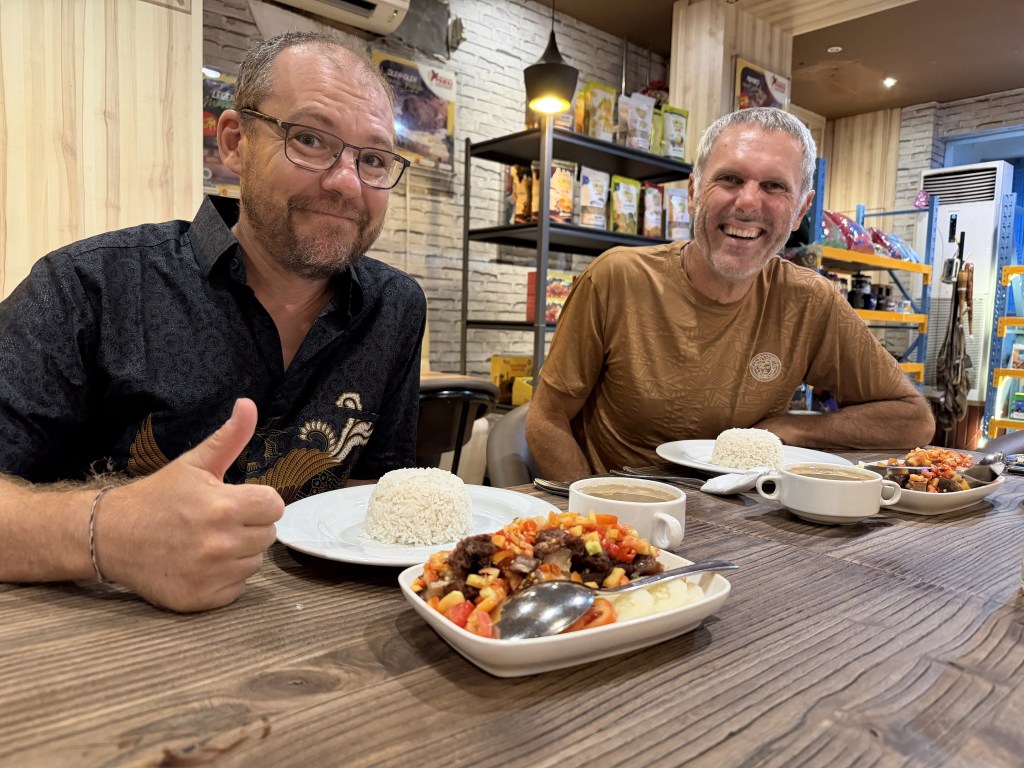
We had dinner out to say bon voyage to our friends on Seaglub; one of the sad parts of this lifestyle is the many goodbyes along the way. Let’s just say oxtail soup served with fiery dabu-dabu was painful for the two who ordered it.
The next morning, on our way, a dayhop to Supiori Island.