Day 1: On our way from Ninigos, PNG at 9:15am, about 400nm to Biak, Indonesia where we will check-in to the country. We are continuing our passage up and over Papua New Guinea and our future travels will bring new challenges, mostly forces of nature. Our goals for this current passage are to get to Biak safely, avoiding lightning and large amounts of detritus in the water (fishing nets, lines, massive logs), while sailing as much as possible in these light winds. Between the middle and end of October, the prevailing winds and currents in this area drop and do a full 180 about face. We can see it happening slowly in the weather forecast trend and the locals in Pihon also talked about the change occurring soon. Boats like us travelling west often plan around this phenomena so that we don’t wind up having to motor for hundreds of miles against the current and what little wind there is. Up goes the asymmetrical spinnaker (asym) and there it stays. The wind is SO light, down to 3 knots but mainly hovering in the 5 to 8 knot range; we really need 6 knots of wind to effectively make way, but we keep it up through the lulls and make some slow progress. We do have a bit of current with us, thankfully, and the wind is in the right direction. Dinner is lobster and fish from the Pihon islanders with pasta and frozen veg. Overnight, Calder calls down to us with some urgency – there is a green light (boat of unknown size?) way too close off our starboard side. We correct to port and investigate, concluding that it is likely squid fishermen using bright green LED lights. We are 3 miles offshore from a remote inhabited island and, supposedly, the reef of the island drops off 2 miles out and people fish there. Likely this is what it was, but it is startling to see this in the pitch darkness of night (new moon here).
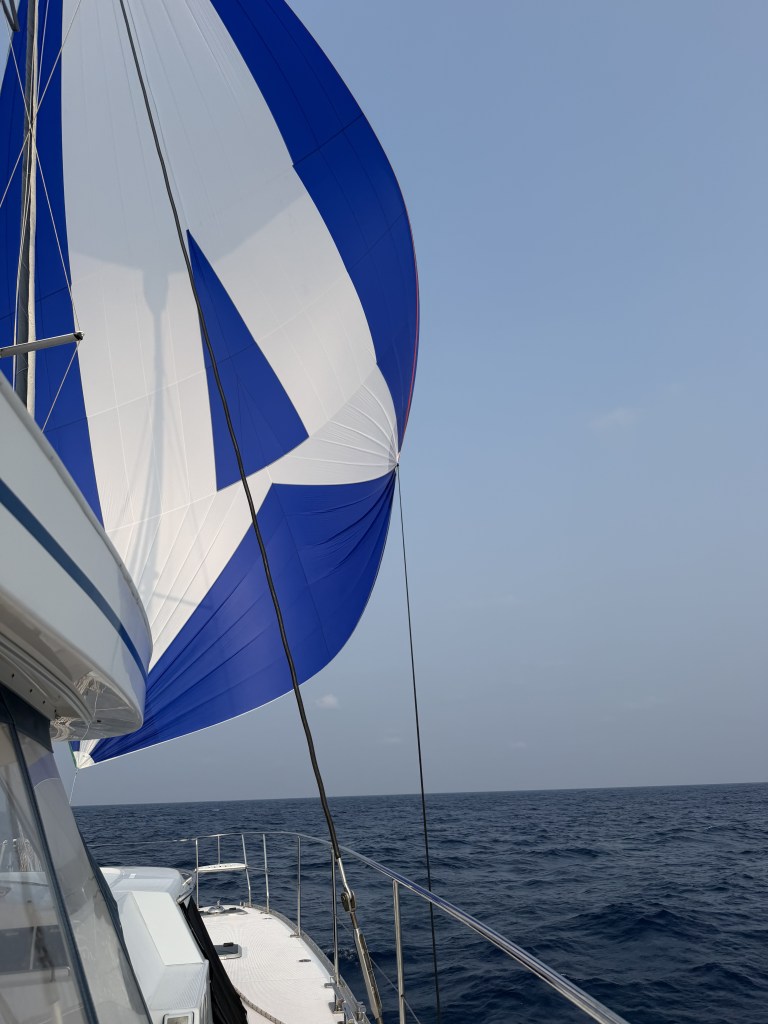
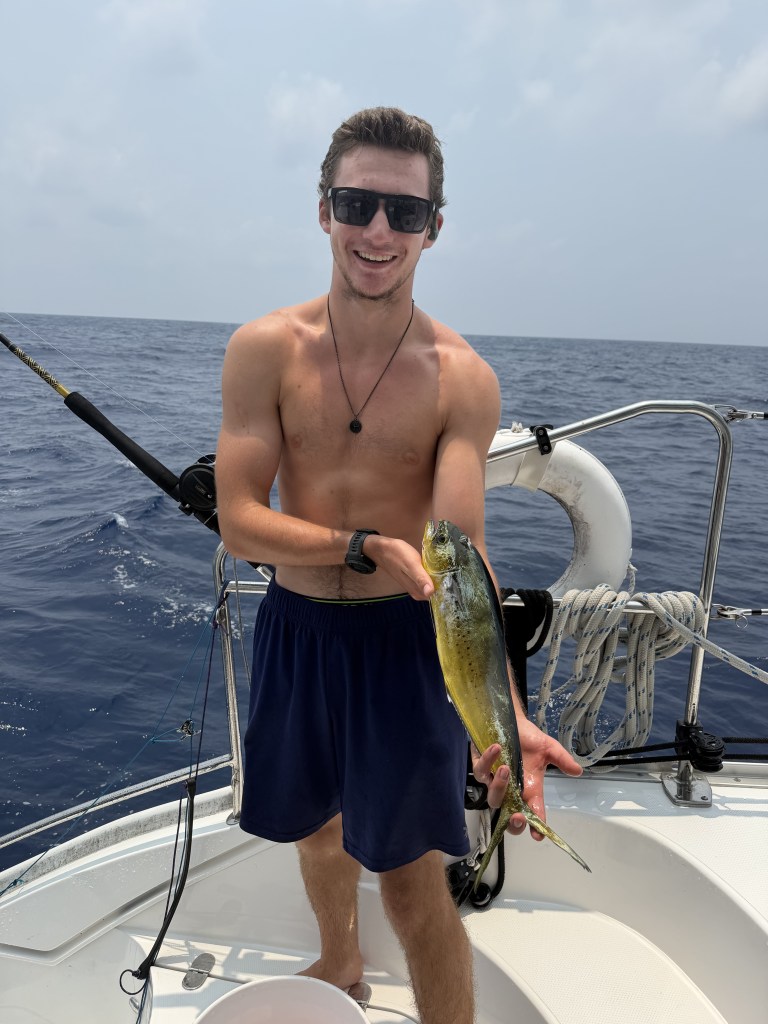
Day 2: Despite the low winds, we still had a 120-mile day! Winds are staying above 6 knots and we are having a dreamy sail under our asym with small seas behind us. We adjust our course based on trying to avoid storm cells and lightening ahead. Skies are blue with scattered clouds. A splash and a fin – likely a huge marlin. A bit later we had a little “something” on one fishing line; it was a small mahi. We definitely wanted to let him go, but the hook had punctured his gills and he bled out. So Calder thanked it, filleted it, cooked it, and ate the whole mahi for his lunch. Ocean to plate in less than an hour.
In the afternoon, we looked up to the top of our mast and noticed that the guide block that our asym’s halyard goes through no longer was attached at the top of the mast, rather hanging on the halyard itself. The concern is that this creates wear on the halyard where it exits the mast and, simply, that something ain’t right up there. We snuffed the sail and checked it out; the block and pad-eye that bolted it to the mast were free-flying, the bolt head having sheared off at the top of the mast. We are able to still fly the sail, adjusting the halyard on occasion to avoid wear in any one spot, but will need to fix it soon.
Night falls and there is an odd, deep phosphorescence behind our boat, more than our normal; it seems to be swarming in aliveness under the water. We puzzled over it, but never figured out what it was swimming with us before it moved on, perhaps a mass of squid attracted to the stern running light?
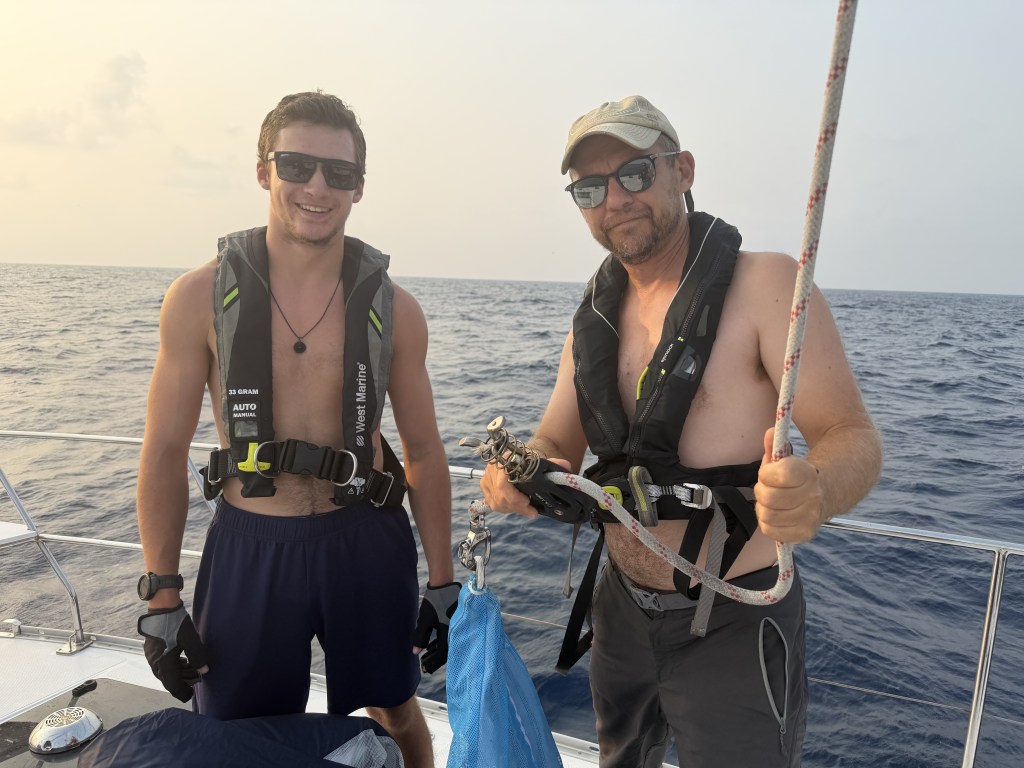
At 9pm, we crossed into Indonesian waters! During my watch, the winds shifted and made it quite challenging to maintain our course with the current sail trim. We were still running our large asym, overnight again due to light winds, but we needed to jibe. Passing off shifts to Calder at midnight, we woke everyone up, came up with a plan, and successfully jibed the large asym in the dark night. Go team Hyer. Overnight, Calder saw lightening in the distance on either side of us, but it stayed away and we maintained our course. We normally do not fly this sail at night because any big squalls can cause big issues if we get hit with it up, and it’s more challenging to take down. However, it was either use this sail, or motor, so we took the risk with added vigilance.
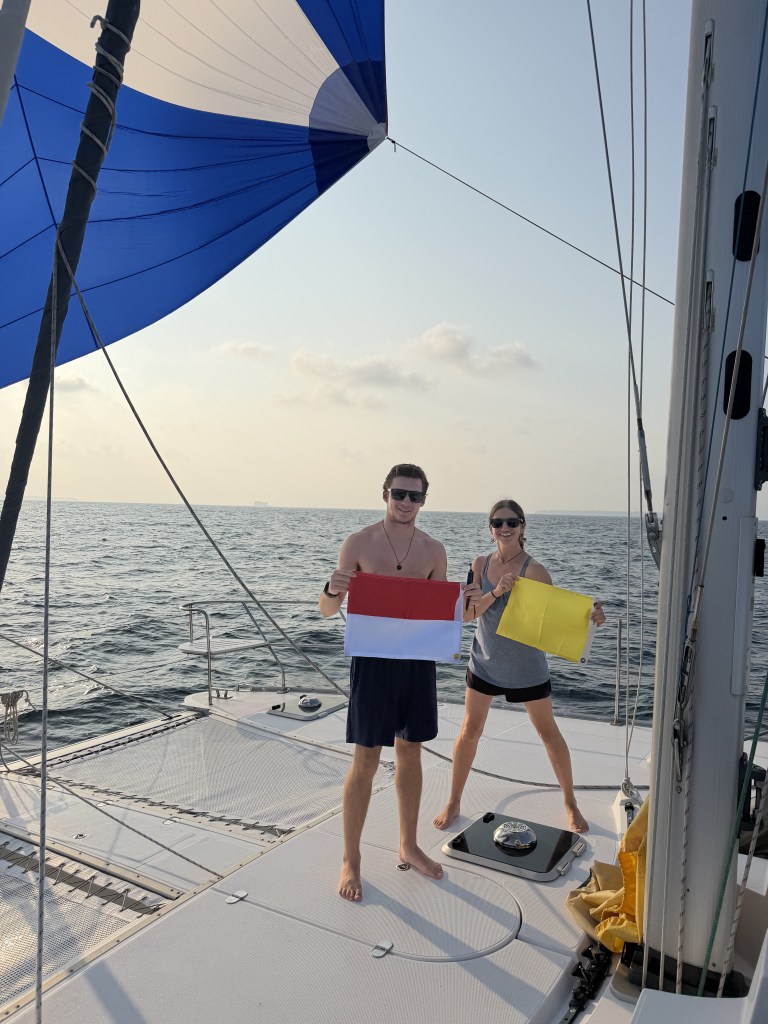
Day 3: Started out with a fishing line whirring, another small mahi that we let go back to the ocean. It could have maybe fed us a small dinner, but it was hooked loosely and we felt better letting it go back to the sea to grow a bit bigger. We ate the baby yesterday, let the teenager go this morning, and have our hopes set on catching the parents today! This morning, we did some mathing for the remaining 240 miles of this passage, trying to calculate the speed we need to go and timing to avoid the major river outflow region in the dark. It will be impossible to do this entire log infested area in daylight, but we’d like to do as much of it in the light as possible. We then plan to slow down overnight so if we do hit something, we do so slowly. A container ship passed us, appearing as a ghost painted white with all white containers; after some research we discovered it was a produce cargo ship, the containers and the ship itself painted white to reflect the sun. There’s an Indonesian fishing vessel and FAD, neither on AIS, just on our radar. Only 58 miles north of us sits the Equator. The sun is intense. We sweat just sitting still. We drink cold coconuts. We hook into a huge fish that spools the line so quickly that the reel is hot to the touch, breaks the line. We seem to be getting fish that are too little, or too big; I want the Goldilocks fish of just right! Overnight, we retire the asym after 57 hours of pulling us along, and continue this easy passage under our Code Zero, slowing down a bit to arrive off the river mouth with its detritus in the light.
Day 4: Timed it well and we are about 40 miles offshore and able to watch for logs and fishing debris in the water. Unfortunately we can’t make it into Biak, Indonesia in the light today; we had originally planned on getting in tomorrow but we have made excellent time sailing! What to do tonight with the reports of logs in the water? We had discussed slowing down overnight tonight with taking turns, watching in pairs for water debris using a torch. Or should we enter Biak in the dark? Maybe there was another option? I reached out and asked permission to anchor in the islands outside of Biak for the night, going in the final 40 some miles tomorrow – and they said yes! Excellent, now we need to pick up the pace to get to the anchorage before sunset; up goes the asymmetric spinnaker again! We pinch the wind angle to pick up speed, now racing the sun. We see a few large FADs, a fishing panga, and no logs. The winds are diminishing, the sun is lowering…we make it in just in time and set anchor inside a sandy niche in the coral. We have gone 487.3 miles (81 hours with average speed of 6) and sailed the entire way.
Day 5: We enjoyed our evening at anchor, took showers, sat outside under the stars, watching the lightening all around (but not overhead thankfully!), and rested well. In the morning, before everyone else is up, I go to enjoy my coffee in the cockpit and stop dead in my tracks…the cockpit is full of insects. Full, full.
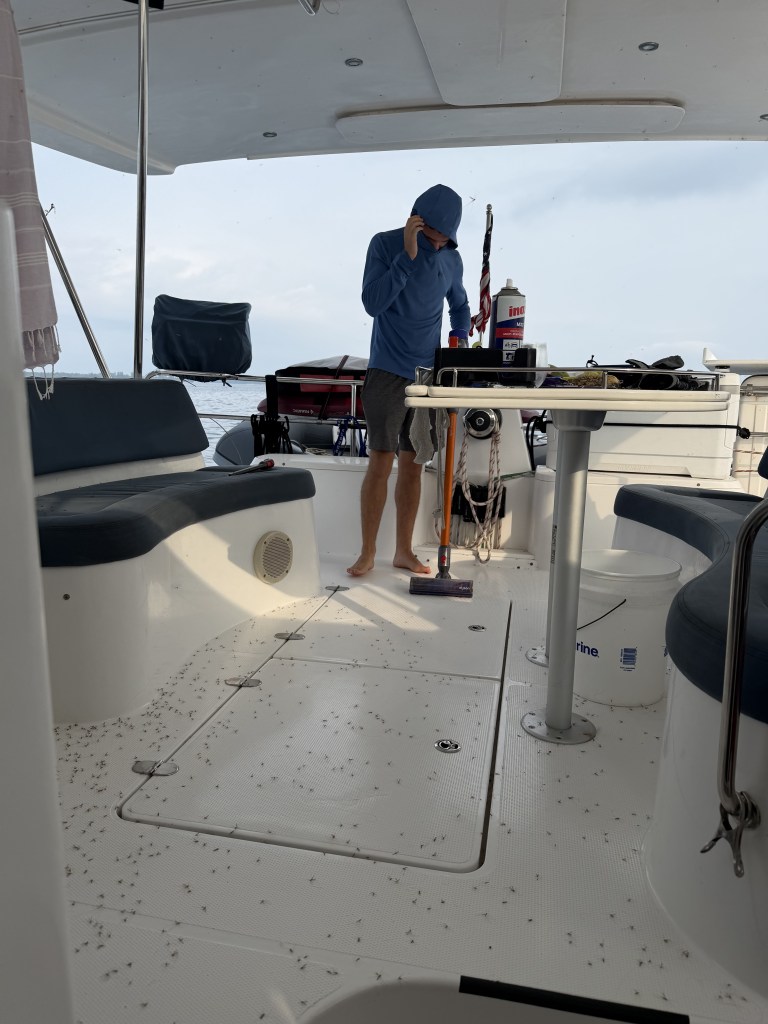
There are thousands of them, the floor is littered with dead and dying ones, the cockpit is covered with masses of writhing bugs. Thousands and thousands. I look at them closely, look it up – they are non-biting midges and have just had a major hatching, mating in swarms, then falling to the ground dead. Good news is they have no disease potential; once they sprout wings, they can no longer use their mouths for eating or biting, and have a short life span. Our buddy boat in the anchorage with us also has this situation. We bring out the vacuum cleaners, fly swatters, water and get to work (“We” being Chris and Calder. My excuse is that I’m making bread and yogurt. Cora’s excuse being “no way.”). Midge population controlled by 50%, good enough to get underway. Anchor up and ready for the last 45 miles or so to Biak, Indonesia; the stretch that has the most reported logs. For better or worse, the winds have died – calm seas make spotting logs easier, though we have to motor. Out the pass, there are lines of plastic wrapping in the tide line, counting about 70 pieces larger than a coconut in a few minutes. Chris at the helm asks for some fresh coffee, as his current cup is loaded with midges. The sea continues to calm even more until it is glassy flat with 0 wind.
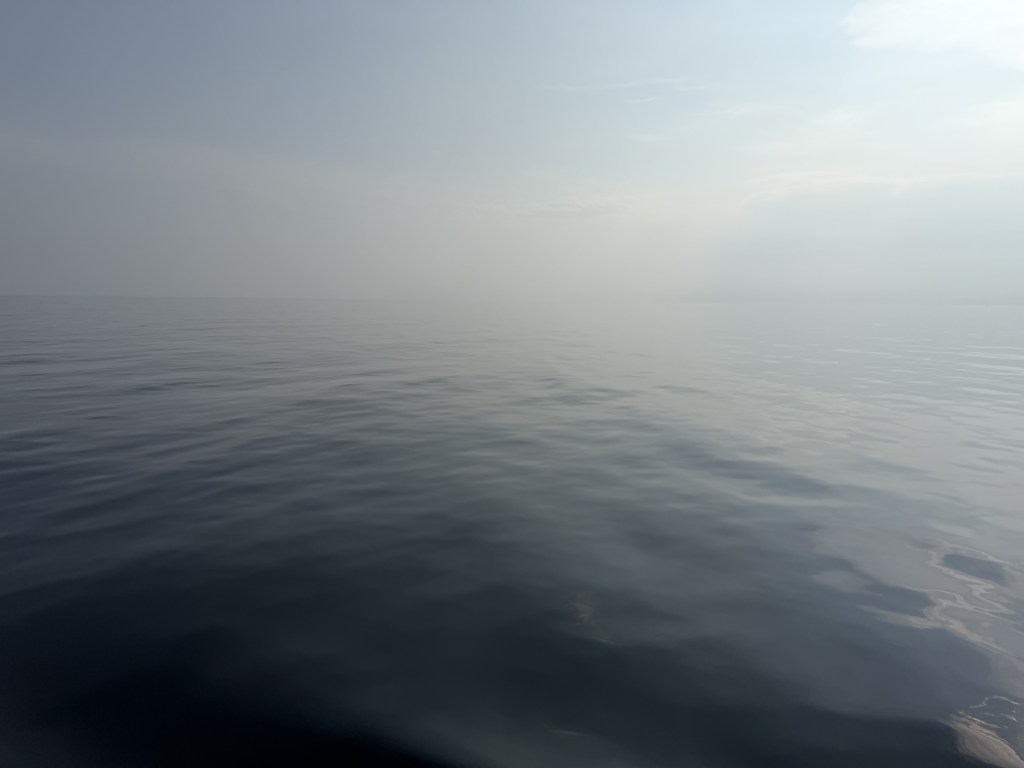
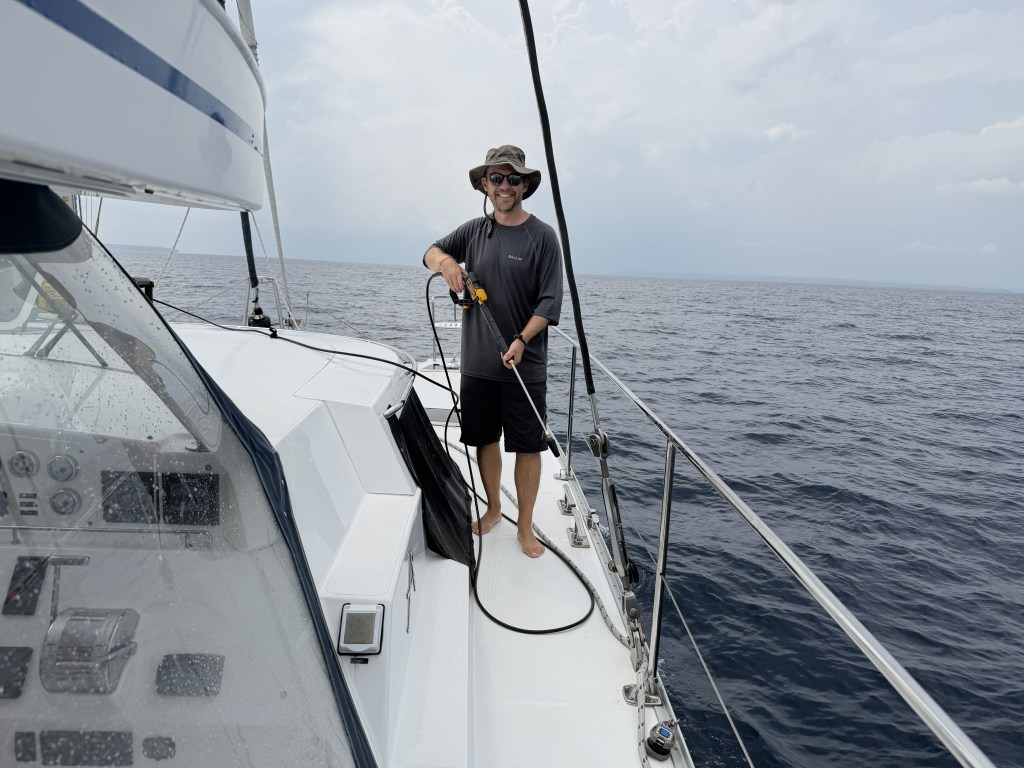
As we are motoring, we decide to put that solar and diesel energy to good use and make lots of water. Chris even washes the salt and midges off the boat.
As we get closer to Biak, there is more local boat traffic, fishing canoes and pangas, as well as plastic bags and other packaging in the water. On shore, ornate golden detailed mosques are visible.
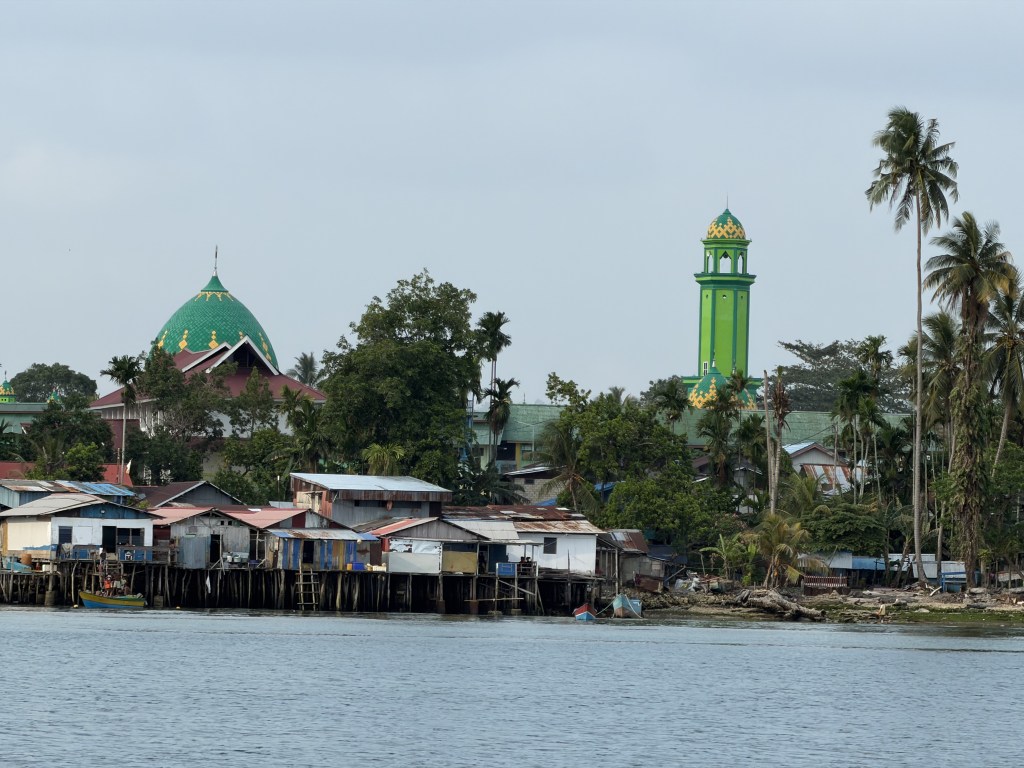
We see our friend boats in the distance, anchored off Nirmala Dive Resort Biak & Yacht Club and are guided in to where we should anchor. TOTAL MILES PNG to INDONESIA: 531.2 miles, most of it sailed under asym downwind with mellow seas, no logs hit, no squalls, no lightening, and great sleep. This was a fantastic passage!
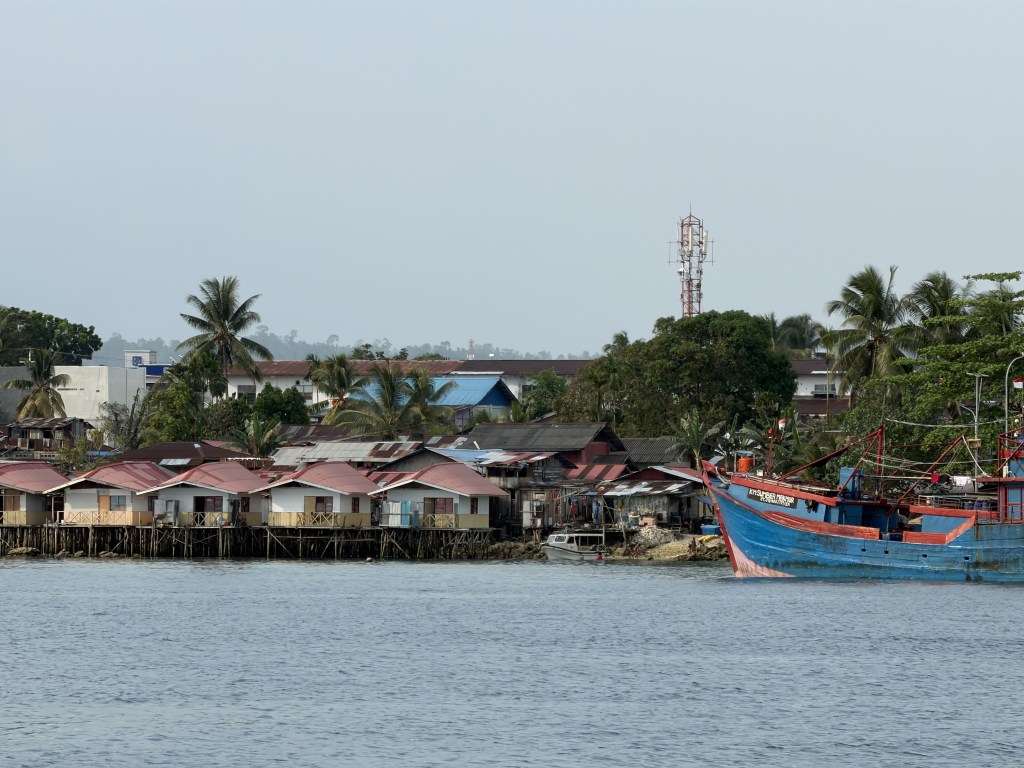
Indonesia is a country of 38 provinces, stretching roughly 3,200 miles from east to west, with incredible diversity in cultures, languages, landscapes, and wildlife. Indonesia is the largest archipelago nation in the world and the fourth most populous country, after India, China, and the United States. There are about 288 million people in Indonesia, the majority Muslim, though the region of Papua, where we begin our Indonesian adventure, is predominantly Christian. Biak Island, where we were anchored, is part of Papua Province. The wider Biak Numfor Regency has around 150,000 people, while the town of Biak itself, the regency’s capital, has a population of approximately 44,000.
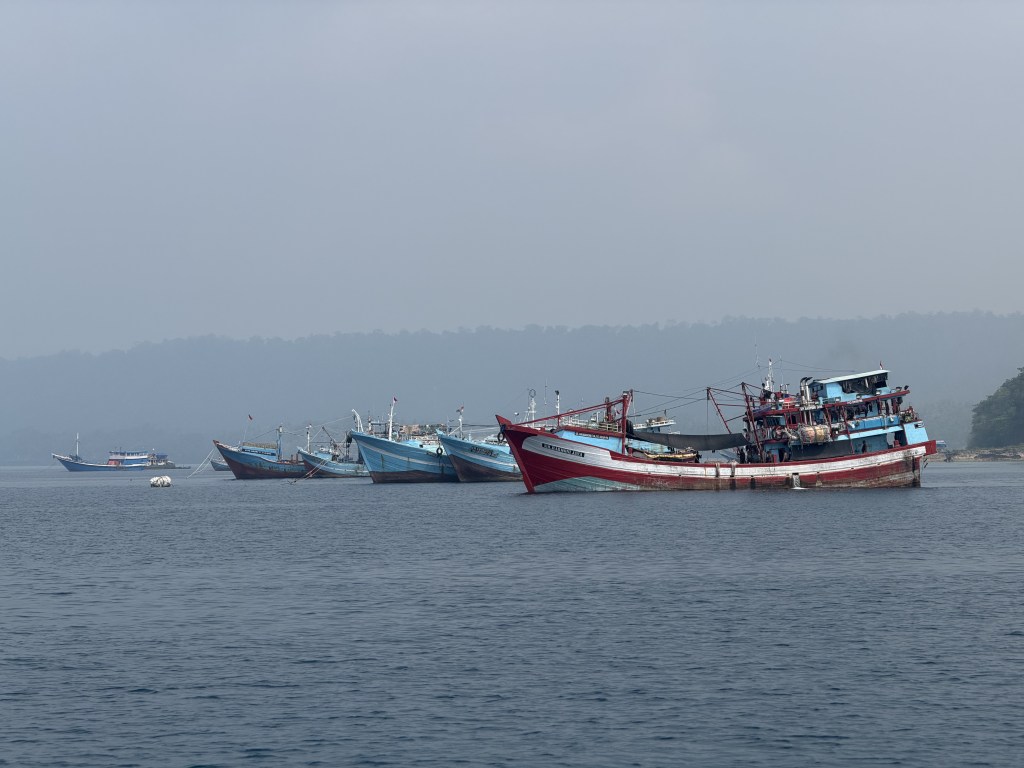
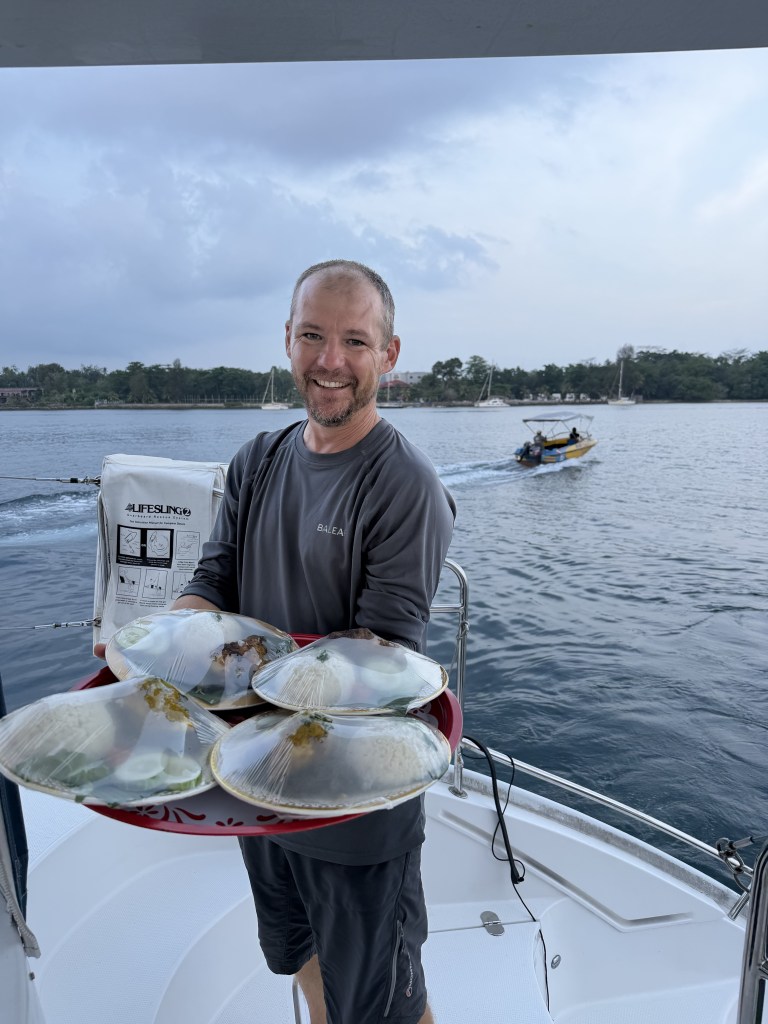
Where is check-in absolutely fun?! Indonesia! With the help of Ahmed and Yulia, the agents we had hired to help us through the complicated Visa process of Indonesia (owners of the resort we anchored off of), the process was a breeze. Our first night at anchor, when we couldn’t leave the boat, they brought us out dinner, served on a platter with ceramic dishes. Sitting on our deck eating dinner, looking out at the local fishing fleet of questionable design and condition, we were elated to have arrived in Indonesia. That night, at dark, we heard the Muslim call to prayer across the water.
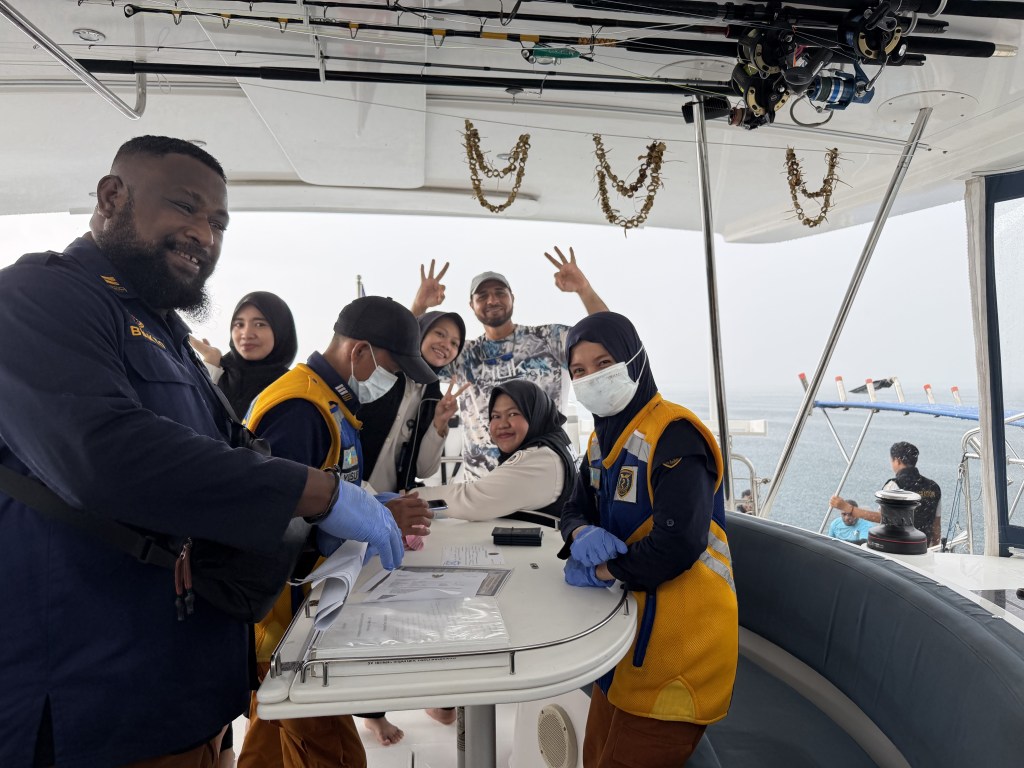
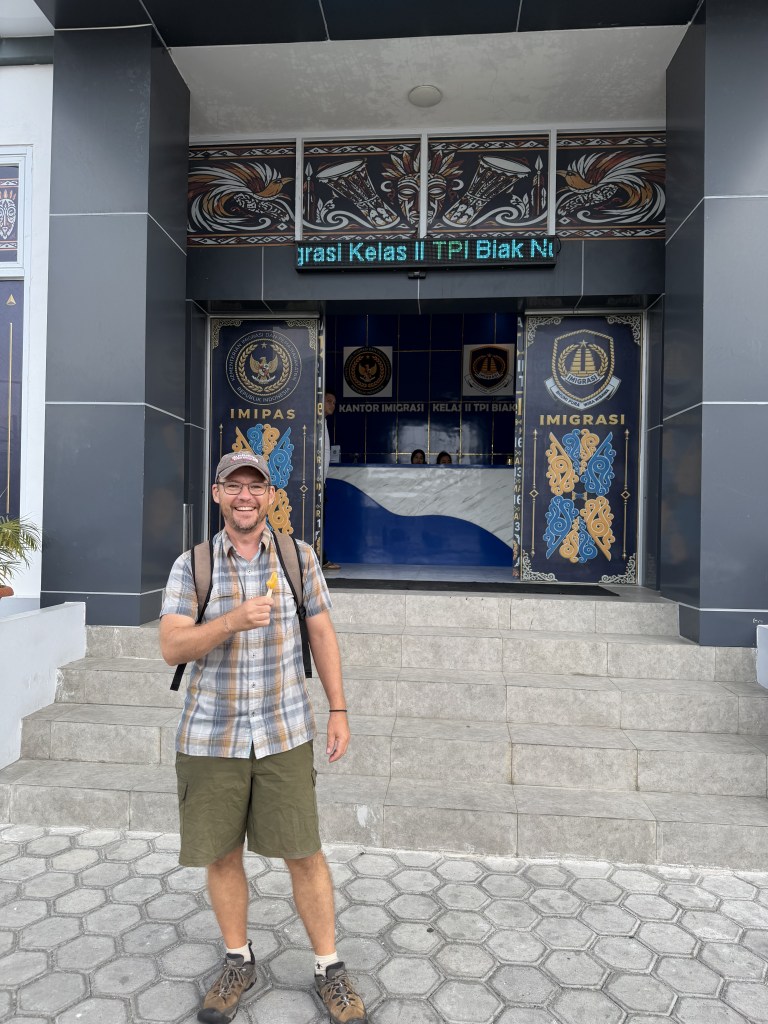
The next day, a boatload (11 people) tied up to Terikah in the pouring rain, a gift due to the draught. First Biosecurity climbed on board, filling out paperwork, checking out my stores of medications (which they were surprised by the quantity), as well as fresh food (which they were surprised by the lack there-of). Declared free of disease and pestilence, our yellow q-flag comes down. Next, Immigration on board, more paperwork, along with lots of smiles, laughter, and selfies.
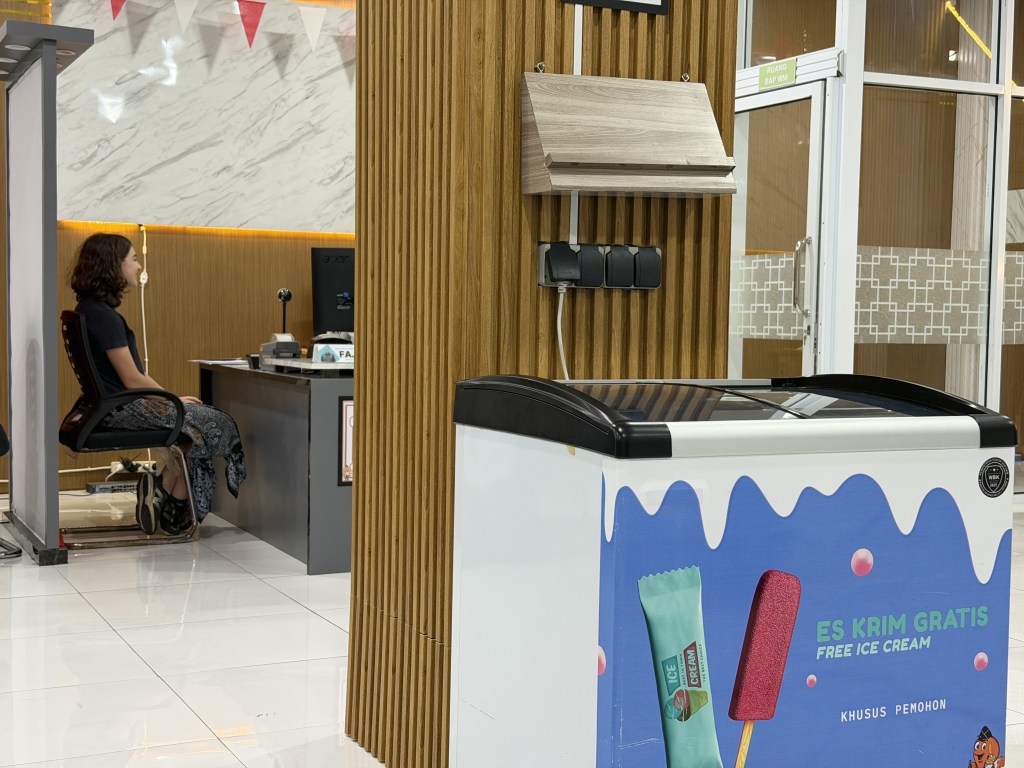
We laughed as the locals panga drivers were “so cold” in the rain that they jumped in the ocean to warm up. For us, this humid 85-degree weather that feels like 90-100 is brutal. Over to shore, where we were shuttled to Immigration, another joyful office of greetings that provided free ice cream.
Finally, we were off to the grocery store, where we pulled out a couple of million Indonesian rupiah. It’s bizarre to talk in terms of millions, but one million rupiah is about $55 USD. The grocery store had great produce, but the middle aisles were full of small packages in plastic wrappers and plastic bottles, corresponding to what we were seeing on the sides of the road and in the ocean. That evening the resort cooked us a meal of local fish, coconut crab, and octopus; a full plate for about $2.70 USD per person. Many times it’s cheaper to eat out here than buy the food and make it ourselves. Tired and checked in to the country, we checked out for the night, ready for what looked to be an amazing week in Biak, as we timed our arrival with the Biak Festival.


One response to “Passage from Papua New Guinea to Indonesia”
I so enjoy being along
LikeLike