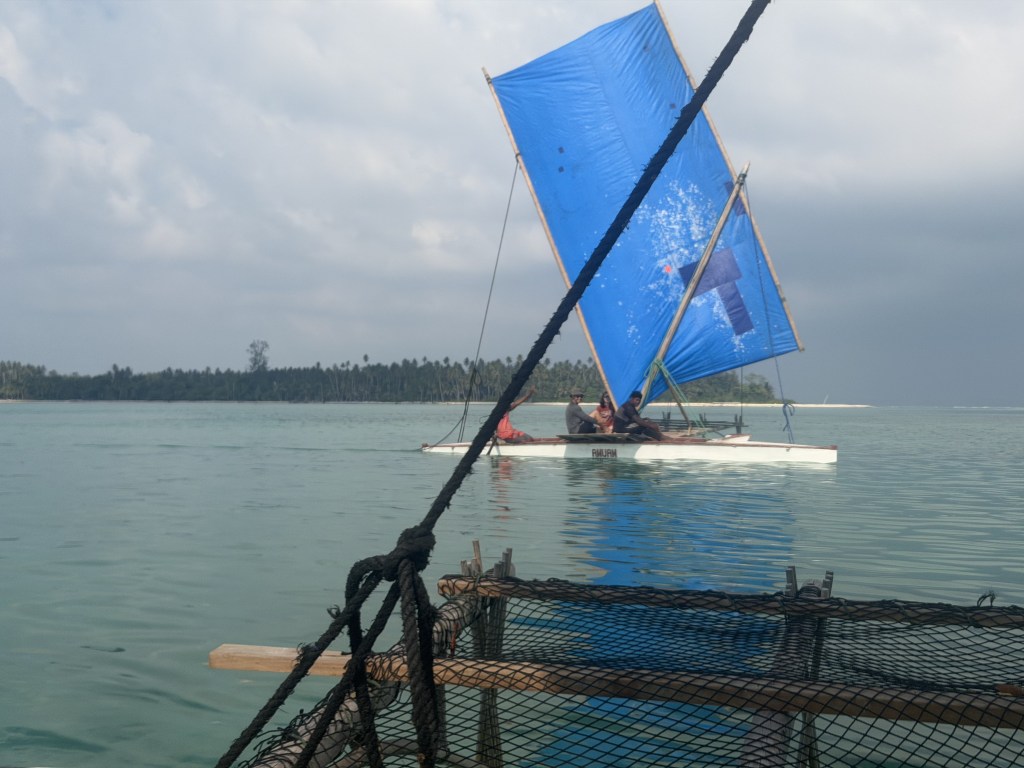
We set off on a 57-mile downwind passage to the Ninigo Islands, a group of about 31 islands and islets inhabited by roughly 1,000 people.
The Seimat, a distinctive maritime people whose lives are centered around the sea and who survive largely through fish, garden food, and coconuts. Outside supplies arrive irregularly and only a few times a year. Spread across a large area, they travel routinely island-to-island by canoe, maintaining gardens on different islands, fishing the reefs, exchanging food, and sustaining family connections across the ocean. They represent a remarkable example of an ancient human adaptation to a difficult environment: tiny islands with almost no terrestrial resources in an enormous ocean have created an exceptionally skilled maritime civilization. We have been to many South Pacific islands, but this is the only one we’ve been to that is actively maintaining its traditional seafaring ways on a day-to-day basis for transportation. We would watch the sailing canoes moving throughout the lagoon from community to community, adjusting their sails. I admit there was more than one time I wanted to break out singing Moana. These islands would become some of our favorites.
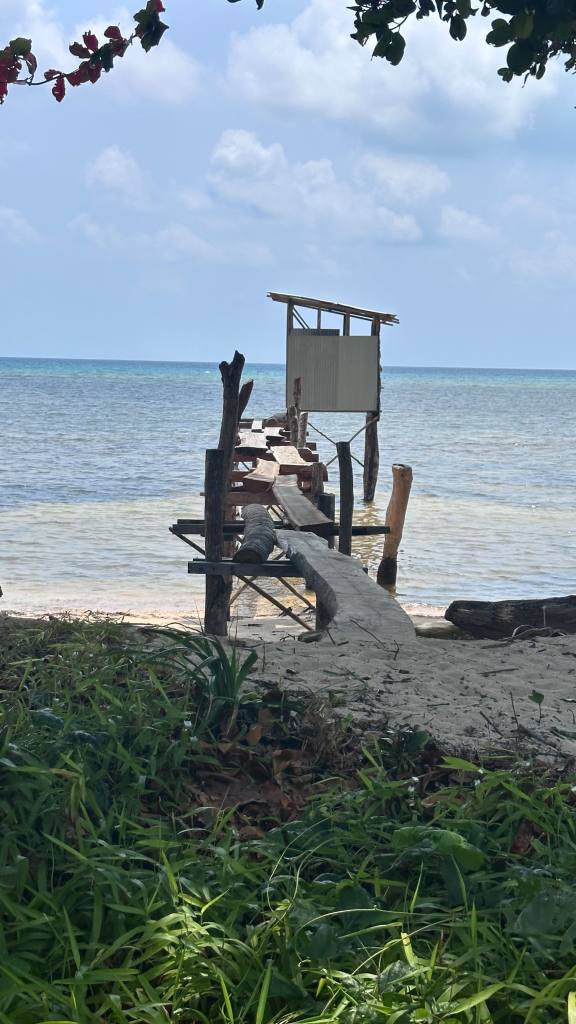
We anchored off Puhipi Village on Mal Island, an island with 250 people scattered across the length. Cruisers Jamie and Behan from SV Totem had shared their family experience here from 14 years ago, asking us to share their appreciation with Elizabeth if she was still living. We went to shore late morning and immediately a lovely older woman came out to greet us, grasping our hands warmly and smiling, “I am Elizabeth.”
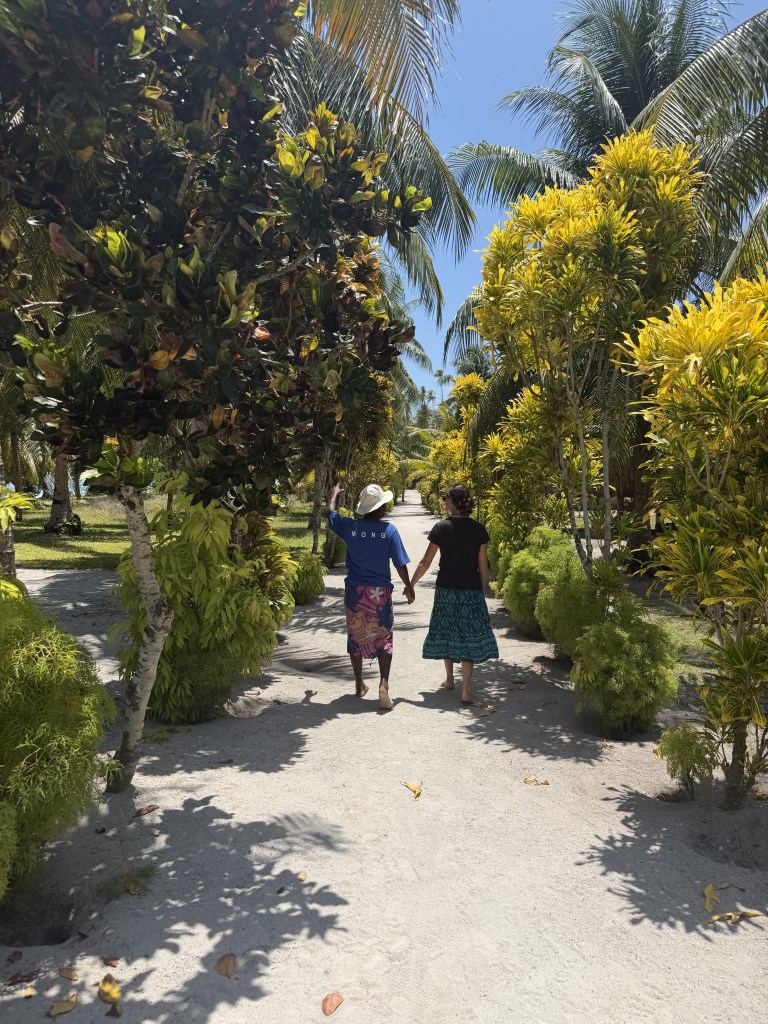
She tearfully shared the loss of her husband and how he is buried here near her home, rather than in the larger cemetery on the other island, based on his wishes. She said he loved inviting cruisers into their community.
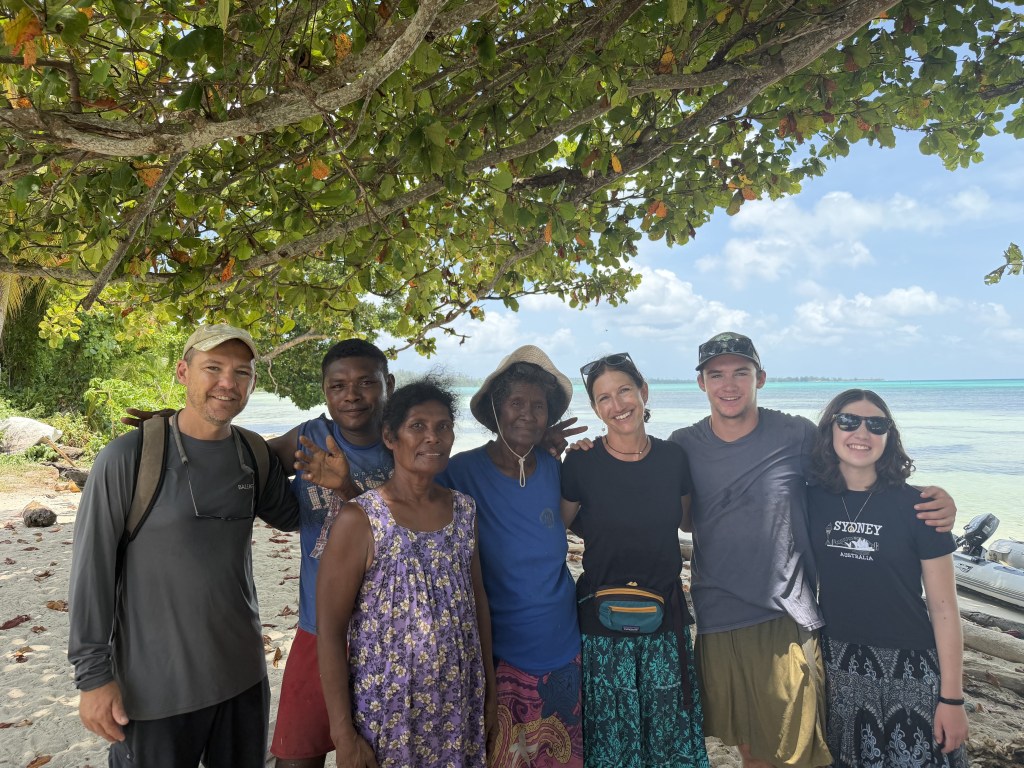
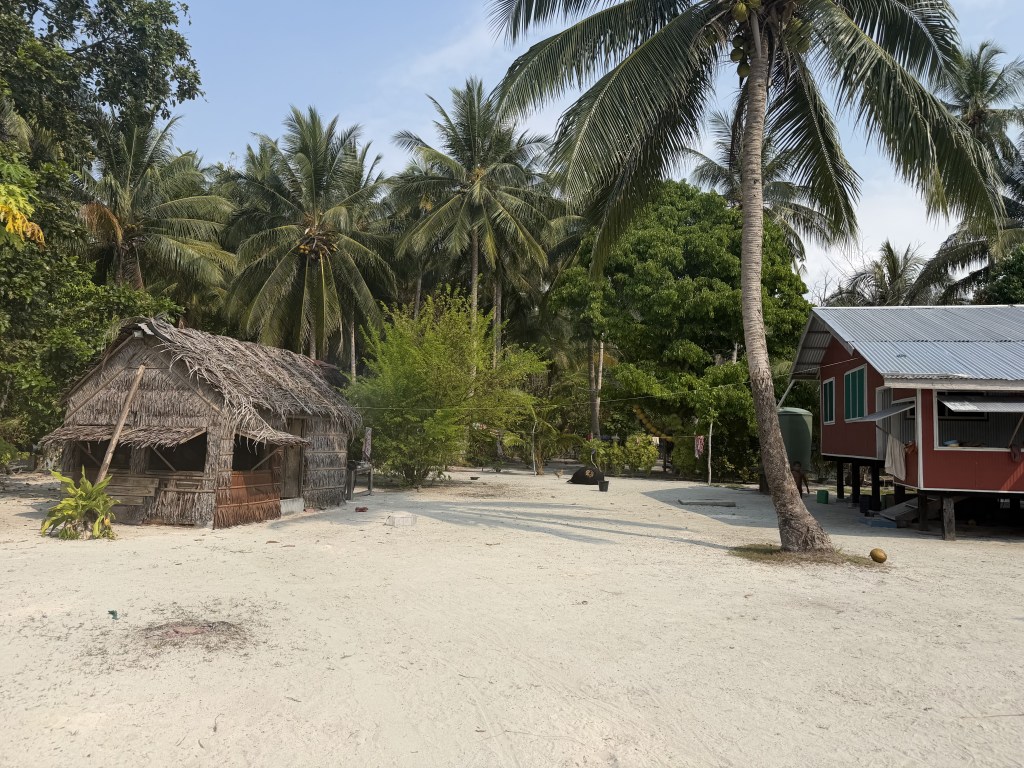
The village was very quiet, as many of them were at school or work further down the island path. The Puhipi Village Visitors Book cover read: “Welcome to our island, so isolated and treasured, you may stay as long as you wish.”
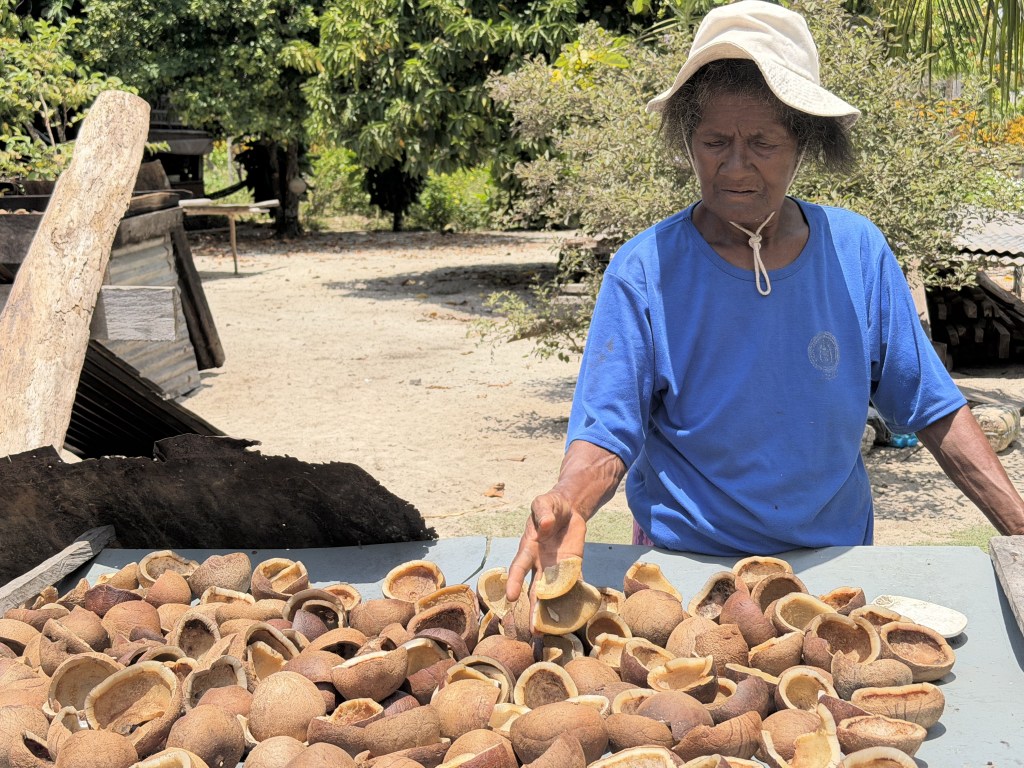
The people here are the Seimet and they speak Seimet, an Austronesian language. Looking through a book of their language, I’m struck by how many of the words relate to parts of a traditional canoe or points of sail, language reflecting culture.
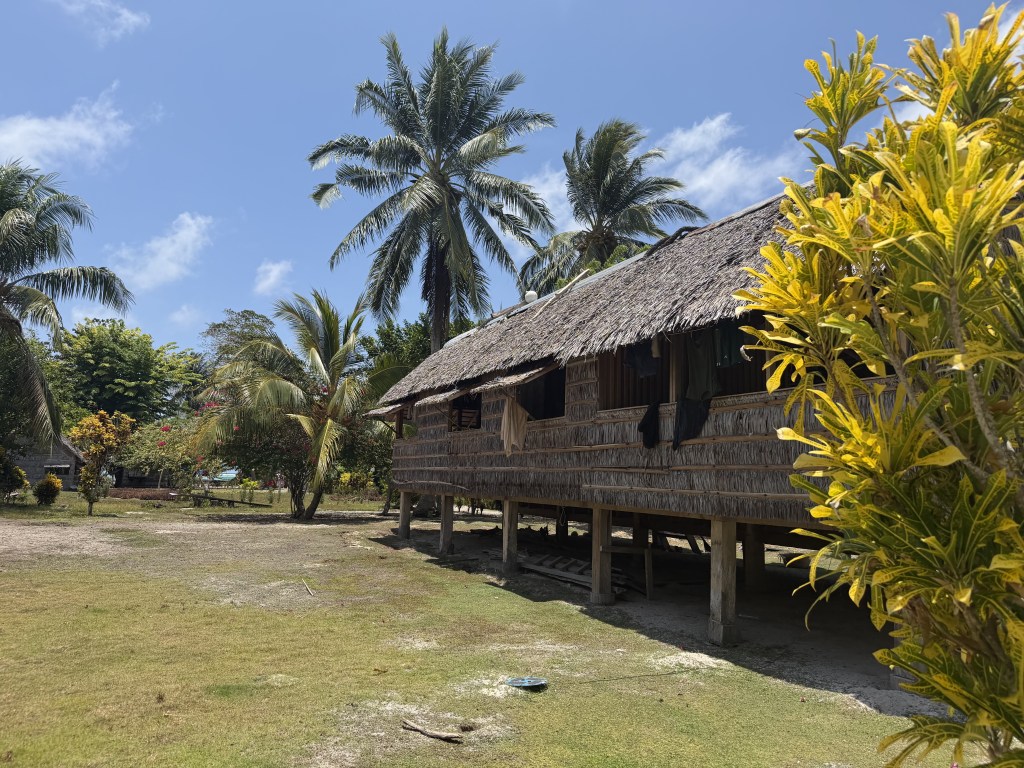
Being in the “croc-free Ninigos,” Calder felt freedom to wingfoil and the winds were delightful for a mellow session among these gorgeous islands.
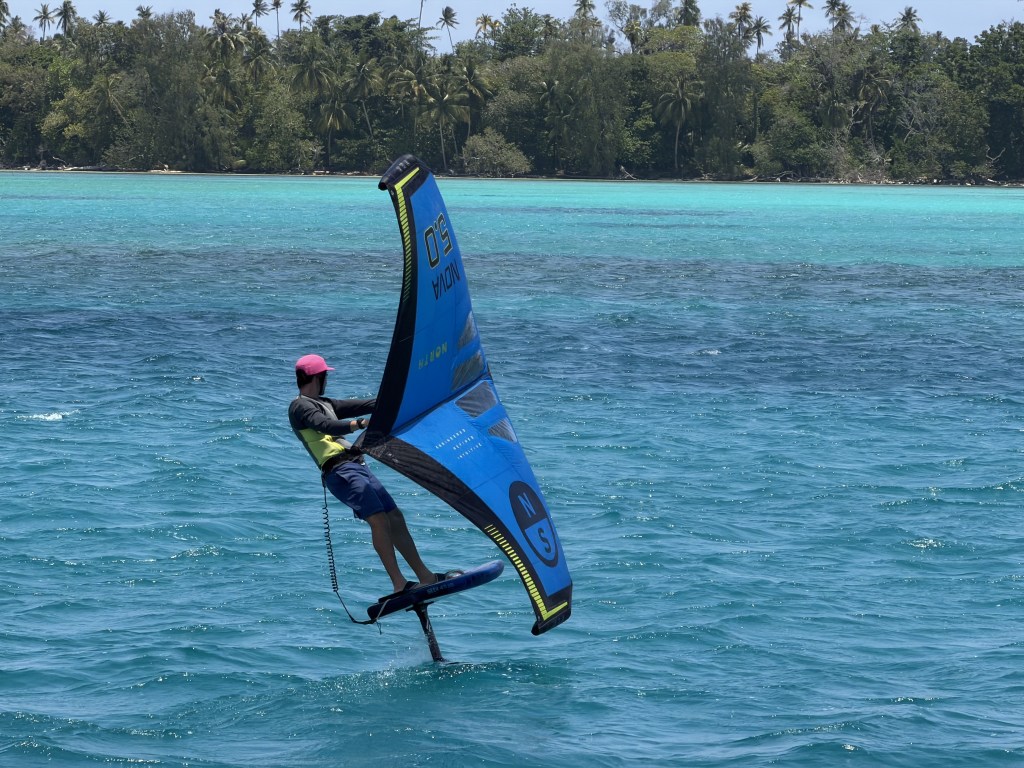
It feels great to jump off the boat and swim, refreshing at first, though if we exercise too much, we find ourselves getting warm again due to the high ocean temps as we near the Equator. It’s been relaxing hanging out with other cruisers, leaving our towels on lines, hatches open and fans on, and sleeping soundly.
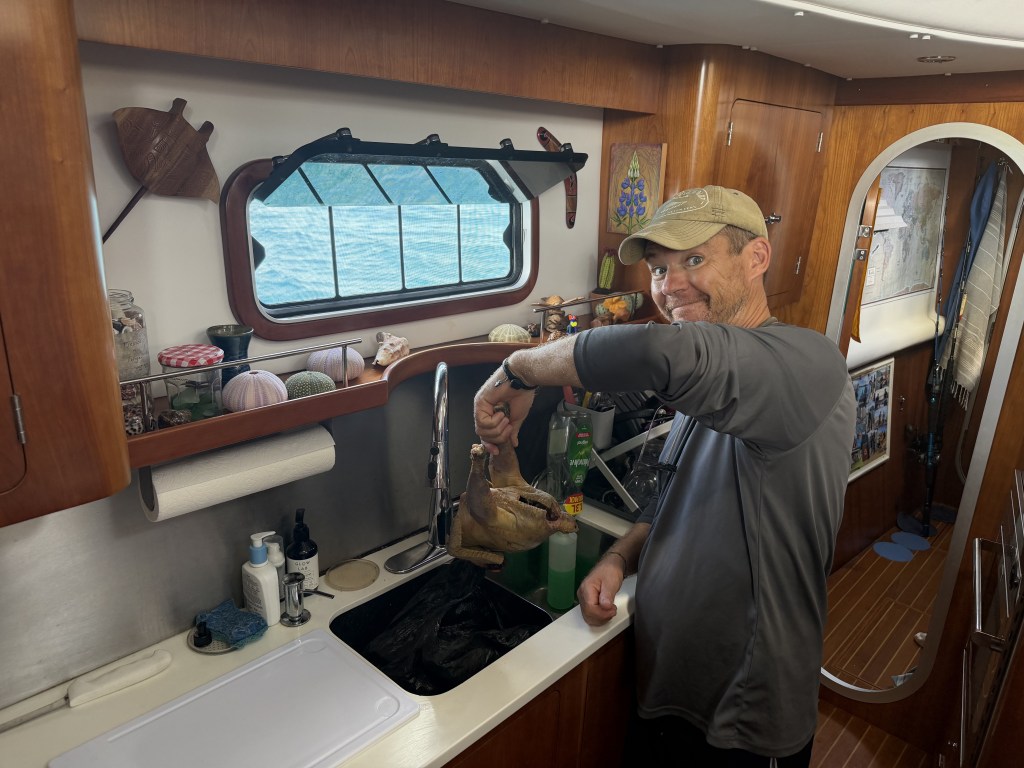
Now, a brief cooking lesson: How to Cook a Free-Range Village Chicken. Hopefully your chicken arrives without feathers, as ours did. Ours was delivered in a black plastic bag without feathers or a head. A word on free-range village chickens – they are typically leaner and more muscular, with smaller breasts, denser muscle fibers, and more connective tissue from a lifetime of walking and foraging. We decided to boil our chicken for a while (an hour), but noticed that it had a firmer, chewier texture than commercially raised chickens. In other words, tough. So, it was time to braise it. Chris removed the skin and picked it into a pile of chewy meat. I made a curry-broth and we braised it for another 90 minutes. Success! The process from beginning to end took about 4 hours and by 9pm we had our dinner of village chicken!
We continued making water for people here, as the only fresh water on the island was found at the school (they have many tanks for catchment that had filled during the rainy season) and a few scattered houses with private catchment, all sharing with the village as well. I think of water as a basic right and we were happy to make more for them, but literally and figuratively felt like it was a drop in the bucket during this El Nino year which is just ramping up. Pacific Ocean water temperatures are already hitting record highs, even though the phenomenon won’t reach its peak until later this year.
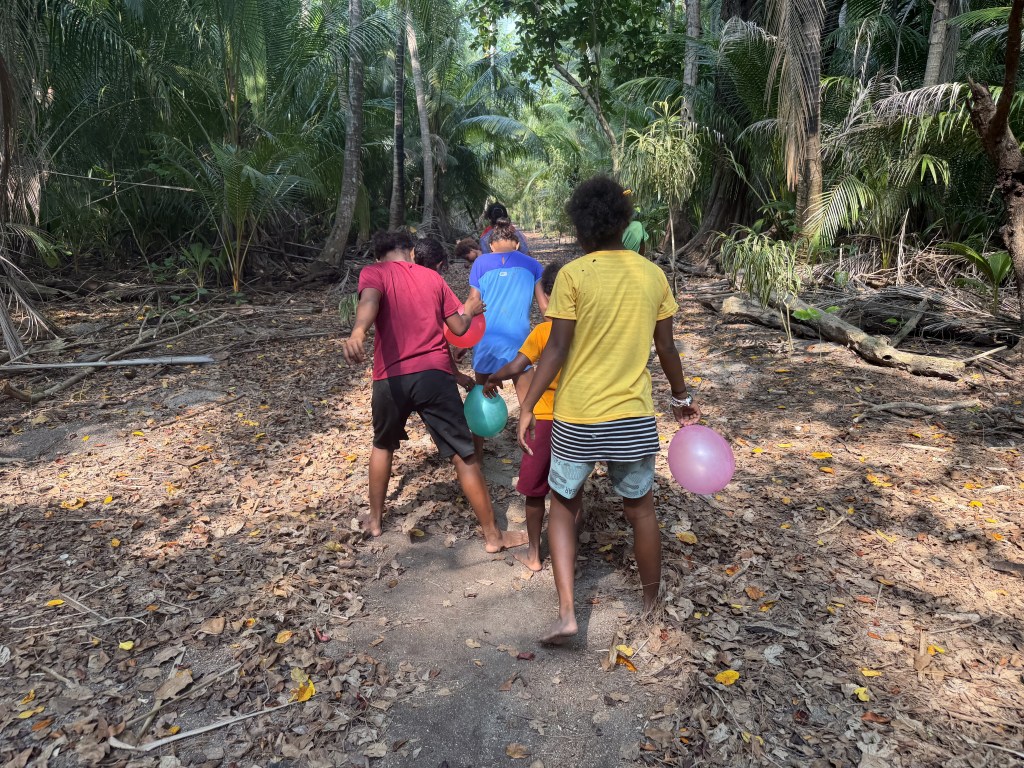
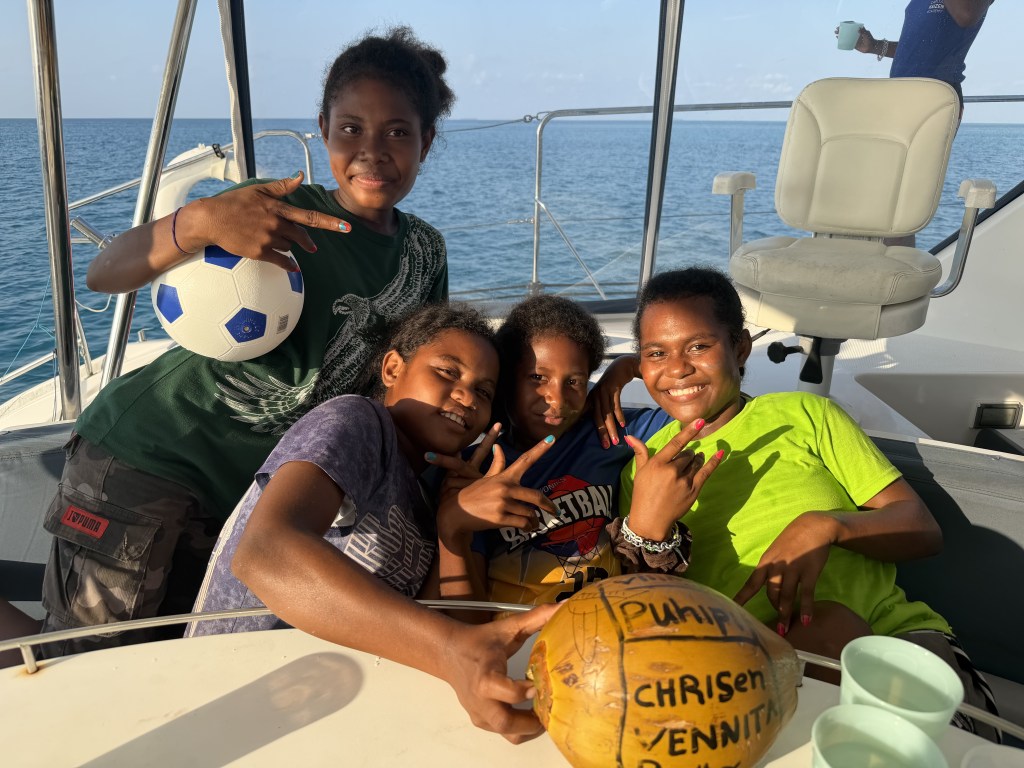
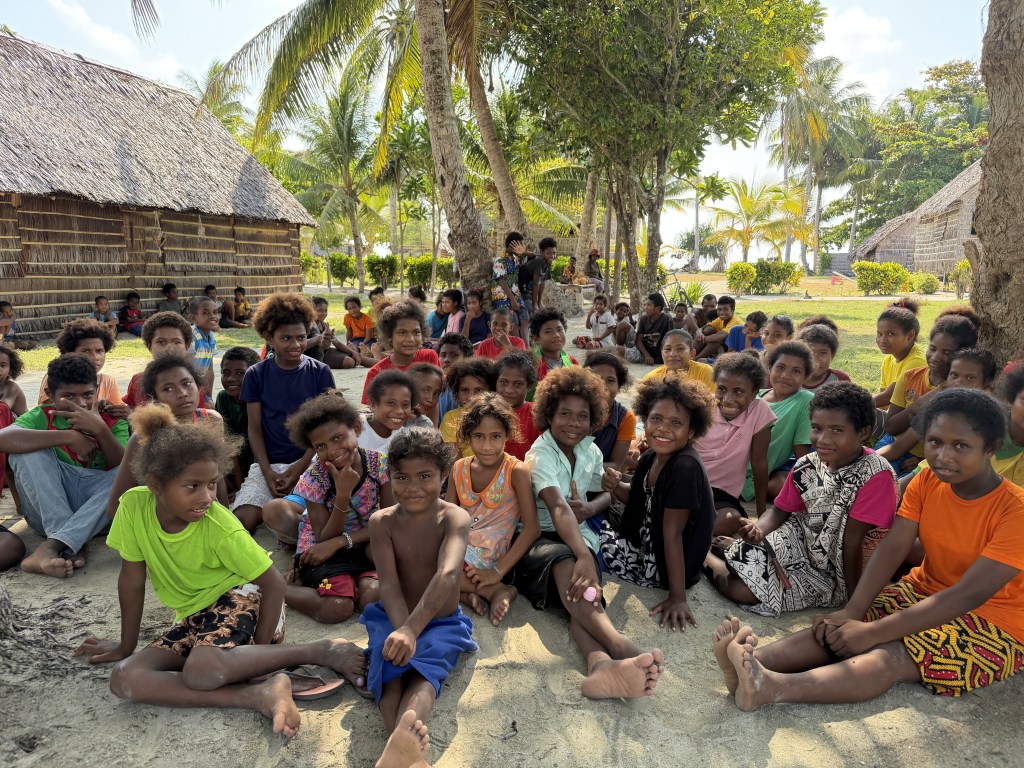
The kids of the small village took us for a walk, Vennita holding hands with Cora, singing to us, and gifting us a pile of drinking coconuts. There is nothing more refreshing than a cold coconut from the fridge.
Later that evening Justin, the school principal, brought by a “formal invitation” to each boat for the International Teacher’s Day celebration the next day. We were to bring the desserts. “We have lots of cooking to do,” he said, as 5 hens huddled together in bow of his boat, clucking and looking up naively.
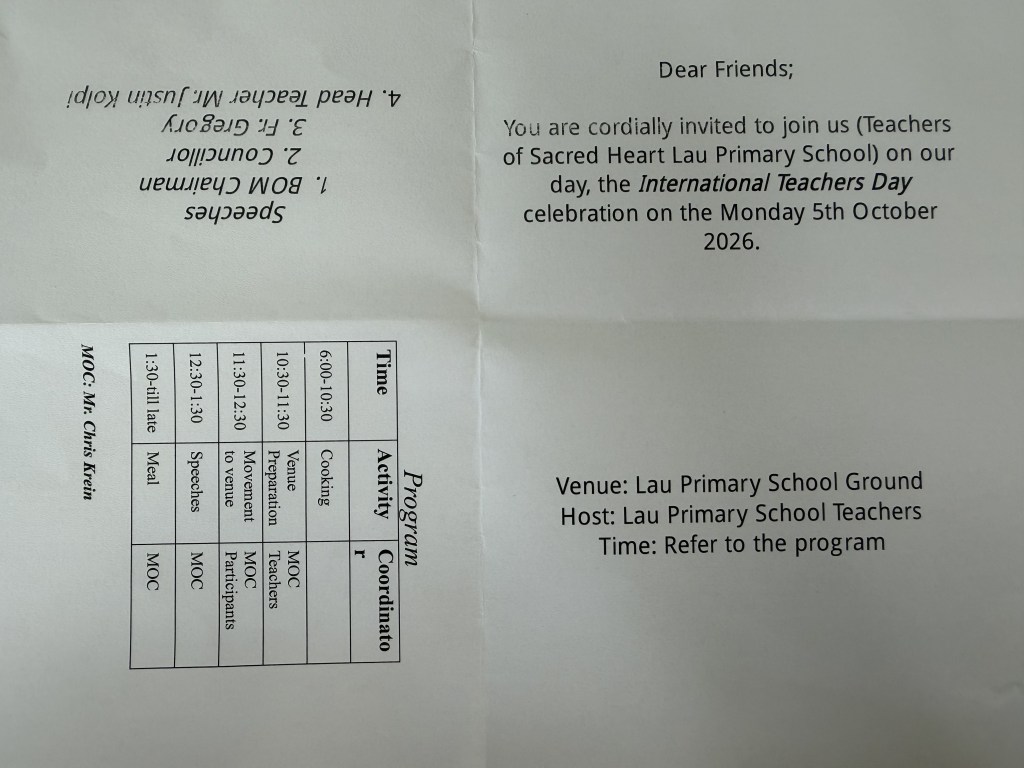
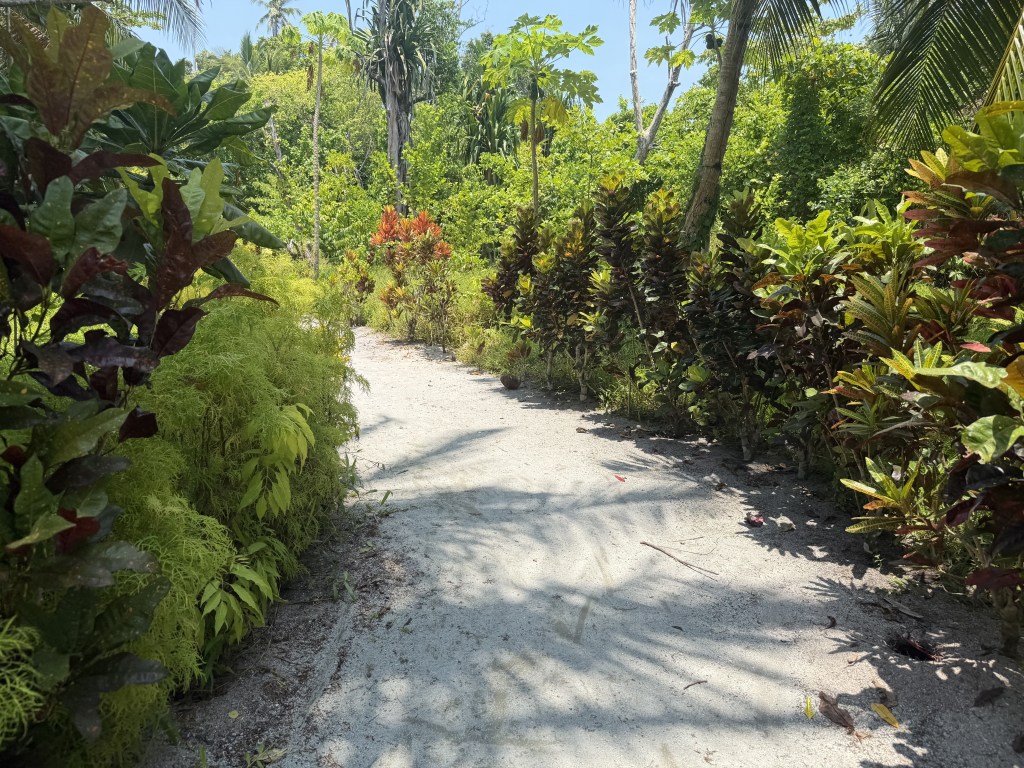
We walked on the trail to the school for International Teacher’s Day, chatting with and admiring one family’s traditional sailing canoe on the way. It’s always good to leave for a village event with plenty of time, as there are often conversations on the way that are nice to not rush.
At the school they had prepared a special table for us 5 boats of cruisers, setting out chairs and a tablecloth. We placed our many desserts at one table and our table was filled with various foods, namely rice, chicken, and roasted pork. The formal presentation included various short speeches (including having us all introduce ourselves and say a few words), gifts and thank yous for the teachers, and a touching reflection by principal Justin and a teacher who was retiring this year.
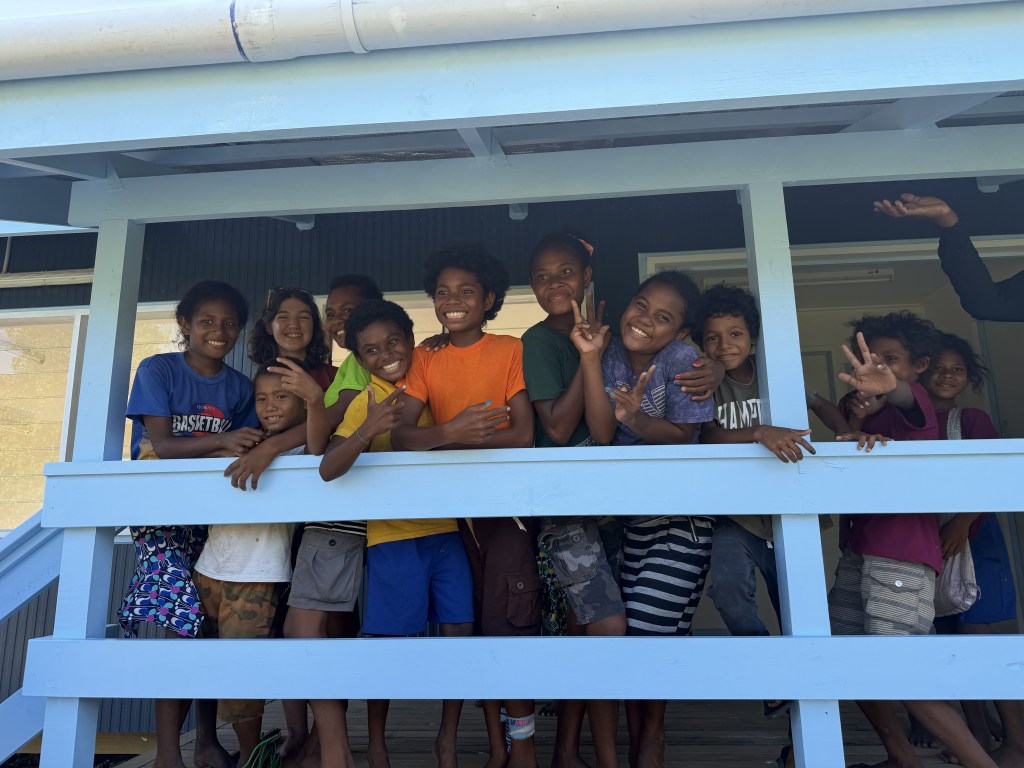
We feasted on the food, the best village food we have had at a celebration, but the desserts all magically disappeared almost immediately. The kids held our hands and toured us through their school and classrooms.
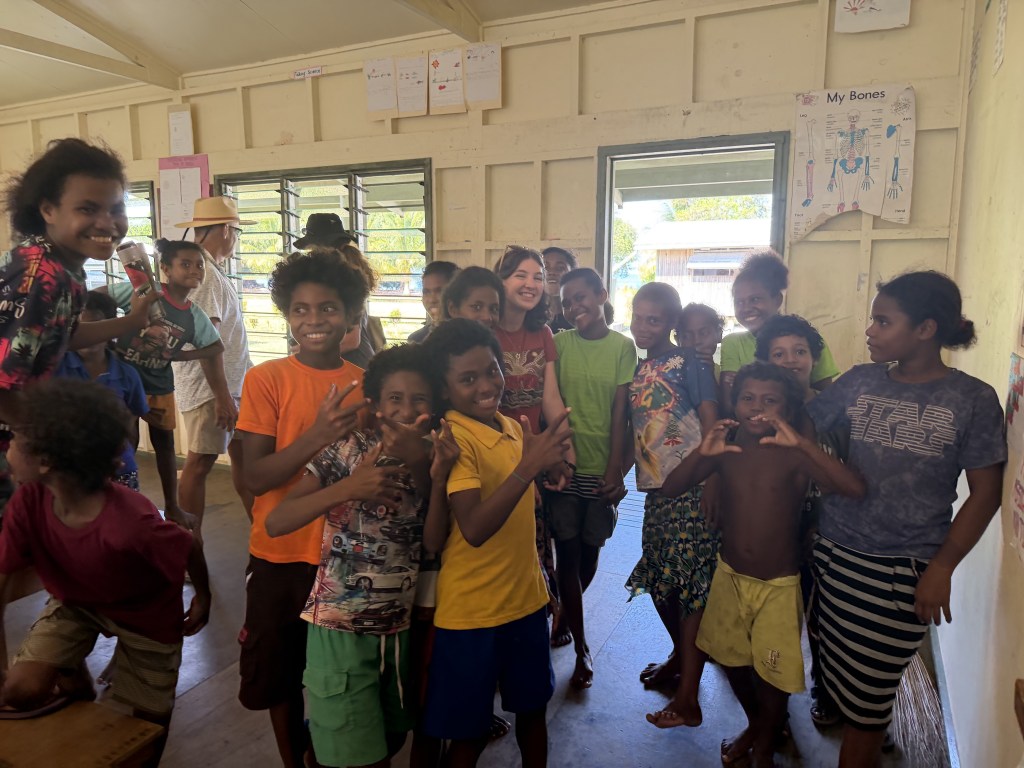
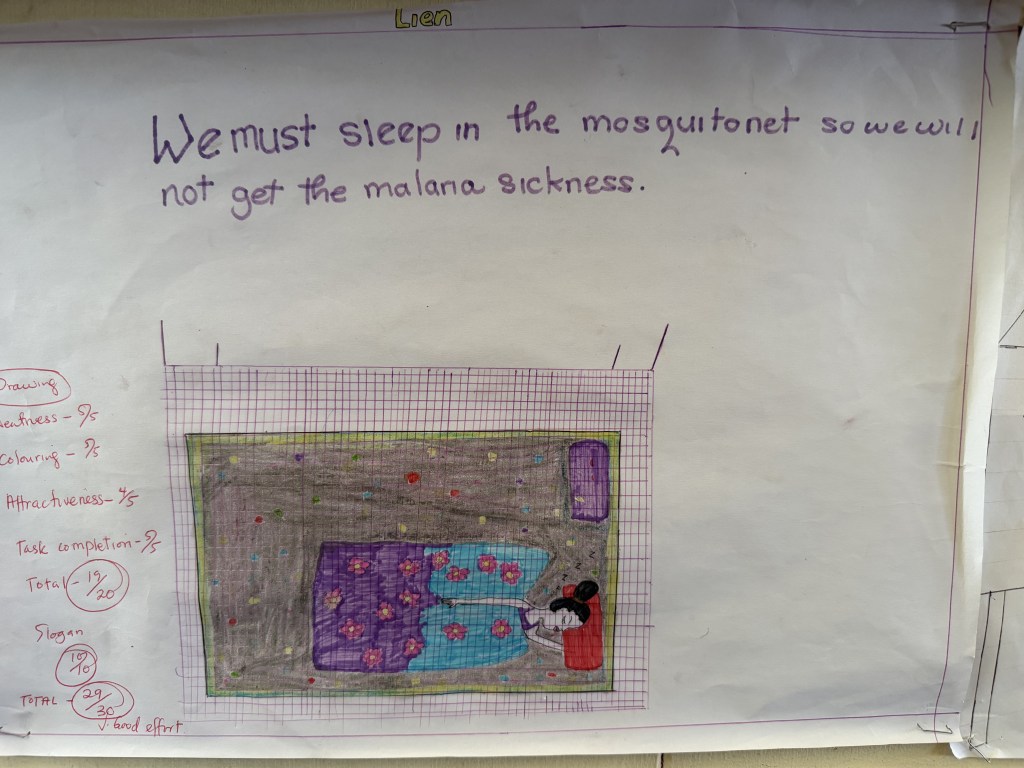
I loved having the kids show me their work hanging on the walls and quizzing them on math problems on the blackboard; the level of education and quality of work was impressive.
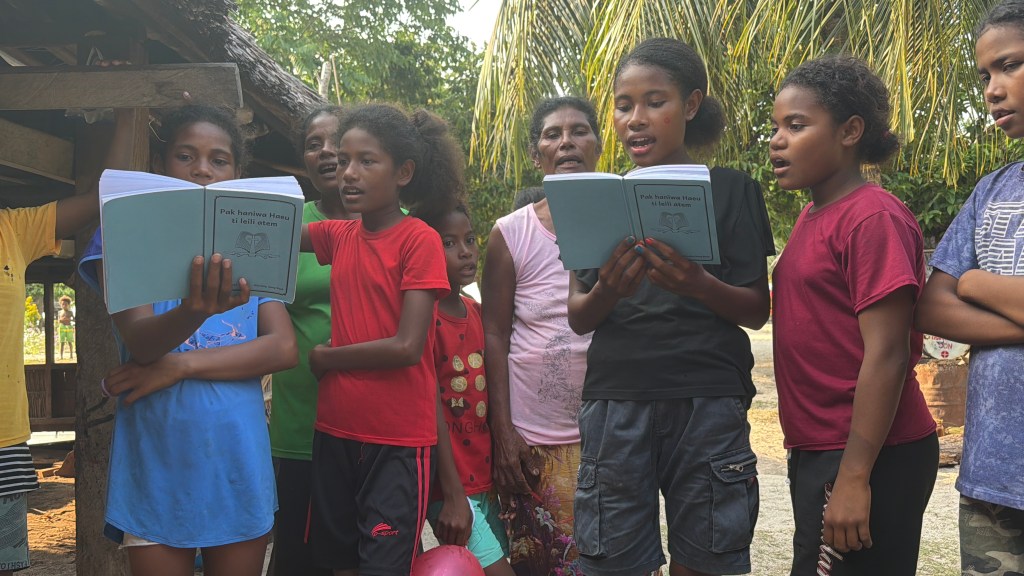
The children from Puhipi Village held our hands and started singing in surround sound; their voices were beautiful.
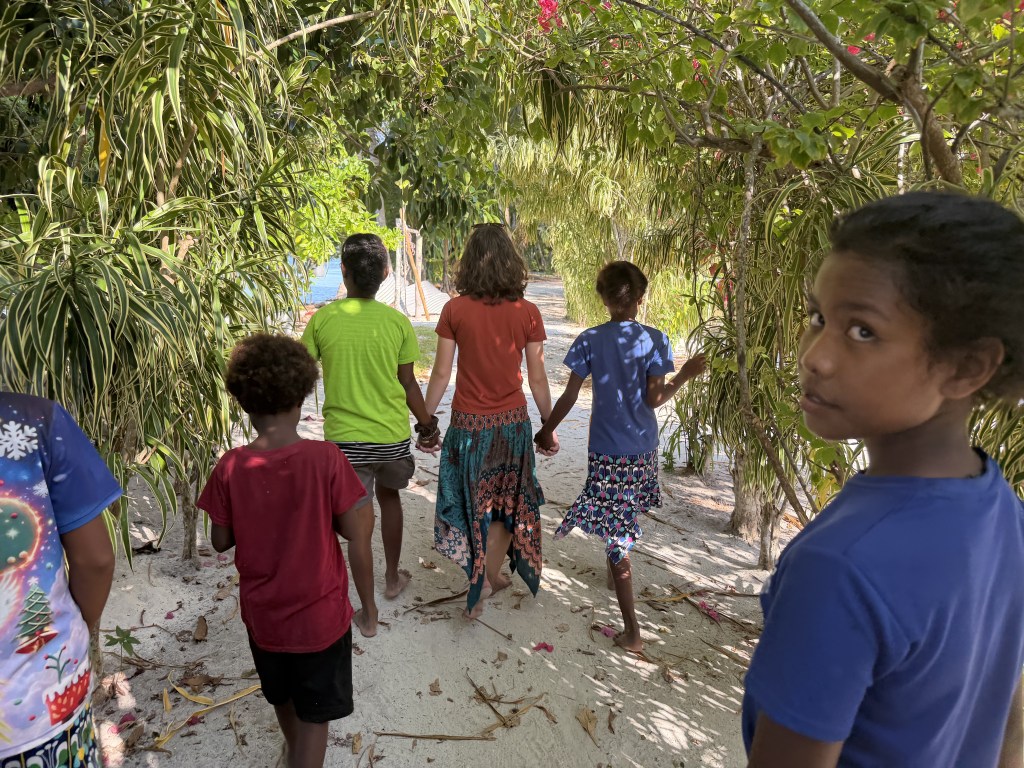
Back at the beach by our dinghy, the kids all clustered around us, ready to wave goodbye. Wait, did they want to come out to Terikah and go swimming? I have never heard such an excited outpouring of “Yes! Yes! Yes!” with Cora engulfed in hugs.
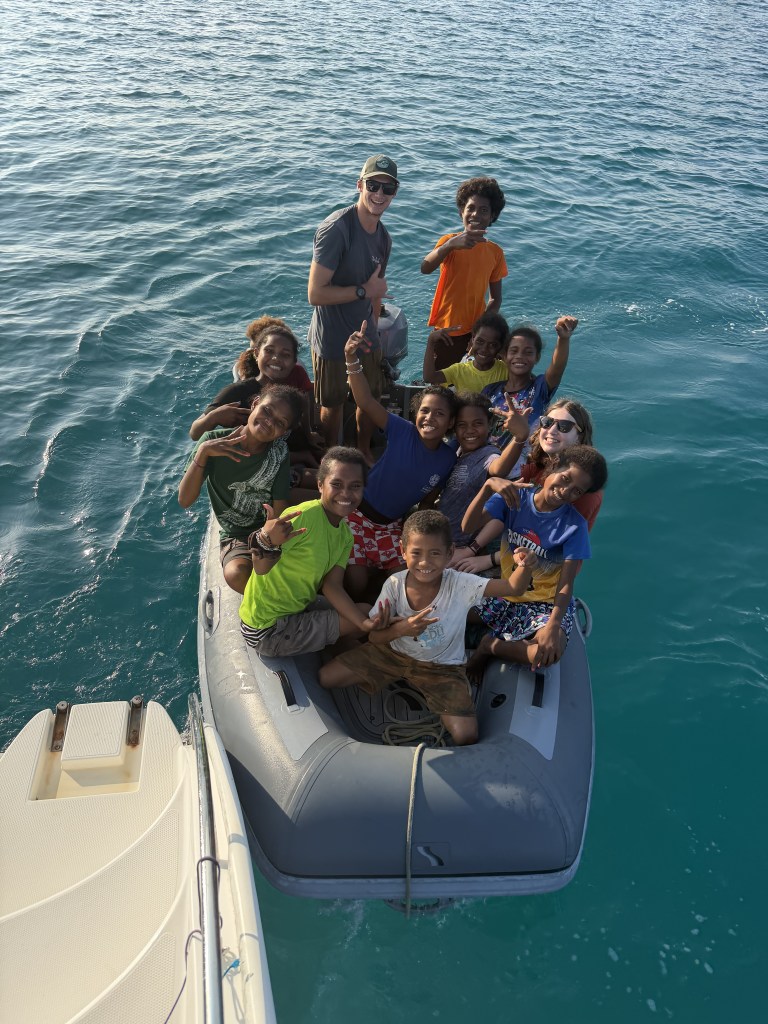
Eleven children (plus Calder and Cora) piled into our dinghy and out to Terikah where we laughed, jumped off the bow, swam, ate cookies, and tossed a ball around. It was SO incredibly fun!
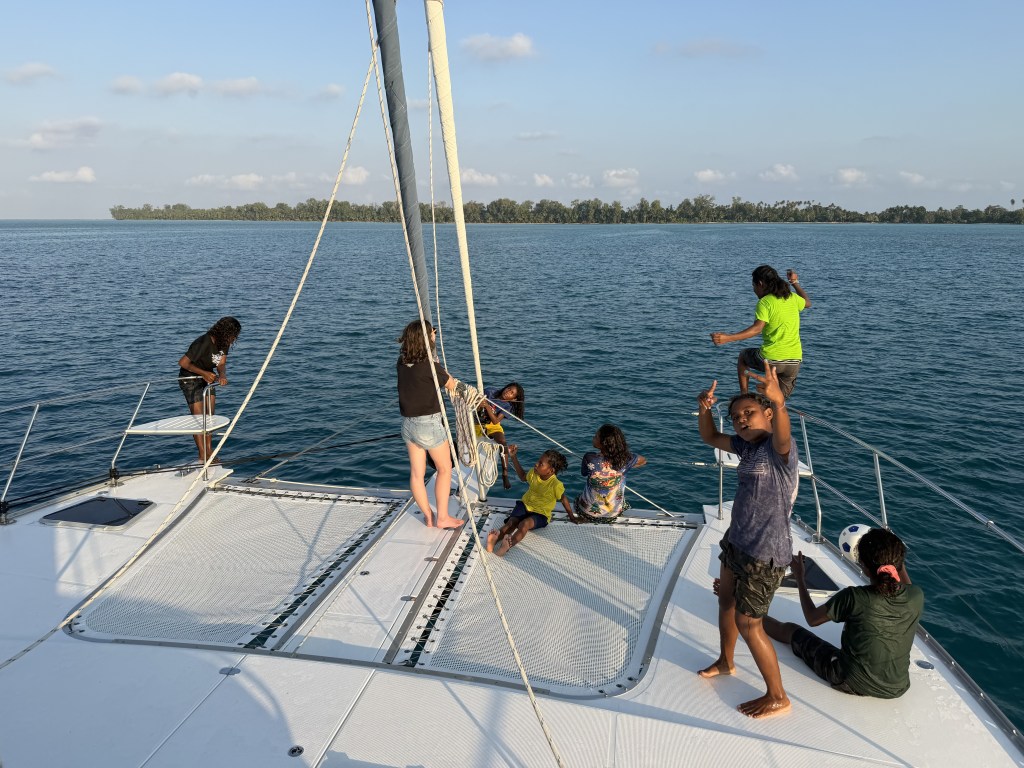
The next day, we visited the school again to drop off some supplies (they had completely run out of pencils), as well as the Mal Island Clinic, the main clinic for all of the Ninigos run by two nurses. The clinic was in very rough shape, a man receiving IV medications on the porch.
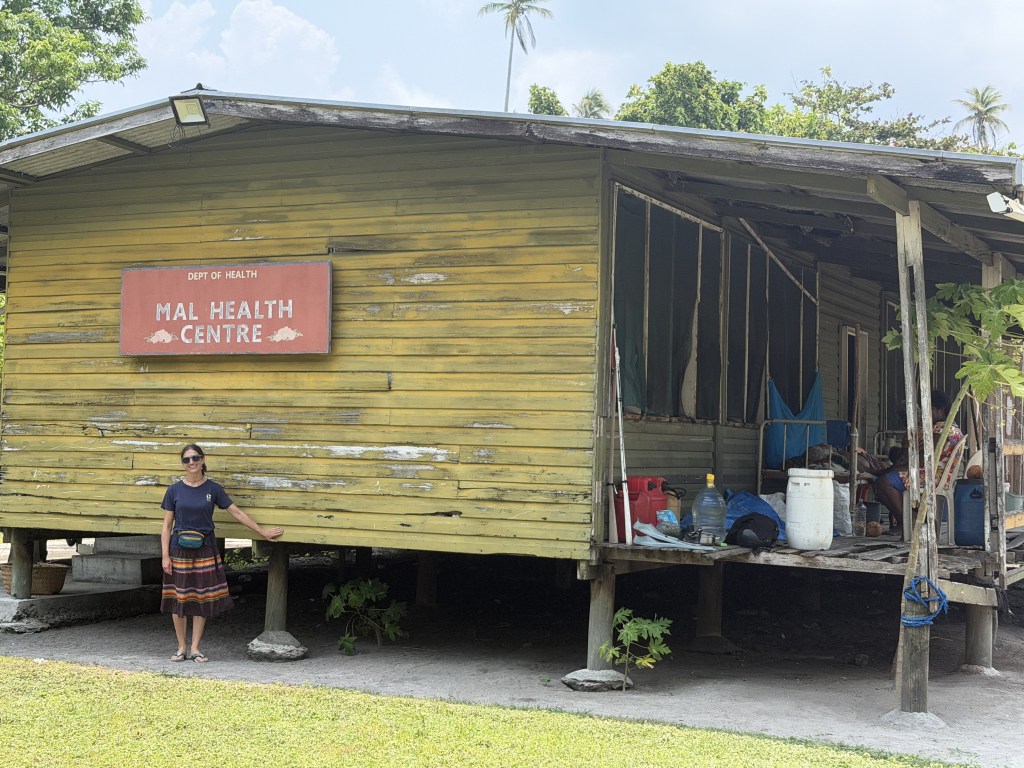
The compassionate care provided by these intelligent nurses with limited resources is commendable. Sister Joann accepted the gifts of medical supplies and listed various medications that she had run out of. We were able to get some from our boat supply, but also passed the word down to other sailors on their way here. She also needed medications for post-partum hemorrhage and a vacuum extractor for delivery, neither of which I had. As midwives, they also deliver the Ninigo Islands babies at the clinic. The community was building a new kitchen for the clinic while we were there.
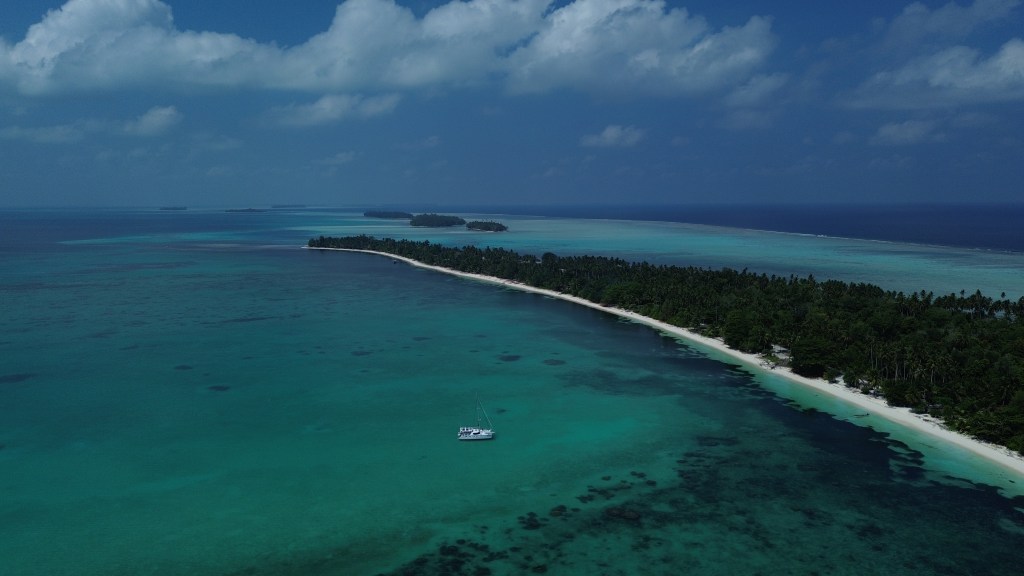
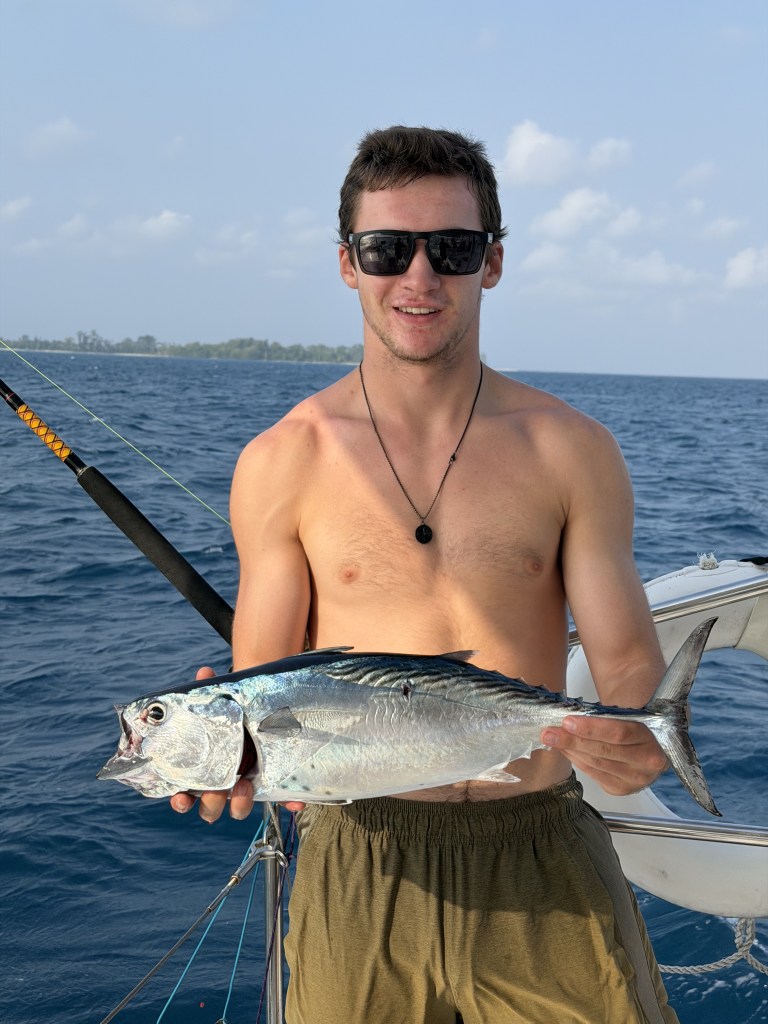
As much as we would have been happy to stay at Mal Island, we had briefly met a man named Phil on the beach who invited us to Pihon Island to go out in a traditional sailing canoe. He even told us that he’d look out for us and assist us in getting over the shallow coral reef into the sandy patch off the village. So off we went, across the lagoon, using satellite imagery to navigate around the coral patches.
Approaching the shallow reef, Calder and I on the bow, we motioned for Chris to stop the boat; it was too shallow. We adjusted our path in and, at that time, a panga motored out to us – Phil and a couple others jumped on board Terikah to help show us the way. It was pretty hilarious when Phil took the iPhone from Chris, who was using the sat imagery on it, up to the bow and used it himself along with eyeball navigation to show us the way in. Chris, now without any imagery, was left to trust Phil and Calder, who were communicating with him via walkie-talkie.
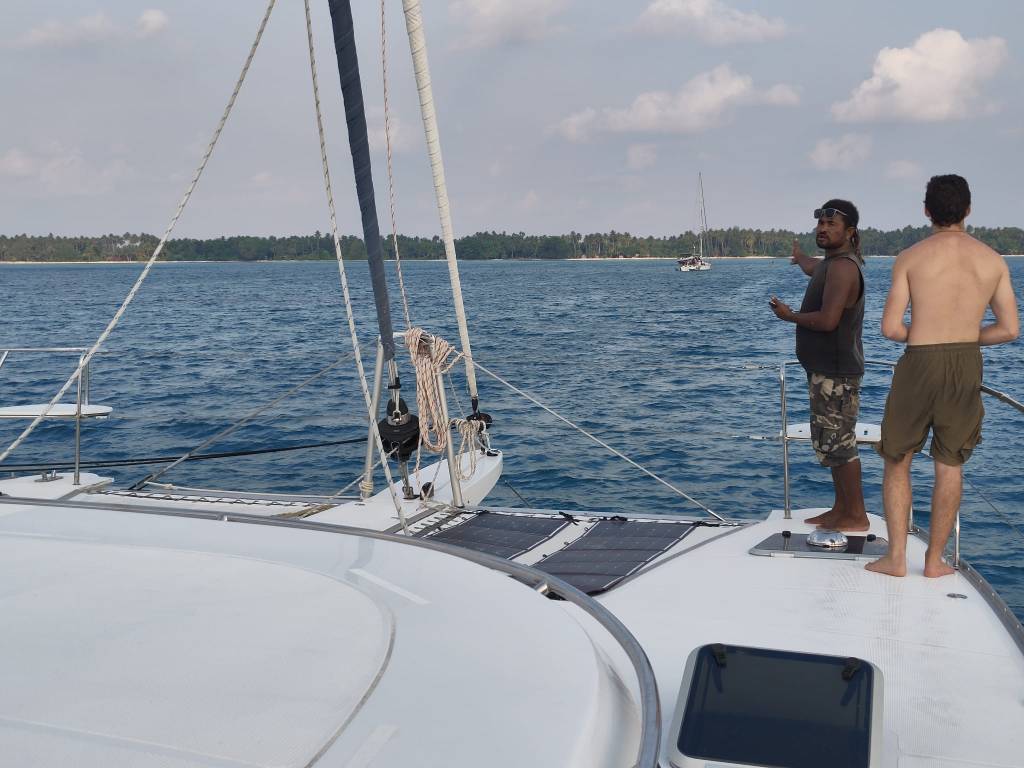
After crossing the reef, there was nothing but a massive sand field. We anchored in 10 feet of water, just off the village and had visitors saying hello and using our Wi-Fi for the next few hours. In bed that night at 11pm, I told Chris that I heard voices. That’s just the wind and fans he told me. But I hear laughter. Hmmm. We turned off the fans and yes, there were voices behind our boat. We looked out and around our boat were several canoes, their phones in hand lighting up the night like lanterns, using Wi-Fi to communicate with their friends and family. Throughout our stay, Wi-Fi was their main request, and they brought us so many gifts in exchange, from drinking coconuts to eggs to lemon grass to lobster.
The next day we visited the school, where the little kids were excited to surround Cora and hold her hand, singing to her.
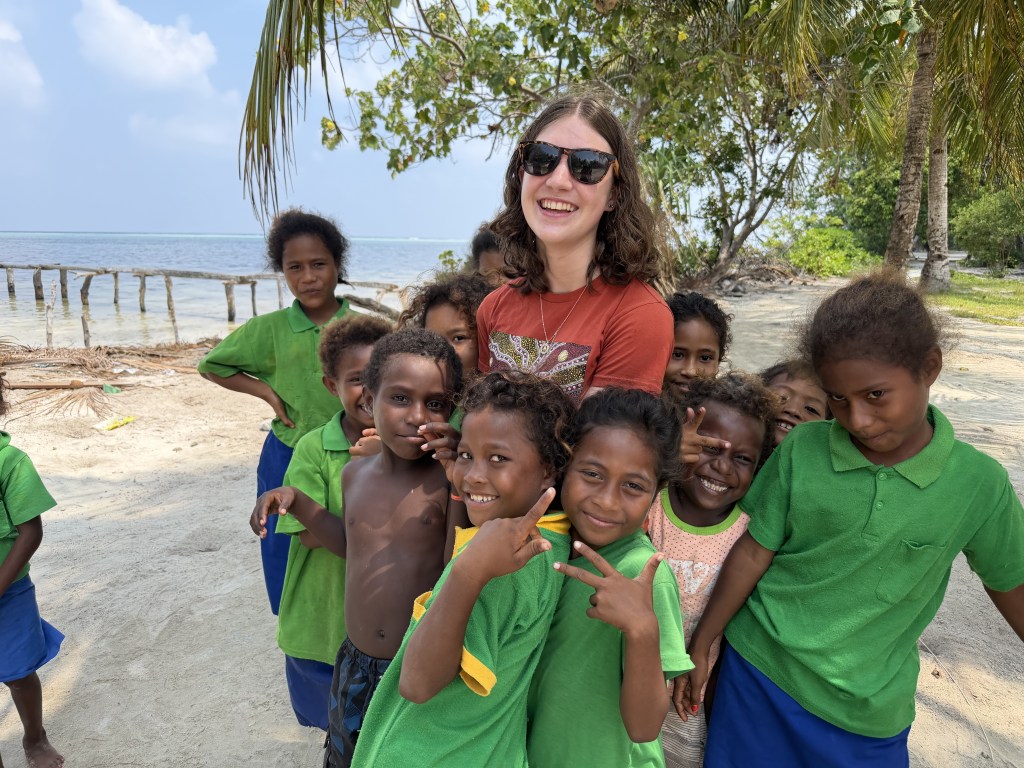
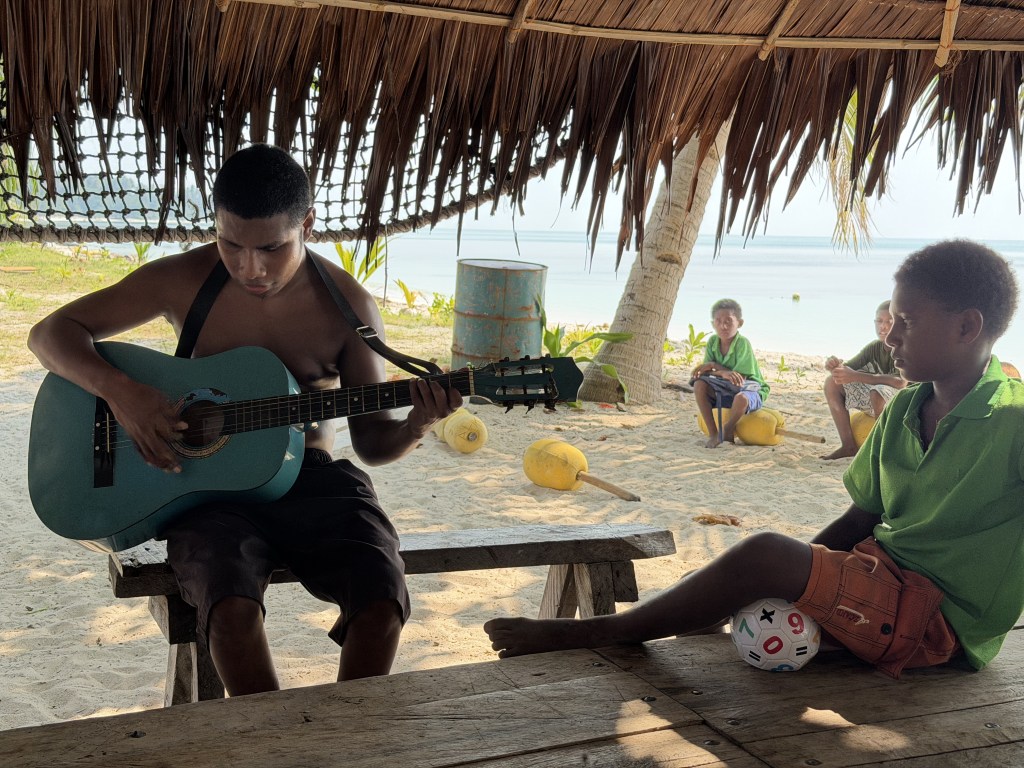
We were led on a walk with Barbara, the principal and Phil’s wife, as well as another teacher, stopping at a few elder’s houses for me to evaluate them as a physician. They have freshwater here, though limited, in their tanks and spoke about how they have never run out; just when they think they might, it will rain. I’m hoping that their past experience holds true during this challenging year. Jamie, a blind man in his 20s came out to where we sat near the shore and played guitar, singing to us.
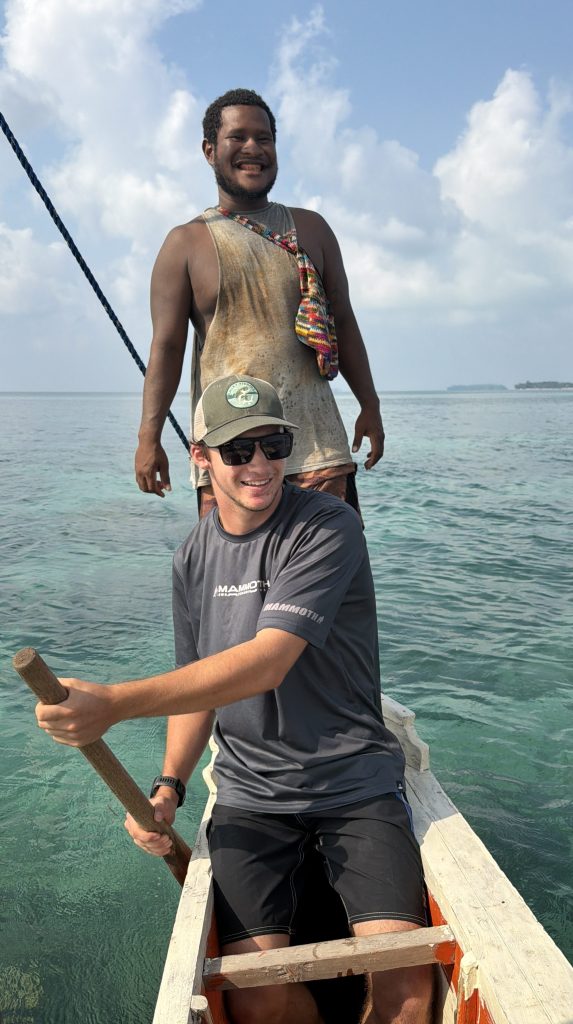
Then Phil and Nico had two traditional sailing canoes (wa) ready and off we went, Cora and Chris on one, Calder and I on the other. In light winds, these canoes could move!
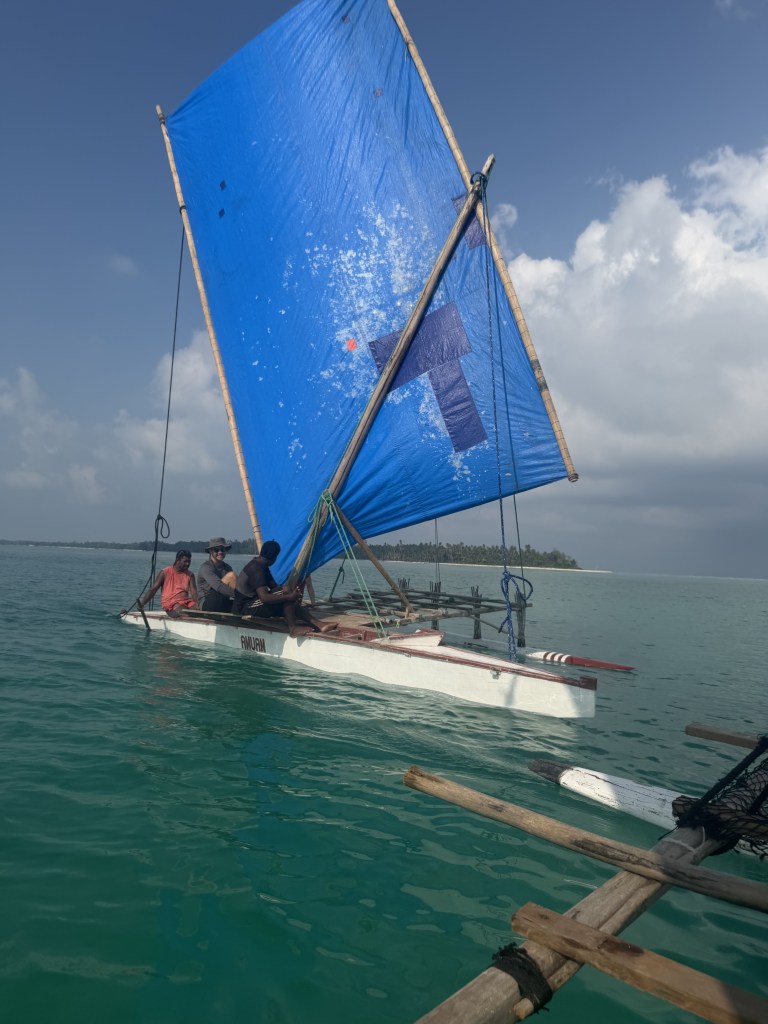
It was an awesome experience and we enjoyed watching how they rigged and adjusted the rigging along the way. Calder even got to steer for a while, as they guys called him “boss” and yelled out in fun.
Back to the boat after a long day, we went for a short swim; soon my bath was interrupted by a panga and some other canoes to use WiFi, also declaring they had brought me some patients, who I invited into the cockpit. Our family went to the dark deck of the boat to eat dinner around 8pm and soon a canoe came right over to us and started lifting up lobster onto our deck. It was Neville and, when we asked him what he wanted for trade, he simply said, “This is for your food – I don’t need anything.” There was no expectation and we didn’t want to create that expectation by giving too much, but it felt right to give him fishing gear in exchange for this gourmet dinner delivered to our deckside.
The next day, while the kids did school, Chris and I ran village errands. We had planned to hand out reading glasses at the clinic and bring supplies to a couple of patients that I had seen the day before, but soon we found ourselves giving a talk on health to the entire gathered school, followed by having a wandering medical and eyeglasses clinic!
Such is the way a day in the village evolves, and our estimated two hours in town turned into five hours! I changed a urinary catheter, did wound care, treated a leg infection, explained expressive aphasia and speech exercises to a stroke patient’s family, evaluated a non-healing wound with leaf band-aid on it, talked about arthritis and hypertension, and reviewed peoples’ med cards/books to provide my input (per their request).
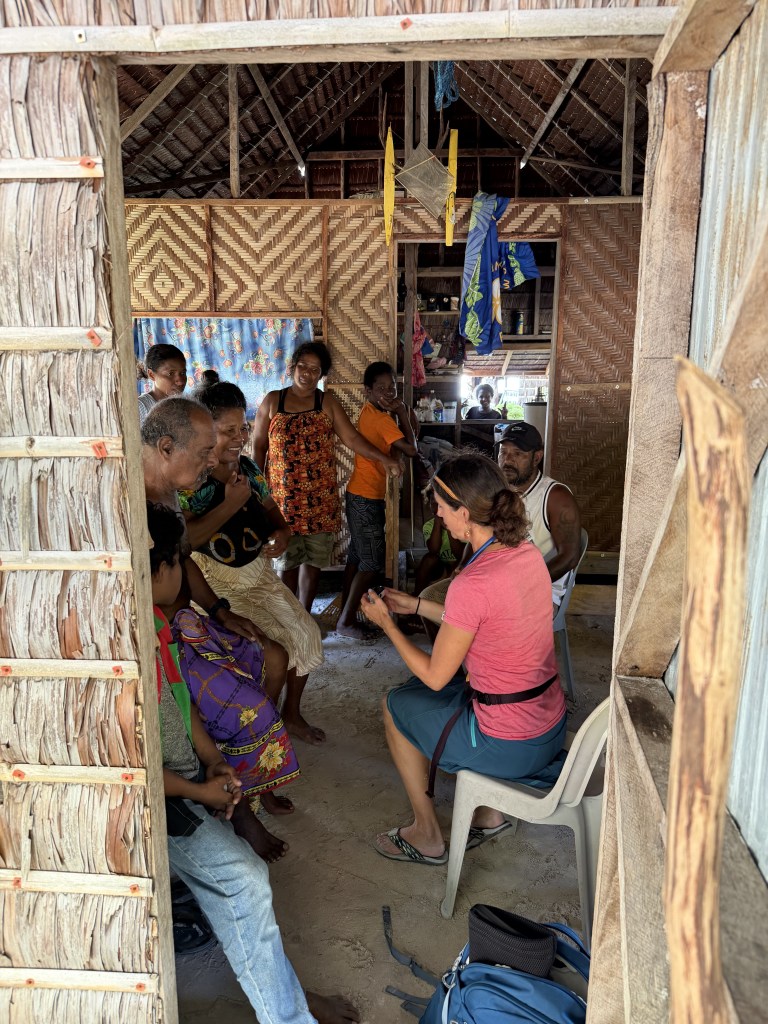
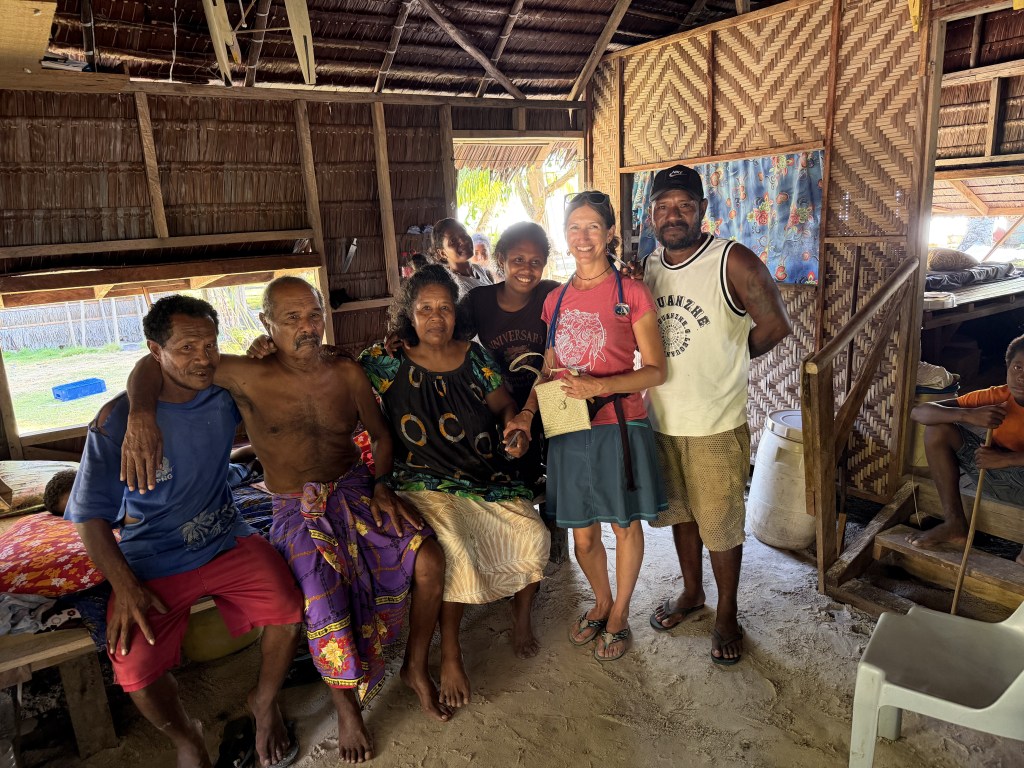
While I did medical tasks, Chris found the strength of reading glasses needed for various people.
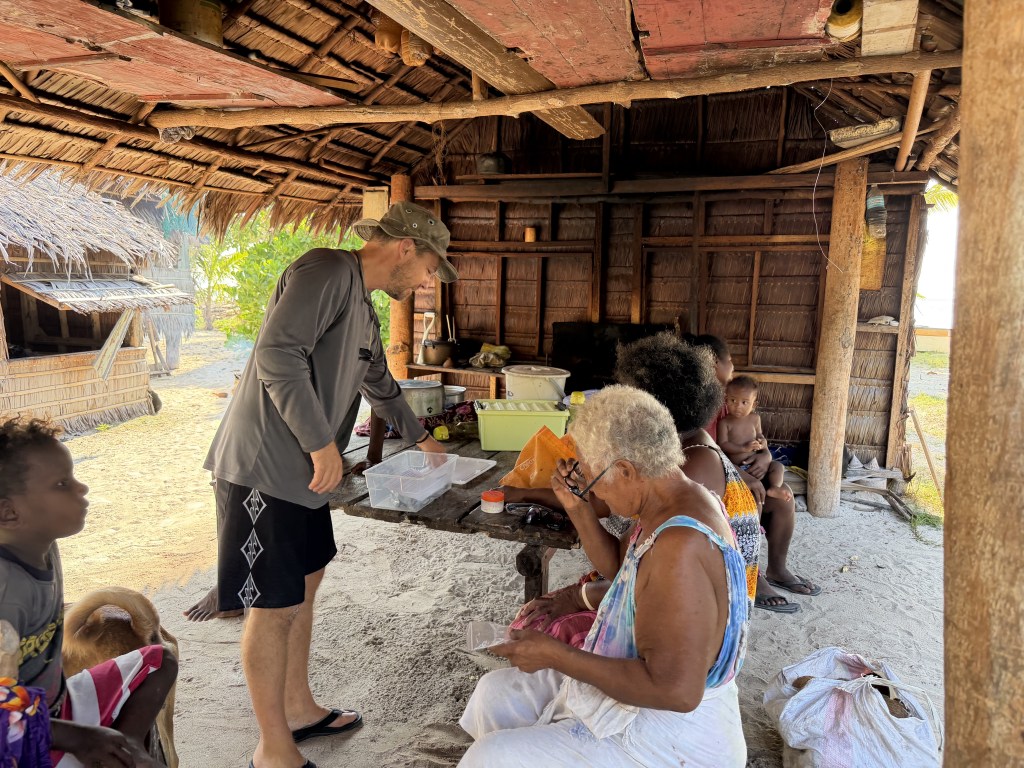
He also had time to visit with the teacher who had spent his day with us, talking about the challenges of life here with extreme remoteness. We were both exhausted and energized by the day. Back to boat, filling up with gifts of drinking oranges, drinking coconuts, and eggs (given to us in small handfuls as precious gifts, a few with baby chicks when we cracked them). Then we hosted dinner at our boat with Phil, Barbara, and their 2 sons, as they wanted to share their traditional food with us, bringing us sago palm and cassava balls to eat.
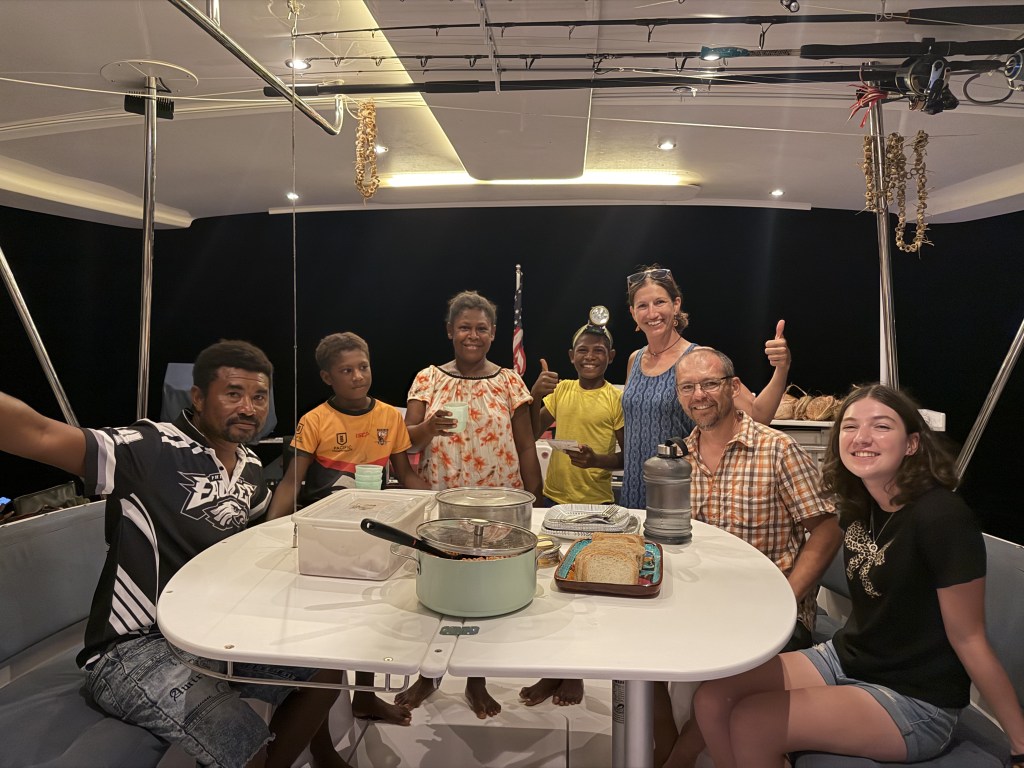
Of the foods we made, their favorite was Cora’s chocolate chip cookies, followed closely by fresh bread with butter. Barbara also presented me with a gift of earrings from her home island of Manus, depicting the basket weaving and green snail of her native land. We enjoyed talking and sharing stories about our homelands. It was a full day and the wi-fi canoes gathered until well after midnight anchored off our stern, listening to and downloading music and chatting quietly.
Letu solian (good morning)! Today was the last morning waking up off a South Pacific island village; this has been a big part of our life for the last 2 years – the sounds of roosters and children and work, the smells of burning coconut husks and salt air. I feel nostalgic, a bit teary, as I sit on our deck and look to shore, the village waking up to gather food for tomorrow’s weekly feast and church. It is beautiful here, the waters, sandy beaches, swaying palms – but ultimately it is the South Pacific island people that have stolen my heart. I will always be grateful for this experience, as I voice a “thank you” towards the shore. Kemulik wanen.
We moved to a temporary anchorage near a pass out of the Ninigos where we enjoy hanging out with cruising friends and swimming. Ironically, a nearby cruising sailboat without a watermaker is almost out of fresh water and asks if we could spare some, as they didn’t want to take from the village. Thirty minutes later principal Justin was out to our anchorage with the cruising couple by panga, as we made them water and chatted.
And now Terikah sets off on a 4-night passage for Southeast Asia – first stop, Biak, Indonesia.


One response to “Papua New Guinea’s Grand Finale: Ninigo Islands”
What an incredible experience. My now almost 40-yr old son often thanks me for taking him a our voyage as a teenager. The memories will last a lifetime!
LikeLike