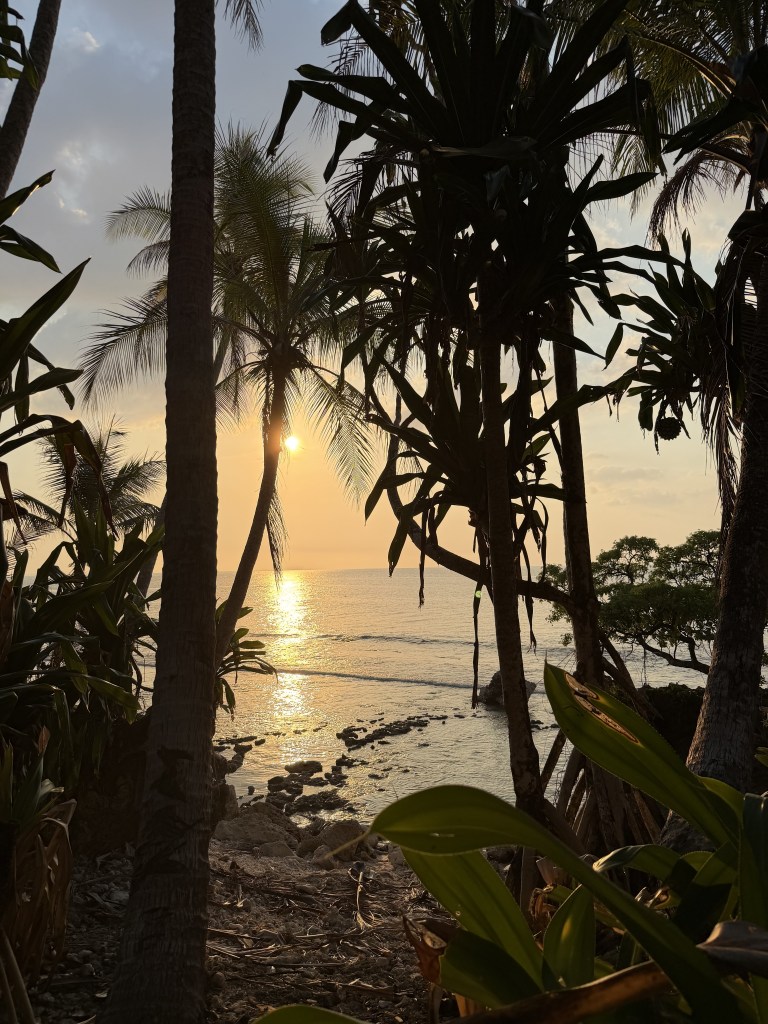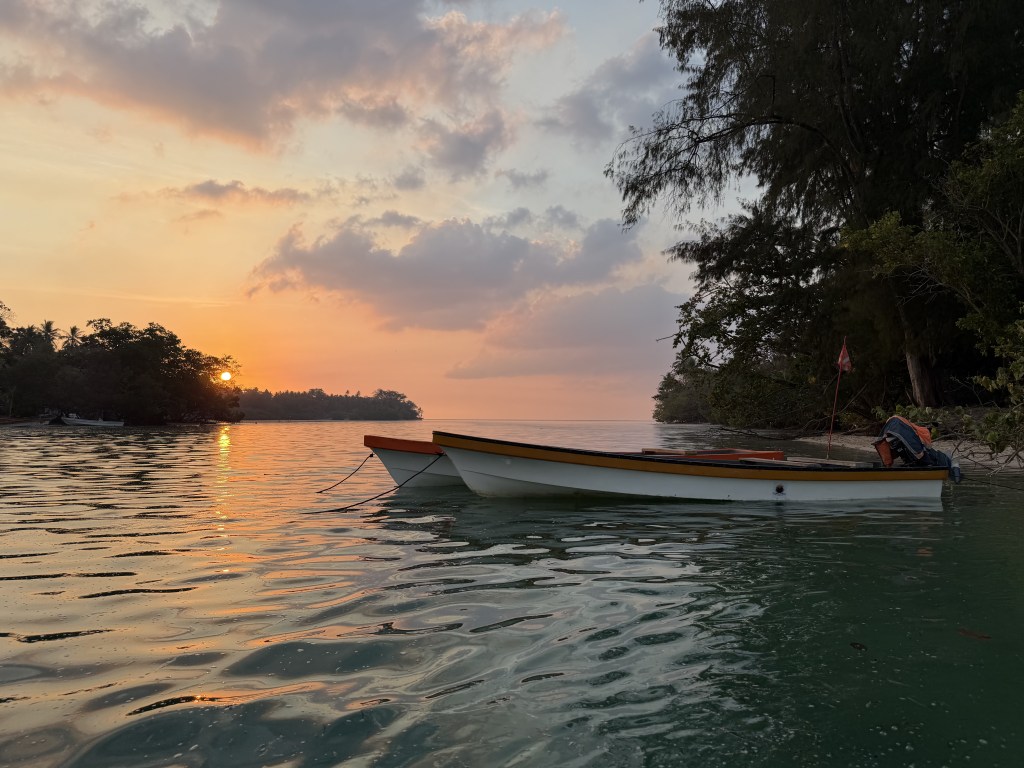
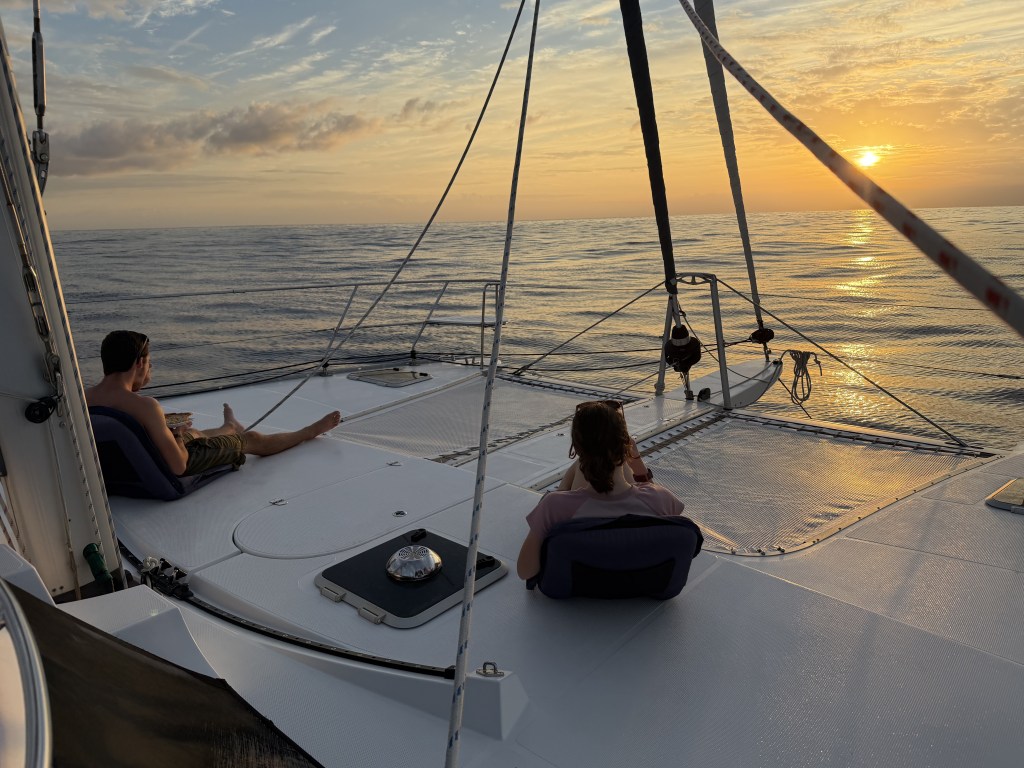
We headed overnight toward Kavieng, skipping Lahir because of the nearby mining activity. As darkness fell, we turned off our boat lights and kept a careful watch on the water for “raskols.” Thankfully, no issues. Chris and I have each celebrated a birthday underway, and now it was Cora’s turn—her 15th birthday passage, a true cruisers rite of passage! Initially, we had fantastic sailing, moving quickly through the day, until we hit the exact line PredictWind had drawn on the chart. Suddenly, the wind disappeared and the sea became glassy calm. A pilot whale surfaced nearby, logging along peacefully, and we took advantage of the calm to make a quiche underway. We ate it on deck as the sun set, followed by a visit from dolphins—a pretty spectacular way to spend a birthday at sea.
We anchored off Nusa Island Retreat on Nusalik Island, across from the town of Kavieng, New Ireland. It felt like an oasis of safety and calm.
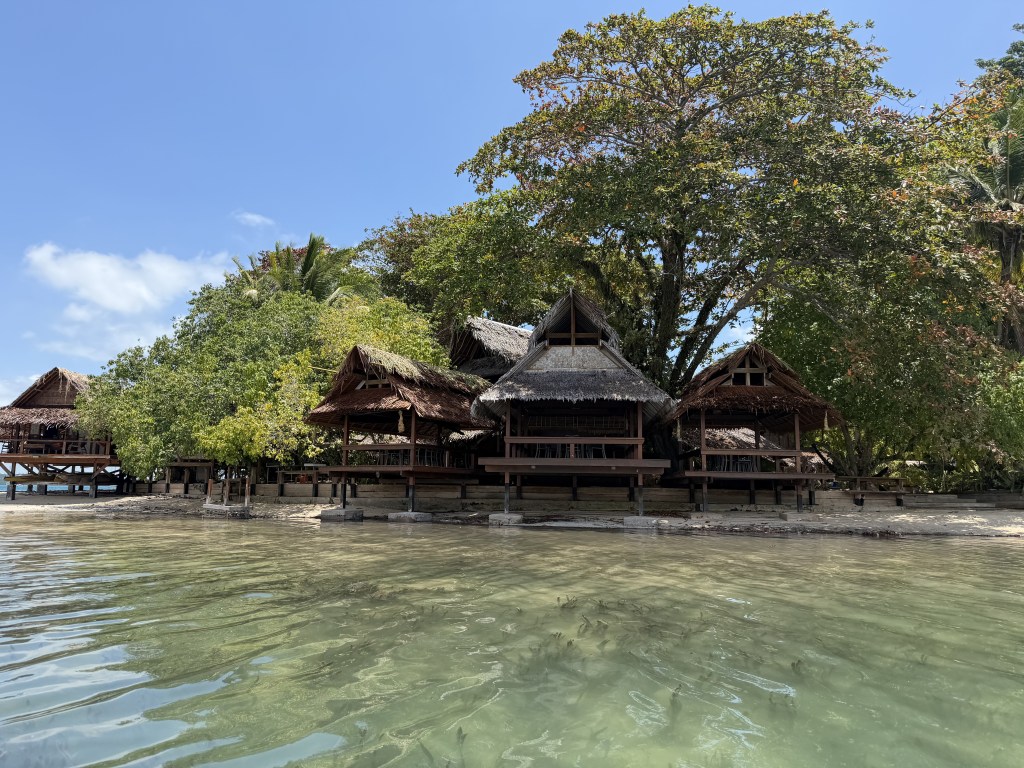
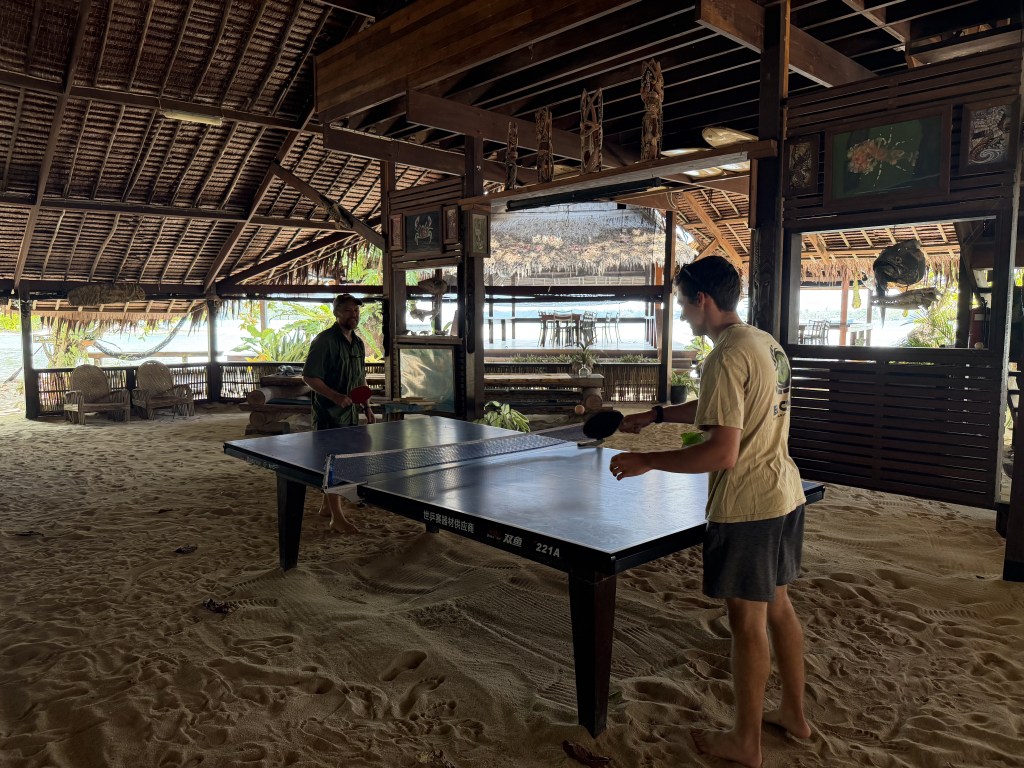
The resort is super low-key and very cruiser-friendly, and we enjoyed time playing ping-pong and eating at their stellar dinner buffet. Buffets are a cruiser’s friend and we all tend to fill ourselves to the brim! So great to get a break from cooking.
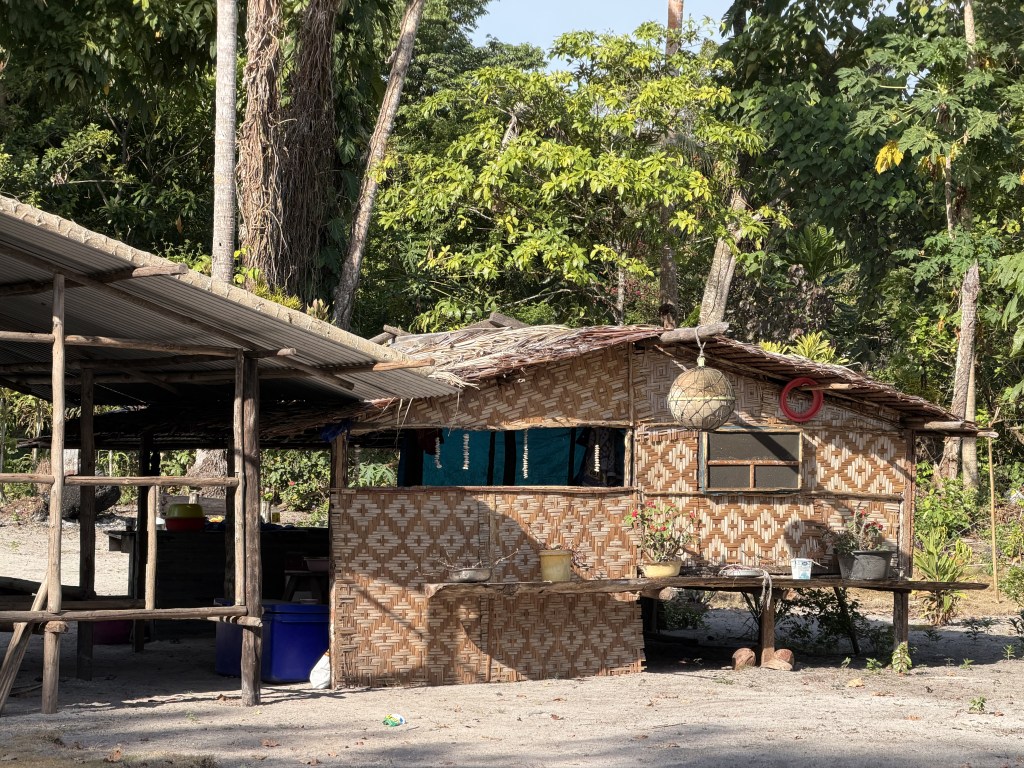
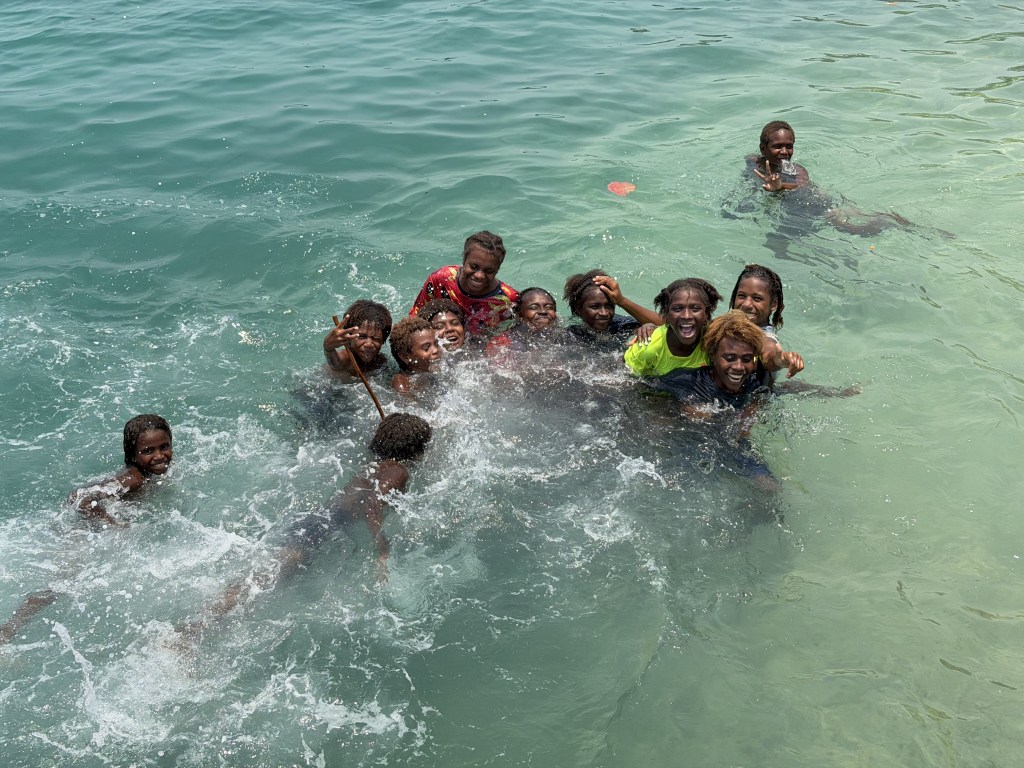
Being anchored directly off the village on Nusalik Island, we had a window into their day-to-day life. There seems no separation between the land and sea, as they freely move between them, washing dishes, cooling off, bathing, and playing with kids jumping from extremely high trees.
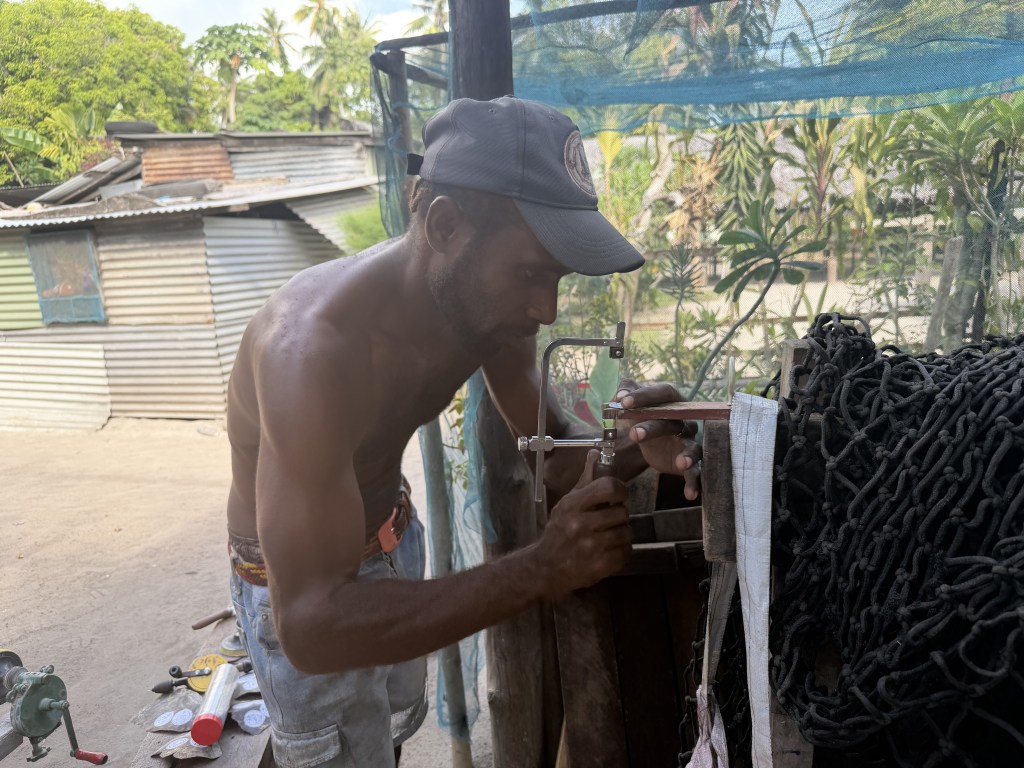
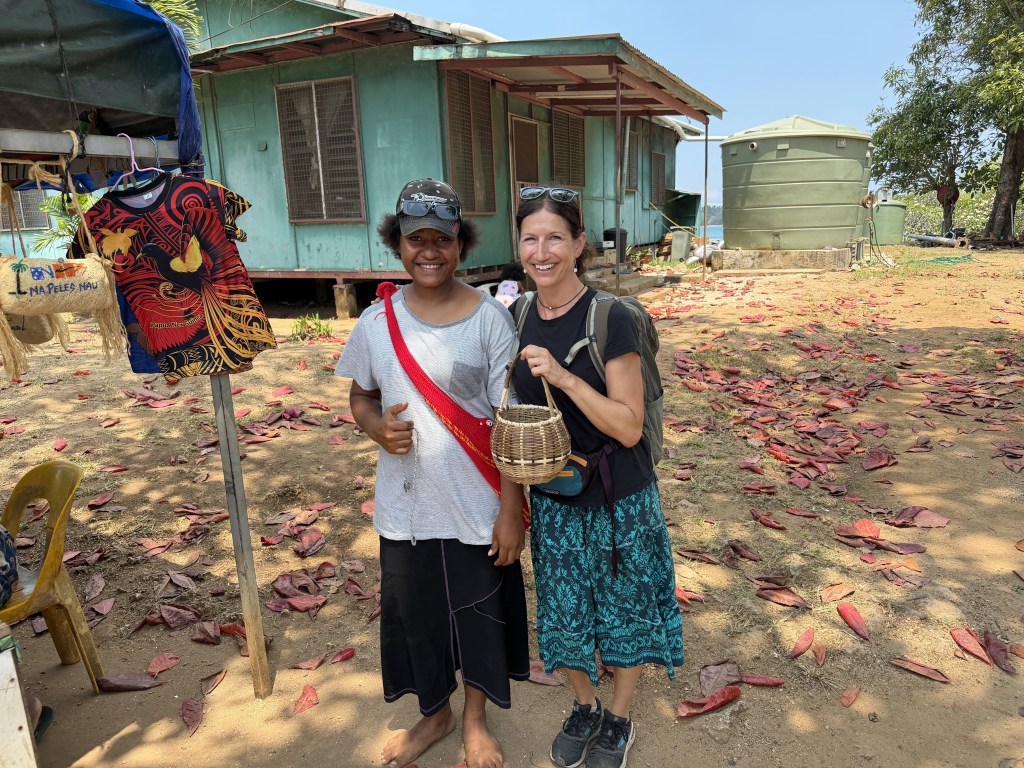
One day we walked the jungle trail through the village to their art tables, a local teenage girl showing us the way and visiting. We watched a man use a tiny saw to carve intricate designs in turtle shell, making jewelry. He said they sometimes find shell pieces in the water; other times buy the shells after people harvested the turtles.
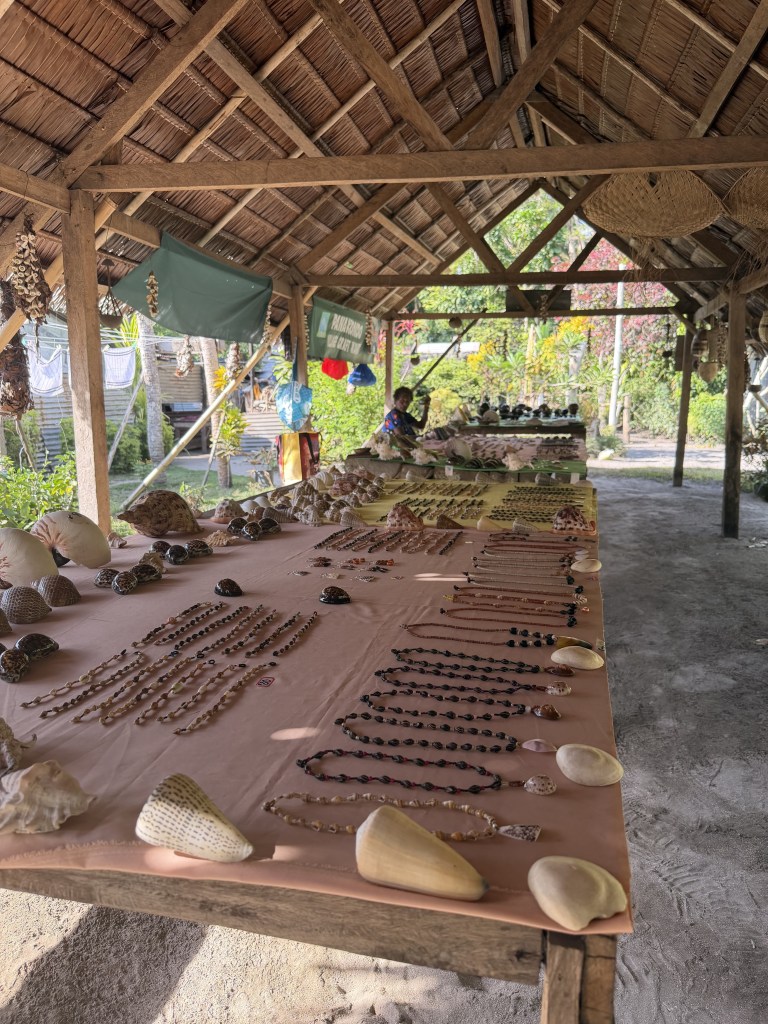
The women showed us the shells that their jewelry was made from, speaking of how the beauty hidden inside the shell emerges with polishing.
Arriving in Kavieng, we were struck by the brightly colored clothing, warm greetings and smiles, well-maintained government buildings, guards at the storefronts, and surprisingly nice roads.
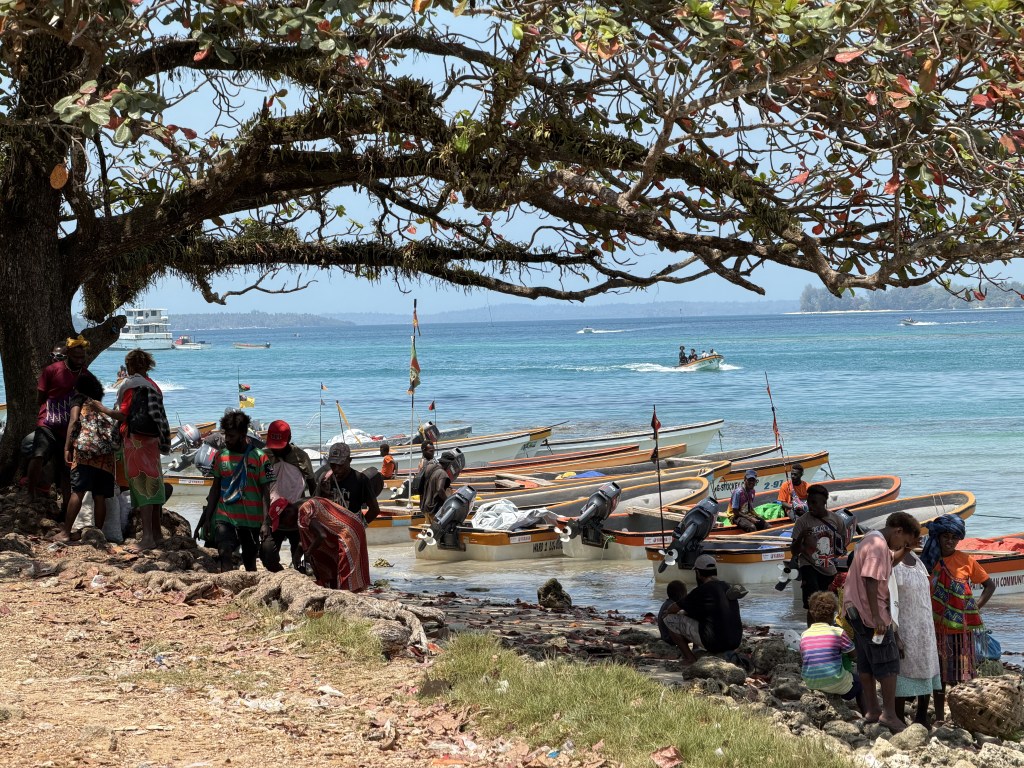
But the environmental conditions were impossible to miss. The grass was extremely dry, and we were dealing with smoke and ash settling on Terikah from nearby wildfires.
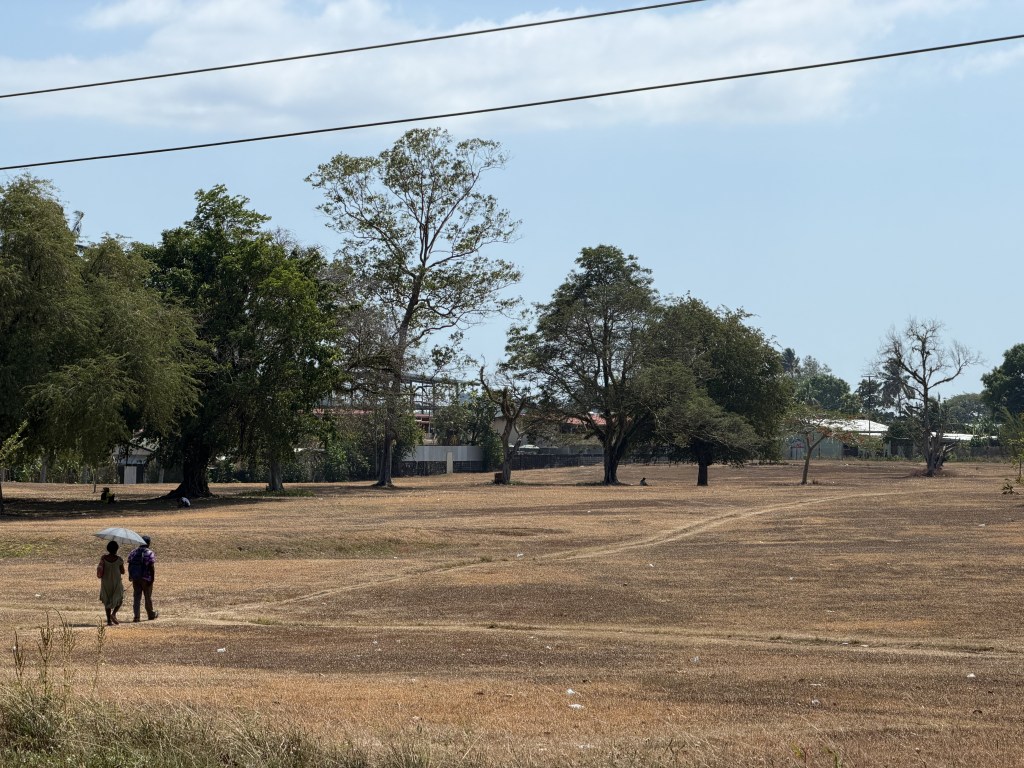
With very limited firefighting resources, there were no reports on when the fires might be contained. The drought is also beginning to show up in everyday life. The grocery store shelves where pallets of bottled water had been were nearly empty, and schools in town were operating only half-days because of the extreme heat and lack of water. We don’t want to turn our travel blog into a political debate, but we also can’t ignore what we are seeing firsthand: hotter oceans, extreme heat, drought, wildfire and the effects of El Niño are having very real consequences here. These aren’t abstract statistics when you’re watching the landscape dry out, breathing smoke, and seeing families prepare for water shortages. Traveling through these remote places has certainly made the reality of a changing climate feel much more tangible to us.
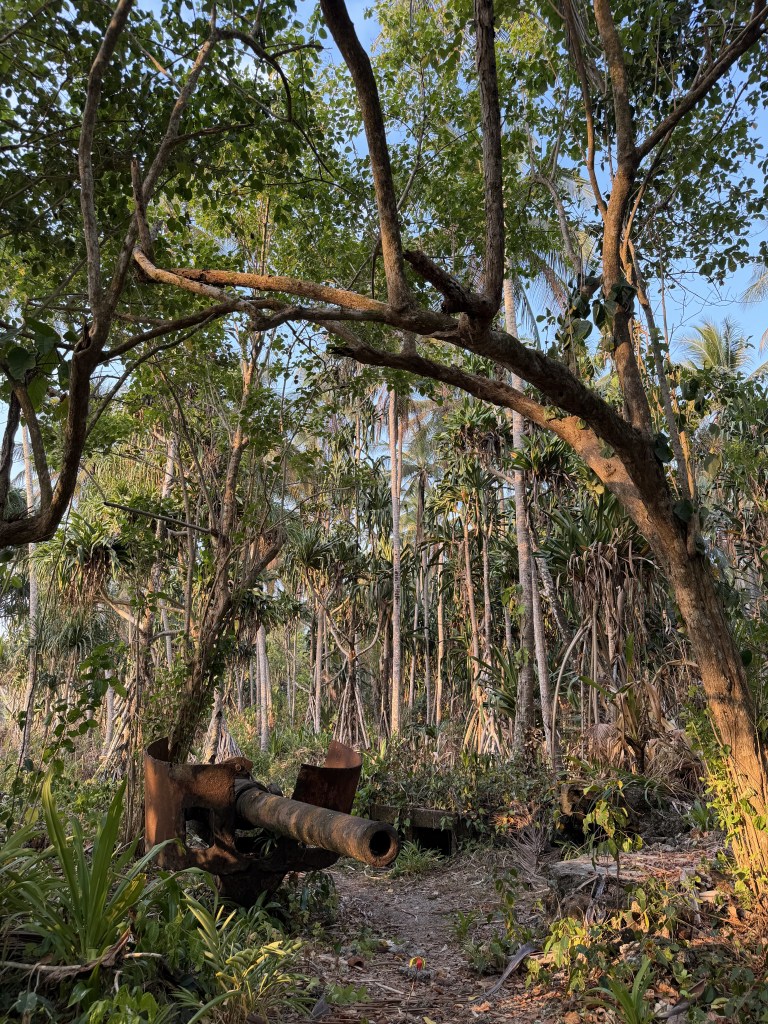
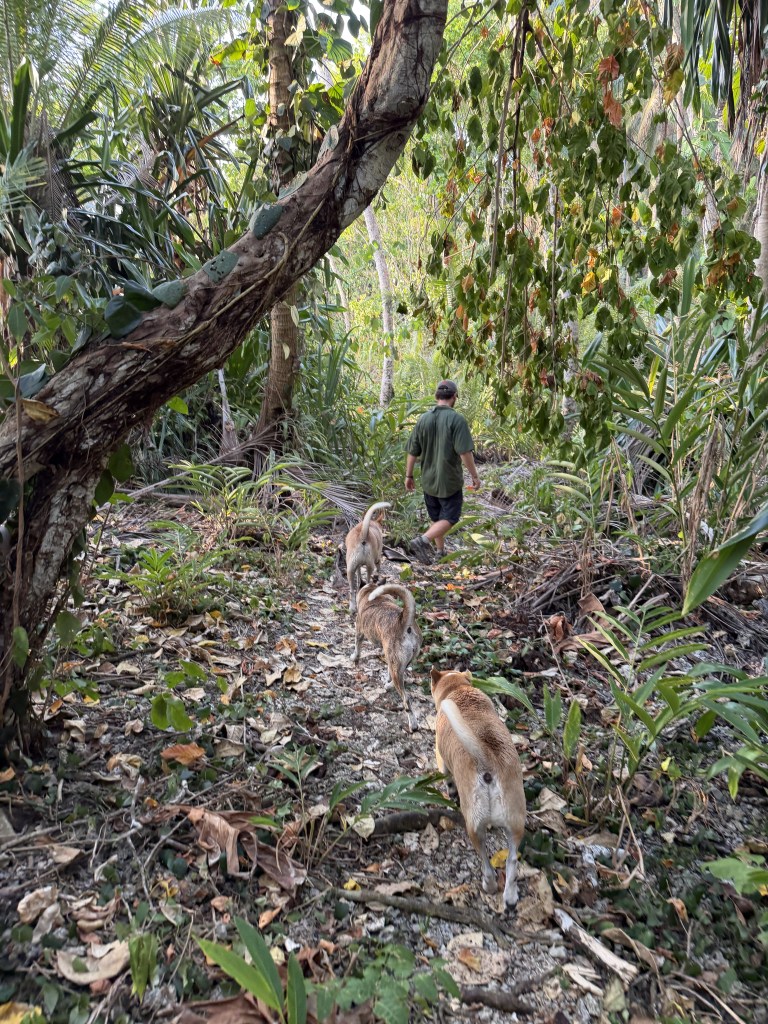
We took the dinghy to a nearby island and, after visiting with a local to obtain permission, set off on a jungle walk to see a WWII-era Japanese bunker and a gun.
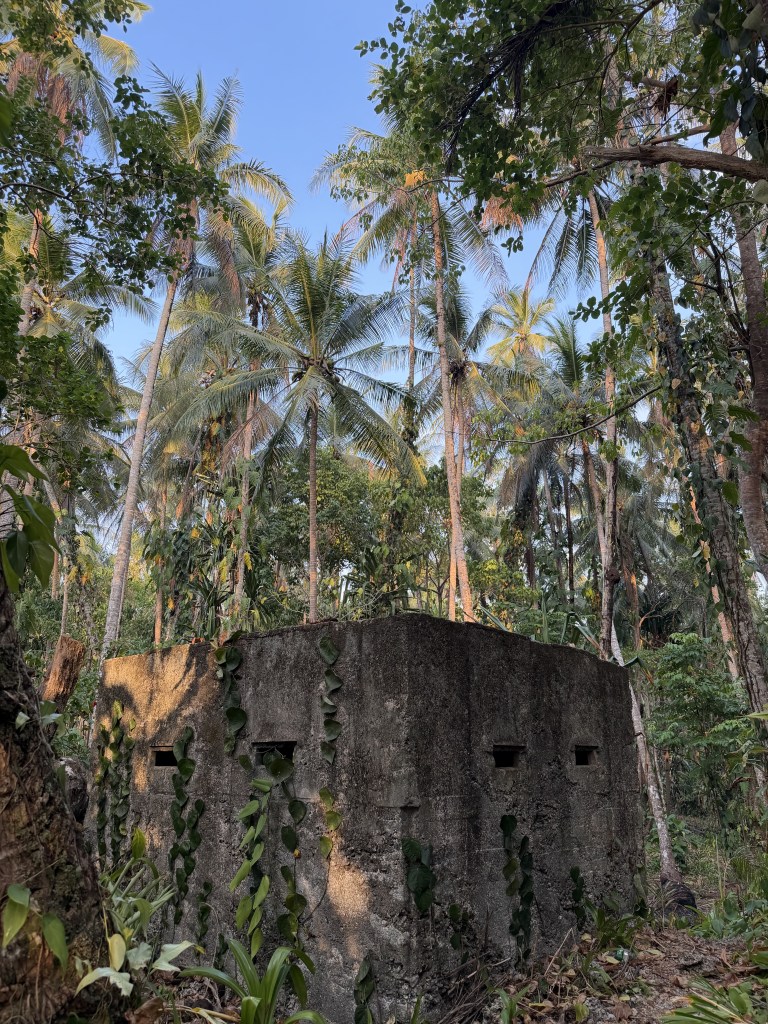
It was surreal walking through the thick vegetation as the setting sun filtered through the trees, revealing remnants of a very different time.
Adding to the adventure were three resort dogs who apparently love to swim the narrow channel between the two islands. They joined us for our hike and happily stayed with our little line of explorers the entire way, as if they were our very own jungle guides.
Customs was a very easy process here, as Martin checked us into the port, as well as checked us out of the country. He recommended we check out in Kavieng, as the other ports of exit have safety issues that are sadly worsening. In fact, we had talked about checking out on Manus but just two weeks ago violent tribal conflict broke out between Keloti, Timoenai, and related tribes involving raids, arson, looting, use of illegal firearms, injuries, death, and now displacement of dozens of people. He reassured us that Kavieng is “safe, not safe, but overall safe,” but just to be smart as there are a few unsafe people and areas. We felt “reassured, not reassured, but overall reassured.” He acknowledged the challenges faced by PNG, but wanted us to spread the word about the good things of PNG, as a tourist destination. Indeed, this area has much to offer in terms of fishing, diving, surfing and WW2 artifacts.
Off for one more trip to Kavieng to get fresh produce at the market.
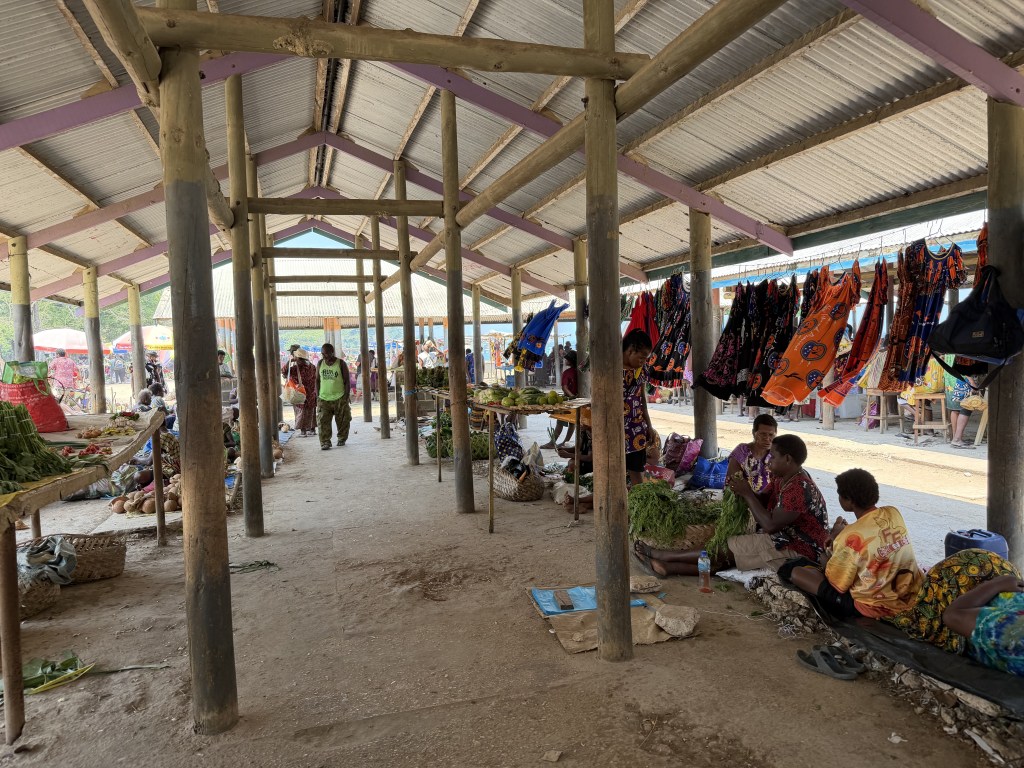
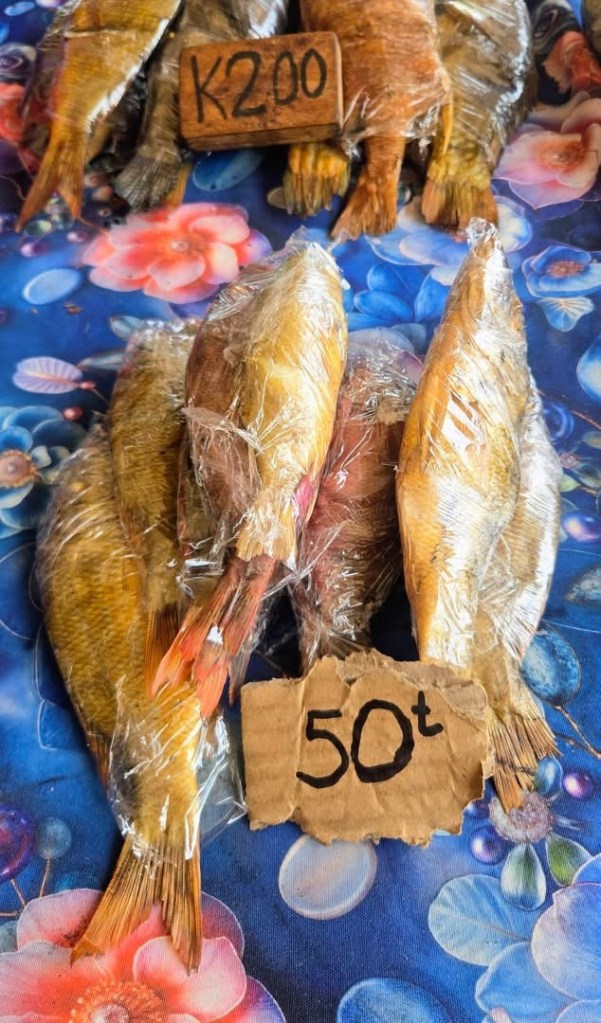
There were fewer offerings from local farmers due to the drought and reportedly the prices we were paying were higher than normal, though we still thought it very affordable and happy to support the farmers.
One more lunch at the resort, a final game of ping-pong, then anchor raised and on our way by 2:00.