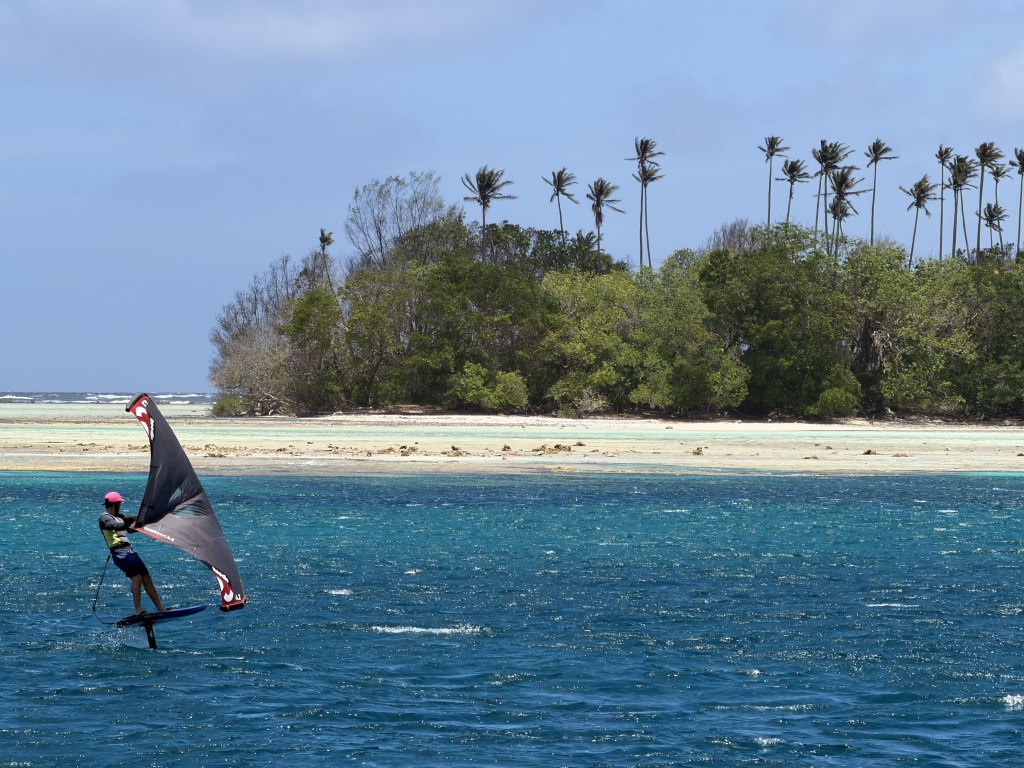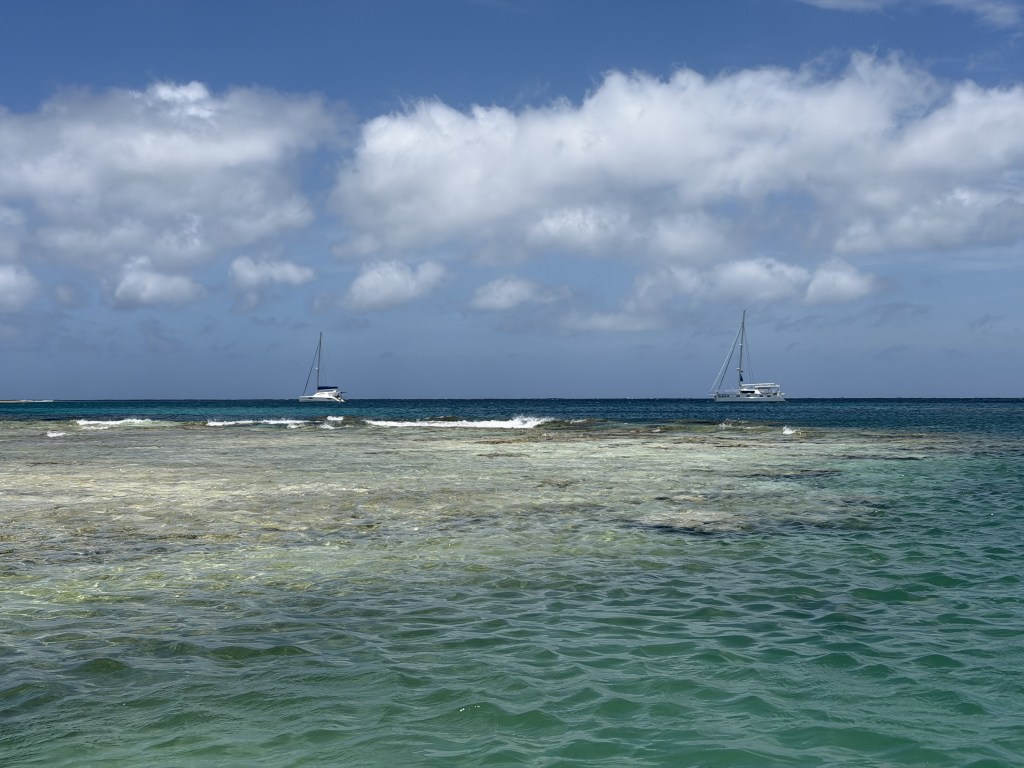
We left Buka and soon fell into the island’s extensive wind shadow, motoring for a while before the wind gradually built as we made our way toward Sungkin Bay on Boang Island, part of the Tanga Islands. The Tanga Islands are a four-island group in New Ireland Province formed from the remnants of an ancient volcanic system and are actually the visible remnants of a largely submerged volcanic caldera.
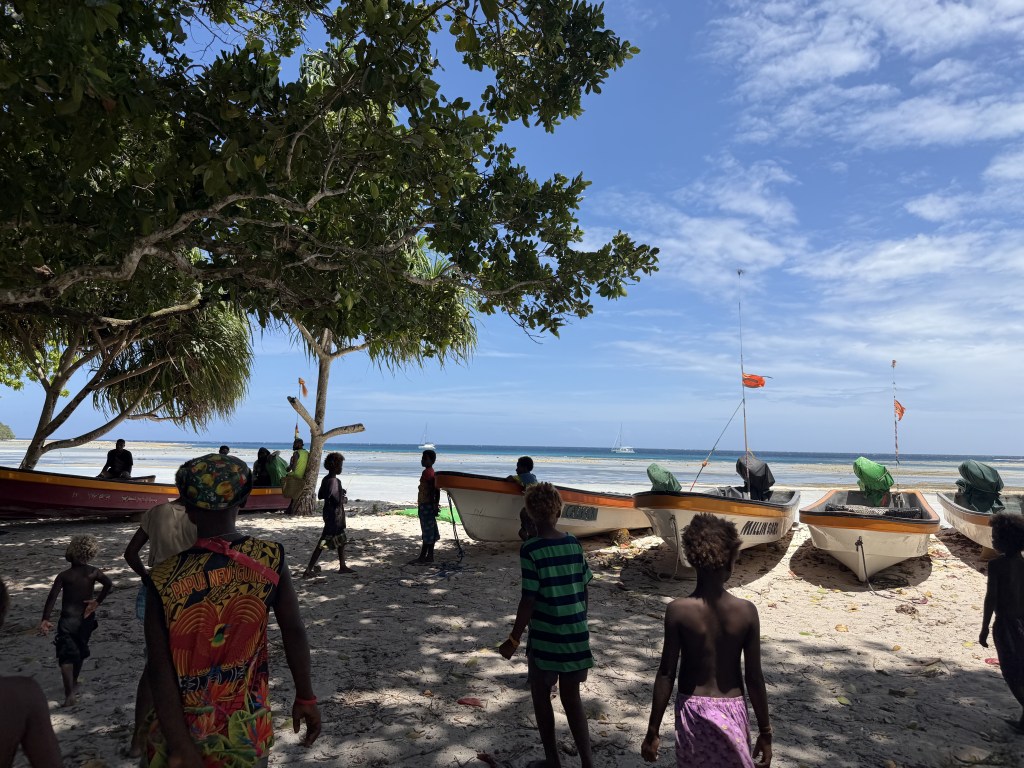
After we were anchored, Tungston, a 14-year-old paddling a canoe he had made himself, came out to greet us. His English was excellent. He explained that he and the adults in his family speak English, while the younger children primarily speak their mother tongue and Tok Pisin. Tungston is in Year 7, but school had been suspended because of the extreme heat and drought associated with El Niño. The students in the three exam years were continuing to attend, while the other children were receiving weekly packets of work to take home. The government had told families to keep their children home during the heat and drought.
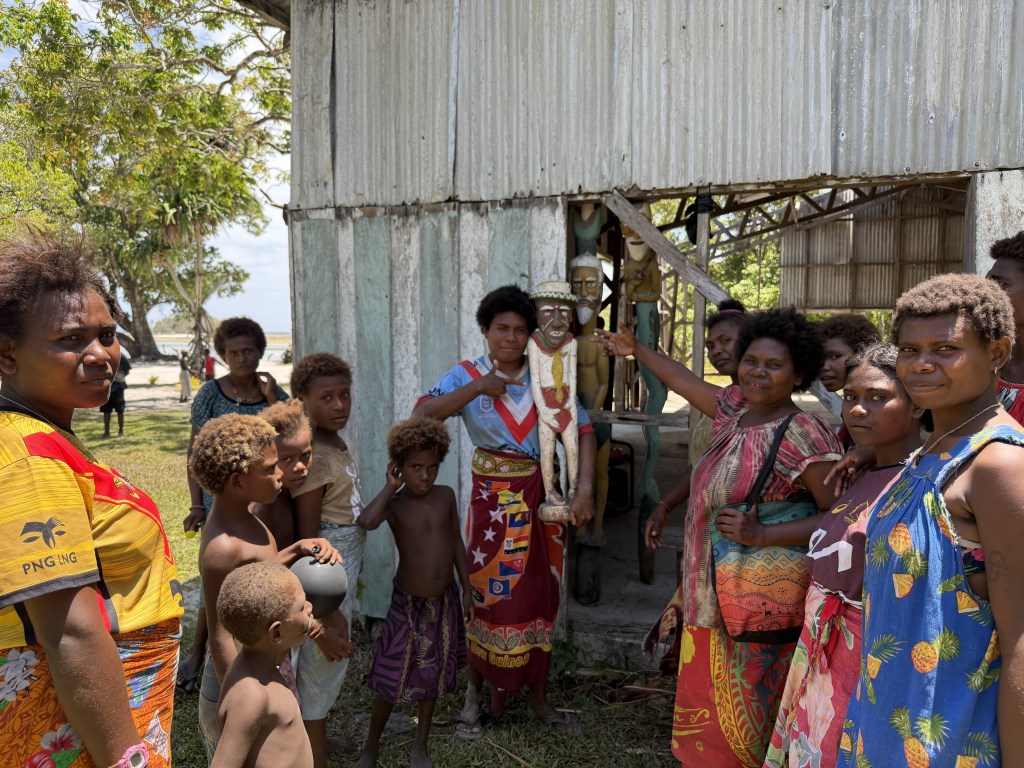
We asked Tungston if this was a safe anchorage, meaning, in our minds, Are there rascals? Will someone board our boat? He took the question much further back in history. “It’s not dangerous anymore,” he told us. “We used to eat people, but stopped a while back.” Well, that’s reassuring, though honestly I hadn’t been worried about active cannibalism! When we asked about rascals, he said they had mostly moved onto the water and sometimes bothered government boats. He assured us we were safe—but then asked whether we had any weapons.
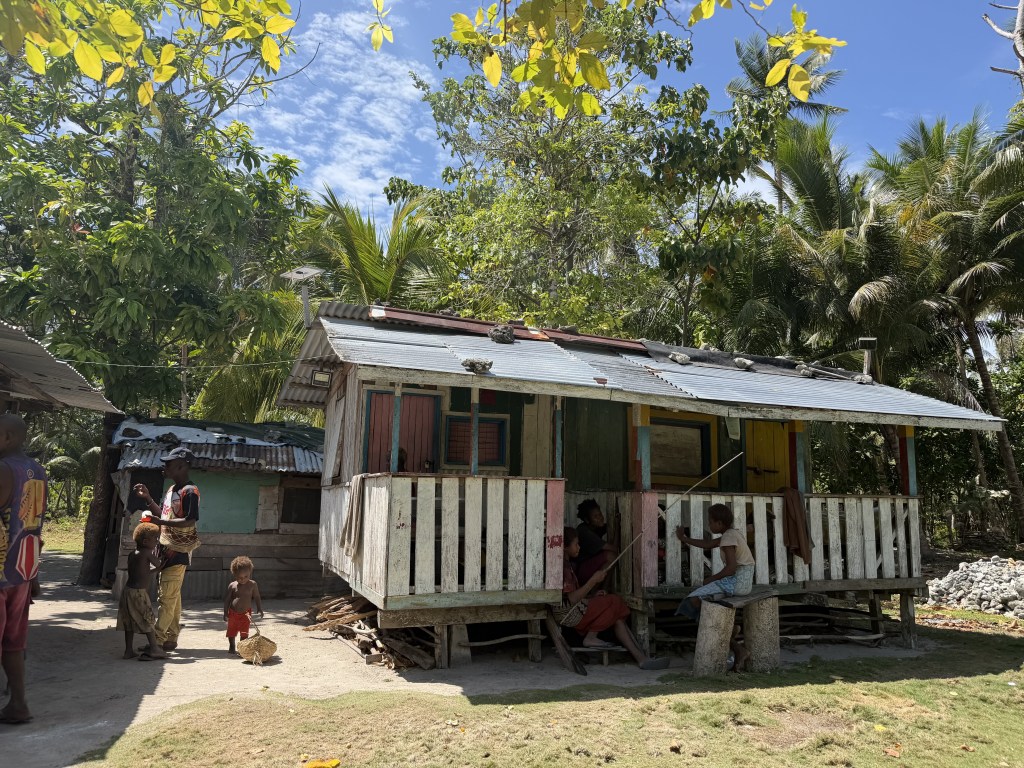
We had arrived on PNG Independence Day, and there were full pangas everywhere, coming from different islands. Tungston’s father, Thomas, is the head of the mine on a nearby island, and his grandfather is Chief Linus. The next morning, Tungston paddled out to tell us the Chief was ready to meet us, as well as brought us a gift of yams.
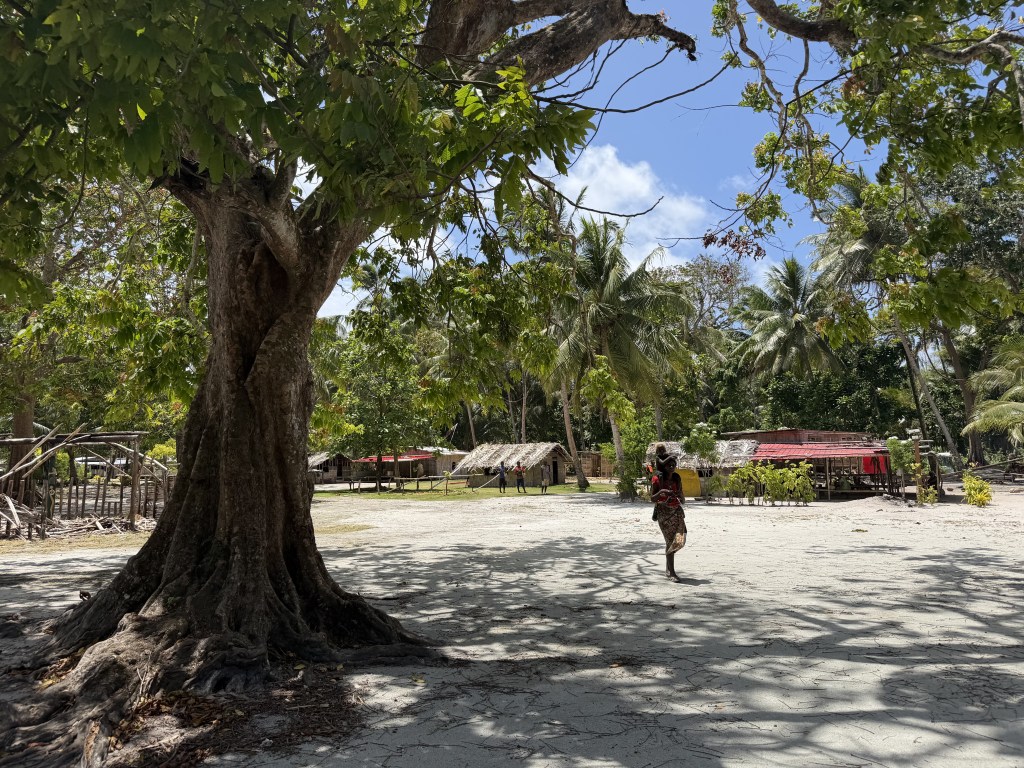
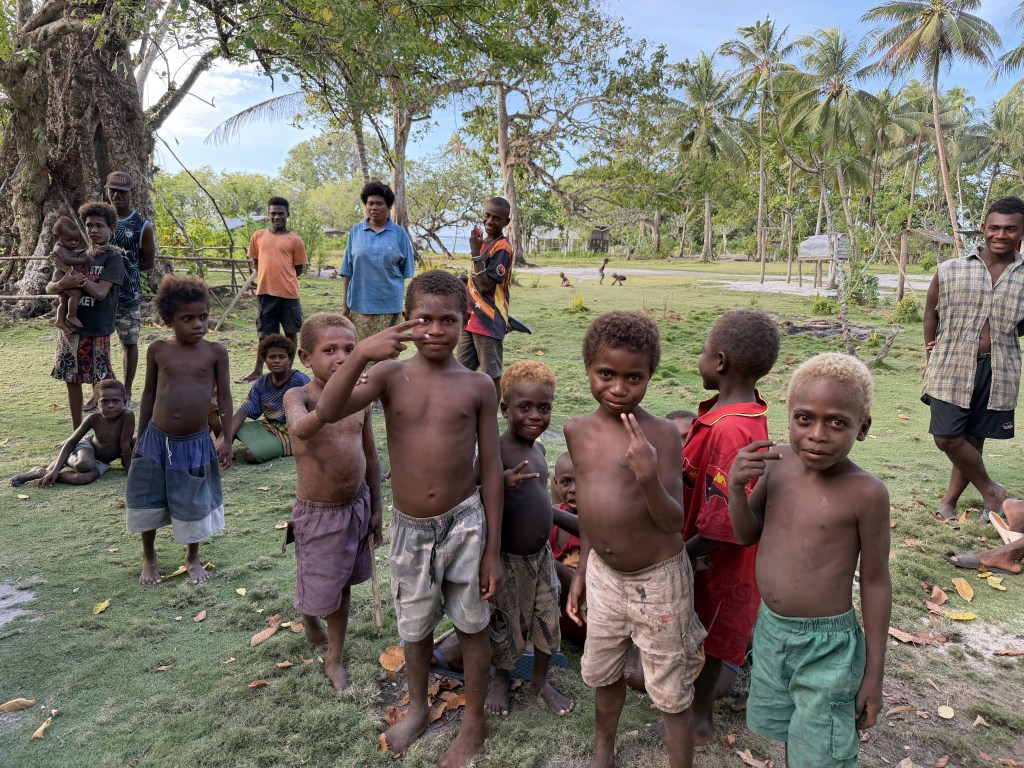
The winds were funneling into the bay, making for a very rolly night. Our monohull friends decided to leave, while one of our catamaran buddy boats stayed along with us. The next morning, we went ashore and were immediately surrounded by a warm and excited welcome. Children stared curiously, and a teacher and her husband shook our hands and said, “Welcome to Sungkin Bay.”
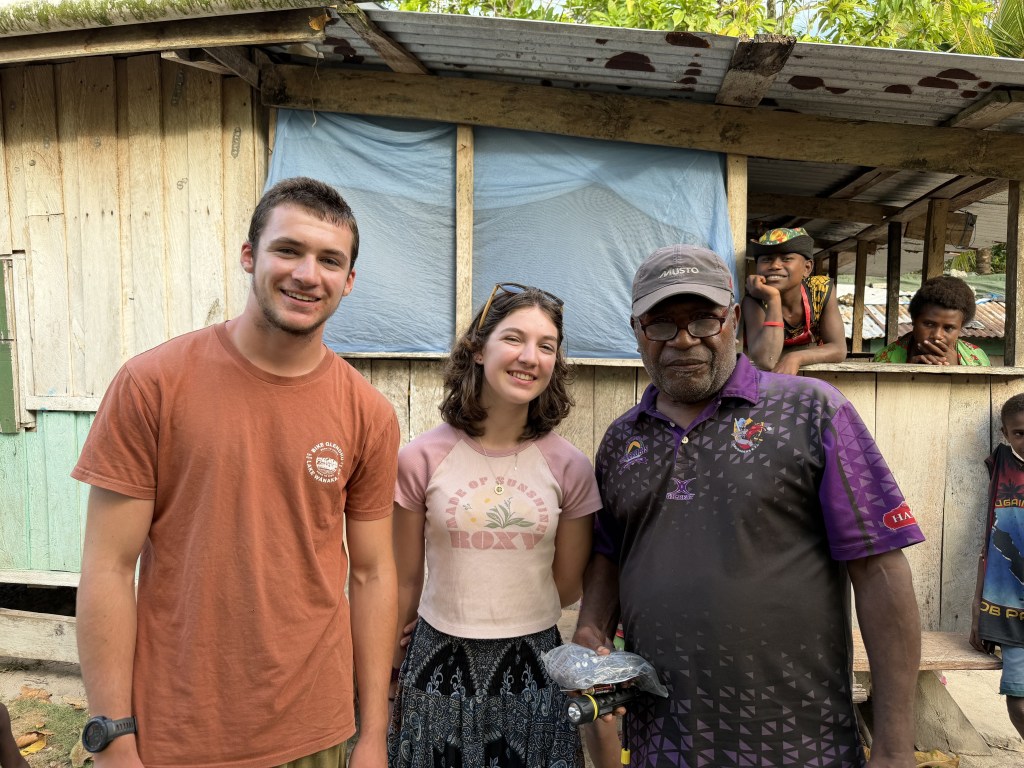
We were brought to Chief Linus, and we all sat together beneath a shady tree while much of the village gathered around us in a circle. It was an incredible experience.
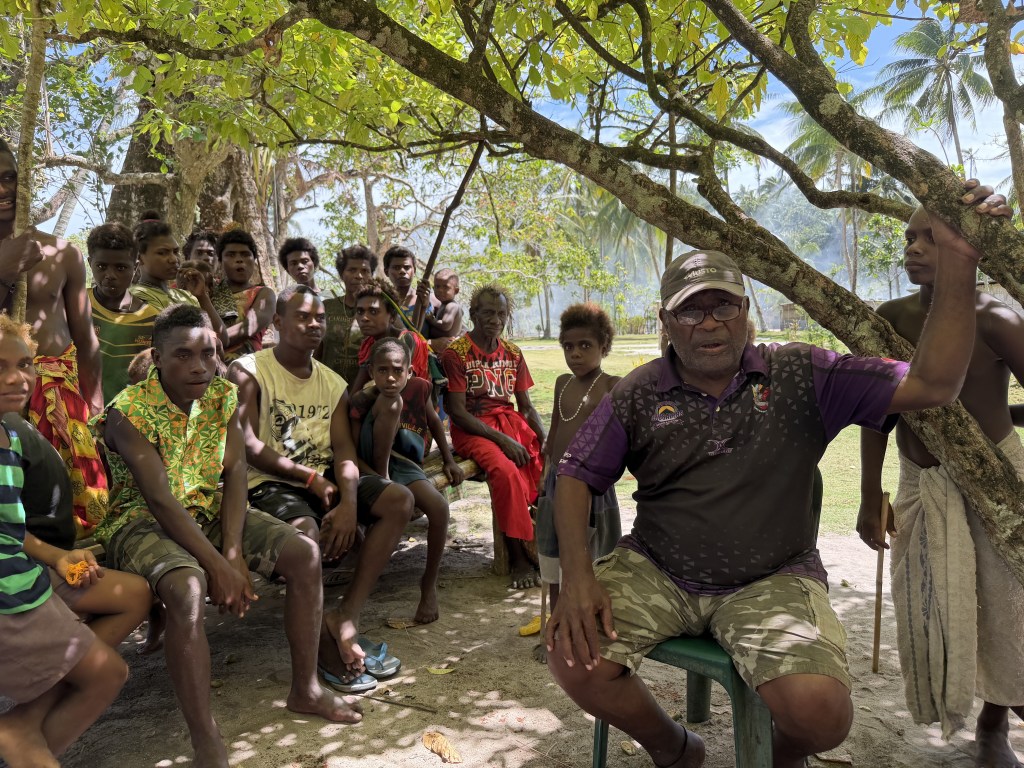
The Chief spoke openly about the challenges facing the village, particularly water and supplies. They use well water, which must be boiled for drinking and cooking, while seawater is used for everything else. The PNG government is working with the community on the possibility of installing a reverse-osmosis system to turn their abundant seawater into drinking water.
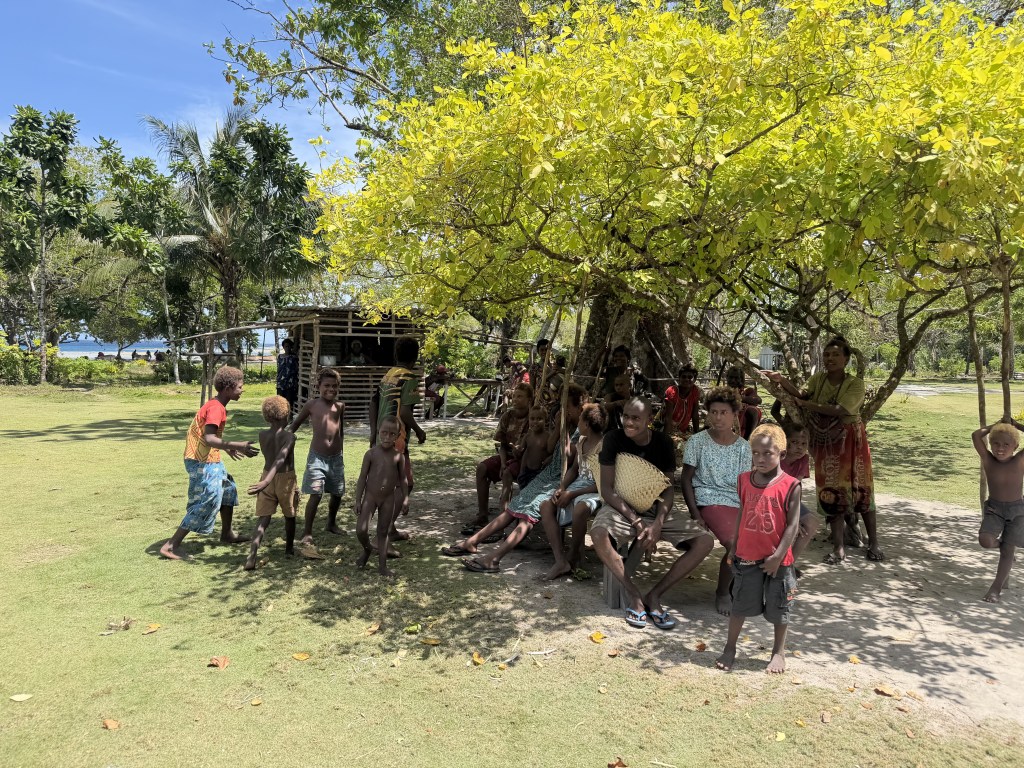
There were plenty of lighter moments, too. I pulled out a volleyball and a teenage boy immediately grinned and said, “I want that ball. That is my ball.”
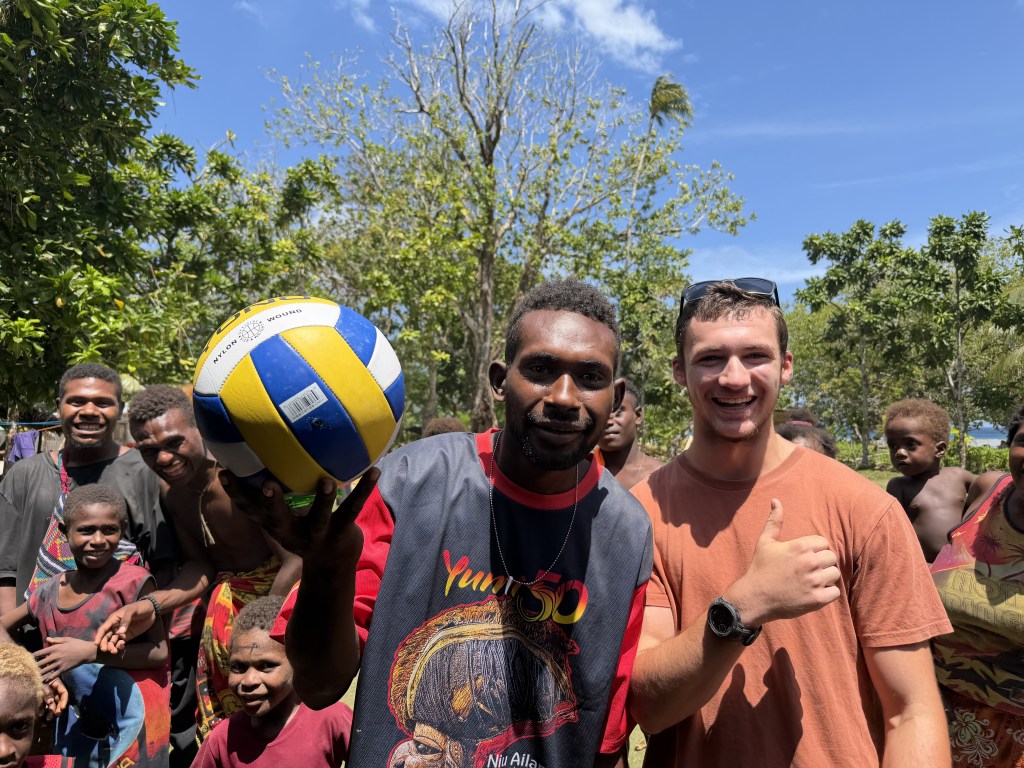
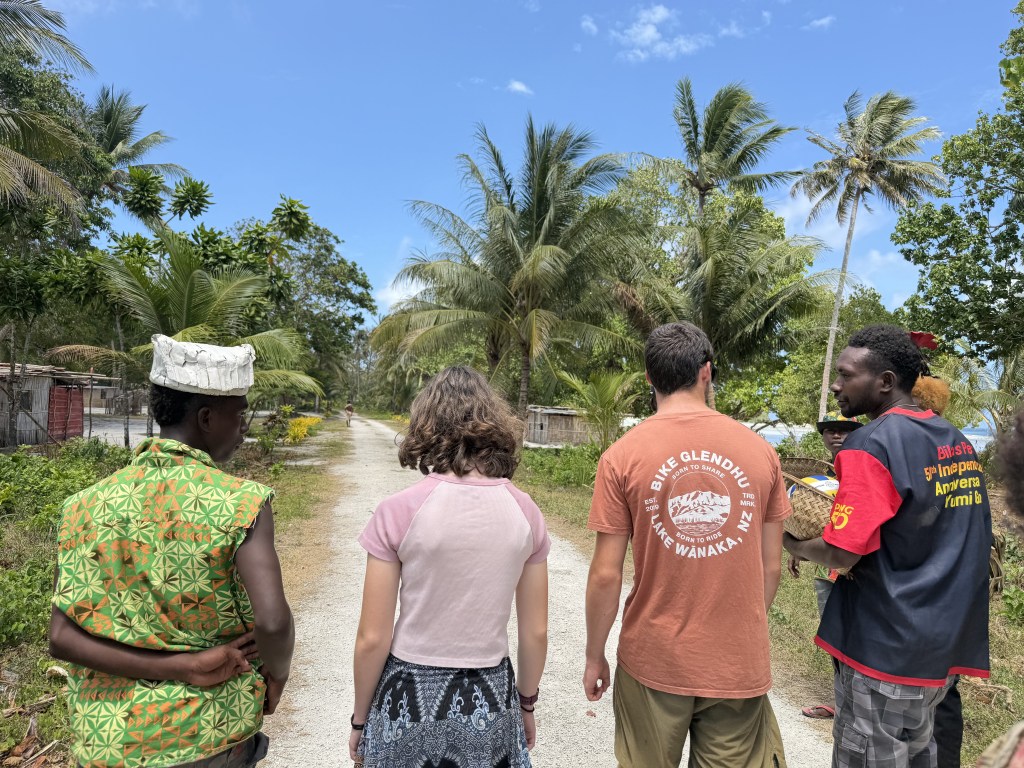
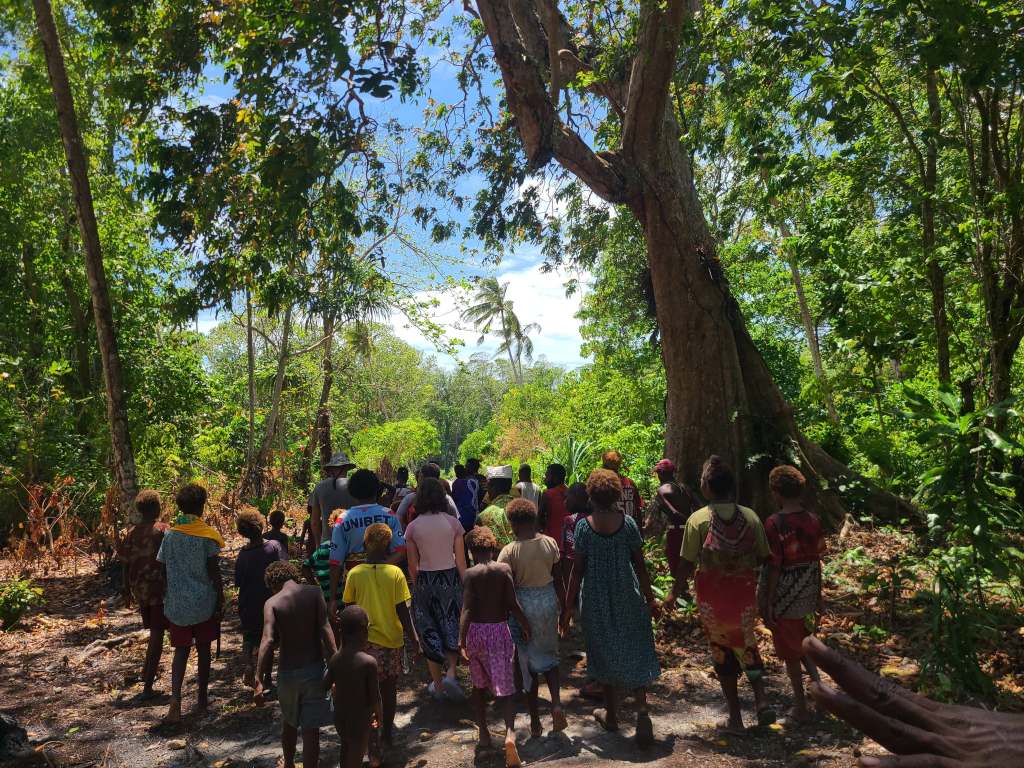
We had brought gifts for the Chief to distribute. We asked to go for a stroll and, before long, the entire village was walking with us. Calder and Cora talked with teenagers their own age while I visited with the teacher and some of the young women, who were particularly excited about the volleyball but concerned the boy would not share. The Chief emphasized how important it was for his village to practice their English with us. So, we walked and talked.
We returned later that afternoon to spend more time with the Chief and the village. Chief Linus even wrote us a letter saying how much he would like more cruisers to visit and that he could arrange cultural events and outings for future visitors.
The women were especially happy when I brought out their own “girls-only” volleyball, and the teen boys were digging the sunglasses Calder gave them.
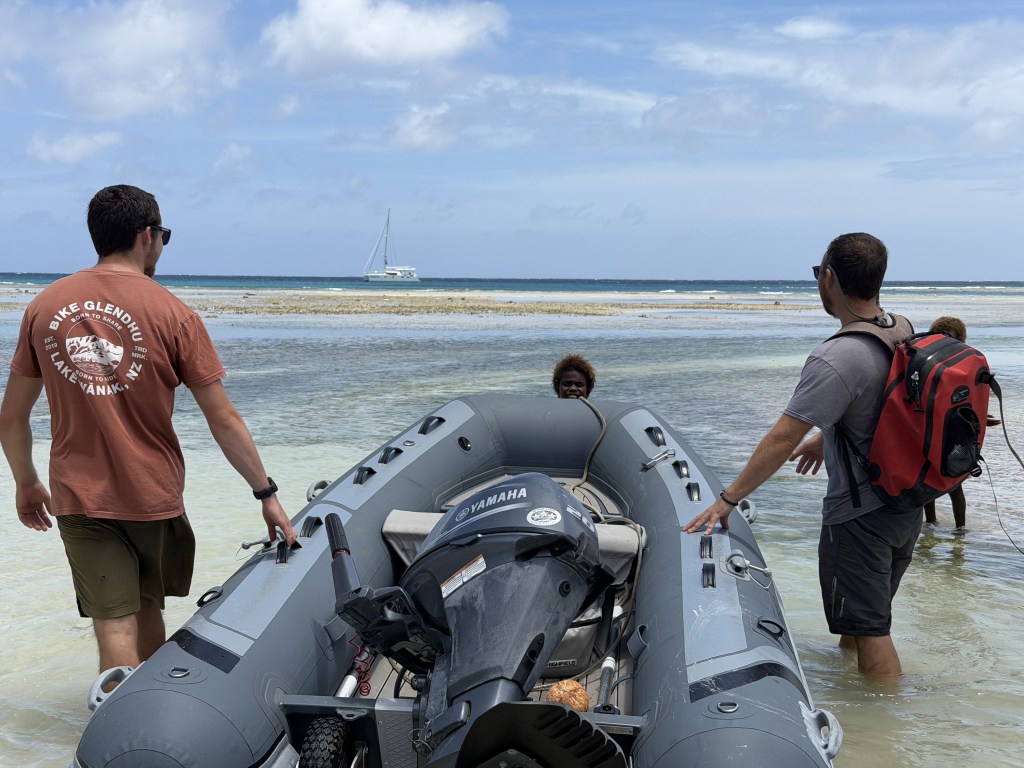
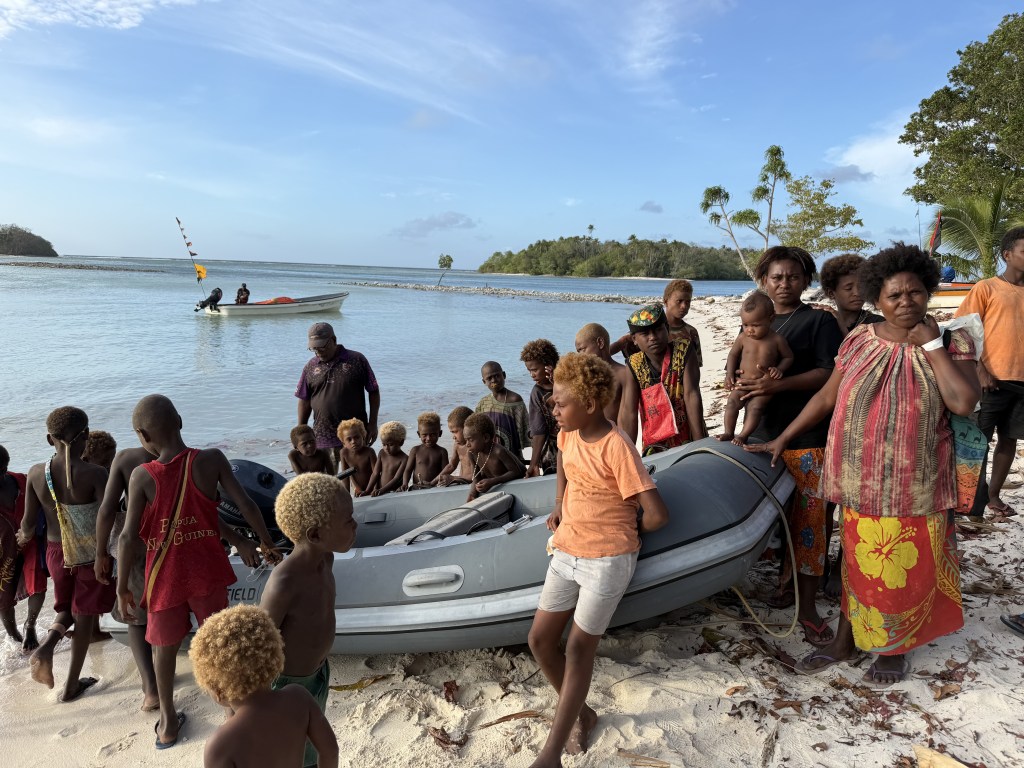
When it was finally time to leave, our dinghy was packed with kids, adults and even a baby bouncing on the bow.
As they pushed us away from shore, the whole group stood together waving goodbye.
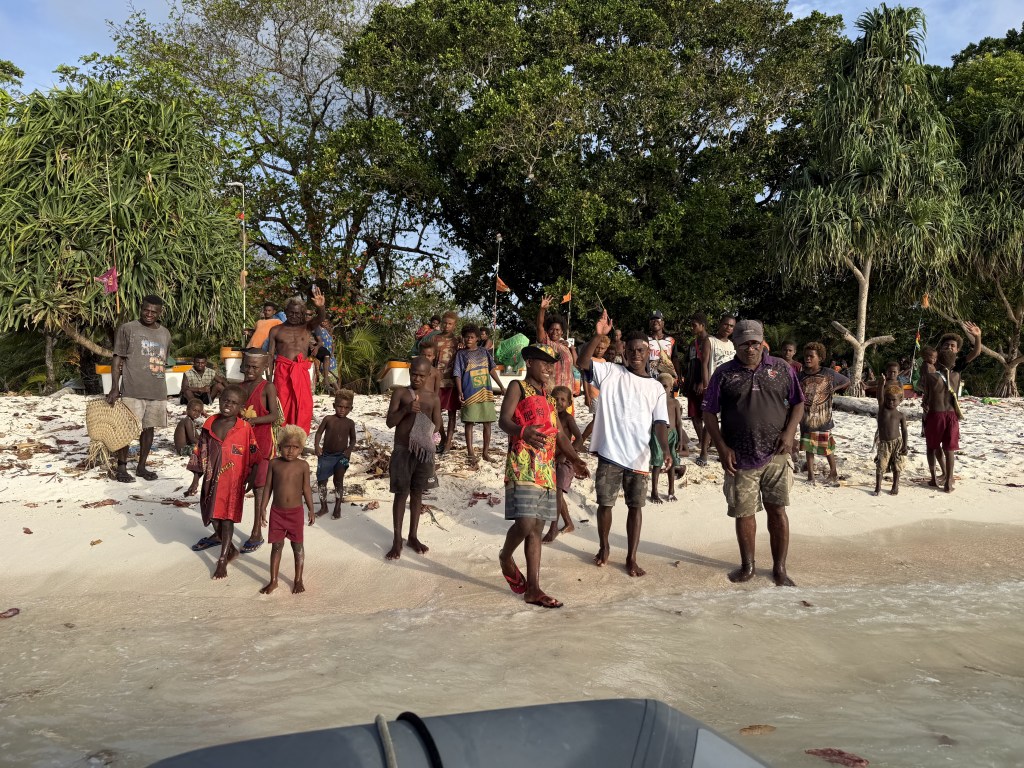
This may have been the most welcoming village we have visited in PNG. We would have loved to stay longer, but the anchorage was simply too rolly to get any work done, so we headed out that evening for an overnight passage to Kavieng.