On our way to the country of Papua New Guinea (PNG) where we would be going northwest, up and over the outer remote island chains.
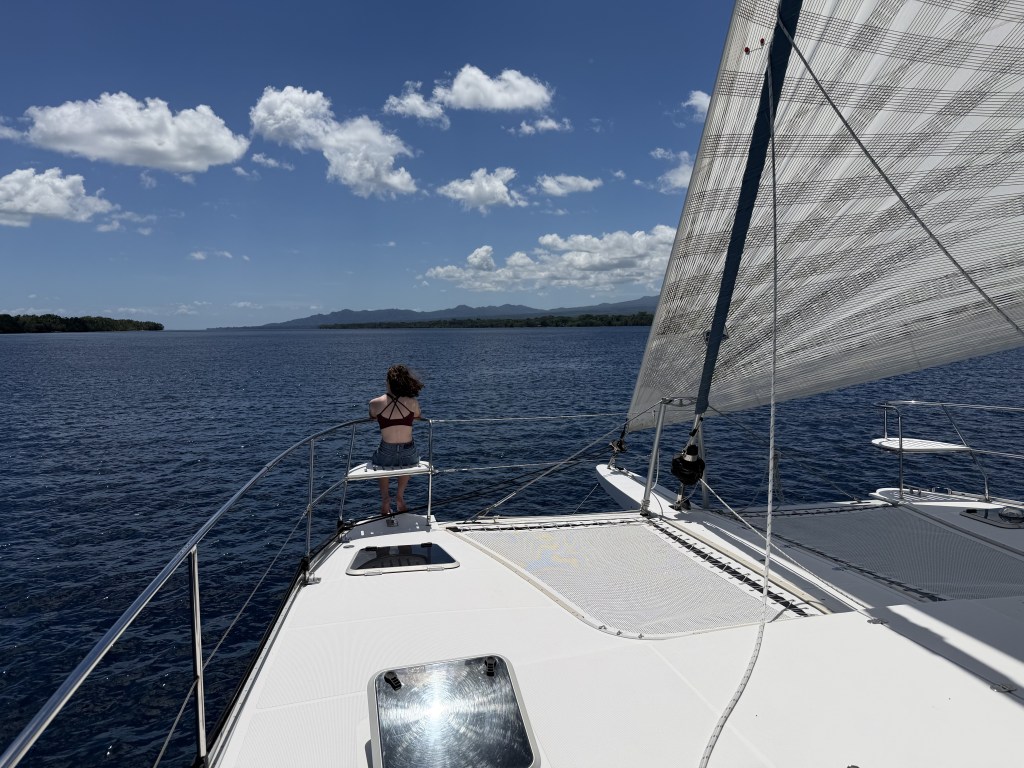
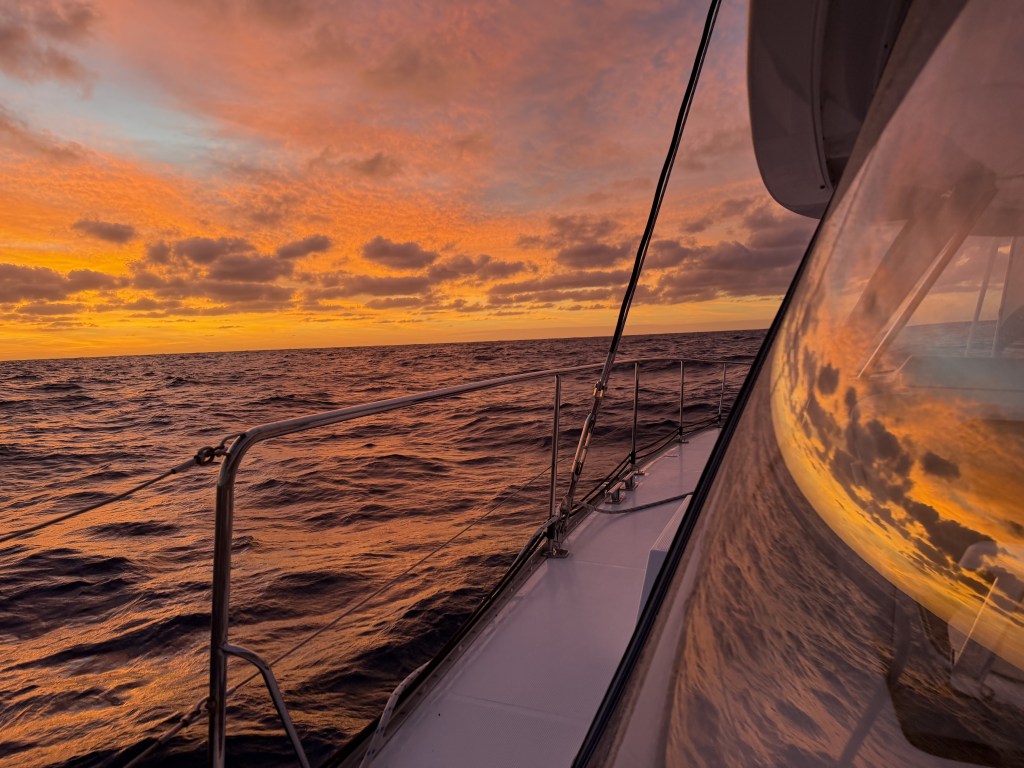
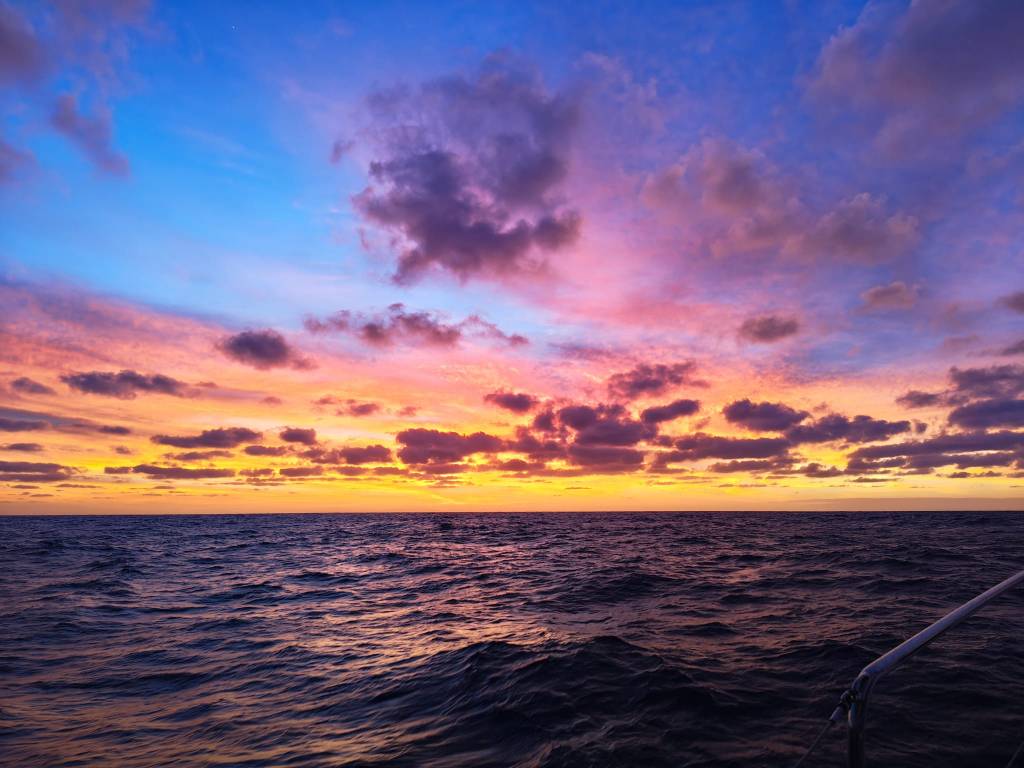
On our way, filling out all the PNG paperwork, I had to laugh at the form where we had to report our ship’s stores, which went beyond just declaring alcohol and medications, but also had other items, from zebra coat to bayonet to record player. We had one of our most glorious sunsets, as we ate dinner, and sang along to music.
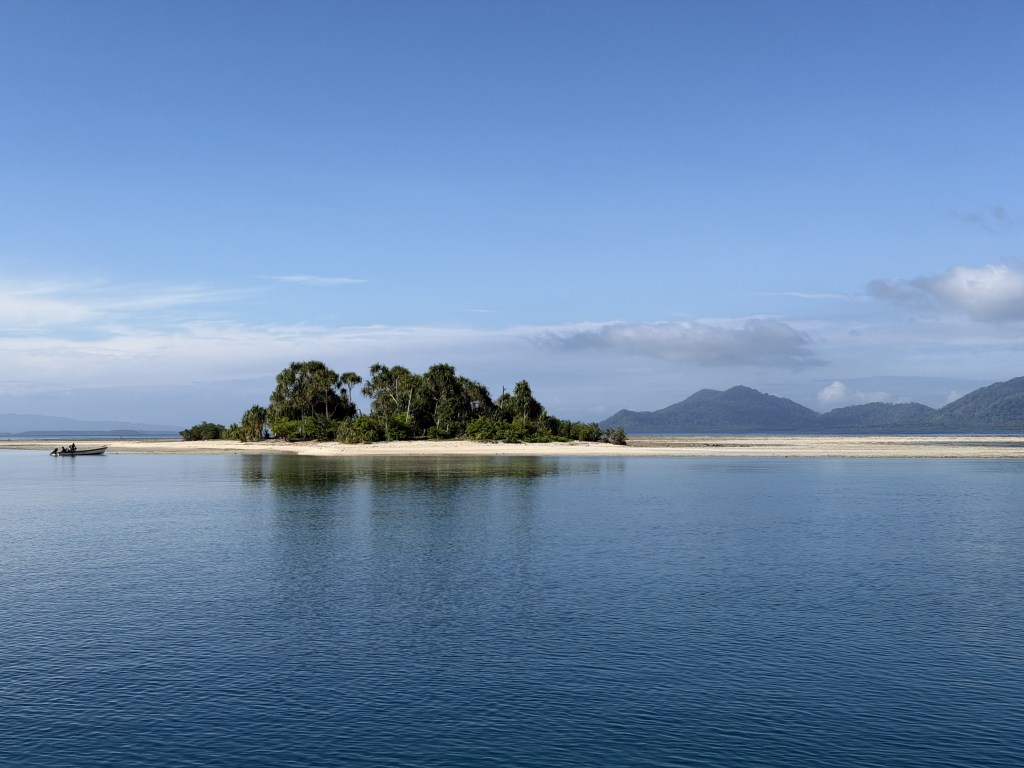
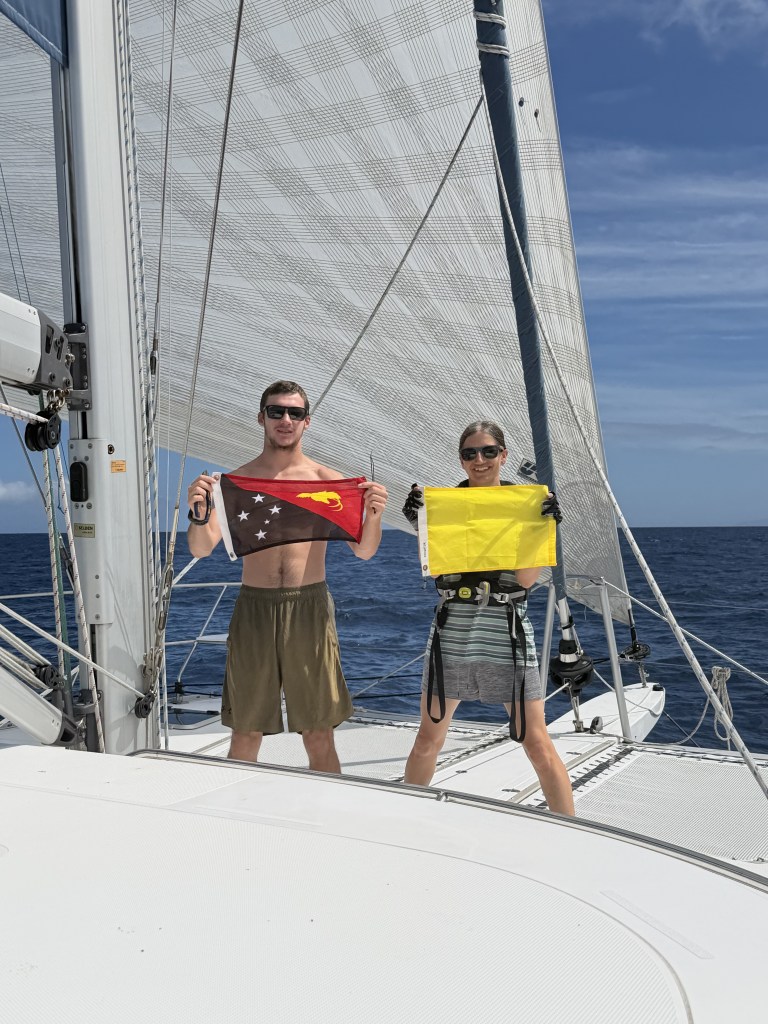
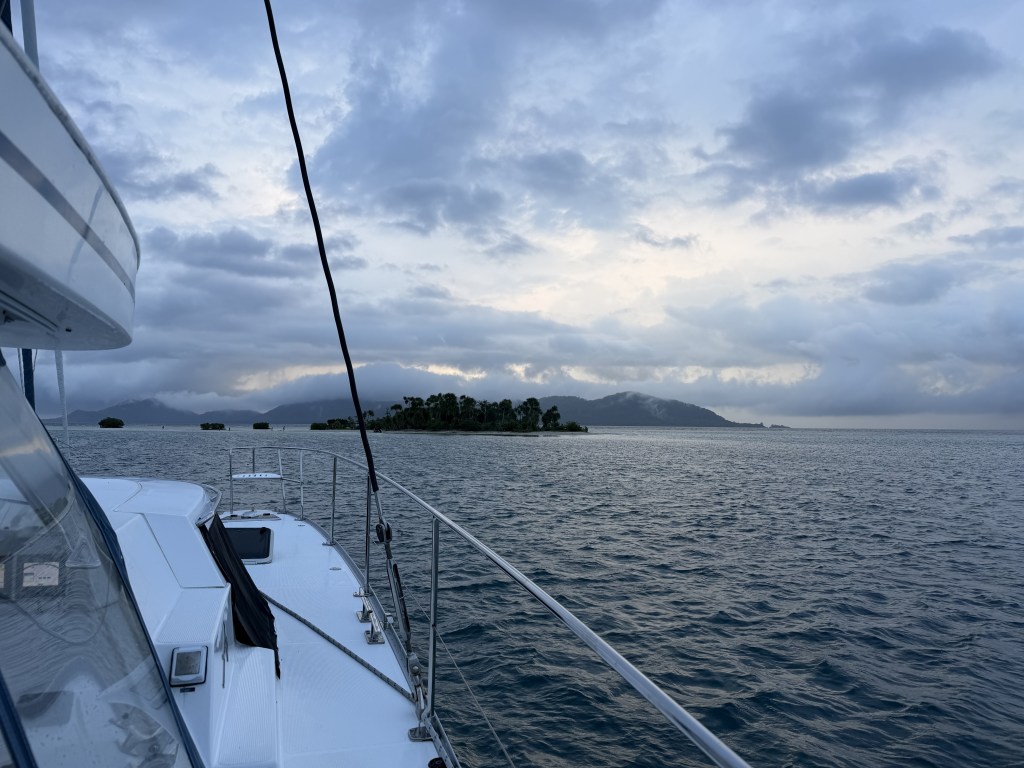
The waves were a bit more on the beam and larger than we anticipated, but it made for an intermittently fast passage. Overnight one time, Chris and I were rolling back and forth in bed as the boat was hauling through the water. Calder was at the helm rockin’ out to his music and sailing fast; Chris got out of bed and, to Calder’s dismay, reduced a bit of sail to slow the boat down for better sleeping conditions! Even with the bigger waves on the beam, we kept fishing; the sign of a truly rough Terikah passage is when we stop fishing. After 48 hours (288.4 miles with average speed of 5.8, our speed ranging from 2-10 knots), we anchored off White Island in Buka, Bougainville, PNG. As it was the weekend, we couldn’t check in for another two days, so stayed quarantined on the boat, our yellow q-flag flying.
Bougainville is a country in the making, with a complicated history. It was first colonized by Germany in the late 1800s, later administered by Australia, and in 1975 became part of the newly independent nation of Papua New Guinea. But the relationship between Bougainville and PNG has never been easy. Tensions over land, resources and political autonomy erupted in the late 1980s around the Panguna copper mine, eventually leading to a devastating civil war from roughly 1988–1998. PNG imposed a blockade during the conflict, cutting off essential supplies, and an estimated 15,000–20,000 people died, many from lack of food, medicine and basic health care.
Peace eventually came through a process that included significant involvement from New Zealand. The Bougainville Peace Agreement was signed in 2001, granting greater autonomy and promising a referendum on Bougainville’s future. When that referendum finally took place in 2019, an astonishing 97.7% voted for independence. The result still requires approval through PNG’s constitutional and parliamentary process. PNG’s Prime Minister also formally apologized to the people of Bougainville for the suffering experienced during the conflict.
And this is what makes our timing here so fascinating. On August 27, 2026, the referendum result was formally presented to PNG’s National Parliament, moving Bougainville one step closer to determining its own future. Bougainville’s leaders are hoping for self-government beginning in 2027 and independence by 2030, although the final decision still rests with the PNG Parliament.
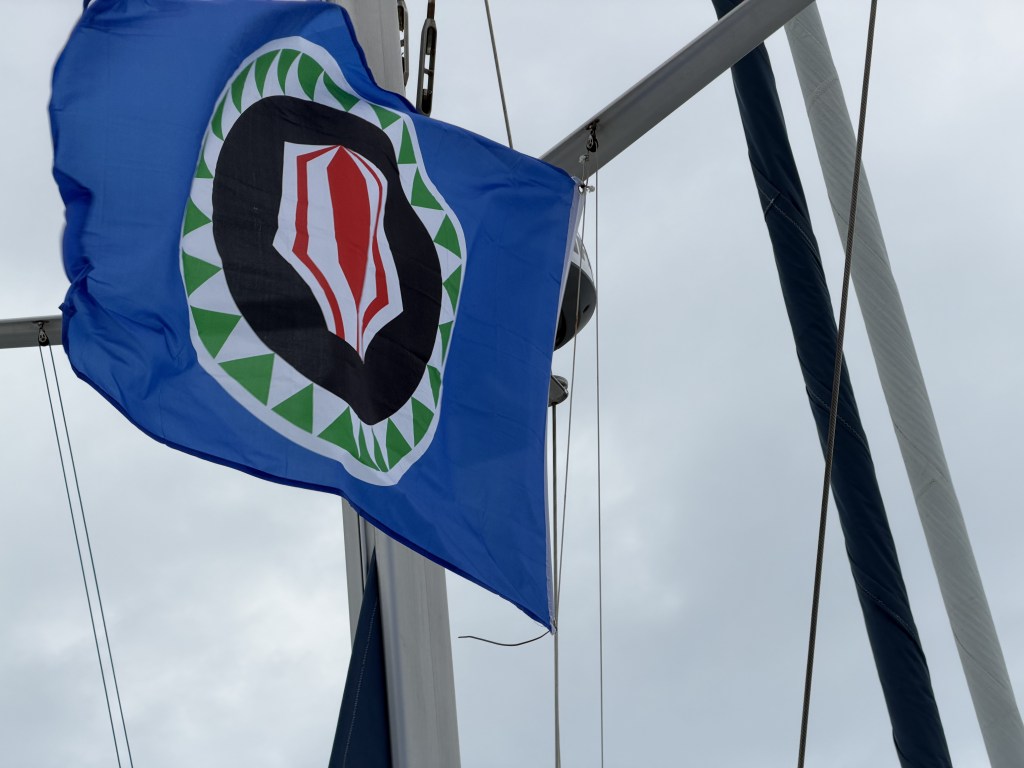
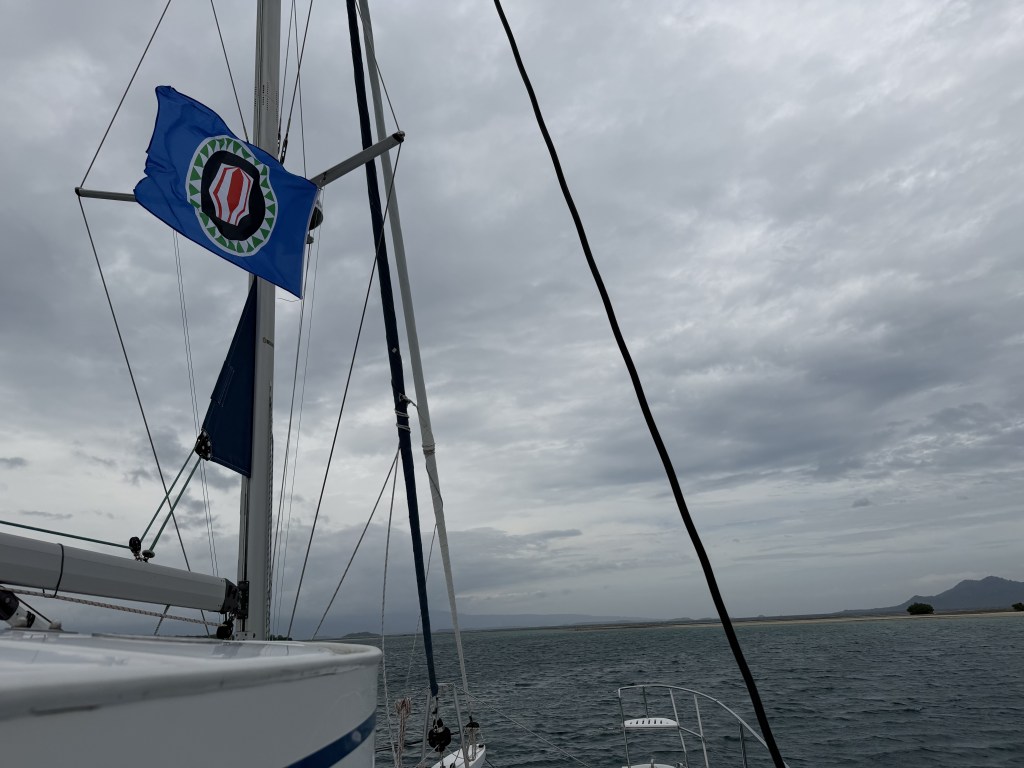
We had been watching events closely because we wanted to be sure it was a good time for us to visit, but what we have experienced has been something quite different from tension. Everywhere we go, the Bougainville flag flies proudly, and there is a strong sense of cultural pride. For us, traveling through Bougainville at this particular moment feels incredibly special. We aren’t simply visiting another beautiful island in the Pacific—we are traveling through a place that has endured a devastating conflict, found its way to peace, overwhelmingly voted for independence, and is now waiting to see what comes next.
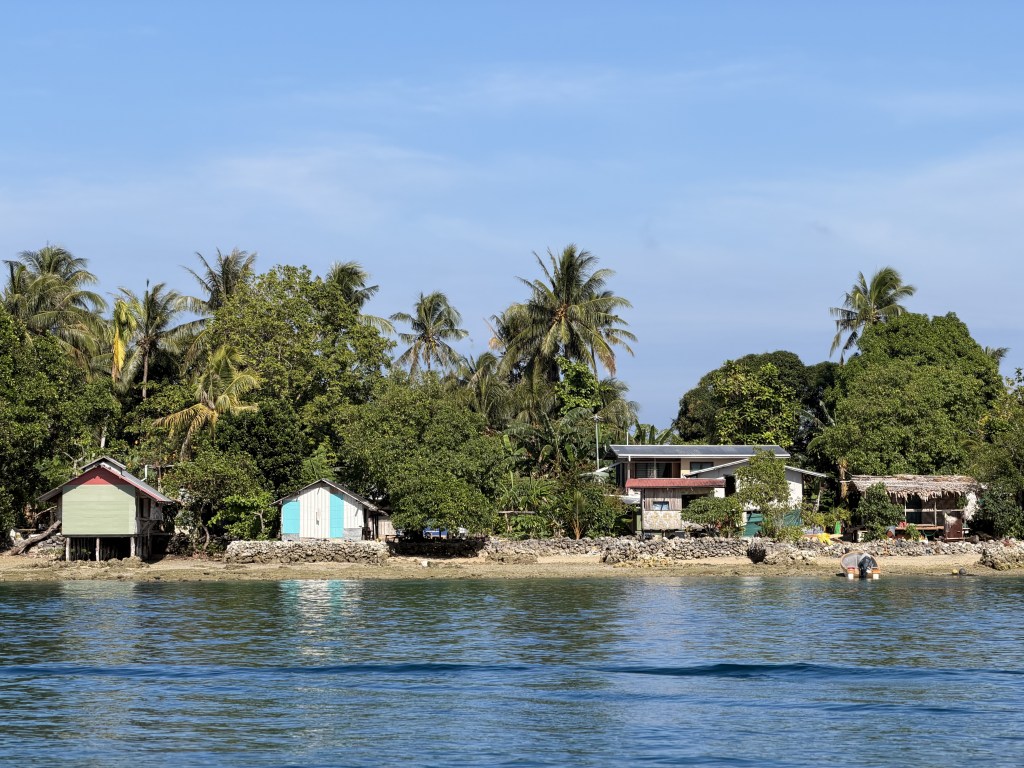
At our White Island anchorage, pangas would drive by very closely, looking at us and waving. We had traveled with other sailboats and we were an anomaly of 5 anchored boats. In the morning, a panga full of men came right over, holding onto the side of Terikah and saying that they were just curious, just looking. It felt a bit vulnerable when one man jumped up onto our swimstep. We kindly informed him that we still had our yellow q-flag flying and could not legally have anyone on board, sorry. PNG has a reputation for higher levels of violent crime, armed robbery, assault and other security concerns than many places we have traveled, so we have to remain aware of our surroundings and make thoughtful decisions about where we go. The open acceptance of all people balanced with necessary caution/unease is a struggle for me.
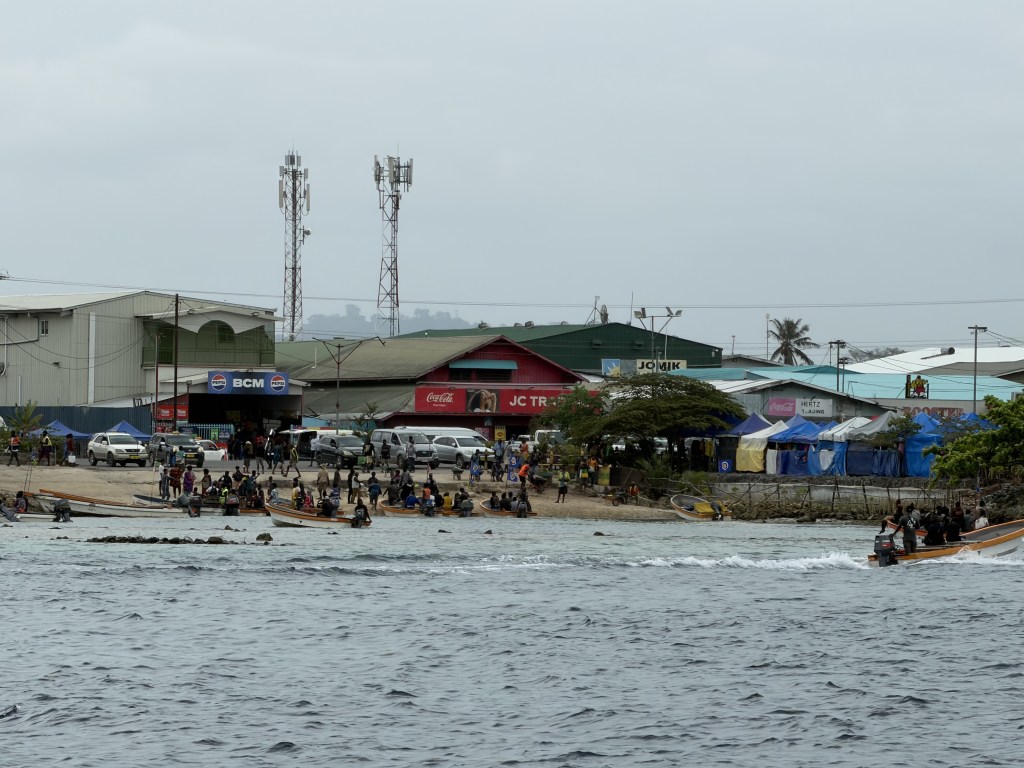
We moved to an anchorage right off the town of Buka on Monday morning for check in to the country, a challenging anchorage of tidal and current swings, as well as curious pangas zipping by close enough to reach out and touch.
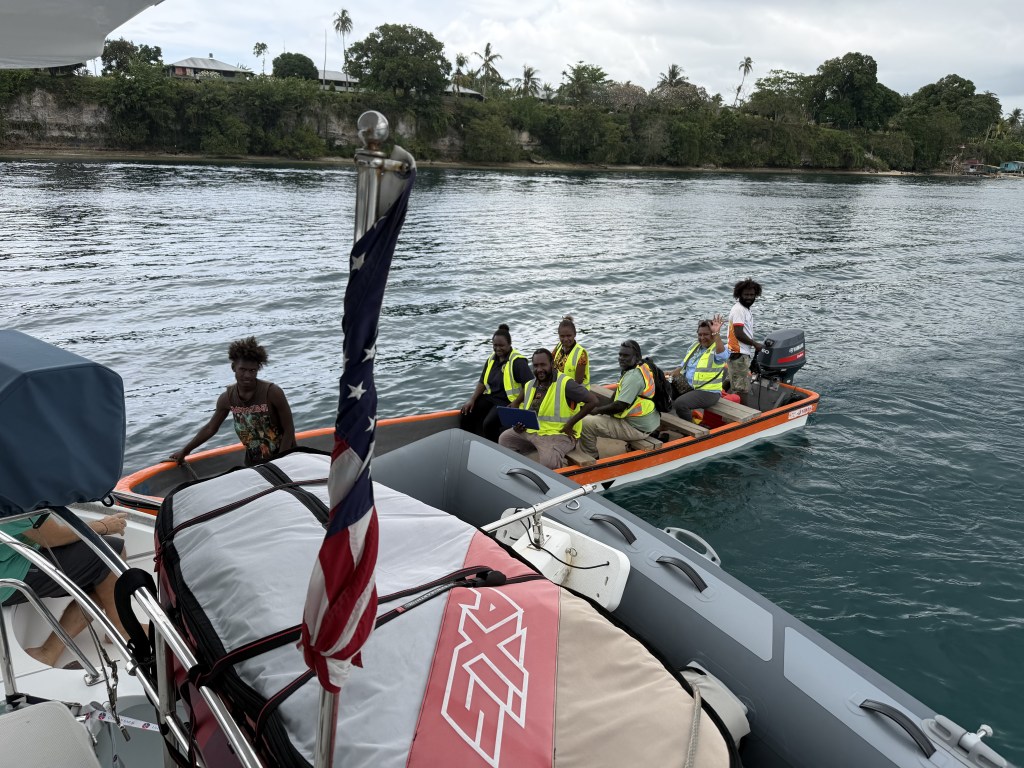
The Customs, Immigration, and Quarantine officers (6 in total) all came out to our boat via panga. We filled out more paperwork and they did a full search of the boat, every drawer, with no issues. They were extremely kind and welcoming. The panga drivers were up on the deck of Terikah, sitting on the trampoline and taking selfies happily, trying to figure out how all the lines worked.
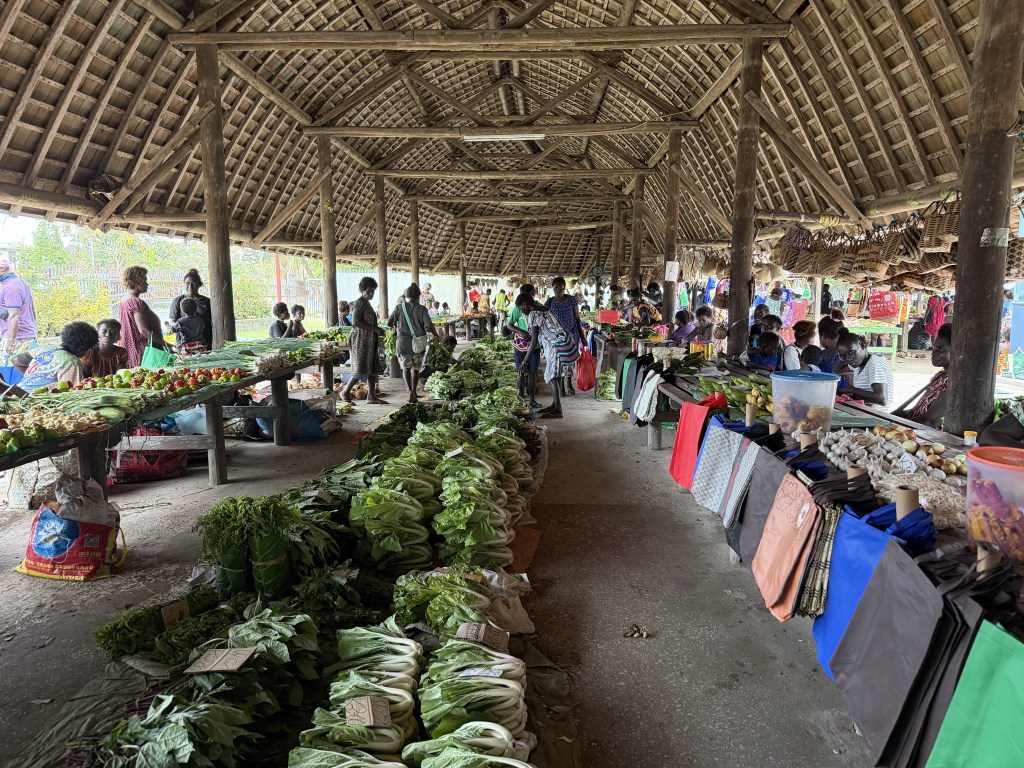
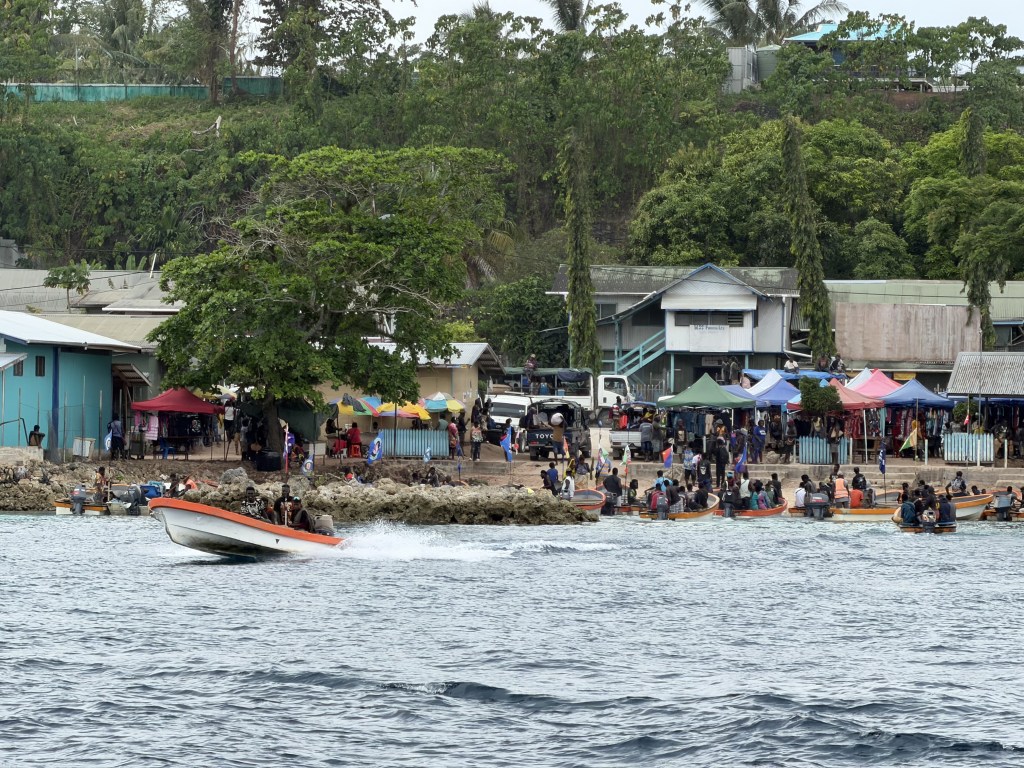
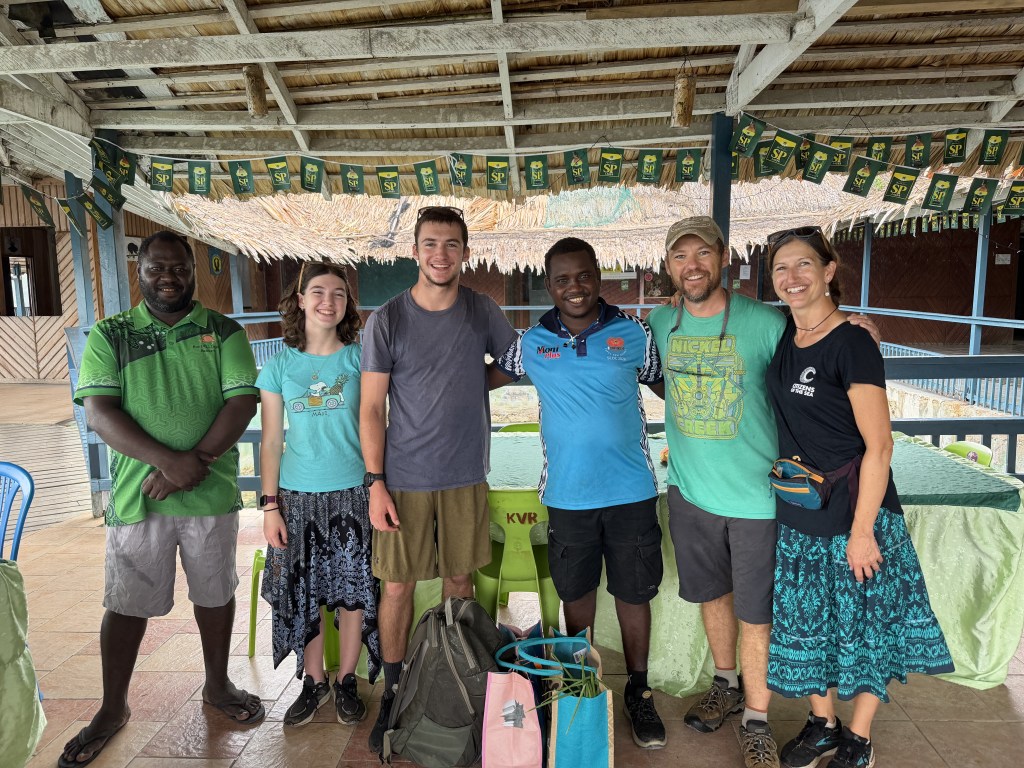
We dinghied over to Kuri Resort, who welcomed us in for a local beer and some chips. One of the awesome staff members, Fabien, offered to take us around to the places we needed to get to: a store where we could find a Bougainville flag, the Quarantine office for our receipt, the colorful produce/art market, grocery stores, and even a hut where we could get eggs. He just took care of us, showing us around and saying hello to most people he passed, obviously well known in Buka. The town did feel quite dirty, with crowded litter-lined red betel-nut saliva splattered streets; faces stared at us as we passed.
Back out to Terikah, where she was spinning about in the currents, anchor up and back to White Island for a night. The next morning, we had a change of plans in our destination due to high thunderstorms and set off on an overnight to Boang Island.
Our current fast pace of movement through these islands with many overnight passages is exhausting. As we motored through town, we decided to hoist the massive Bougainville flag we had just bought from our spreaders, eliciting waves, thumbs up, and general excitement from the people; they are proud of path toward independence and we wanted to acknowledge that.
On our way to Boang Island, spinner dolphins sending us off.


One response to “Papua New Guinea: Bougainville, A Country in the Making”
This is one of your most fascinating posts. A new country with blossoming pride seems to have a chance of a future of peace with their neighbors who once inflicted horrible misery. It made me wonder, what chain of events triggered the forced isolation and what decisions and concessions were made by both parties to get past their worst days.
LikeLike