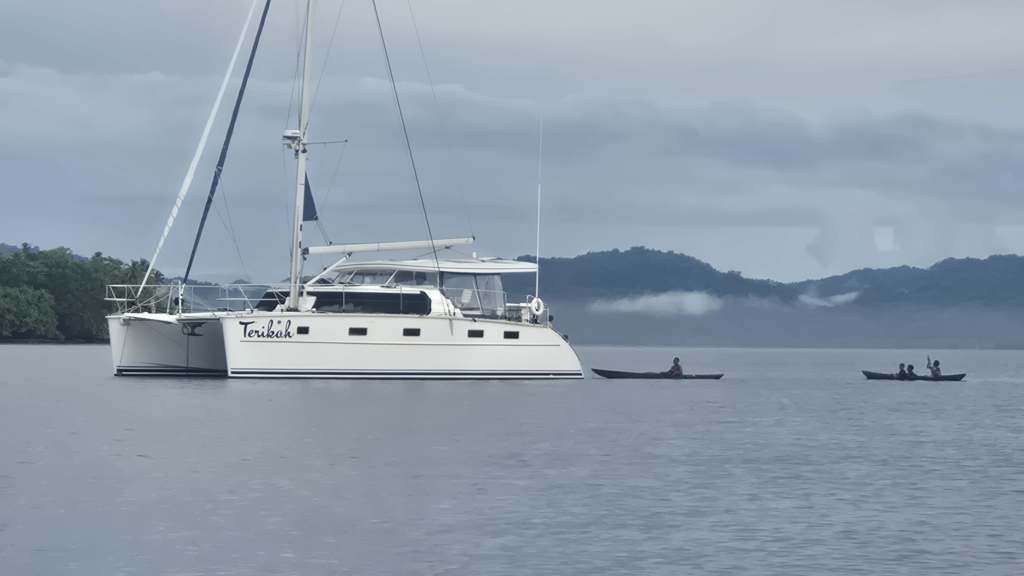
Squall line passed through us in the morning and, as the skies lightened, we departed for what ended up being a very sporty 283-mile passage. We knew the seas were going to be large initially, but were forecast to be decreasing throughout our passage, along with decreasing winds, and low thunderstorms. We weren’t alone in our interpretation of this passage being very reasonable, as three other boats left as well. We had an easy trip out the pass, winds light but building, all going well. Caught and released a large barracuda.
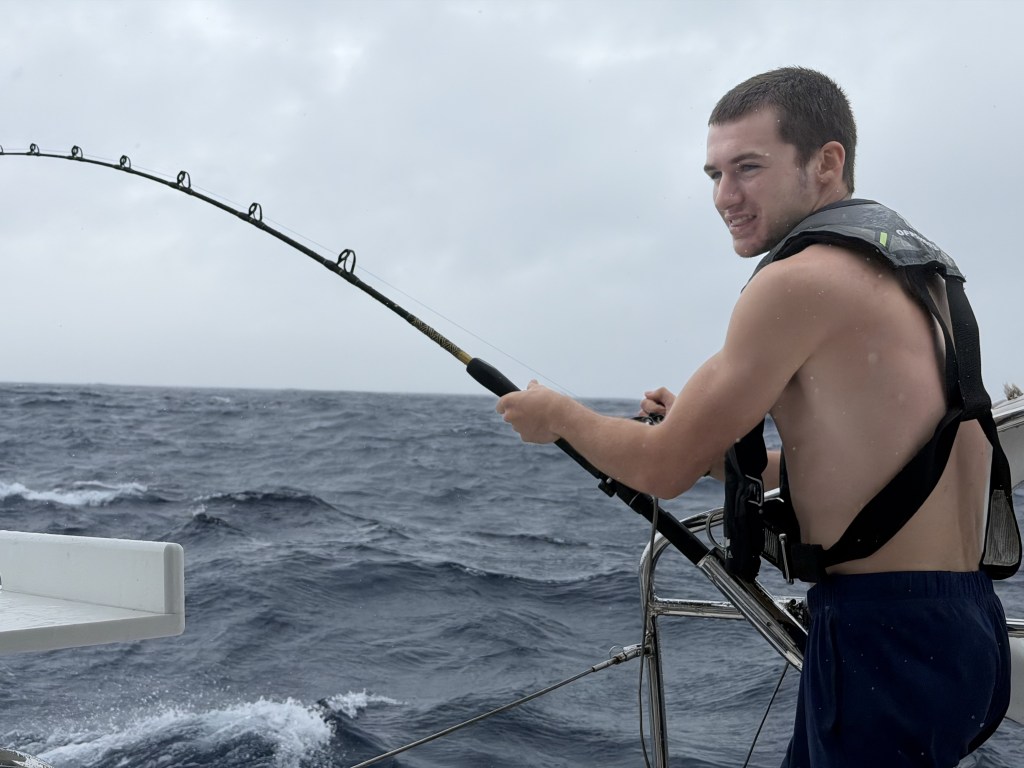
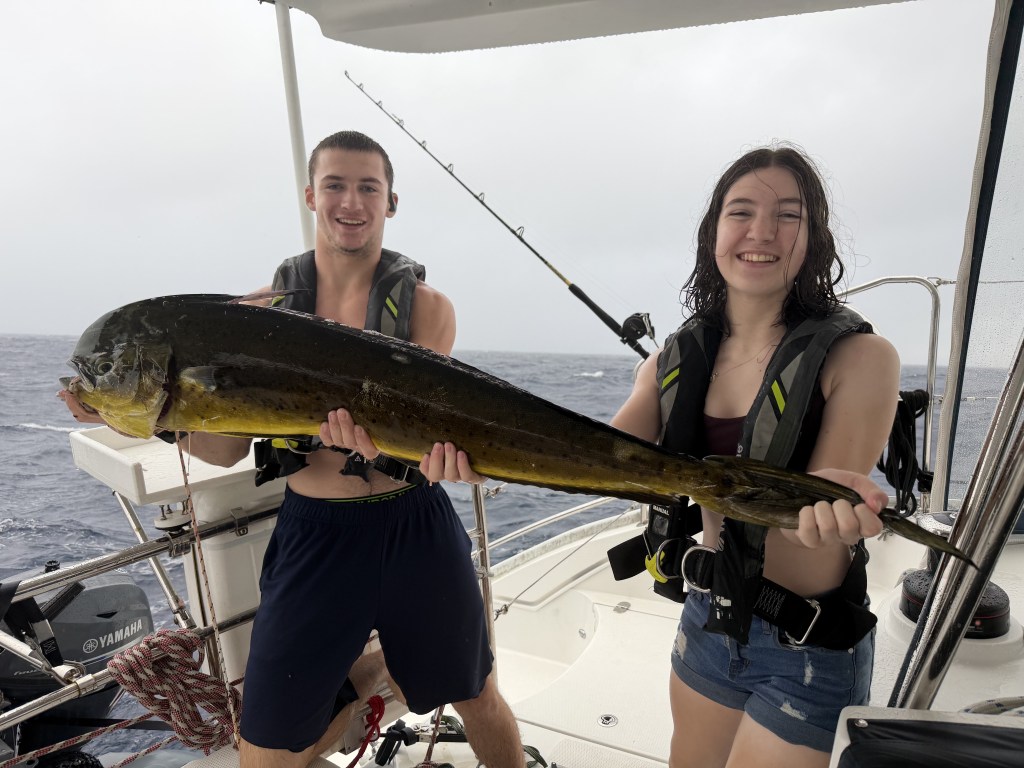
Seas building and started to rain, just as one fishing line whirred, and then the next – a pair of mahi we could see jumping behind the boat! Cora on the starboard side, hauling in her mahi, rain pelting her face as she laughed.
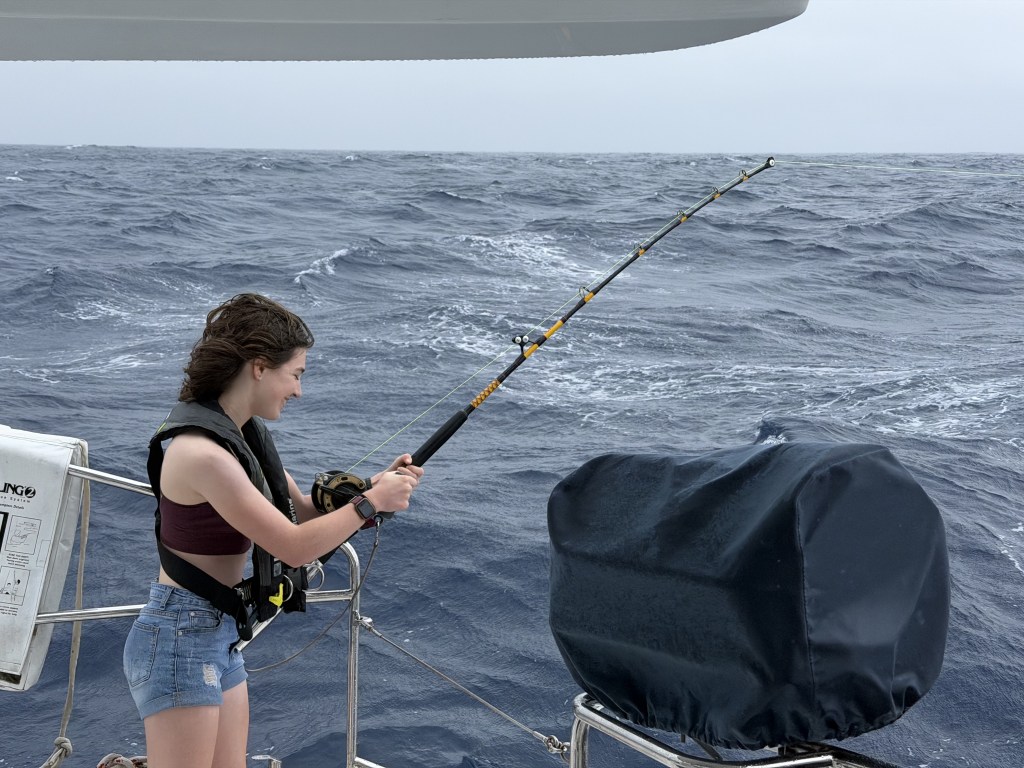
Clipped Chris onto the railing and he went down on the swimstep for the challenging job of gaffing the fish and putting it in our cooler – a beautiful mahi, what a gift. But the port side fishing line had the bull and Cora and Calder worked together for over an hour to try to get him in, the rain a deluge now, the seas large.
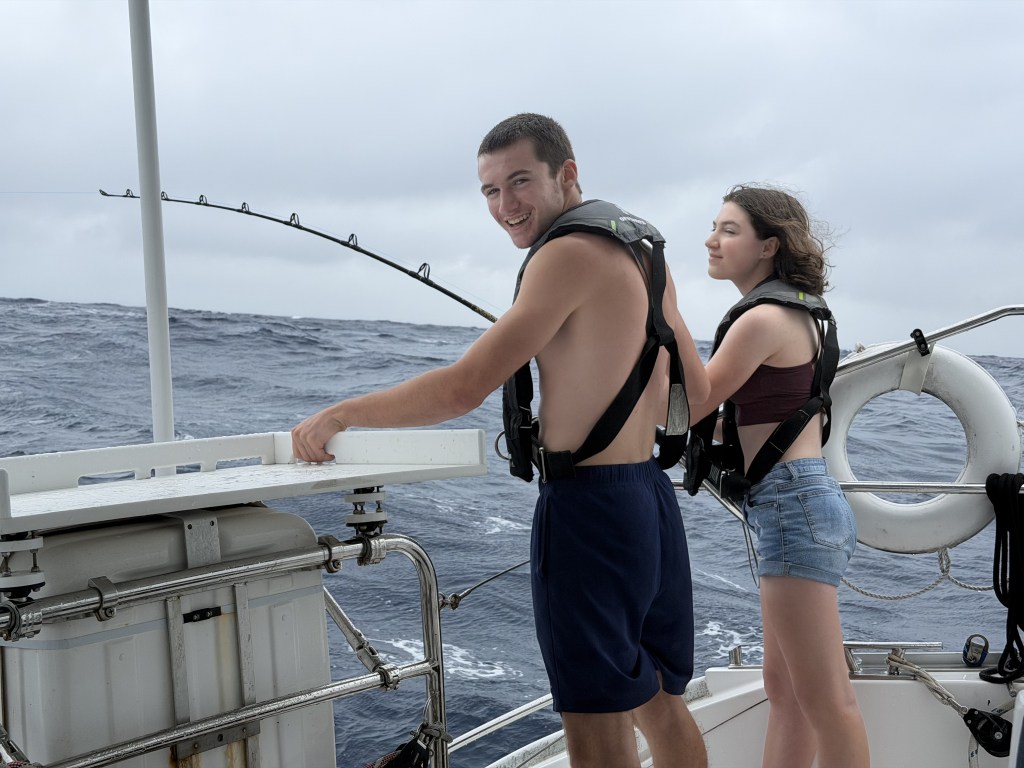
We reefed our sails so we only had a whiff of main out, trying to slow the boat and get the fish in. Finally, the line broke and the fish swam off. We were thankful for our one mahi and decided to stop fishing, as the conditions had gotten quite lively.
The seas built to 3 meters. We found ourselves in a squall that was sitting on us, moving the exact same speed forward, so we could not shake it. We finally reefed in more sail, slowed way down, and allowed it to move along, thank you very much. The winds were in the upper 20’s, then the 30’s. The seas were a solid 3 meters and very close together. Rain was on and off. But it should start to calm, shouldn’t it? The forecast was for it to start strong, but then chill out. But it didn’t. It just built. Seas up to 4 meters, water up and over the boat, wind hit 38 knots; Terikah was a champ, up and over the waves. I would pat her and say, “Thank you Terikah,” as the boat was much heartier than we were! It was loud, our watch schedule got out of whack, no one really slept. We had crackers for dinner one night, which should tell it all. The next night we heated water for instant camping meals.
We sailed with our genoa and main heavily reefed, but still averaged 7.6 knots speed. Dolphins visited us, and we watched them play in the seas that lifted them up next to us. Cora and I saw a series of 3 waves that were among the largest we had ever seen, as we looked behind the boat at a wall of water higher than our hardtop. Thankfully Terikah just went up and over and these waves did not break on us. Have I mentioned how much I love our boat?
So, what happened? Why such an awful passage? Just one weather forecast after departing, there was a big update. It wasn’t going to calm along the way; it would stay the same (or more) the rest of the passage. As our weather router said, “The big forecast change is directly related to the Madden Julien Oscillation (MJO) which has been the driver for the unsettled weather in our region for a few weeks. It normally doesn’t stick around more than 2 weeks – so this extra MJO is unusual and unlucky.” It’s especially not great on top of this year’s El Nino. At some point on the passage, I had to release the idea of “it’s not supposed to be like this” and accept “You’ve got what you’ve got.” Though a rough passage, I was super proud of our crew of four; we maintained calm, took turns at the helm, laughed, caught a fish, and dealt with what we got. We’ve come a long way. It was bliss when we were about 20 miles from our destination and all calmed. Chris sailed until we were moving only 1.5 knots, then started the engine; it was just so calm and nice that he was loath to give the peaceful sailing up. We pulled into our anchorage in the dark, using satellite imagery and parked ourselves, falling fast asleep off Ugi Island.
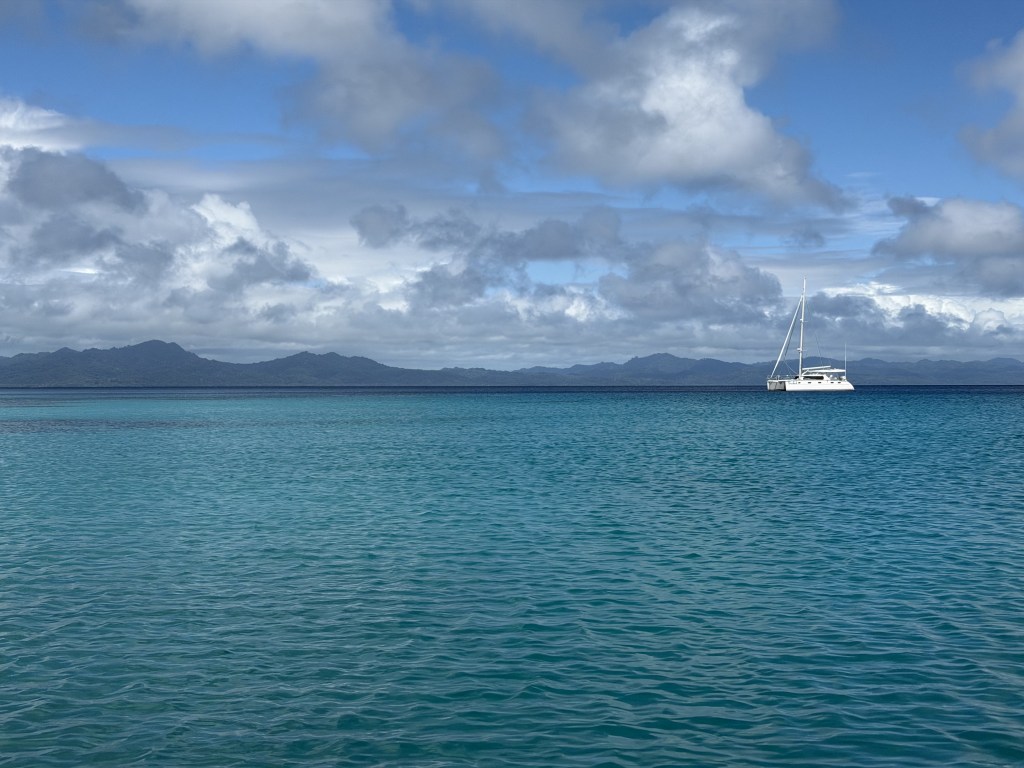
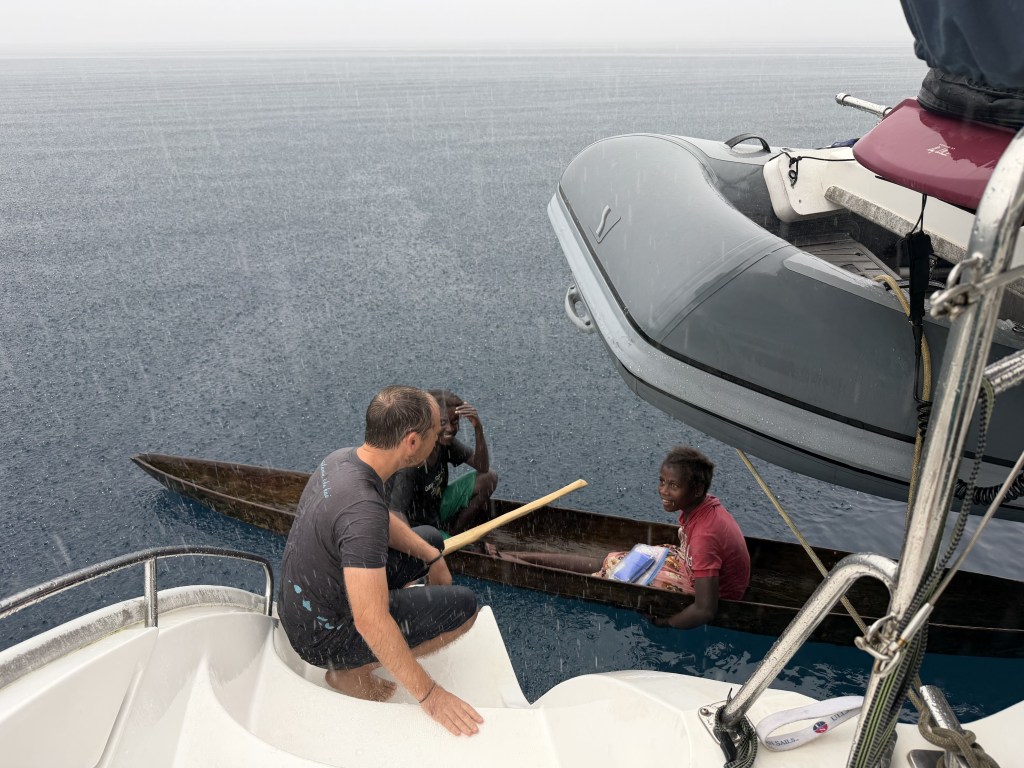
The next morning, we woke up to rain off Ugi Island, surrounded by a few friend boats. We enjoyed a big breakfast and soon saw a lone canoe with a small boy on his way to us. Only about 6 years old, he circled our boat shyly with a bag of tomatoes on his lap. “Hello. Do you want to trade those?” we asked. Yes, he did. Junior gave us a bag of tomatoes and we gave him a book, notebook, and some pencils. A short while later, in the pouring rain, out came a canoe with two girls and papayas; yes, we’ll trade. Some notebooks and fingernail polish, and we had ourselves papayas. They visited for a while and asked if they could swim, which they did.
A bit later Fred came out, the son of Chief Henry, and invited us to a birthday party that evening for the Chief’s granddaughter Lydia. Yes, we’d love to attend! There was some confusion on whether Lydia was turning 3 or 13, which made bringing a gift challenging. The rain cleared and we went to shore. We spent time at Chief Henry’s house, sitting on his porch, as he shared how he is working on the village relationship with the cruising community, discussing mutual benefit for us all as one people to learn from each other.
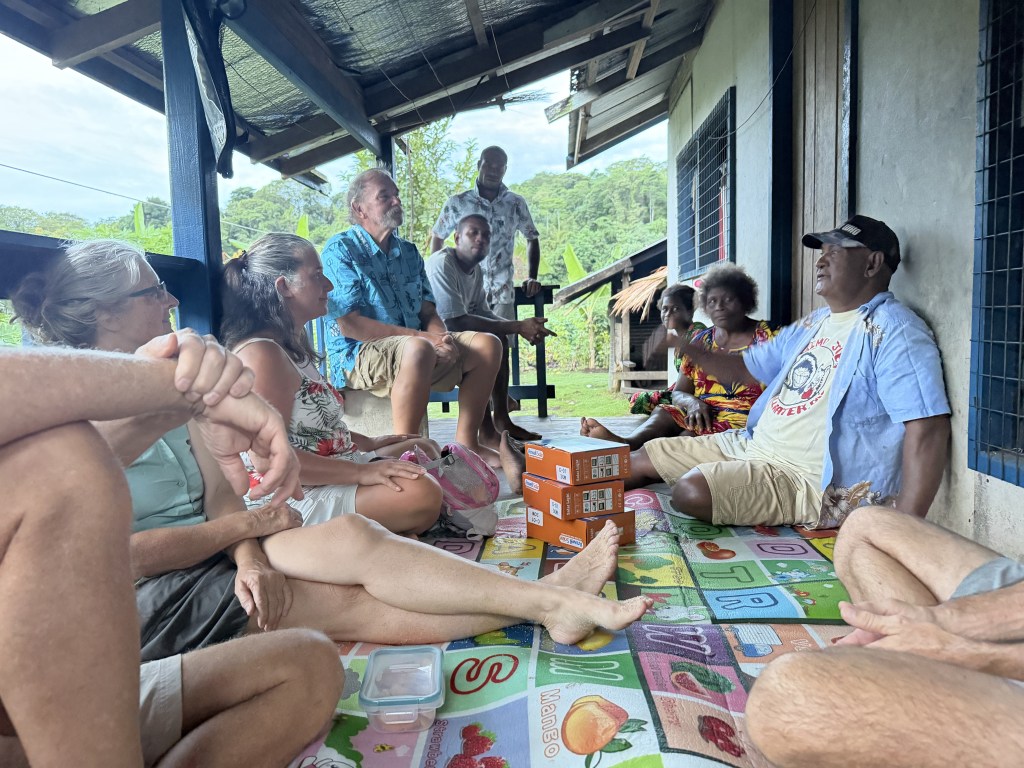
He also voiced strong disapproval of any theft that had happened on boats in the past and that he would not stand for this behavior. There had been a few reports of boat boardings and petty theft in this anchorage, which almost deterred us from anchoring here. After we talked, it was off to the party. Fred led us through the gardens (there are no roads here) to the birthday girl’s house where lights and balloons were strung up, a big “Happy Birthday Lydia 3” sign with a cake that Lydia sat behind.
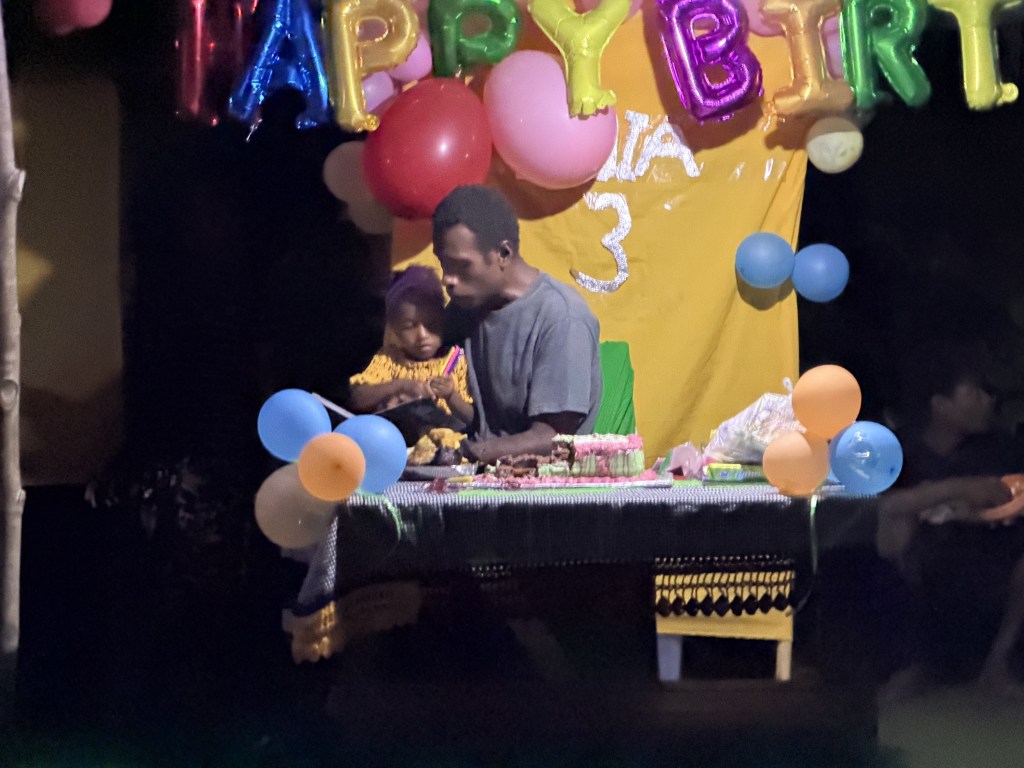
We were welcomed as guests of honor, given chairs to sit in, and Chief Henry said the opening prayer. We offered Lydia our gifts and she loved the mermaid book Cora picked out of our box of gifts for her, flipping through it and clutching it to her. Then we enjoyed a meal, as they had prepared an area of food just for us with ceramic plates and utensils, followed by cake and a closing prayer.
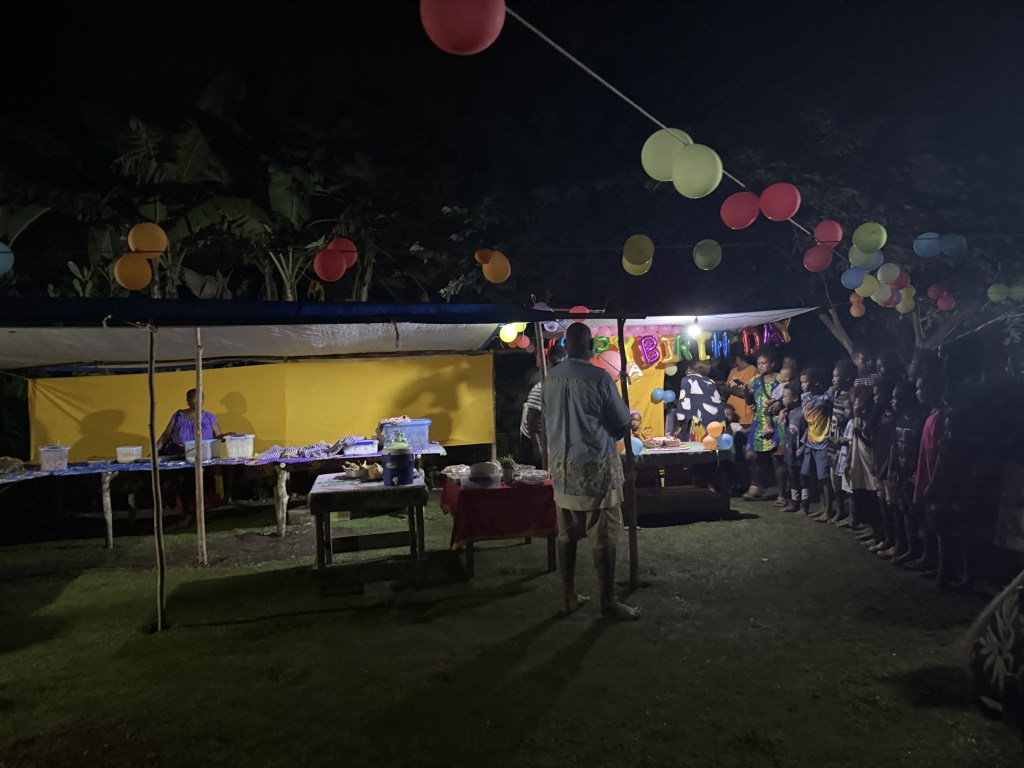
I felt humbled to be welcomed so warmly into this community party. Heading back in the dark by headlamp through the fields, we laughed at the numbers of large toads along the way.
Sunday, our first day of no rain in 3 weeks! Ahhh, felt so good! From the shore, we heard laughter and saw a group of teens playing with the ball we had given them yesterday. Shortly after breakfast, the canoes of kids started to trickle out to our boat, wanting to swim.
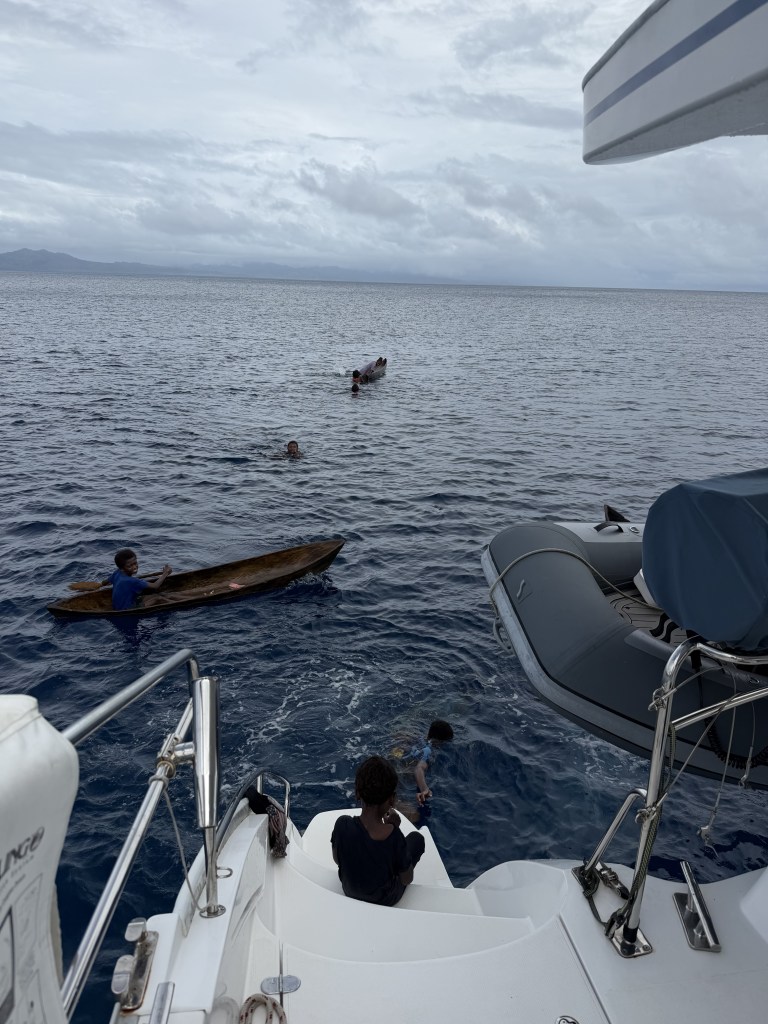
Just a couple at first, then more, then soon we had 4 canoes and over 20 kids jumping off our swimsteps and swimming between our boat pontoons.
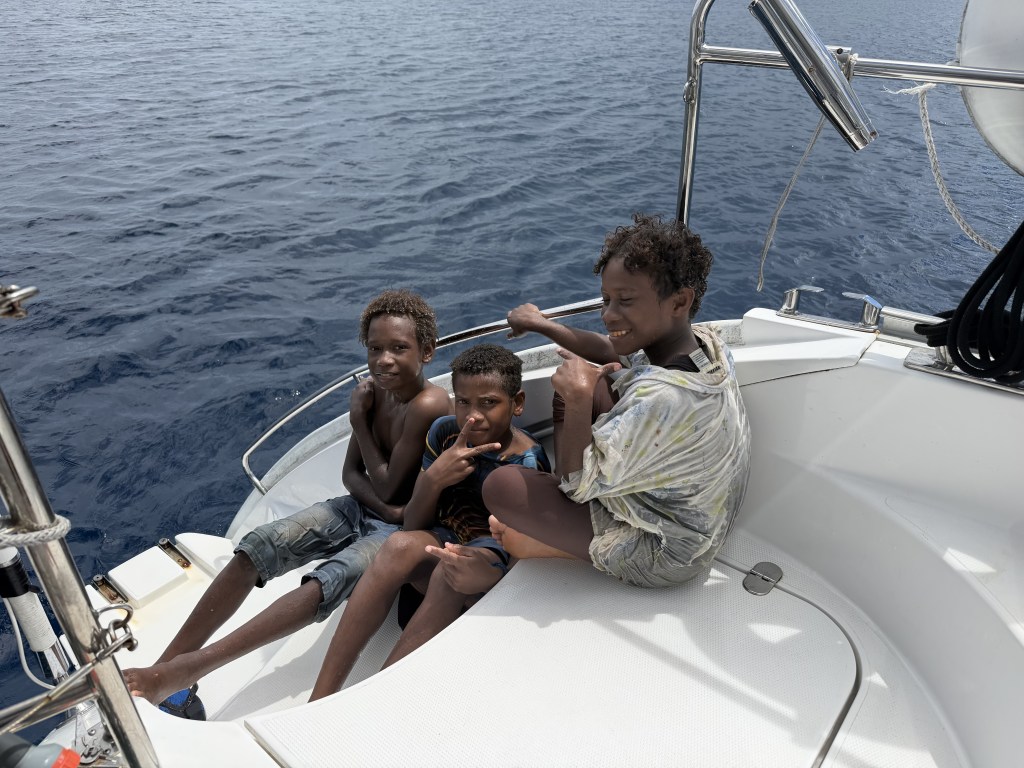
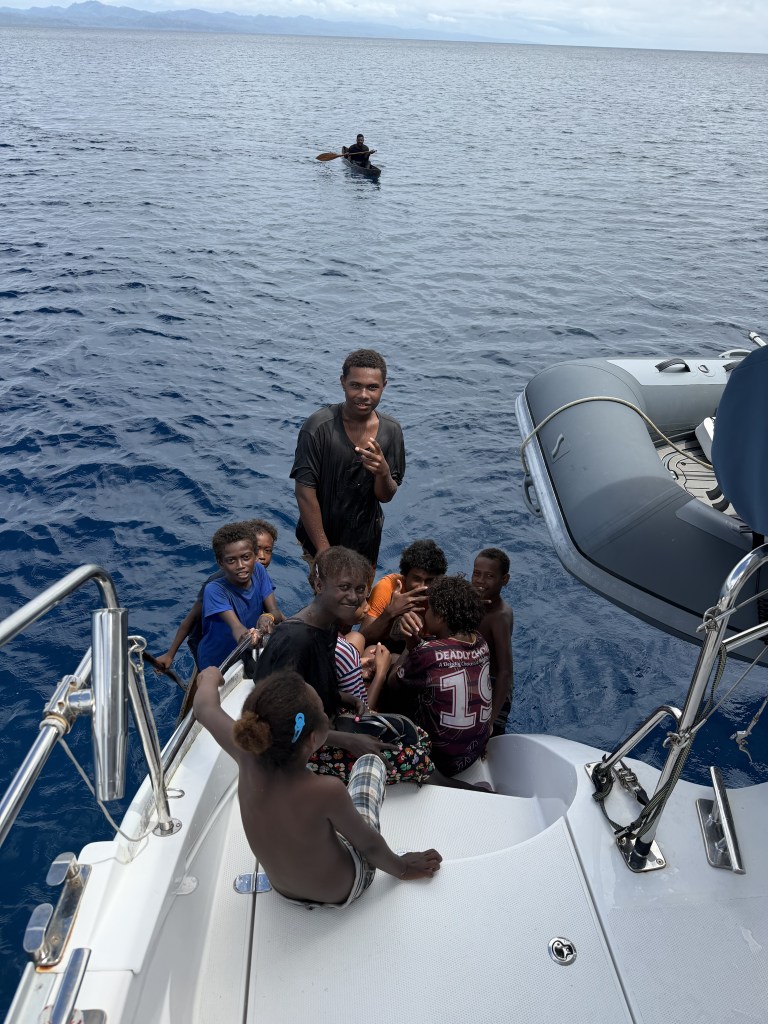
This went on for hours! Fred brought out his wife and child to swim as well. One girl exclaimed, “Thank you for letting us swim; it’s so fun!” It was so much fun for us too!
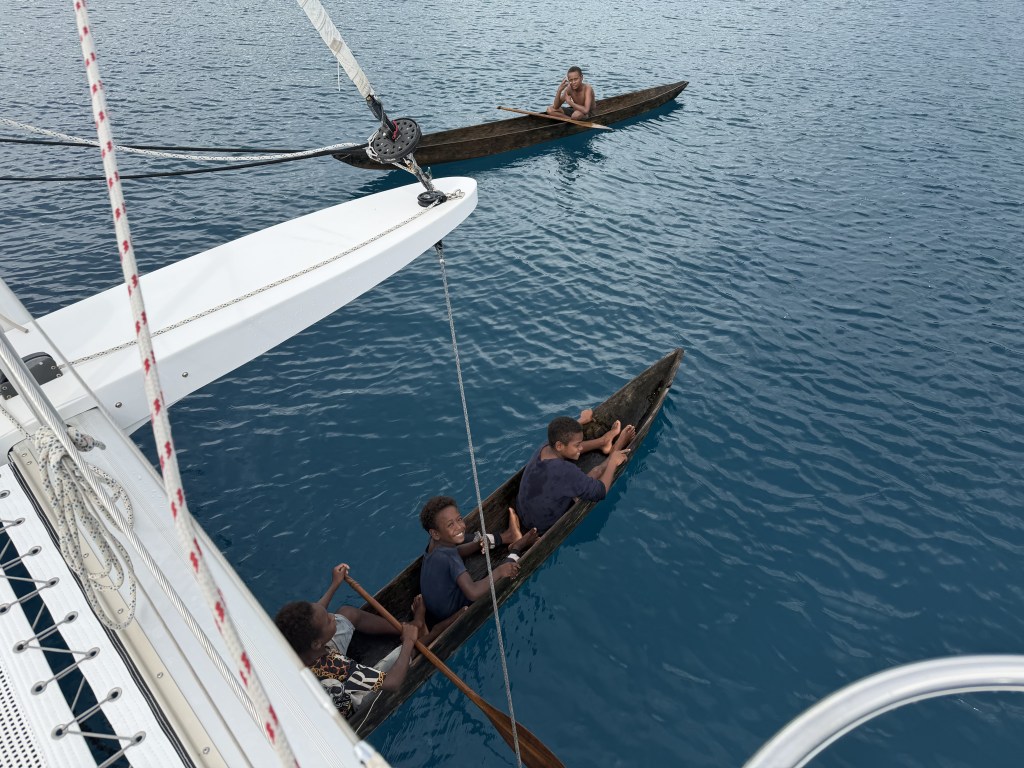
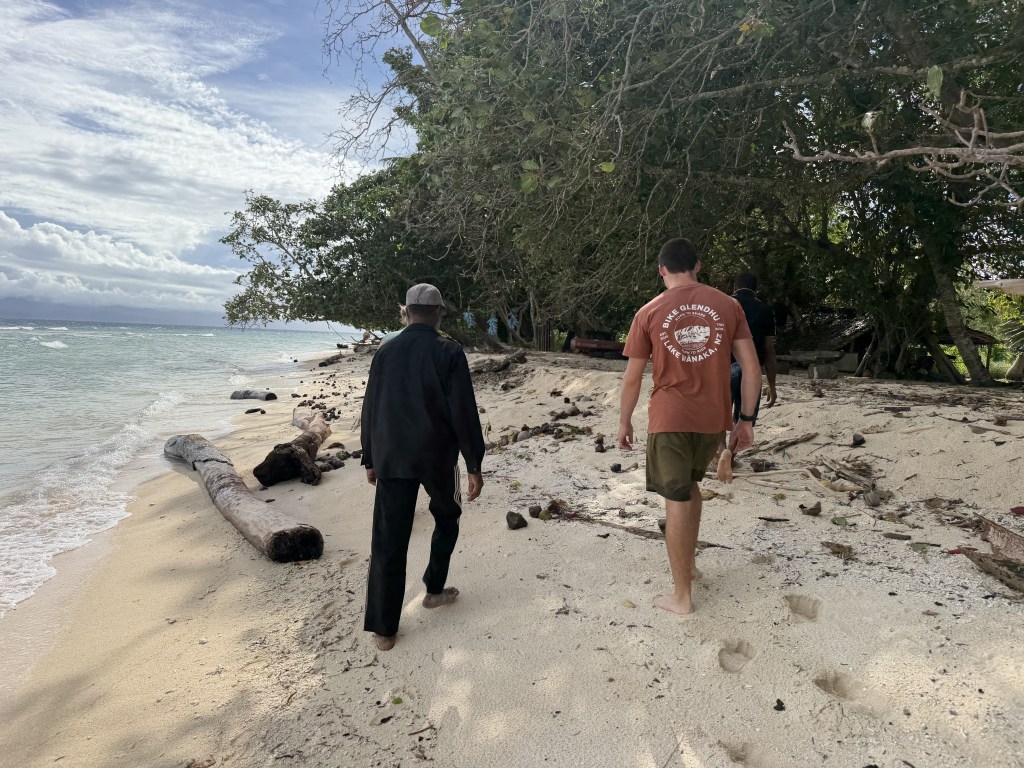
The next day, Fred asked us if we would like to see his uncle’s carvings at a beach “just around the corner” and we said yes. A few hours later Fred came out in his canoe, tied it to Terikah, and off we went in t2 around the reef to the nearby village. Calder was a stellar dinghy driver, as the waves grew in size and our destination was always “just around the next reef.” There was one point when the waves were getting bigger, that Fred reached out and held Calder’s hand (unsure exactly why) for the rest of the dinghy ride; Calder just rolled with it, steering the dinghy with one hand on the tiller and holding Fred’s hand in the other as he navigated us through the waves. We surfed into shore and were greeted warmly by his uncle, the carver.
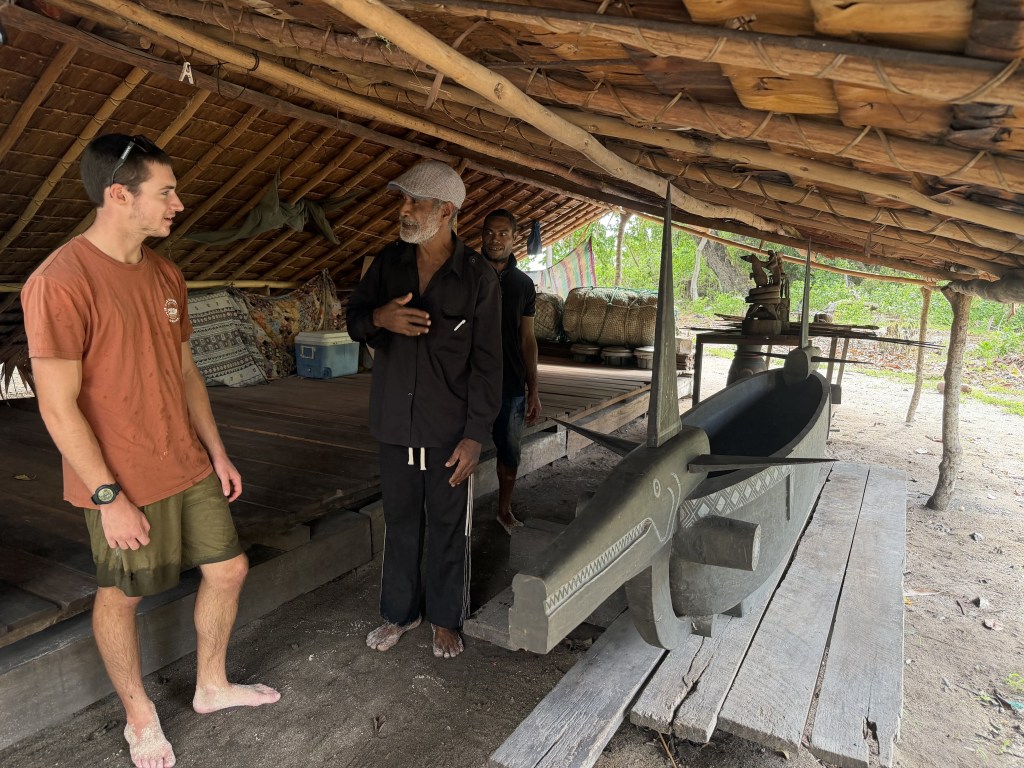
First, he showed a massive canoe-shaped carved wooden food trough, made for the chief and used for ceremonial feasts to hold foods such as pudding, a whole pig, and leaves.
He showed us traditional war tools such as bows/arrows, clubs, and spears; used to kill people in the past, but now used for traditional dance.
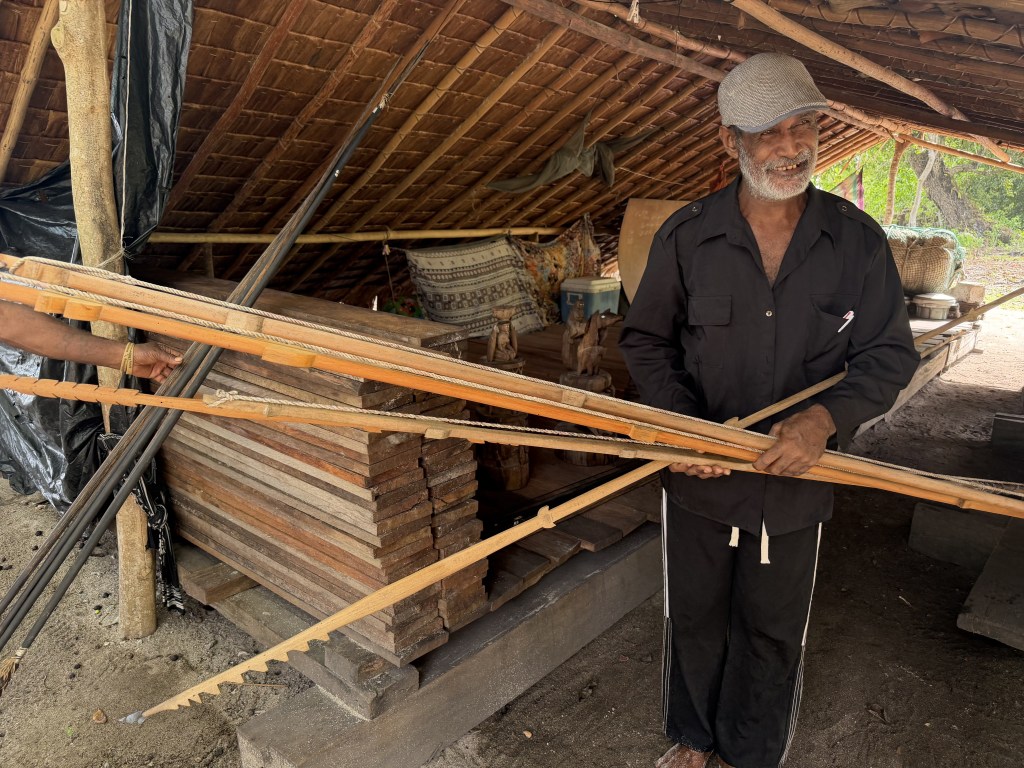
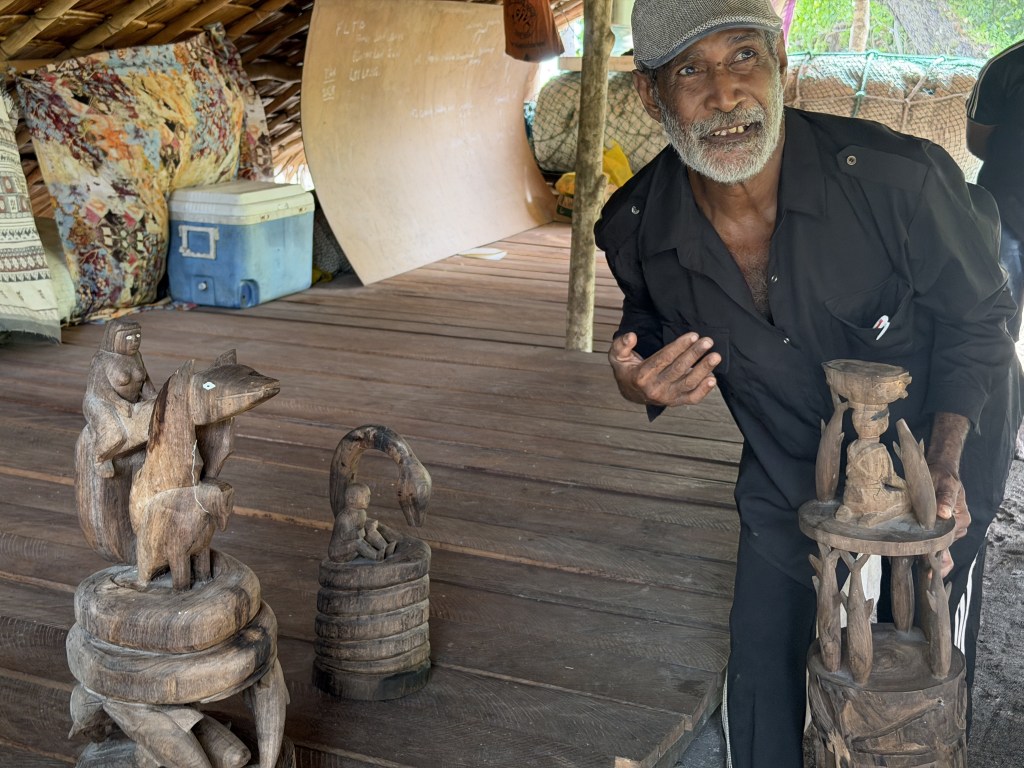
He had 1-2 foot high carvings that told creation stories that he shared – intricate carvings out of one piece of wood, that took him many months to create.
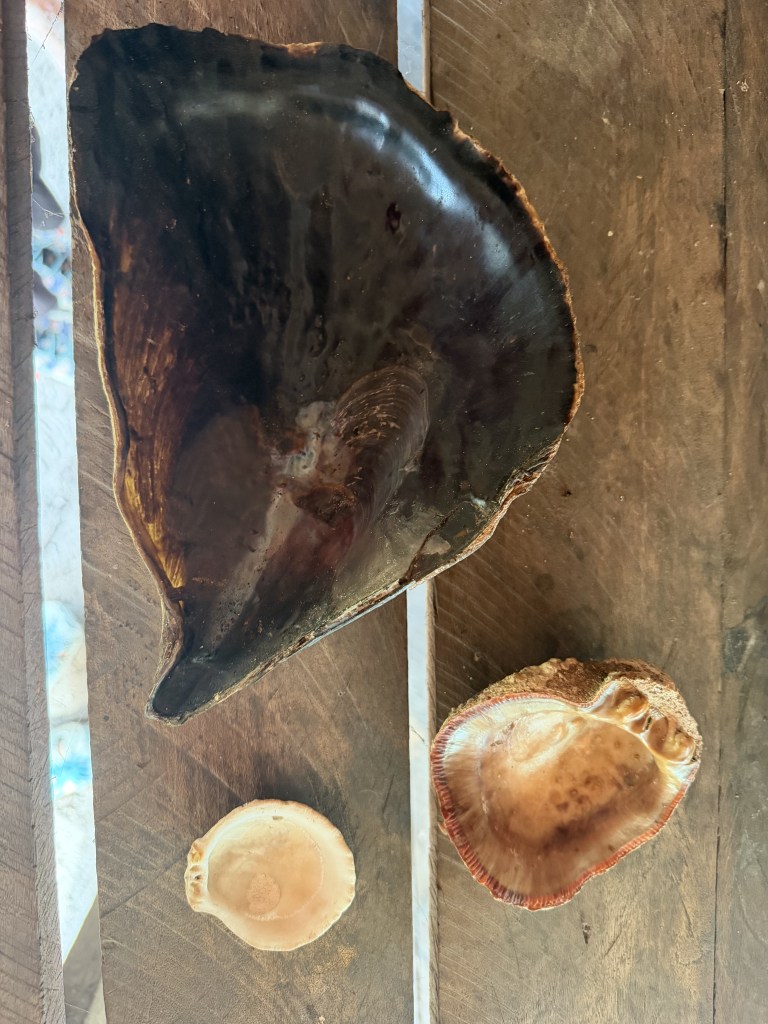
Finally, he showed us some small rock carvings and traditional shell money, including three large shells in red, black, and white, which are highly valued cultural objects used in the Solomon Islands for ceremonial exchanges, marriage payments, and other important transactions.
There was zero pressure to buy anything; he just genuinely wanted to share his culture and artwork. We jumped back in the dinghy and Calder surfed us safely back to the boat on the waves.
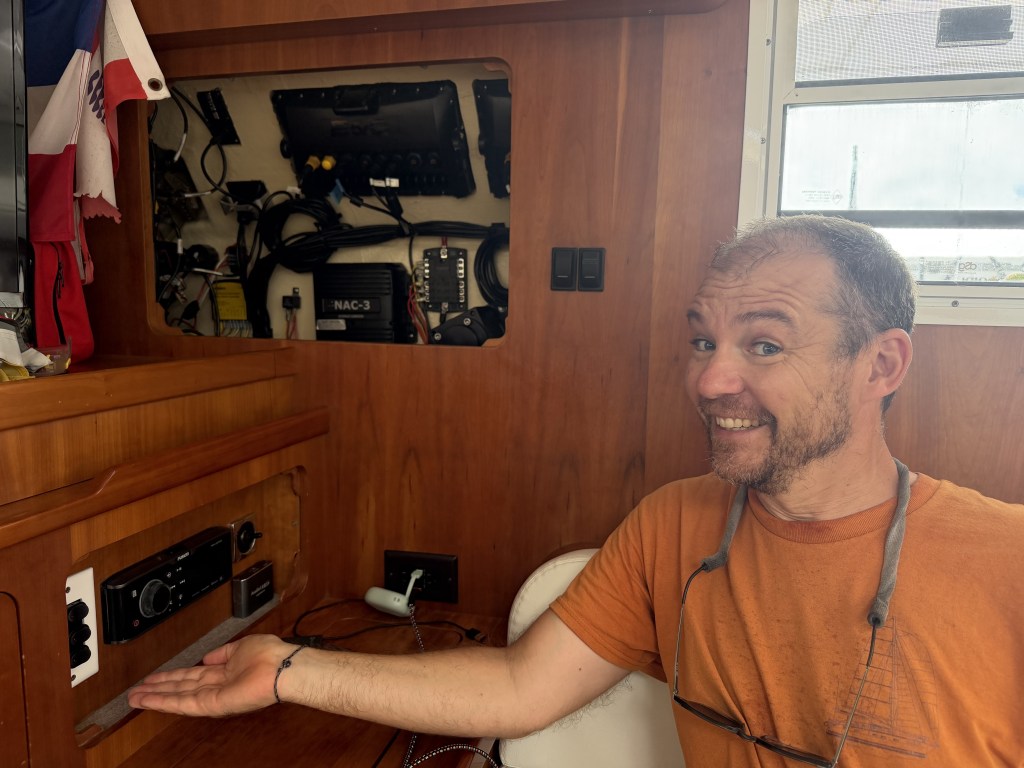
As we surveyed the boat after our recent rough passage, we noted damage to the webbing attaching the tack of our genoa headsail. The heavily-reefed genoa took the brunt of that rough passage and it appears that the webbing is worn at least 50% through. We will need to repair it before putting any strain on that sail. Chris has been researching that. He also finished installing safety lights and a siren that we can toggle on if someone boards our boat. He used the top of a peanut butter lid as part of the switch, creative guy!
Our nightly routine has involved keeping our decks completely clean; everything in the boat, from fishing rods to our winch handles, comes inside. We close and latch/lock the doors and tie up/lock the dinghy, all before dark. Talking to a woman who has sailed here for 7 years, we learned quite a bit on how to stay safe. She conveyed in a deadpan voice, “Just do not swear at them if they board your boat. If you do, they will return with a knife and kill you.” It was a literal warning. No pirate language here on Terikah.
On the evening we heard this information, we were a bit “heightened” and noticed a canoe in the night going from sailboat to sailboat, closely behind the boats. It looked like someone was casing the joint. We all had agreed to keep our VHF on channel 16 and notified the other boats. We kept our lights on and Chris watched closely. One of the boats went out and talked to him in the dark, asking him to move away from their boat. Another boat lit him up with a bright light. The next day, I asked Fred if people fish at night and he said, yes; indeed, he was the boat in the night fishing and that he finds the fish are attracted to the lights of the sailboats. Our paranoia, in combination with stories of real danger, created a misunderstanding. We had a good conversation with him about yacht boardings in the Solomons, of which he is aware, and some of the nervousness of yachties. We apologized for the group, acknowledging that we were anchored in his fishing grounds and were thankful for the safe place to stay.
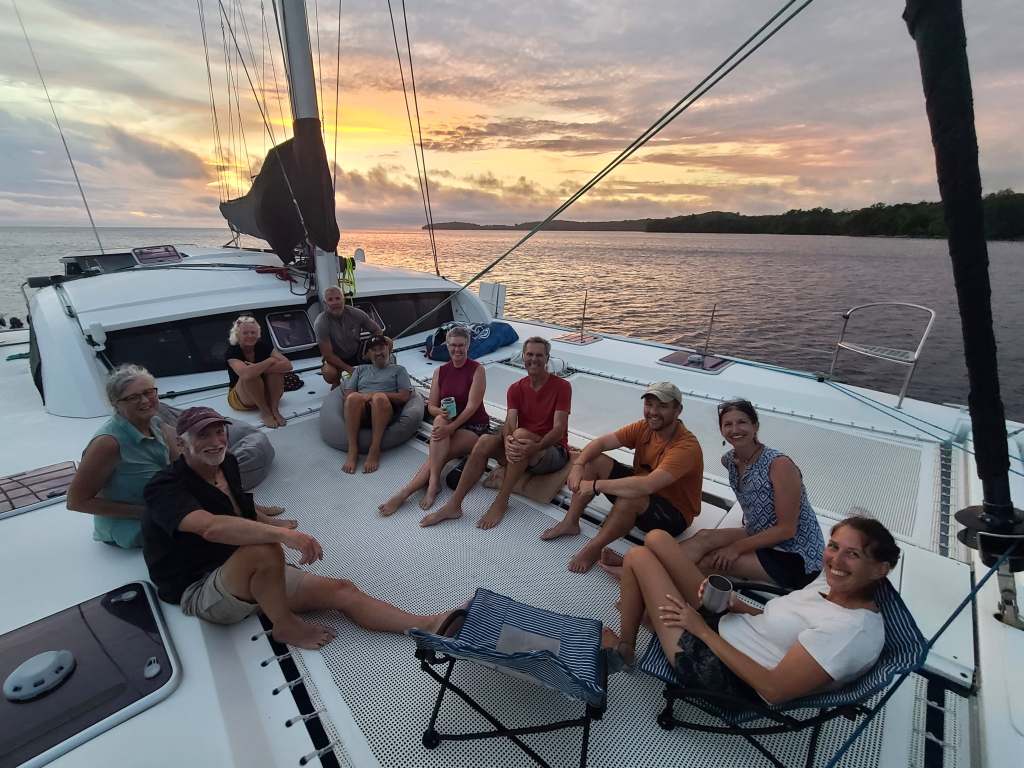
We have ourselves a small community of yachties in the Solomons! Calder noted tonight that this is the first country where we have met every boat in every anchorage; it’s a community created out of our remoteness, vulnerability, and shared adventure. It means gatherings and comradery to discuss anchorages, weather, and share tools and knowledge.
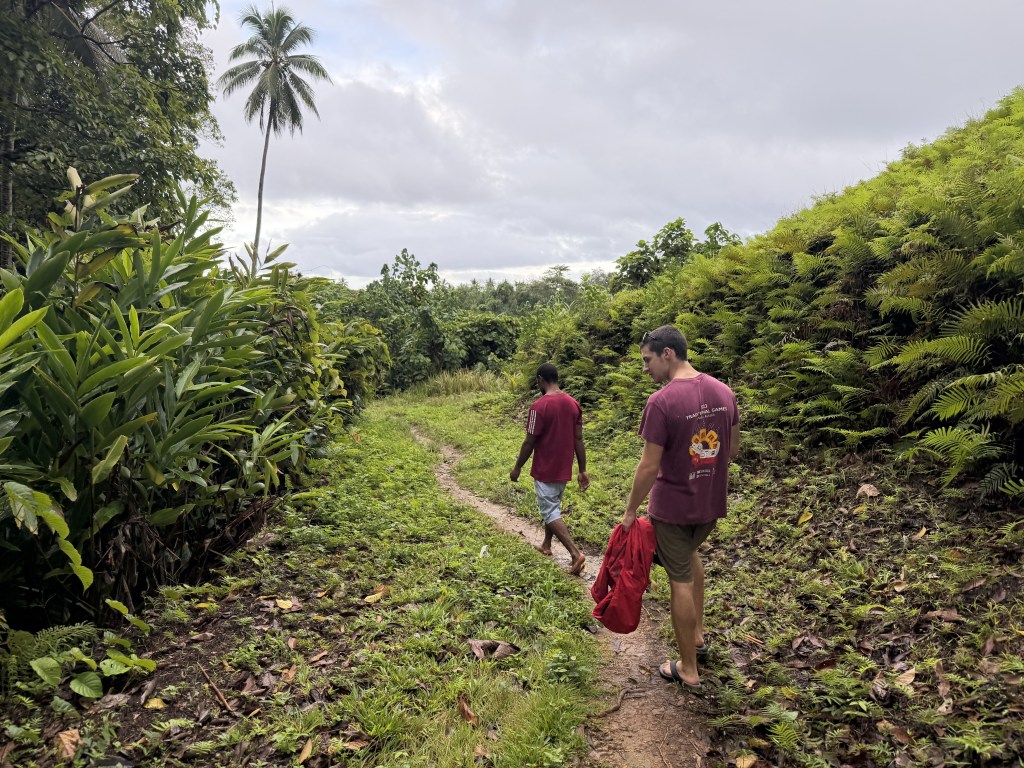
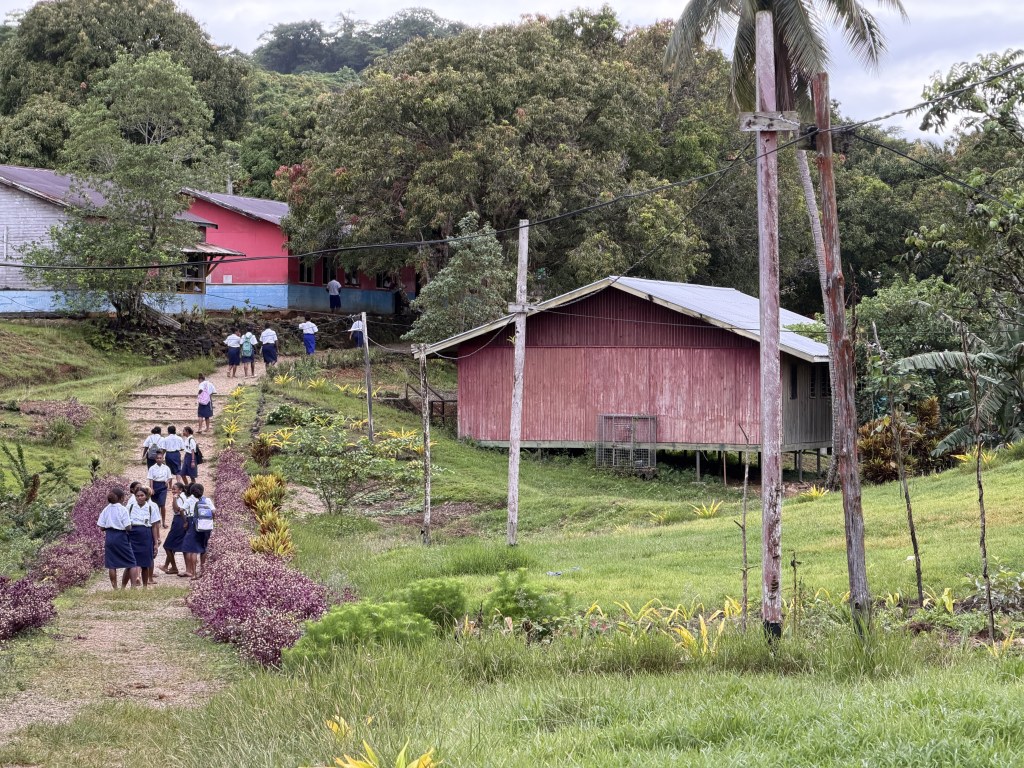
This morning, Calder and I, along with another two cruisers, visited the district boarding school. We met Fred on the beach at 6:45am and walked up the muddy hill to the school grounds, where the 300 students were gathering for assembly.
The principal introduced himself and told us that the children would sing, then we would go to the stage and sit there in front of the Assembly. After a prayer, we would then be the guest speakers and tell about who we are and what we are doing on our journey. He told us this so matter of factly that there was no hesitation from us. It was compelling to be on stage, looking out at these 300 students as they sang in beautiful harmony.
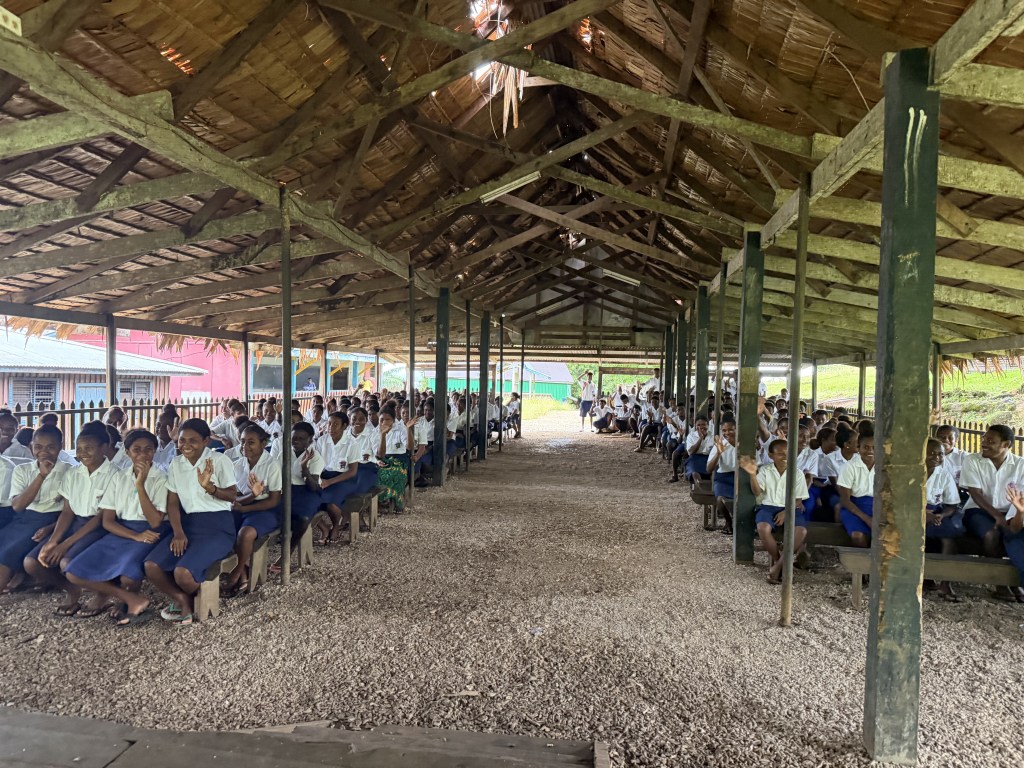
As we each spoke, they smiled warmly, giggling when Calder introduced himself and talked about his school on board the boat. We were definitely on display, the principal commenting that it was “good to see some white faces around here.” Walking through the school grounds after, the students all smiled and said good morning.
Back to the boat, Cora was busy trading one of her books for some sweet potatoes. Later, kids were laughing and swimming off the boat. More trading and our freezer is full of papaya. Calder and I have embraced the papaya-plantain-peanut butter smoothie as our breakfast staple. My table is covered in root vegetables. A pod of dolphins passed by our boat at sunset. A man in a canoe stopped by, talking of how their monthly supply barge was understocked and he was looking for some soap to wash with. He accepted the bar of soap only on the pretense that he would fish and, if he caught one, share with us. It is a barter system here and that exchange is part of being respectful.
Today, we move onto our next anchorage, though this stop has evolved with the most up-to-date local information about safety. We had planned to go to one anchorage, but the lodge there has closed and there were some questionable issues about “Brown and his Gang,” that made us think twice. So, instead of a daysail, we will set off on a 24-hour overnight passage to a reported safe anchorage with some buddy boats. Before leaving, we go to shore and thank Fred and his family for our time here. As our anchor goes up, big waves and shouts from the kids on shore. Thank you Ugi Island!


2 responses to “Solomons: A Rough Passage & Wonderful Ugi Island”
So so sooo cool.
LikeLike
Thank you.
Sent from Yahoo Mail for iPhone
LikeLike