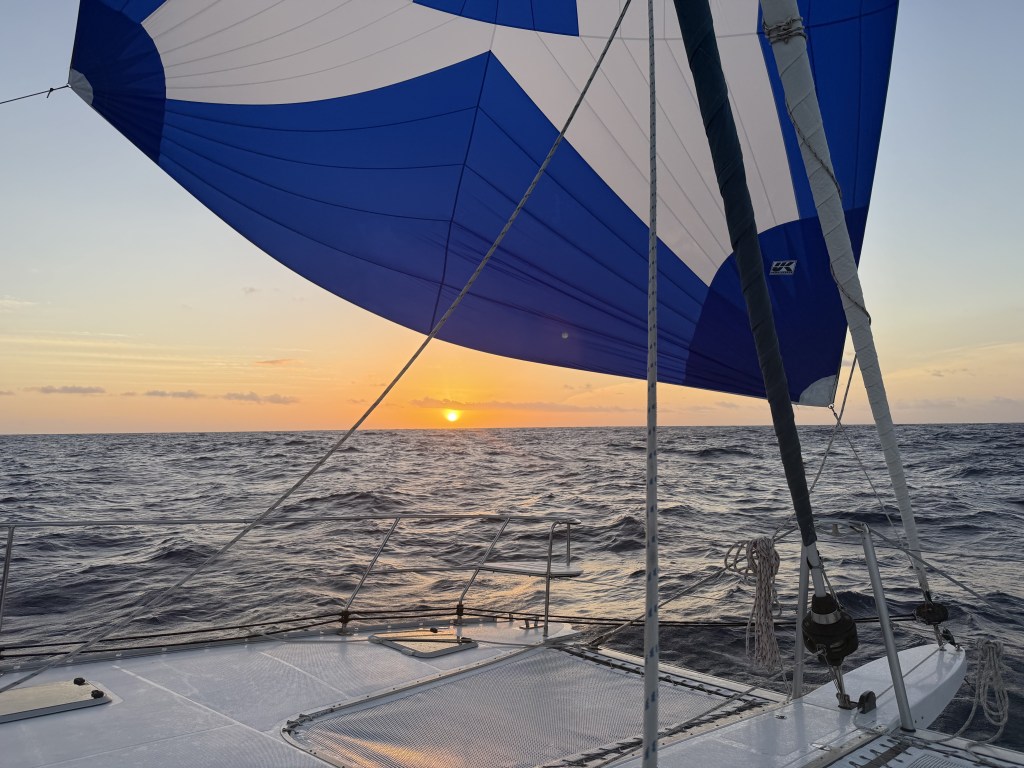
The passage from Vanuatu to Lata, Solomons, where we check-in is about 300 miles and should take us from 40-48 hours depending on conditions. We are racing a storm, which is not our favorite thing to do. Our first night out we flew our main and Code Zero. We usually don’t fly this large sail overnight, as it’s harder to furl it quickly if there’s a huge wind shift, gusts, or squalls. But the skies were clear and the stars shown bright, so we let it fly and made great time covering the much-needed distance. Being in our last year of cruising, I’m looking more at the little things I enjoy on passage; last night we could see both the Southern Cross and Scorpius off our port side. Curious birds circle our boat, checking us out closely before flying off. I count the seconds that flying fish stay “flying” out of the water. And then there’s the horizon in front and all around us.
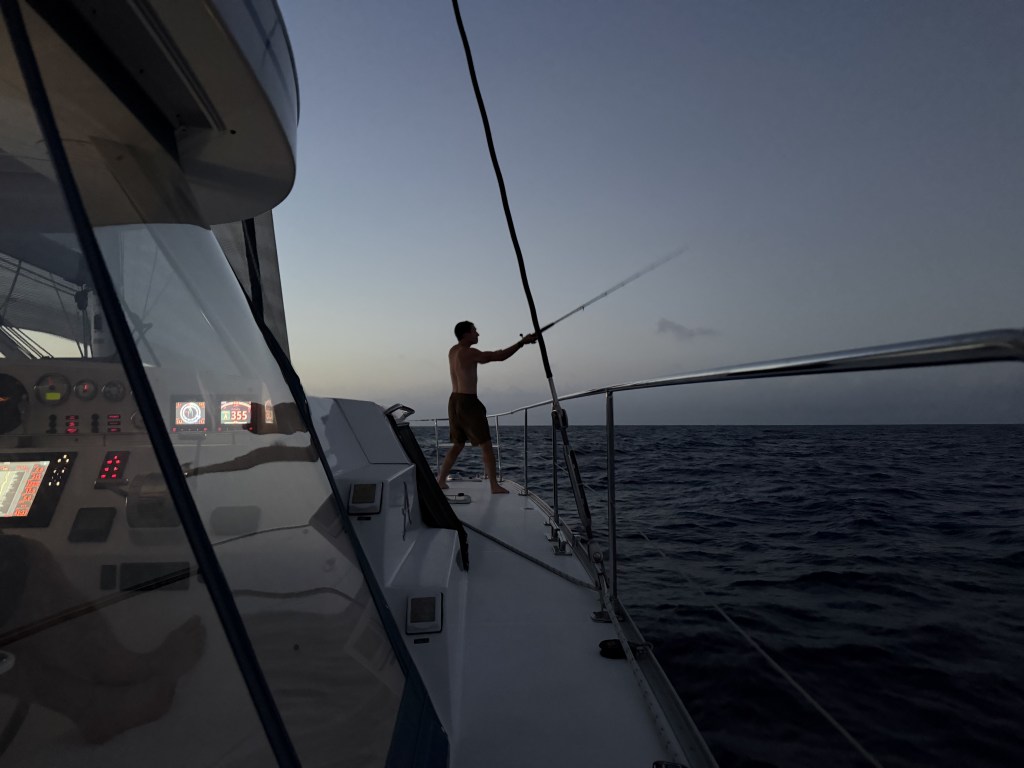
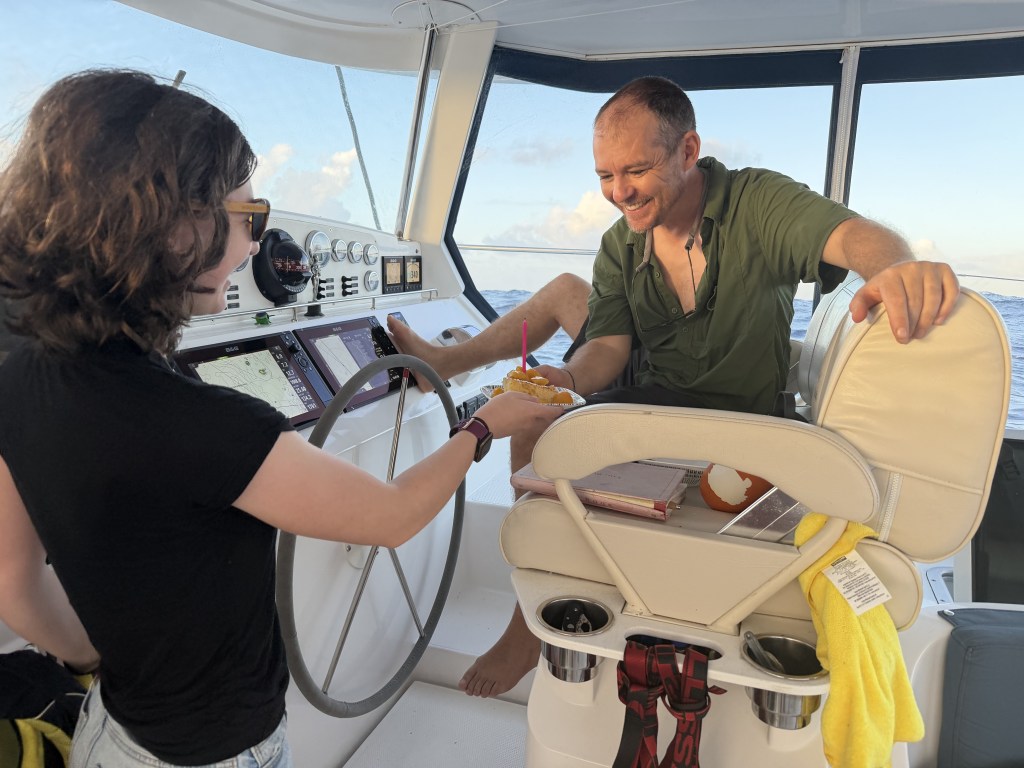
Back to the weather (it’s always about the weather!): a large band of thunderstorms is forming ahead of us, the forecast changing overnight from our original departure forecast. We may need to divert a bit west to allow it to pass. It’s hard imaging this as we sail along under our asymmetrical spinnaker under blue skies and sun! We will be checking the infrared radar images regularly to monitor this thunderstorm, a new tool that our weather router taught us about, allowing us to see if the weather predictions match the actuality of the last hour radar. We celebrated Chris’ birthday on passage with a cake and great sailing!
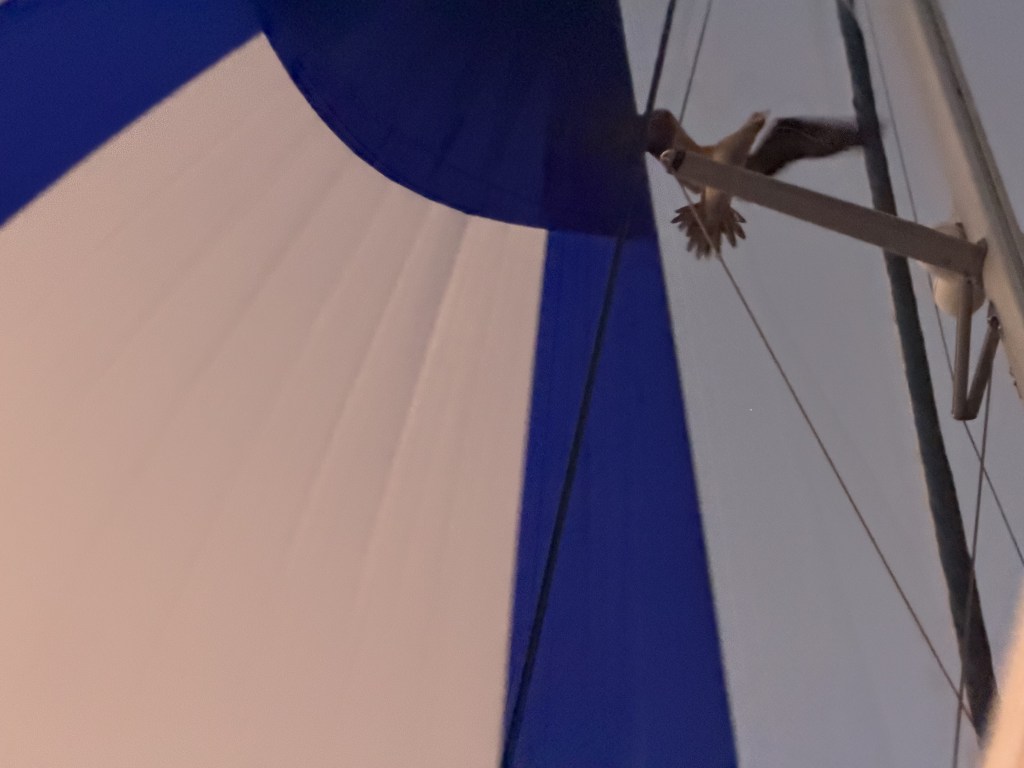
Tonight it was comical to watch a booby bird try to land on our moving mast, as he would circle, then put feet out for the landing, land on a spreader then slide off. We encouraged him just to land on deck, but he didn’t understand.
Our last day out we had some scattered squalls and rain, but no thunderstorms. Yellow q-flag and Solomons flag hoisted.
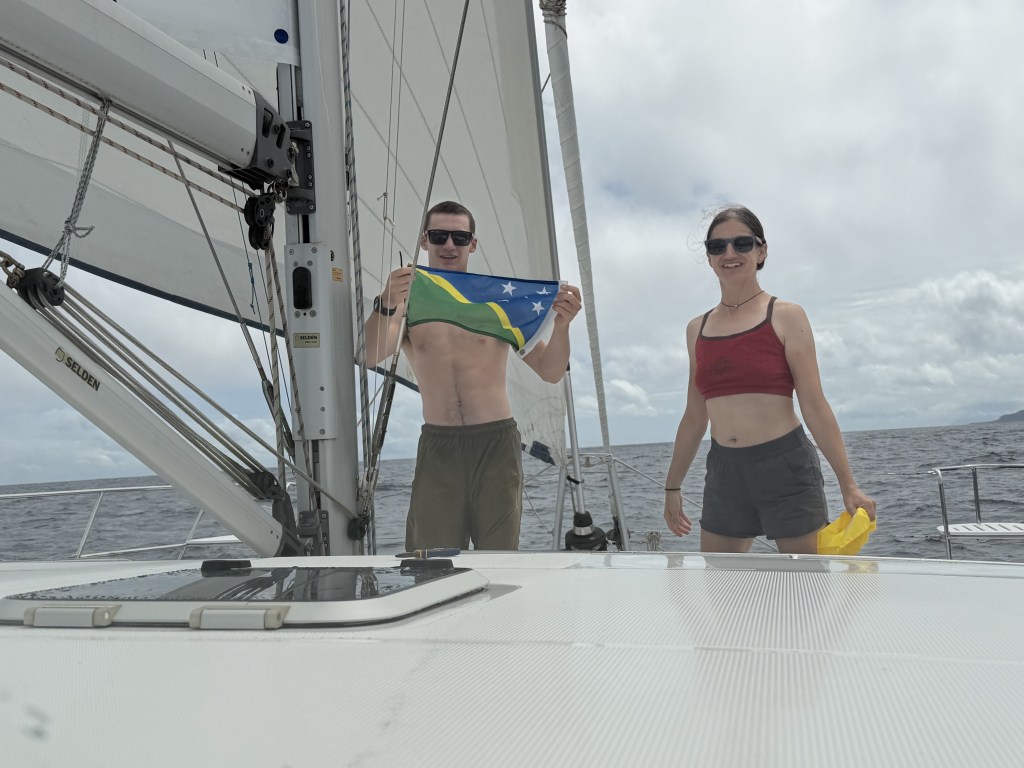
Overall, it was an excellent passage with favorable winds and seas (Cora gave it a thumbs-up!); we covered 300 miles at an average speed of 6.6 knots. We had arrived to the Solomon Islands!
The Solomon Islands are a Melanesian nation of nearly 1,000 islands, stretching about 1,500 km from Vanuatu to Papua New Guinea. The population is around 750,000 people, with most people living in small coastal villages and communities. The Solomon Islands gained independence from Britain in 1978, and during World War II the islands were the site of some of the fiercest fighting in the Pacific, including the pivotal Battle of Guadalcanal (1942–43) between Allied and Japanese forces. English is the official language, but Solomon Islands Pidgin is the language most commonly spoken day-to-day and is widely used alongside English in schools. People also speak their indigenous languages as their first language.
Into Graciosa Bay, boats zipping by and waving and taking selfies with us, kids on shore yelling and waving.
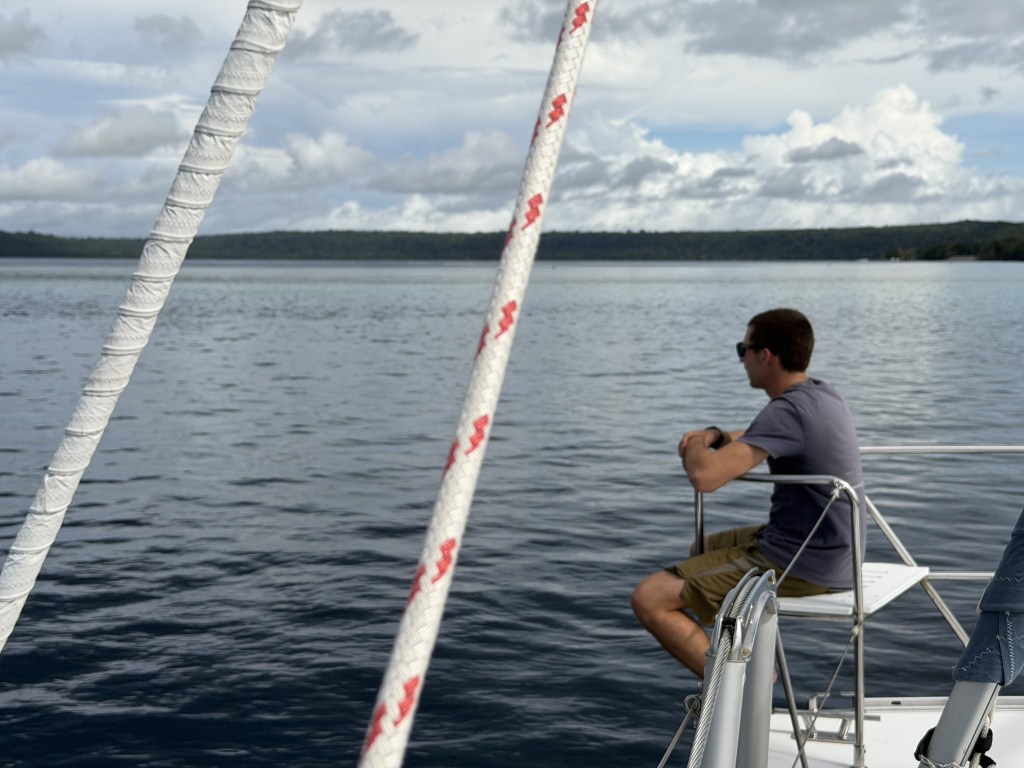
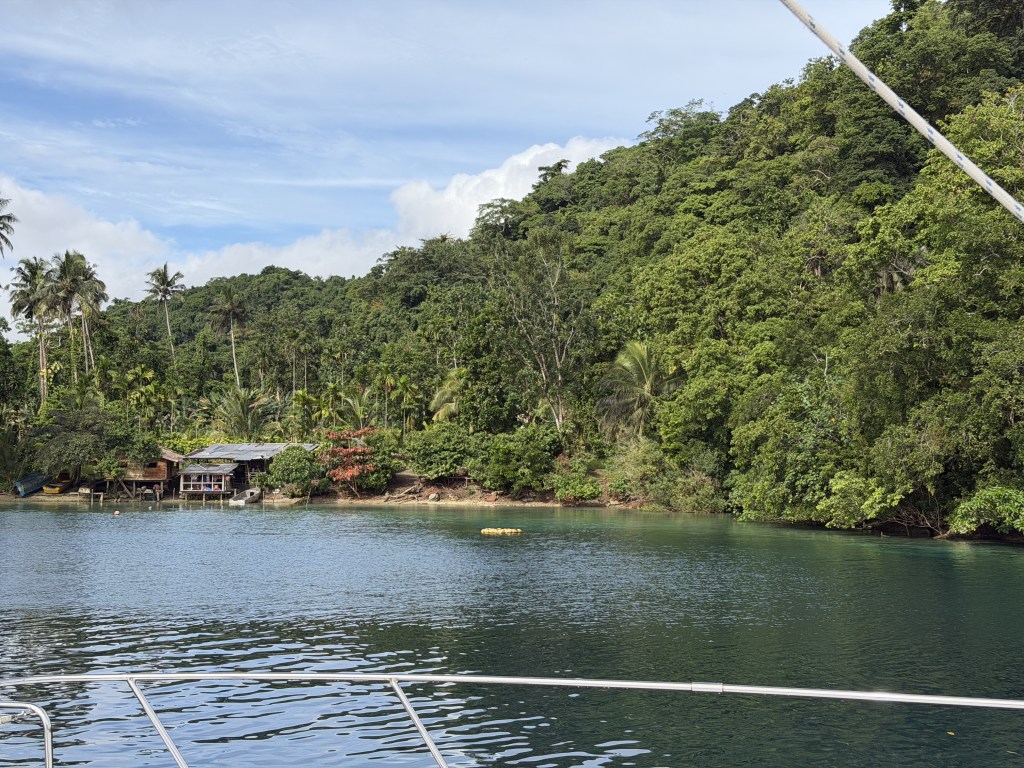
Lata is the main town on Santa Cruz Island (Nendo), in Temotu Province, with a population of roughly 3,000–4,000 people in the wider Lata area. We anchored near the local vocational school across the bay at Shaw Point Anchorage, a very calm and protected spot.
A local man Paul, stopped by in a dugout walnut canoe, wanting to know if we’d like any fruit or vegetables the next day that he could bring by for trade. Yes, please! He also showed us some of his wood carvings and feather money. Feather money, or tevau, is a uniquely Nendo tradition made by carefully collecting the tiny red feathers of Scarlet Honeyeaters—traditionally plucking just a few feathers and releasing the birds alive—and weaving tens of thousands of them into long coils that served as highly valued currency for marriages, canoes, pigs and other important exchanges. They were beautiful and unlike anything I’ve seen on our journey and he said he would bring them the next day as well for me to buy/trade.
I had been in touch with the Customs agent via WhatsApp and, only 30 minutes after we were anchored, Wilson showed up in a panga.
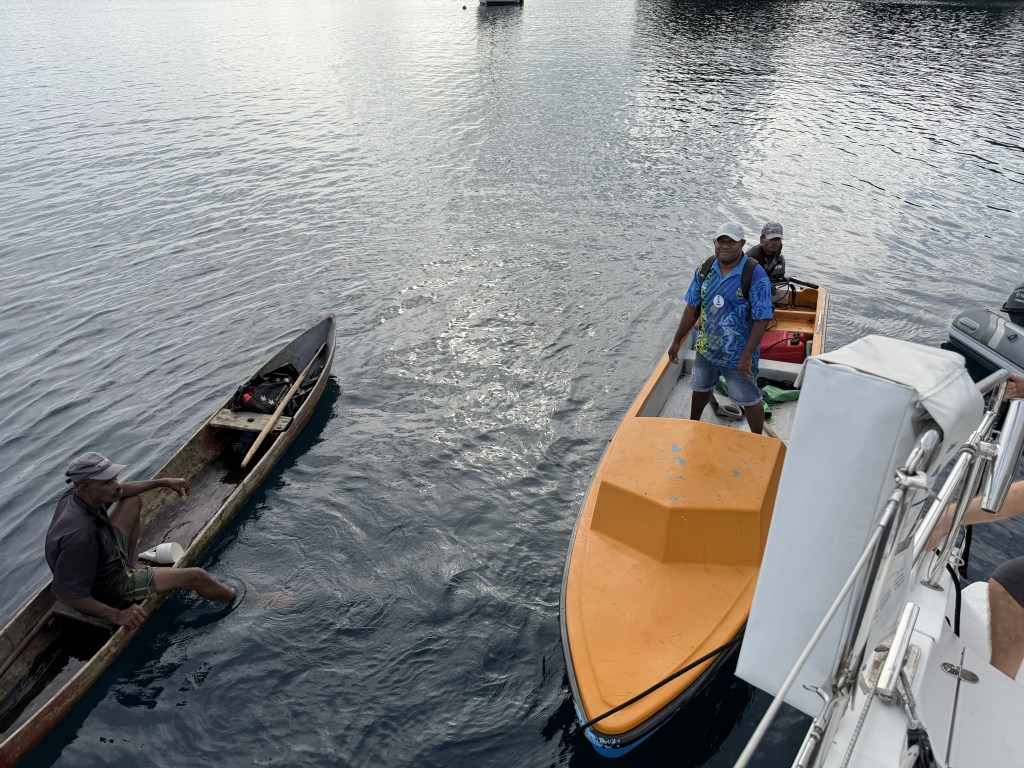
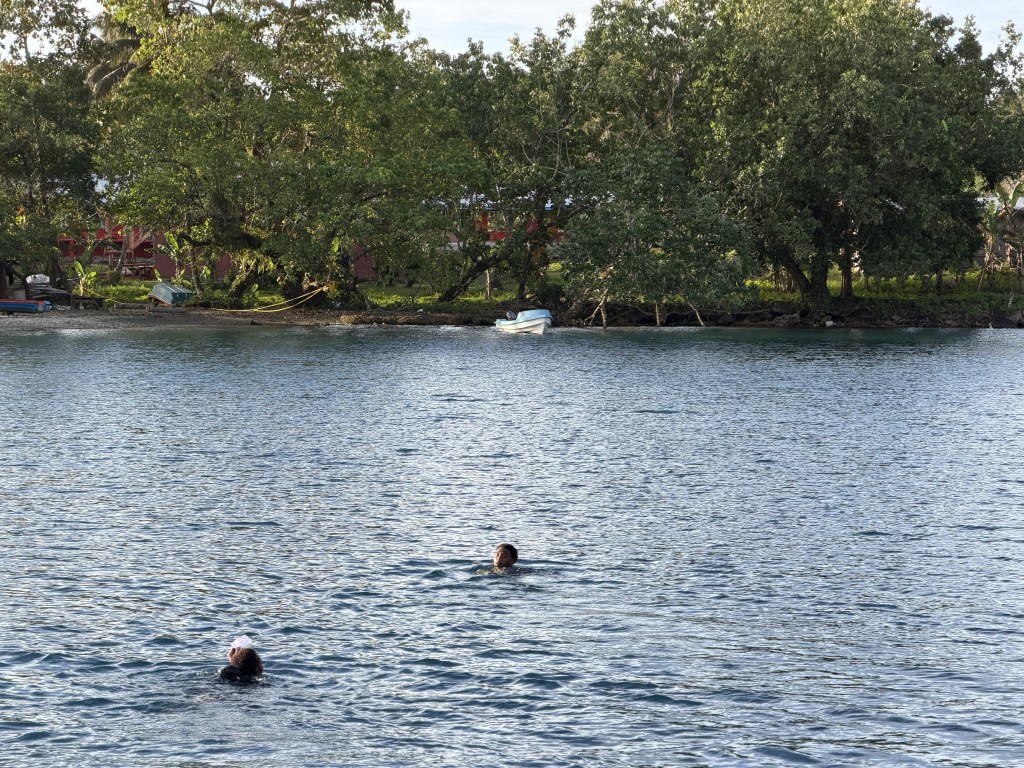
This was the easiest check-in to a country we have ever had. I had the 3 forms filled out and printed and, along with our clearance papers from Vanuatu, and he read them over. He did ask, “Do you still have 47 beers on board?” to which Chris said, “Yes.” He said, “You’re over limit” to which Chris made a subtle grunt… he moved on and no one said anything more. He enjoyed the plate of cookies and off he went; we were all checked into the Solomons within 10 minutes with a receipt to pay at check-out. Anchored off the vocational school, a group of male students in their 20’s swam out and asked if they could use our WiFi, as we were close enough to shore that they could access our Starlink from the shoreline. I wrote the password on a slip of paper, he jumped back into the water off our swimstep, then swam back to shore holding paper out of water in his hand first, then his mouth. Hilarious.
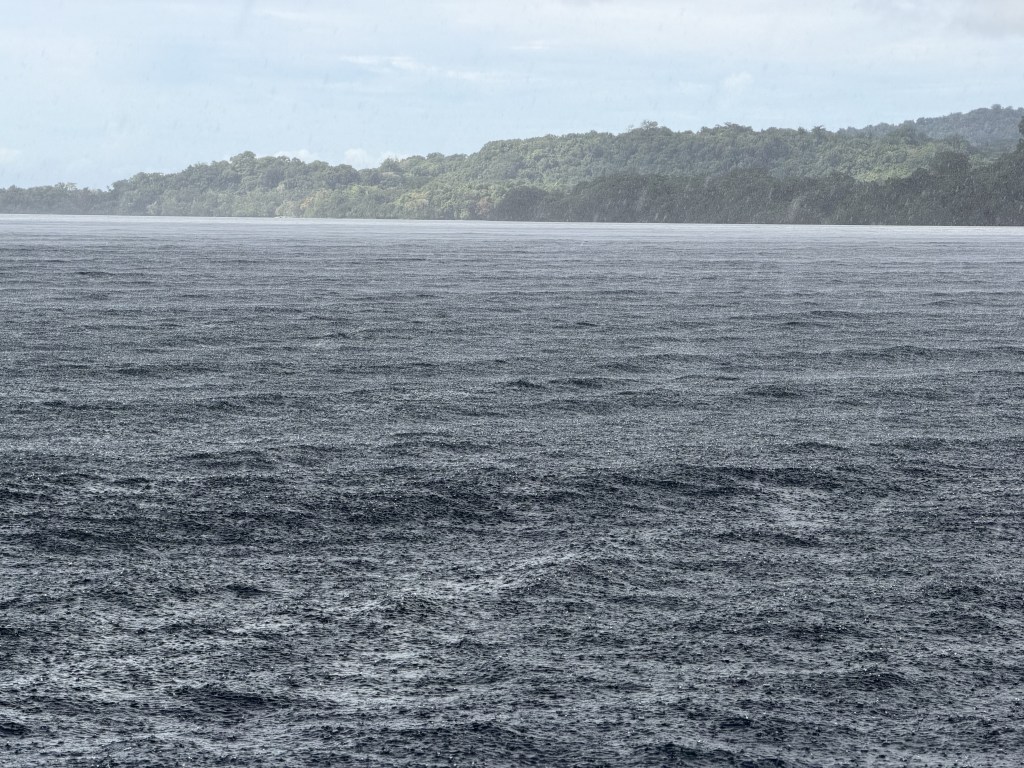
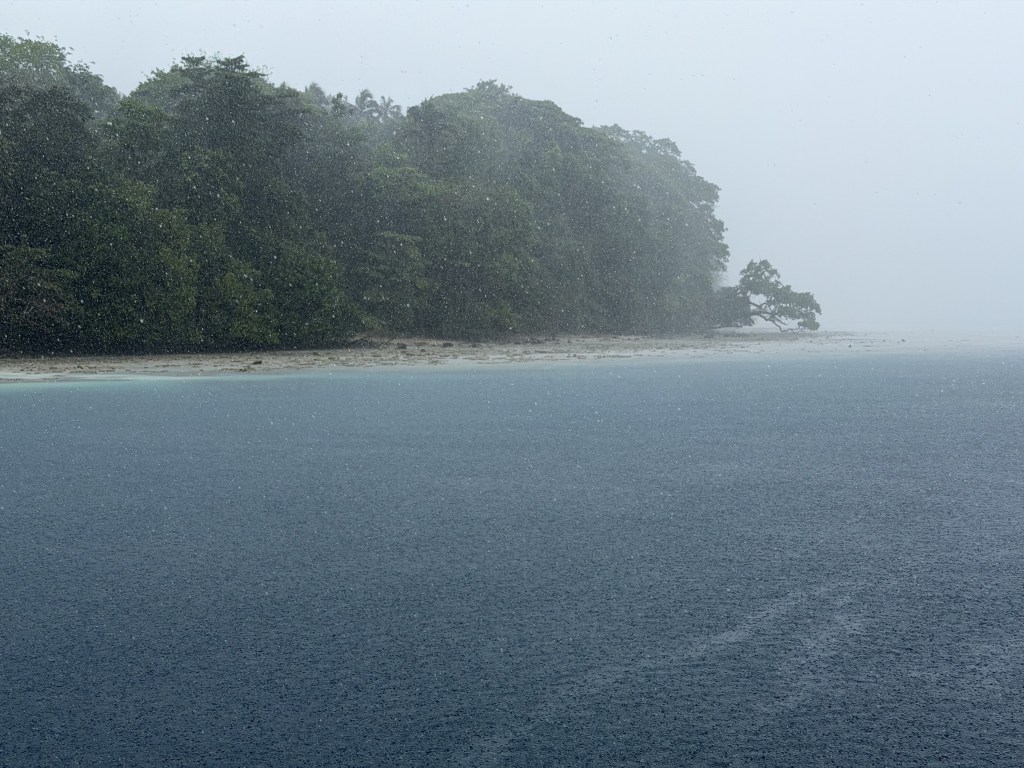
The next morning, woke to the sounds of roosters, singing, songbirds, and laughter from shore. The sky opened up and we completely filled our water tanks with the deluge. The taste of rainwater is delicious and fresh, similar to home and yummier than the sterile water maker water.
Three of the students came out to our boat with produce to trade; they gave us a papaya, some hot peppers, and a handful of green beans.
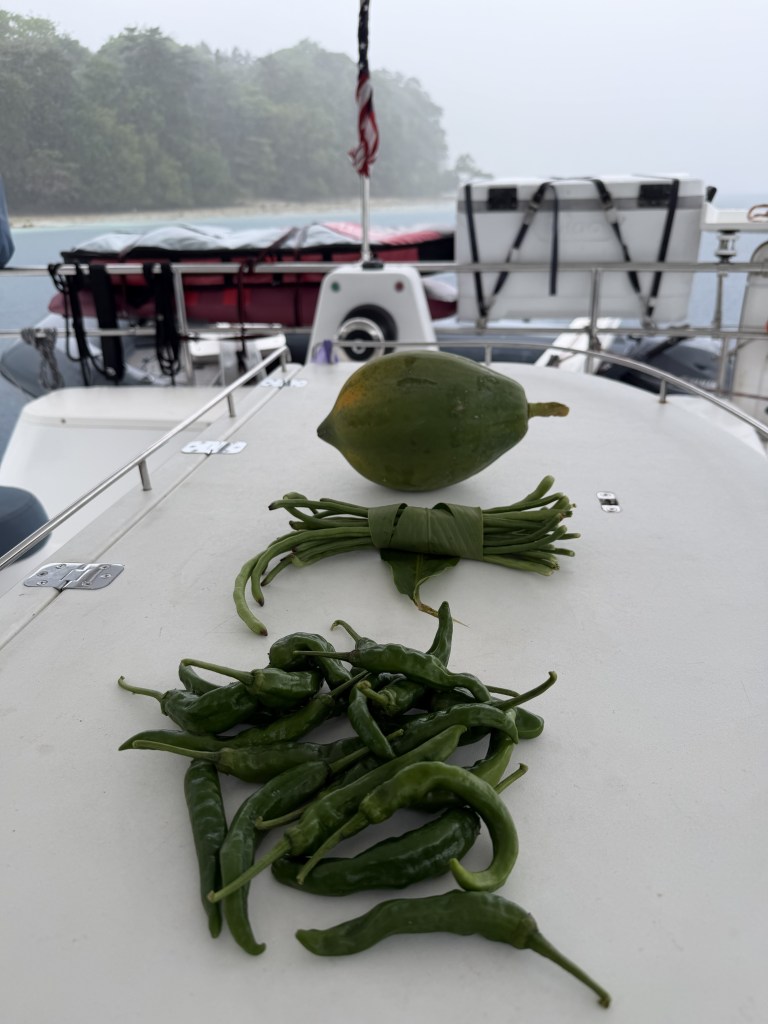
We gave them what they asked for, rice and tinned fish. A little later they came by, in the pouring rain, to give us a large bag of plantains in various stages of ripeness and taro root. They hoped we had cigarettes, but we did not, and they were happy to let us keep the plantains without further trade, a gift.
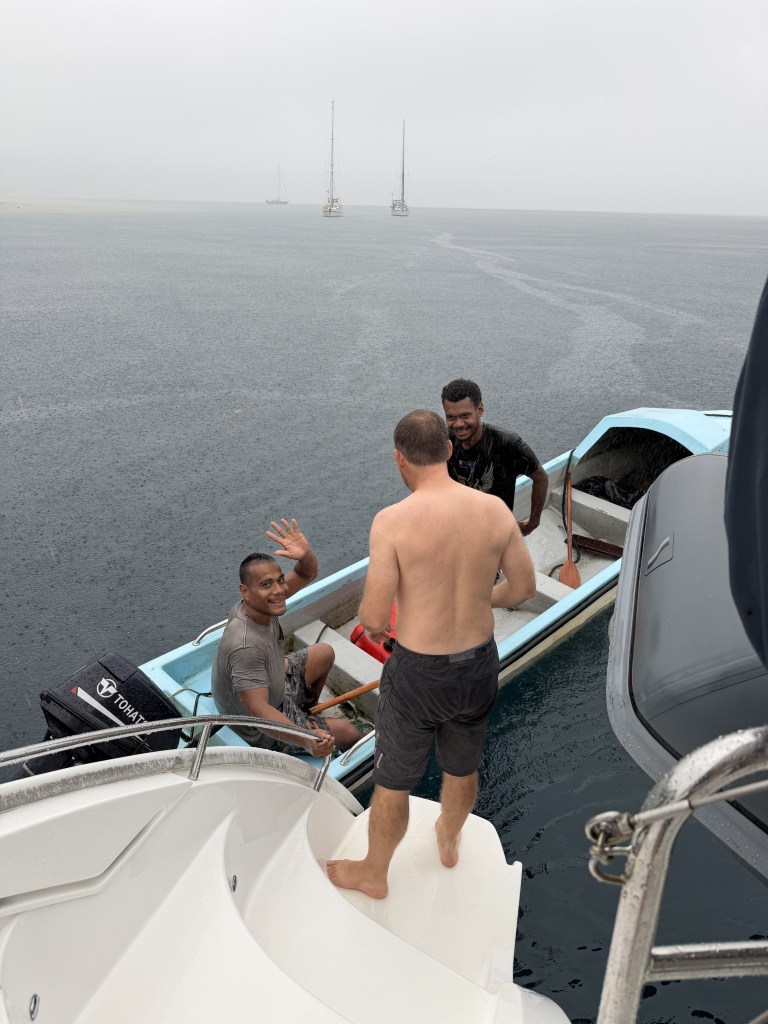
Later in the evening, during a brief time of no rain, Chris and I were sitting outside and a panga drove by waving and snapping photos, “Hallo! We’re just looking,” they said. Who’s looking at who, as we all look at each other with curiosity. At 8pm, a bell rings, and we see flashlights on the shore moving about; around 8:15 the chorus begins and the harmonies float across the water from their church choir practice.
 SV Terikah Adventures
2 responses to “The Solomon Islands: Passage & Arrival”
We ran into S/V IMPOSSIBLE yesterday at Pavlof Harbor (Chichagof east side), and they said to say hello to you all! Lovely folks with their two young boys. Such a very small world!!!
LikeLike
That is AWESOME!! Yes, we are going their same route this next season, will be home August 2027. Tell them Hello from us. We’ve been following them closely on their route. They have some crazy stories about their passage from Japan to the USA via Russia, worth hearing if you haven’t already! Hope you are well.
LikeLike