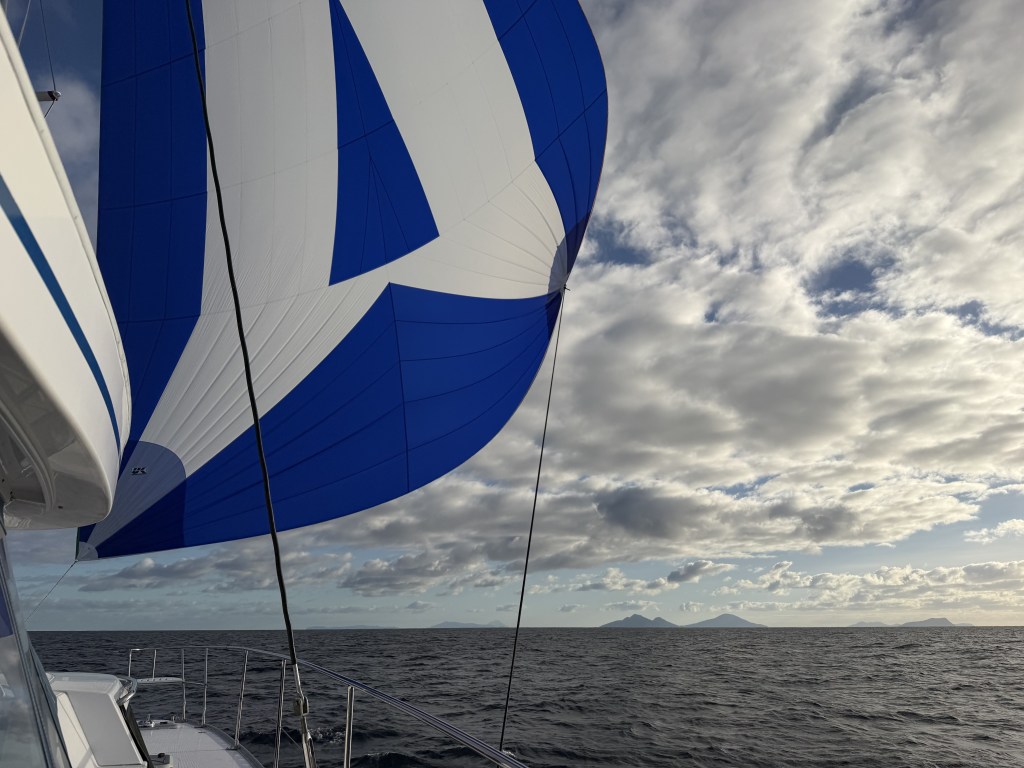
Up just before sunrise and under way, downwind spinnaker sailing for 57 miles, flying fish all around. I said to Chris, “Look at that volcano!” to which he answered, “Which one?” as we were surrounded by a trail of volcanic islands.
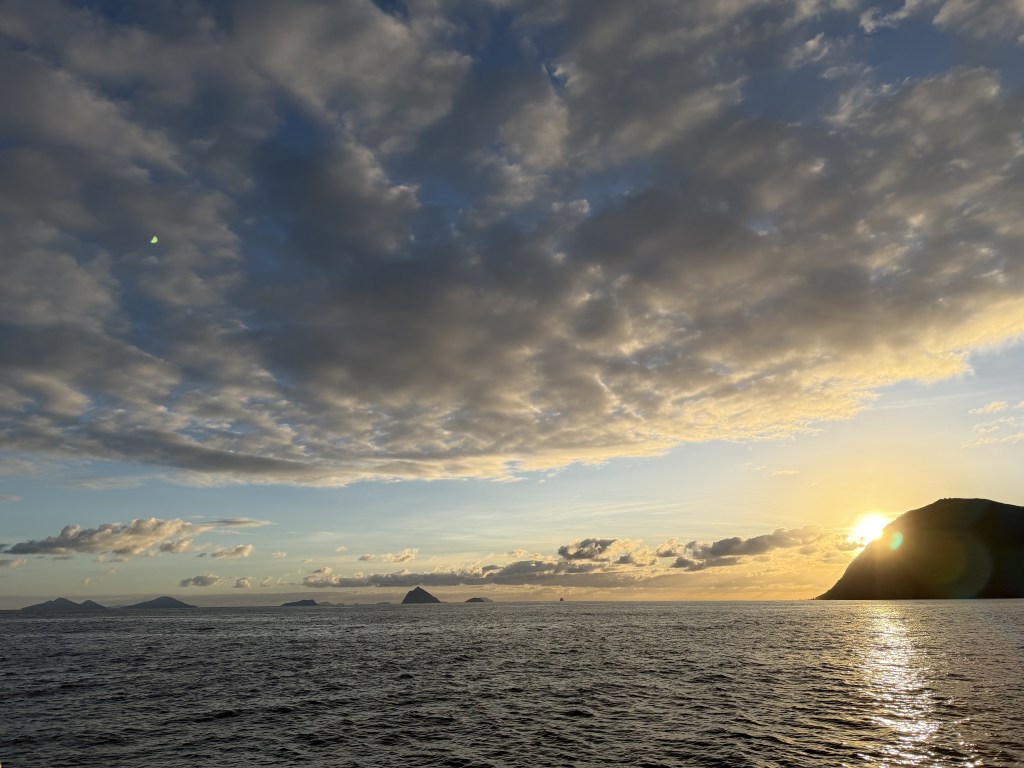
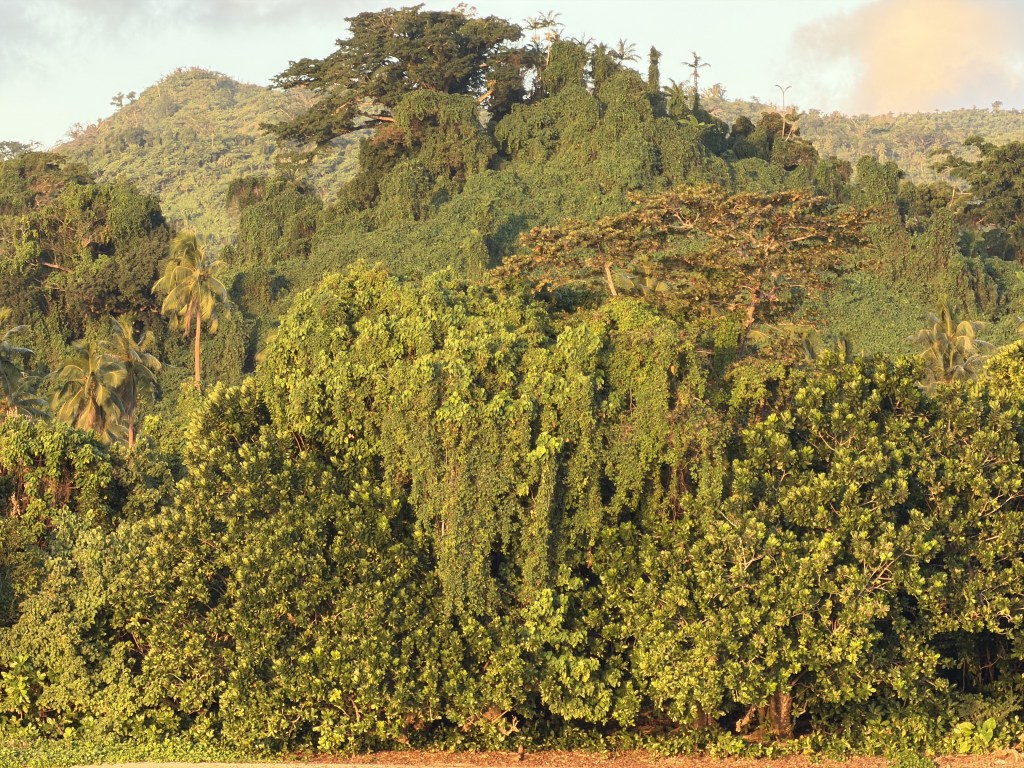
Caught a micro-skipjack tuna and let him go, otherwise no fish. Into Foreland Bay on Epi Island just after sunset, with the lush jungle greenery draped over the cliffs, curtain-like growth of mosses and ferns.
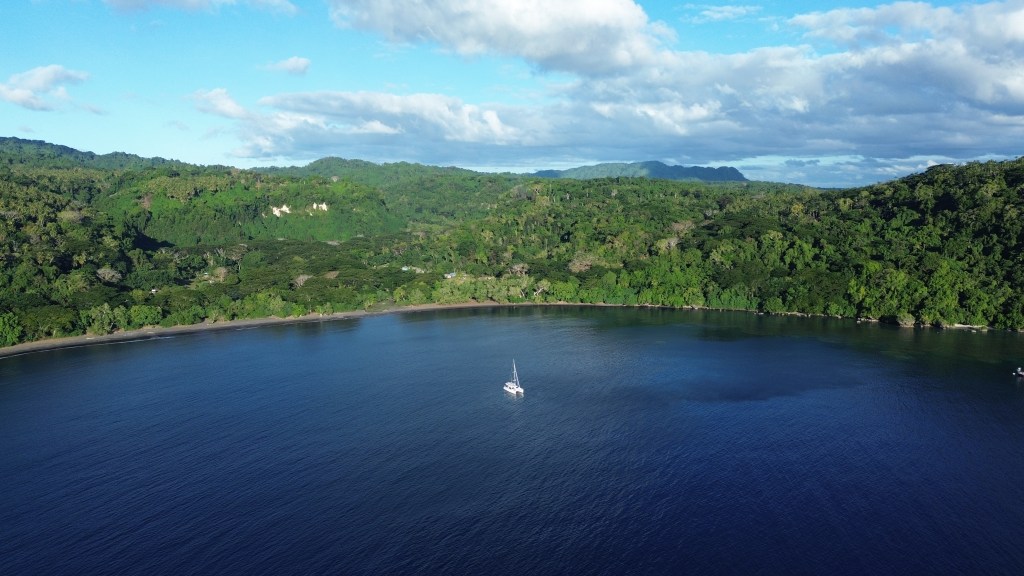
Next day, a lovely 25-mile sail to the beautiful Maskelyne Islands (off the southeast tip of Malekula Island), where we anchored off Vula Reef for a couple nights in only 6.5 feet of water.
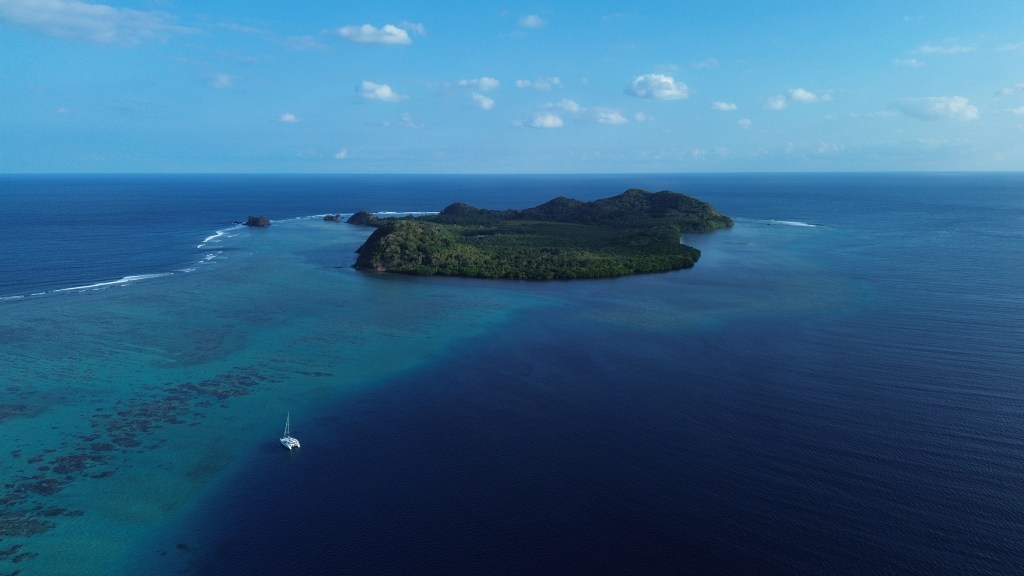
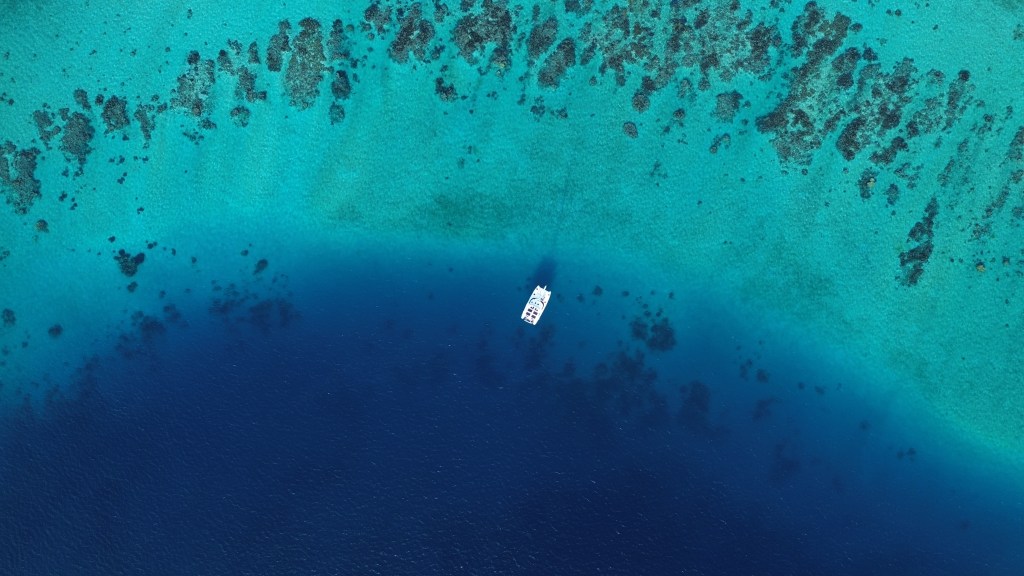
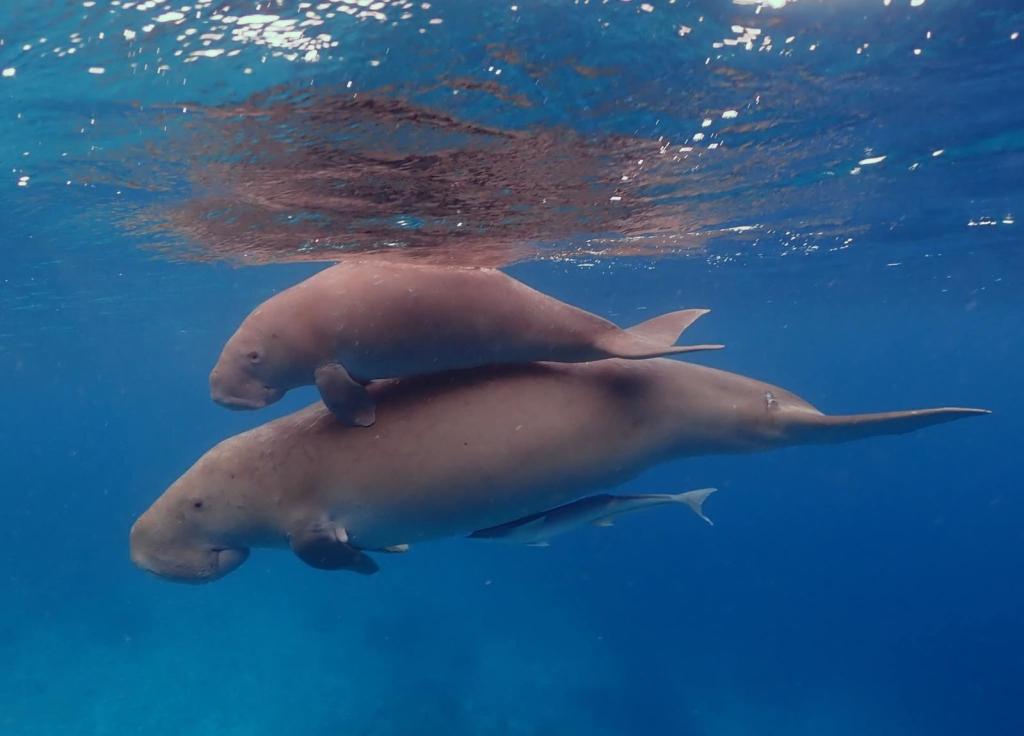
The highlight here – dugongs! I had contacted Niptick and Phillip of Maskelyne Islands Dugong Tour and they called me the night prior to set up a time to meet. Before we got off the phone Niptick said reassuringly, “Dugongs be waiting.” All that night and the next day I couldn’t stop saying, “Dugongs be waiting” with excited anticipation of seeing these amazing mammals.
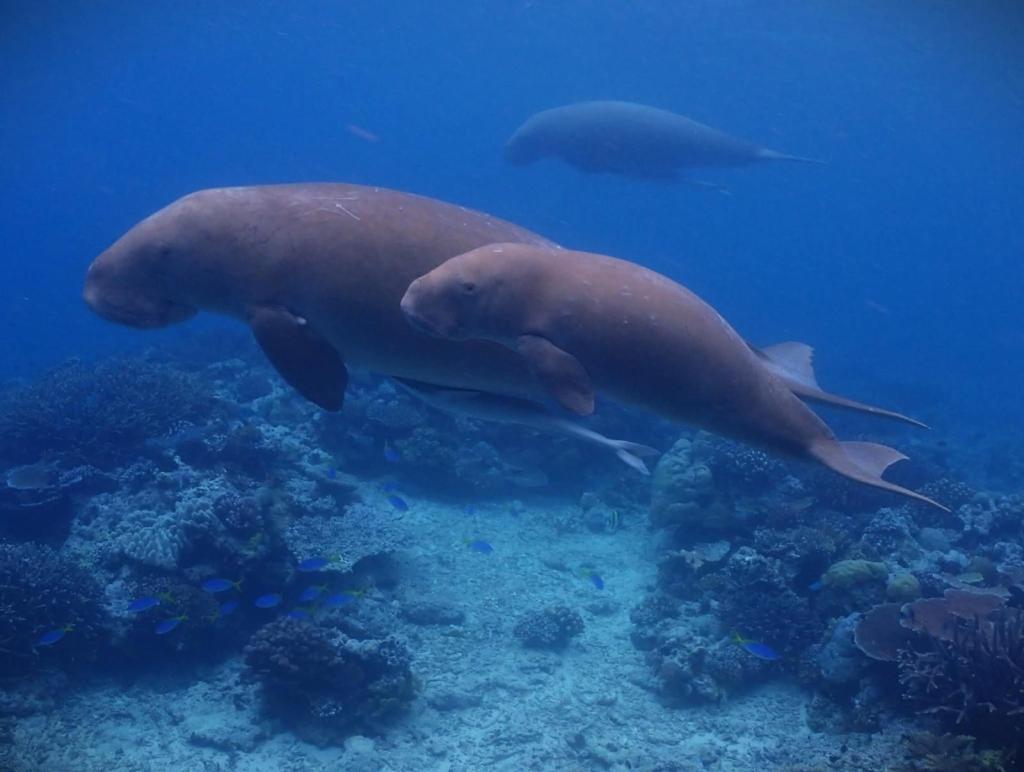
Dugongs are gentle, marine mammals related to manatees that graze on seagrass meadows, earning them the nickname “sea cows,” and can grow up to about 3 meters (10 feet) long and weigh as much as 400 kilograms (900 pounds). Mothers usually give birth to a single calf after about 13–15 months of pregnancy, and the calf stays close to its mother, nursing and learning to feed on seagrass for up to two years.
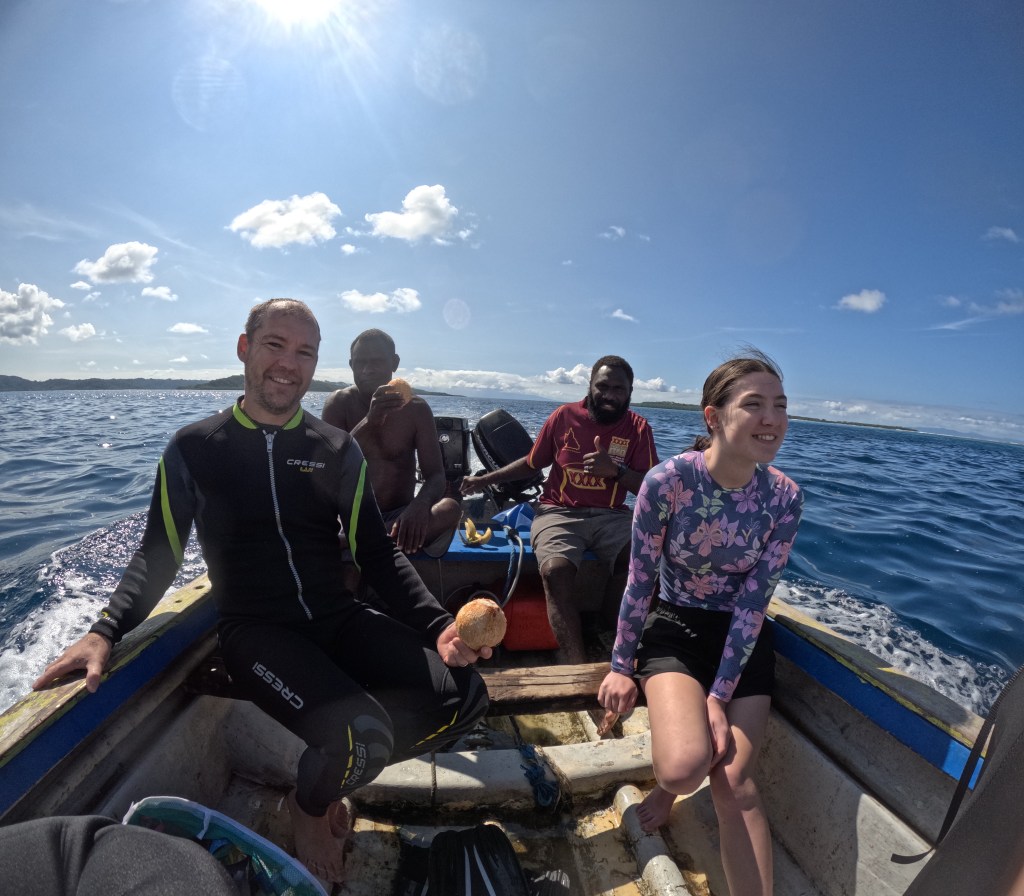
The next day, Phillip picked us up in a classic South Pacific panga. On board were the panga owner (dugong spotter), Phillip (dugong spotter and in-water snorkeling guide), Niptick (the principal of the school), and some school children.
A dugong spotted, we jumped into the water and swam toward her, but after a bit of a swim, she eluded us. I thought, oh no, the dugongs aren’t waiting! Then we saw another one and all jumped in again. Yes, there she was with her calf; amazing! And she swam so close to us. But then another arrived. And another. And another. Yes, it was a dugong convention! They had indeed been waiting for us! In the end, we had about 25 dugongs around us, three with calves. We spent 45 minutes in the water surrounded by these spectacular mammals.
The next day, during our 46-mile sail past a mangrove village and across to Pentecost Island, the fishing rod whirred. And then we saw a large splash and a leap out of the water – it was a billfish of some kind! A very large billfish. Lauren worked and worked to bring it closer to the boat, only to have it make another run and have her hard work spool out before her. Calder took a turn reeling as well. About 1 ½ hours later, the fish was to the boat – a beautiful Striped Marlin.
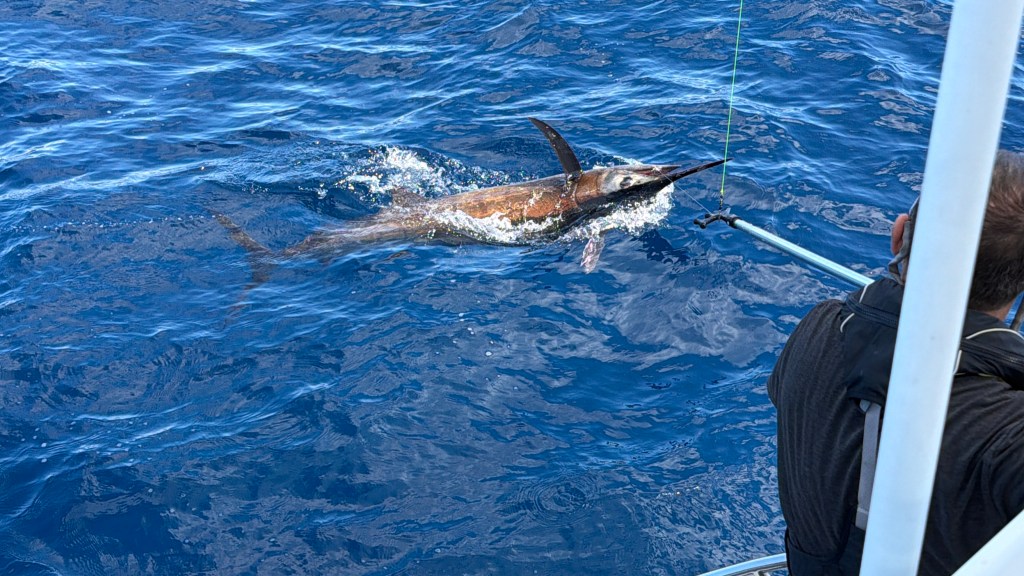
There were questions about whether we should keep it, both due to concerns about ciguatera toxin (in this large apex predator), as well as whether we could even get it on board. At that moment the line snapped and the beautiful fish left us. It was the largest fish we’ve had on the line in Terikah.
Headwinds for our last hour of the sail made for some bashing, happy to get the anchor down in Homo Bay on South Pentecost Island.
I had contacted a local, Bartholomew, to coordinate our visit to Ratap Kustom Village for naghol (land-diving) and he said he would meet us on arrival to the anchorage. And, sure enough, there was a man down on the beach waving his arms and motioning to where we should anchor. It still is unclear how long he was waiting, but there he was. We quickly dropped the dinghy and headed to shore to meet him, where he said he would just come out to the boat to give us information about naghol. So in he climbed and out to Terikah, where we invited some other boaters to come over to get our naghol orientation. I put out a plate of cookies. Another man in an outrigger canoe came over and came on board as well, unsure of exactly who he was or why he was there, he was quite friendly but spoke no English.
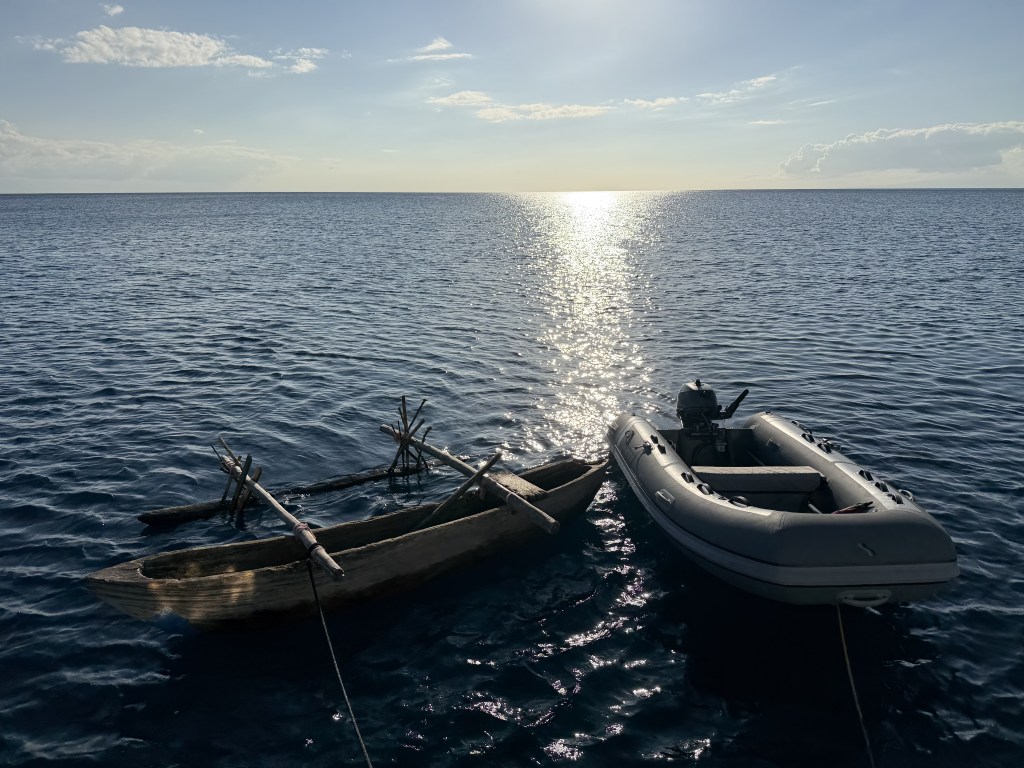
Our orientation consisted of finding out the time to meet the next day. Cookies gone, Chris and I took Bartholomew back to the beach and asked if we could meet the chief to ensure we were anchored in a good location, as some areas are “taboo.” We were taken to Chief Willie, who was very welcoming and appreciated the check-in. Surrounded by playful local kids holding our hands back to our dinghy, they pushed our dinghy back out into the water with smiles and waves. Village kids are so vibrant, curious and friendly.
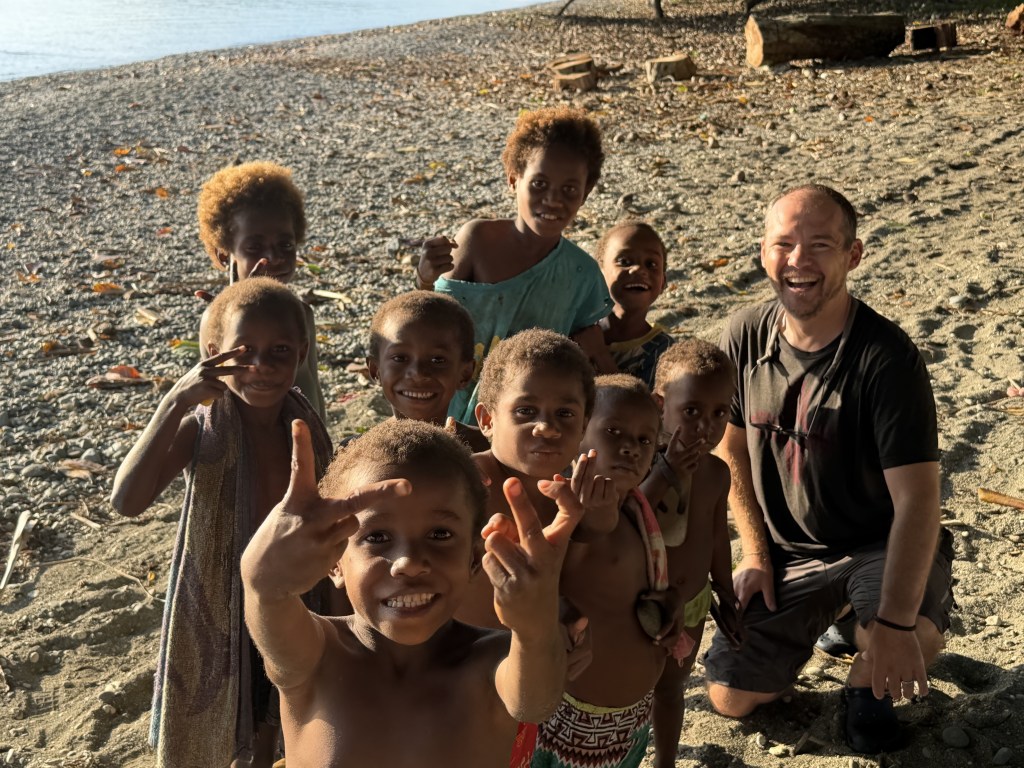
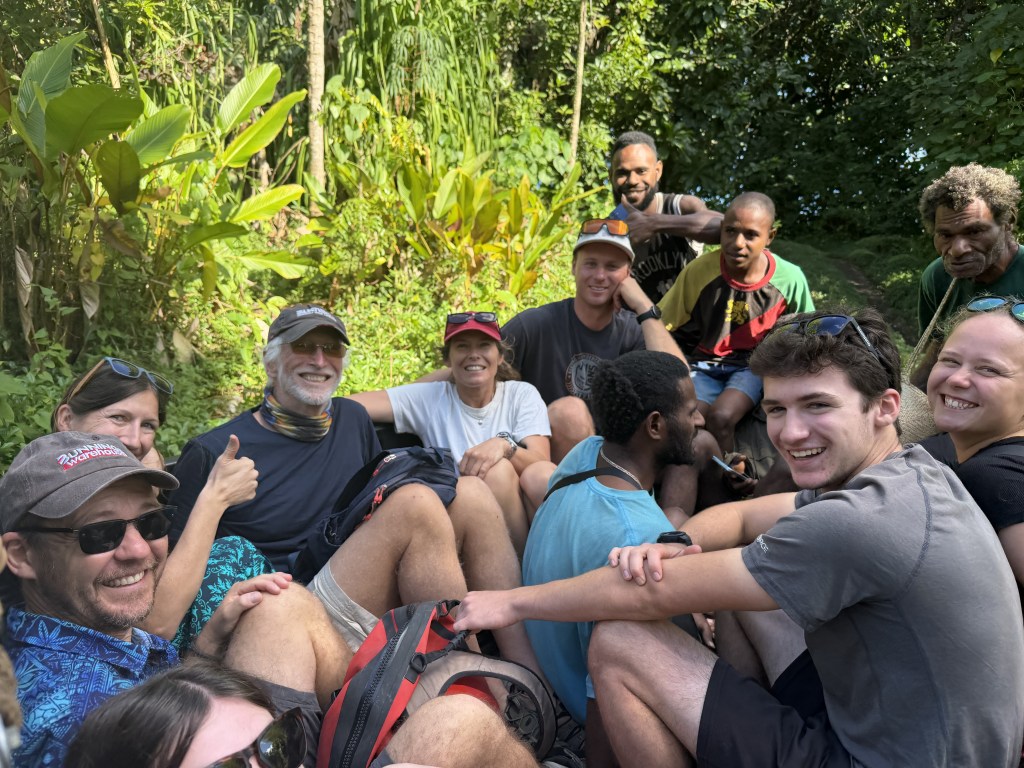
The next morning we were on the beach at 8:15 as planned, where Bartholomew repeatedly apologized that the truck he had set up had gone somewhere else and he had arranged another that would be here “soon.” In the meantime, we slowly found ourselves surrounded by curious locals, some making themselves at home in our dinghy. About a half hour later, we were reassured by Bartholmew that our ride was on the way and would be here “soon.” All good, as we conversed with locals and a few other boats of cruisers joining in to witness the land-diving. Another half hour later, reassured that the truck was coming “soon” and something about “after it was fixed.” Adventures often happen on their own timeline and this was no different. About 90 minutes after getting to the beach, we found ourselves crowded into the back of a Toyota pick-up – 15 people and a tuna – bumping and laughing our way up and up the mountain road.
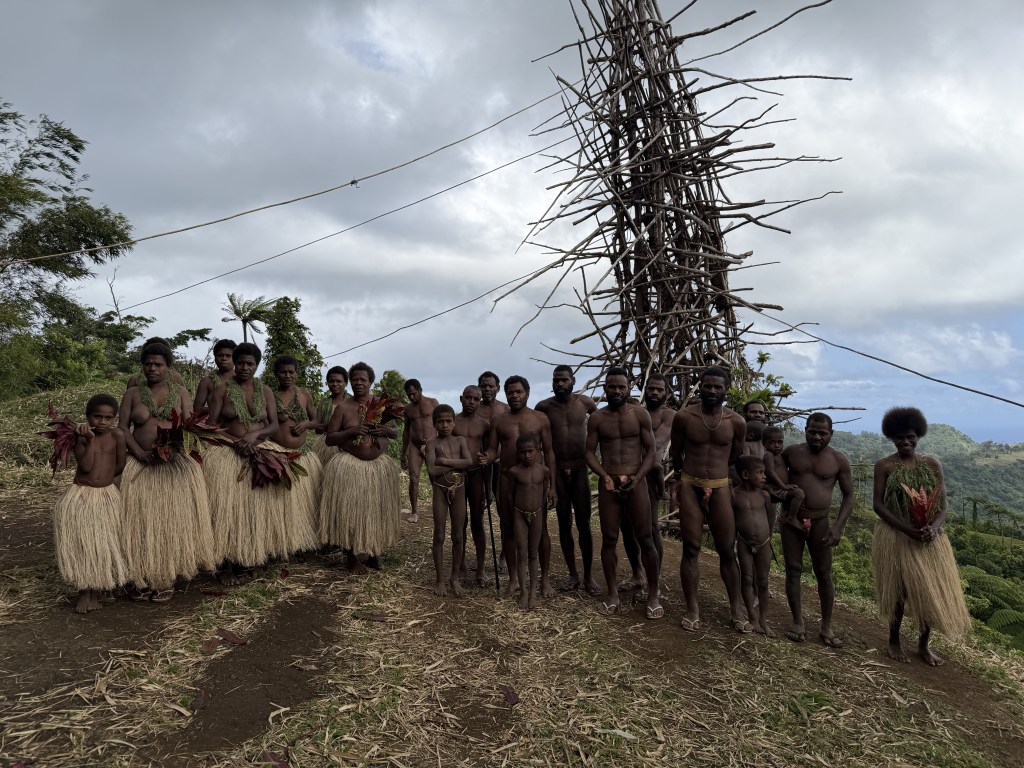
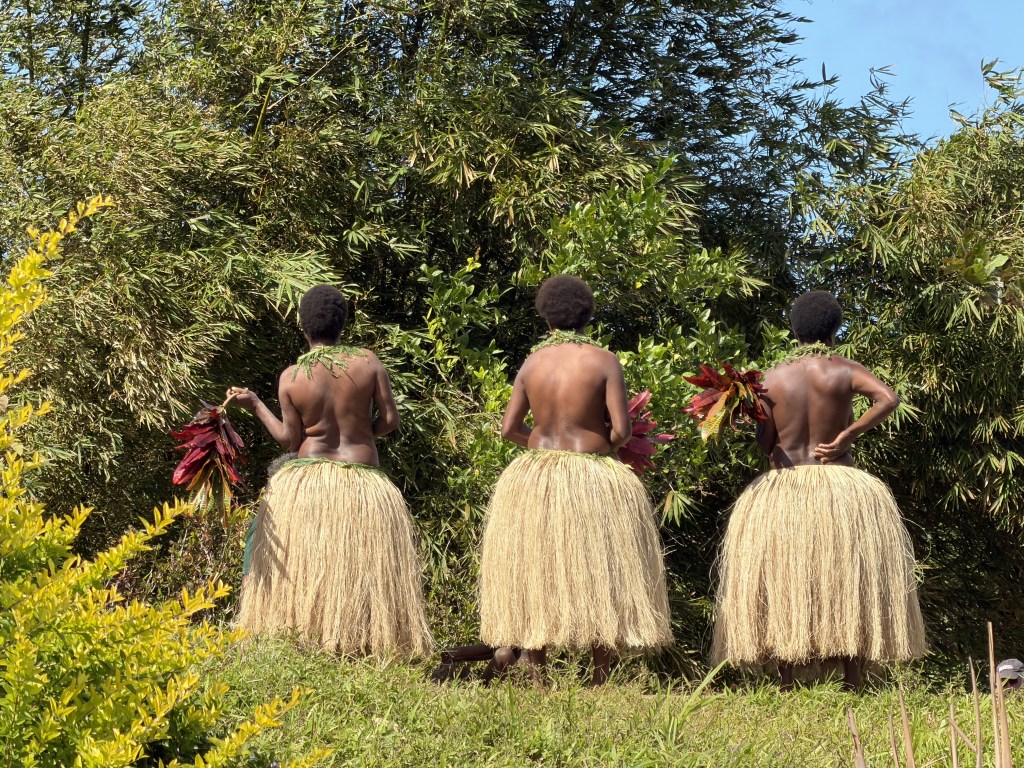
Arriving at Ratap Kustom Village, we lined up and were greeted by the chief, wearing his namba, a traditional penis sheath typically made from leaves, bark, or cloth. The sheath is then folded back up under a belt. We were welcomed by local women wearing only traditional dried grass skirts, while the chief placed a necklace of fragrant Euodia hortensis (nisei) leaves around each of our necks.
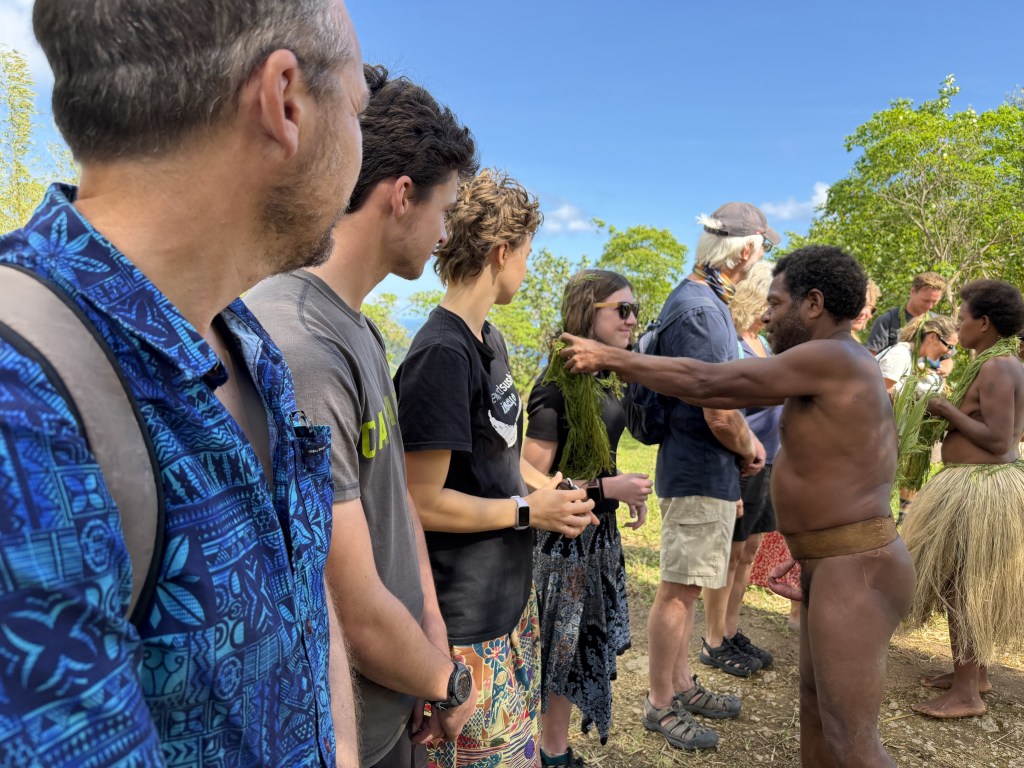
The citrus-scented foliage symbolizes hospitality and celebration and is also woven into traditional ceremonial clothing. A “kastom village” is a community that continues to preserve and practice kastom—Vanuatu’s traditional customs, beliefs, ceremonies, language, dress, and way of life passed down through generations. Walking through the village, I felt as if we had stepped into the pages of a National Geographic magazine.
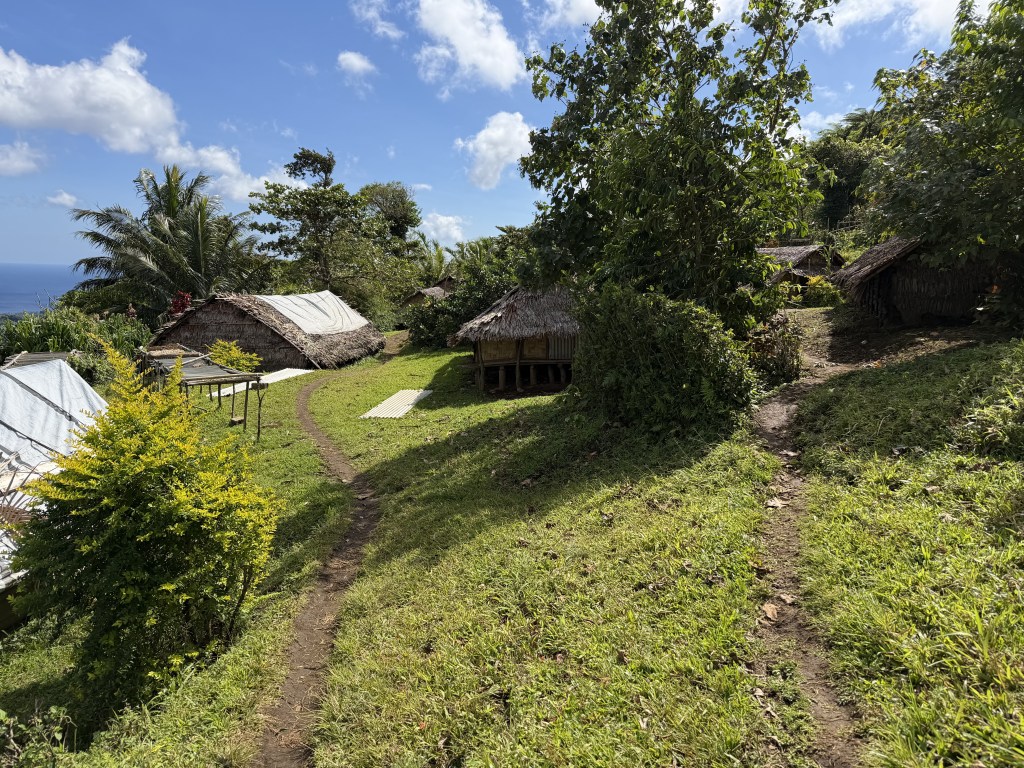
The homes were built into the hillsides, with low entrances and walls of bamboo and woven mats, topped by roofs of tightly thatched palm fronds.
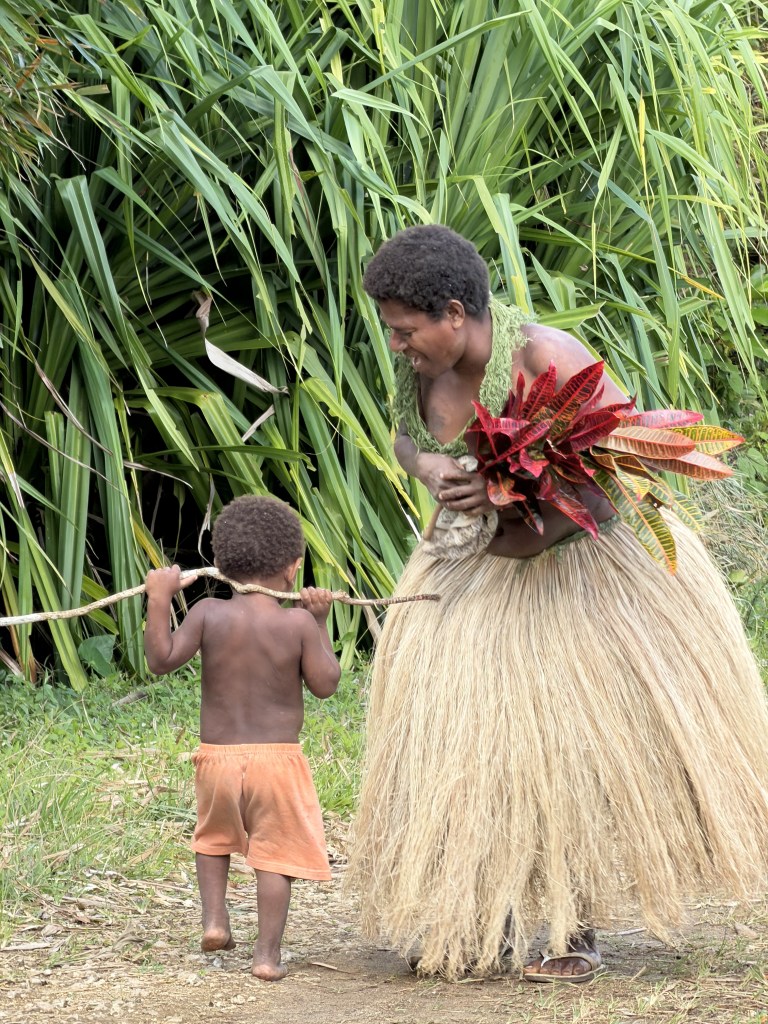
We were invited into the cooking house, where three fires burned in the center of the earthen floor; inside, the air was smoky and dim, with only a little light filtering through the thatch and a simple bench along one wall.
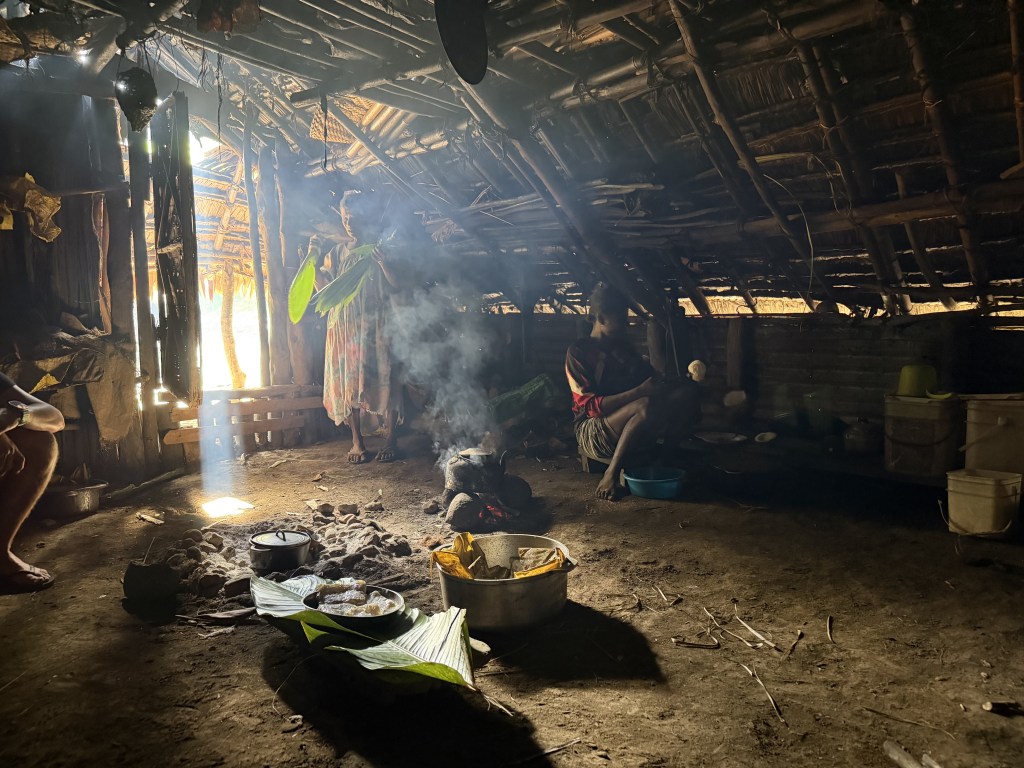
Despite the humble surroundings, we were welcomed with open arms as the family prepared laplap and graciously shared their meal with us.
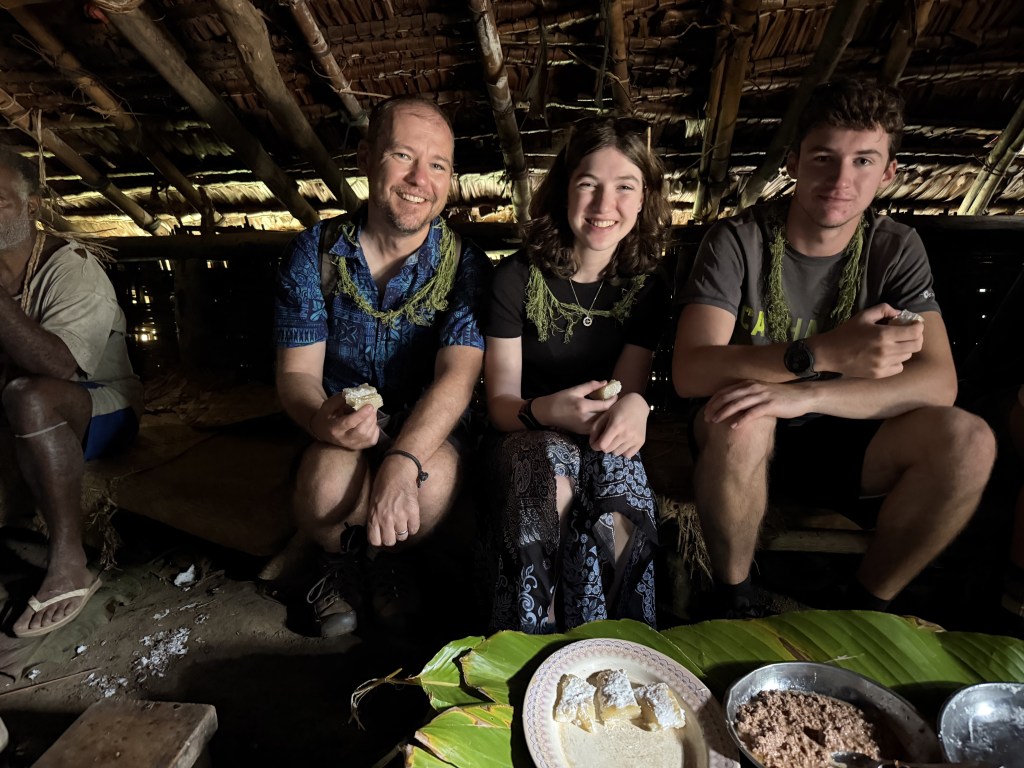
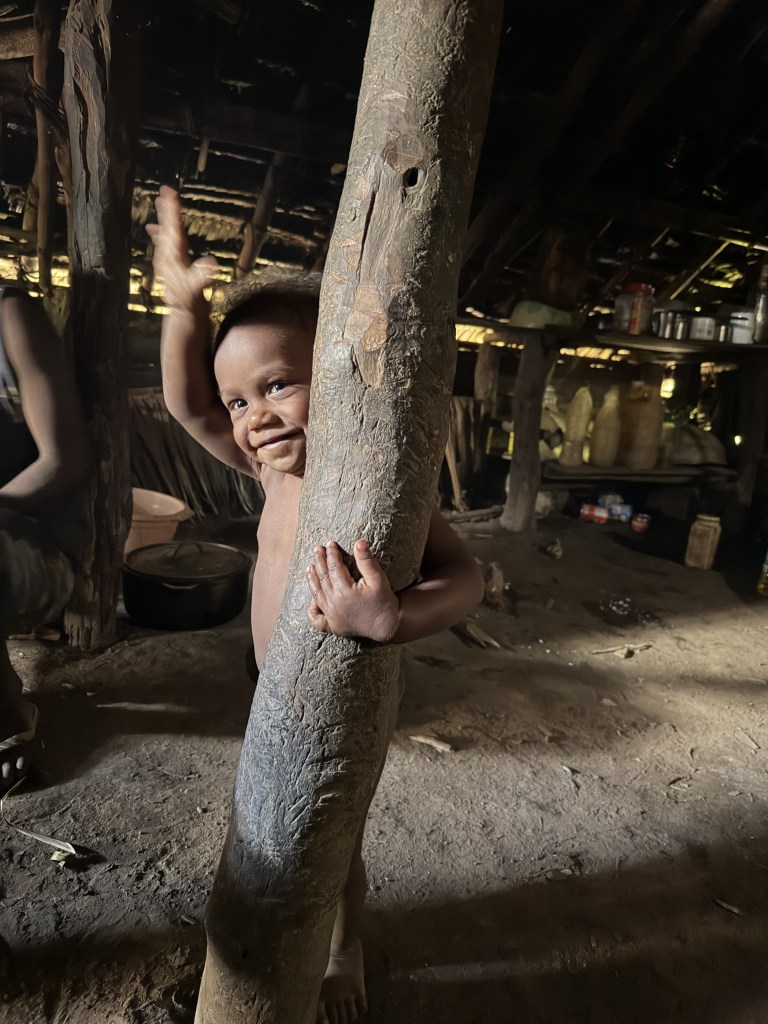
Sitting together in that warm, smoke-filled kitchen, exchanging smiles with a curious one-year-old child, was my favorite moment of the day.
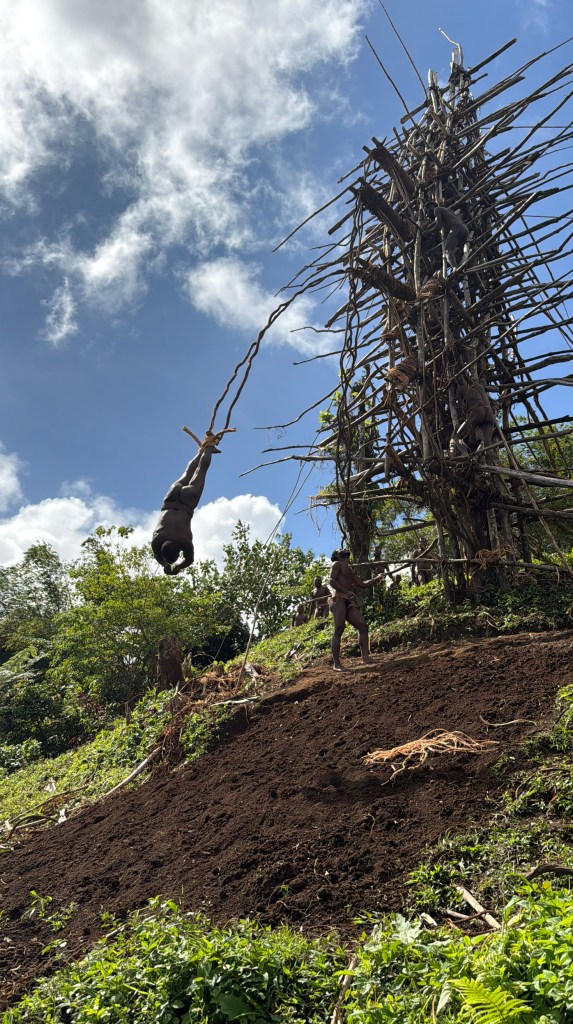
But the dancers had arrived and it was time for the land-diving to commence. Naghol is a traditional ritual only on Pentecost Island in which men leap headfirst from tall wooden towers with specially prepared vines tied to their ankles to break the fall.
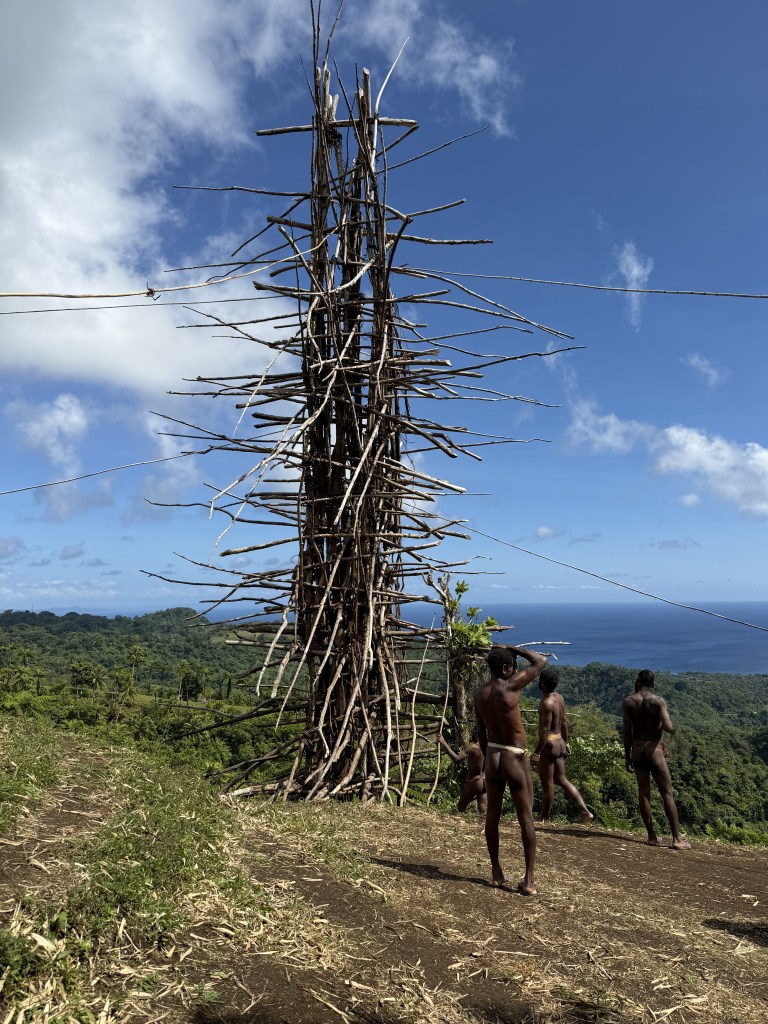
Performed each year during the yam harvest season, it is believed to ensure a good crop, demonstrate courage and manhood, and is widely recognized as the inspiration for modern bungee jumping.
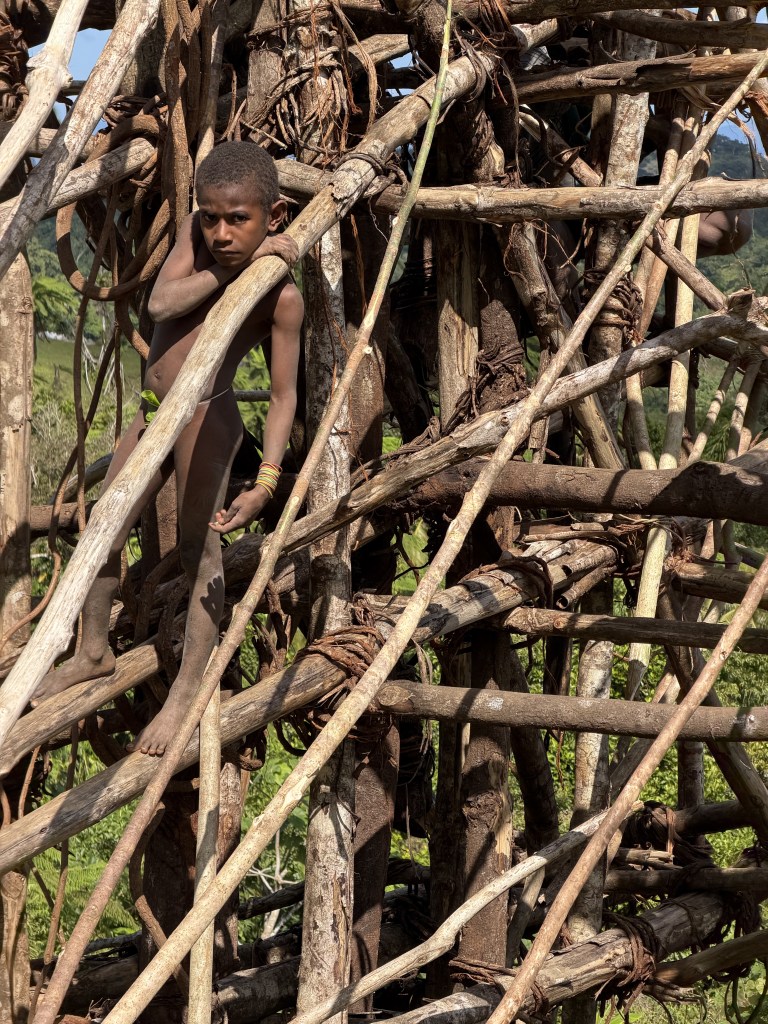
A 12-meter (40-foot) rickety-looking wood tower stood before us, with five platforms at increasing heights. Before the ceremony began, the men carefully measured and prepared the vines for each jumper, while dancers gathered and began singing.
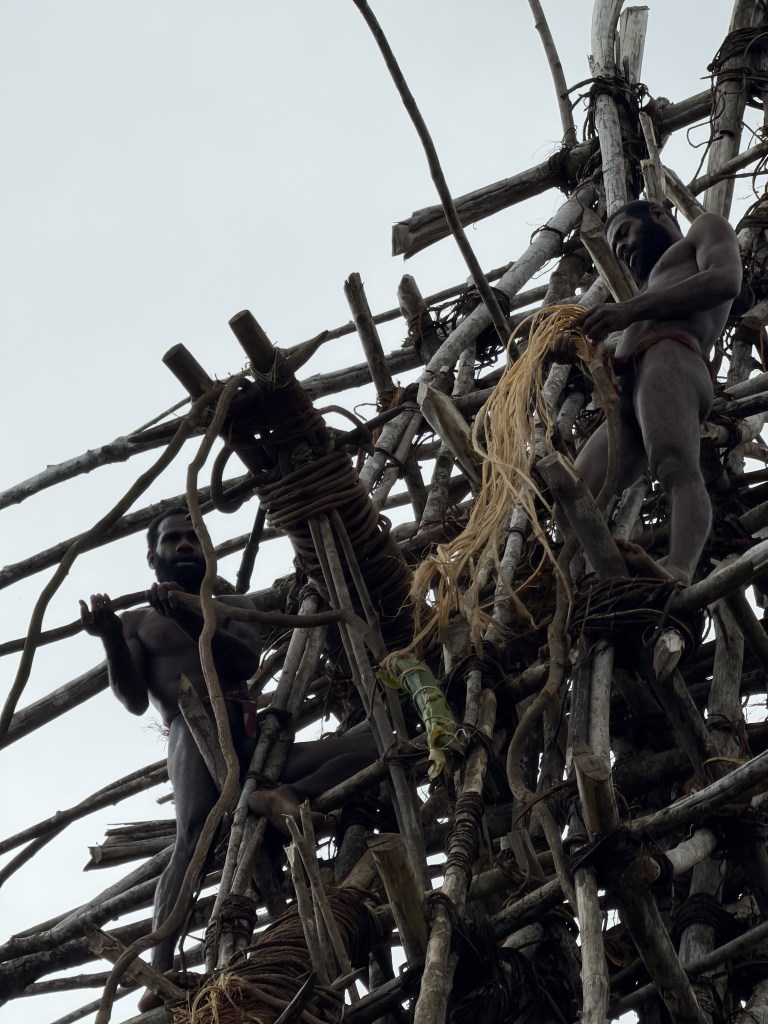
The first diver was a boy of about 10, who leapt from the lowest platform, followed by adult men diving from progressively higher platforms. Each vine was intricately tied around the jumper’s ankles; with arms raised and a loud cry, each man launched headfirst into the air.
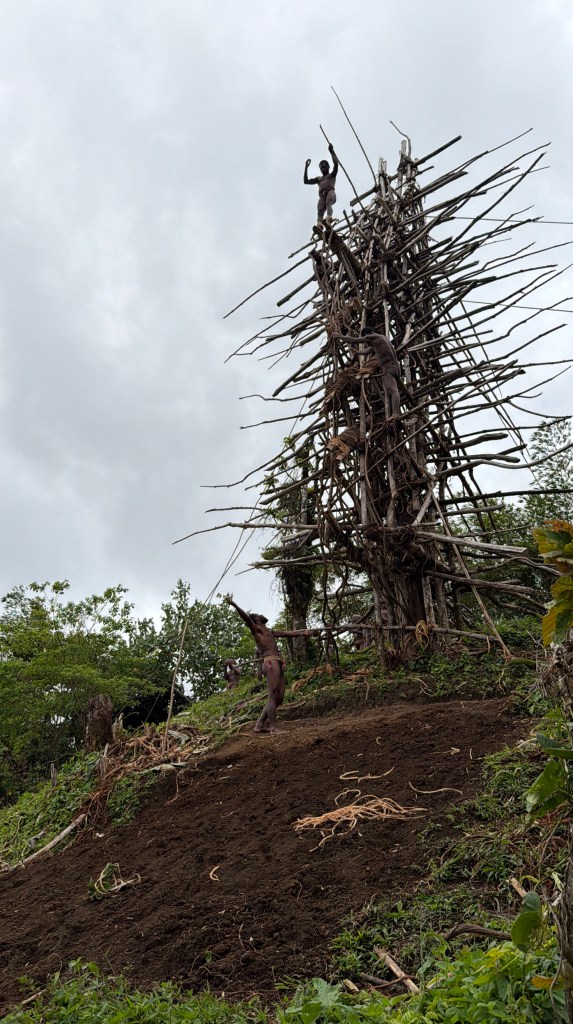
As he fell, someone cut the platform attachment to release some tension, while another man continuously loosened the soil below to create the softest landing possible.
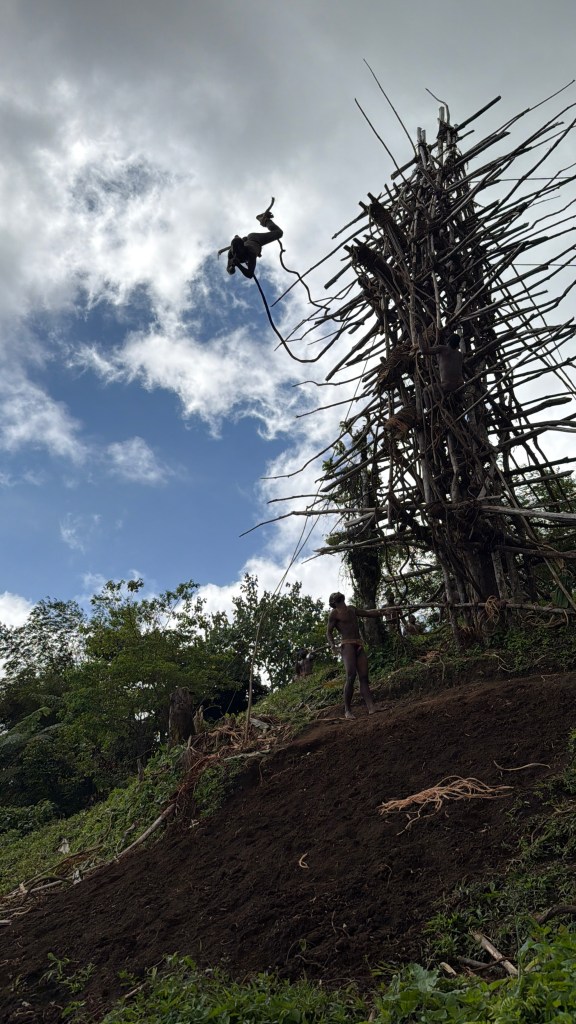
Some divers brushed the earth gently with their shoulders, while others landed with a much harder impact, before climbing to their feet.
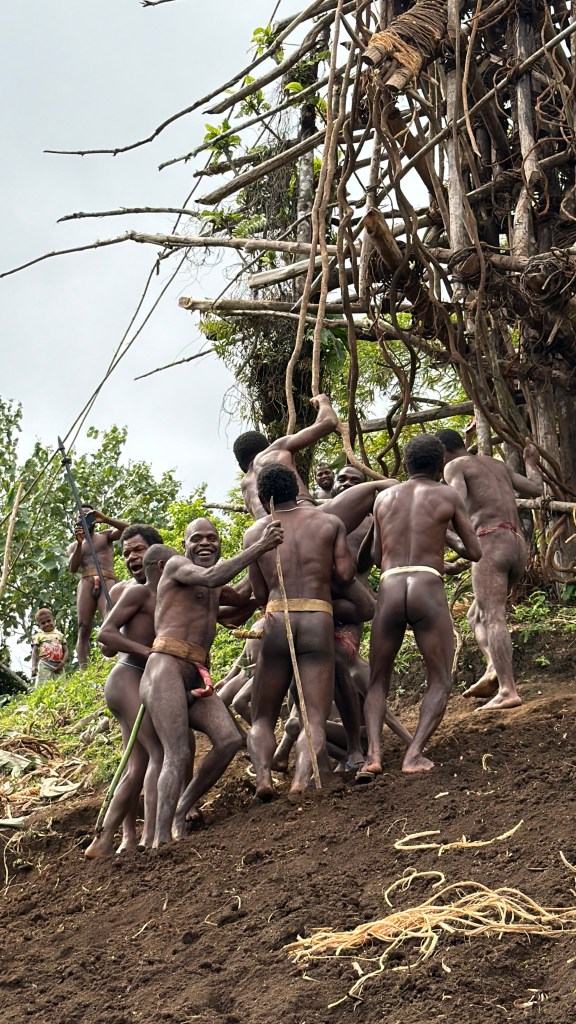
It was a truly phenomenal, breathtaking spectacle—one that seemed almost impossible to believe even while witnessing it firsthand.
After a lunch of coconut rice, fish, tinned meat, taro, and Pamplemousse; we hopped back into the truck and down the rough road back to the beach. What an experience!
 SV Terikah Adventures
2 responses to “Vanuatu: Maskelyne Dugongs & Pentecost Land-Diving”
Hey, sounds like a really awesome chapter
LikeLike
Yes, we’re loving Vanuatu!
LikeLike