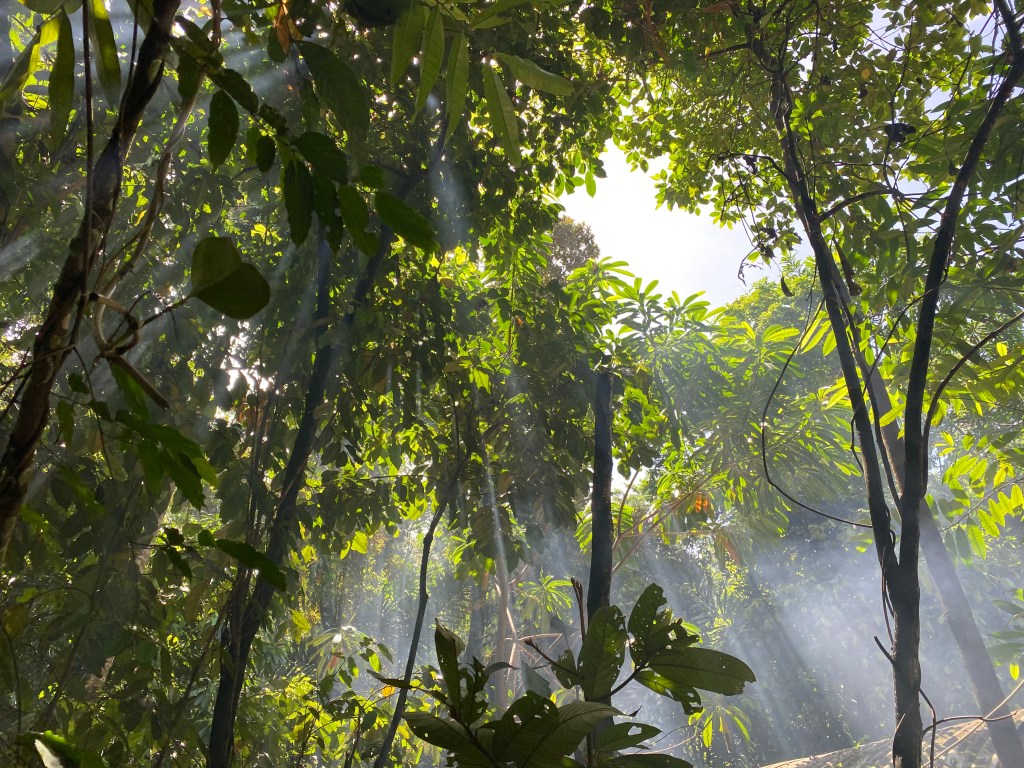
Stepping off the plane at Cairns, it was immediately obvious that our short 2-hour flight had taken us from the desert to the lush tropical rainforest. The air felt moist, the birdsong was immediate, the greenery popped, and the air smelled earthy and wild. Welcome to Tropical North Queensland! Due to our flight delays, it was a dark drive to Port Douglas, as we wound our way along invisible oceanside cliffs, through road construction from the recent flooding, slowed for a massive wild pig that definitely knew he was in charge, and skirted a few dingoes walking the sides of the narrow road.
When we turned off the road to our AirBnB, my family wasn’t so sure about my choice – it was a narrow dirt path through the dense rainforest, made all the more eerie by the darkness. But there was our place with our host waiting at the Killaloe Rainforest Cottage, as he introduced us to our perch in the forest, a home lovingly hand built by he and his father. There were fresh vibrant flowers on the counter and a bowl of chopped fruit for us in the fridge; ahhh, the tropics. Waking up to the birdsong and having our common space outdoors has been lovely, feels like a retreat.
We are in the Daintree Rainforest, considered the oldest tropical rainforest in the world, dating back around 180 million years to the time of the dinosaurs and the supercontinent Gondwana. It has survived major climate and geological changes over time, preserving ancient plant and animal lineages found nowhere else on Earth. The two-million-hectare Wet Tropics region takes up only 0.26% of Australia’s landmass and yet contains the highest combined biodiversity of plants and animals in the country. We walked through Mossman Gorge on a Dreamtime Walk with an Indigenous Kuku Yalanji guide. Learning about the various toxic and healing plants, culture, and connection to the rainforest from a Shaman and a Shaman-in-training (Alex) was an immersive experience, from hearing and feeling the echo through the roots of a large cedar when struck with a rock for communication, to painting and washing one’s body with natural materials.
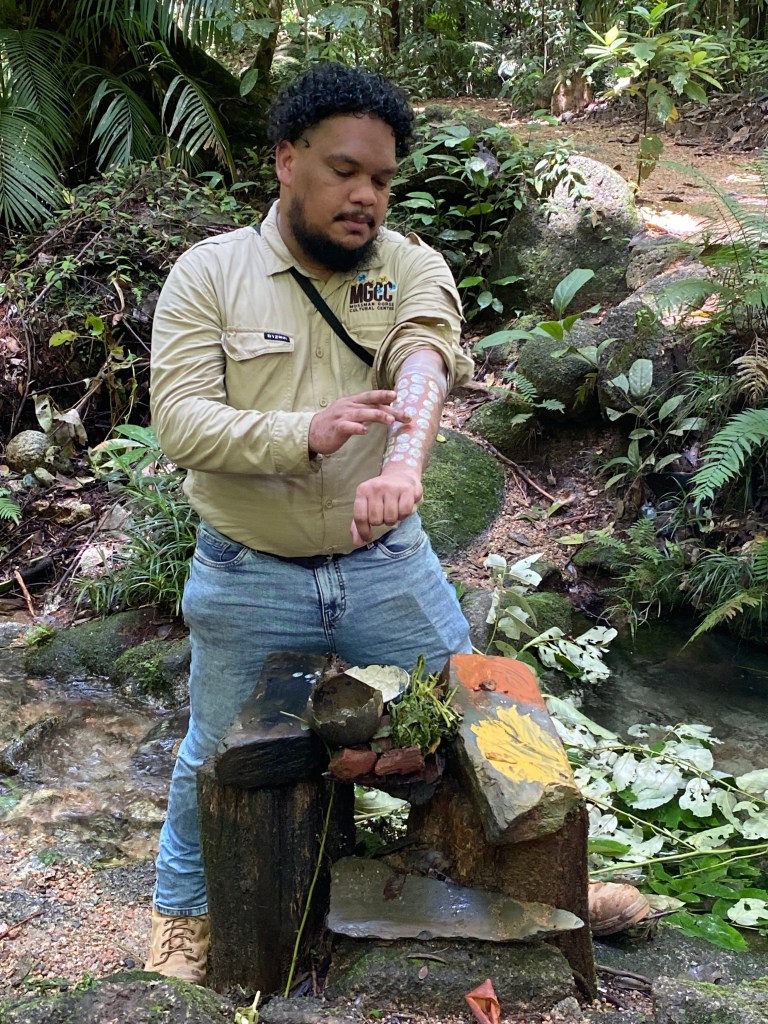
One moment, while looking out at the surging river, Alex came over to our family and said, “This is the new normal,” referring to the water level. He shared how people can come and heal here, washes away the bad memories and spirits, confiding how the task before he and his uncle is huge for the healing of his land and people. I could feel the heaviness of what he carried and it brought tears to my eyes, as well as a deeper connection to the spirit of the Country as we walked on. Later, talking to the Shaman, who was an MD prior, had me reflecting on my own ongoing transitions in medicine, as I seek to understand foods, plants, and nature as medicine. It was a deeply compelling experience for me that I reflected on as we walked the other trails as a family through the Mossman Gorge National Park. In other news, there is a cyclone building in the Solomon Islands that looks to be tracking toward us in the next week. Alex had shared that the wild turkeys were building their protective shelters, a sign of major weather approaching. We may need to find our way out of this area before planned and are watching it closely; stay tuned.
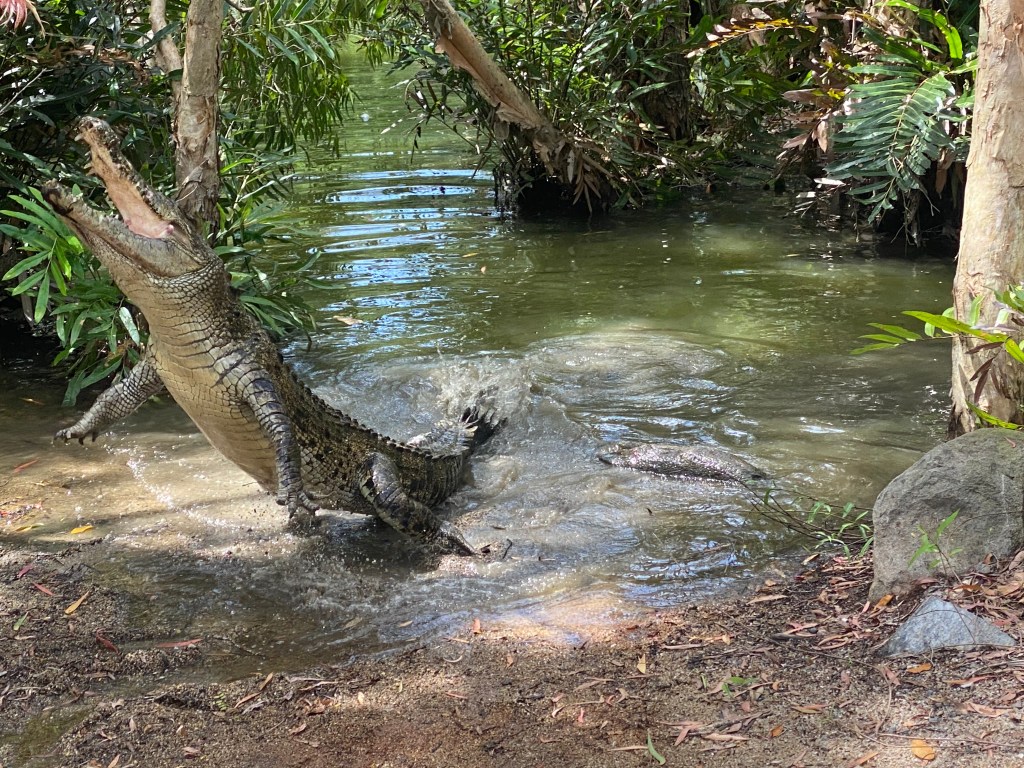
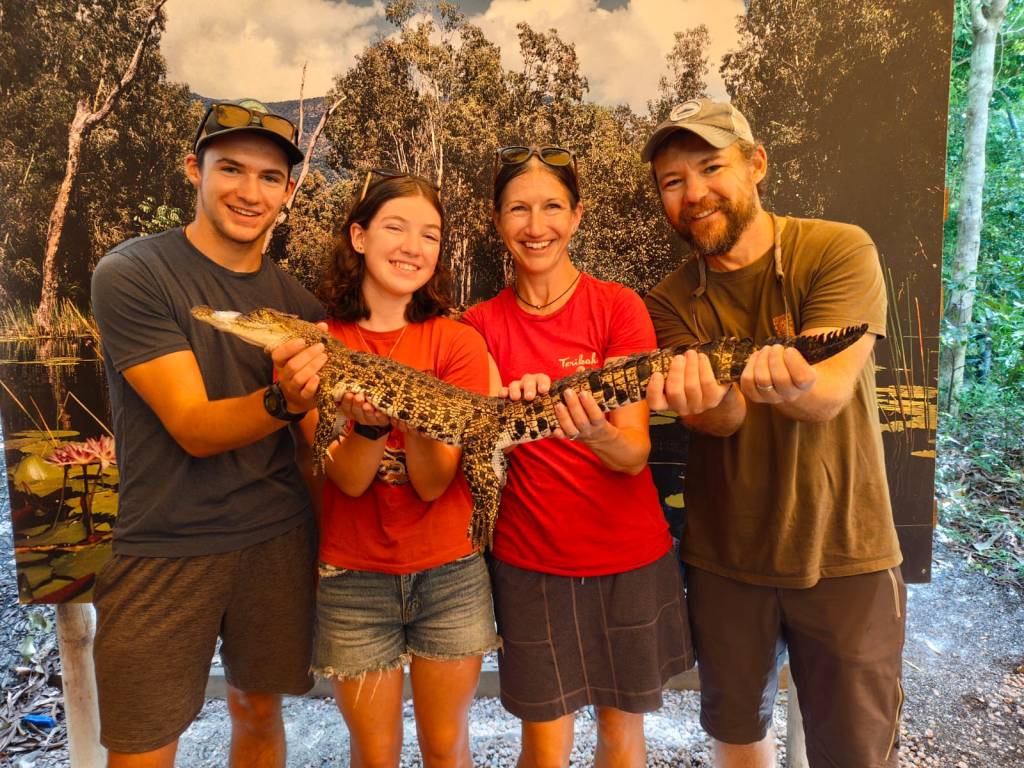
Watching the saltwater crocodile (salties) at Hartley’s Crocodile Adventures getting fed was slightly terrifying, as we learned about and saw crocodile behavior (including attacks and rolls), the startling sound of jaws snapping shut with a force of around 3,700 pounds per square inch (PSI), one of the strongest bite forces in the animal kingdom.
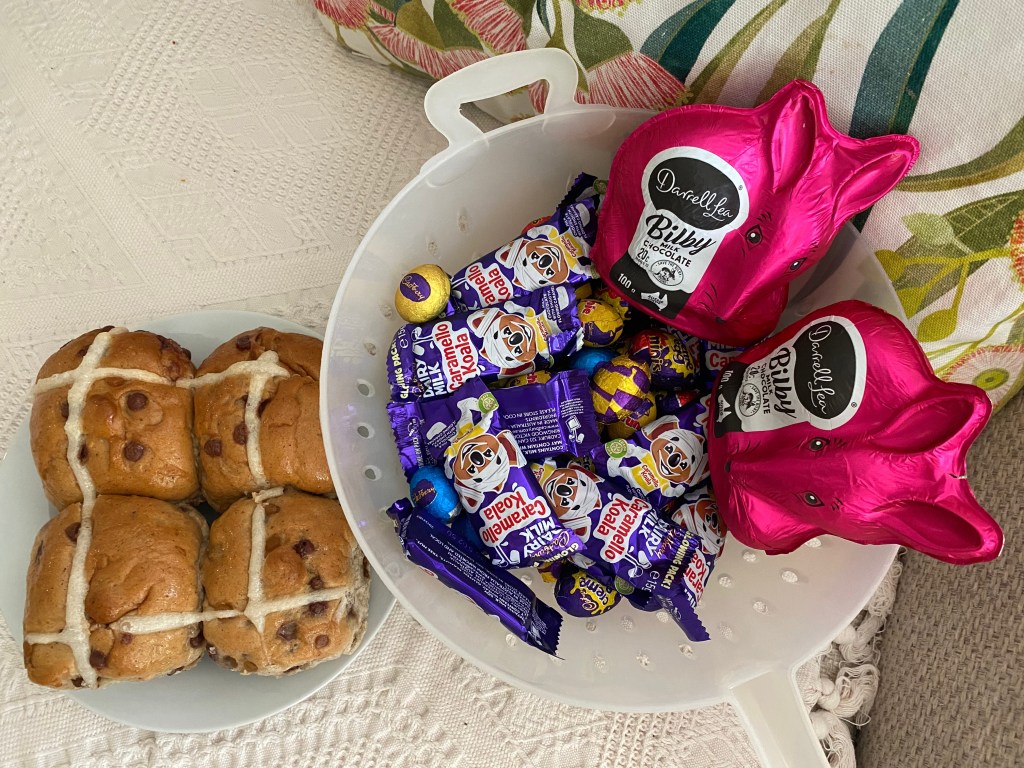
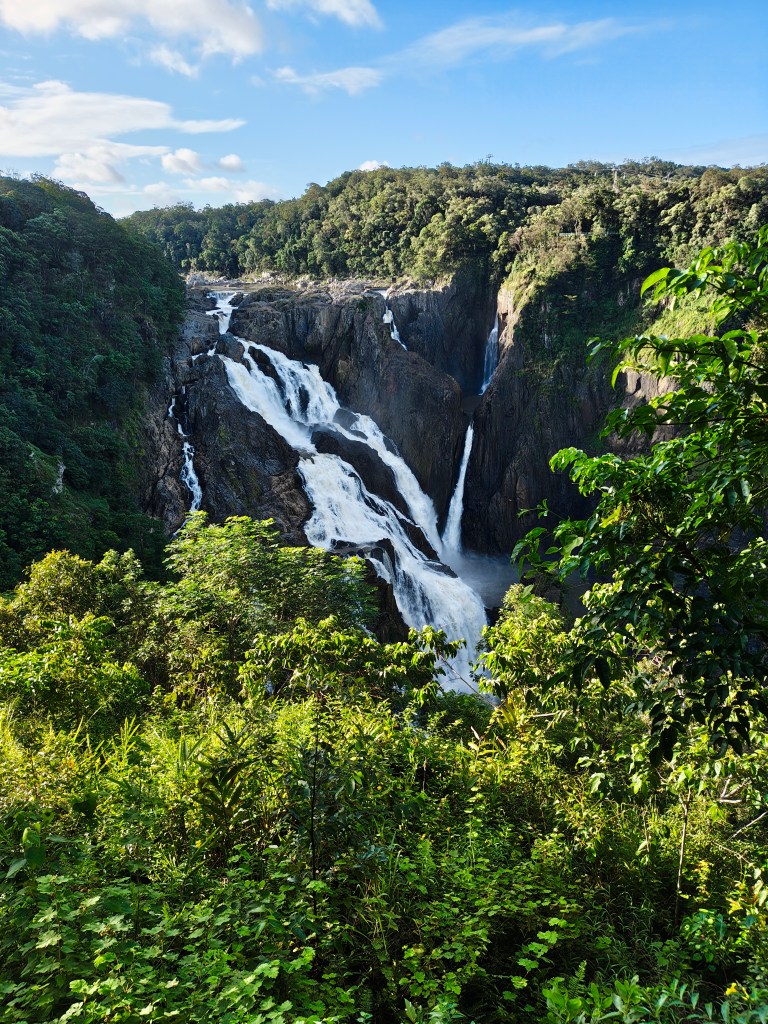
Next, off to explore the Atherton Tablelands, a lush highland region inland from Cairns, known for fertile farmland, crater lakes, and waterfalls. First stop was our rainforest AirBnB in Speewah, near Kuranda. On the home’s window screen, a massive Spiny rainforest katydid clung (almost a foot long including its antennae), a large orb-weaving spider crafted a patio web, a mouse darted up a tree trunk, a padymelon bounced through the yard, and tropical nectar-feeding birds flitted among the foliage on the porch. We were definitely living in the rainforest! Nearby, the Barron Falls plunge over a 260-metre-wide escarpment, and during the wet season (this time of year) they surge with powerful, muddy torrents, while the surrounding rainforest gully teems with life, a constant hum of a thriving tropical ecosystem. We try to celebrate holidays wherever we are and this year, for Easter, we hid 63 chocolate eggs, 12 koalas, and 2 bilbies around our house.
No Easter ham at the store, so how about ‘roo? Kangaroo meat is a great environmental choice for meat eaters, as Kangaroo are native, free-ranging animals that require no land clearing or feed inputs and produce far lower methane emissions than livestock like cattle.
We had a wander through the Kuranda Markets, where we enjoyed talking to locals for hours. At a hardwood stand, we purchased a small rice spoon made from downed bloodwood timber, while talking to the woman originally from Germany (who knew our state capital was Juneau) about the lack our tourism this Easter week due to fears of flying and the cost of fuel. A local photographer shared his love of travel, excitement about bonding with his son at an upcoming hunt in New Zealand, and desire to travel to Alaska. We shared our stories of giant manta ray experiences with an Aboriginal artist whilst looking at her painting together of a fever of rays. Chris got a colorful local art shirt from an energetic woman whose store specializes in Fair Trade local art. It was an afternoon of connecting with strangers and storytelling, something that evolves when there is no time pressure and an openness to talk story.
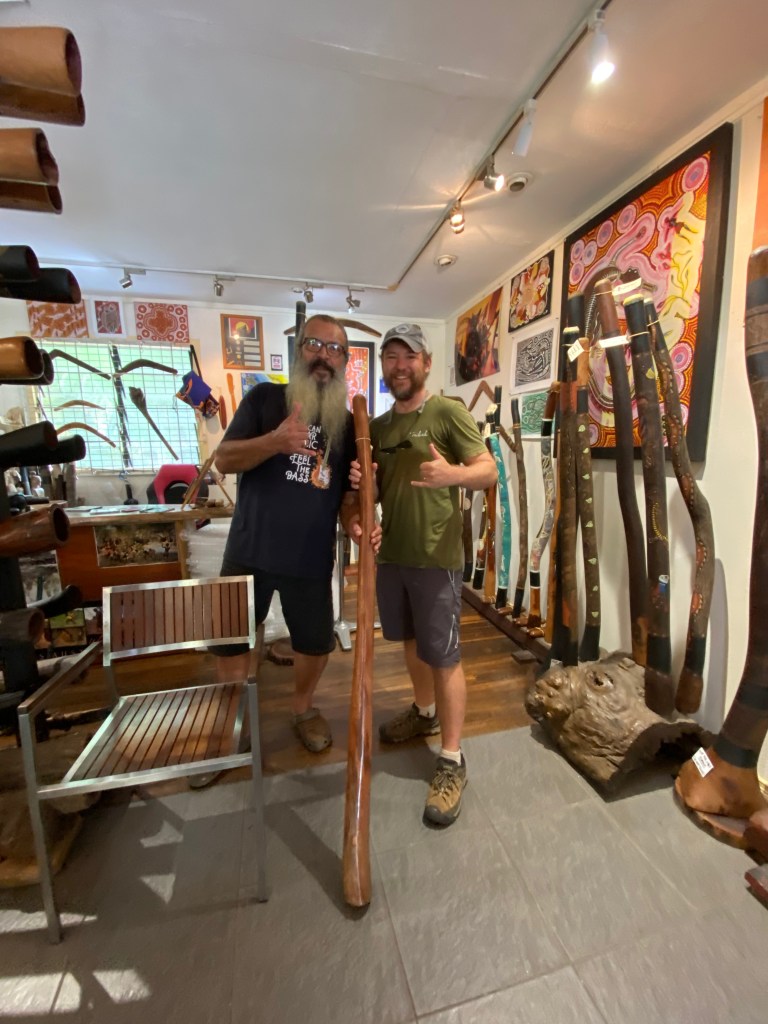
All that said, Kuranda for us is about digeridoos. We spent hours (many hours), trying out digeridoos with a passionate musician (Jimmy at Jimmy’s House of Real Didges) who is fervent about ensuring they are truly authentic didges, hollowed out by termites (not machines) before being further carved and painted. He certifies not only the art of the didge, but also the artist who found the wood and made the actual instrument. Many places sell authentic art didges, but the instrument itself is done using a machine. Chris is now the excited owner of a 2020-crafted, bell-bottom bloodwood eucalyptus didge made by Graham Bowen (also known as ViuVu Yiocinsi) of the Guugu Yimithirr people, a Traditional Owner of the Hope Vale region, Far North Queensland. He looks forward to letting the deep thrums echo out over the Pacific waters as we journey on.
Weather, weather, weather. We can’t escape the weather. There are two cyclones spinning out of the SPCZ (South Pacific Convergence Zone) tropics and heading south. One has been named (Maila, Category 4) and is heading for us right here in Queensland. The other is heading toward our boat in New Zealand (Vaianu, Category 1).
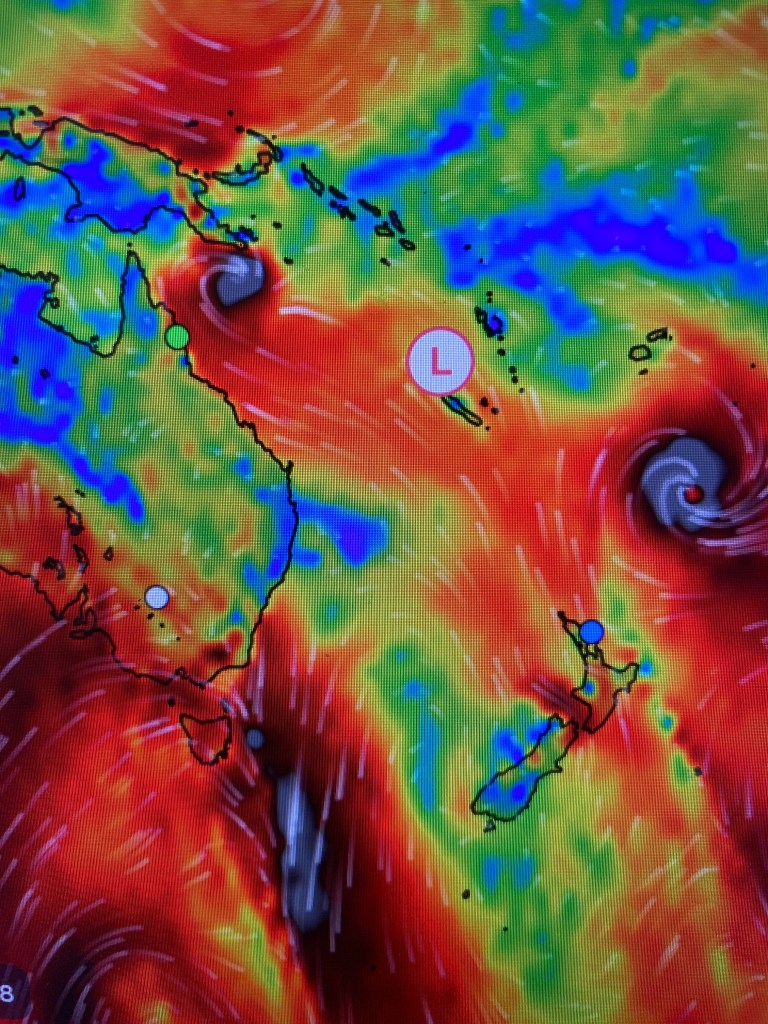
Change of plans again…leave Daintree area and head further south of Cairns to be close to flights. But wait, now it looks like the Cyclone Maila is going to land in Cairns and on the day of our flight out. So, change of plans…again…changing our flight earlier to get out of here ideally before cyclone lands here and get to Sydney? We’ll give it a day and see how it pans out.
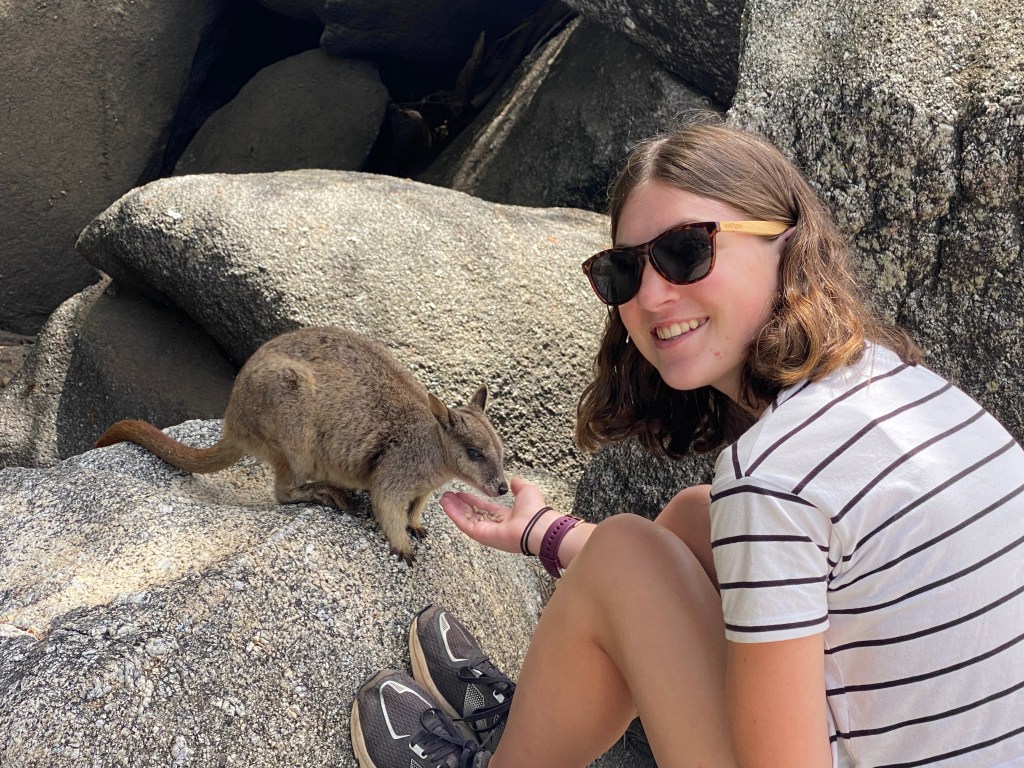
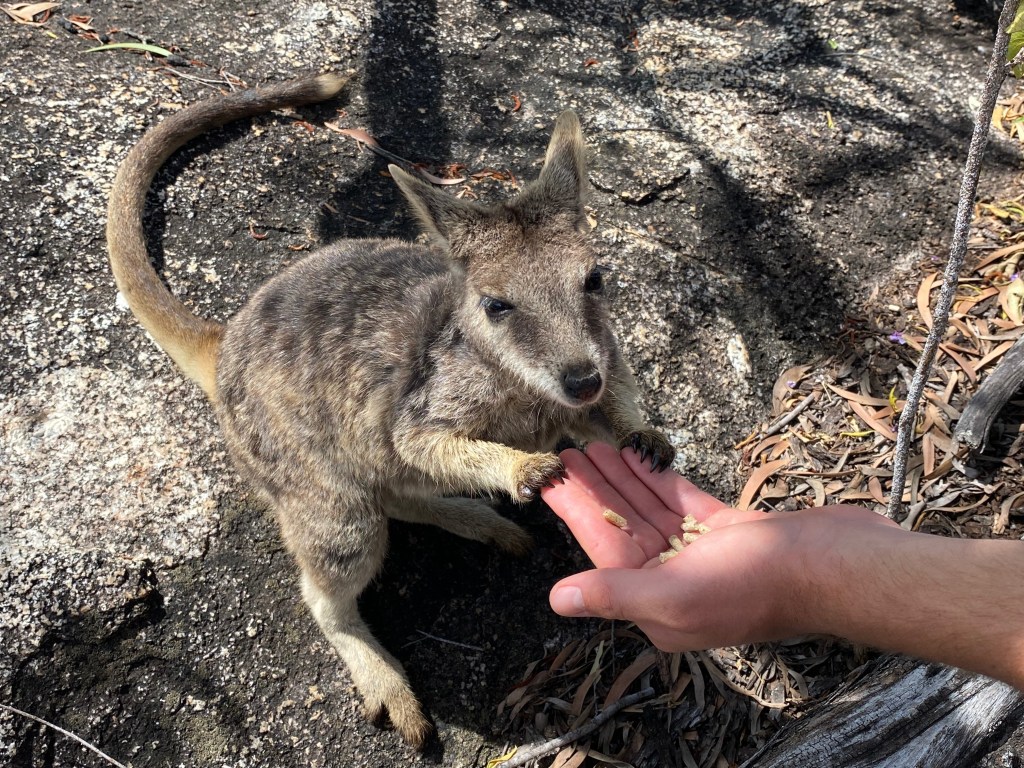
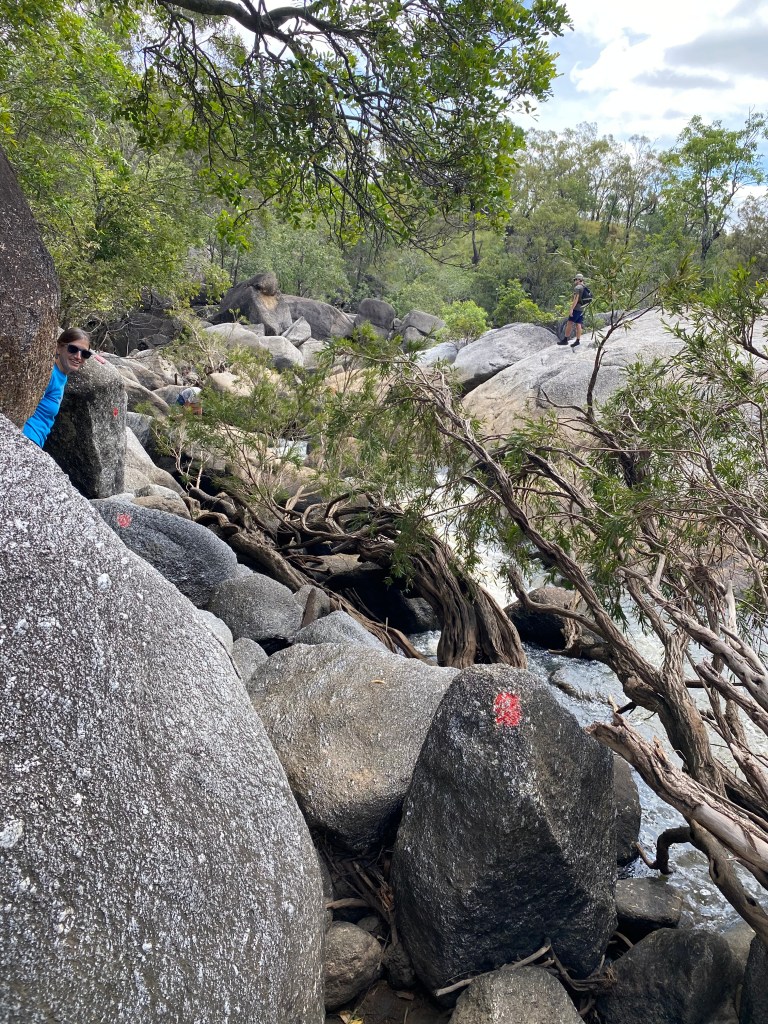
We stopped at Granite Gorge Nature Park, known for the rare Mareeba rock-wallabies and enjoyed feeding these gentle friends out of our hands before we bounced around like wallabies ourselves, rock-hopping our way among granite boulders to whale rock while trying not to get wet.
We held a few local lizards and birds at the center as well. Seeing a store off the road called Humpy Nut World, we obviously had to stop – turned out to be a great spot for local produce, nuts, and ice cream. The lady at the Visitor Center in Atherton excitedly laid out everything to see in the area (we don’t have enough time!) and how to spot a tree kangaroo and platypus in the area, two goals of ours.
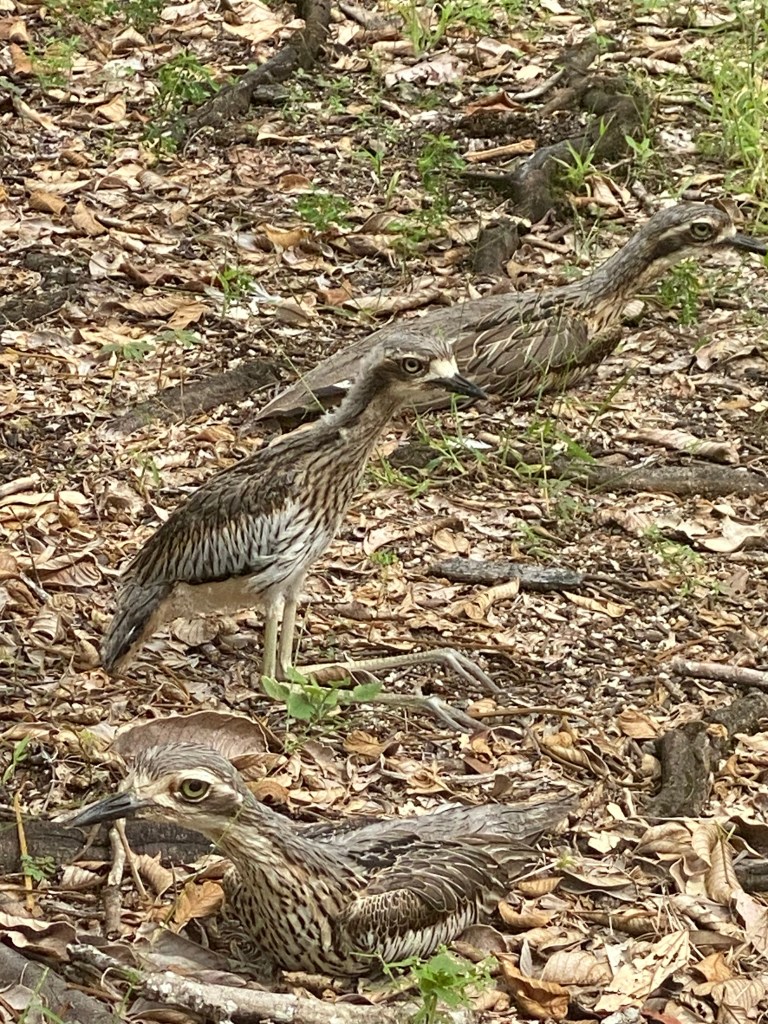
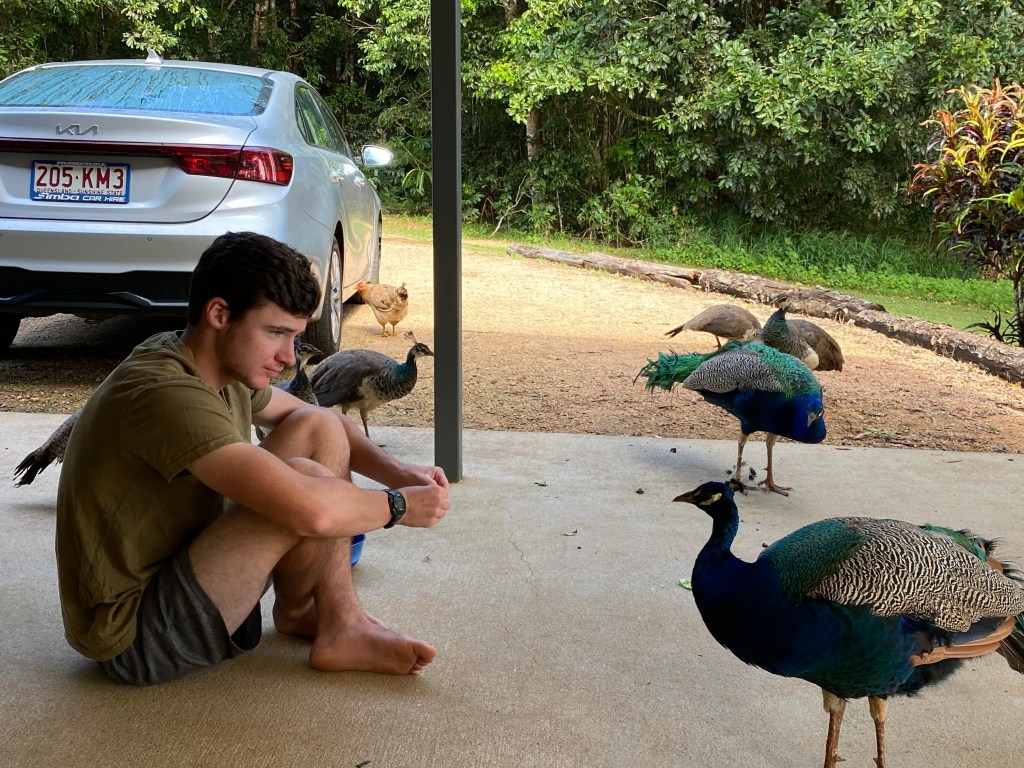
We loved our farm cottage rental, as we regularly had chickens, peacocks, and Australia brush turkeys on our patio. There was a funny moment when I was reading outside, sipping my coffee, then suddenly was surrounded on all sides by peacocks, one jumping up on the table with me.
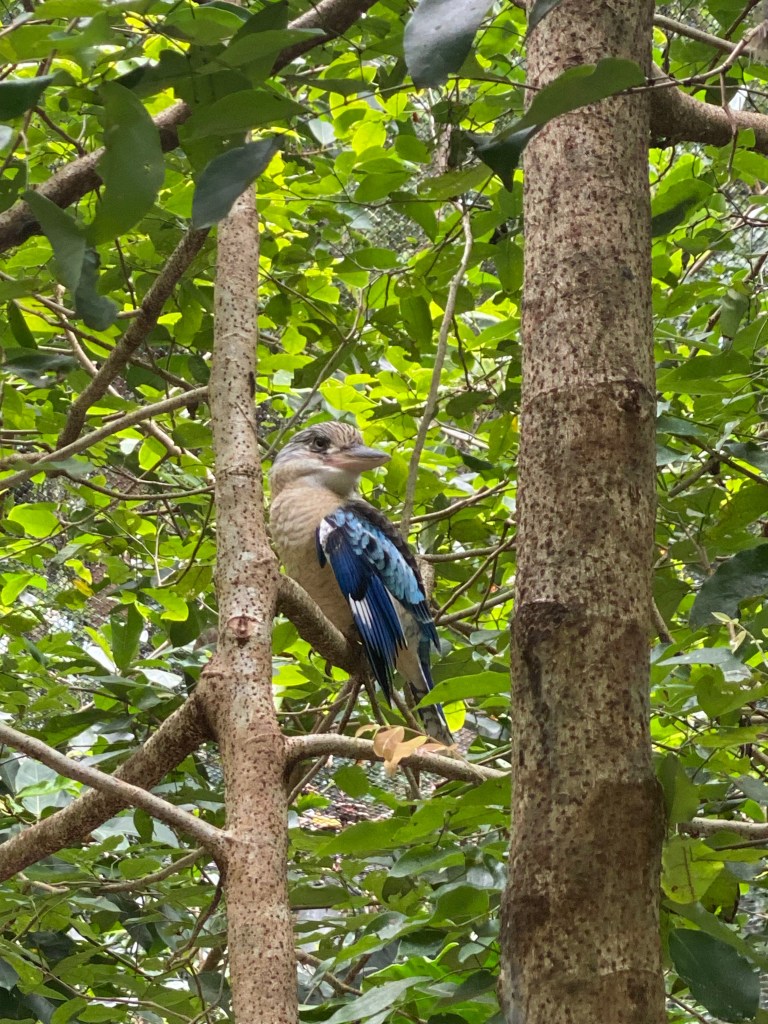
We heard laughter through the trees, only to discover two kookaburras looking down at us from the branches.
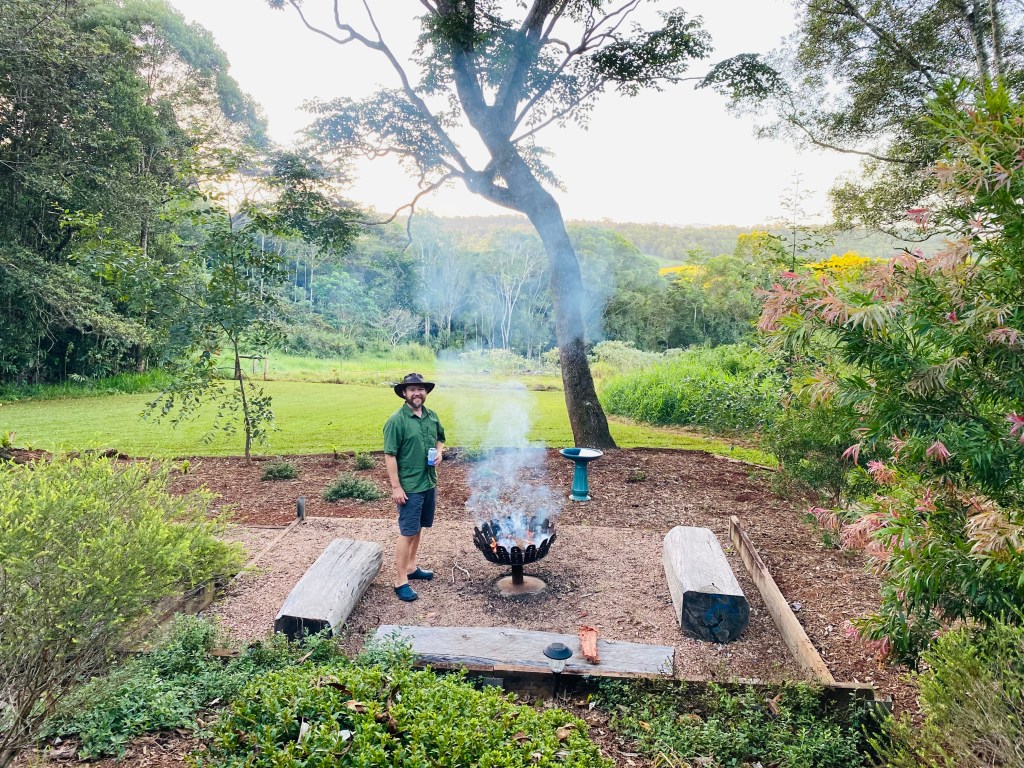
We ended the day with a fire in the cottage firepit and roo steaks on the grill.
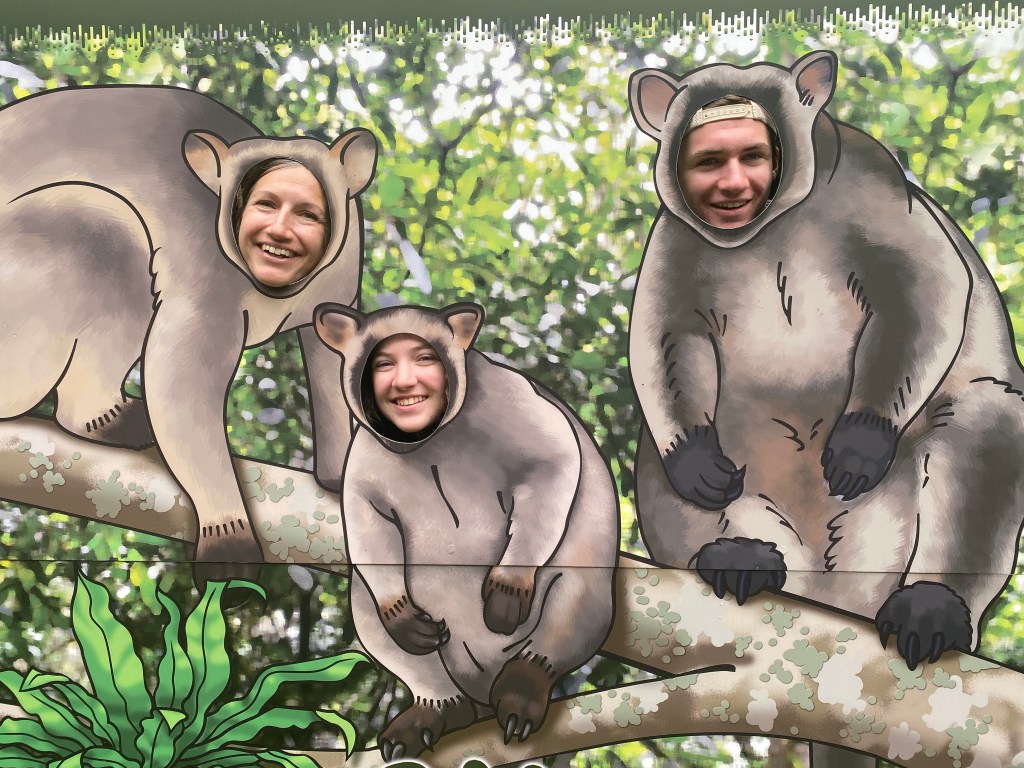
We are in the richly volcanic Tablelands and the endangered Mamu rainforest. We set off with the goal of spotting the elusive platypus and tree kangaroo. Malanda’s tagline is “where the kangaroos climb trees,” and we headed out determined to find one. We quickly learned just how elusive they are, and despite walking the trails from the Visitor Centre, we failed to spot a single tree kangaroo. Along the way, we heard the Eastern whipbird, its distinctive rainforest call a sharp “whip crack” followed by a softer “cheer-up”—a duet between male and female pairs echoing through the forest.
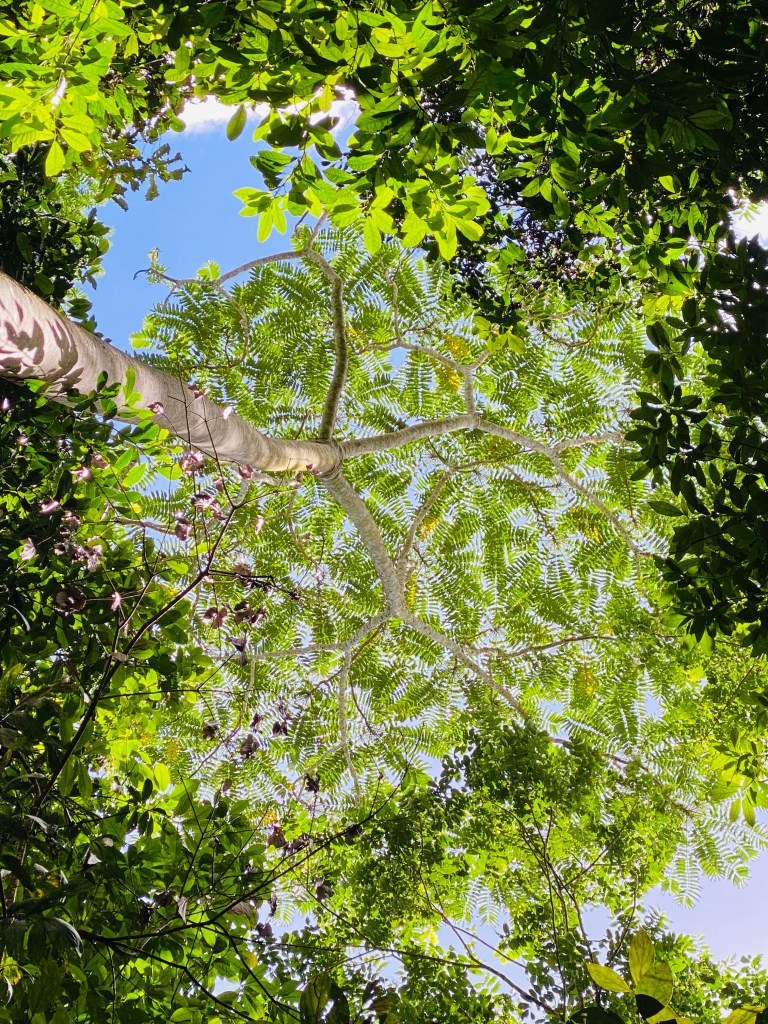
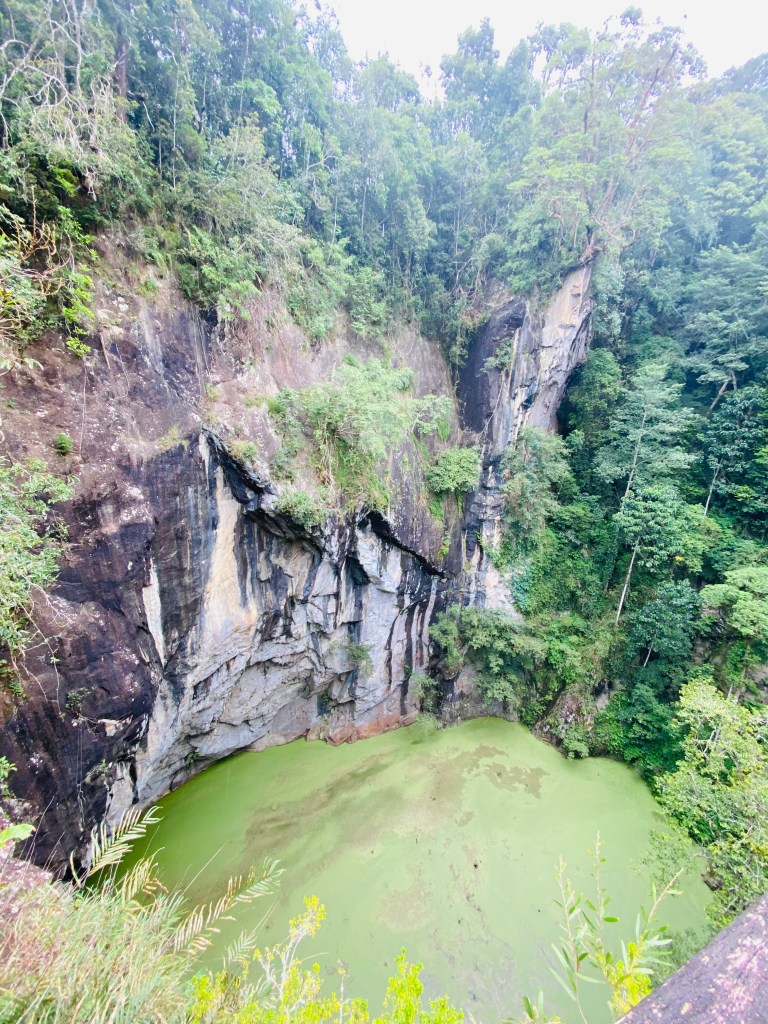
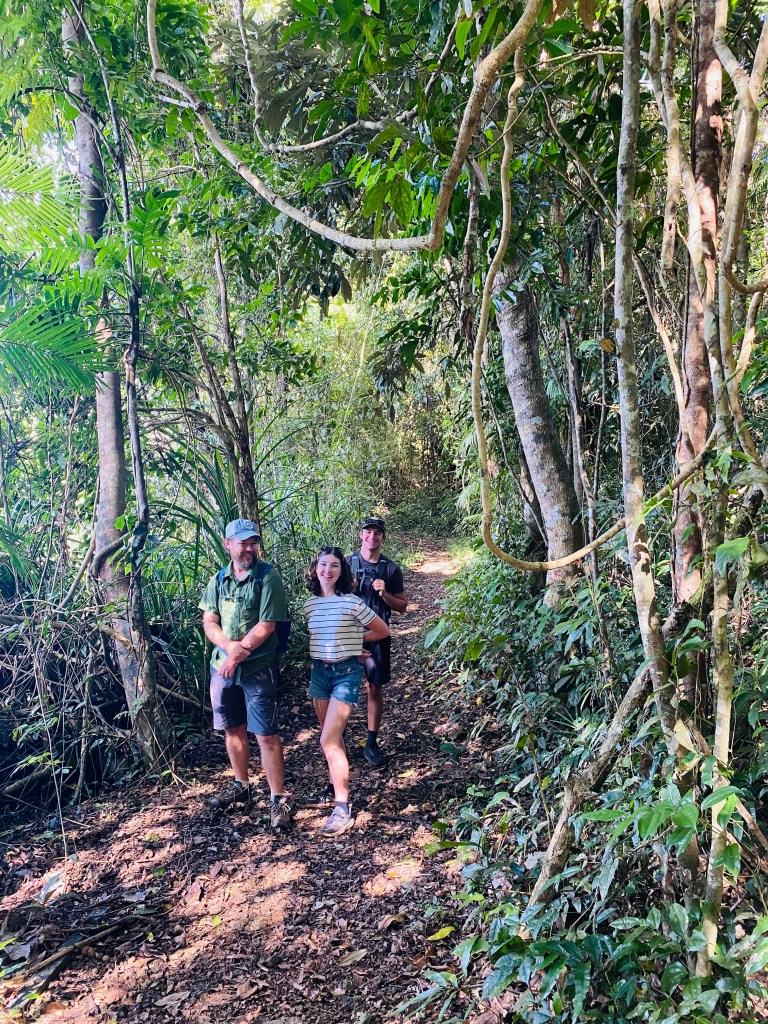
At Mount Hypipamee National Park, we followed the trail out to the dramatic volcanic gas vent crater, then continued through lush rainforest to the three-tiered Dinner Falls.
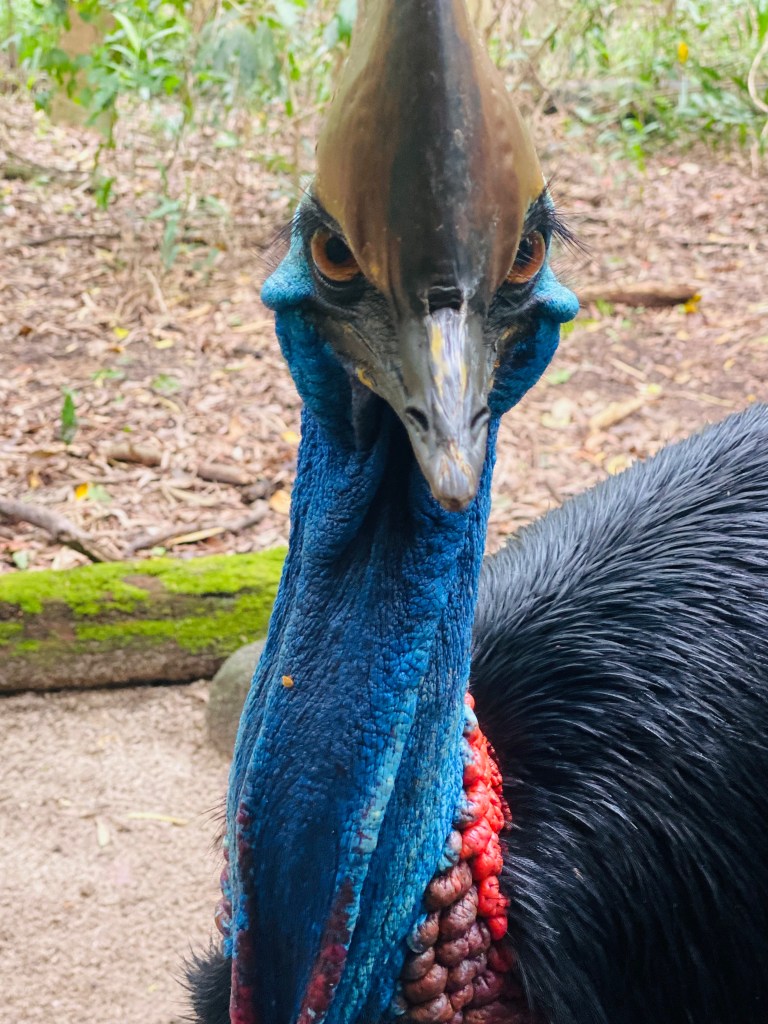
We ended up at a sheltered picnic spot just as the rain arrived in full tropical enthusiasm. Along the trails, signs warned of Southern cassowary encounters—advising visitors to keep their distance, avoid feeding, and remain calm if one is sighted.
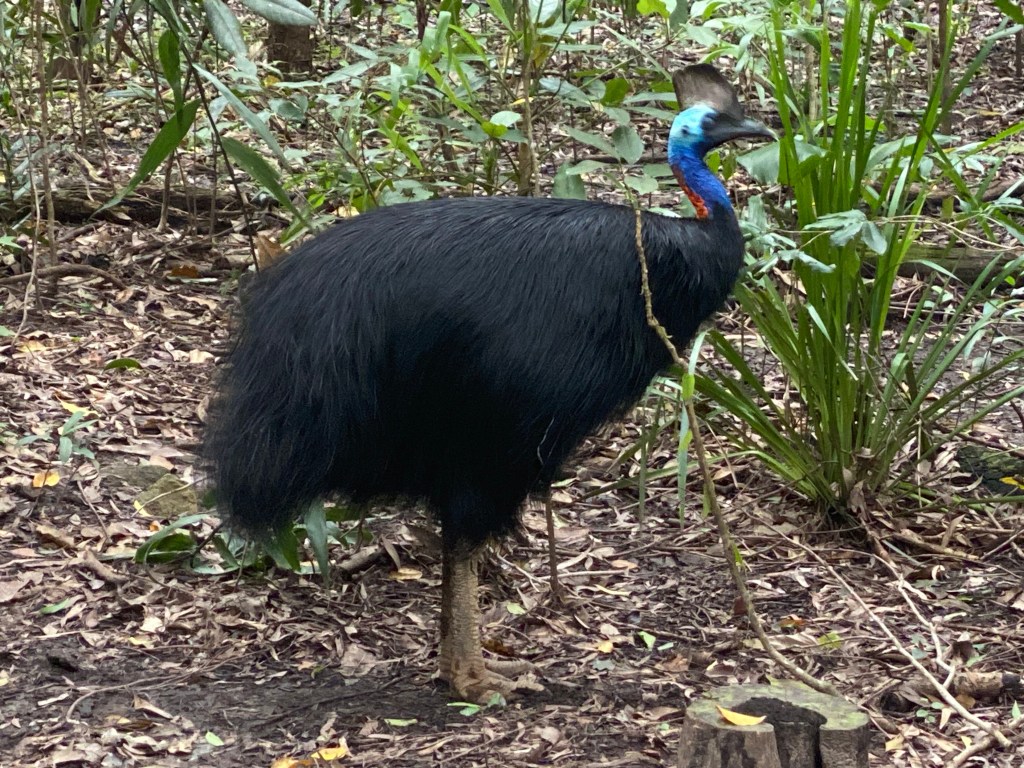
We both wanted to see one in the wild… while also quietly wondering if “seeing one” might be the exact moment we immediately regretted that wish.
After a brief walk in the endangered Mabi forest at Wongabul Forest, and a quick stop to look for birds at Hasties Swamp, we set out for our tour at The Bat Hospital. The Bat Hospital is a not-for-profit community group working for the conservation of bats and their habitat, caring for around 1,000 bats each year and acting as a sanctuary for about 100 permanent residents. Our passionate guide filled us in on the importance of bats in our ecosystem (did you know that 20% of mammal species are bats?!), as well as the very real dangers of barbed wire—they’re working to replace the top strand of fencing to help reduce injuries.
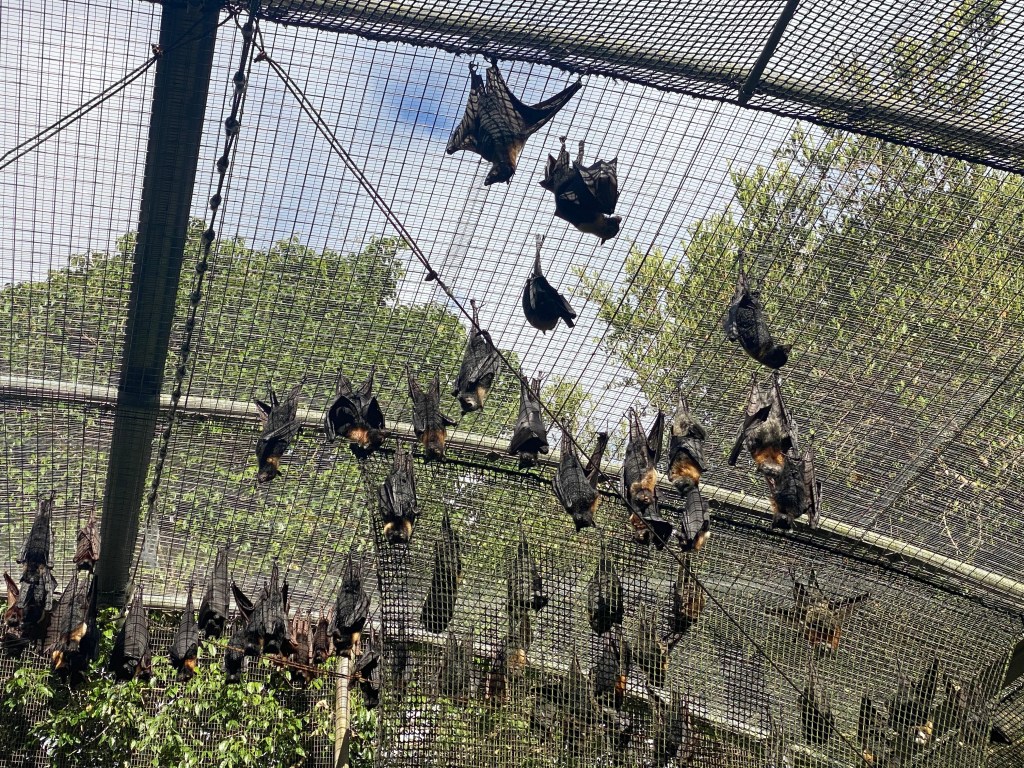
We even got to listen in real time to the echolocation calls of a microbat via a special device. It’s fair to say the Hyer family has developed a growing appreciation for bats over the course of our travels.
The massive Curtain Fig Tree, draped in epiphytic ferns, is stunning—but even more remarkable is the fact that the original two host trees are long gone, completely consumed by the life of this single fig.
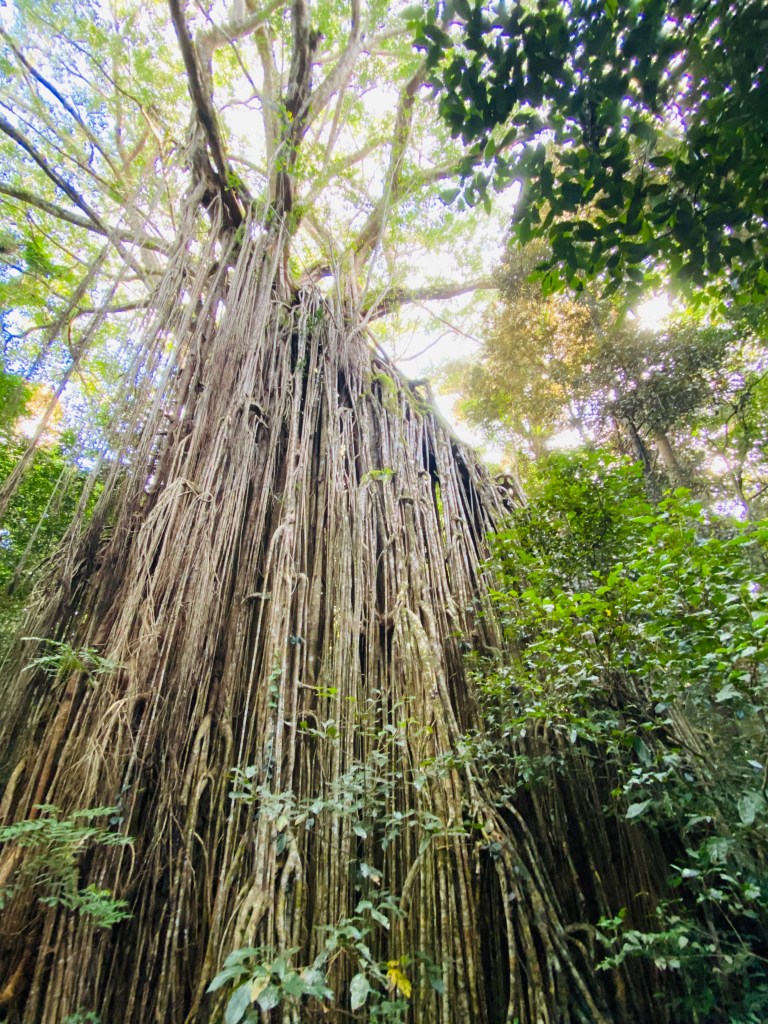
We walked along the Johnstone River at sunset, once again with the platypus eluding us, but we were rewarded with treetops alive with talkative spectacled flying foxes instead.
Exploring Crater Lakes National Park, we set off for Lake Barrine, a volcanic maar—a broad, low-relief crater formed when lava came into contact with the water table. We followed the Lake Barrine circuit loop through lush fringing rainforest, spotting a water dragon along the trail.
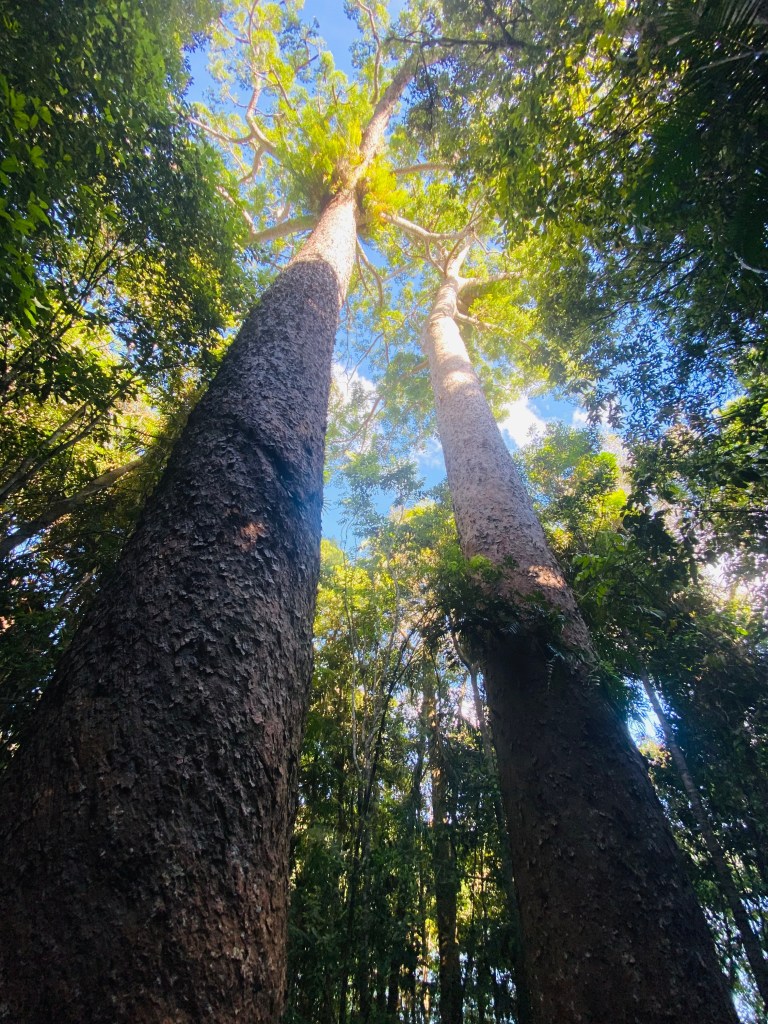
At the end of the walk stood two massive, ancient kauri trees (not the New Zealand kauri, but rainforest kauri pine), rising high above the forest canopy like quiet sentinels.
It was time to leave the Tablelands, still having failed to spot either a platypus or a tree kangaroo. We did learn that wildlife guides apparently use infrared to find tree kangaroos, which made us feel marginally better about our own completely unaided efforts. On the drive out, we made one last hopeful stop for a platypus, where a local looked at us with genuine disbelief that we hadn’t seen one yet. “You guys are really unlucky,” he said—helpfully confirming what we were starting to suspect, though I can’t say it improved morale.
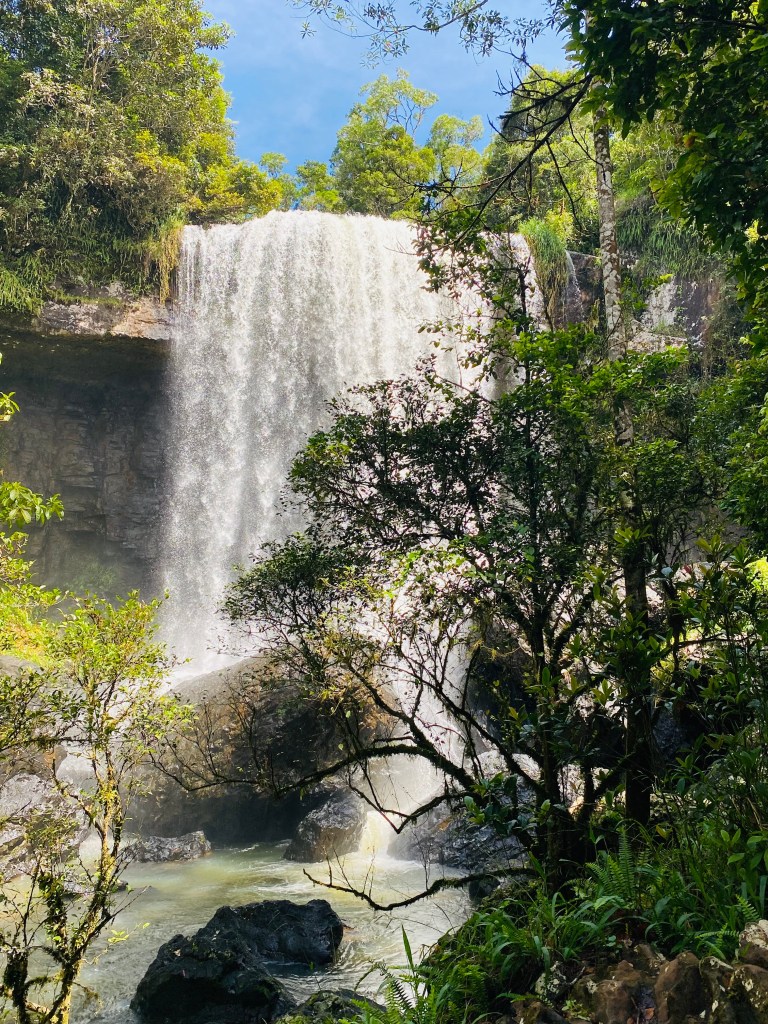
On our drive we stopped at a series of waterfalls including the 18 m plunge waterfall Millaa Millaa Falls, Zillie Falls cascading off an eroded basalt column to the boulders below, and the horsetail Ellinjaa Falls; each beautiful in their own way.
I was enticed by Mungalli Creek Dairy and Café, a family-run, organic biodynamic dairy where we enjoyed lunch (featuring cheese as a major ingredient), followed by ice cream. We transitioned into Wooroonooran National Park, where a series of canopy overpass bridges—netted walkways arching above the road—allow wildlife to safely cross between sections of forest. Designed for arboreal animals like possums, gliders, and tree kangaroos, these structures are part of ongoing conservation efforts to reconnect fragmented rainforest habitat, reduce vehicle strikes, and restore natural movement through their territory. It’s a quiet kind of engineering—less about humans moving through the landscape, and more about making sure the forest can move through itself.
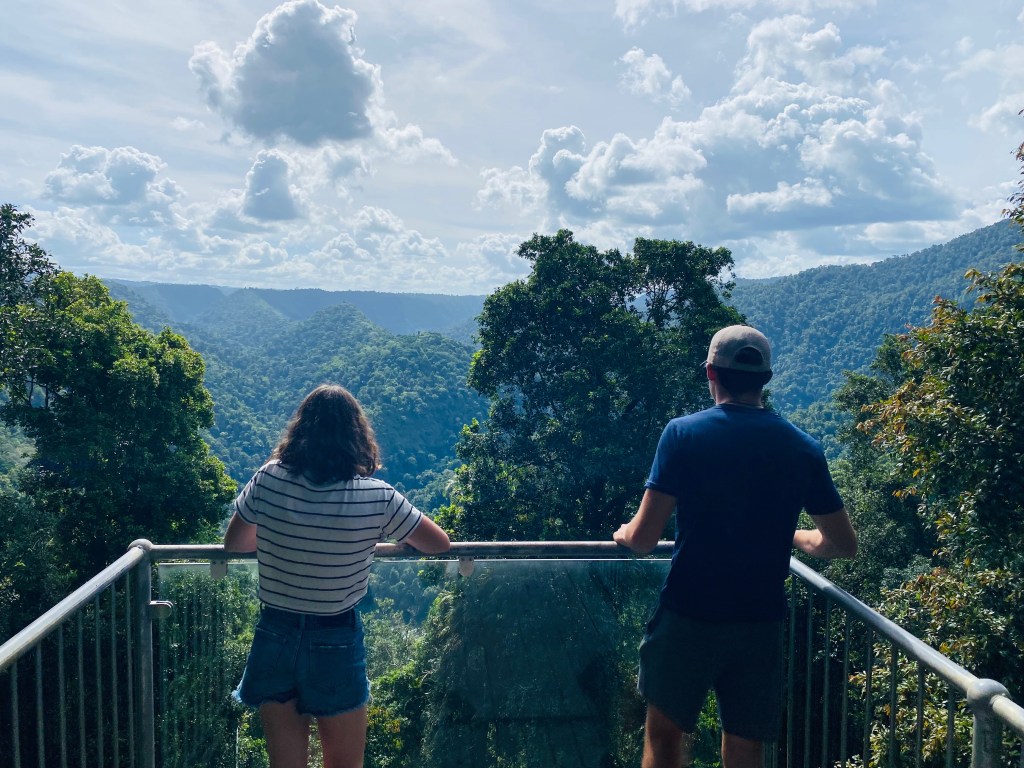
We felt a bit like arboreal animals ourselves, as we walked the 350 m canopy walkway high through the rainforest canopy overlooking the North Johnstone River gorge at Mamu Tropical Skywalk.
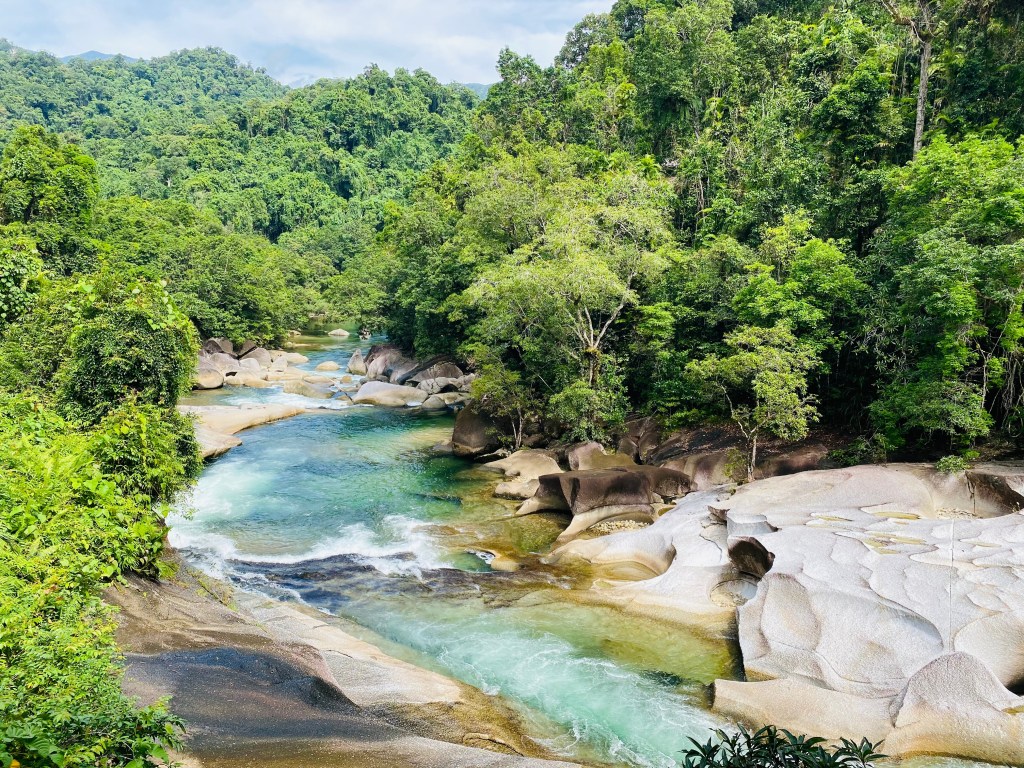
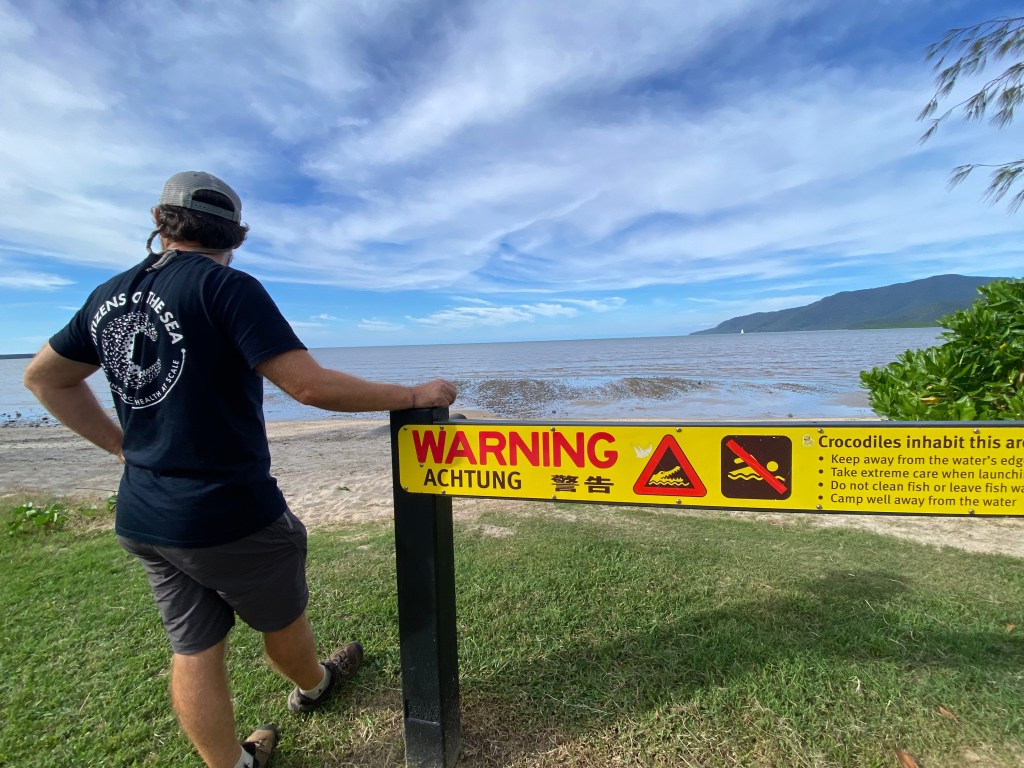
Missing our rainforest home of Petersburg, Alaska, we settled into Babinda—the wettest place in Australia at roughly 177 inches of rain a year—draped in green and permanently steeped in humidity. We visited Josephine Falls and Babinda Boulders, both stunning but accompanied by a very respectful number of warning signs about currents, undertows, and general “please don’t die here” conditions.
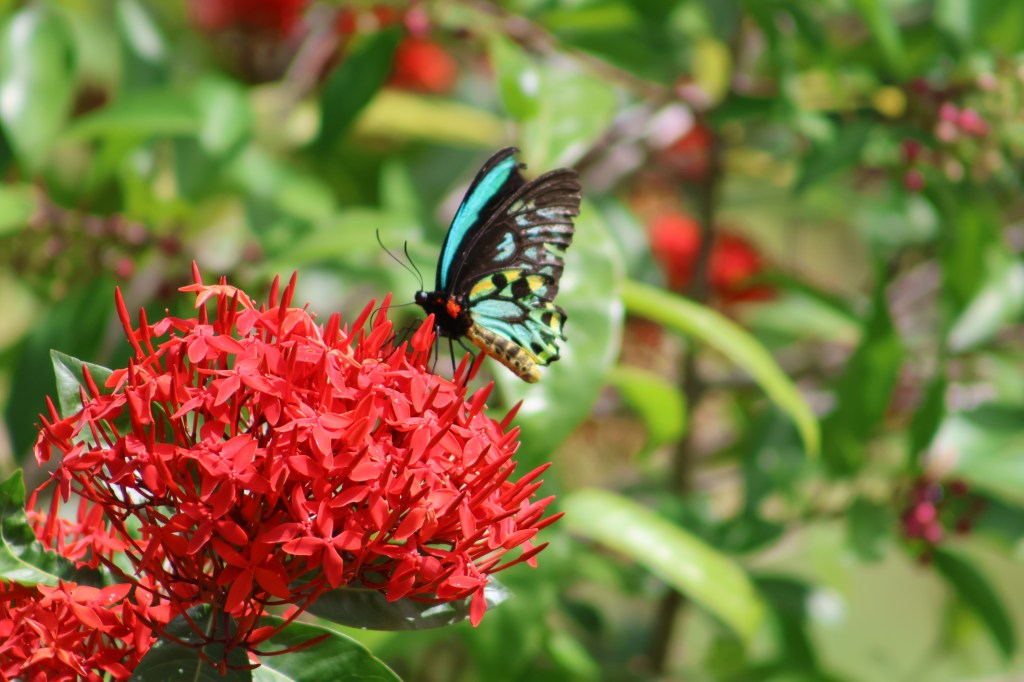
Our rainforest house sat right on Babinda Creek, looking toward the cloud-wrapped rise of Mt Bartle Frere, the highest point in Queensland. It was often tucked into mist, and after reading up on leeches, toxic plants, and low visibility, we collectively decided the summit was not calling us quite loudly enough. Instead, we embraced the alternative expedition: sitting on the patio, watching iridescent Ulysses and green Cairns Birdwing butterflies busily going about their work, as we quietly wound down this two-month Australian adventure and felt ourselves losing a bit of steam.
Cyclone Maila heading toward us in Australia has now been downgraded to a low-pressure system, so we’re sticking with our plan to hang out in Far North Queensland for a couple of days. Cyclone Vaianu, meanwhile, worked its way down the North Island of New Zealand—Terikah on the hard came through just fine, though we do feel for those affected by the flooding it brought. That likely marks the end of this cyclone season (knock on wood), and cruising boats will soon start scanning for those long-awaited weather windows north to the tropics.
In Cairns, we enjoyed a solid IPA at Hemingway’s Brewery, a wander through the Aquarium, and a stroll along the Esplanade.
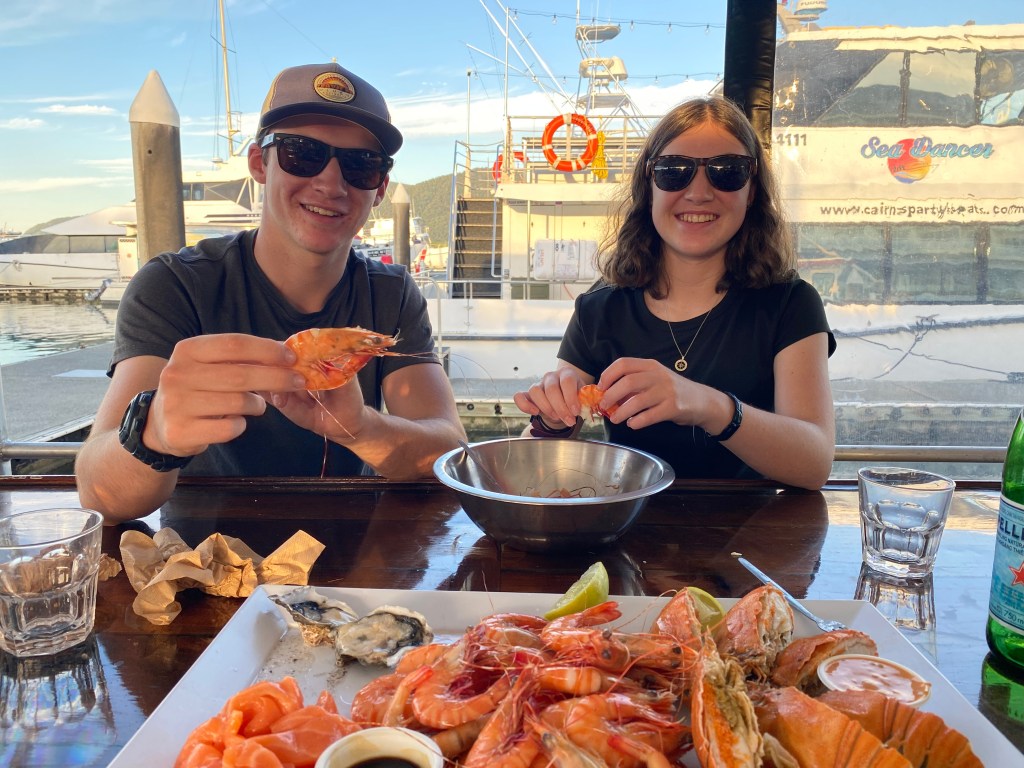
We also leaned into the local seafood scene with a platter at The Prawn Star—a boat restaurant serving prawns, bugs, salmon sashimi, and oysters. (Somehow, we still ended up seeking out a boat in the harbor to have dinner on—apparently we can’t escape them!)
Weather kept us from getting out to the Great Barrier Reef or up into the “tippy top” of North Queensland, but we filled the time with other adventures nonetheless. Each place, each stop, felt like another small piece of the puzzle that is Australia slowly clicking into place.
Our flight to Sydney was canceled, but we managed to reroute onto another evening flight and settled into the airport for an 8-hour layover. I’ll admit our family has hit a bit of “travel fatigue” at this point—likely a mix of the sheer length of the trip (two months), and the steady stream of schedule changes, cancellations, health issues, and weather disruptions along the way. It’s been an incredible journey (mostly), but we’re definitely starting to feel the pull of our boat home.
Have I mentioned how much we love Sydney? It’s my favorite big city in the world thus far, and it felt fitting to have our final Australian hoorah here. In 2021, Australia became the first English-speaking country in the world to become a “majority migrant nation,” meaning that more than half of residents are either first-generation migrants or have at least one parent born overseas. Within the next decade, migrants from India are expected to overtake those from England as Australia’s largest migrant group. Since 1945, more than 7.5 million people have migrated to Australia from over 180 countries. Today, it stands as one of the world’s most visibly multicultural societies—layered, diverse, and constantly evolving.
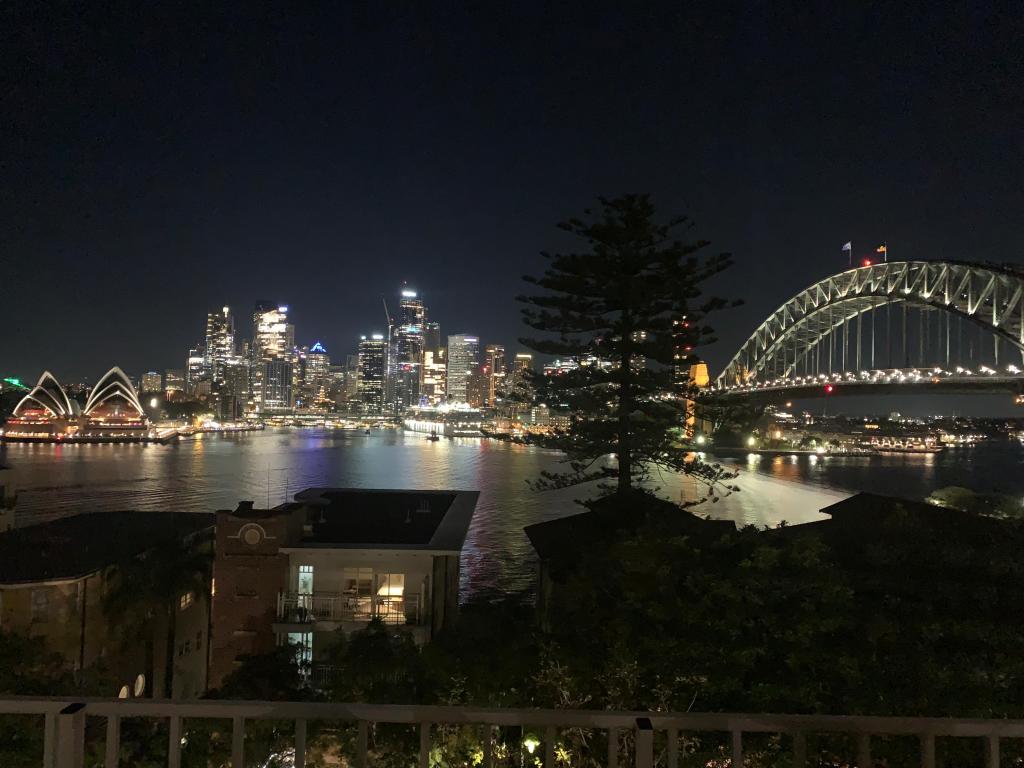
Our Airbnb was across the water from downtown, with the Opera House, skyline, and Harbour Bridge glowing at night—so surreal to be here.
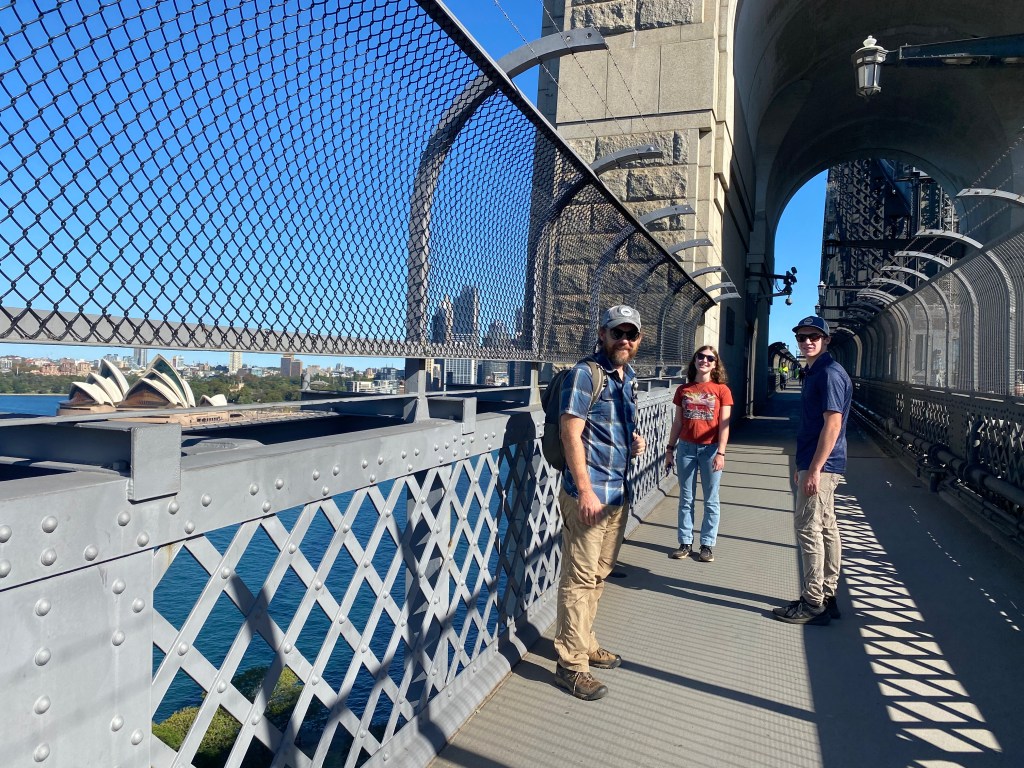
The next day, we enjoyed a delicious brunch (a very Australian ritual) before walking across—and properly marveling at—the Harbour Bridge.
The grand finale of Australia for us was The Phantom of the Opera, performed on a floating stage outdoors at Mrs Macquarie’s Point, overlooking the harbor and Opera House. I’m a bit of a musical nut, and this has remained one of my favorites since first seeing it at 17 in New York City. But this performance took it to another level entirely. A live orchestra, pounding score, a majestic open-air stage with the chandelier suspended from a crane, extravagant costumes, fireworks, and phenomenal singing and dancing—it was spectacular in every sense. Utterly over the top, and completely perfect.
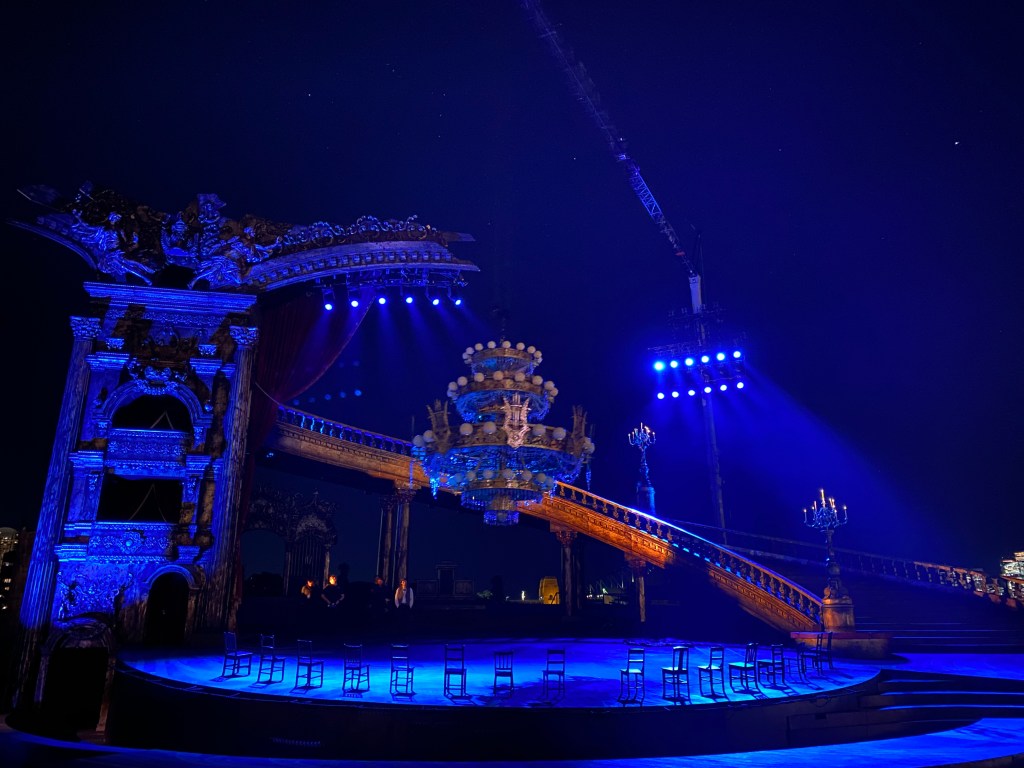
We made our way back after a walk and ferry ride, tucked into bed around midnight, and were up early to catch our flight back to New Zealand.
As we leave Australia, I’m grateful for our time in this vast and layered country, and I find myself with a few reflections. It helps to think of Australia not just as a nation, but as a continent—one with dramatically different regions, climate zones, ecologies, and histories. In many ways, it feels like an island of islands: pockets of people separated by enormous distances, with their own rhythms, identities, and ways of life.
The Shortest History of Australia (Mark McKenna, 2025) was a remarkable companion on this journey, framing history in themes rather than strict chronology, and weaving Indigenous history through every chapter rather than treating it as a separate thread. Through that lens, we began to see three overlapping stories: the First Nations narrative of the world’s longest continuous cultures; the Second Nations story of British arrival and settlement; and the Third Nations story of Australia becoming one of the world’s most successful multicultural, multi-ethnic societies. It is these three strands—First Nations, convicts and settlers, and migrants—that we found ourselves encountering again and again as we moved through the country.
Economically, Australia is strong, which also makes it an expensive place to travel; the USD simply does not stretch as far here as it does in New Zealand. Our travel costs, in the end, exceeded our original budget.
Australia is a complex place, and its juxtapositions are everywhere: epic beauty alongside extreme natural forces, natural abundance set against vast distance and isolation. I found Australia to have a deep and unmistakable spirit that was compelling; we’ll return someday.
Now, we turn back to boat work for the next month, before pointing north toward the tropics, and eventually, our long route home to Alaska.
 SV Terikah Adventures