After our time in Sydney, we hopped a Quantas flight to Hobart, Tasmania. Our time in Tasmania was quite the mix, as we loved the scenery, pace, wildlife, and people – but were in and out of various hospitals when Chris’ mom developed complications from COVID. I will start with the highlights, and finish with a summary of our health care experience.
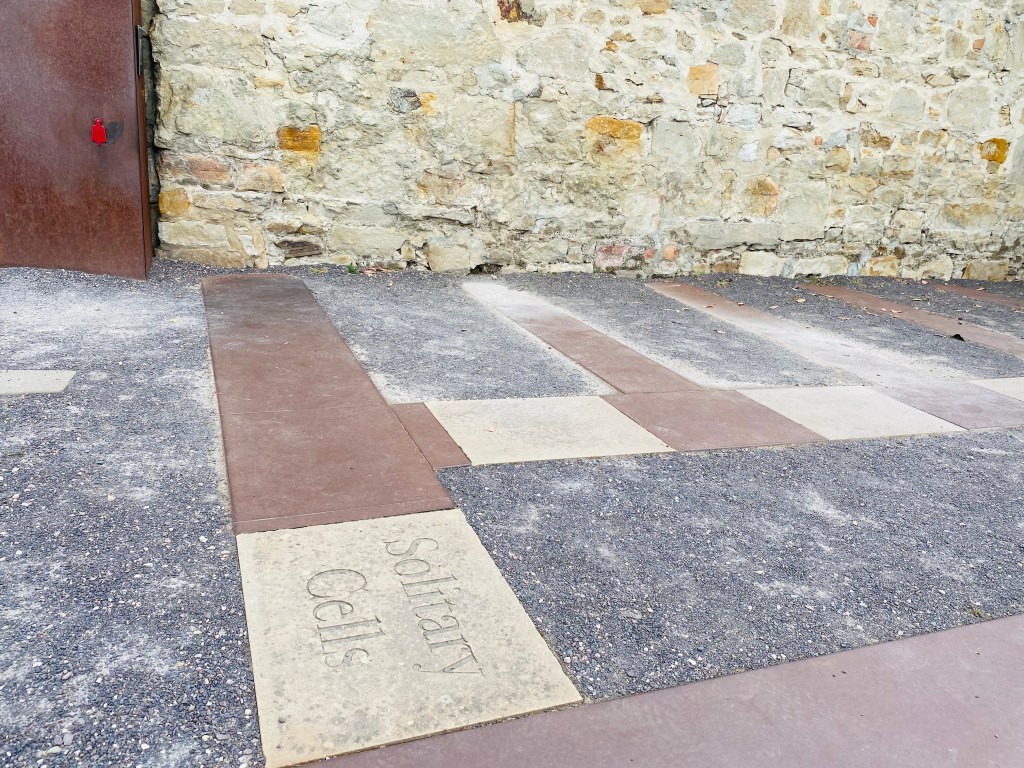
At Cascades Female Factory Historic Site, we learned the sobering stories about convict women’s history. Between 1788-1853, over 25,000 women and girls were transported to Australia for their crimes with half of them coming to Tasmania. These oppressive institutions, in the name of reform, served up harsh punishments for many petty theft crimes to the tune of 7-14 years. Many of these women were living in poverty in Britain’s industrial cities and had families and children reliant on them. The convicts were separated into three distinct classes that were not allowed to communicate with each other. First Class were women deemed suitable to work in the colony, being housekeepers and nannies. Second Class had committed minor offenses but were not yet suitable for assignments in the colony, instead working in the Factory making clothes and mending linens. Third Class was the Crime Class with the worst behaved women who had serious offenses or had re-offended, sentenced to hard labor of washing all government institution laundry. They were often punished with solitary confinement in the cells with complete darkness.
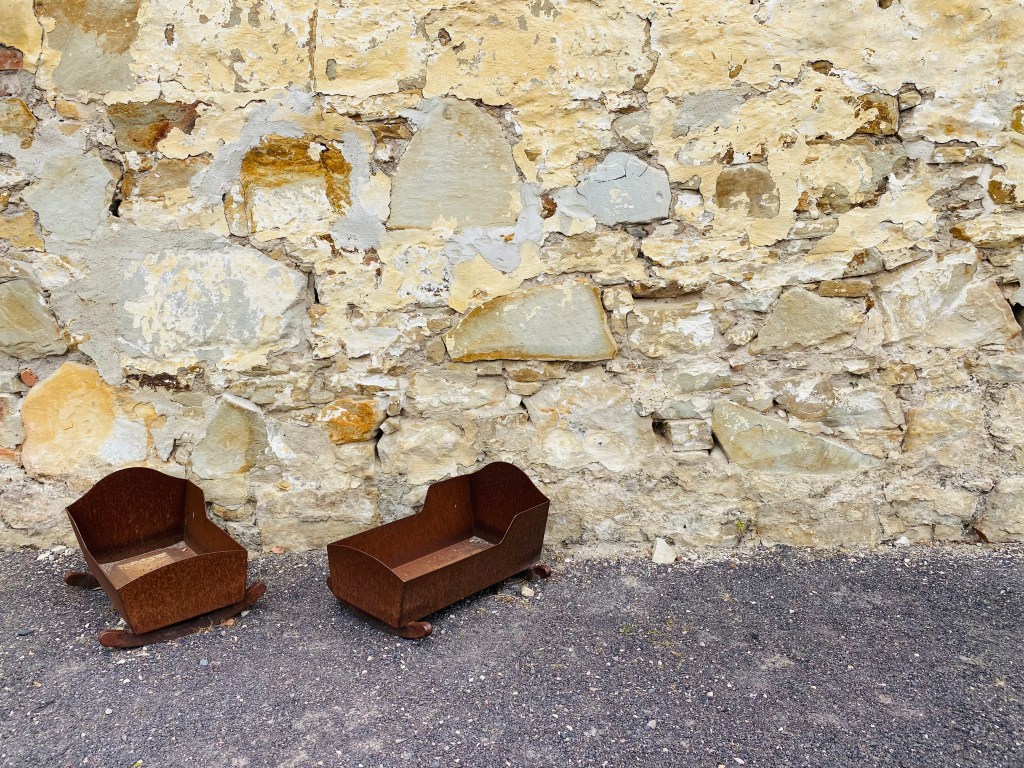
Some women, once allowed to work in the colonies, would become pregnant (not by their own choice) and then were punished for this pregnancy. We walked through the nursery where children would stay until age 3, though many of these “illegitimate” children died and were buried in unmarked graves. There is now a memorial to these children at the site.
The convict history, with many original buildings destroyed in an attempt to erase the “convict stain,” is now being brought forward as a key part of Australia’s national story. It is estimated that half of the current Tasmanian population has convict heritage. Sites like this also serve as a reminder of the broader violence of imperial expansion on those it dispossessed, as well as the strength of the human spirit.
We settled into our South Hobart AirBnb, which is appropriately named the “Treetop Escape,” tucked into a canopy of eucalyptus trees with a view of Mount Wellington. At the local Hill Grocer, we picked up wallaby mince to make burgers, trying the local flavors.
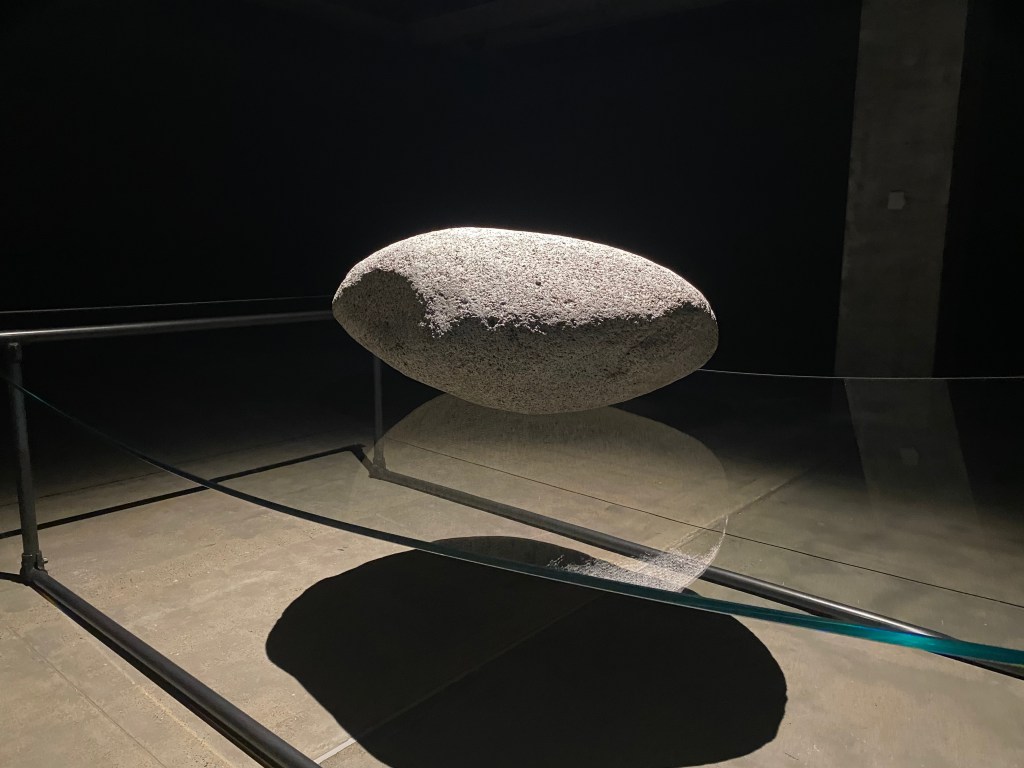
The next day off to mind-bending MONA (Museum of Old & New Art), where exhibits ranged from interactive to shocking to captivating. There was an installation where hundreds of water droplets were released from the ceiling at just the exact interval to appear as words in the air. There was a massive boulder balanced on a now-bent piece of glass the moment before its breaking point, with strict signage not to approach closely.
There was a Colosseum of Connex boxes to walk around in.
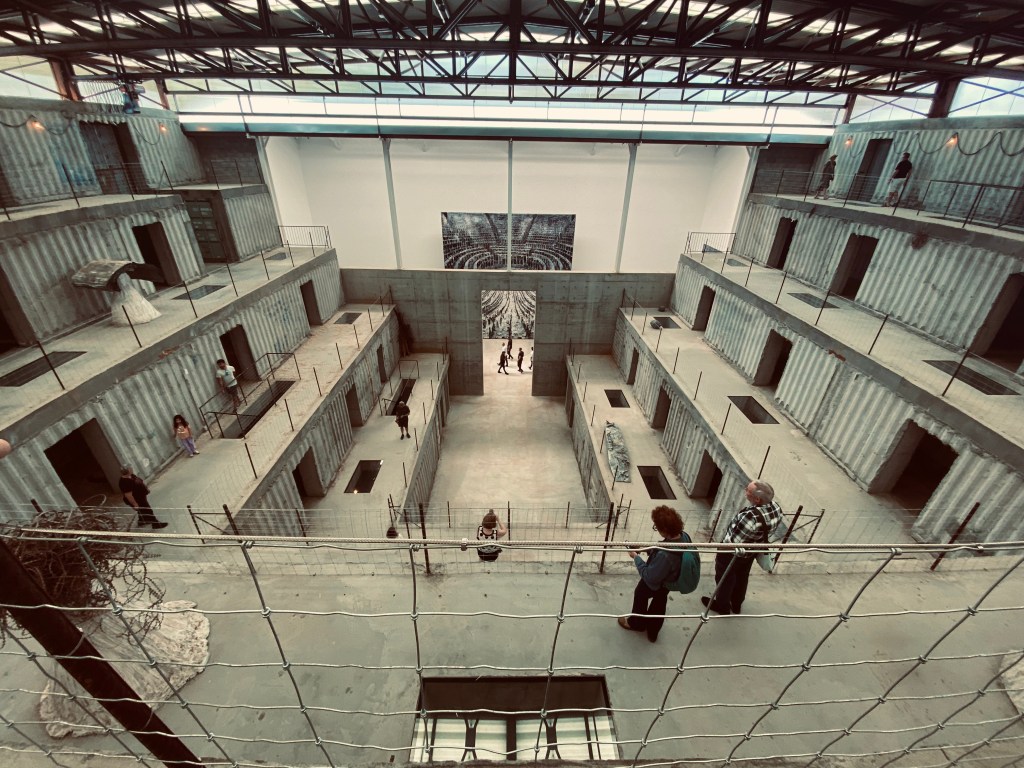
In fact, there were multiple pieces of art with safety warnings!
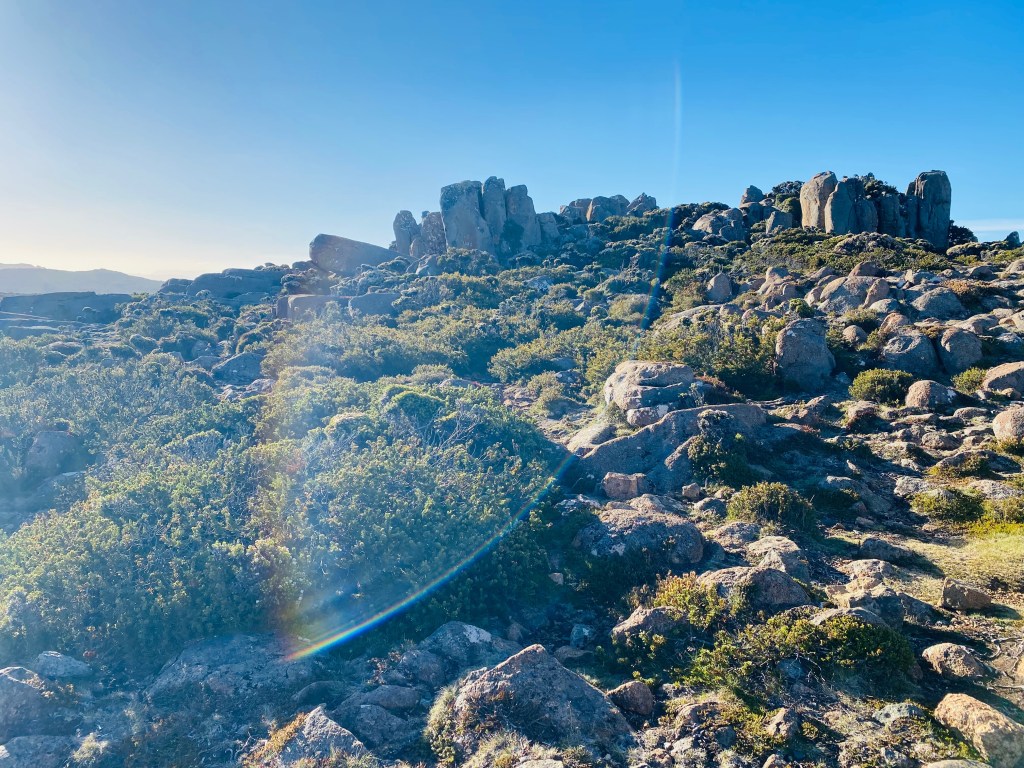
We drove our way up Mount Wellington (kunanyi), 1270 metres above sea level. Hiking the Sphinx Lookout Circuit was our first time walking through a eucalyptus forest and we were struck by the distinct smell, as if we were in a wood-fired sauna steaming eucalyptus oils, while our feet crunched along the dry leaves below as they rustled above. The temperature cool, the air crisp and refreshing, wearing pants and hoodies. And there, could it be – yes, in the trail – Calder searching for the correct word for this new animal ahead that then bounded up making a “thud, thud, thud” through the forest. A wallaby! The kids eagerly walking in front on the trail in hopes of seeing another and spotted two more thumping through the forest. We drove to the top where we explored the striking dolorite pinnacle formations and scrub bush in the windswept environs, looking out over the city of Hobart to where the Tasman Sea enters.
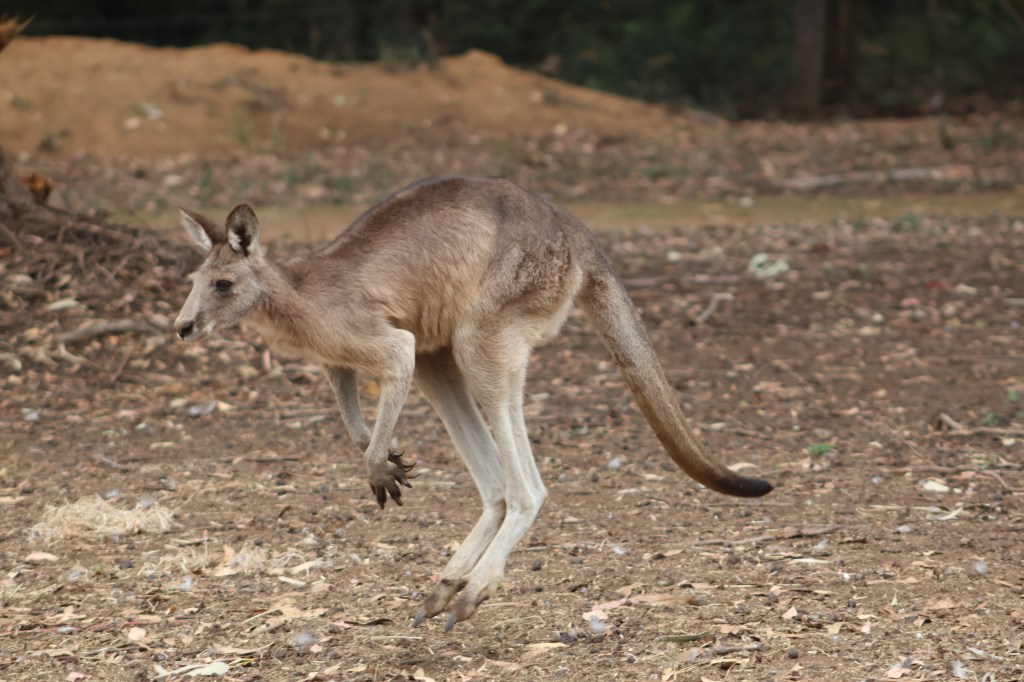
Off on a side trail by ourselves we felt as if we were being watched – yes, two eyes stared at us curiously, ears up, arms and hands folded politely in front of his body, standing upright on two strong legs – a wallaby! Where the wallabies in the forest were a brief glimpse, this fellow let us watch him graze then bound along, as we literally laughed with glee as his body boinged up from the brush repeatedly. Eventually, we parted ways and went back to our AirBnB where we made a delicious dinner of Tasmania Salmon and local greens.
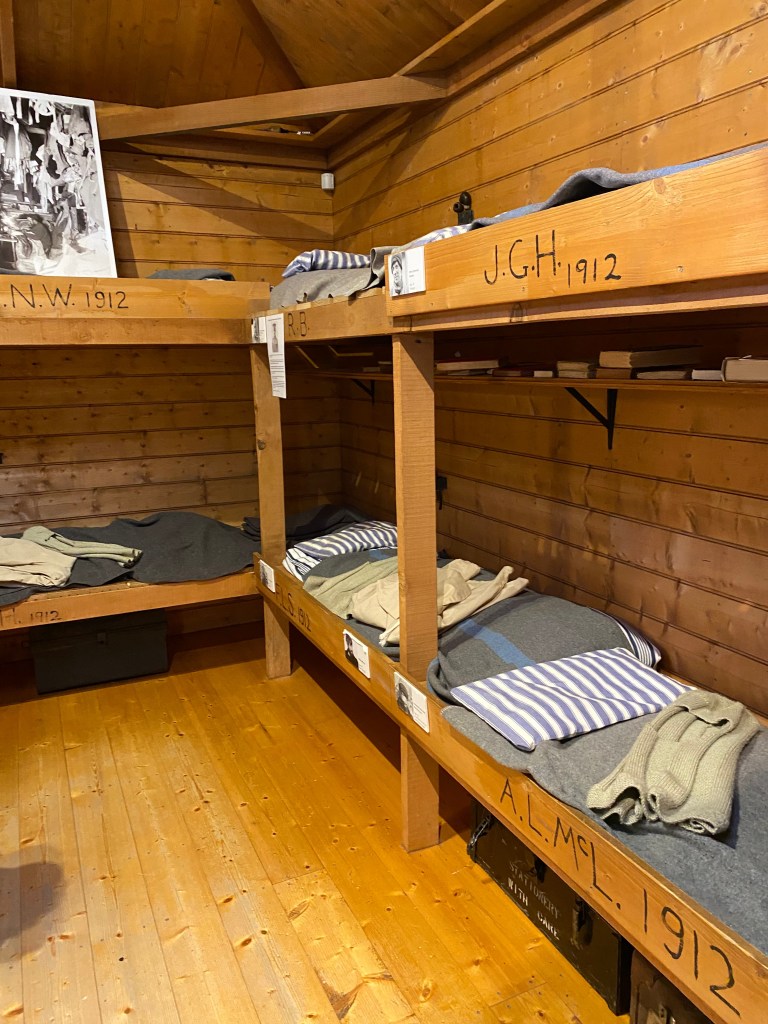
Before leaving Hobart, we walked the waterfront, picturing what it would be like to have Terikah out front. We also explored the Mawson’s Hut Replica Museum and learned the story of Antarctica exploration that goes along with this full-scale hut replica from the “heroic era” of Antarctic exploration. Mawson’s Huts at Cape Denison, East Antarctica, served as the main base for the Australasian Antarctic Expedition of 1911-14, home to 18 men. Mawson’s story of survival is truly remarkable, as three men picked their way through the treacherous country. The first man disappearing into a crevasse with most of the dogs and supplies, the next succumbing to hypothermia and illness, and Mawson continuing on and ultimately surviving and completing another season of research at the hut. Mawson’s book, The Home of the Blizzard, has been added to my reading list.
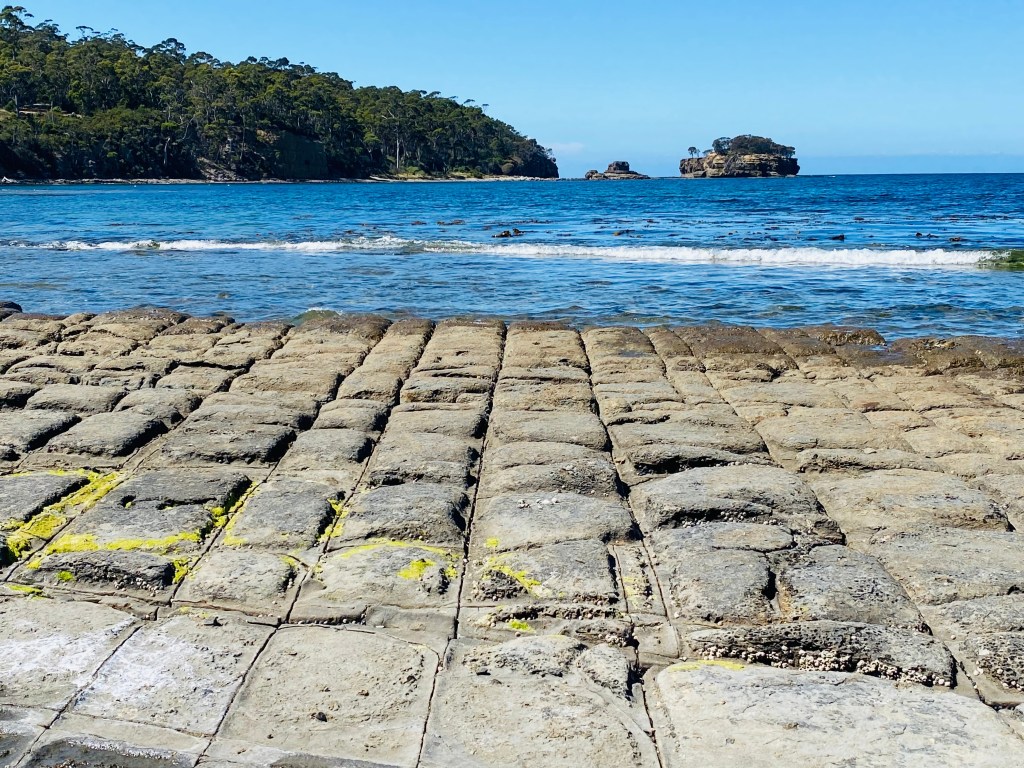
Off to Tasman Peninsula, where we stopped and walked around the geological formations of Tessellated Pavement, Tasman Arch, and Devil’s Kitchen. We had fun walking the patterns of the Tessellated Pavement, which look to be human-placed tiles. These tiled rocks were formed mostly of siltstone about 300 million years ago. Essentially, the rocks were fractured by the movement of the Earth and resulted in what is called jointing. Jointing itself is not incredibly uncommon, but the presence of salt crystals and consistent erosion by the Tasman Seas’ waves and sediment deepened the patterns.
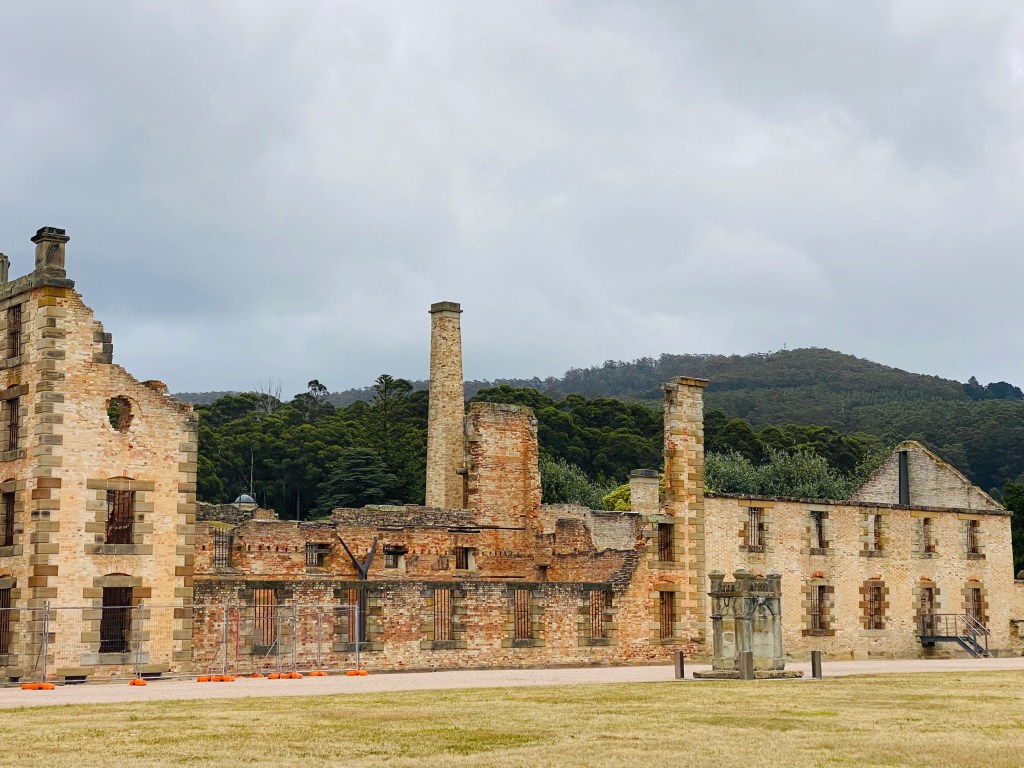
We spent a full day at the Port Arthur Historic Site, a former penal settlement for male secondary offenders, now a UNESCO World Heritage site.On the various tours, it hit home that this is the only country in the world that was built as a penal colony. It is also the country with the largest forced immigration in the world, a forced migration of convicts. Transportation was used to expand Britain’s sphere of influence and, ultimately, led to building the Australian nation as we know it today. The system was responding to the rising crime rates in Britain and the need to populate the Australian colonies with over 165,000 men, women, and children transported to Australia.
One brutal turn in punishment was when they created the Separate Prisons, where each prisoner was kept completely by themselves in quiet, not communicating with any other person. Even in mandatory church, they were shut in private boxes, separating them from each other.
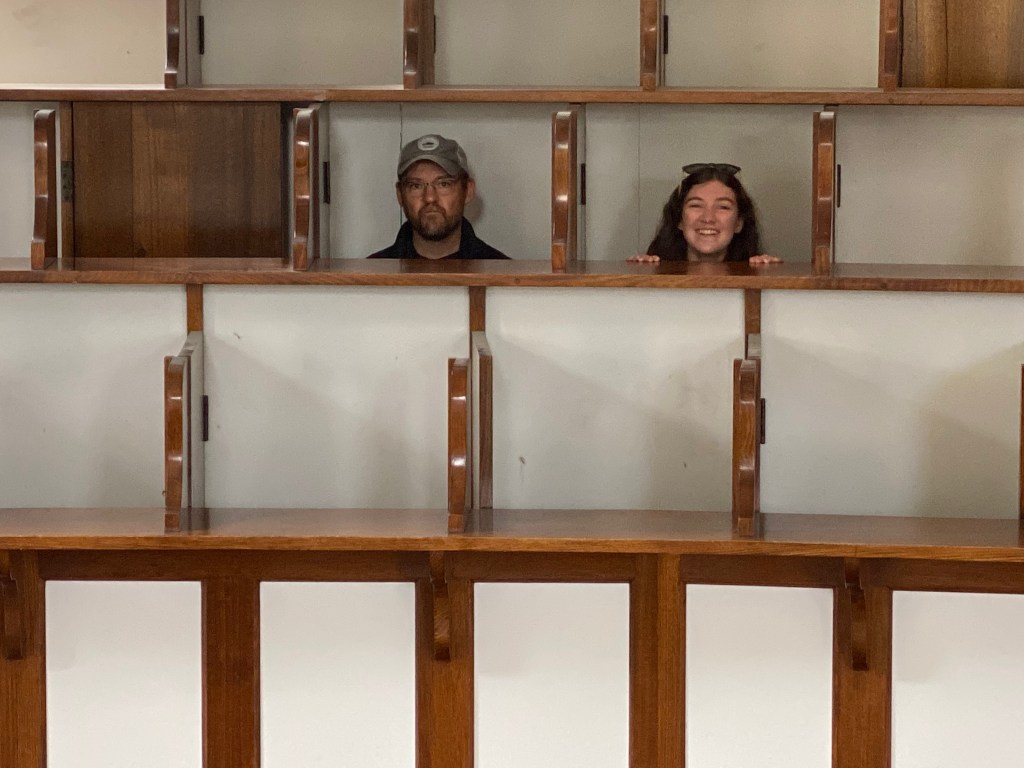
They were allowed an hour of exercise to walk back and forth on a path by themselves. We toured on a boat out to Point Puer Boys’ Prison, as well as the Isle of the Dead burial grounds. It is a massive grounds with many of the buildings partly remaining to explore, from the Penitentiary to the Asylum. We heard stories of convicts who tried to escape repeatedly, very few succeeding.
“Were convicts evil brutes, habitual criminals, tragic victims of poverty and oppression, or heroes of the class struggle? Were administrators brutal sadists or well-intentioned, if mistaken, philanthropists? Is Port Arthur a site of romantic gothic horror or pastoral beauty and tranquility? We have seen this place and its former inhabitants in many ways. Only one thing is certain – that we filter the ‘truth’ through what we want to believe. So who do you want them to be?”
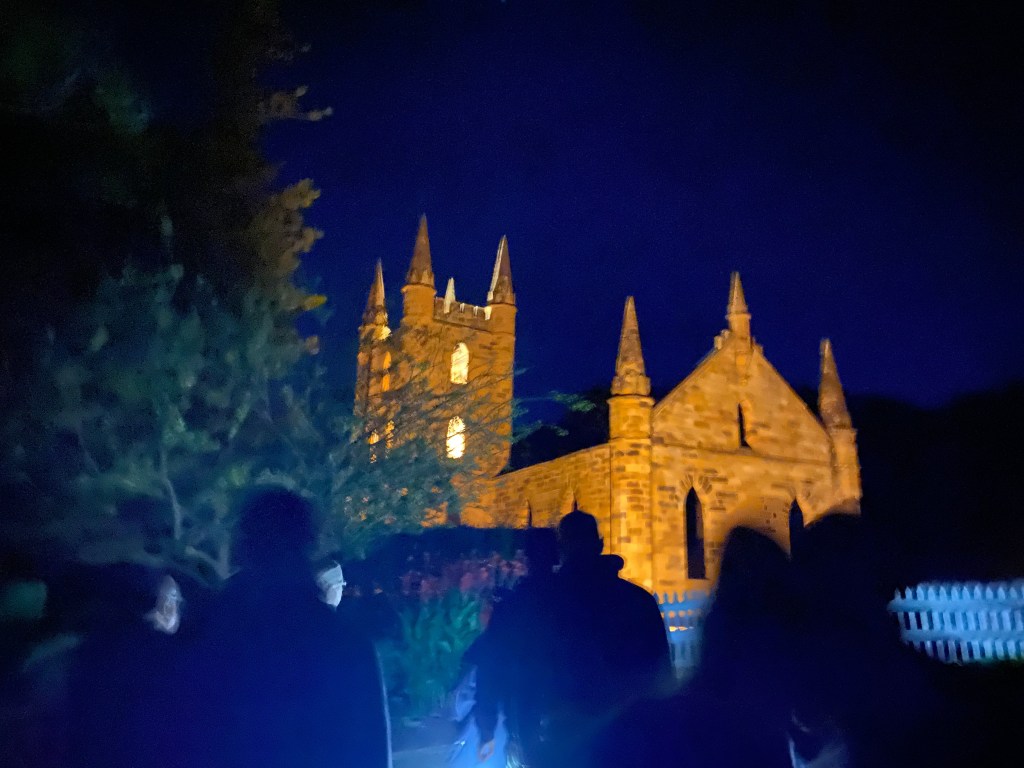
We returned at night and walked amongst and through the historic buildings by lantern light on the nighttime Ghost Tour, as our guide wove together mysterious stories that happened in each location where we stood, looking over our shoulder for the Blue Lady or a face looking out of a window where no one was. The mind starts to play tricks on you.
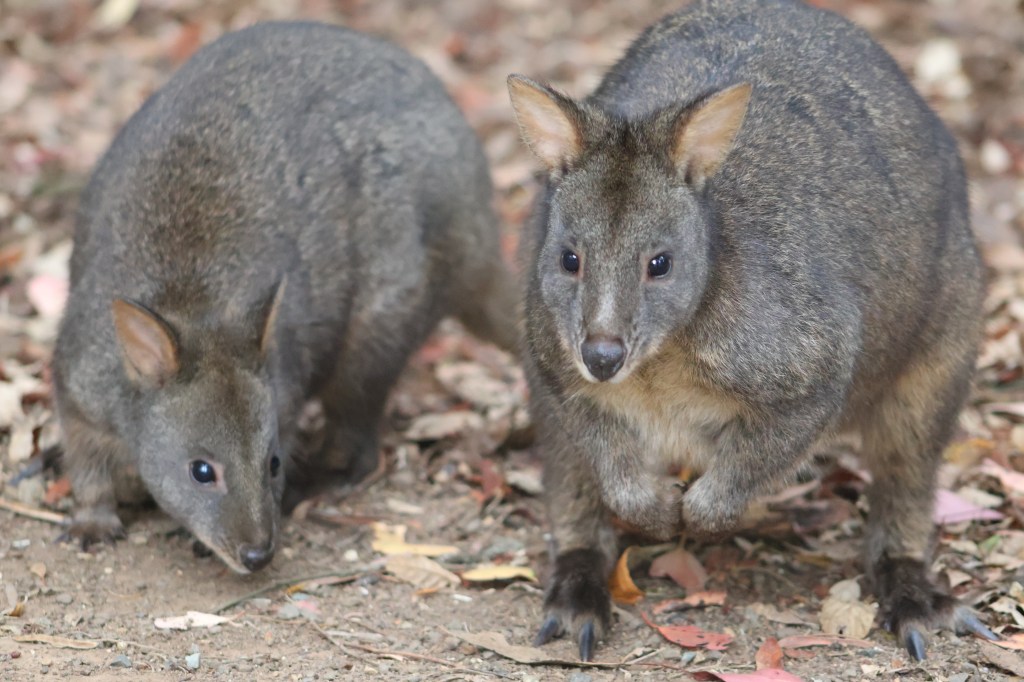
As we left in the dark for our drive back, we were warned to watch out for the pademelons…what? This is an animal we didn’t know existed and sure enough, there are many of them hopping about the sides of the road and in our neighborhood at night. These are adorable, small kangaroo-like marsupials. I love meeting new animal friends that we didn’t even know existed before. And the name is so sweet and funny – pademelon?!
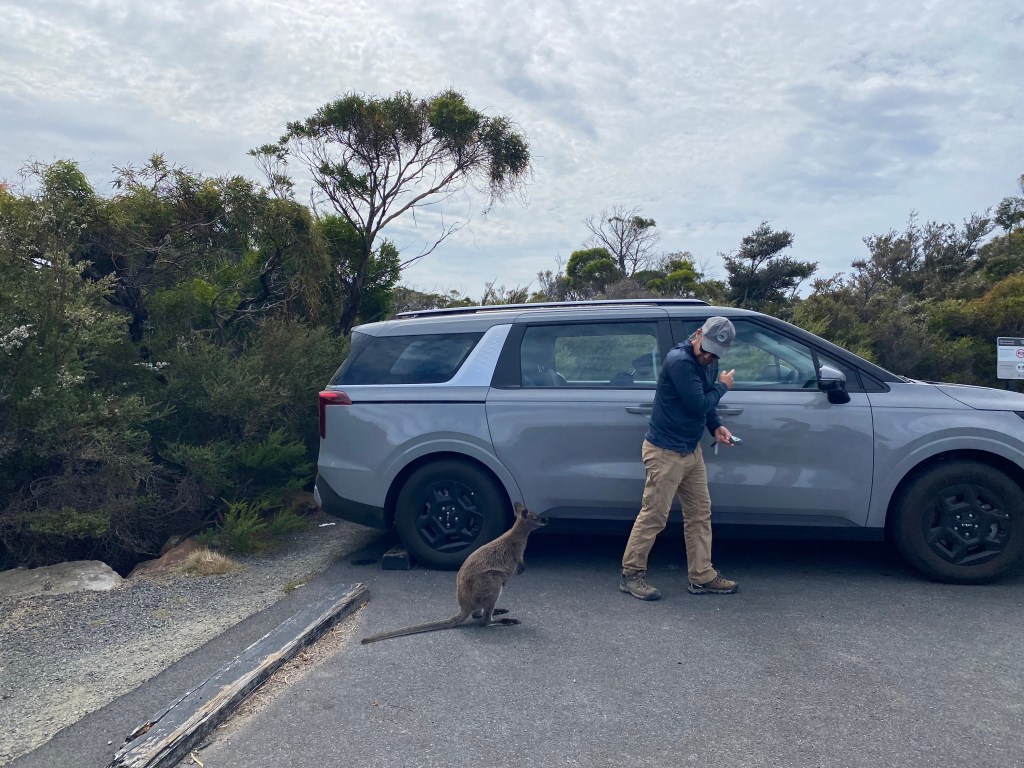
The next morning, on our way off the Tasman Peninsula, we spent a morning at the Tasmania Devil Unzoo in Taranna. The conservation-focused Unzoo took down most of the fences at an old wildlife park, planted native trees and shrubs, and welcomed in wild mammals and birds to come and go, while continuing their mission to save the endangered Tasmania devils. We started off watching the Devils being fed chunks of wallaby, as they growled and gnashed their teeth, the sound of breaking bones.
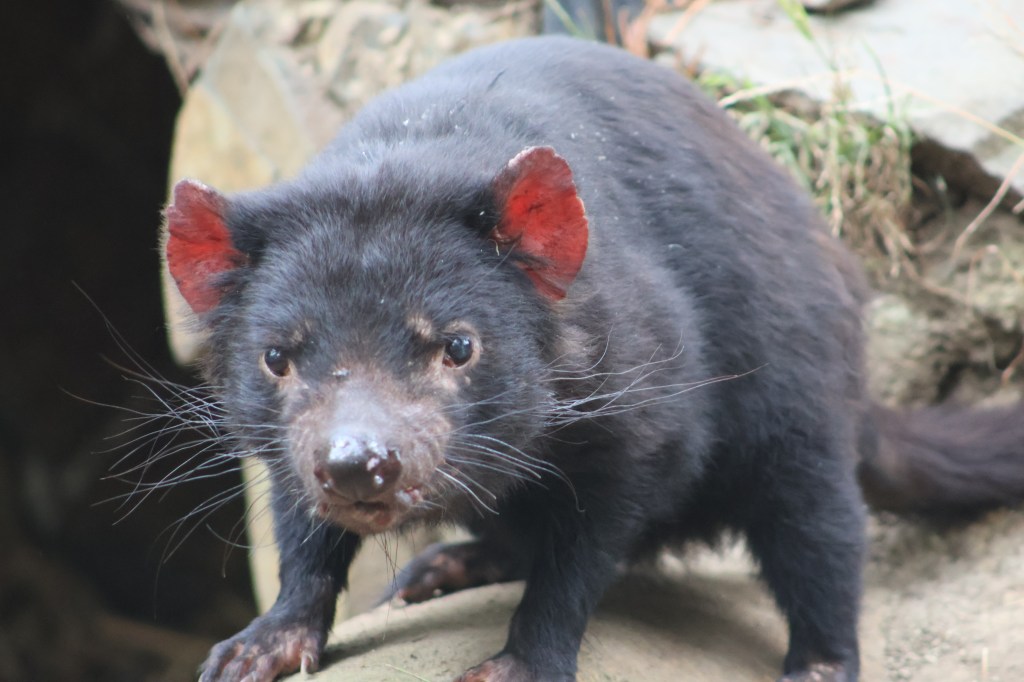
Despite Looney Tunes notoriety, they do not actually spin as they move, but they do make some interesting sounds. And we couldn’t help but love these little devils’ cute faces. Tasmanian Devils are found only in Tasmania, as the human-introduced dingo from Asia killed off the mainland population but did not make it to Tasmania. They are a meat-eating marsupial, mostly eating dead animals (wallaby and possums). They have a short life span. The females have their “love nest,” and enjoy making love to numerous boyfriends so they end up with over 50 babies born. With only 4 teats, only the fastest and strongest of the “little imps” survive, while the others get consumed. No wonder they are called little devils! They spend 6 months in the pouch then are left to fend for themselves. Sadly, they are now endangered due to a Facial Tumor Disease that has killed 80-90% of them, but the Tasman Peninsula is disease-free and the Unzoo has an active breeding program to increase their numbers. The Unzoo has a healthy population of wild pademelons, the small wallabies found only in Tasmania. They remain Calder’s favorite. Birds here include the rare Cape Barren Geese and the cheeky Rosellas that would land on your arms and head as you fed them seed. The Unzoo has a very friendly mob of Forester Kangaroos that allow you to come up close and feed them.
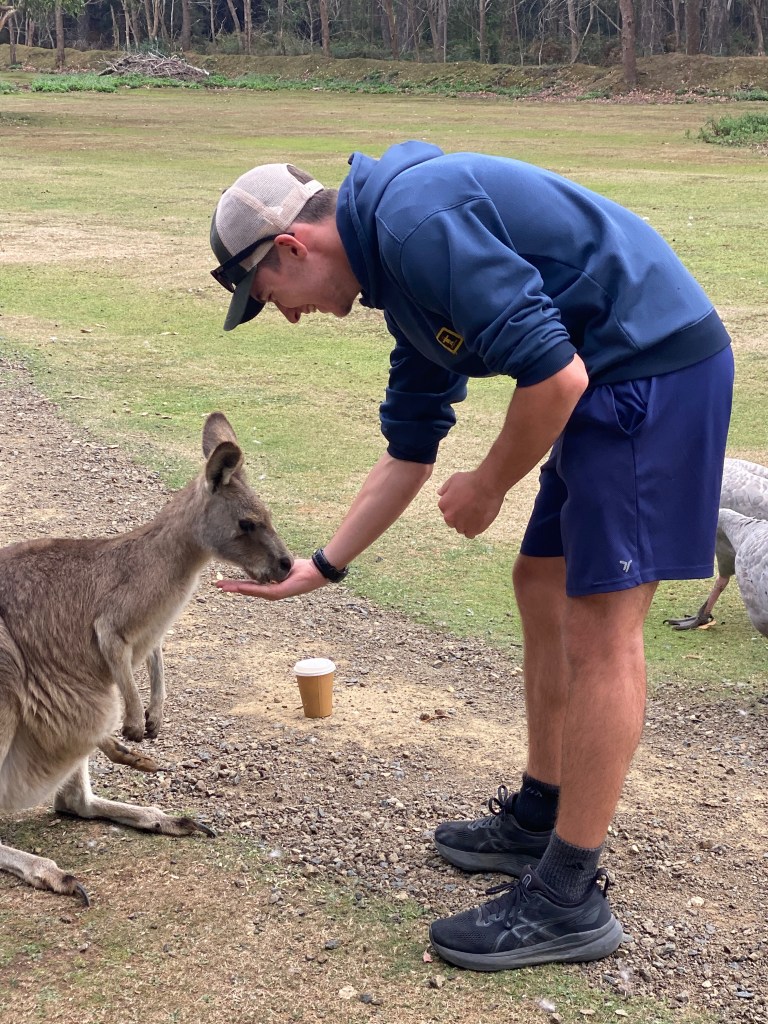
We watched as a joey climbed into his mom’s pouch, one leg sticking out.
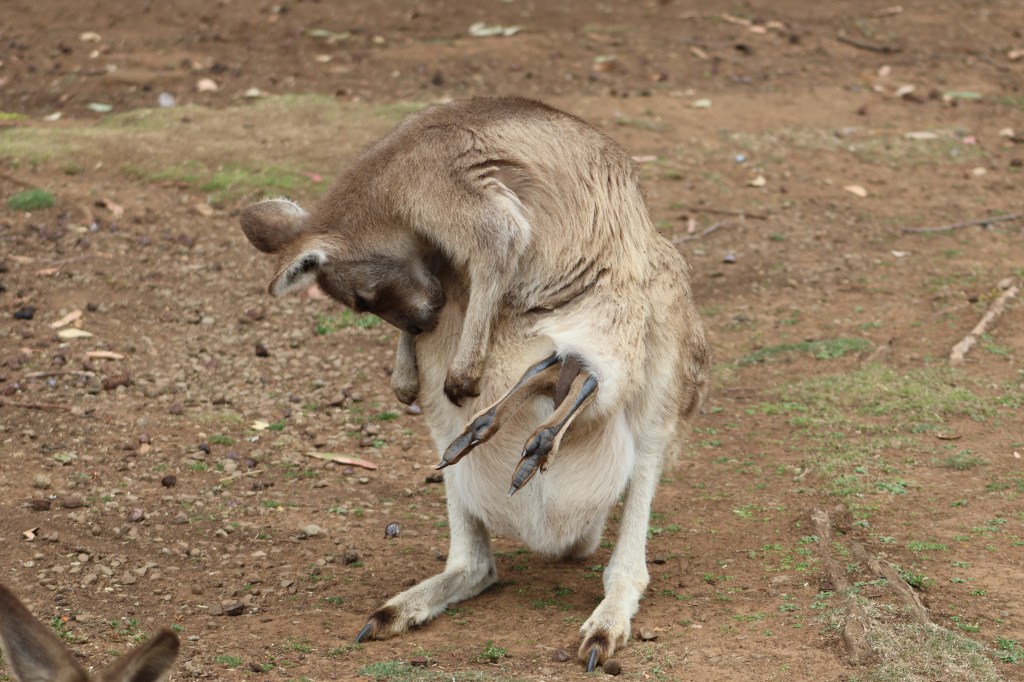
Another joey peeked out from their mom’s pouch. I had a nice moment sitting next to a mama kangaroo for a while, as we bonded over raising children.
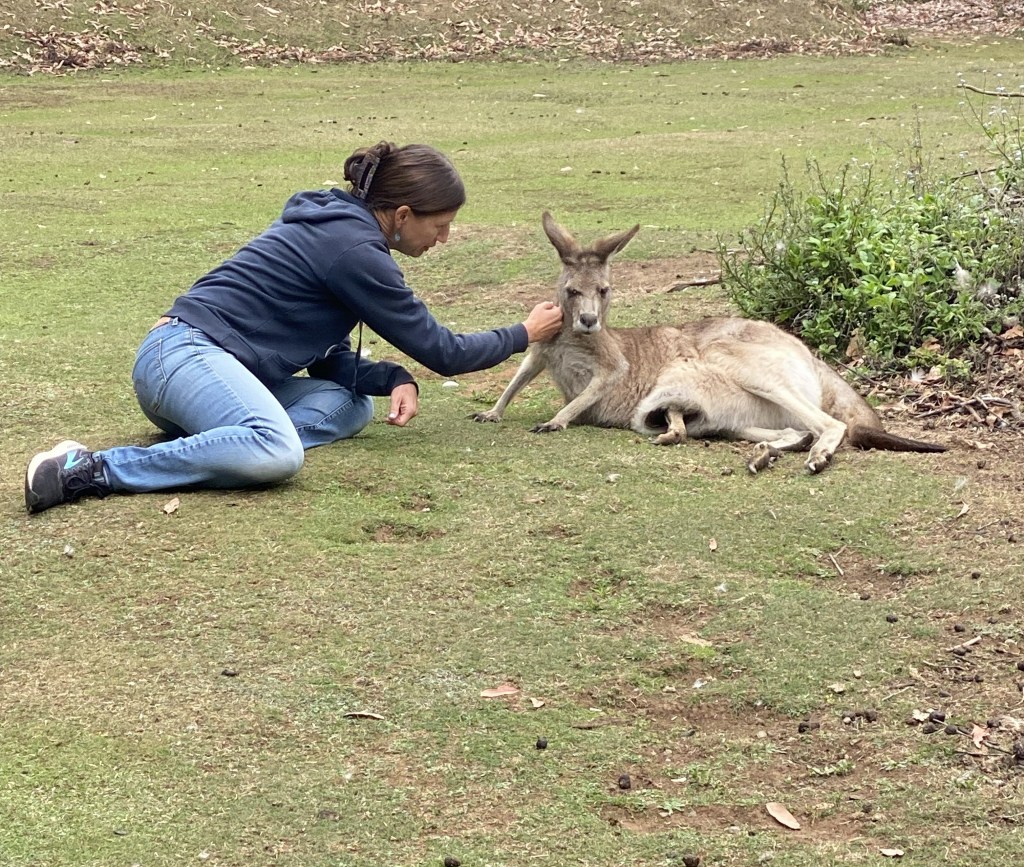
After Indonesia, Australia possesses the largest number of endemic species on Earth. Since colonization began in 1788, the country has lost over 100 species of flora and fauna. Australia also leads the world in mammal extinctions, with 38 native mammals lost so far.
Before leaving Tasman Peninsula, we stopped for ice cream and chocolate bars at the Tasmanian Chocolate Factory, as well as at the Dunalley Bakery for the famous Tasmanian scallop curry pie, lamington dessert, and flat whites.
Next stop was an overnight at Spring Beach before taking the ferry from Triabunna to Maria Island for the day for hiking and searching for wombats.
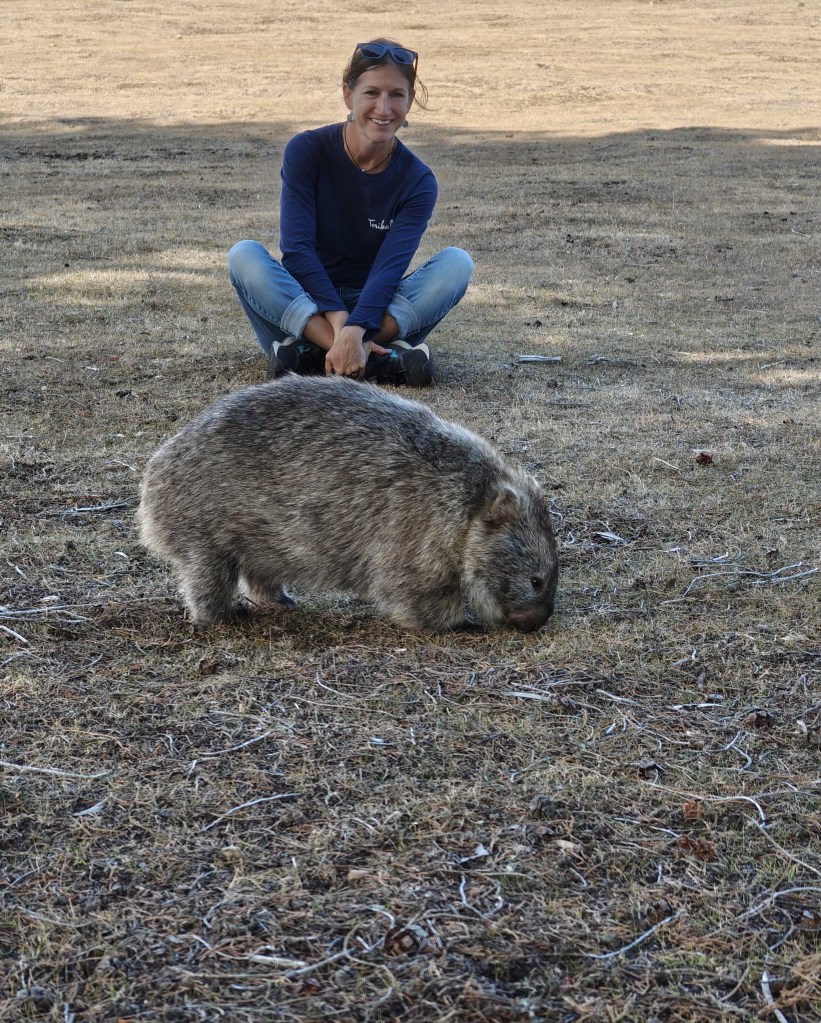
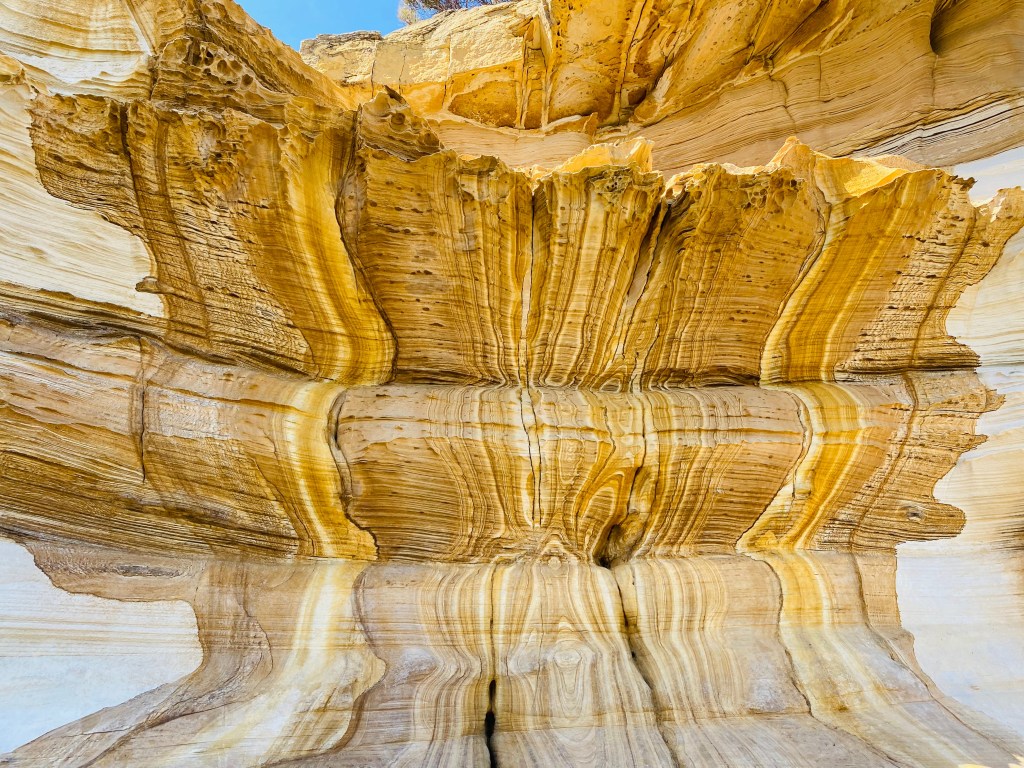
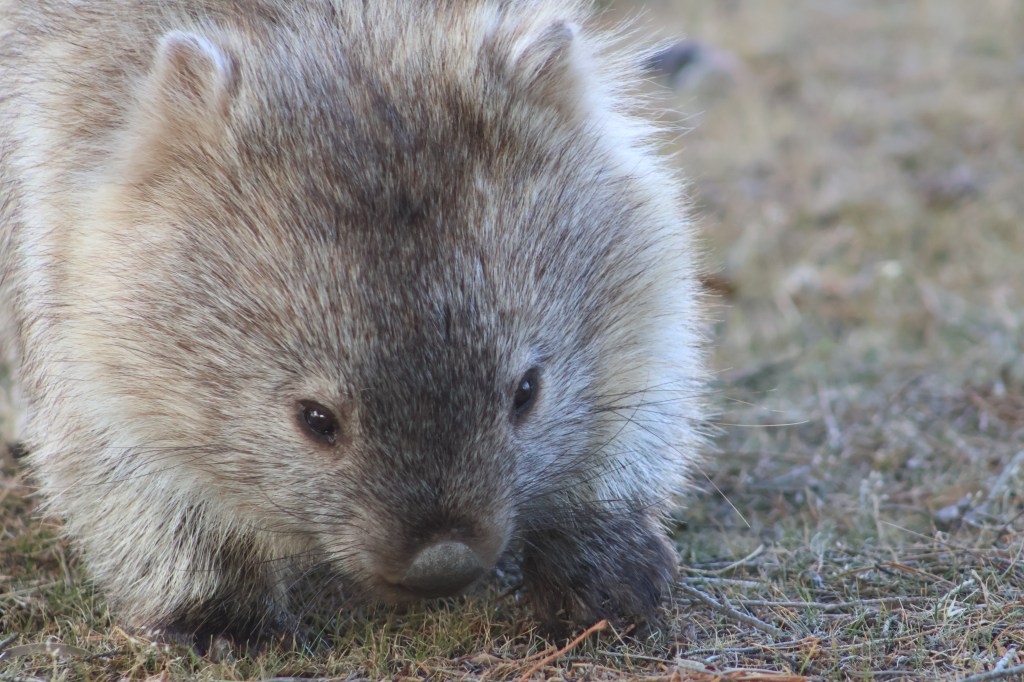
Upon arrival, we almost immediately saw a wombat making its telltale cube-shaped poops before he ambled off; he was seriously adorable with his fuzzy fur, little ears, and big nose. Wombats are burrowing Australian marsupials with complex underground burrow systems, and a surprisingly powerful build that lets them defend themselves by crushing predators with their solid rear end. At low tide, we walked along the Painted Cliffs with their honeycomb sandstone patterns and swirls of color, where we perched for a picnic lunch.
Up around the island, we hiked to the Fossil Cliffs where visible marine fossils are embedded in the white limestone cliffs. Before we left, we went on one last walkabout looking for wombats – and found two delightful wombats that let us just sit with them and watch them nibble away. Calder also communed with a pademelon friend.
Next to Freycit National Park area, we had dinner overlooking the Hazard Mountains. My fish-n-chips was actually “gummy shark,” which is the first time I’ve eaten shark, finding it quite delicious. Hiking up to the Wineglass Bay Lookout, I’m not sure if we were more impressed with the views or the actual trail with its stone work meandering through massive boulders.
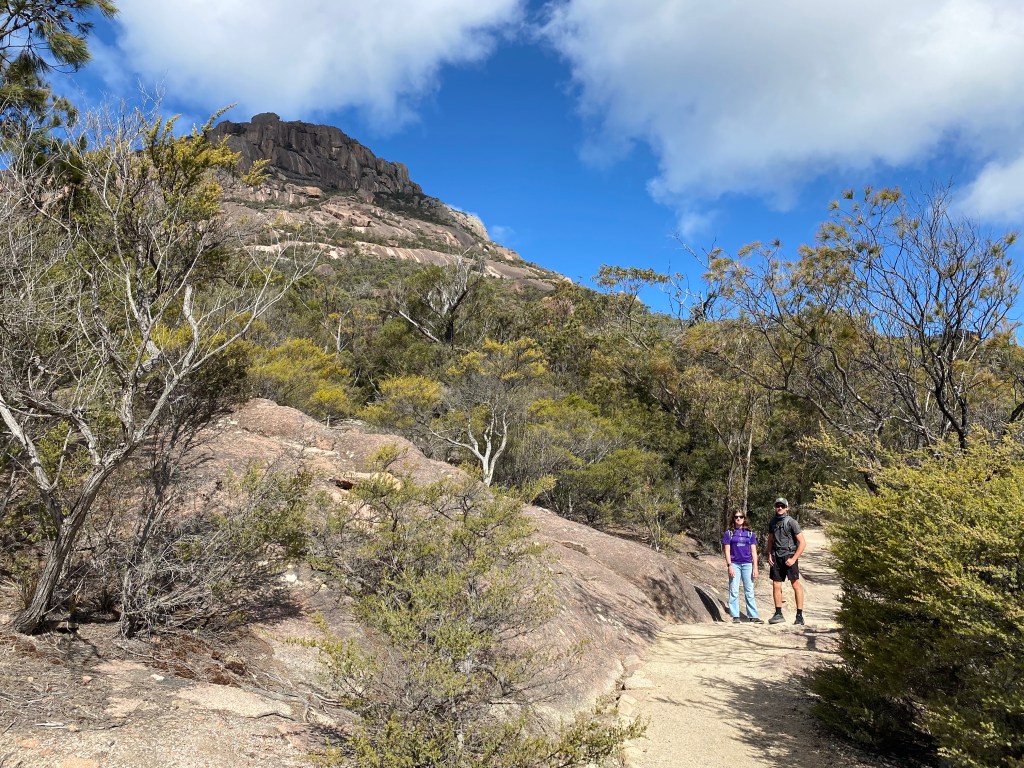
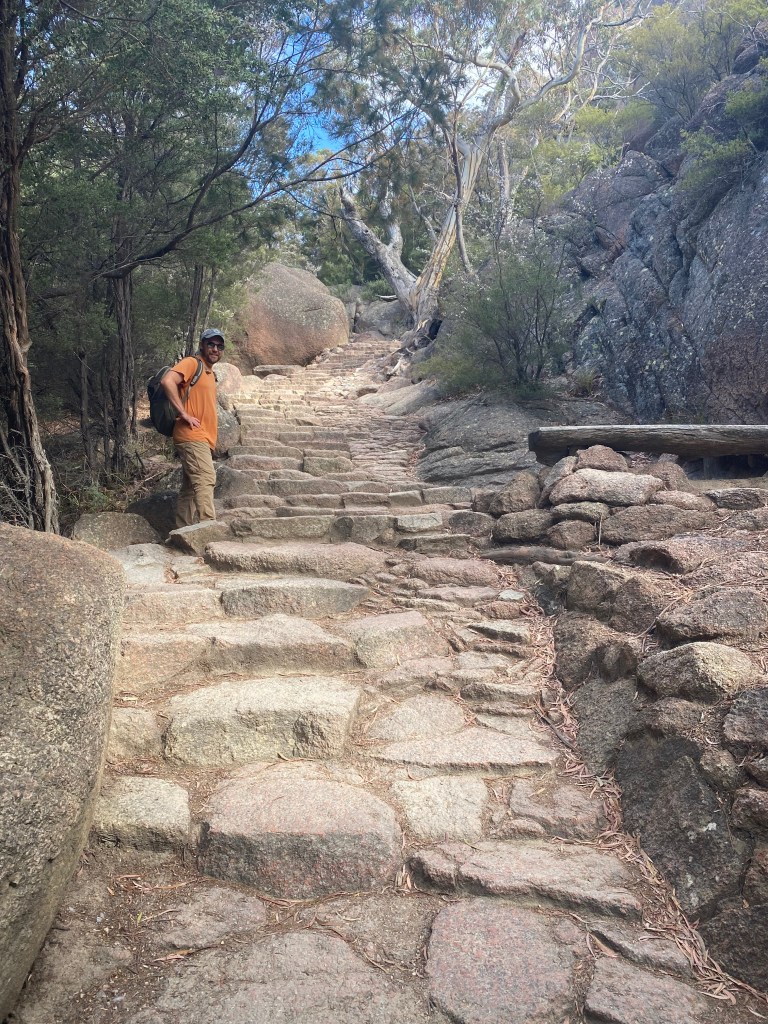
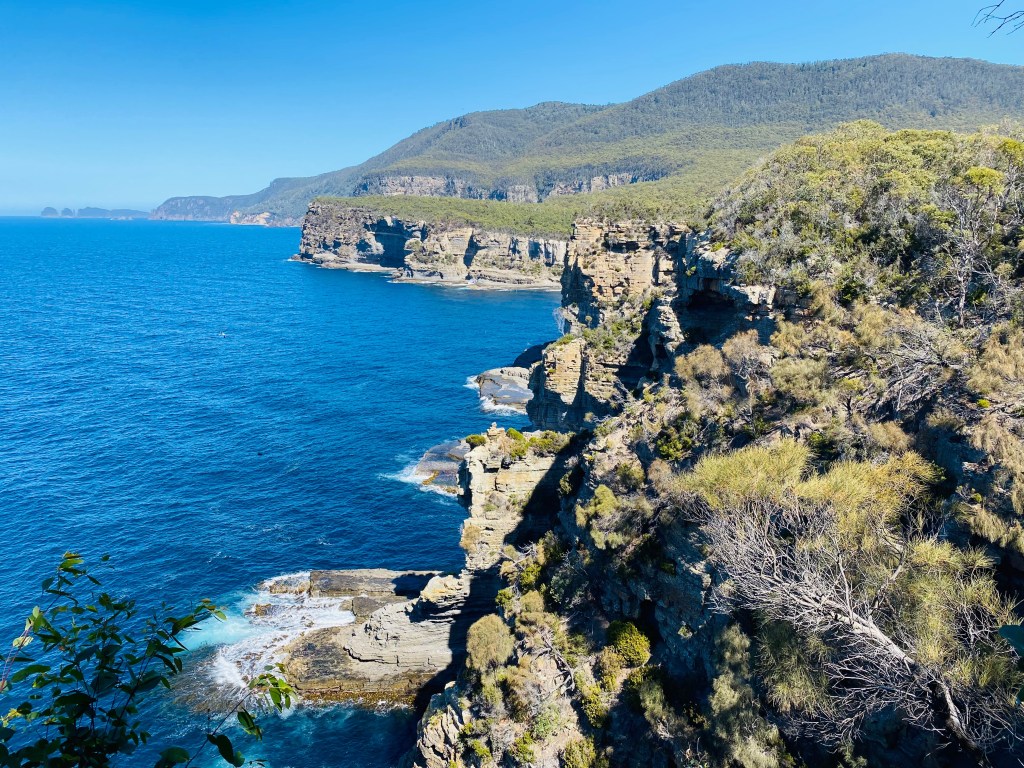
We bummed around the Visitor Centre where we were reassured by locals that a massive spider was just a simple, non-poisonous house spider and learned about blob fish. We walked the trail by the Cape Tourville Lighthouse with its dramatic clifftop views.
Spent just one night in Deloraine, enjoying a delicious dinner out and looking for platypus in the Meander River, briefly spotting one swimming in the distance. I hope to get a closer look at this spectacular monotreme before leaving Australia.
Next stop, our favorite, Cradle Mountain where we stayed on the doorstep of the park in a cabin for 3 nights, a fire in the woodstove to keep us cozy.
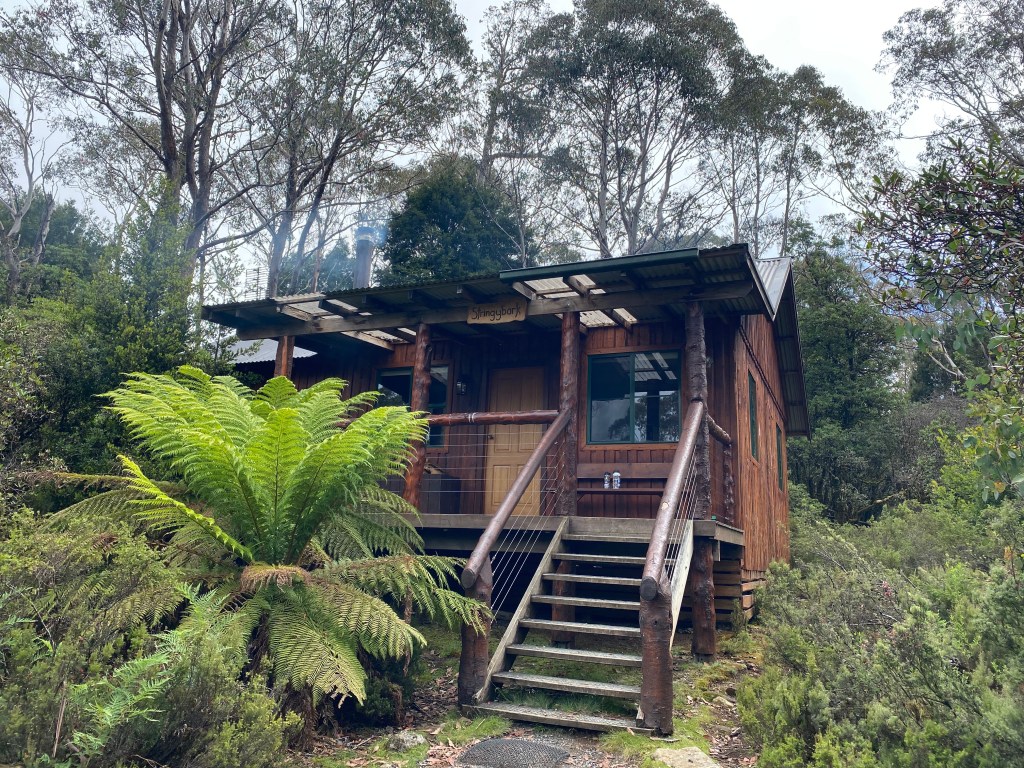
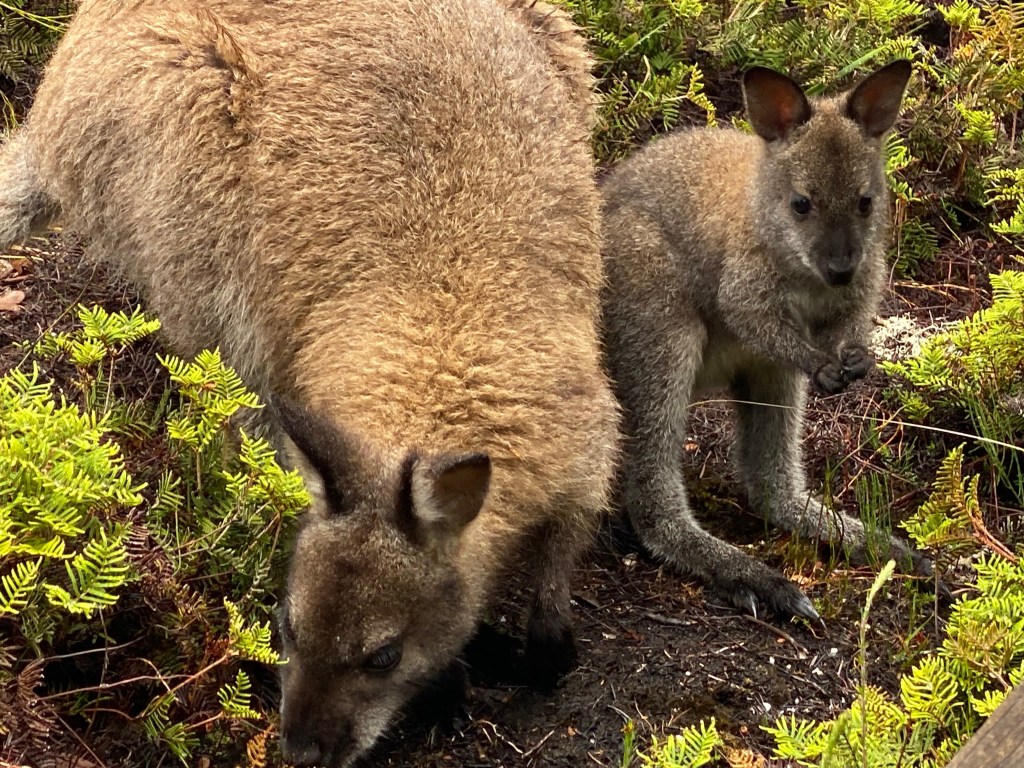
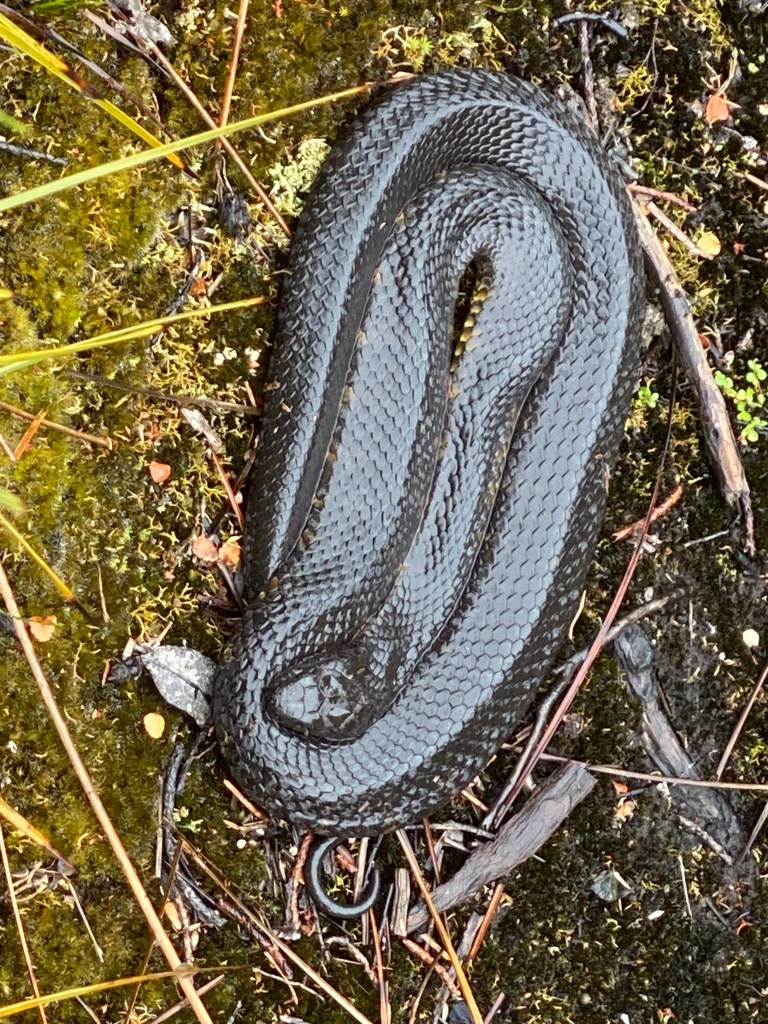
After settling in, we went for a drizzly meander on the Enchanted Walk where we saw a wet wombat wombling, a highly venomous tiger snake curled up, and a pademelon with joey practically on the trail.
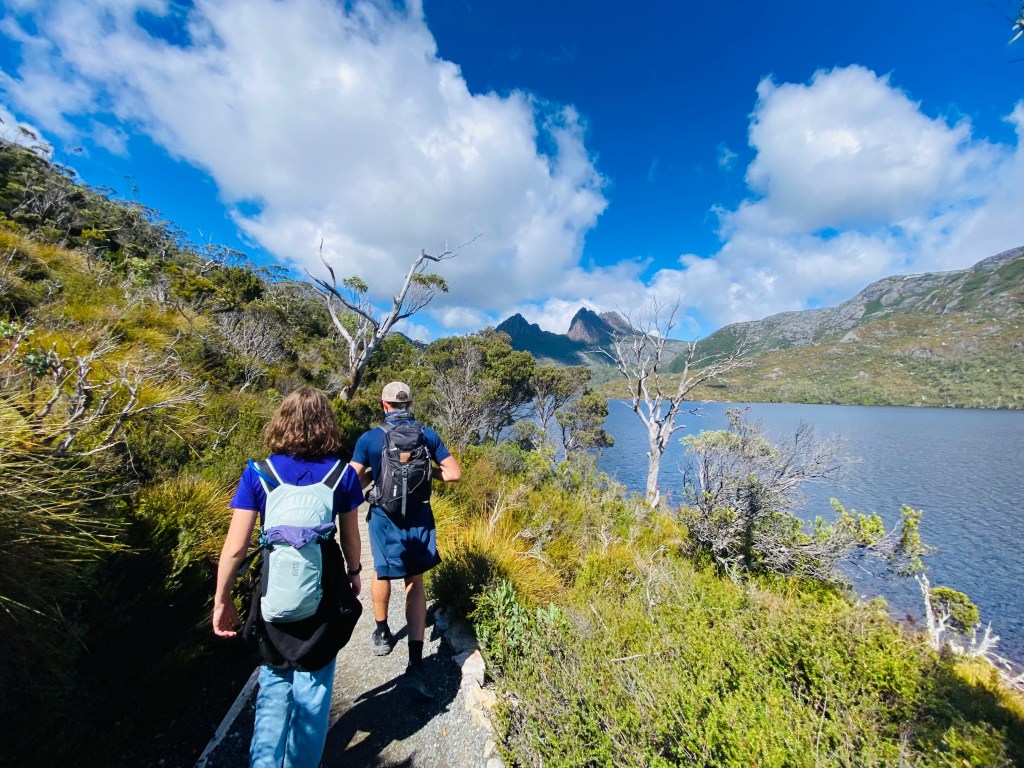
Cradle Mountain has a bus system to take people in and out of the main hiking and park area, as it is a windy one lane road. On our drive in, an echidna crossed the road and, later that day, we saw a baby echidna, called a puggle. The echidna is a spiny, egg-laying mammal (monotreme) native to Australia, using its long sticky tongue to feed on ants and termites. We hopped on the bus back to Dove Lake and trekked around the lake, Cradle Mountain standing sentinel and enticing us with its amazing geology and views.
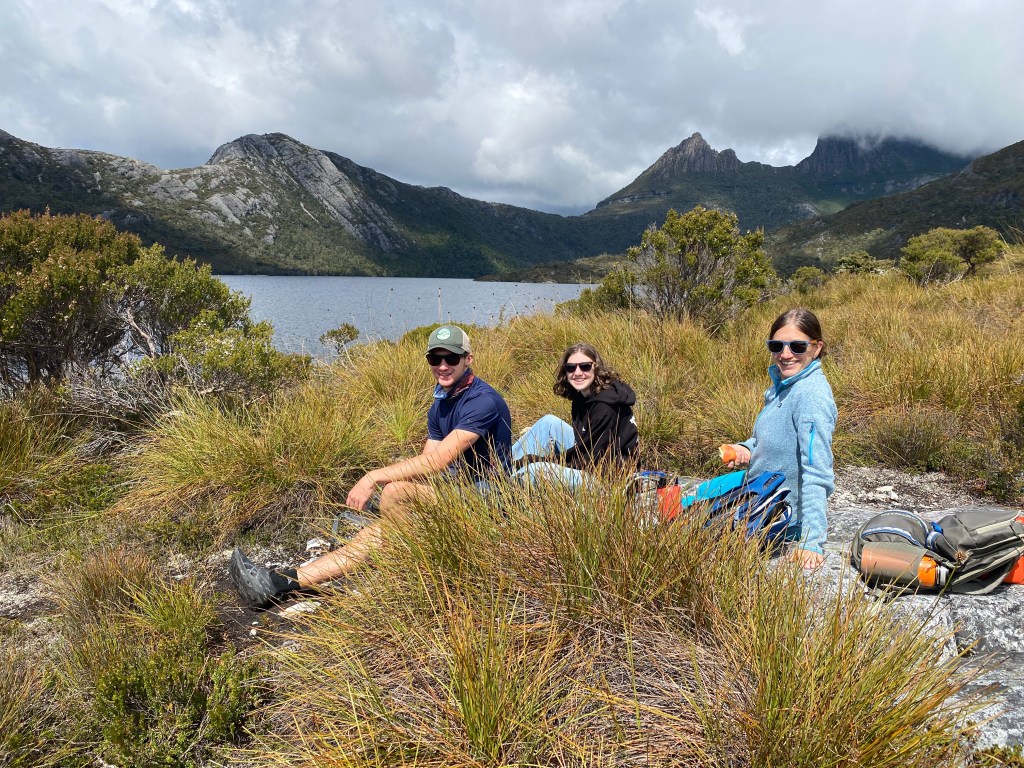
Up to the Wombat Pools and Crator Lake, scheming to return the next day to tackle the Summit.
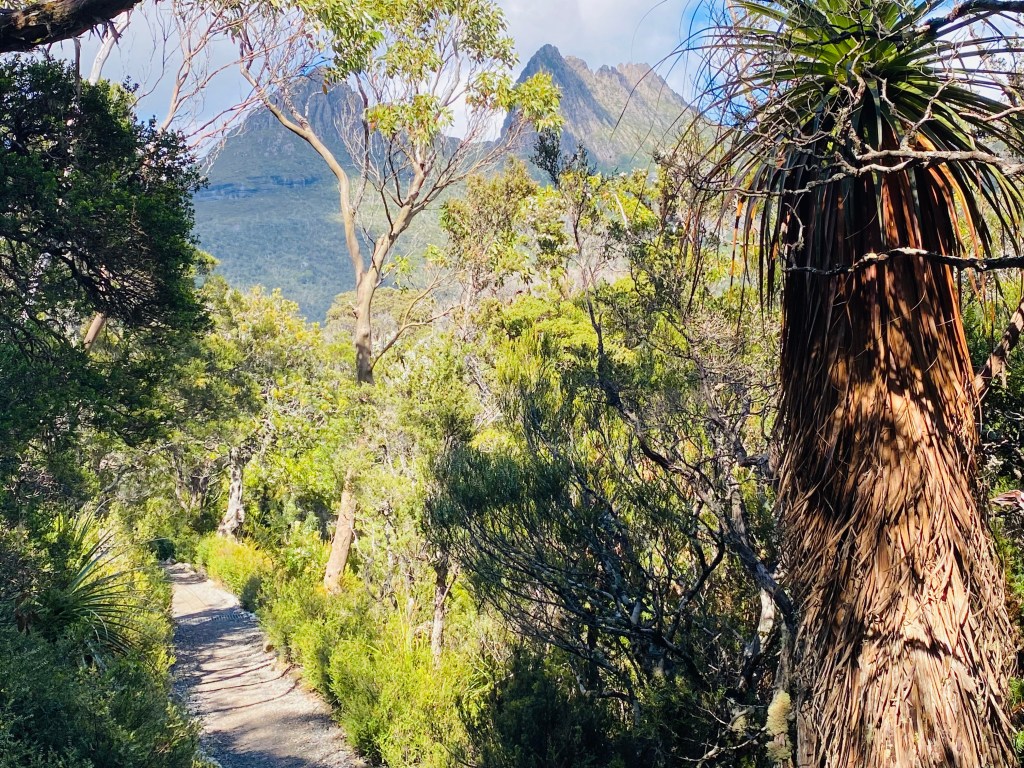
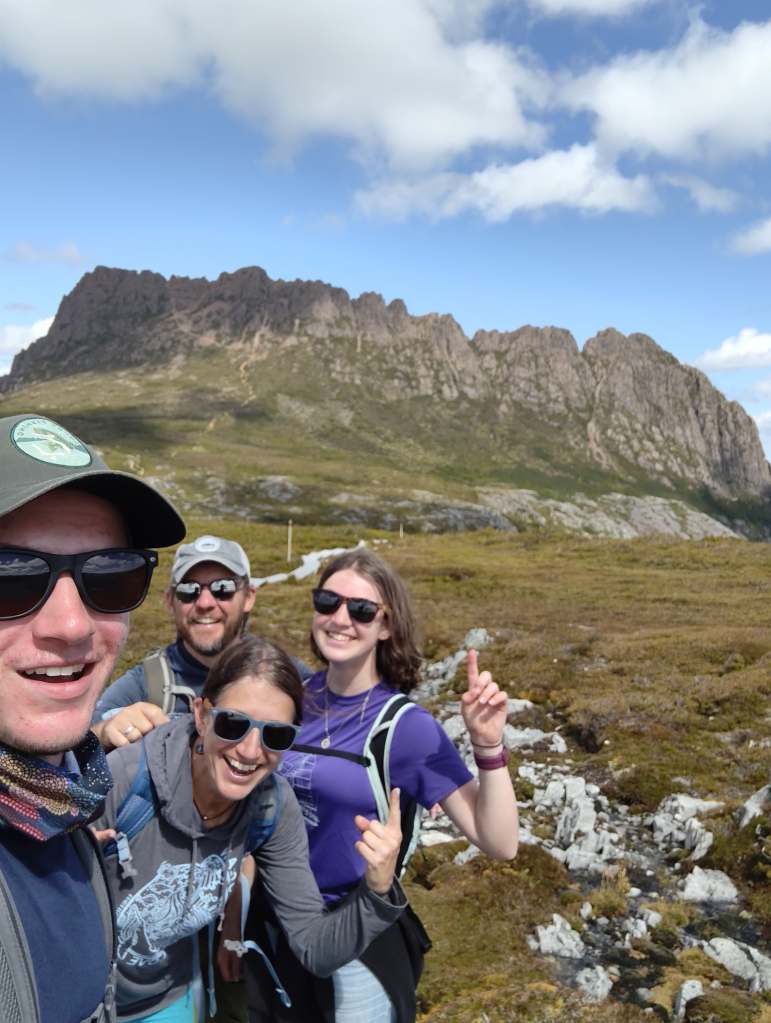
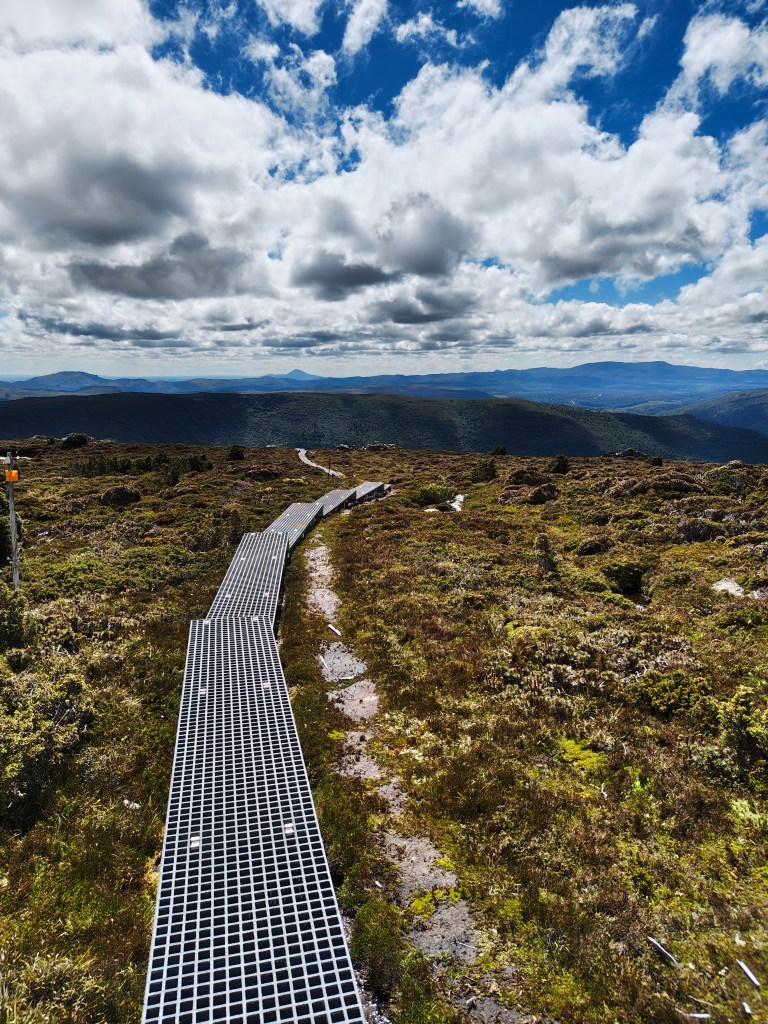
Our Tasmanian highlight was the Cradle Mountain Summit. Up early, we were able to drive into the park before the buses started their route. Off on the quiet trail, the mountains reflected in Dove Lake, a nonchalant pademelon munching his breakfast on the trail; it was stunning. We made our way to Marian’s Lookout, using the lines provided, and had a snack before continuing on.
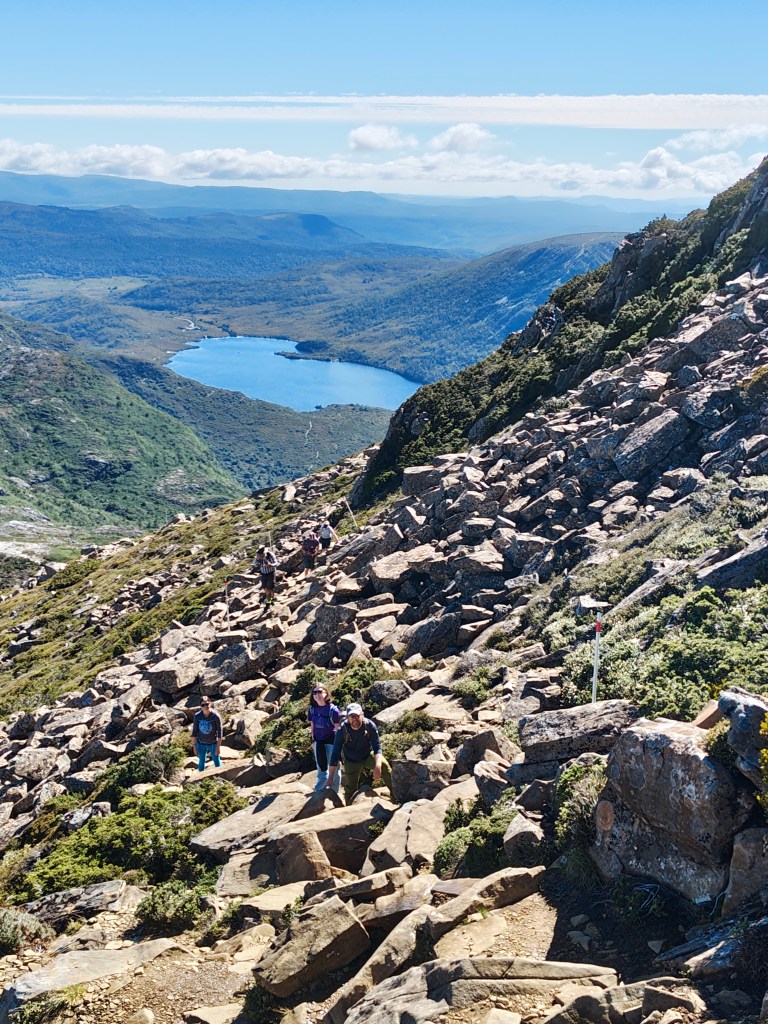
Up and up we went in a true boulder scramble, hauling our bodies up and over mammoth boulders, tuck and shimmy up areas, and even get an occasional boost from a friend if our short legs couldn’t quite make it!
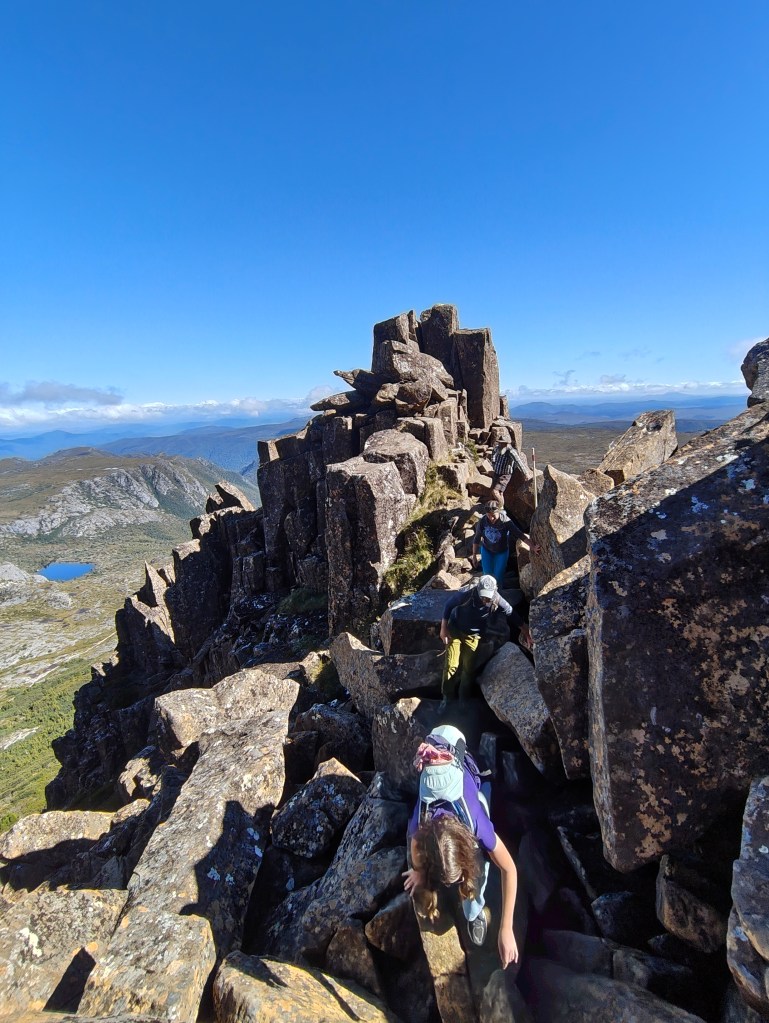
It only got more challenging after the false summit, but we pushed on and were rewarded with the most amazing views, standing amongst large vertical columns of dolerite.
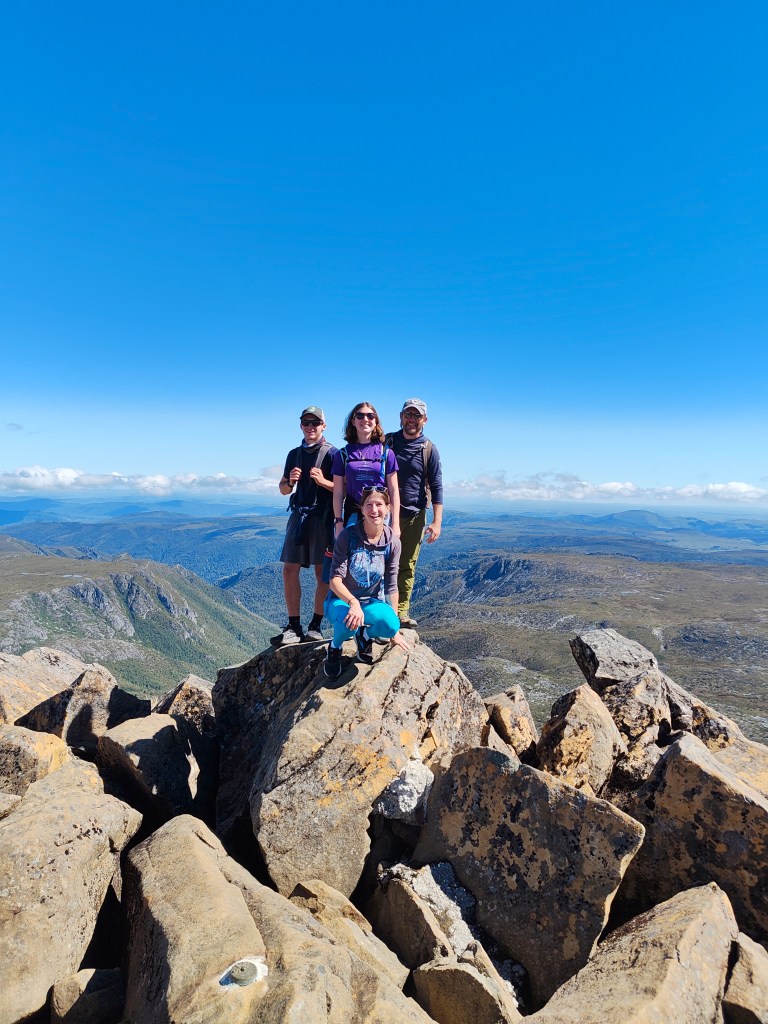
Our picnic lunch was made more delicious by our shared excitement at having made it to the top, thankful that the weather cooperated. Starting to feel the wind pick up, down we went. All in all, we climbed 1,106 m (3,628 ft) over 16.1 km (10 miles).
That evening, after a brief rest, we went to the evening feeding tour at Devils@Cradle. Devils@Cradle is a conservation sanctuary dedicated to breeding and protecting endangered Tasmanian devils and other native species, helping rebuild wild populations and educate the public about their survival.
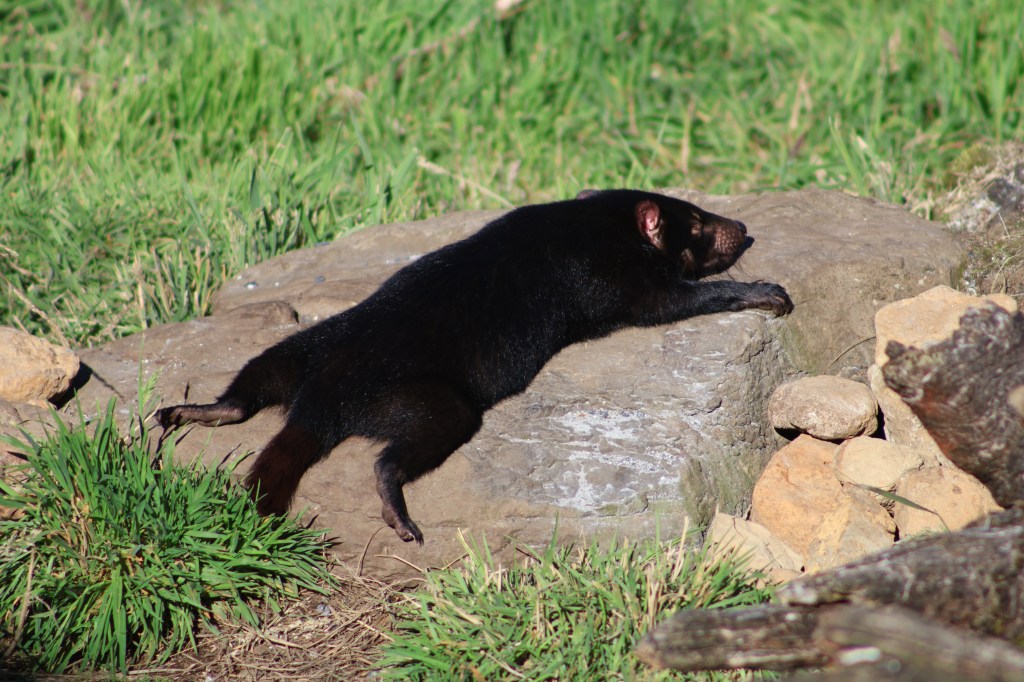
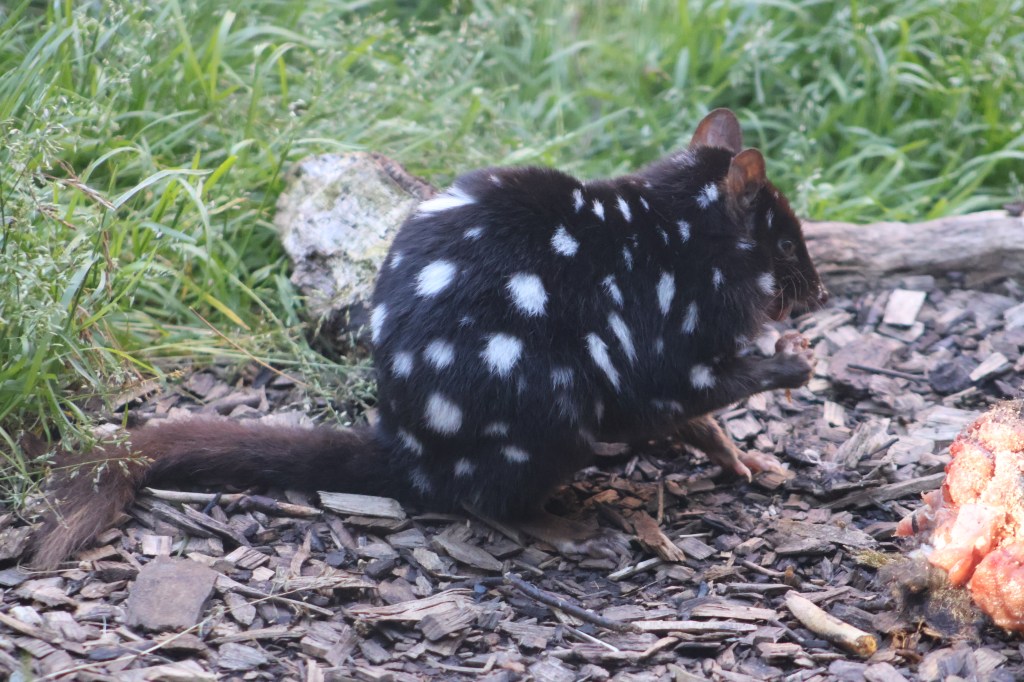
We were amused at the lounging Devil joeys in the sun and delighted to meet a few more Australian animals – the quoll! Quoll are carnivorous, spotted marsupials native to Australia, now endangered due to habitat loss and introduced predators.
The kids enjoyed their private cabin at our next AirBnB in Port Sorell, but most of the time there was spent in the hospital. Our time in Tasmania was also spent with 2 ambulance rides and 4 hospital visits, as Gma was diagnosed with COVID and developed various complications.
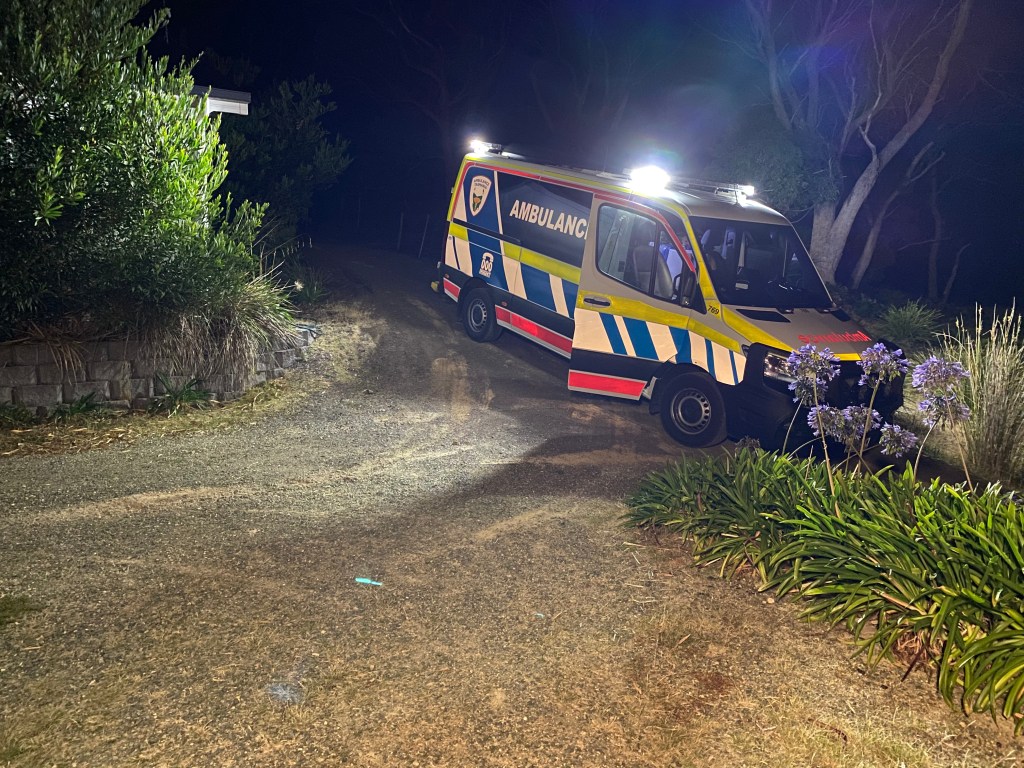
After her initial diagnosis with COVID in Hobart, we moved along together, practicing precautions along the way. But in a remote setting, she developed atrial fibrillation (a heart arrythmia) in the night, triggered by COVID and had a long ambulance ride back to Hobart. Two days later, back in a normal heart rhythm, we again carried on together, until another episode of atrial fibrillation with low oxygen occurred. One more ambulance ride to a different hospital. We met some amazing nurses along the way, but I was overall disappointed in the public health care system of Tasmania, an opinion that I found reiterated in newspaper reports and by both a nurse and EMS worker in the system themselves. One nurse said that if anyone in her family got sick, she would get them to the main island of Australia. Tasmania’s healthcare system is widely perceived as struggling due to a complex combination of high demand from an older sicker population (the oldest population in Australia), physician shortage, as well as significant funding and older infrastructure challenges. After an episode where I had to initiate the medical team to take action and her doctor who refused to talk with me (he had to catch his tee time on the golf course), we made sure she was stable and I had the medications needed; then we walked her out of the hospital AMA (Against Medical Advice) and got her on the ferry for an overnight cruise to Melbourne on the main island.
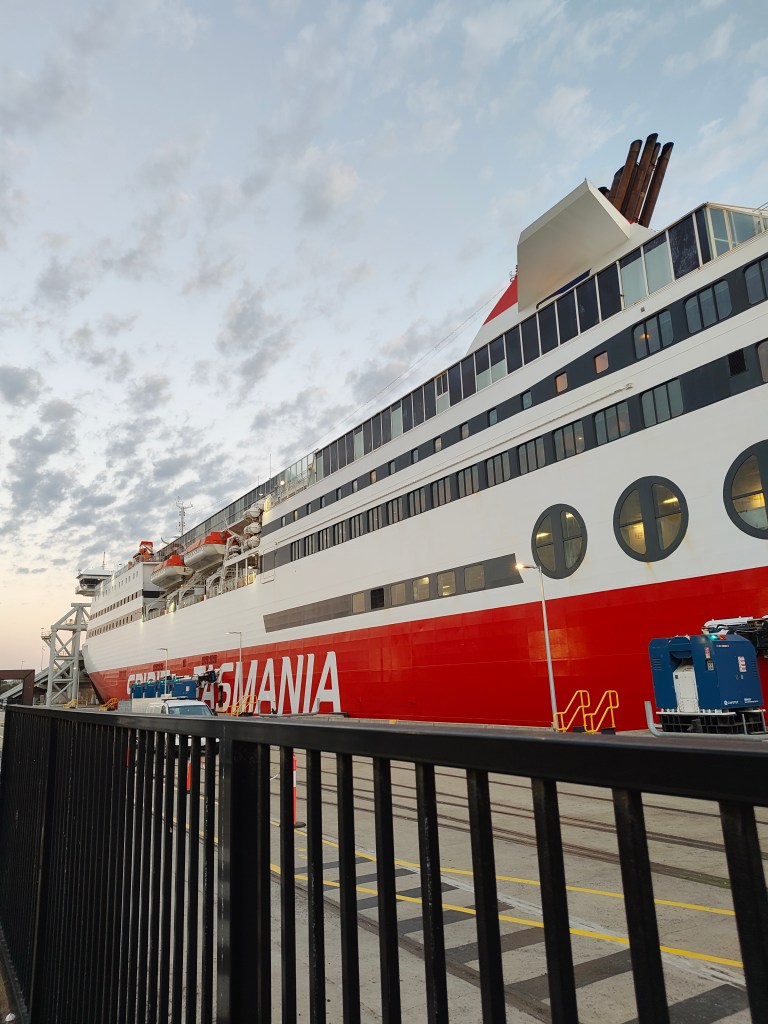
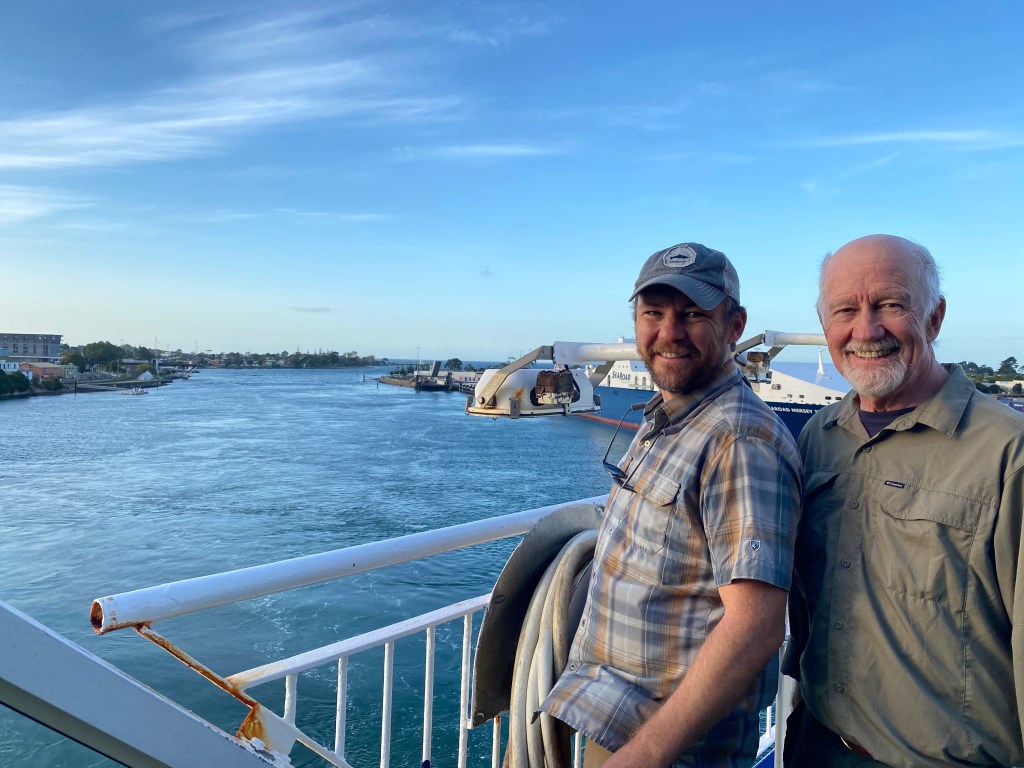
Relieved to be out of the Tasmanian public health system, we all joked about Gma being such a rebel.
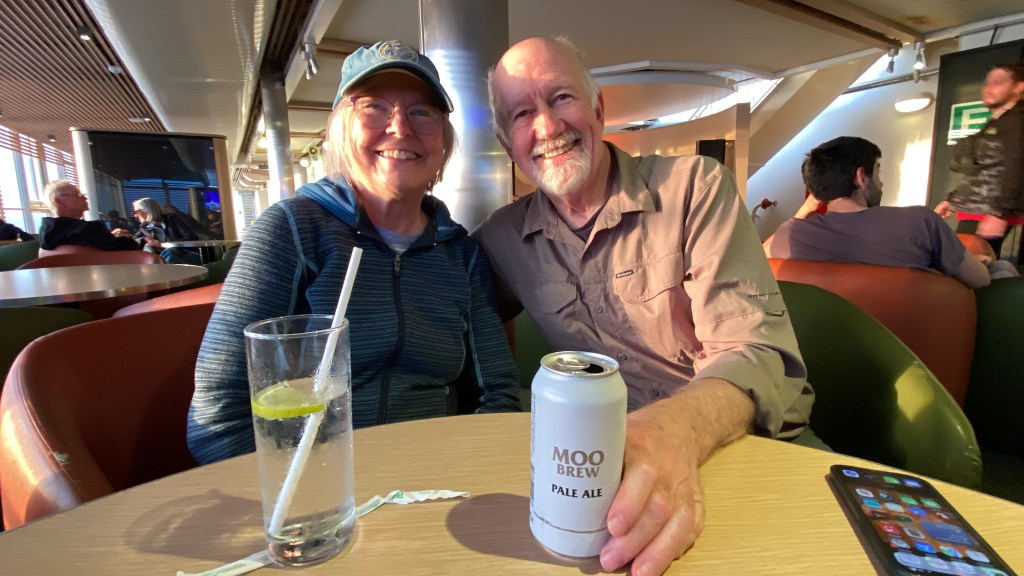
All went well on the ferry and a check-up in Melbourne on arrival confirmed she was healing well. We stayed in a high-rise apartment in downtown Melbourne together, enthralled by the forest of lit-up skyscrapers, so foreign to us. Gma and Gpa received the “all good” for flying and got back to Alaska within the week, where Gma has continued to heal from one heck of a go with COVID.
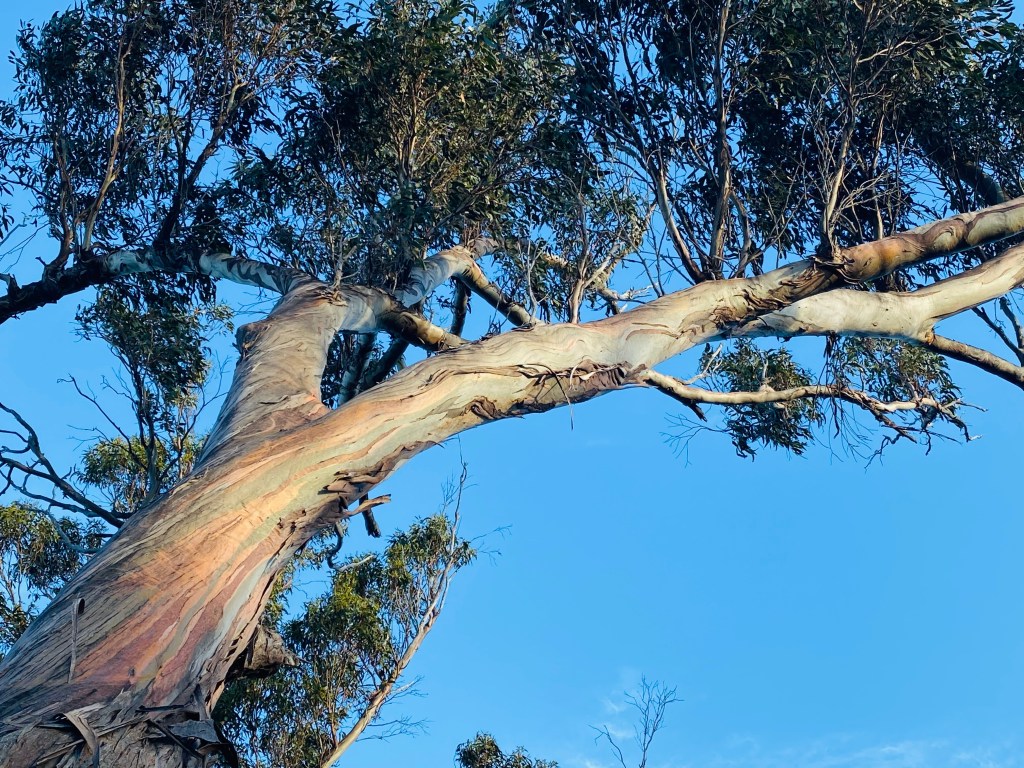
So in summary – Tasmania is absolutely fabulous – the wildlife, the scenery, the people. But just don’t get sick there and, if you do, seek out private health care facilities.
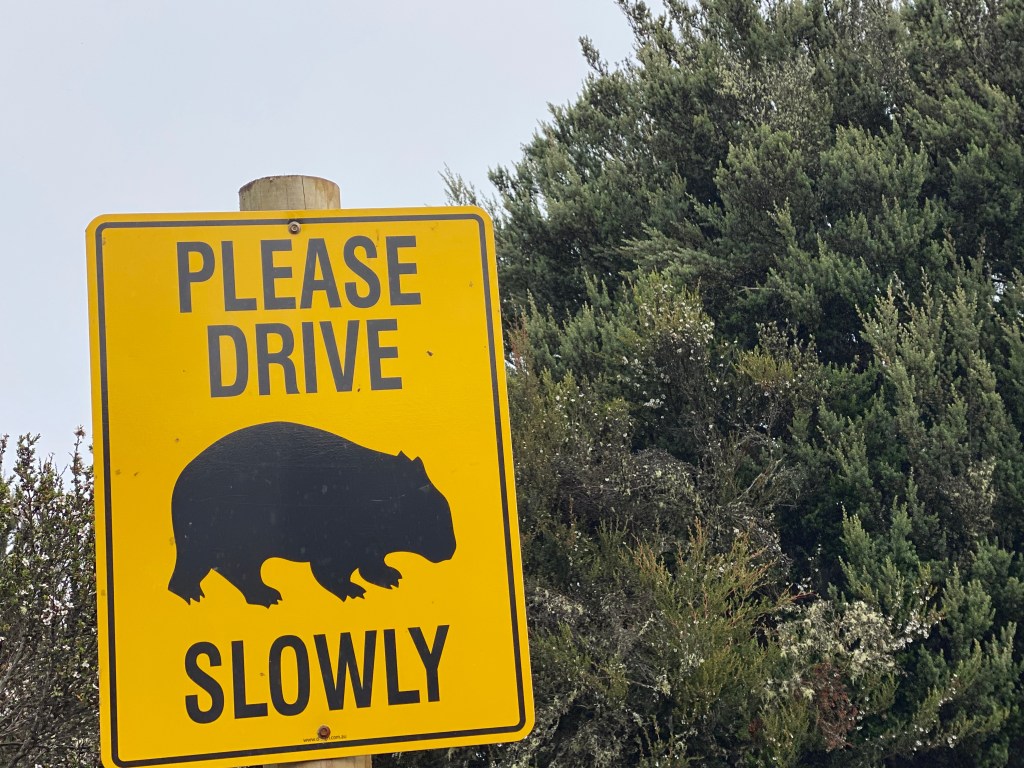
Now, onto a Jucy Roadtrip with Alaskan friends!


2 responses to “Australia Part 2: Tasmania”
I love this post and it made me homesick. No need to reply. Enjoy your continued Aussie adventures
LikeLike
Wow…what a trip.
LikeLike