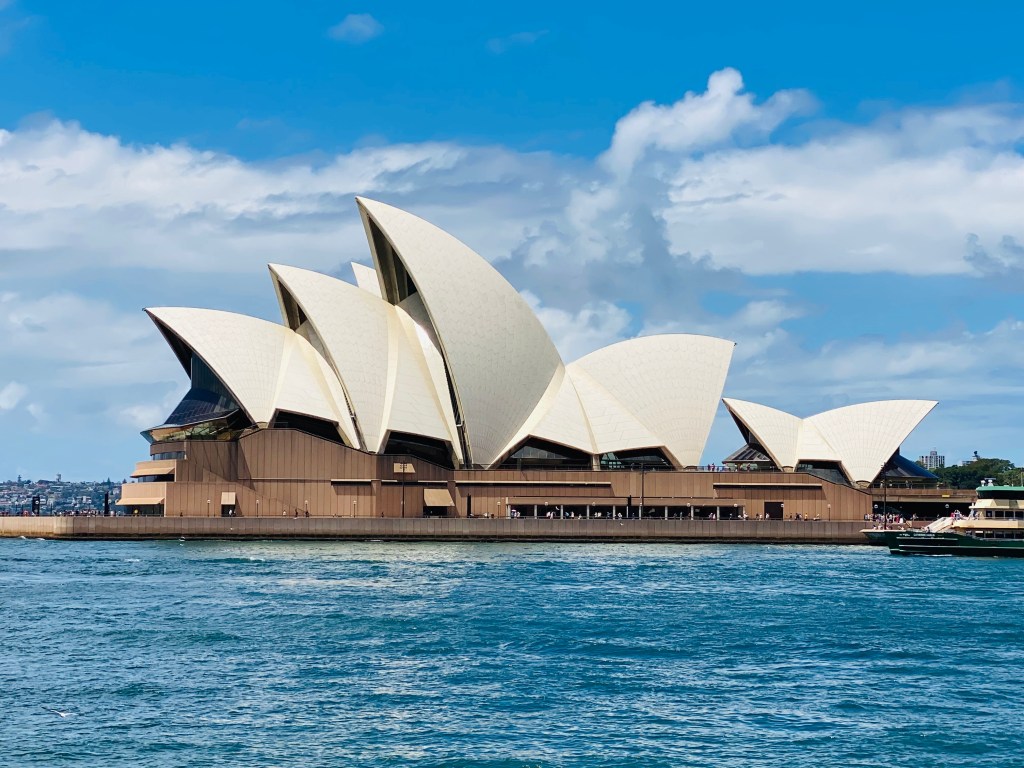
SYDNEY, AUSTRALIA: February 14-22, 2026
Terikah on the hard in the Marsden Cove boatyard, we wished her well and drove to Auckland where we caught the 3-hour flight to Australia. We are lucky to have 2 months to explore Australia and this time is being divided into five regions: Sydney, Tasmania, the Great Ocean Road, the Outback, and tropical Queensland. I’ll be posting a blog entry for each regional experience.
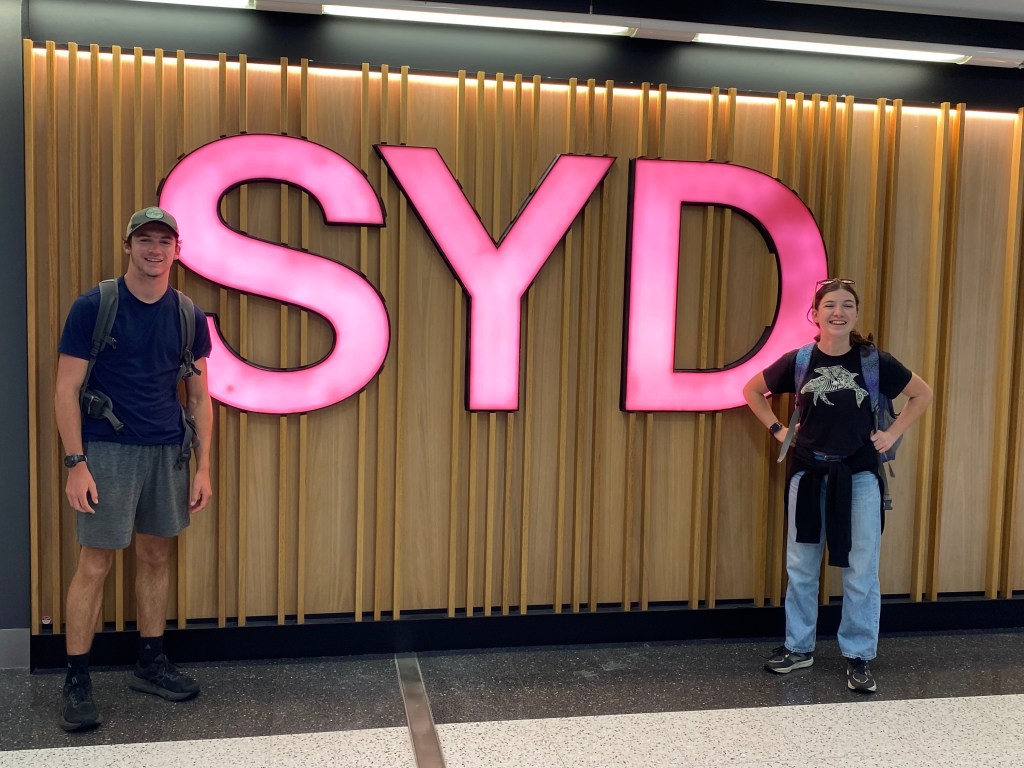
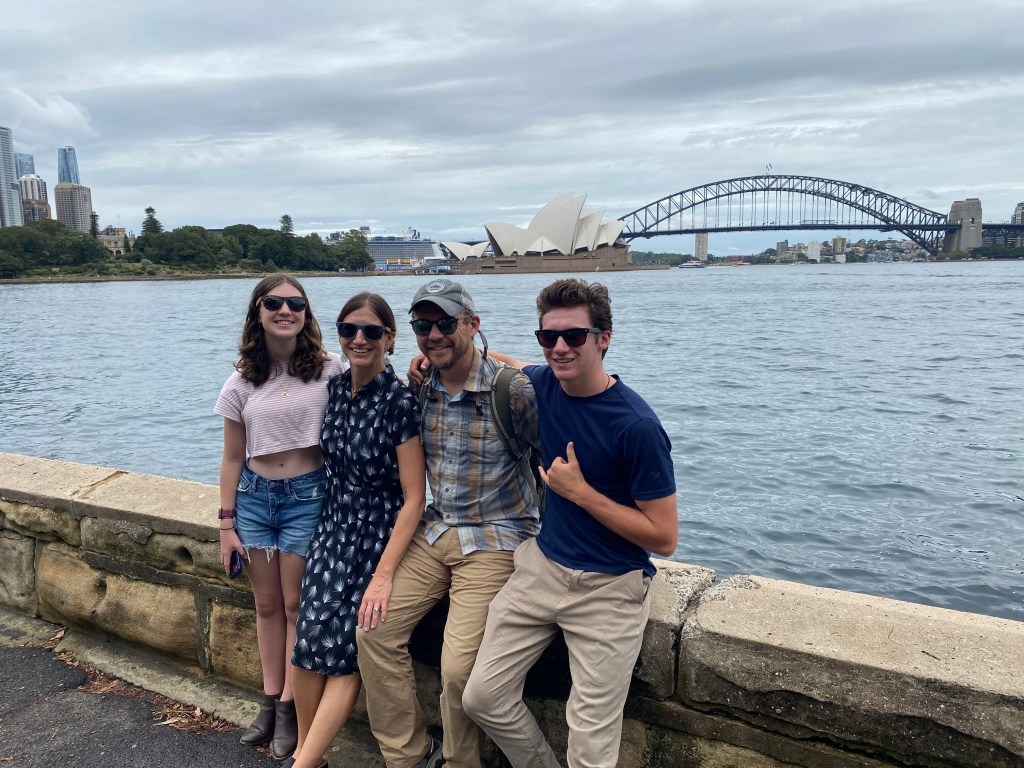
Everything was splendidly uncomplicated and efficient as we were welcomed to Sydney where we will be at a Townhouse in the Rocks District with Gpa Terry and Gma Erin Hyer, who joined us from Alaska for a few weeks of exploring. Our first day was a celebration of Gma’s birthday, where we started at Mrs. Macauarie’s Chair for iconic views of the Sydney Opera House and Bridge, then meandered through the Royal Botanic Gardens, eating lunch at the Leaf Dept Café near The Calyx.
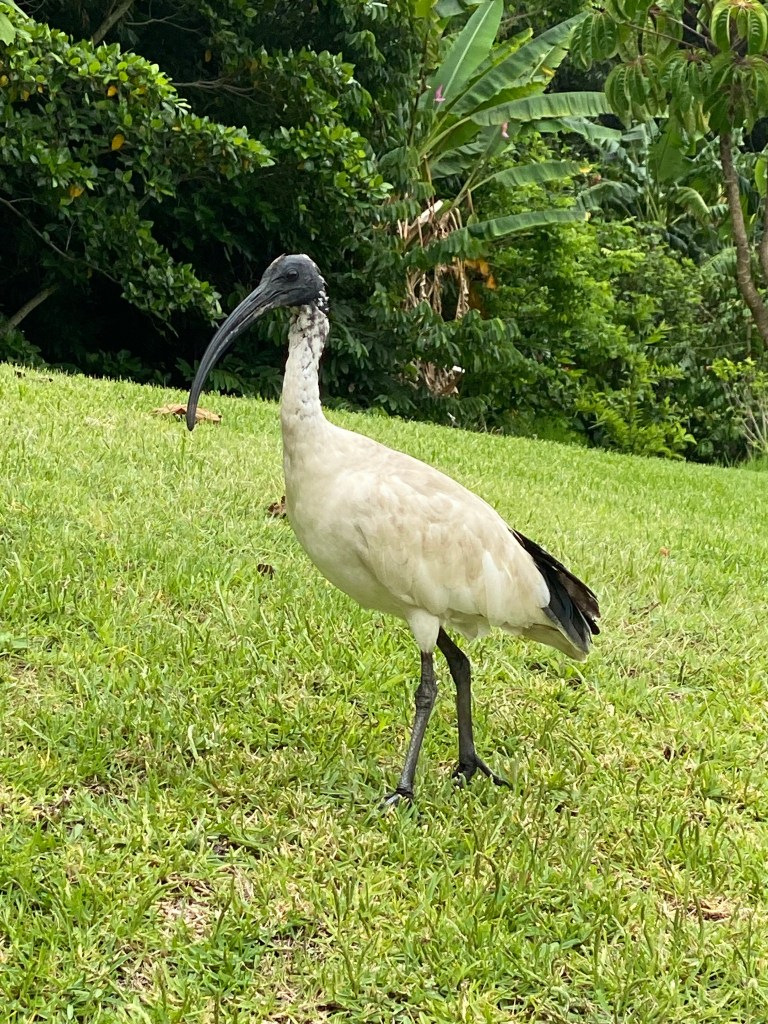
New bird species abound, from the Australian White Ibis (locals call them “bin chickens” as they get into their garbage) to the Laughing Kookaburra and loud Sulphur-crested cockatoos.
Then on to the grand finale of Gma’s birthday celebration… the Sydney Opera House!
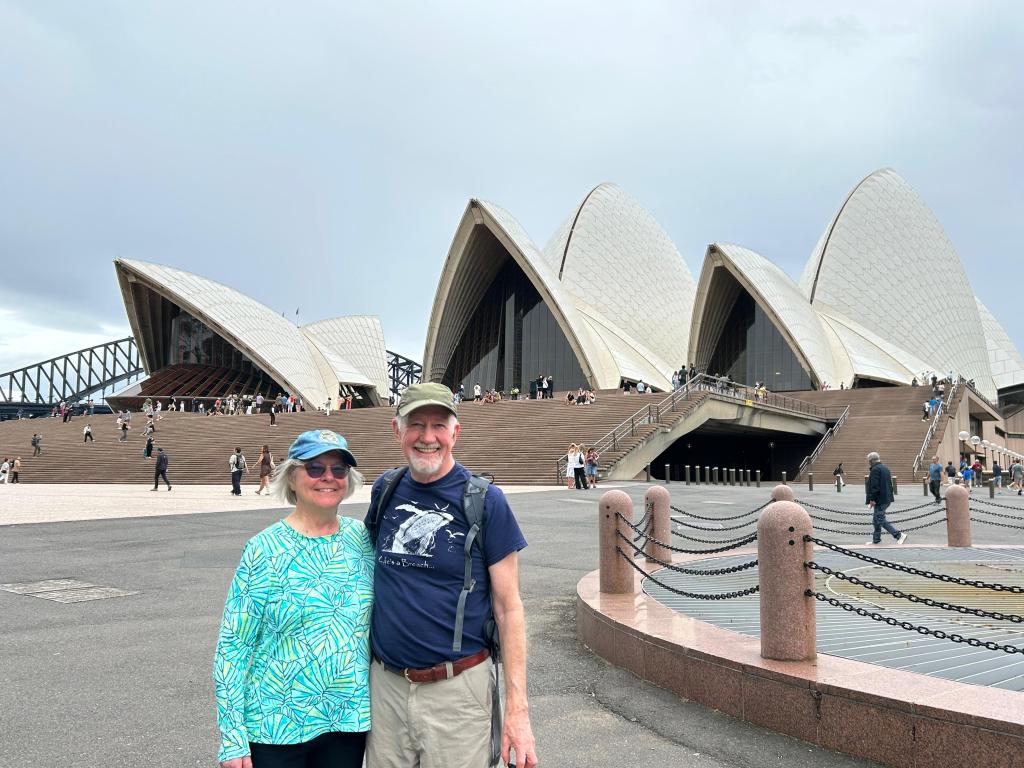
The Sydney Opera House, designed by Danish architect Jorn Utzon, opened in 1973, is a UNESCO World Heritage Site famed for its soaring shell-like roofs formed from sections of a single sphere and clad in over one million gleaming ceramic tiles.
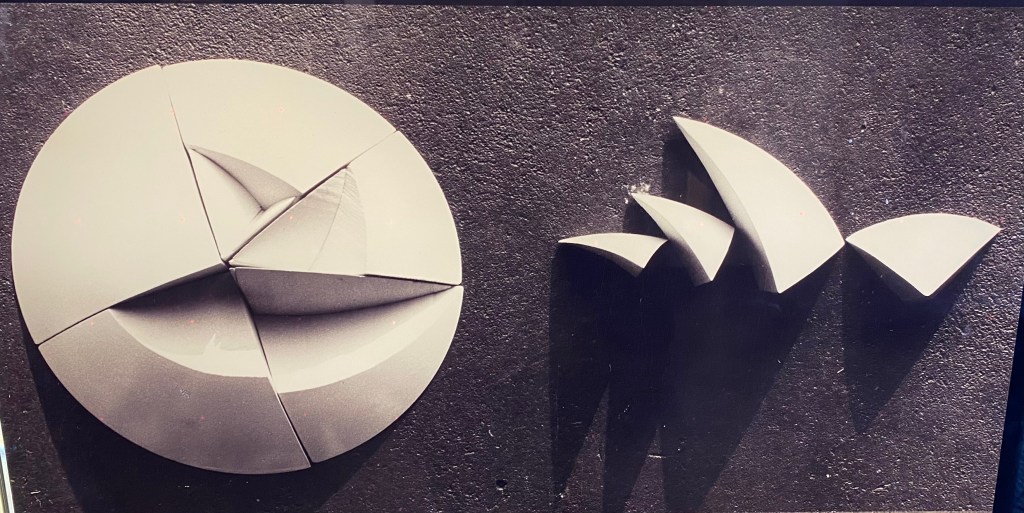
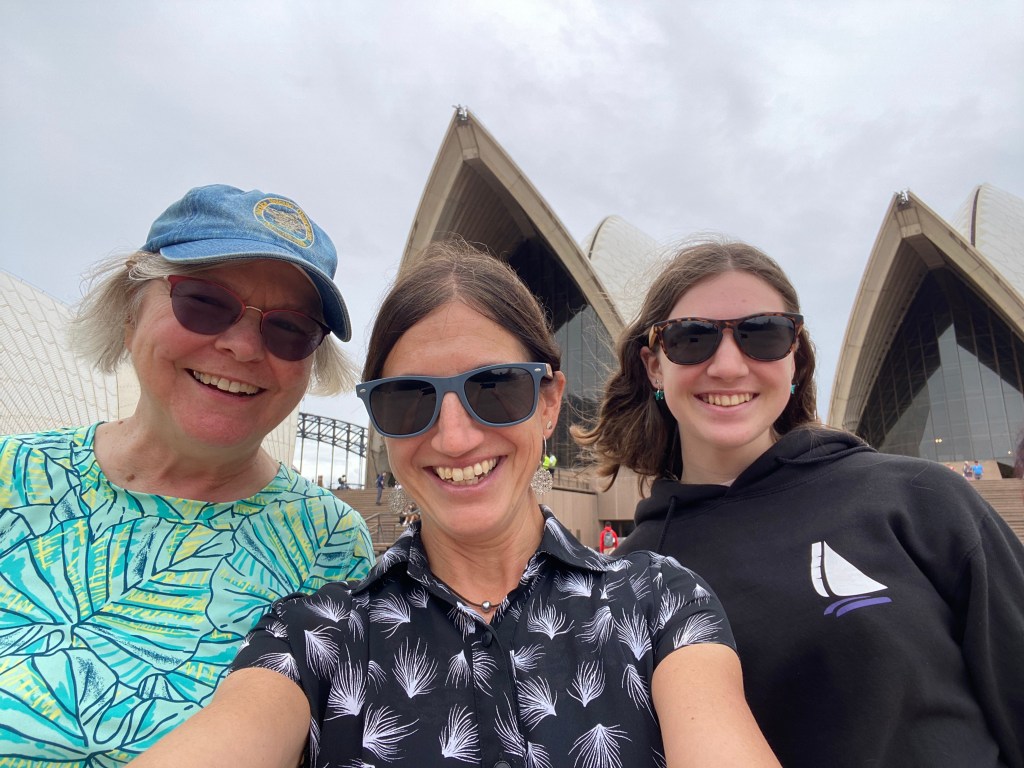
“As the light moves across it during the day, it changes its form and shape…It’s full of moods (Max Dupain).”
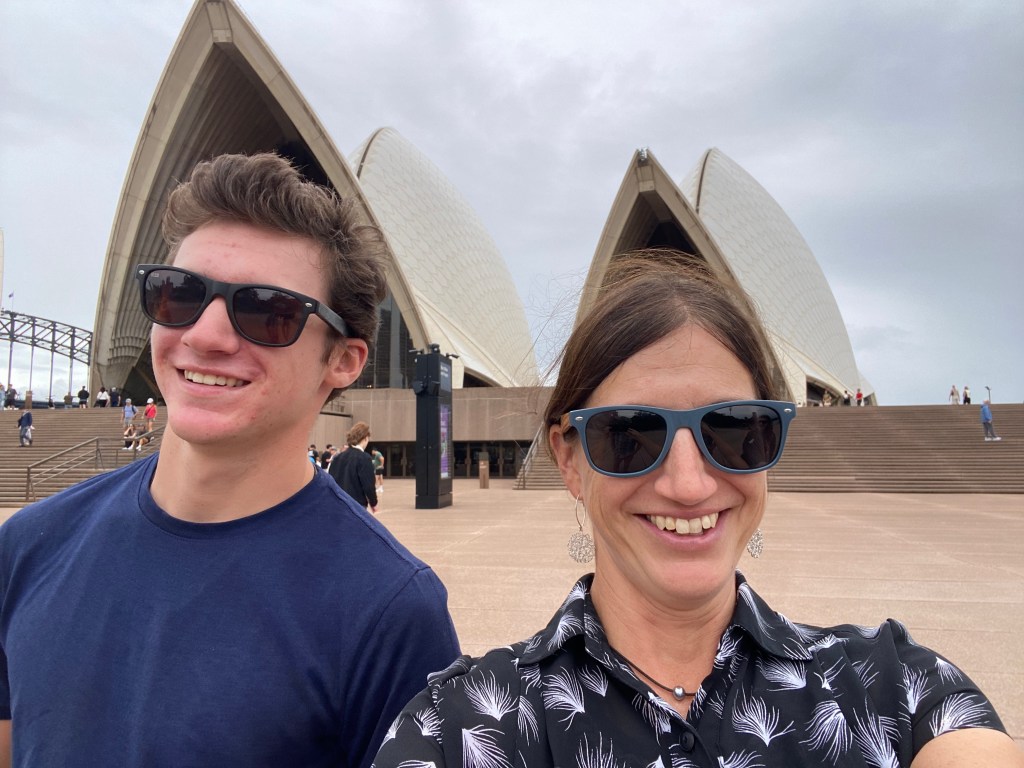
So surreal to be there at this work of human creative genius, the architect Gpa reveling in the experience, which then turned even more WOW as we had booked a performance in The Concert Hall. The show was the Australian Chamber Orchestra, culminating in Rachmaninoff’s Rhapsody with a world-famous pianist center stage. Inside the Concert Hall, layered timber panels, acoustic reflectors suspended above the stage, and carefully contoured walls are engineered to project sound evenly throughout the 2,500-seat space.
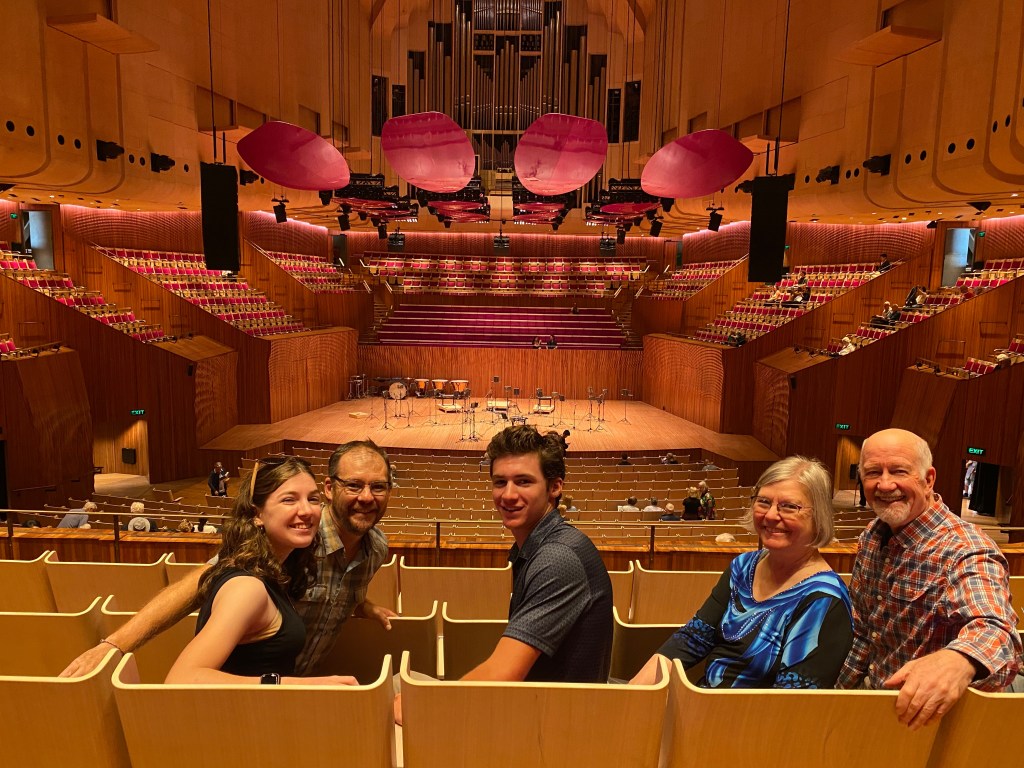
After celebratory drinks and dinner at the Opera Bar, we meandered back to our Townhouse before a nighttime stroll through Barangaroo Reserve on the Wulugul Walk and the many wharves of Wash Bay. Later in the week, we returned for another tour through the Opera House, exploring the other theaters located in this structure.
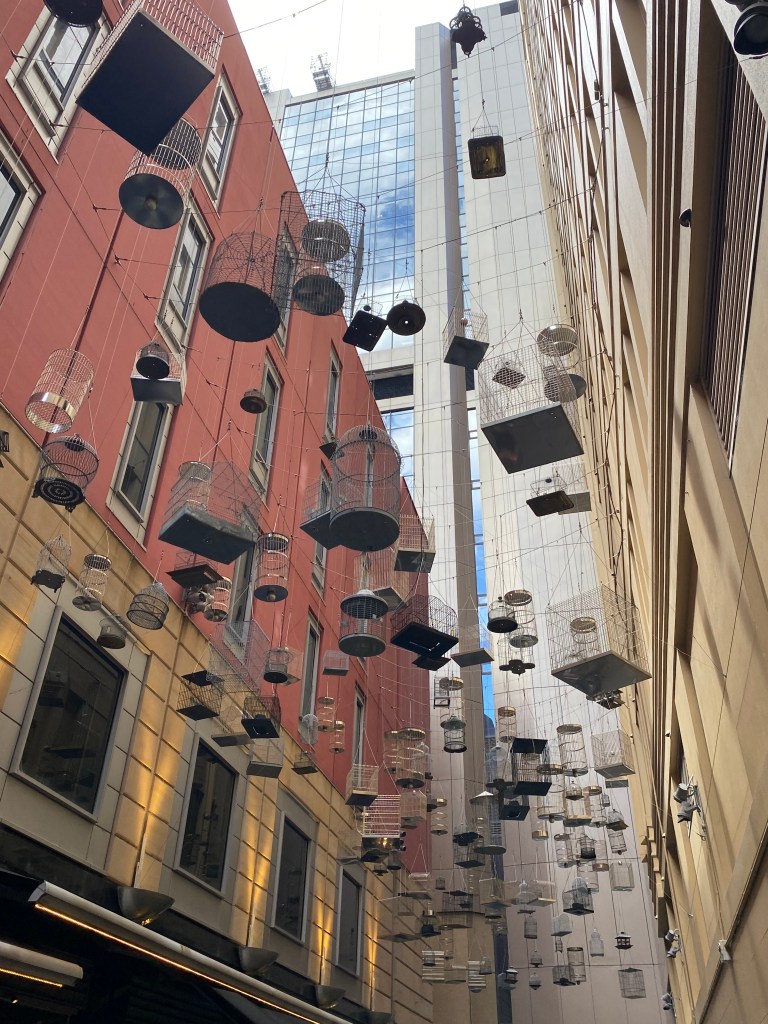
Sydney is Australia’s largest city, with a metropolitan population of over 5 million people, making it the economic and cultural hub of New South Wales, built around one of the world’s largest natural harbours. We set off to understand it a bit better with an “I’m Free” walking tour, where locals take you on a 3 hour walk through downtown Sydney, a blend of beautifully preserved Victorian sandstone buildings dating back to the colony’s beginnings in 1788 with sleek glass-and-steel skyscrapers, creating a striking juxtaposition of Australia’s colonial past and its modern global-city skyline. In Sydney, this intentional old-meets-new contrast is legally protected under the Heritage Act 1977, which is why downtown features preserved 19th-century sandstone façades, modern towers rising behind retained heritage fronts, and strict height and sightline protections near the harbour. We tucked into a side alley, where we saw “The Forgotten Songs,” an evocative 2009 installation of one hundred suspended birdcages that play recordings of native bird calls, commemorating the species once common in central Sydney before urbanization.
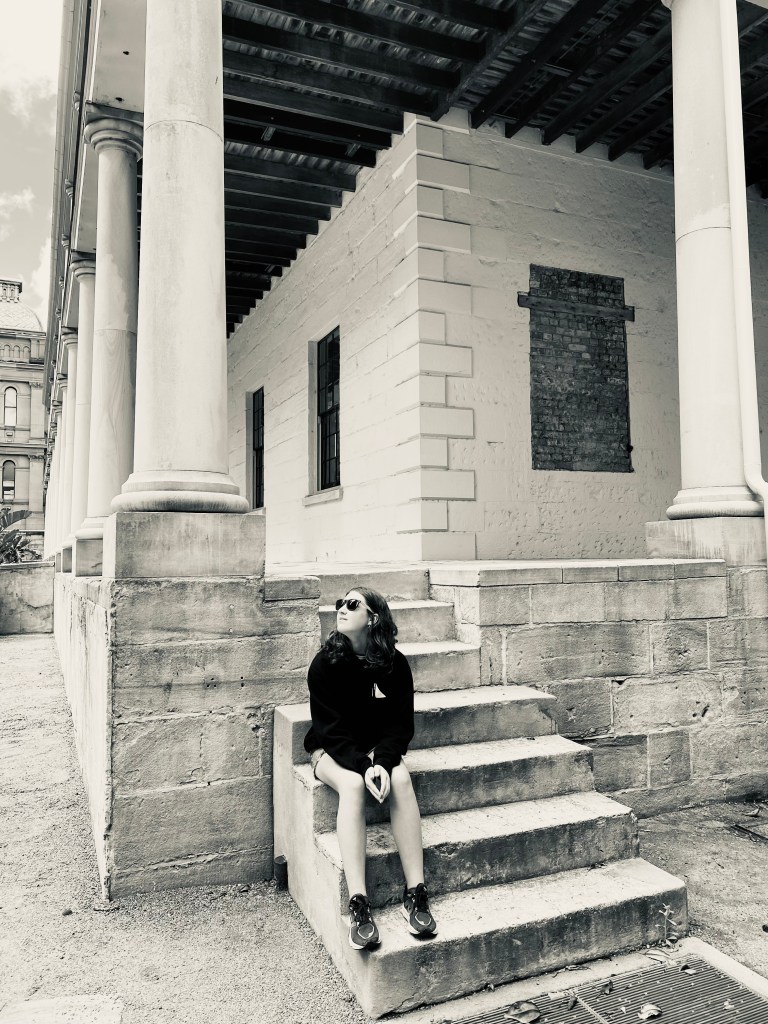
There are multitudes of museums and historical buildings, so we toured a few. We made a quick stop at The Mint (1816), originally part of the “Rum Hospital,” which was funded in a rather unusual way — contractors were granted a monopoly on importing rum (hence the name). It was then converted in 1855 into a branch of Britain’s Royal Mint where gold from the Australian gold rush was refined and formed into coins. It is Sydney’s oldest surviving public building. More recently, it was used as part of the set of our new favorite series Artful Dodger.
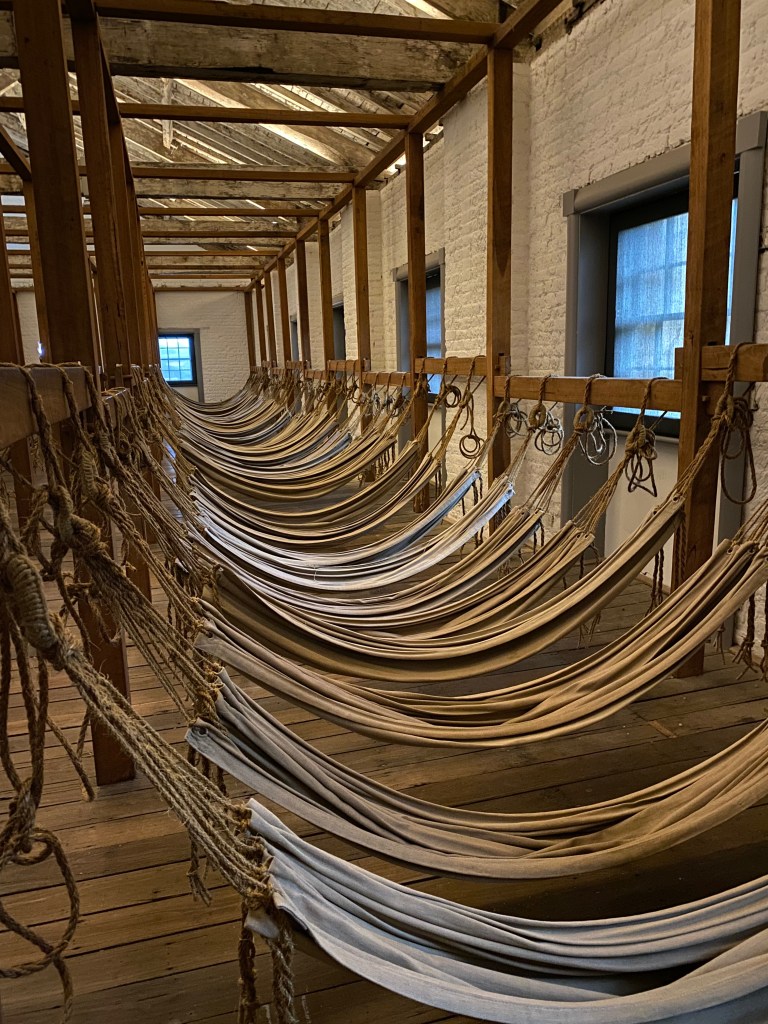
I found Hyde Park Barracks (1819) to be a powerful window into Australia’s convict past, where male convicts were housed as they built the colony. Between 1788 and 1868, about 162,000 convicts were transported from Britain and Ireland to Australia, establishing it as a penal colony for 80 years. The Barracks later became an immigration depot for women (many orphaned from the Irish potato famine), with thousands of artifacts—shoes, clothing, and personal items—discovered beneath the floorboards of this now UNESCO World Heritage site.
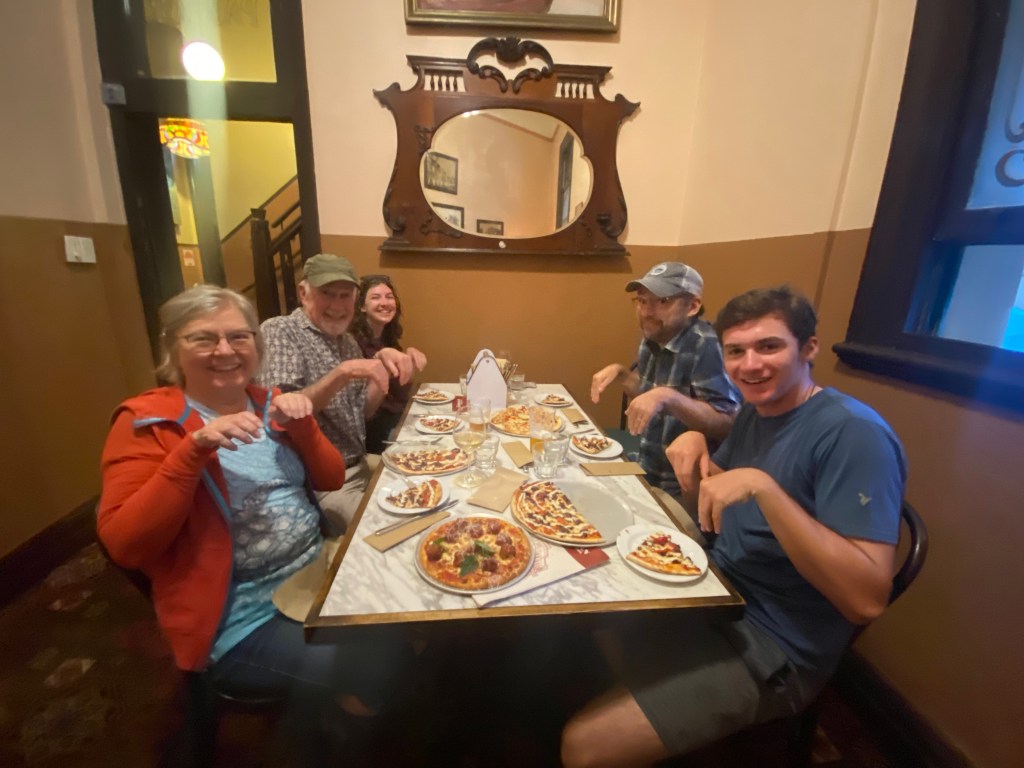
We had our lunch at Fortune of War Pub (had to try the schnitzel which has become traditional Aussie pub cuisine) and dinner at Lord Nelsons. Sydney’s “oldest pub” debate hinges on whether you count Fortune of War (1828), which occupies the earliest pub site but has been extensively rebuilt, or the Lord Nelson Brewery Hotel (1841), which, though slightly younger, retains much of its original structure and has operated continuously. Apparently, there is a 3rd contender, the Waterloo, that we may have to seek out, as part of the “research” of pub debate as well. (Update: Chris and Terry did some “research” here one afternoon). We also enjoyed dinner at The Australian Heritage Hotel with its Coat of Arms pizza, half emu and half peppered kangaroo, in a playful nod to the country’s symbol. The crocodile pizza was pretty tasty too; love trying the local flavors!
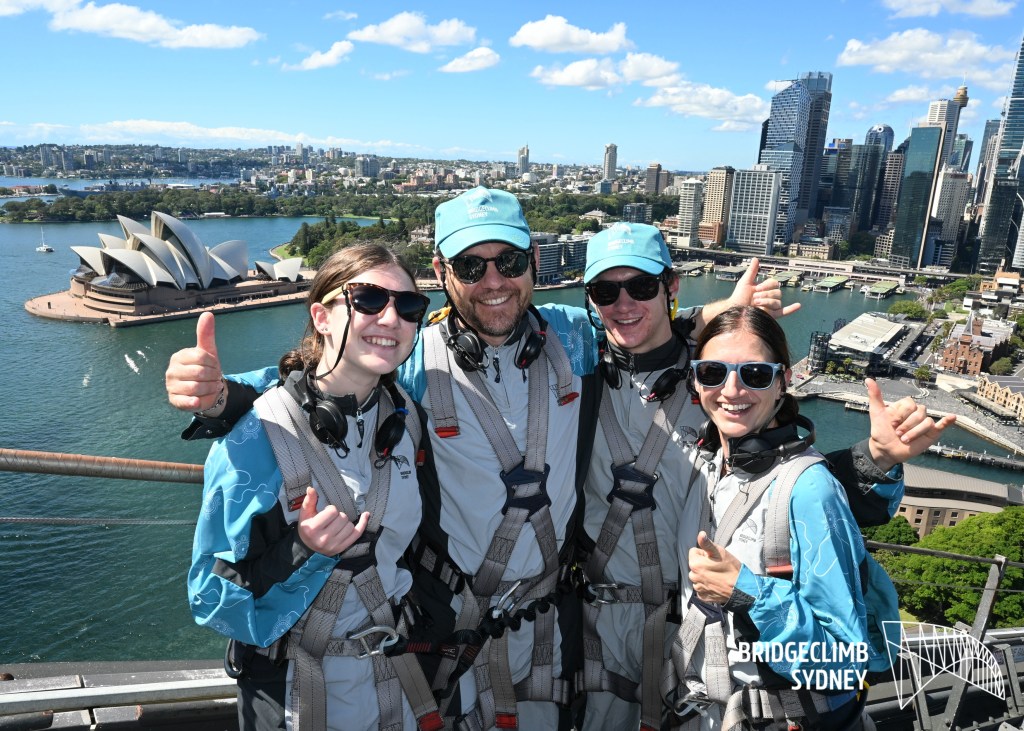
One of our highlights was to get up and personal, literally to stand at the summit, of the Sydney Harbour Bridge on the Summit Climb. We went in for our safety briefing, mandatory breathalyzer test, and got kitted out in our awesome jumpsuits and harnesses. Clipped into the bridge with our guide ahead of us, we worked our way up steps, ladders, and walkways to the top, as he told us all about the bridge’s history, construction, as well as surrounding sites. Built over nine years from 1923 to 1932 during the Great Depression, providing thousands of jobs, the Sydney Harbour Bridge was constructed using 52,800 tonnes of steel and about 6 million hand-driven rivets, rising 134 metres high as the world’s tallest steel arch bridge. Our first step outside the bridge structure to the more open walkway was stunning and the views only got better and better, as we walked along the outside of the bridge to the very summit with a 360-degree view. We couldn’t have asked for better weather – clear skies and slight breeze.
On a tour of The Rocks, our guide led us through one of Sydney’s oldest neighborhoods, first settled by Europeans in 1788 as part of Sydney Cove. The first Europeans arrived from Great Britain on board a fleet of 11 ships, 736 in total, mostly convicts and marked the beginning of Australia’s colonization, where quarrying and terracing of the rocks soon began to change the landscape. Originally home to convicts, sailors, and working-class settlers, our guide wove stories of colorful convicts and other local characters as we wound our way through cobblestone streets, sandstone buildings, and hidden laneways dating back to the 19th century. We dove into this history further with a tour of Susannah’s Place (1844) and a walk through The Big Dig Archaeology site, together revealing layers of early colonial life, from preserved 19th-century terrace homes to excavated remains of some of Sydney’s first European dwellings. It helped to give us a glimpse into what life would have been like in these early colonial days.
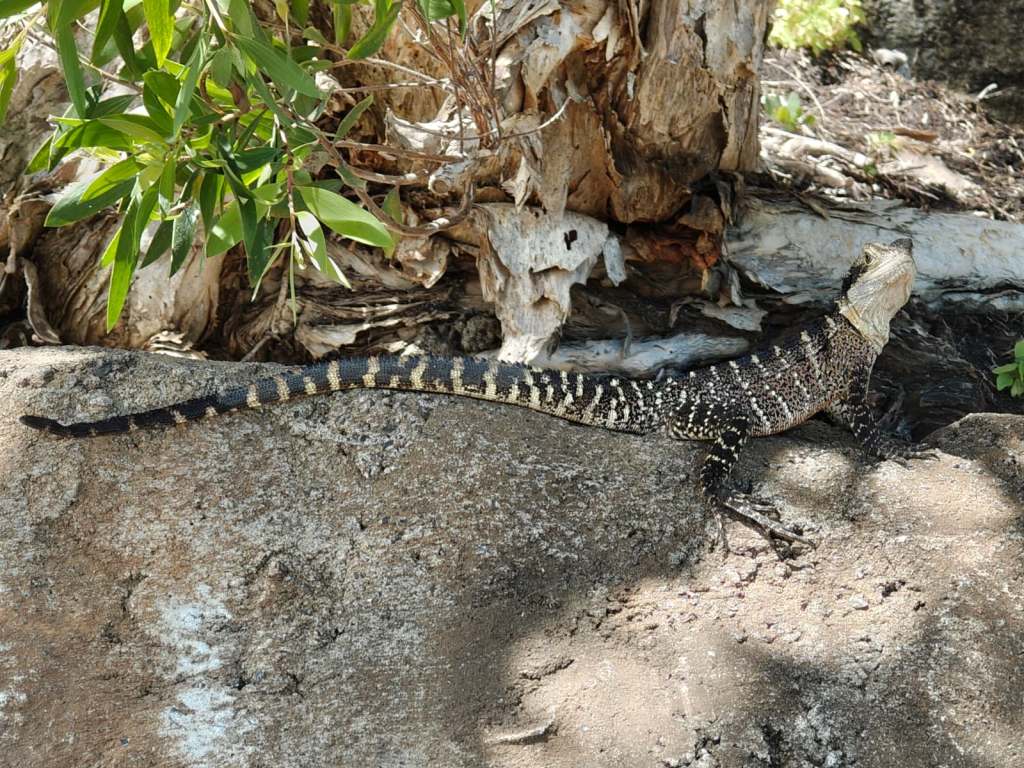
There are a dizzying array of ferries moving in and out of Circular Quay and we decided to hop on one to Manly Bay; it felt great to be back out on the water! Walking along the trail from Manly to Shelly Beach, there were numerous Australian Water Dragons along the way, a large, semi-aquatic lizard native to eastern Australia that can remain submerged for several minutes when threatened.
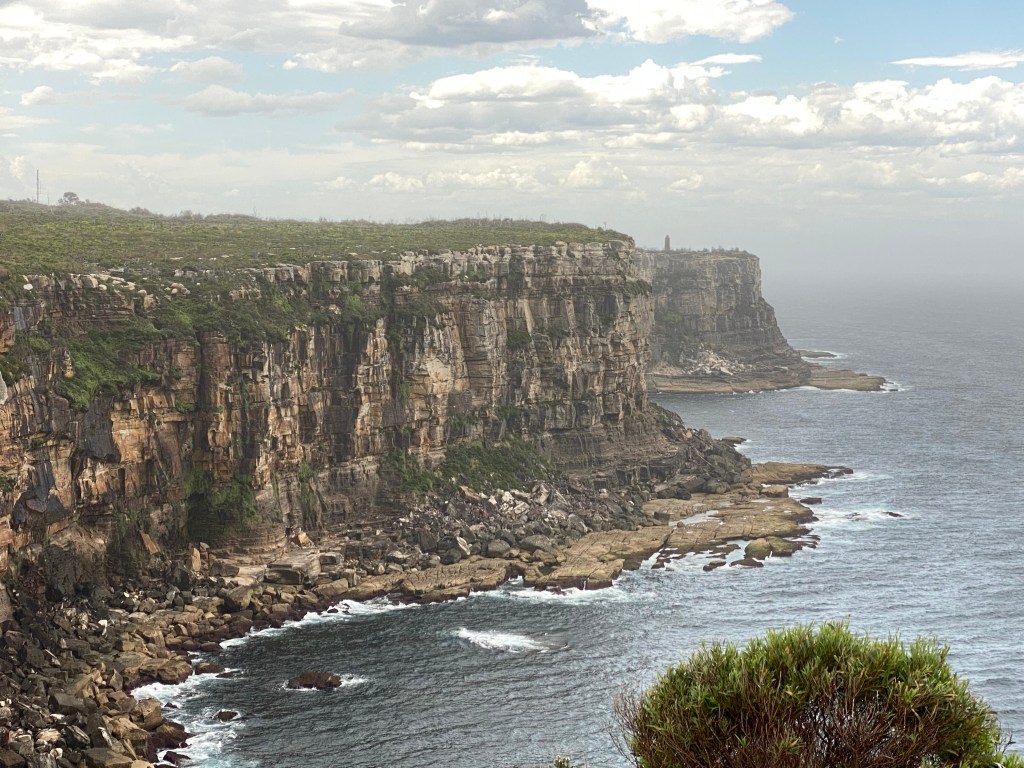
It was quite a hot trek up the North Head, where we walked a trail through the bush (under massive spiders!) past a quarantine cemetery, up to the Visitor Centre. The Quarantine Station was the first port of call for ships that sailed into Sydney Harbour, as they raised their yellow flag just like we do now when heading into new countries. Thankfully, we aren’t quarantined for a period of 40 days, with our luggage being fumigated or made to take carbolic acid showers, with our survival rate much higher than it was then. After learning about the WWII history of the place, as well as the quarantine history of those coming into the country, we ate PB&J’s on the patio of the Visitor Centre where the talkative ranger brought chairs out for all of us. The Tasman Sea was so unexpectedly placid earlier in the day; it seemed appropriate that when we got to North Head Scenic Lookouts, where the Tasman meets the entrance to Sydney Harbour, the winds howled and it started to pour, the Tasman frothing below. “I am the Tasman Sea!” the waters seemed to be shouting.
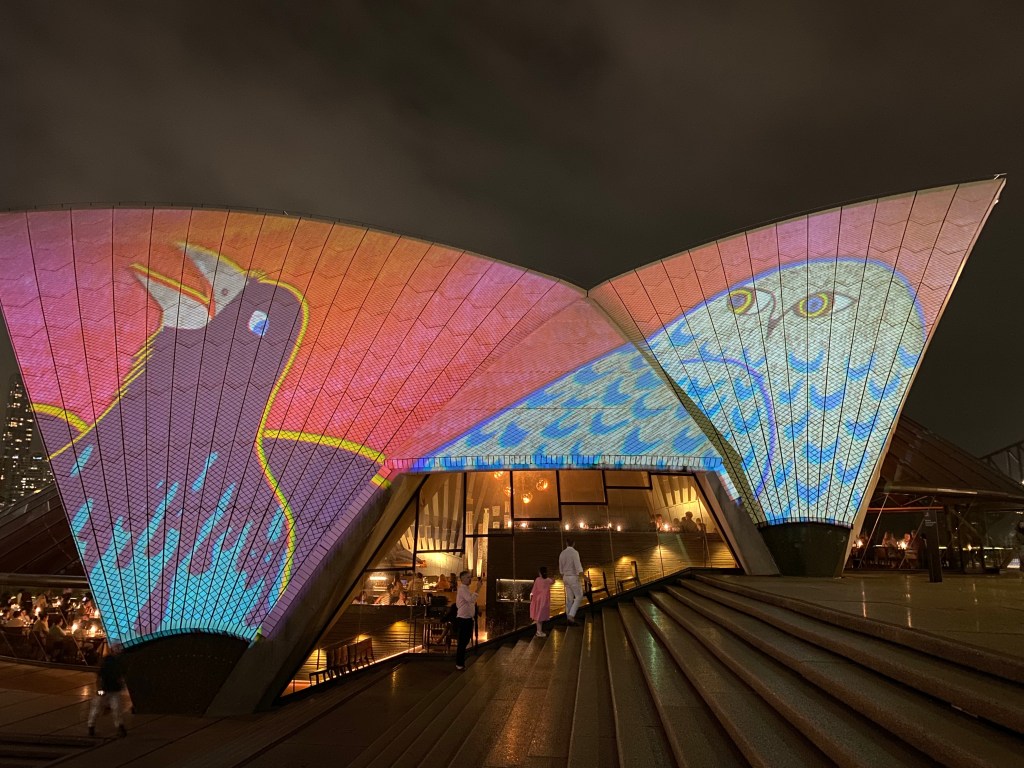
We jumped on a bus, only slightly saturated, to the Corso and enjoyed some gelato before the rain set in again. By the time we were back in Sydney, the rain had cleared. Tired, but unwilling to give it up yet; Chris, Cora, and I jogged to the Opera House for a First Nations storytelling display, Badu Gili Lighting of the Sails, lit up on the sides.
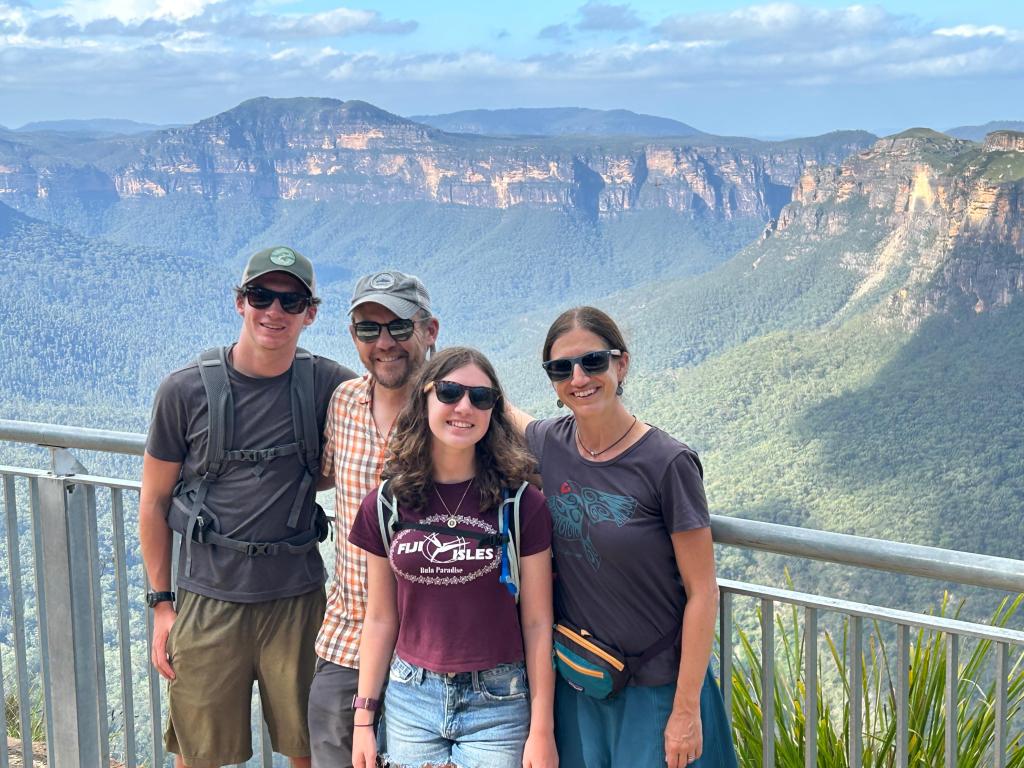
We climbed in our rental van and drove to the Blue Mountains for a full daytrip through this spectacular setting where the eucapytus oil in the air refracts light in such a way as to make the mountains appear a hazy blue.
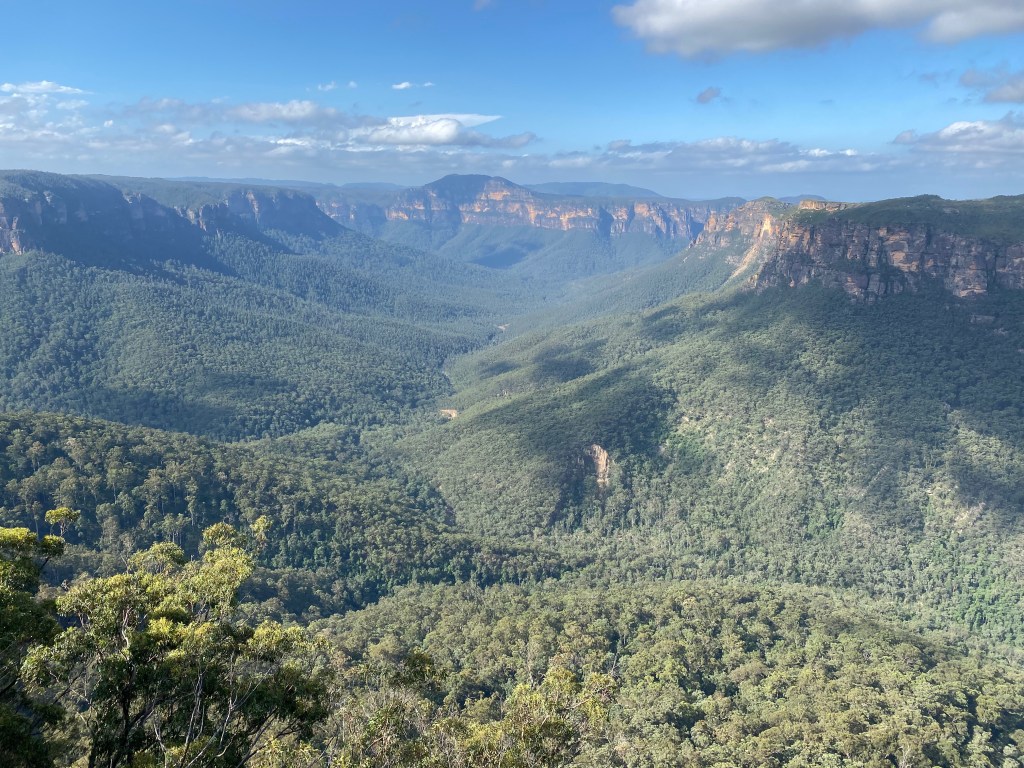
These mountains are the remnants of an enormous plateau that has been eroded by rivers and creeks.
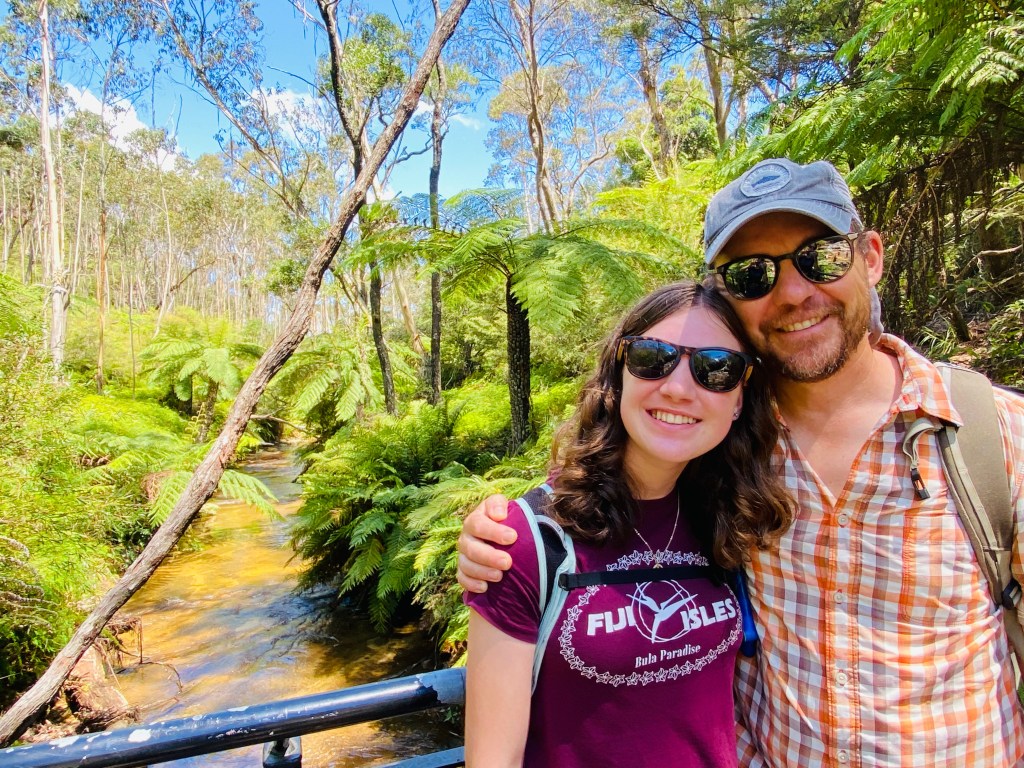
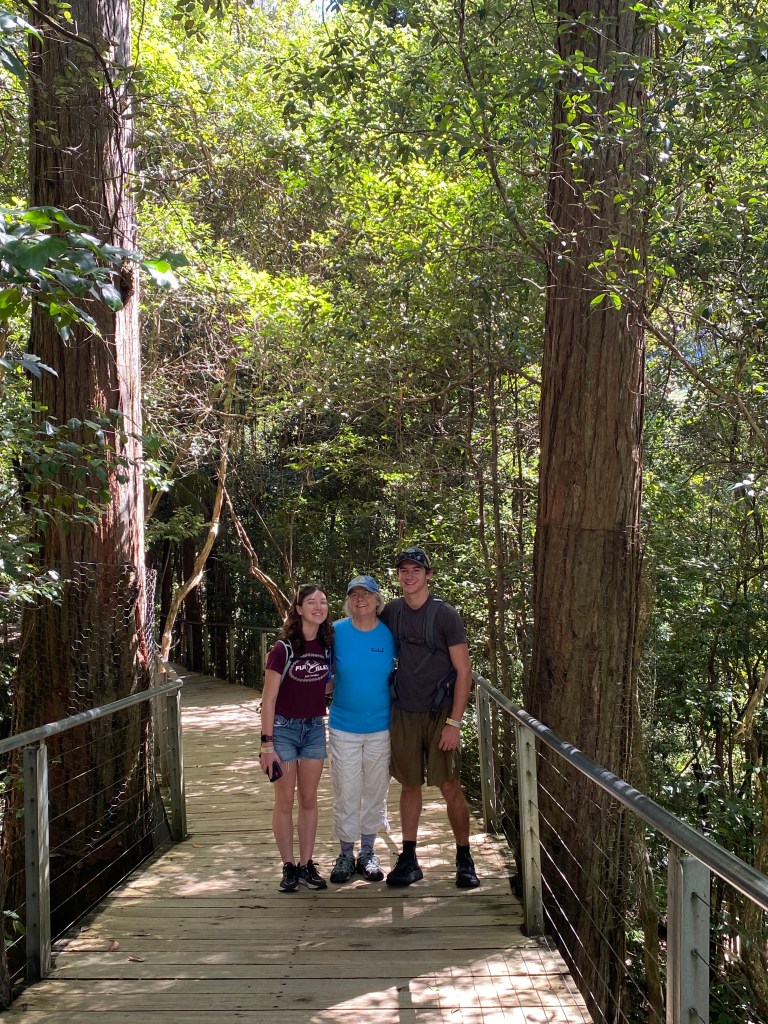
We started at Scenic World, where we rode the cableway on a gentle descent into the rainforest, then walking the boardwalk trail through the gum forest of peeling eucalyptus under a canopy of 5-leaf water vines. “Gum forests” refer to landscapes dominated by eucalyptus trees—nicknamed “gum trees” for the sticky sap they exude—forming vast, aromatic woodlands that define much of the country’s natural environment. These eucalyptus trees are in a constant state of renewal, their bark peeling away in long ribbons to reveal smooth, fresh trunks beneath, a natural process that helps shed pests and adapt to bushfires.
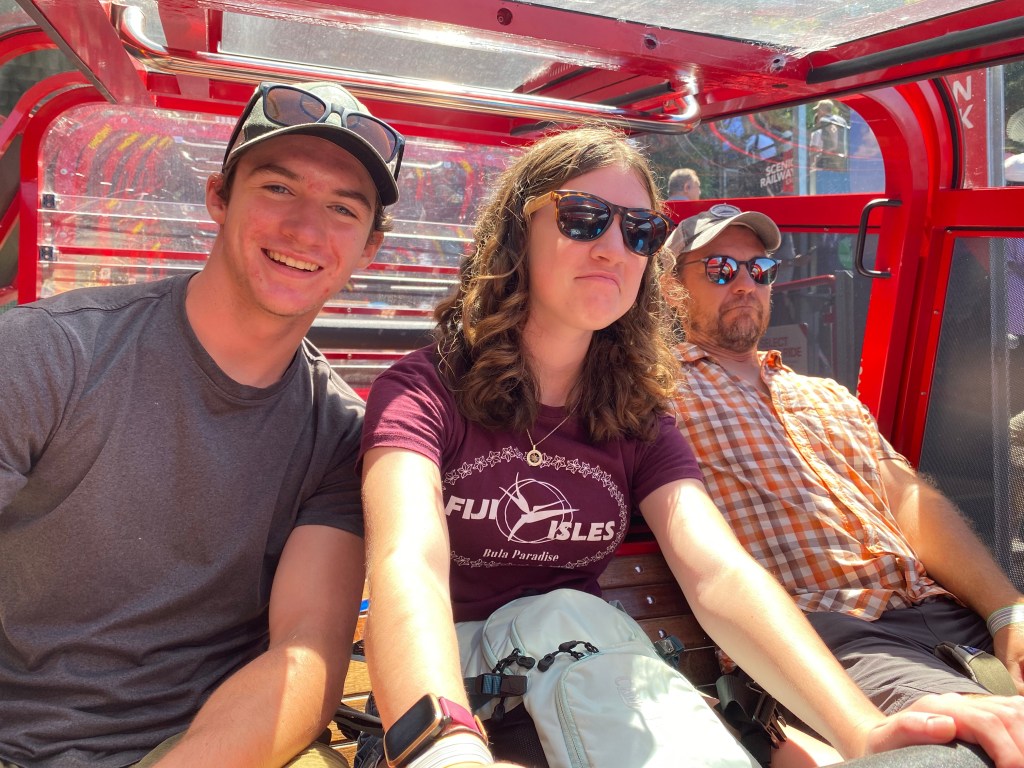
There used to be a mine here and we climbed on the steepest funicular railway in the world, originally built in 1882 to carry coal from the Katoomba Coal Mine to the cliff top, for a ride up to the top – quite a nauseating thrill that had Chris holding on tight. It holds the Guiness World Record with an incline of 52 degrees, 128% grade, with a vertical drop of 206 metres.
On the skyway, we crossed the valley with stunning views of the Three Sisters, Katoomba Falls, and Jamison Valley.
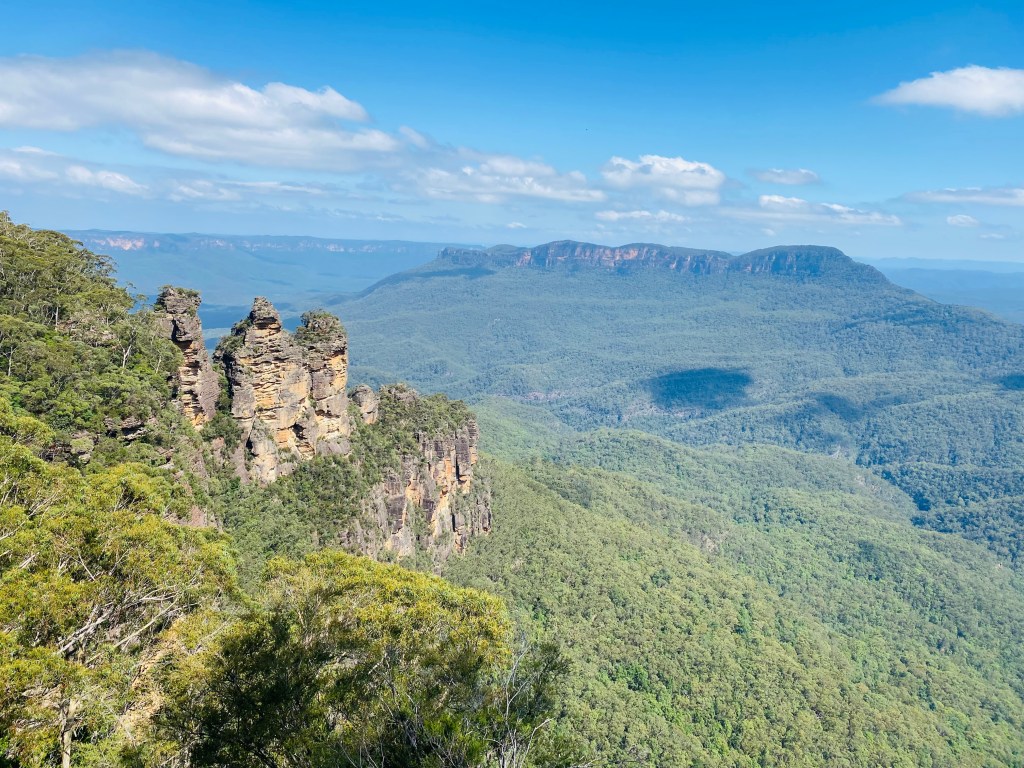
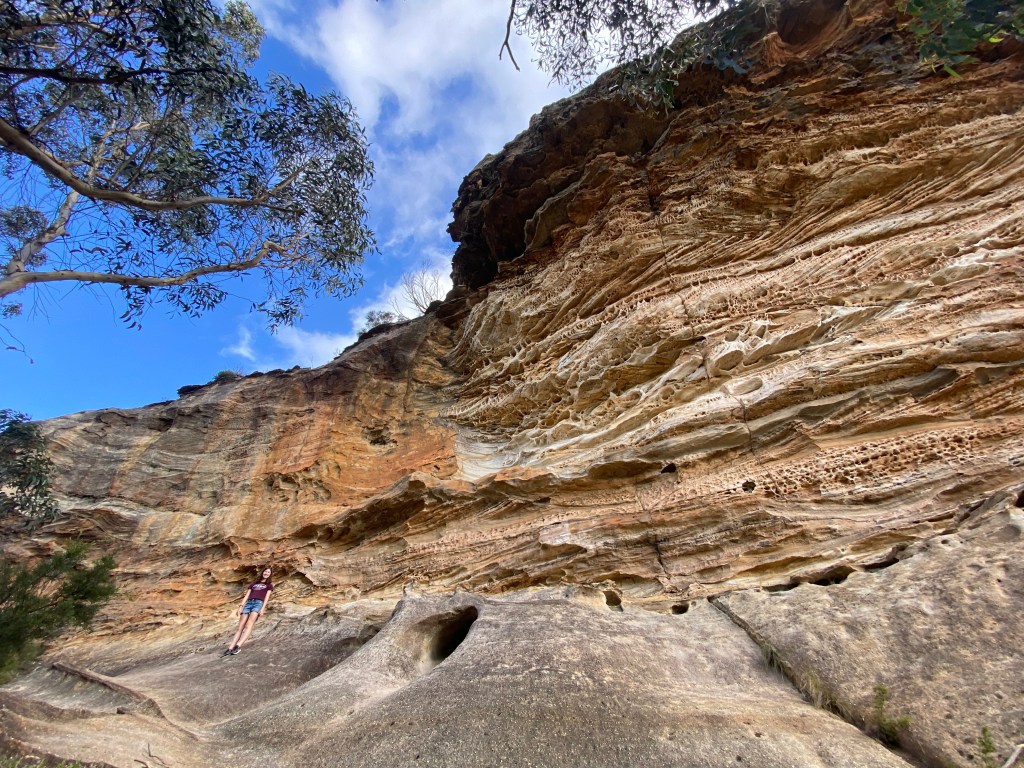
After a picnic lunch, we explored Echo Point and the Three Sisters, Leura Cascades, and Evans Lookout at the Grand Canyon Rim. Our final wow stop, after winding on a side road through eucalyptus trees, was Anvil Rock where we walked around a massive wind-sculpted rock and to the top of the lookout high above the canyon.
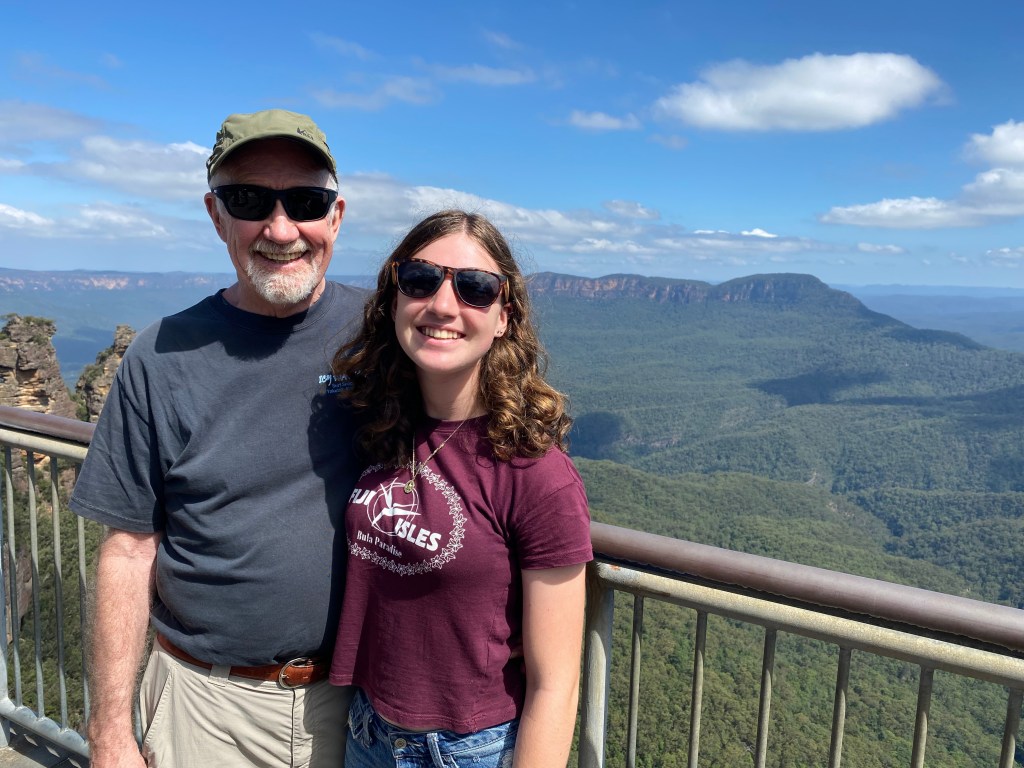
This was a very full day, but completely worth the drive – such a stunning place so close to Sydney!
Today, after braving underground (below sea level) parking garages (with eerie lighting), Sydney traffic downtown, and successfully returning the van via a labyrinth carpark; we set off on an Uber to the most famous beach of Australia – Bondi Beach on the Tasman Sea with surfing waves and the nearby Icebergs Ocean Pool. From there, we set out on the Bondi to Coogee Coastal Walk, a 6 km paved clifftop and beach trail along numerous bays, beaches, a massive cemetery, and weathered sandstone outcroppings.
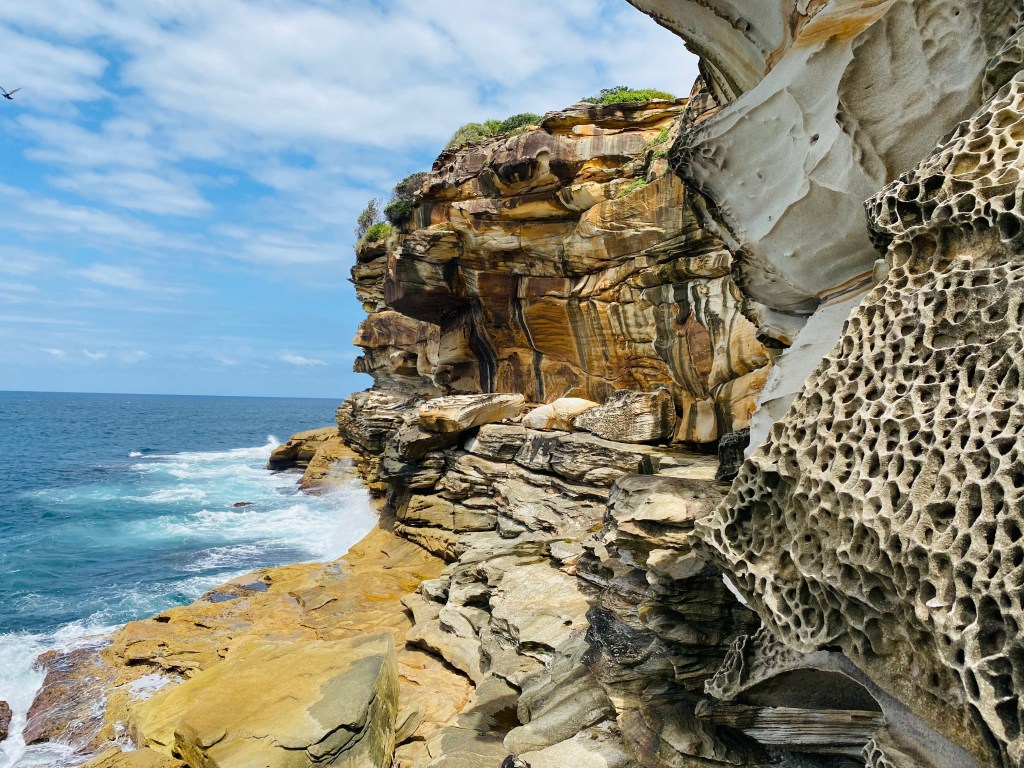
There was a funny moment at Clovelly Beach when a bird landed and re-launched itself off Calder’s hatted head; he could feel the little guy running on his head before taking off again! Had to grab a bit of gelato at the end before taking an Uber back. We enjoy talking to Uber drivers about life in Sydney. I commented on the lack of homelessness seen here in comparison to major cities in the USA. Sydney has fewer people sleeping rough because the government and NGOs provide public housing, emergency shelters, and welfare payments (funded in part by Australia’s progressive income tax system), helping most residents afford a safe place to live. A well-funded public healthcare system combined with cash support for living costs is particularly effective at preventing extreme poverty and homelessness. It’s a unique system and it shows as we walk around Sydney.
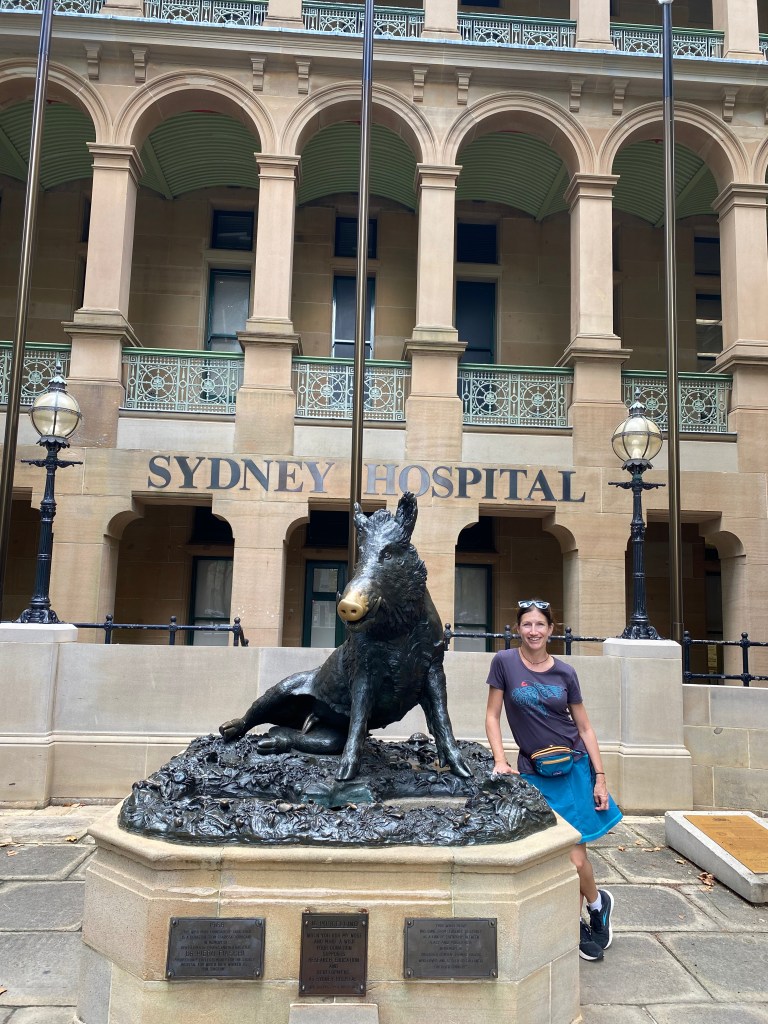
Our last day in Sydney was spent finding a corner barber for a haircut for Calder, doing a bit of shopping with Cora, and enjoying some amazing desserts at the pâtisserie. Next stop – the island of Tasmania!


2 responses to “Australia Part 1: Sydney”
Besides Oregon, Tassie is our second favorite place in the world. I was there in high school for a few months and we’ve been back several times to visit friends and adopted family. If you get to Strahan on the West Coast, don’t miss interactive play, The Ship That Never Was. Wishing we were there. Deb & Dan Kidney (friends of Bob & Christine)
LikeLike
Yes, Tassie was fantastic. I’m just about to post a blog on our time there. We didn’t make it to the West Coast…that will have to be our next trip to Oz. So much to see!
LikeLike