
Out of the capital city of Noumea, motored in zero wind to Ile Casy, an uninhabited nature reserve, immediately greeted by bird song and the visually stunning mix of palm and tall pine trees.

These endemic columnar pines stand like beacons, survivors of Triassic vegetation from some 230 million years ago, at the time when Gondwana formed only one continent. There are only 19 species left in the world, including 13 in New Caledonia. The largest can reach 60 meters in height.

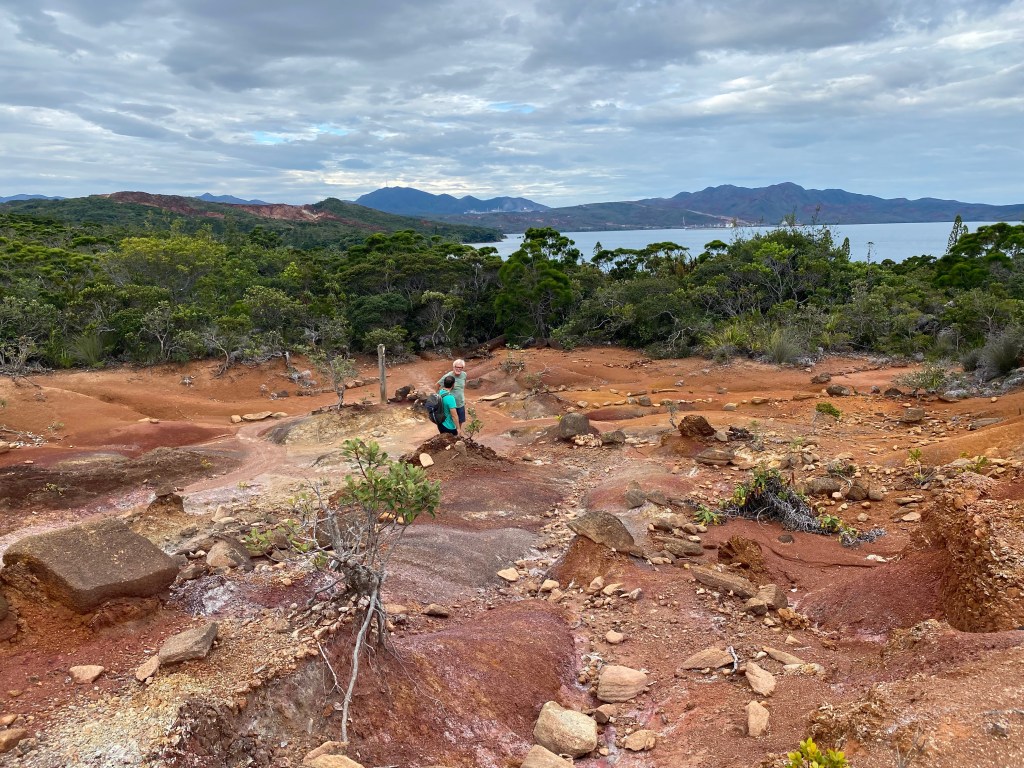
The island felt otherworldly, as we hiked the trails, dipping between pine and palm groves, up into the alien realm of a prior nickel mine, looking across at red hills and an active nickel mine (appropriately named Mordor).
Carnivorous tropical pitcher plants waited for their dinner.

Today, sadly 2/3 of New Caledonia’s wet forests have disappeared. As for dry forests, only a little more than 1% of their original surface remain. Fires (during the dry season) are most responsible for the annual loss of about 20,000 hectares. The exploitation of nickel also contributes to the alteration of the landscape. Finally, animal (the introduced Java deer) and biological plant invasions are a scourge for native species.

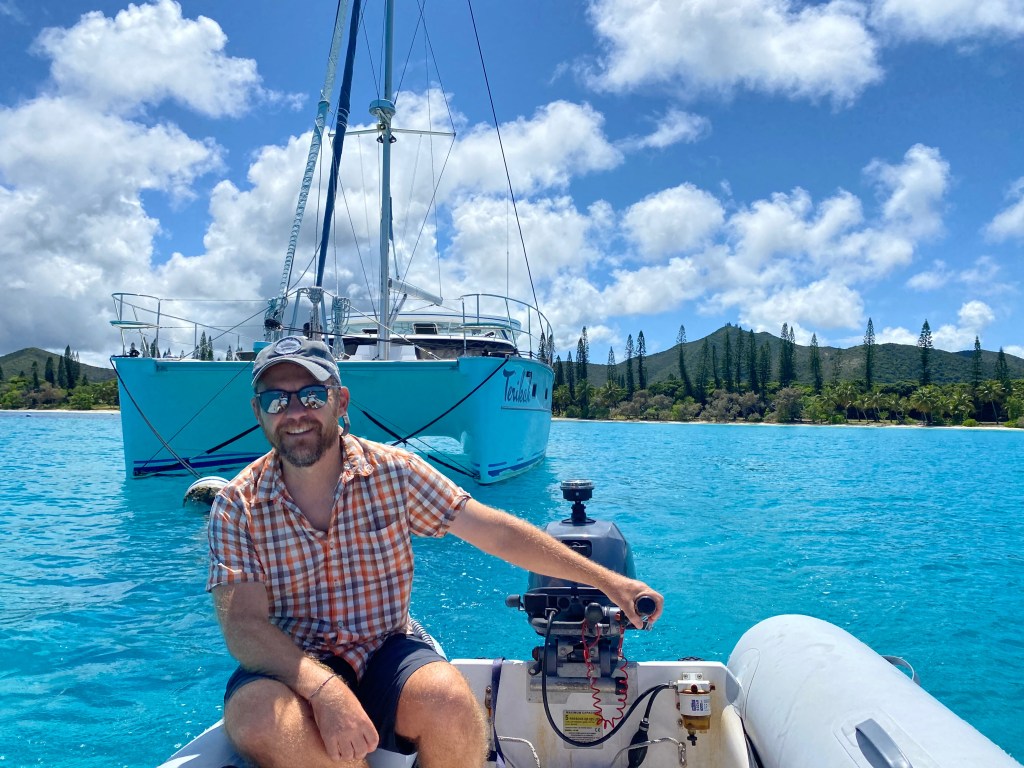
We had an amazing 41 nm day sailing to the more remote Ile de Pins (Isle of Pines), lovely winds for Code Zero sailing with minimal seas in the protected lagoon, where we tied up to one of the many mooring balls in Kuto Bay.

The island has 2,000 residents, 94% being Indigenous Melanesian Kanak people who refer to themselves as “Kunies” divided into 8 main tribes with numerous sub-clans. We had planned to stay less than a week and ended up staying 1 ½ weeks, so enthralled with this location that provided everything we could ask for, from a calm sandy anchorage to exploring on shore to fresh produce.
The Vao market, though small, provided local fruits (papaya and bananas) and vegetables (pumpkin, lettuce, tomatoes, leeks). A highlight was biking the 6km to the market early one morning. On the way back, I coasted down a hill, fresh baguettes sticking out of my backpack, stopping for a strong coffee en route and feeling like I was in the movie Amelie (I even had crème brulee one night). Another early market day, I walked with friends, so many friendly greetings and offers for rides. The owner of a local store gave us (and our full bags) a ride back to the bay. We have felt truly welcomed and safe here. I am reminded again and again in our travels of the goodness of people and our shared humanity.
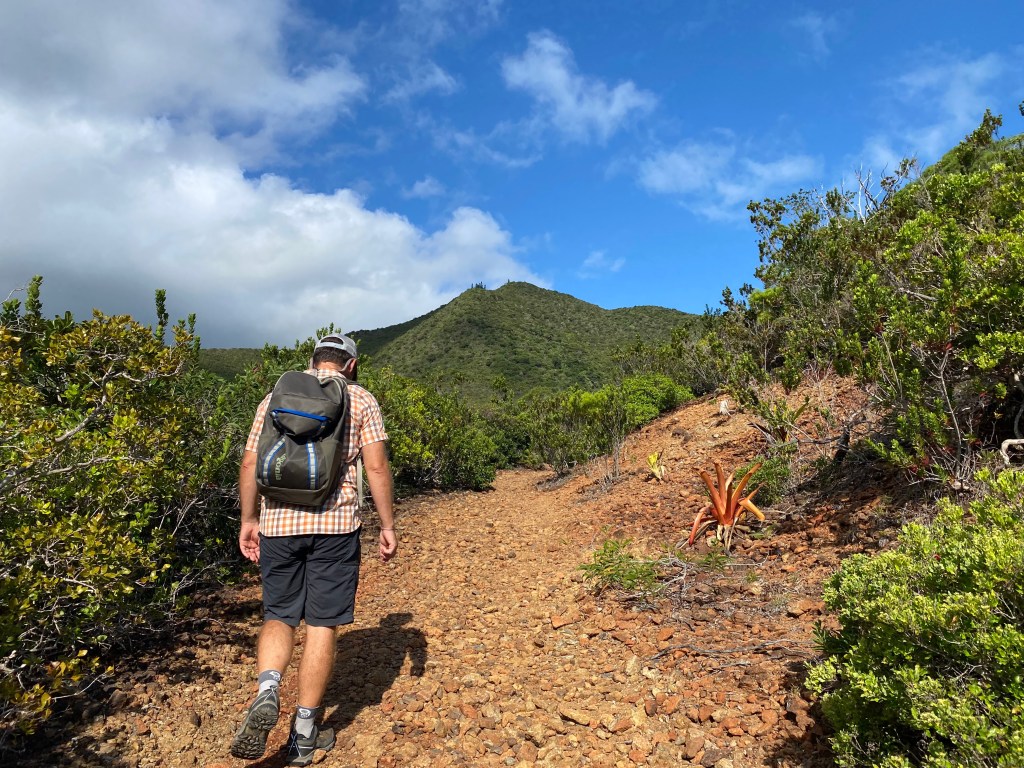
The adventures here were many. We hiked to the top of Pic N’Ga, the mountain that stands tall above the Island of Pines, looking out to the lagoon.
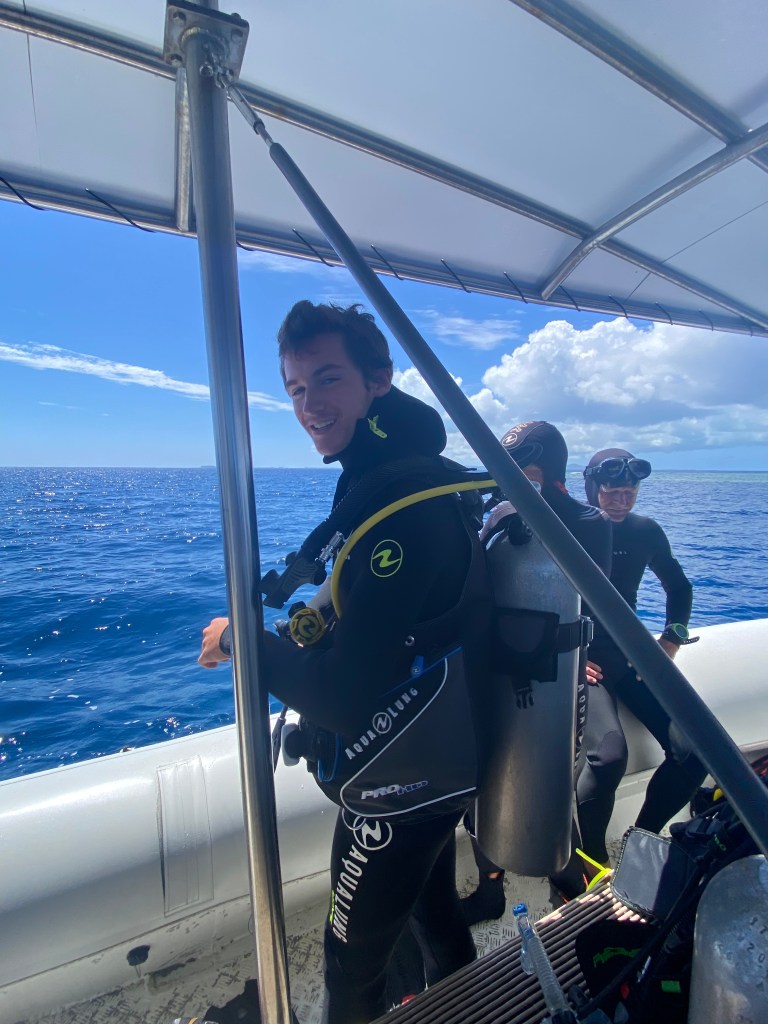
Two cruising families joined up on a daytrip with Kunie Scuba Center, some snorkeling above, others doing SCUBA below, with a stellar boat ride zipping through the turquoise waters of Gadji Bay where we rested between dives with coffee and homemade coconut cookies.

Highlights for them were a massive cuttlefish, colorful gorgonian fans, moray eels, reef sharks, and another stonefish. For me, I loved being in massive schools of blue fish, seeing a moray eel, and looking down on Chris and Calder doing SCUBA together.
There was snorkeling to be had around the Sacred Rock near our anchorage, where my highlight was a cave of gorgonian fans, a massive cuttlefish, and sea turtles that swam along with us. Cora’s least favorite was a massive sea snake that had her swimming back towards shore at record speed!
We took a guided tour of the island led by a local which began at the Saint Maurice Monument, commemorating the first missionary’s arrival in the early 1800’s. The perimeter of the monument is protected by a circular wall of traditional totems, each carved by a tribe of the island, Marie sharing with us her family’s carving.
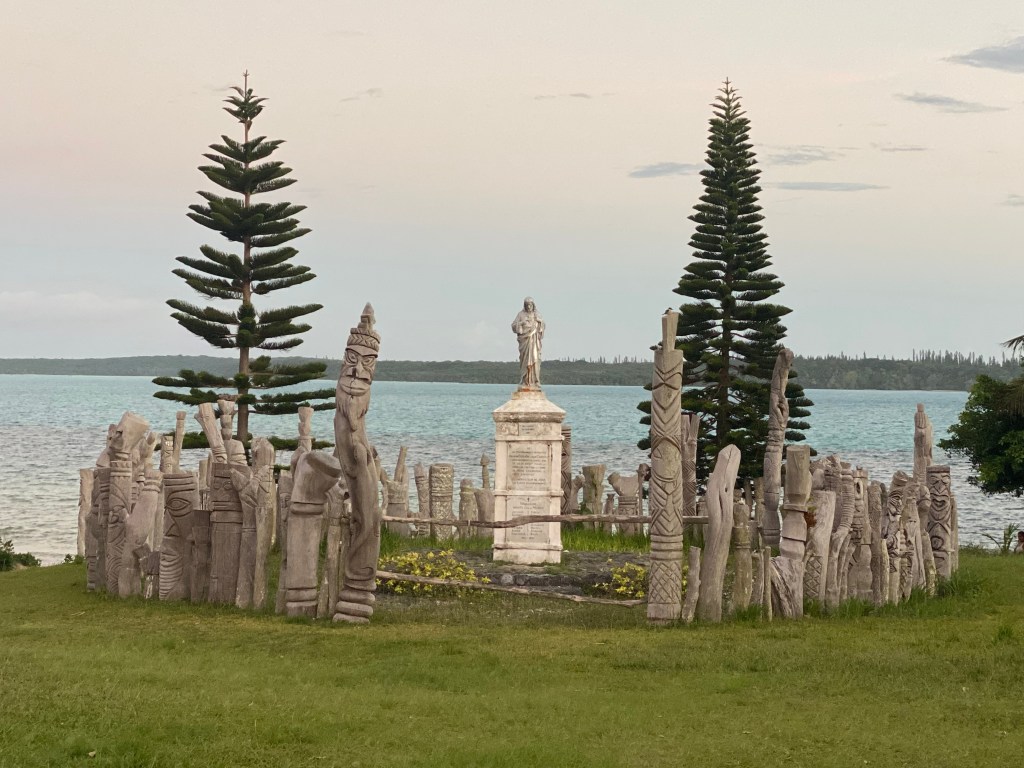
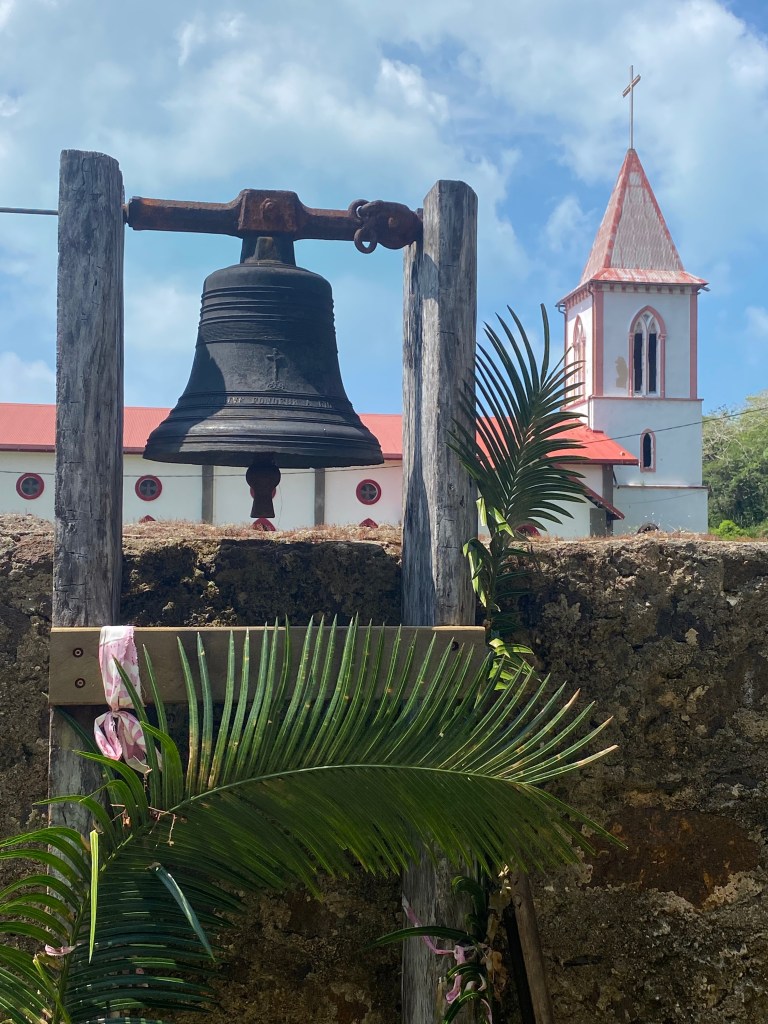
Interesting mixing of sacred snake carvings and Christian imagery, which also extended to our visit at the Mission de Vao’s imagery. The church no longer holds services, as the bell tower was burned in the uprising last year.
In St. Joseph’s Bay, there were traditional pirogue outriggers made of the columnar pines of the island. I purchased a traditional wooden wall carving to keep our boat safe by a local carver named Willy at his roadside stand.

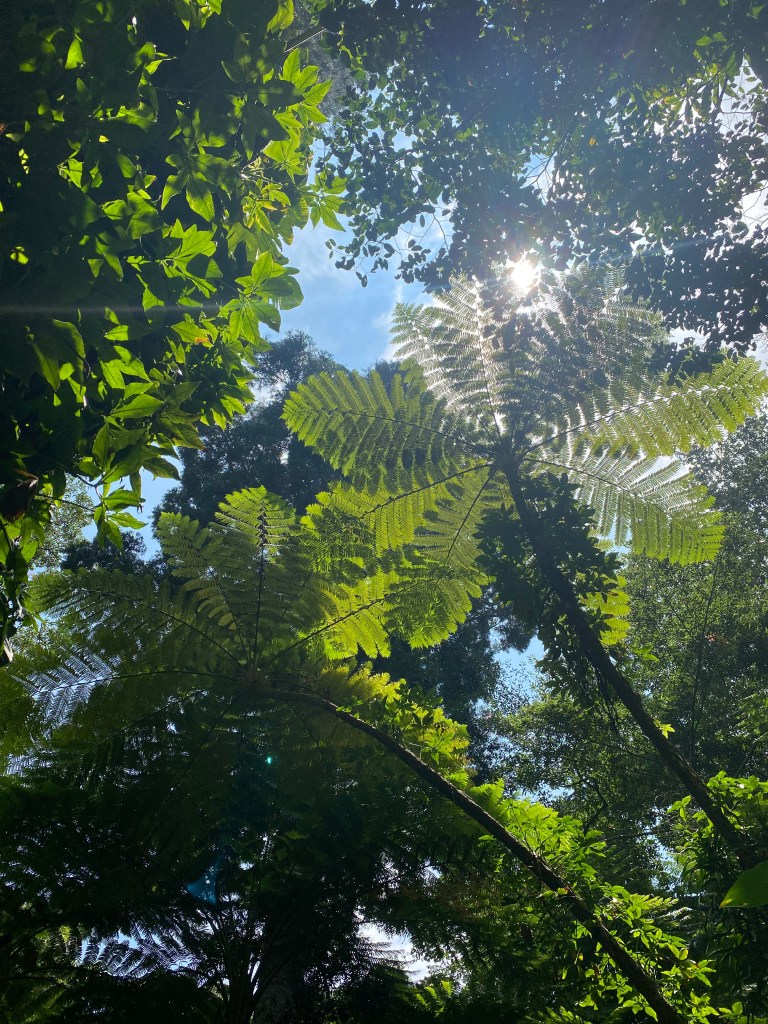
We walked the lush jungle path with mind-blowing tree ferns to The Grotto de la Reine Hortense, a cave that we explored with headlamps, the darkness punctuated with natural sunlight skylights.
We added a coin and a shell to the shrine inside of the massive cave.

We crossed a river to get to Piscine Naturelle (the natural pools where we spent two afternoons), snorkeling above curious fish (one ran into Calder’s mask!), an artist’s palette of giant clams, an active octopus, yellow batfish, and our first stonefish waddling on his pectoral fins along the bottom. It was a full day.
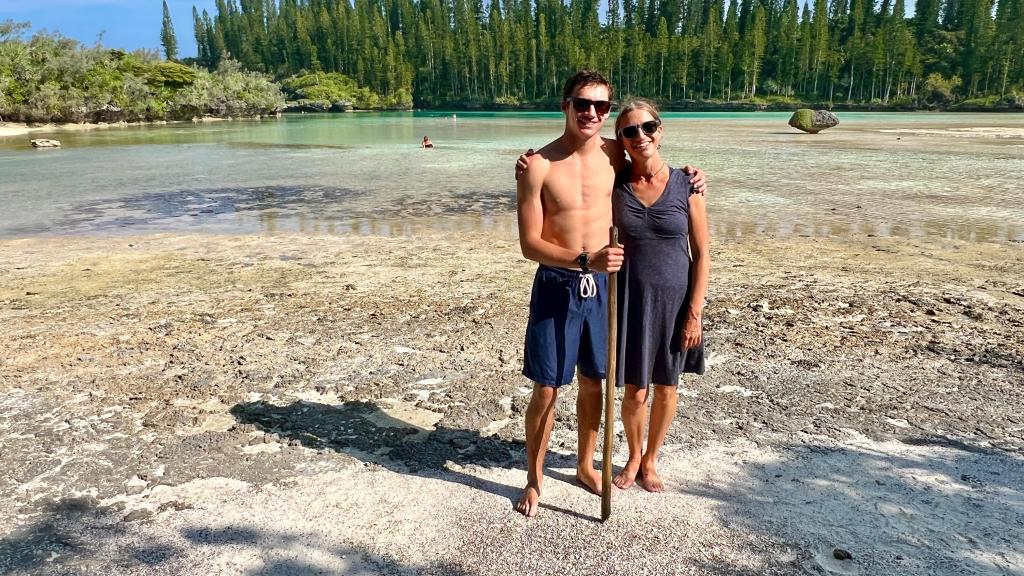
Another day, a few cruising families rented cars to explore the island further, exploring the Grotto de la Troisieme (a smaller cave system), wandering through a vanilla plantation with the owner, more swimming at the natural pools, and hiking to a beach.
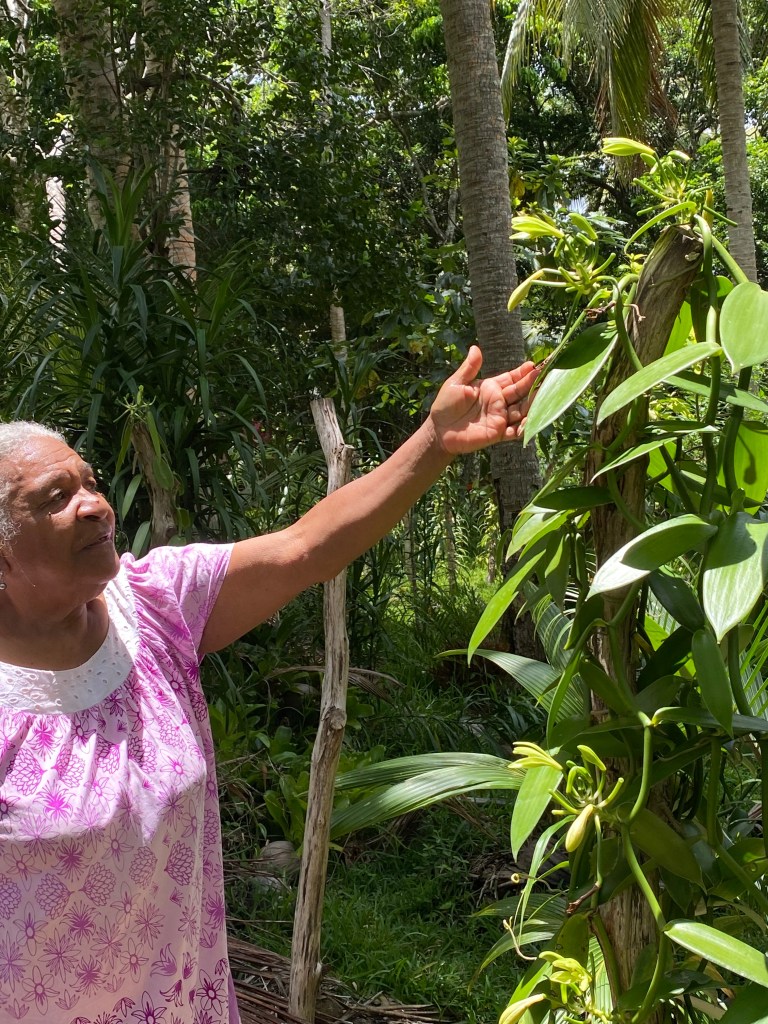
We learned about the voyage of vanilla from Mexico to New Caledonia and how each flower must be hand-pollinated, as the specific bee needed does not live here. Another full day.

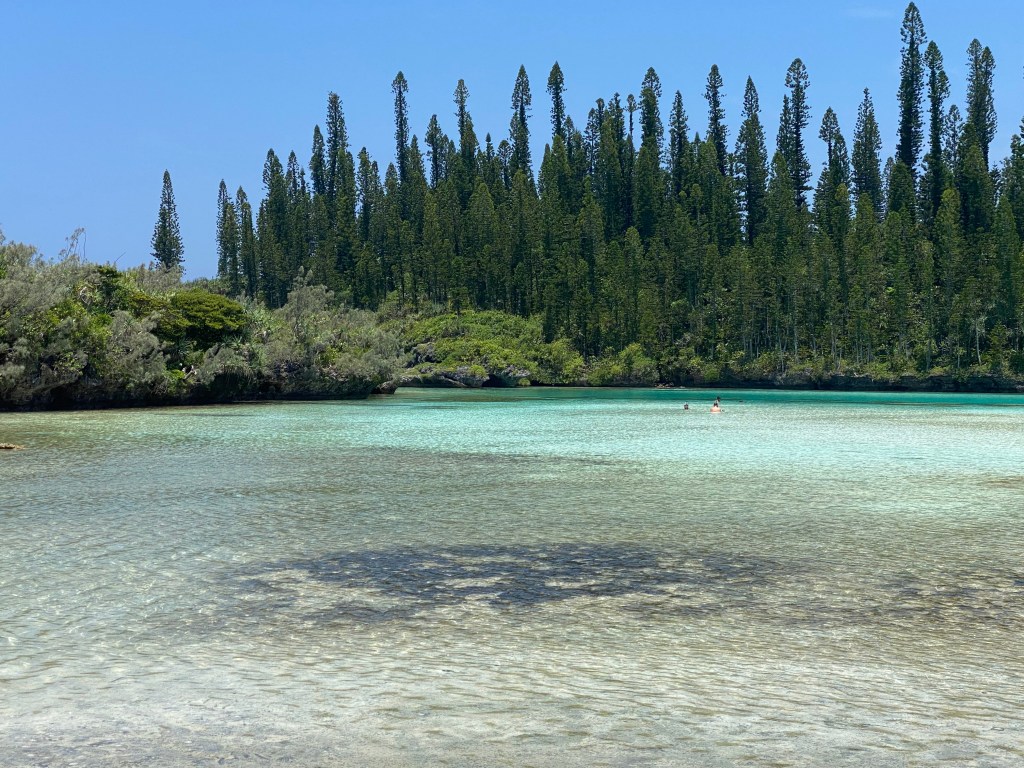
This island is magical…simply walking down the road through the canopy of Bugny trees with sunlight filtering through. Out for dinner one night, the largest grasshopper in the world perched above us (coconut grasshopper), locals passionately expressed the importance of protecting islands from the effects of global warming and their happiness with our visiting. The island used to get numerous large cruiseships, more people than they could truly absorb, then COVID shut it down significantly. Just starting to bring back tourism, the rioting last year decreased it further.

What riots? Now is a good time for a very brief history lesson. In a nutshell, in 1853, France annexed the islands, turning them into a penal colony. Throughout the late 1800s-1900s, land dispossession, forced labor, and segregation displaced many Kanak communities. The 1980s were Événements (the “Events”) — a decade of violent conflict between Kanak independence movements and loyalist (mostly European settler) groups. The 1988 Matignon Accords and 1998 Noumea Accord established a peace process, land restitution, and gradual transfer of powers to local government — with eventual referendums on independence. From 2018-2021, three independence referendums were held; all resulted in a majority against independence, though Kanak-majority areas voted overwhelmingly for it. In 2024, violent riots erupted in New Caledonia in response to a proposed reform by France that would expand voting rights in local elections, which many Indigenous Kanak feared would dilute their political influence. On this island, you can still see damaged tourist signs and buildings, as well as the painted over graffiti: Vive Kanaky.
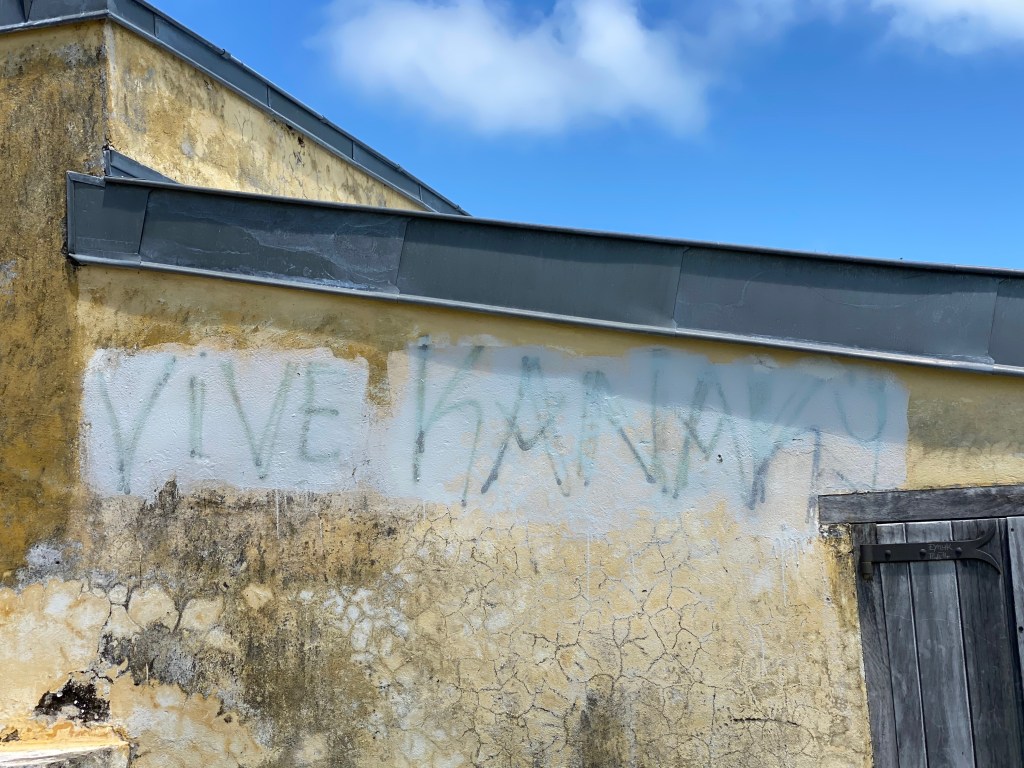
Currently the territory is entering a phase of political negotiation and normalization: a new autonomist agreement has been proposed that would give New Caledonia increased self-governance while remaining linked to France.
The military presence has been strong during our visit here, with numerous helicopters flying overhead and landing, unsure of whether this is to monitor the behaviors of the island, to monitor for drugs on cruising boats (sadly a problem), or both.

One early evening, the equivalent of the US Coast Guard visited our boat. We heard them talking to our friends about flags and quickly pre-emptively got to work getting our flags “correct.” We didn’t have our US flag up and had taken down the French flag as recommended before arrival to this island, as there is another Kanak flag we had wanted to fly (though we couldn’t find it for sale). We have been seeking the Kanak indigenous flag to fly alongside the French flag, which has the flèche faîtière (roof spear).
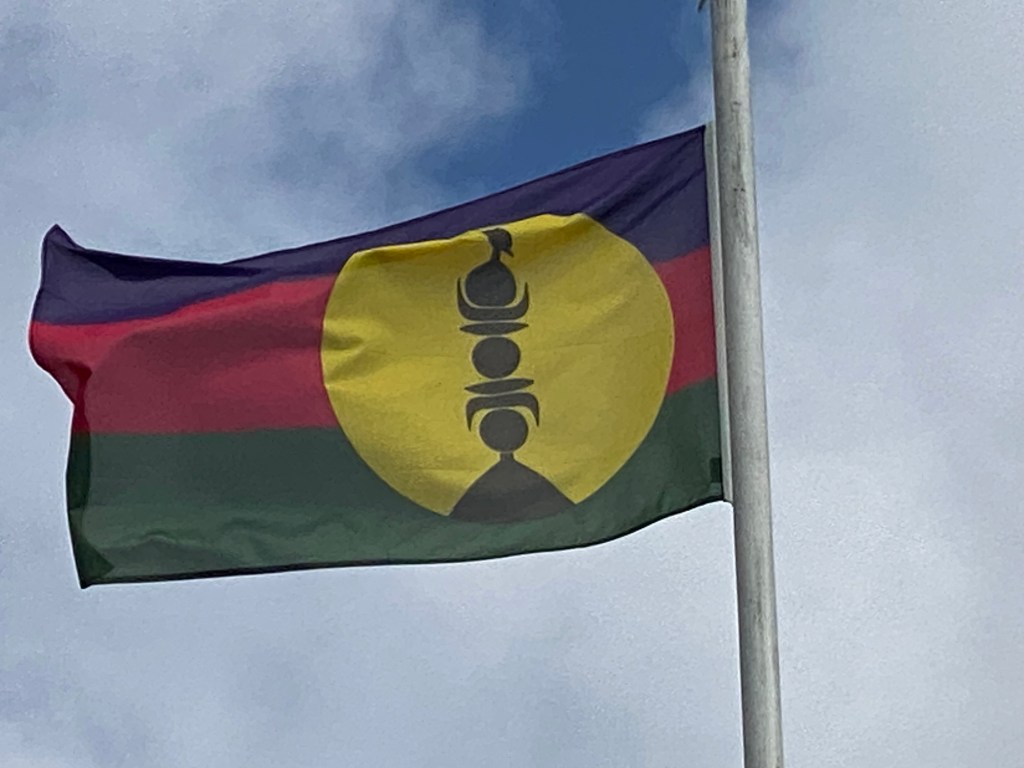
So up went both our US and French flags, just in time for our visit. The two young men who boarded were very pleasant and, after they joked that Chris had more hair in his passport photo, we knew we could be more candid. We discussed living here and politics whilst they filled out paperwork. Some of the initial riots of 2024 were on this little island.
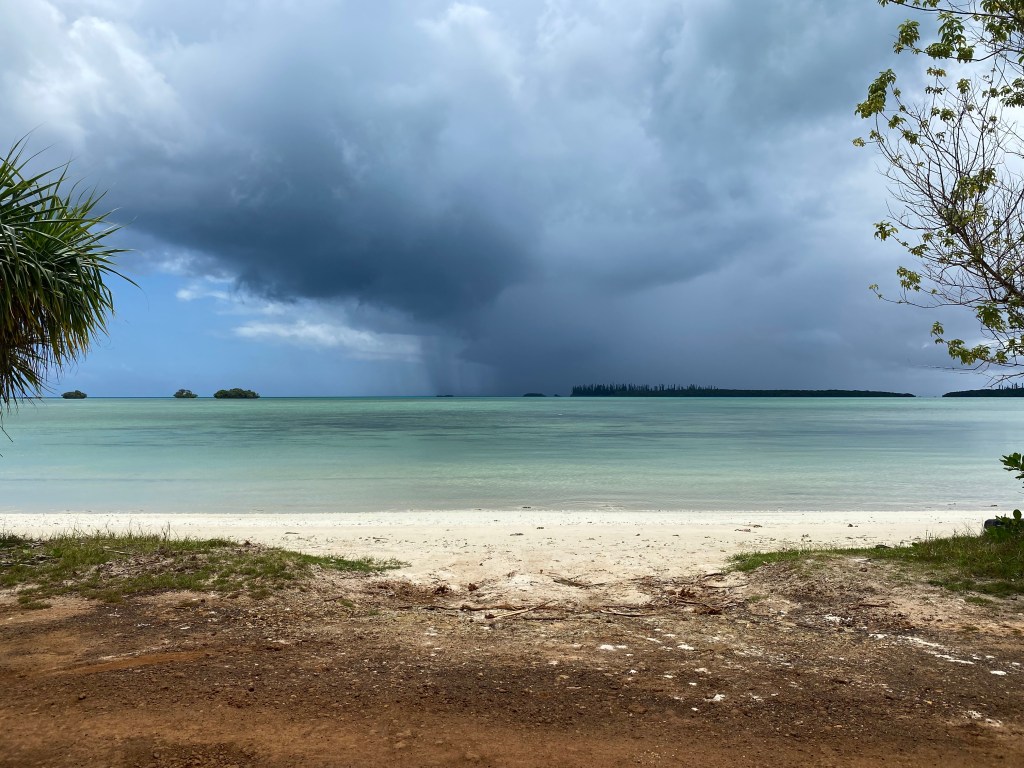
On Halloween, we watched a massive thunderstorm descend on us, at first taking showers and scrubbing the boat in the downpour, then turning off all electrical systems and putting our devices in the microwave and oven as we watched lightening hit the islands around us.

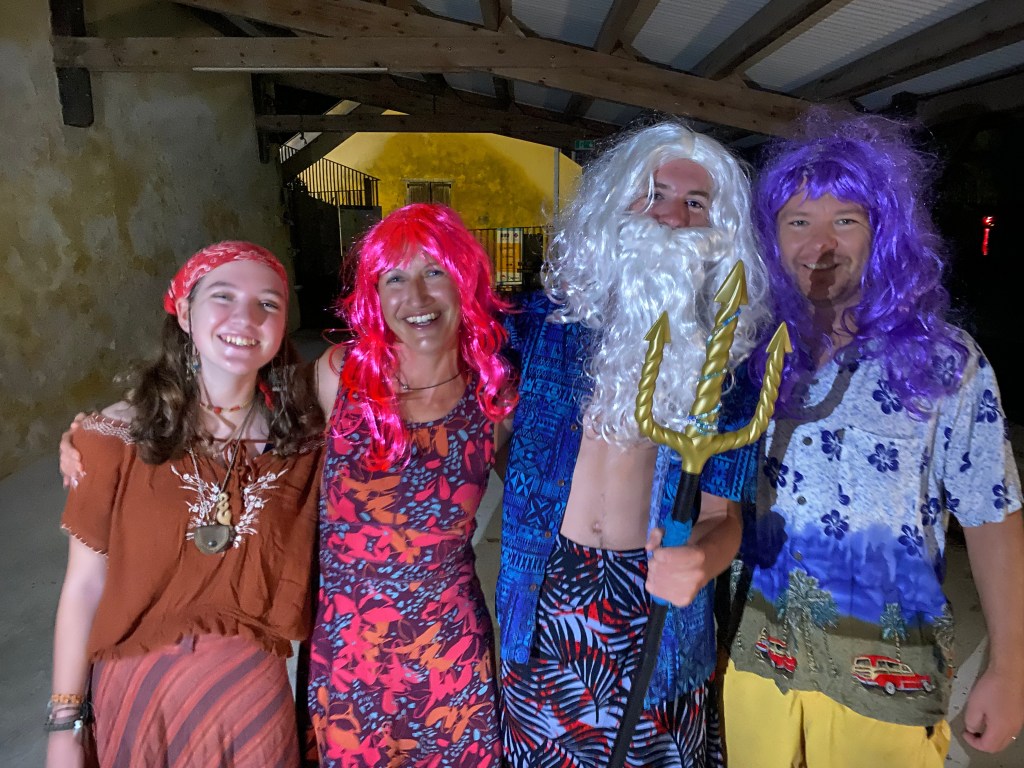
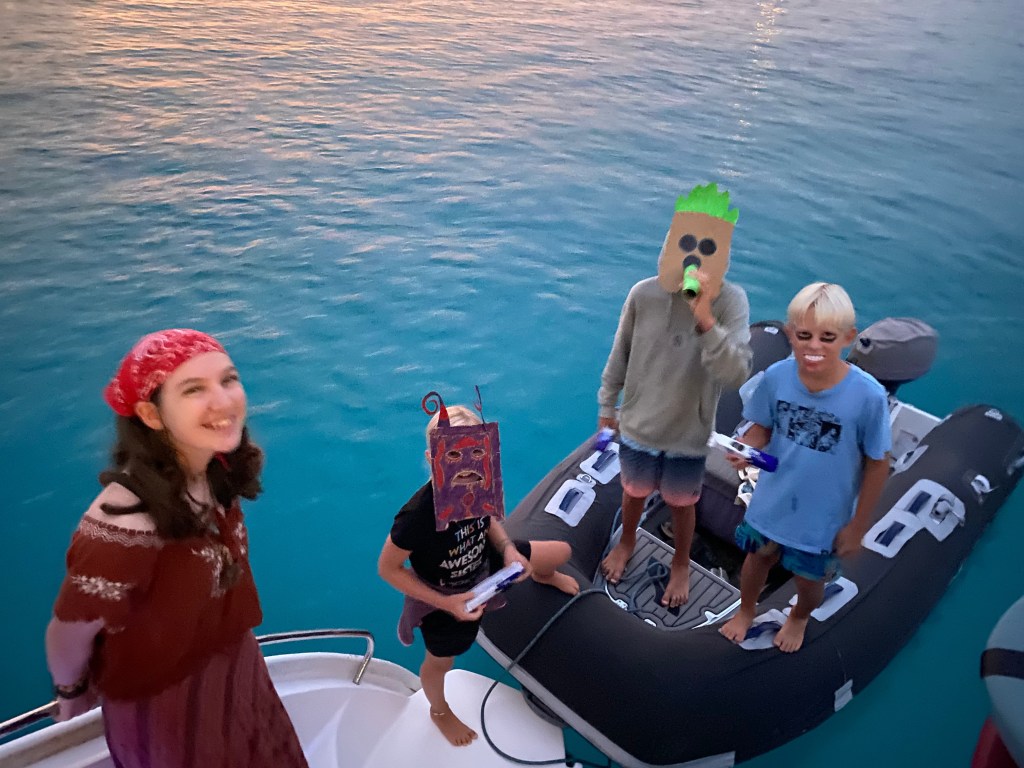
The storm moved on and we dressed up, ate treats, and played games with other cruising families. We even had trick-or-treating in our dinghies.

Not all play (okay, so it was mostly play here), we got down to the business of cleaning the hulls thoroughly, which has to be done and videoed within 30 days of entry to New Zealand as part of their strict biosecurity requirements. This year there are stories of it being stricter, though I feel the guys did a great job and am not feeling concerned at this time.
Our hulls clean, our food supplies restocked…it’s time to leave this lovely welcoming island and start a saunter back to Noumea, exploring the Ilots along the way until a weather window to New Zealand appears.


2 responses to “New Caledonia: Ile Casey & Ile des Pins”
I was just sitting here thinking about not reading another post from you all.
Terrific photos and wonderful stories.
Looking forward to reading your next post!
Always be safe and take care.
Camdin / James.
James Reece 9075184460
Sent from Proton Mail for iOS.
LikeLiked by 1 person
Great flora!
LikeLike