
Off to the island of Venua Balavu! The winds weren’t consistent and we made many sail changes between our asymmetrical spinnaker, Code Zero, and main sail with a touch of motoring until we entered the southern pass of Venua Balavu. We arrived to Susui village just after sunset, so glad for satellite imagery showing the numerous coral patches. Anchor down after our 68.4 nm day with plans to head to the village the next morning for sevusevu.
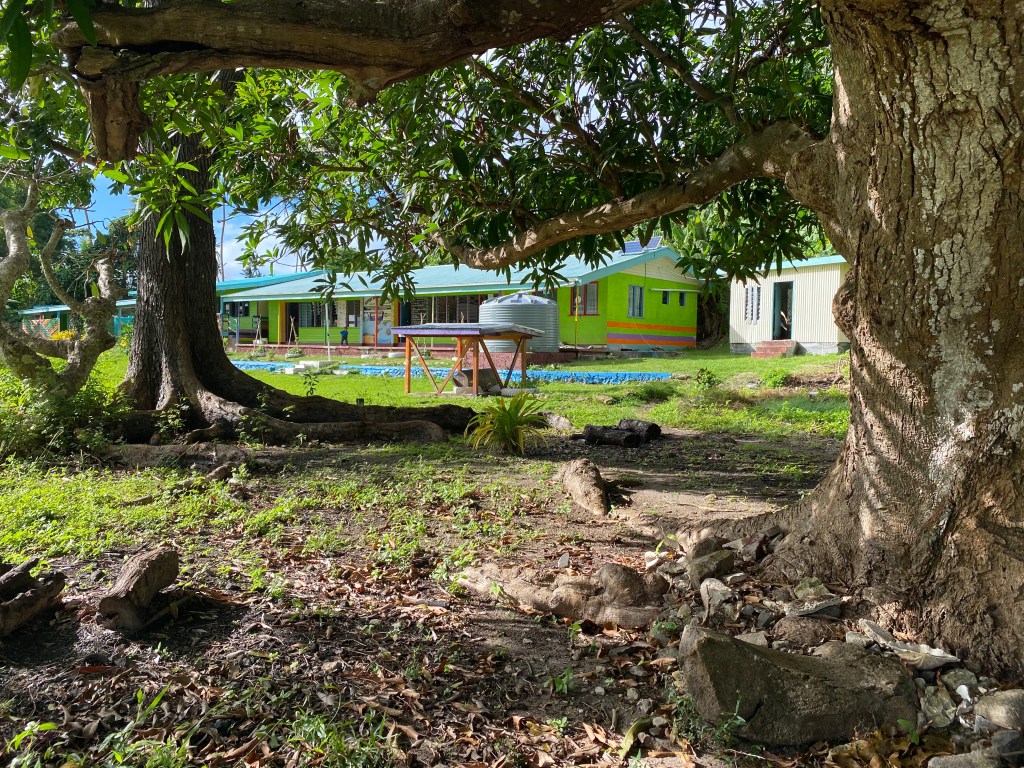
Vanua Balavu is approximately 53 square kilometers (20 square miles) in size, making it the third-largest island in the Lau Group of Fiji. As of the 2017 census, it had a population of around 1,200 people, spread across 17 villages, with Lomaloma serving as the main government and service center. We were anchored in front of the small village (about 75 people) of Susui, about 3 miles across the lagoon from Lomaloma.
We woke up on Monday to the sound of roosters, kids laughing on shore, and the school boat zipping by to Lomaloma where there is a secondary school and the kids board for the week. On shore, we were presented to the Chief for sevusevu; many people were tied up with a local dentist visit. Next we met with Jacob, the headman, who was hosting the Fijian navy and police for the village to learn about the drugs coming in on boats. Sadly, Fiji is increasingly being used as a transit point for drug trafficking, with yachts and small boats smuggling methamphetamine and cocaine through its remote maritime borders. Authorities have intercepted multiple large shipments in recent years, but limited patrol resources and high volumes of cruising vessels (about 700-800 per year) make enforcement a growing challenge. The Fijian police and navy are educating the villages to be aware of the issue and how to monitor for concerning signs. When we visited Jacob and his wife Bale in their home later, Jacob felt sad that some villagers now look at cruising boats anchored in front of their homes as a potential part of this problem. We had asked permission to anchor in a nearby remote anchorage, but he politely and apologetically denied our request, stating that he’s trying to prevent boats going there. We sadly understood, wondering if the conversations with law that day weighed heavily on them.
Jacob said they were collecting donations for panga fuel, as they were heading to Lomaloma that day to get the water tanks donated by Sea Mercy to replace those damaged by Cyclone Rae.

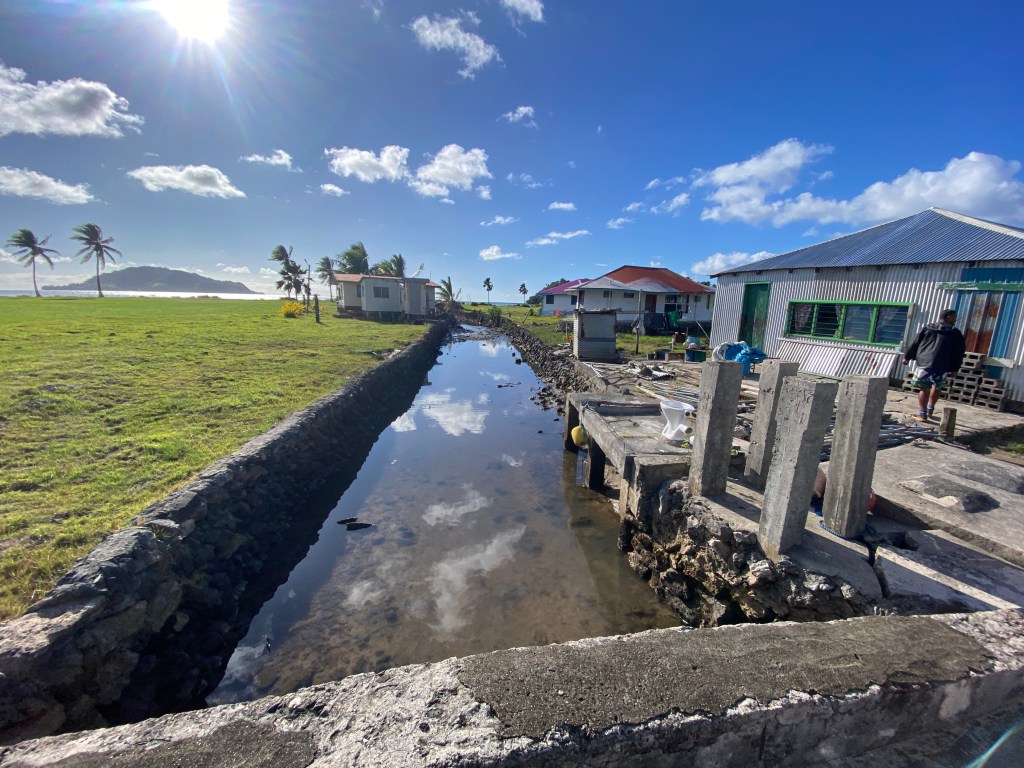
In February 2025, Tropical Cyclone Rae (Category 2) passed over the Lau Islands—including the village of Susui—bringing strong winds (up to 110 km/h), heavy rainfall, and flooding that damaged farm crops and 75% of the rainwater systems. People continue to suffer from food shortage (crops destroyed and new plantings will not be ready for another 6 months) and water shortage (imperative to collect water going into the dry season). The damage in the village was the most serious since Tropical Cyclone Winston in 2016, of which structural damage is still obvious. Susui is vulnerable, being so close to sea level, and the village is feeling that pinch. In Fiji, tide gauges show around 29 cm of rise over the past 30 years, with projections indicating at least another 18 cm by 2054—and up to 68 cm by 2100 under current high-emission pathways.

Jacob explained how the organization “Sea Mercy” has helped out greatly in the aftermath of Cyclone Rae, coordinating food stores, water tanks, and other needed resources. Sea Mercy Fiji is a sailor-run maritime charity of volunteer cruising yachts providing services to Fiji’s most remote islands. By leveraging a fleet of cruising boats, they provide essential medical supplies, dental and eye care, food, and infrastructure support—especially after cyclones.

Trying to get the anchor up in Susui, the windlass kept dying to the point where we had to put the anchor and chain back down for some sleuthing. Thankfully, it wasn’t the windlass itself, but rather that we needed an updated breaker for our 1500 W (12 volt) 125 amp windlass that had only a 100 amp breaker that kept tripping. We’d ideally have a 150 amp breaker to install, but we had 120 amp breaker; it worked! We decided to stay one more night in front of Susui, as the winds picked up. It feels a bit wrong at times to use our expensive foiling gear in front of villages, but their emphatic YES about Calder foiling made us feel better about it (and provided entertainment for the kids on shore).
Later that evening, Jacob and his family brought Calder along to set up their fishing net, then stopped by for a visit.
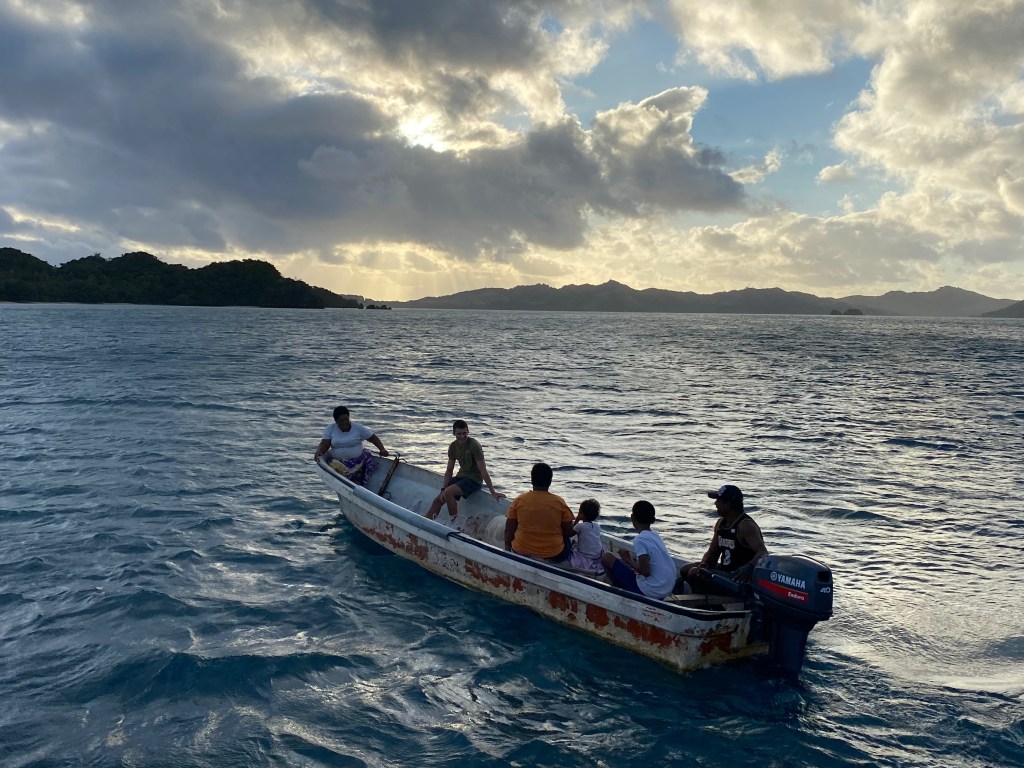
We gave him some lures and hooks that he needed. The next morning at 4am, while we were sleeping, they picked their net. At times they will pick their net at midnight under a full moon. When we went to the village later that morning, Bale was busy cooking and insisted we take the blue swimmer crab they had caught for our dinner.

They gave us permission to anchor in the little calm tucked-away anchorage where we had wanted to go to…a gift of an anchorage and we moved at high tide the next morning.
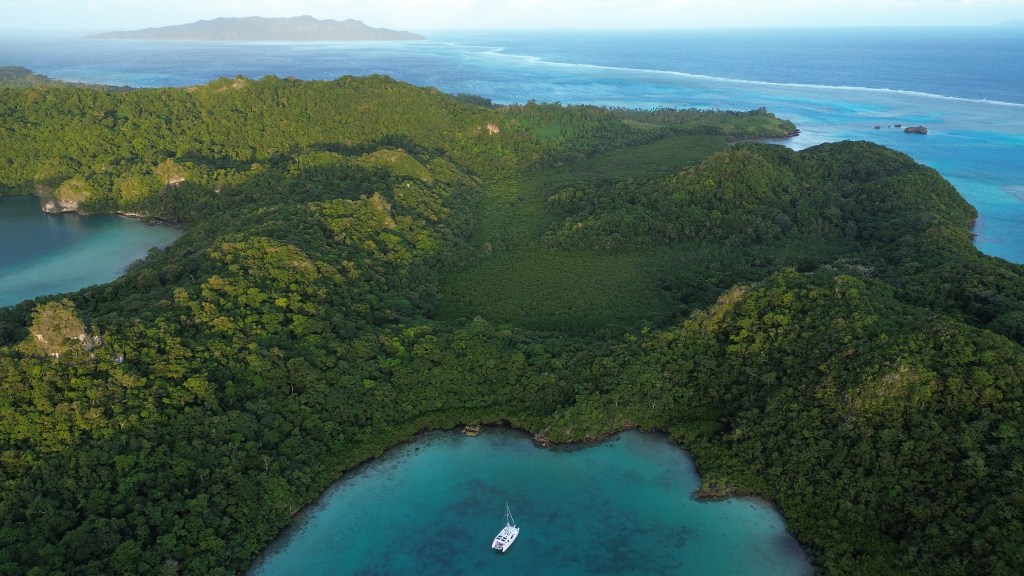
That day, we heard a deep booming barking noise resonating from the trees around us, circling in on us. After some research, we discovered it was the Barking Imperial Pigeon, standing about a foot high with their distinct call that sounds more like an angry monkey than a bird.

Jacob and his family stopped out to the boat to visit that night, sharing stories of their life here, from getting up daily at 4am to pray at the church to Bale’s constant cooking (for their daily meals, for the school kids in Lomoloma). She laughed heartily about Jacob’s cooking – “I make the tea,” he said. As the night fell, we sent him home with our spotlight that can be recharged using a USB plug, which he has; he was thankful, stating it would be a huge assistance with checking their net in the middle of the night. We woke up at 6:30am to a BULA and a gift of 5 fish from their net. They visited us again that afternoon, enjoying Cora’s baked goods, Bale declaring that Cora needs her own bakery.
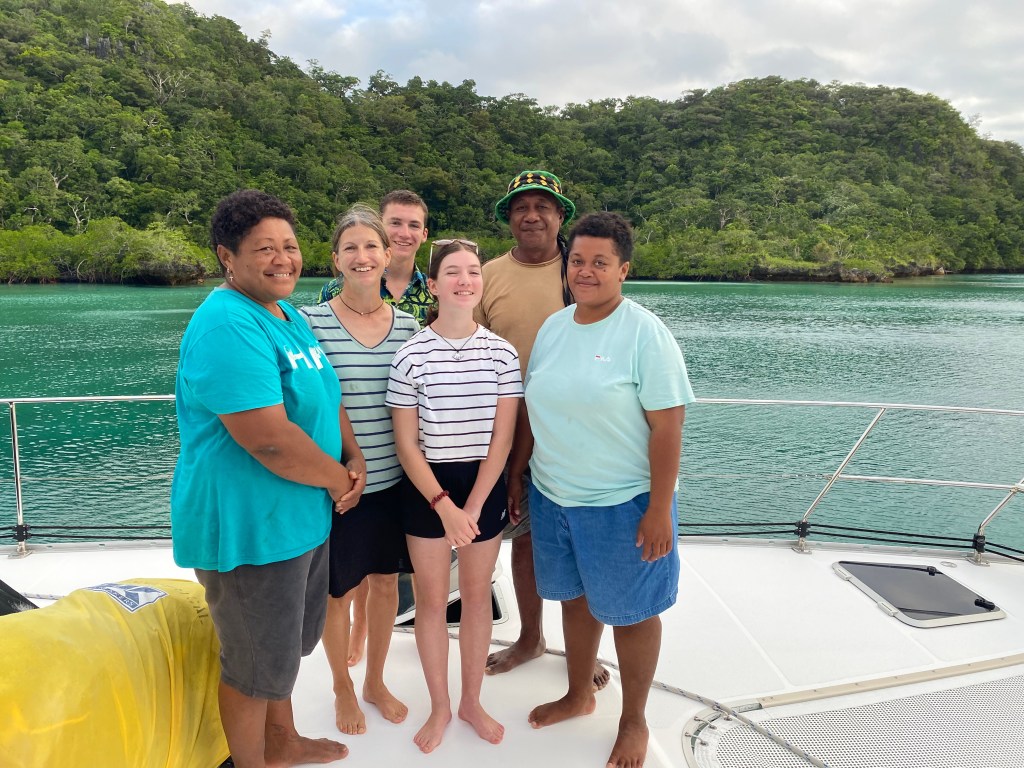
Anchored in only 10 feet of water, the only boat in this mangrove and jungle cliff lined cove; it was a calm place for Chris to continue with his evolving boat repair. First, the dinghy engine needed some love on our slowly sinking dinghy (leaking in a few spots and requiring frequent pumps).
Chris had recently declared, “I think I need some more alone time in the generator room,” missing his shop at home to escape. He got his wish – the generator stopped working. The next two days were spent sleuthing out the generator problem, finding and fixing other impending problems along the way.

It was quite the saga and reiterated our decision to change to lithium batteries this last year, as we had felt quite vulnerable with all our freshwater being made requiring the use of the generator.

The main problem ended up being the raw water flow sensor malfunctioning and reporting no water flow when there was flow, shutting down the entire generator. Chris made a jury rig around it to keep our generator running without this sensor and still monitor flow until we can get new parts.
Anchor up and caught a massive snapper and a bonito on the way; fresh food!

We stopped temporarily at Lomaloma for groceries, finding the main store that takes credit card closed due to a funeral. We found a smaller store where we bought a handful of apples, oranges, and green beans using our dwindling cash.
Anchored in Little Harbour, a gorgeous bay where we enjoyed a calm morning paddleboarding above the coral, fish, and turtles eating, booming pigeons echoing off the cliffs.

At high tide, we dinghied up into the mangroves and talked to Tui, a man who lives there with his wife and 5 boys, currently with his mother visiting. Tui’s property is at the very end of the bay in the mangroves and can only be reached near mid-high tide, as we rowed the final bit to the base of stairs leading up to his home.

What a stellar property he has with his family, the main problem being lack of freshwater collection.
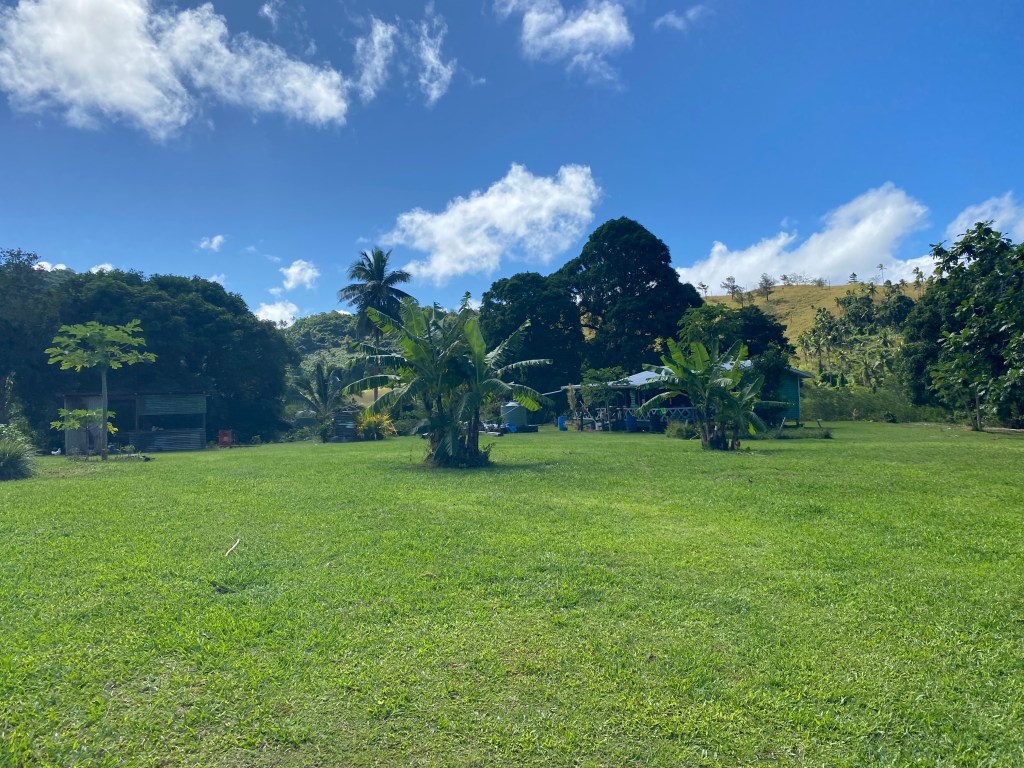
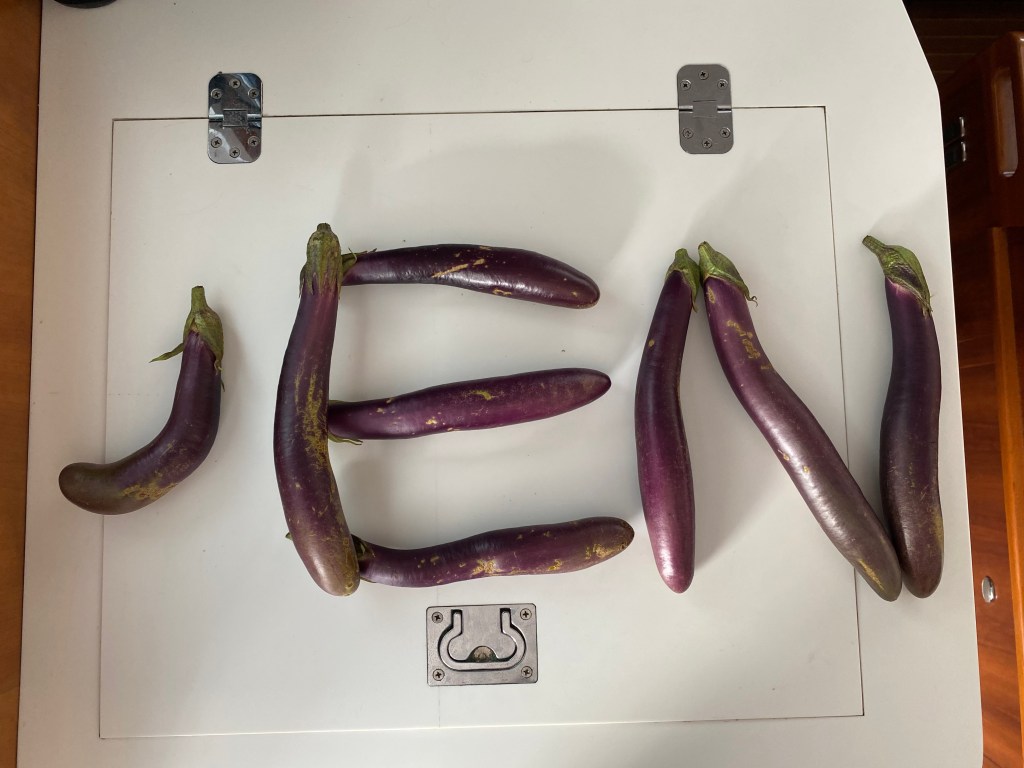
We wanted to arrange sevusevu at nearby Mavana Village, as well as visit the farms to look for much-needed vegetables, and Tui said he would walk us there the next morning, but to wear long pants due to the rough trail. Before we left, we bought sweet potatoes and aubergine from his son.
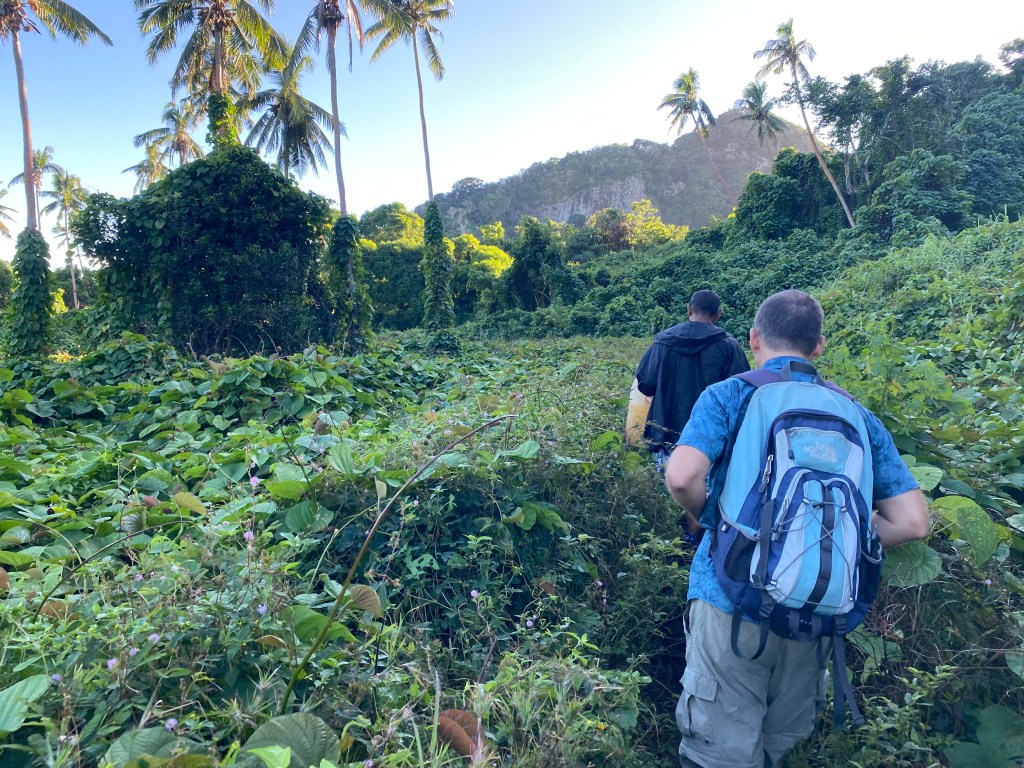
Up at 6am and enjoyed a walk with Tui through the jungle, as he wove our walking with stops along the way to share stories. He’d point to a pillar of rock where the women and children would go, ready with a large rock to roll down on enemies during a battle. He knew the stories about the original village locations, farming, and shared his own experience of taming wild horses for his sons to ride to school.
The best story he told was about a nearby lake. Villagers from Mavana take part in a traditional Christmas fishing ritual at Masomo Lake, where they enter the muddy water wearing only leaf skirts to stir up silt and trap large fish like mullet, sometimes up to 3-4 feet long. Before entering, they perform ceremonial offerings—such as pouring coconut juice into the lake—to honor ancestral spirits and bless the catch. Tui was looking forward to it this Christmas. He then went into the origin story of how the fish got there, sharing so much of his culture with us freely as we walked the red mud paths with him.
In Mavana village, the chief was ill and had gone to see a doctor, so we did sevusevu with his son before wandering through the plantation fields and loading up with massive pumpkins, plantains, papaya, and greens.
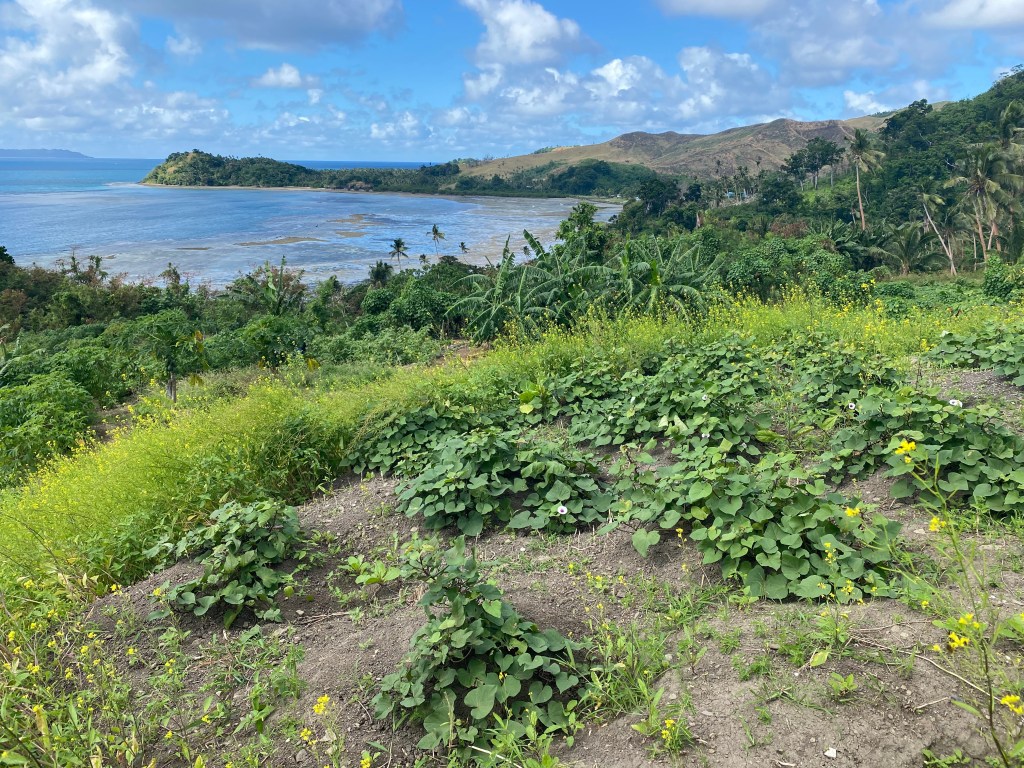

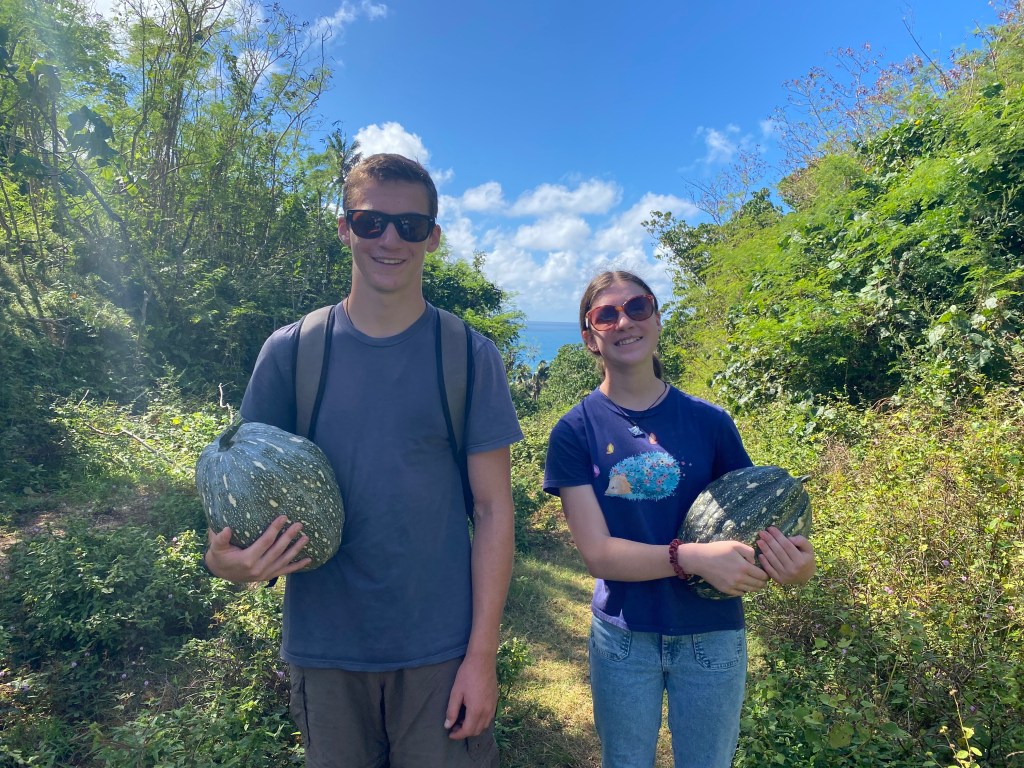
Back at Tui’s home, we drank coconut water and left as the tide was rising, wading out into muddy mangroves, mud squishing between our toes. Back at the boat, we spent hours processing the haul of fresh produce, cleaning, cutting, and sorting. We enjoyed a fresh loaf of plantain bread.

Next day, after a peaceful paddleboard with Chris, it was anchor up – not quite! There was an awful grinding and the boat pulled to a halt with a tearing sound. We had gotten stuck on a coral bommie or rock 40 feet down. The anchor chain ripped the bow roller in half, then peeled the lower stainless bracket back. Not good. Another project for Chris.

Anchor back down, then he and Calder created a jury-rigged bow roller and, with plenty of patience and maneuvering, we joyfully got the anchor up. No need for Chris to don the SCUBA gear and follow the chain down. We switched over to our secondary anchor and chain and moved to a new spot in the bay to anchor for the night, as it was getting dark by the time this spectacle was over. Chris declared that the “honeymoon phase” of newer boat ownership is over, as this year’s 11,000+ miles has put some wear and tear on Terikah.
Next day, over to Mbavatu Harbour, where we hiked around the farms among cattle, horses, and sheep and even spied the elusive Imperial Pigeon.
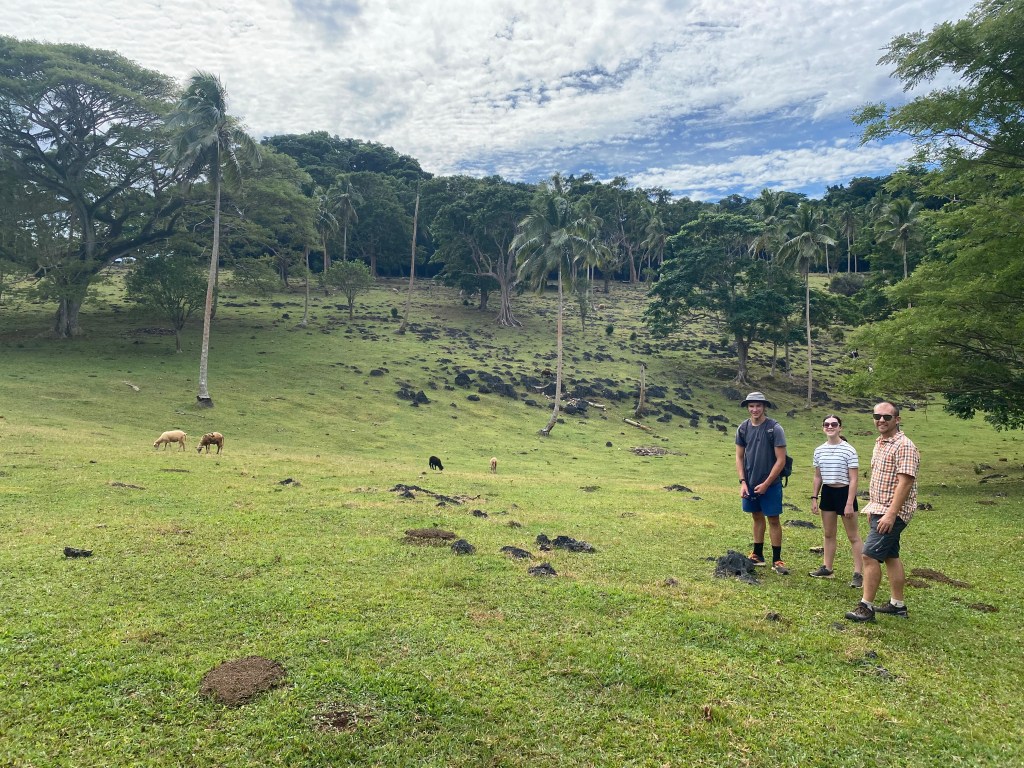
The sheer cliff drop-off overlooking Bay of Islands was beautiful, though a bit nauseating. Calder challenged the 271 step record of 56 seconds.


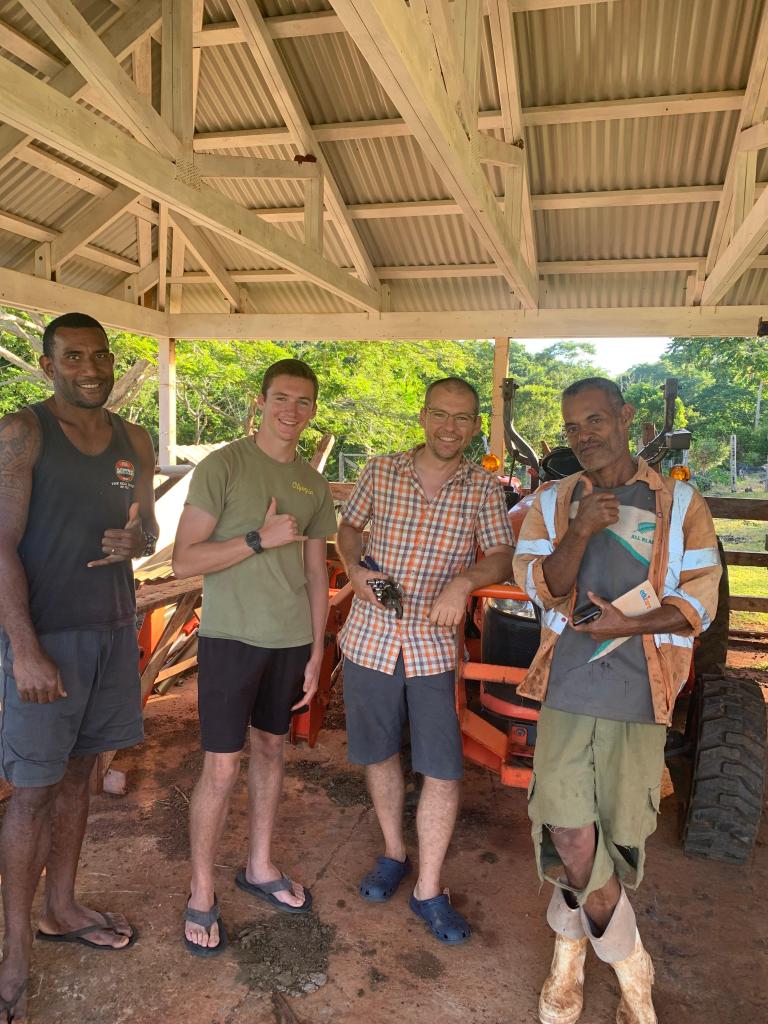
We swam in the glacier-looking (silty) water, though it was much warmer than Alaskan waters. I encouraged Chris to take it easy, as he has been working on fixing things constantly this week. Just then, a local man in a panga came over and asked if he could get some help with their broken tractor!
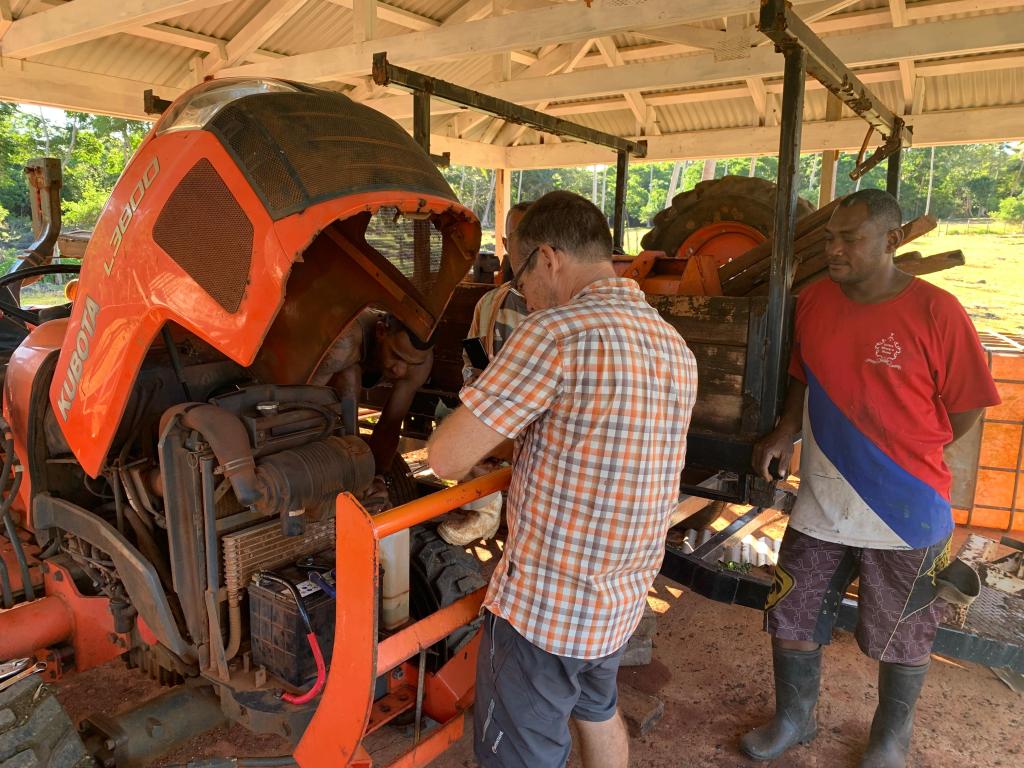
The rest of the day, Chris and Calder hung out with the friendly Fijian farmers who were quite thankful that the tractor got up and running enough to do what they needed to do until they had a more permanent fix.
And that concludes our time in four lovely Venua Balavu anchorages…fixing things in beautiful locations, surrounded by a kind and welcoming Fijian people. As they say – “Cruising is the art of fixing your boat in exotic places.”

 SV Terikah Adventures
One response to “Vanua Balavu: Susui, Little Harbour, & Mbavatu Harbour”
Fiji was our favorite tropical stop. Friendly people, stunning scenery, and barking pigeons! So glad you made it to the Lau Group. We missed it, but your pictures and stories help make up for it!
LikeLike