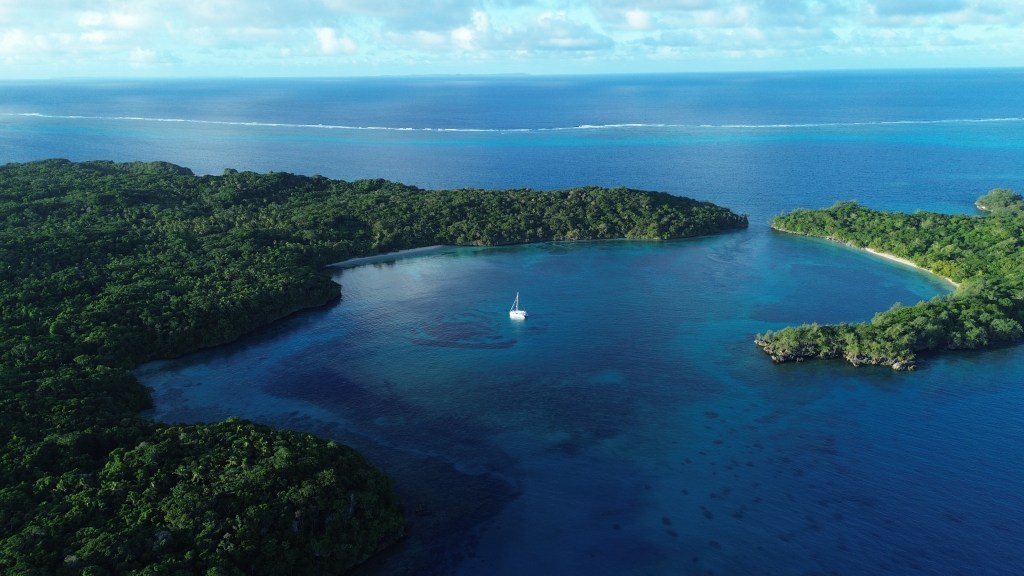
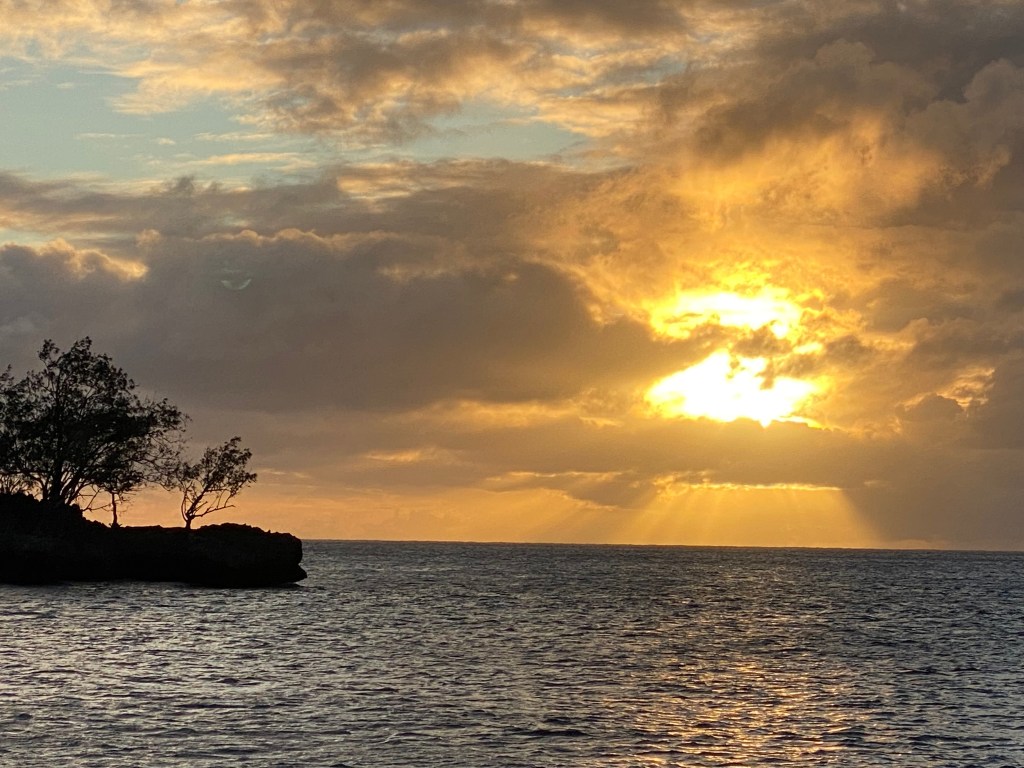
Yagasa is a small group of four uninhabited islets in Fiji’s remote Lau Group that share a common lagoon. The main islet, Yangasa Levu, rises to about 86 meters and houses a colony of various sea birds, namely boobies. Though there are no permanent settlements, the islands are occasionally visited by local fishermen. We wanted to see this remote anchorage and consider it for the upcoming heavy winds that were forecast. After 29 miles, we tucked into the crystal-clear anchorage next to the cliffs, enjoying an evening of watching the boobie birds come home to their nests in the trees, massive frigates swirl above, and fruit bats.
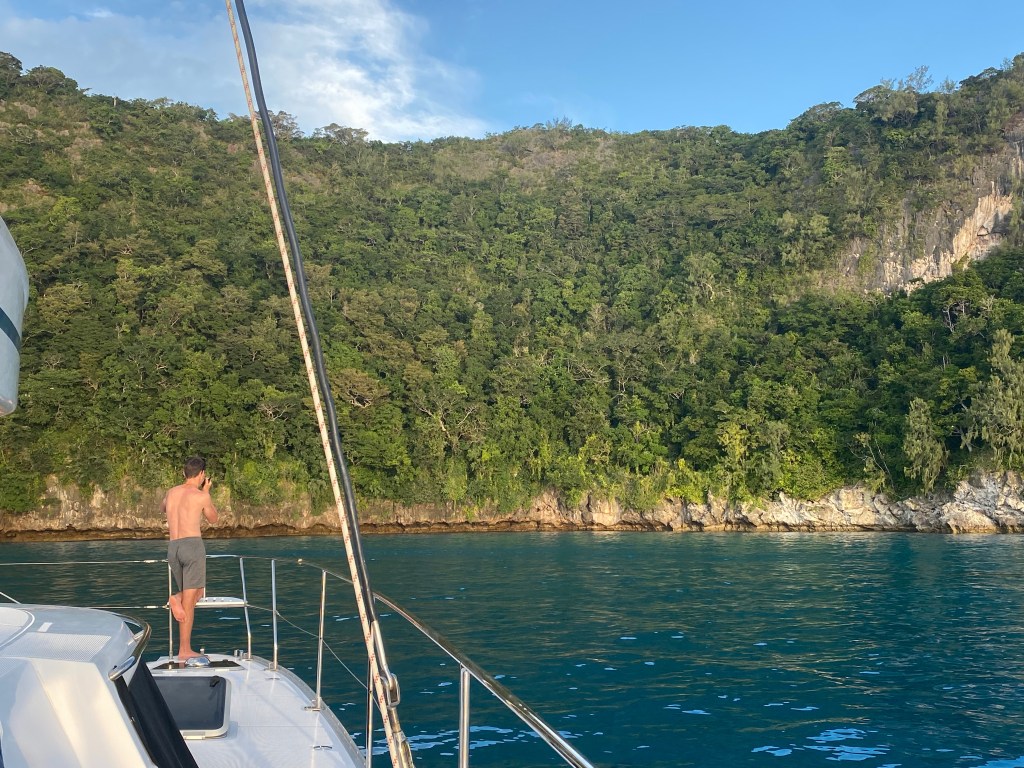
But we all agreed that we just weren’t “feeling it,” as far as an anchorage to spend the next 5 nights in a blow with big seas; we felt like the seas might wrap around and create an uncomfortable anchorage where there also was no place to go to shore.
The next morning, we said goodbye to the impressive wall of birds and had an excellent 19 mile sail to nearby Namuka-i-Lau.
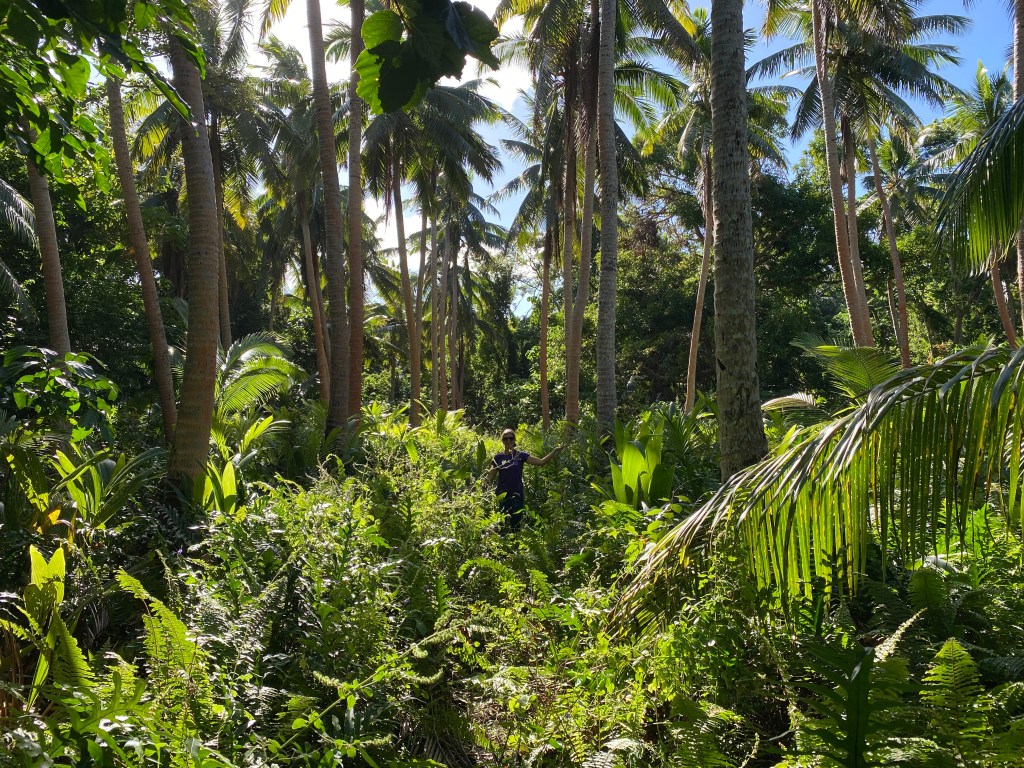
Into the entrance at low tide, coral reefs seen clearly on either side of the channel, tucked into the shallow enclosed anchorage – felt great for sitting out the upcoming elevated trade winds! Off we went on a jungle walk to head to the village for sevusevu with the chief, bushwhacking through what may have been an old path, but eventually retreated to our starting beach. The kids found the correct trail and we set off, markedly overgrown with burrs and seed pods sticking to our clothes, tripping on fallen coconuts, and climbing over branches.
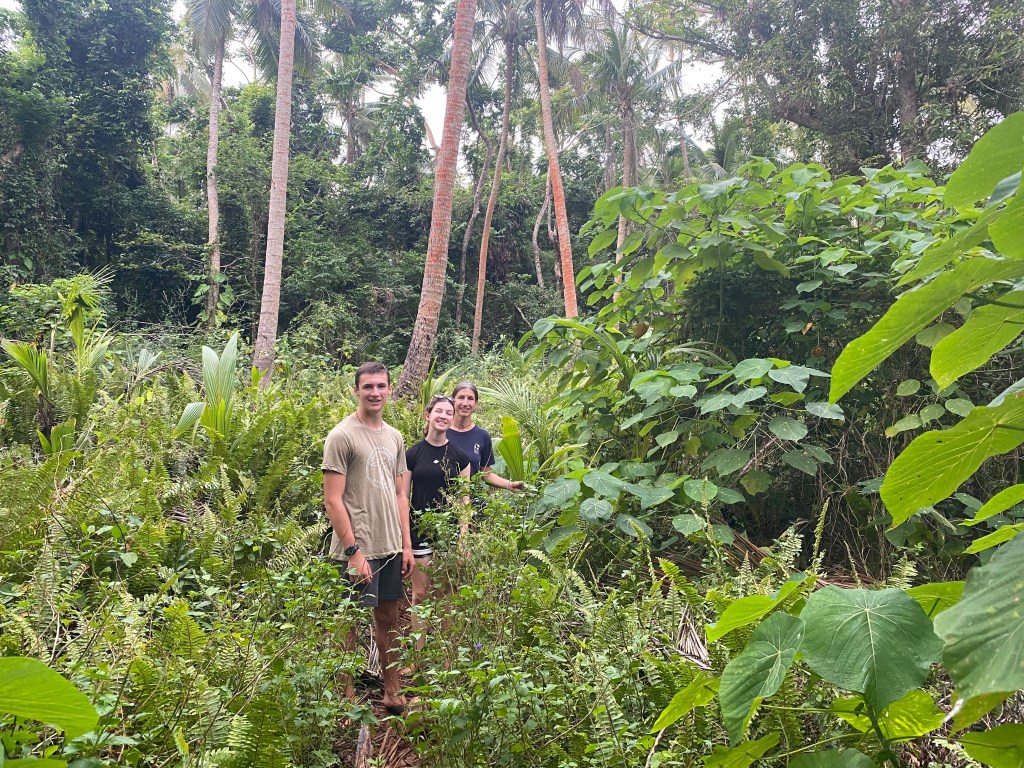
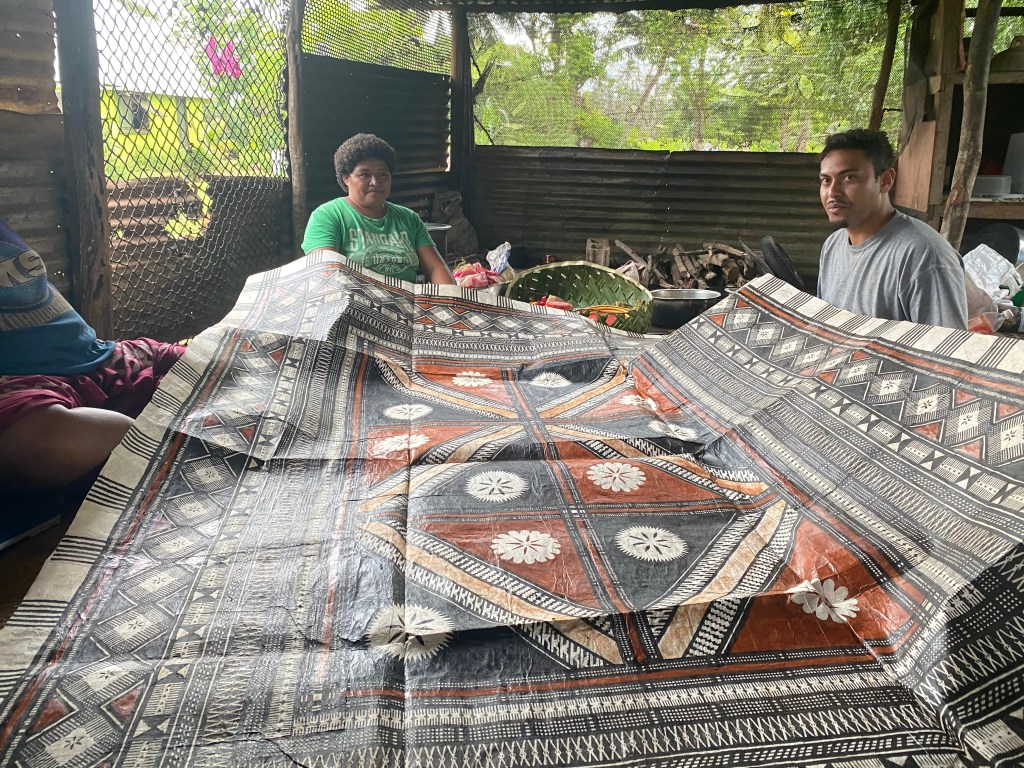
About 1.5 hours later we heard the sound of drumming on the lollies and voices. Wandered into the village and were taken from one person to the next, all so friendly and welcoming, until we found ourselves in front of an elderly chief where we presented our kava root and were accepted to their region. Soon we were passed off to a 20-something year old Fijian named Pate who explained that he was originally from here, left after primary school (to attend secondary school in Suva as most do), and just returned here about 6 months ago to take care of his sick uncle. His English was excellent and he introduced us to the headman of the village, who is the main government administrator (somewhat like a mayor). His wife gave us delicious sticky buns called pani popo (chunks of bread soaked in a rich coconut caramel sauce), as well as showed us the beautiful masi that Namuka is known for (more on this later).
They had us sign their village book and asked for $100 FJD anchoring fee (about $40 USD), which is twice the normal fee (if there is one at all) and has been the most expensive we’ve encountered in Fiji. It left us with a few questions about whether this was an intentional deterrent to having cruisers here or if they wanted cruisers here but had just increased the price. We had an opportunity later in the week to explore this.
We had been in the village longer than expected and started back to our boat on the trail, the sun setting at 5:30 and still a ways to go as we tripped over coconuts and branches on the ground, stumbling through the increasingly dark jungle without a light. Finally, well after dark we arrived back to the dinghy on the beach; Cora declared that she would never do that hike again!
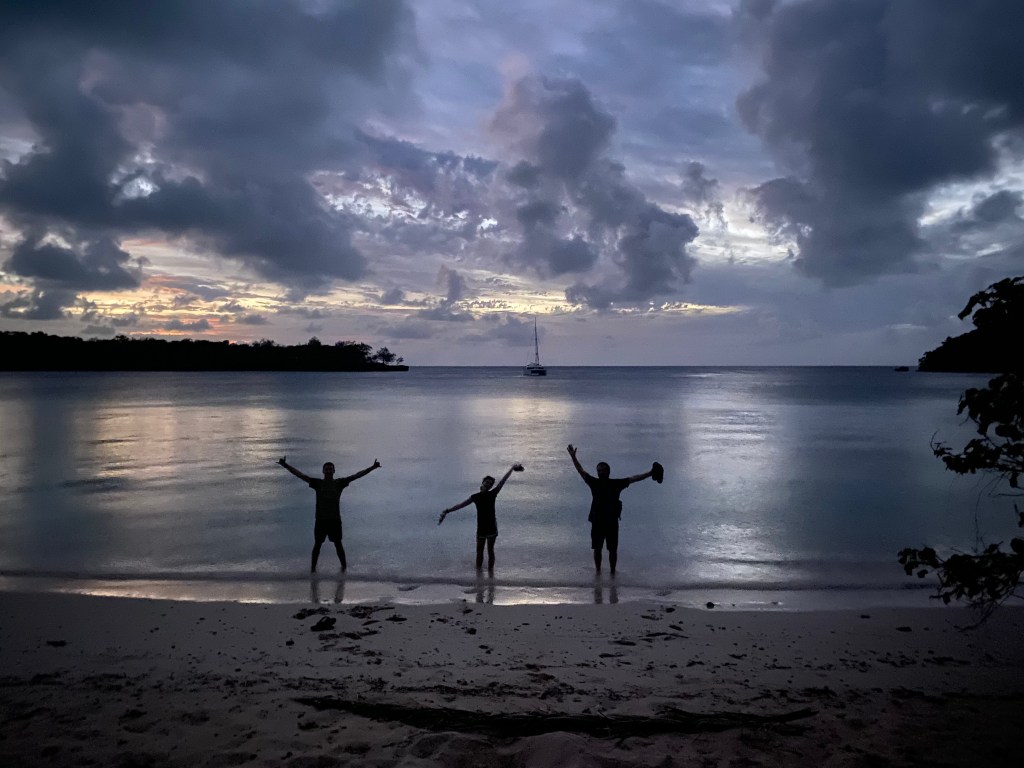
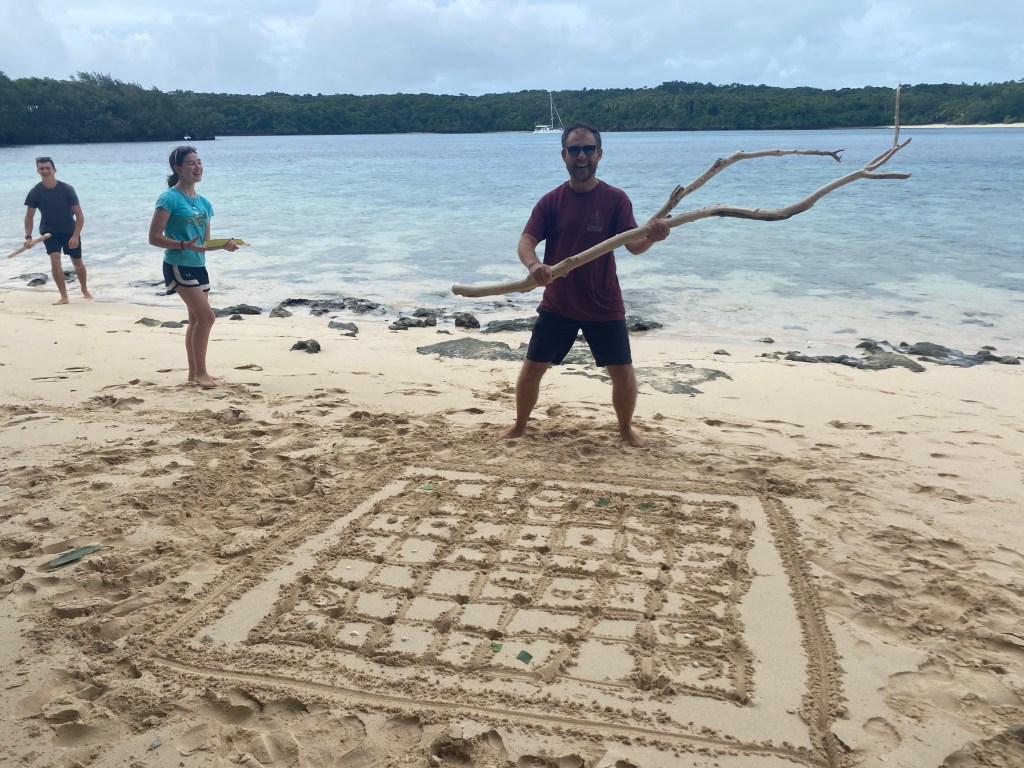
We settled in for a few days of school and games in this delightfully calm anchorage, only a bit of swell making it in during high tide with the bigger seas. It was a good choice to come here and we slept well. We had some fun family afternoons on the beaches, playing games and making beach art.
A few days later, Chris and I set off on the jungle walk to the village again, this time clearing the trail of fallen coconuts, branches, and other tripping hazards, trying to make the way clearer for other cruisers.
There was some confusion when looking for Pate, as we were passed around various kind locals until we found him way back in the brush feeding his pig. There was a feast in celebration of the cricket team and we were invited to the table and, after lunch, watched the game.
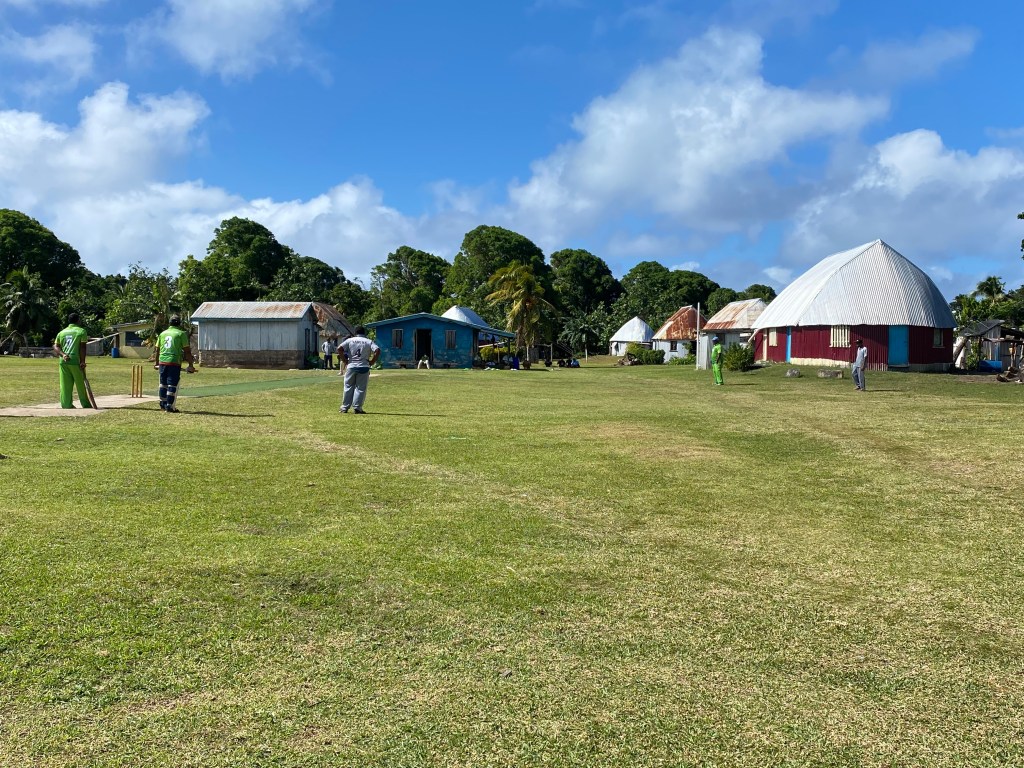
Pate took us for a walk through the village, many empty homes vacated for the bigger city of Suva, though he maintained hope that people would return and the future of Namuka is secure.
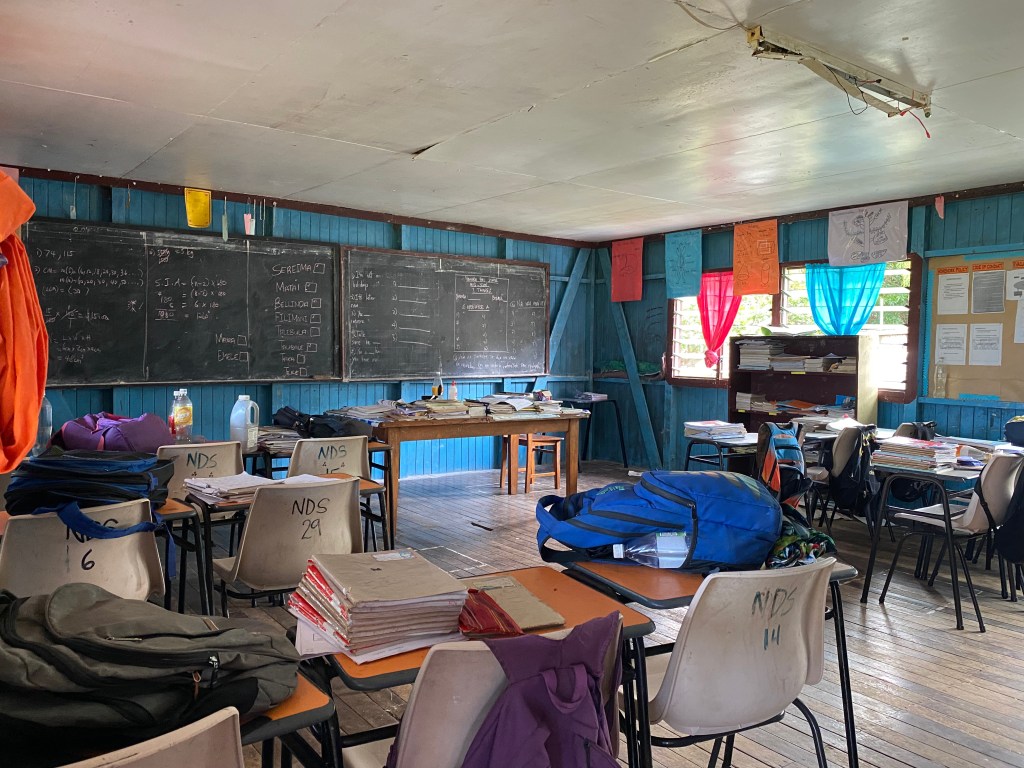
The village is notable, in that there were numerous starlink dishes about, a central village generator, with electrical connections to many houses, which has not been the norm. They run the generator from 6pm to midnight, allowing some to run freezers, lights, and even stream movies.
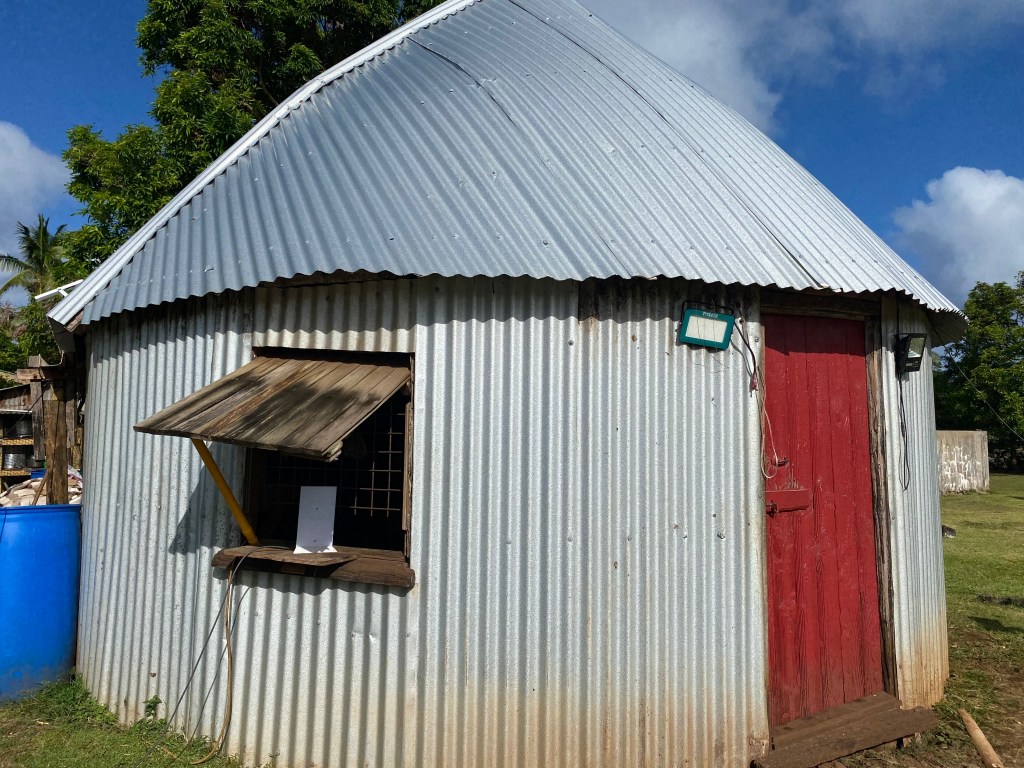
We had a candid conversation about the anchoring fee and if the community wants cruisers to visit, to which he said, yes, cruisers are welcomed and enjoyed. We tried to convey to the headman, that some cruisers will interpret the difficult trail and the relatively high anchoring fee as a deterrent, but it was difficult to say whether the message was sent/received well.
It had us contemplating the benefits and risks of cruisers in remote villages. For us, the connection with local people in our travels is rewarding and helps us understand other cultures. They provide us company, share local foods, access to their way of life, and take us for experiences such as gathering those local foods and going for hikes to hidden caves and outlooks. Our children learn how to interact with other cultures and listen. Locals make our cruising experience rich beyond words. They invite us into their homes, overwhelmingly generous. But, what do we provide? Is it enough… or is it too much? Negatively, we are a boat anchored in their scenic view and using their natural resources, also providing exposure to things and ideas that may not be always beneficial from our cultures. We are always asking if what we leave in a village really helps support them in their current lifestyle, such as reading glasses for handicrafts, fishing hooks, and pencils for schools. Positively, we provide a cultural exchange, practice speaking English, and our own resources (from assistance fixing items or building in their villages to medical care to financial help for their current projects), and they seem to enjoy us. Overall, it seems it can be a wonderful symbiotic relationship.
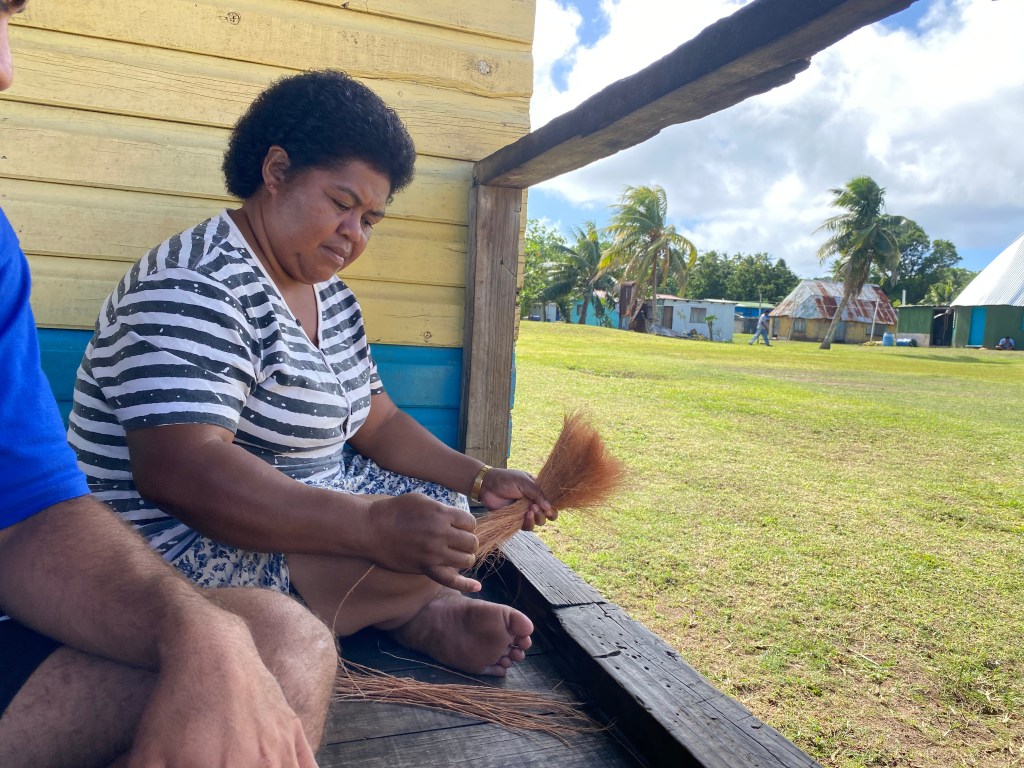
Back to our walk through the village, where we learned about and witnessed various handicrafts. The coconut husk threads made by Fijians are called sinu and they’re a traditional form of strong, natural fiber rope made from the coarse outer husk of mature coconuts. As we watched cricket, a woman sat next to us rolling the fiber into ropes on her thigh. It is very strong when dry and resistant to saltwater and is one of their main exports.
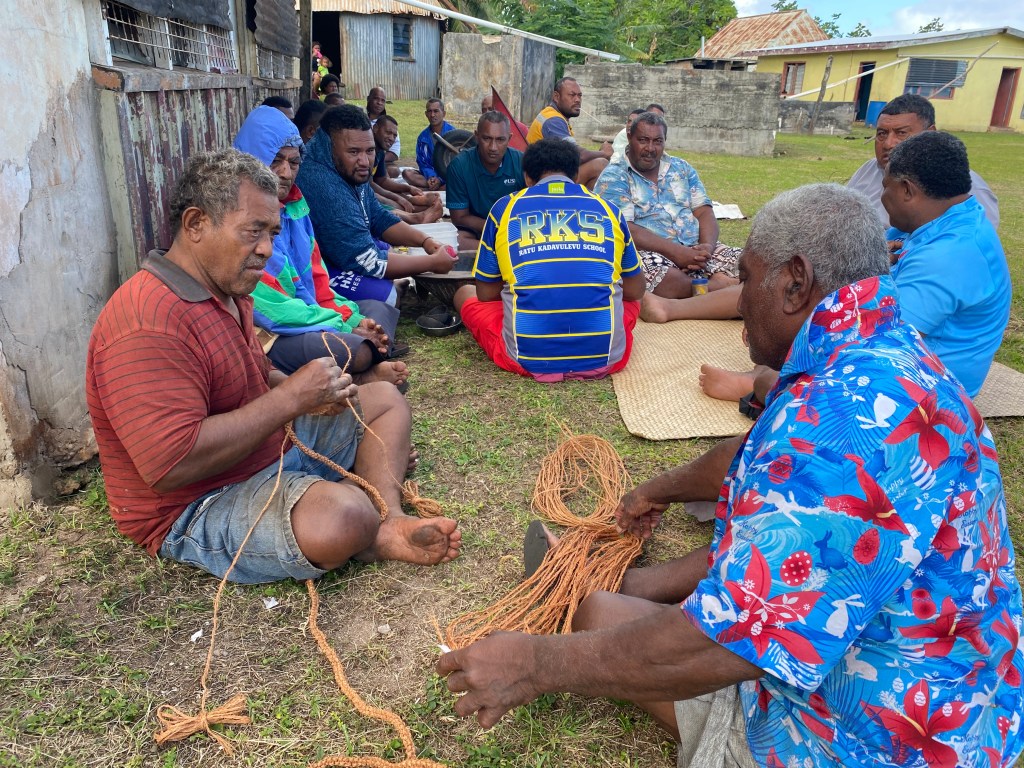
We saw where men were braiding it into a cord called mangimangi which is very strong, flexible, and used to attach ceremonial items like the sacred tabua (whale’s tooth) for weddings.
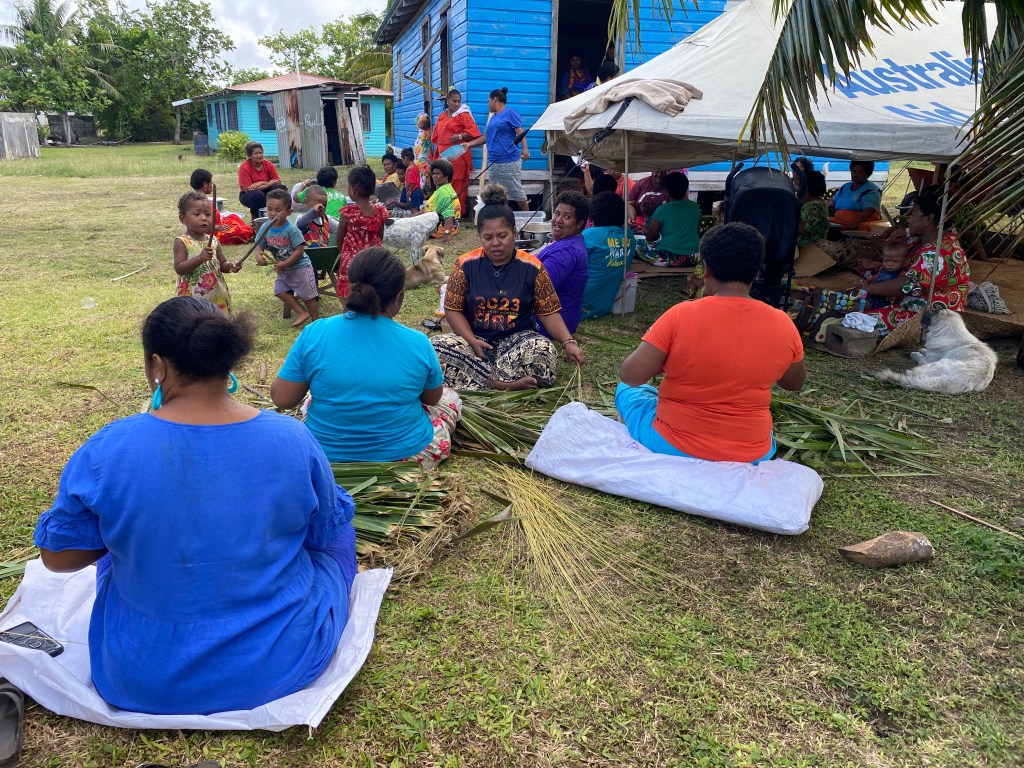
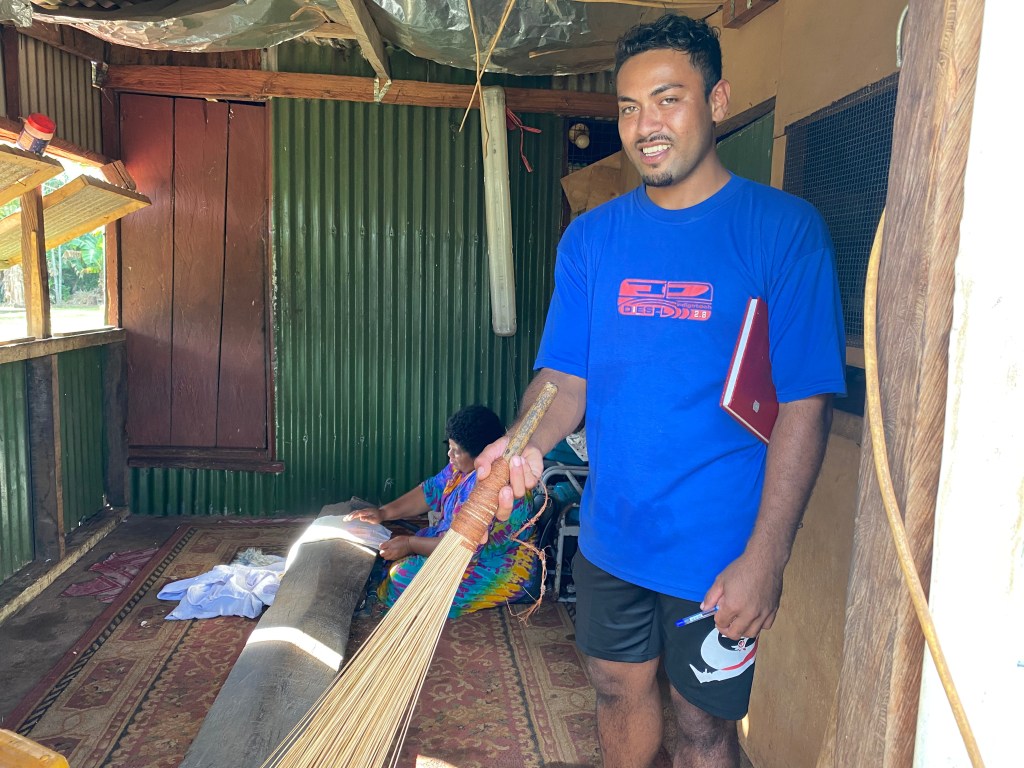
We watched the women make traditional Fijian brooms by stripping out and bundling sasa (the stiff midribs of coconut fronds) and tightly binding them with the coconut husk rope.
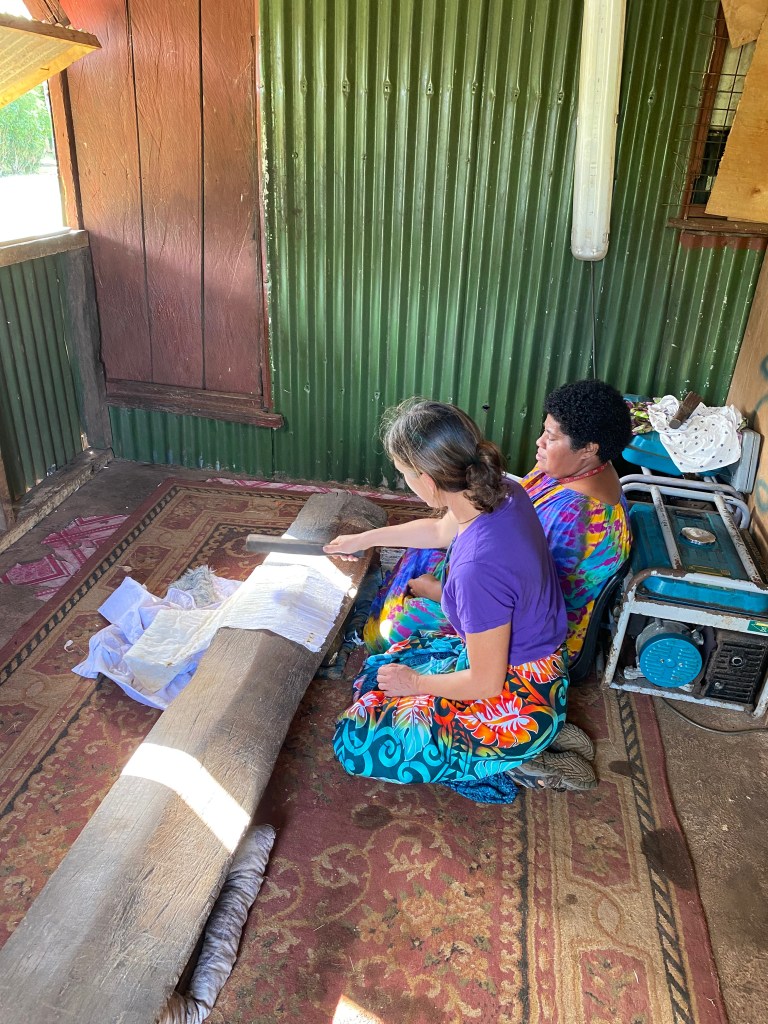
But Namuka is best known for masi, the beautifully painted tapa cloth made from the inner bark of the paper mulberry tree.
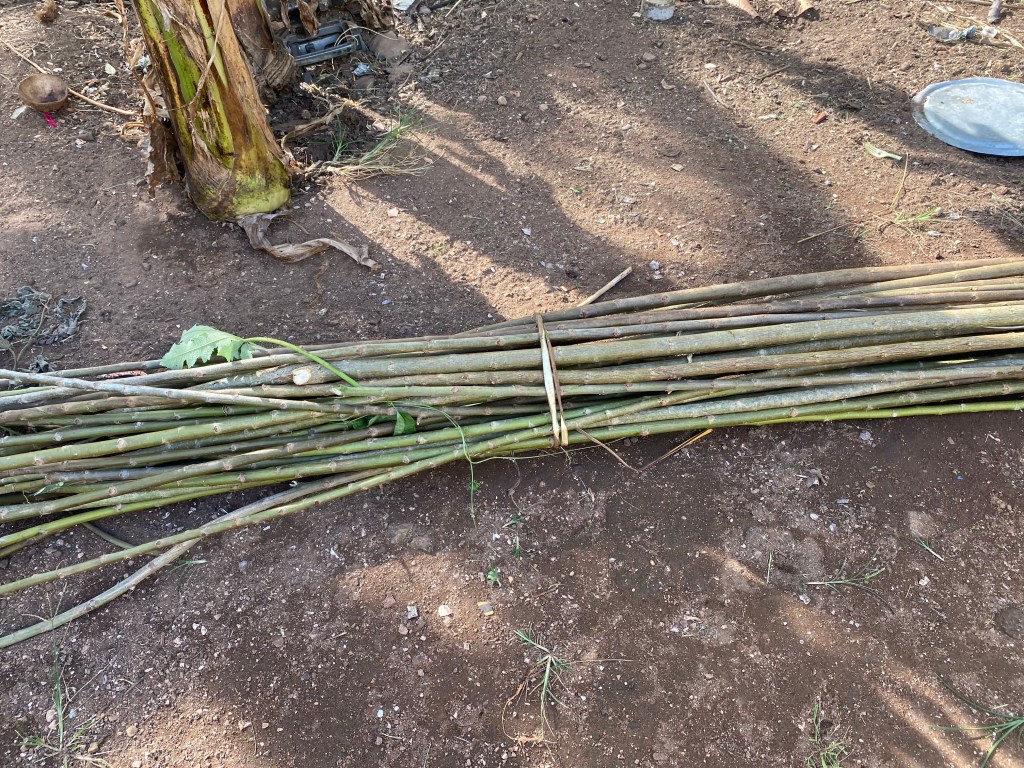
We witnessed (and I was able to participate!) in beating the bark. This is then joined and decorated with natural dyes made from mangrove plant extracts, clay, and charcoal in traditional geometric, symbolic designs that express village identity.
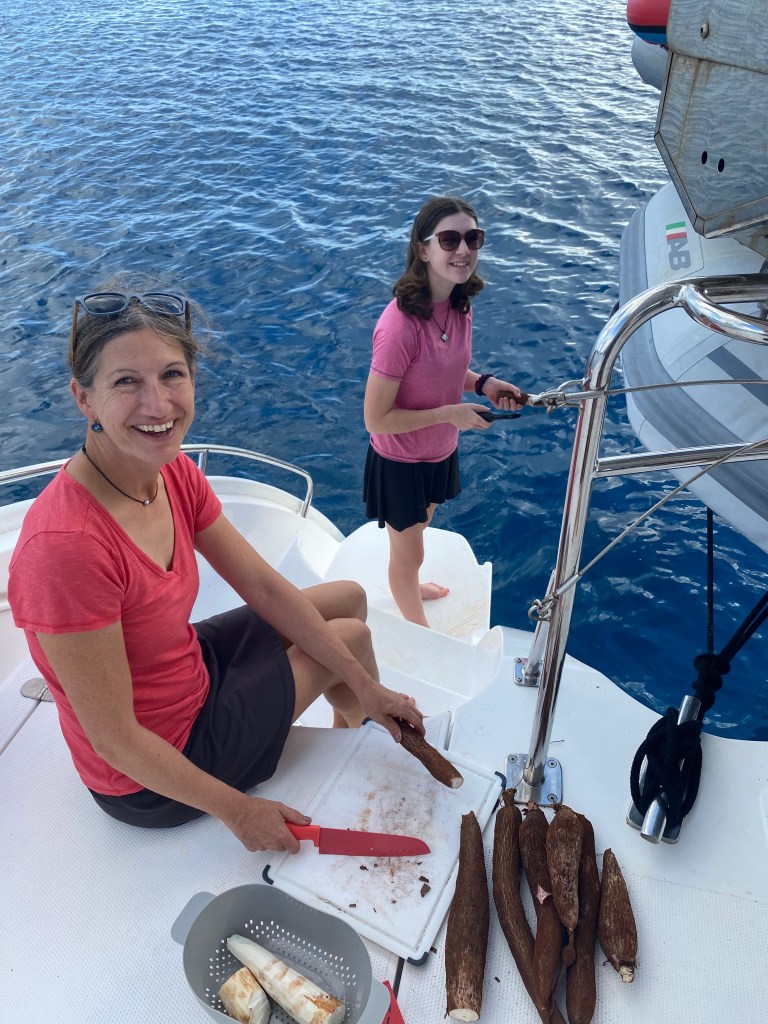
Before we bid Namuka farewell, the head teacher sent her husband off to dig us a huge bag of cassava. It was a wonderful village “wander” that ended up being a full day excursion. I often tell my family that we never know what is in store when we go…we just wander in and it evolves, mainly if we don’t have any time pressures or expectations.
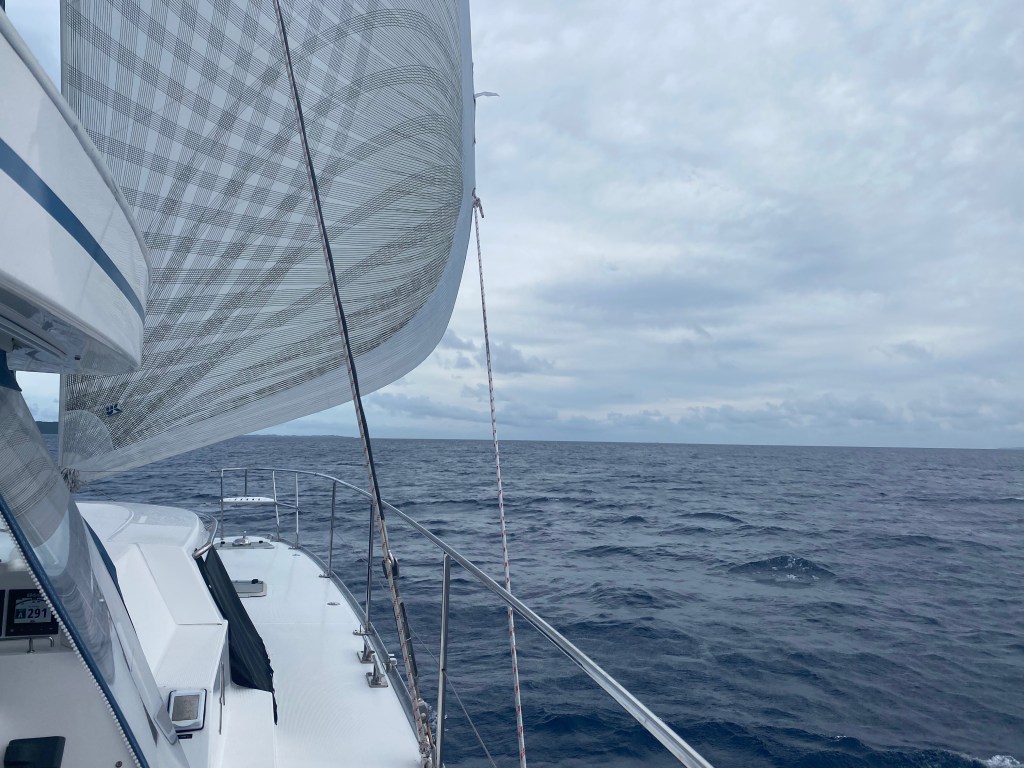
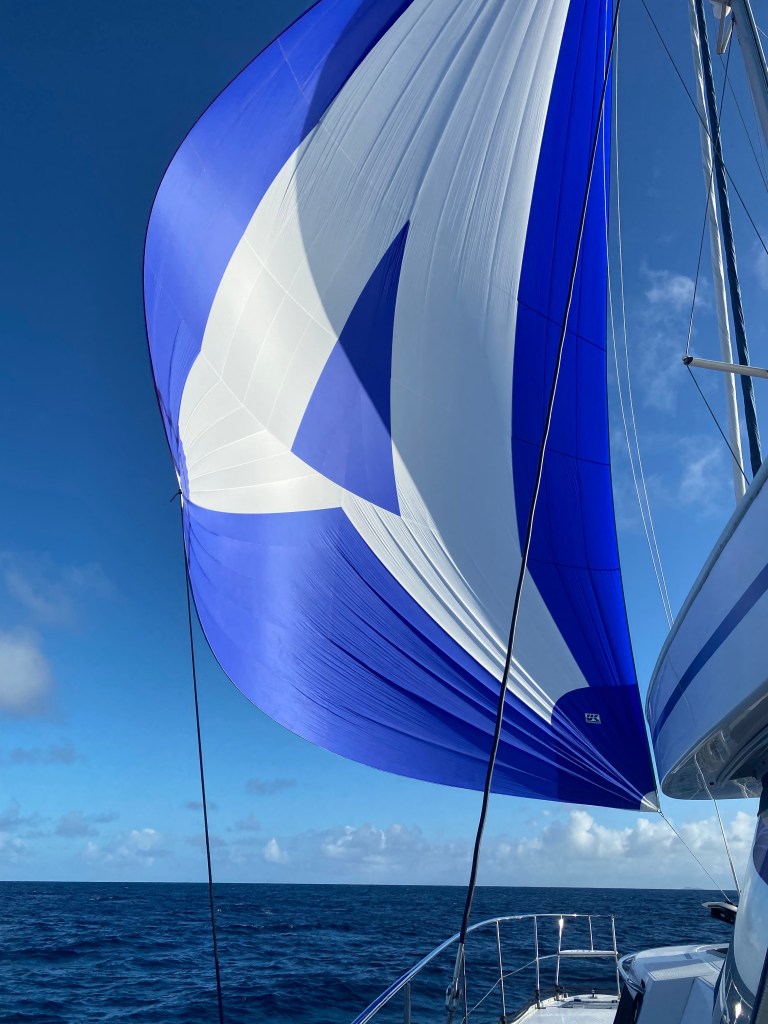
The next morning, underway by 7am to the island Lakeba. Such a glorious day, sunny, seas down. We went 42.5nm to Lakeba “dent” anchorage with light tail winds under asymmetrical spinnaker the entire way, average speed of 5.4 knots – lovely!
After a short night’s sleep, we were up in the dark the next morning to head to Venua Balava, the northern end of the Lau Islands. Our windlass was acting up again, which complicated raising the anchor, but in the end, we got it up and still beat the sunrise.

