Fiji is spread out over quite a large area of ocean and, with limited time to spend here, we are trying to cover the highlights. We decided to head to the most remote location first, as we enjoy the mix of quiet peaceful nature along with cultural experiences, and the Lau Group of islands fits this description. The Lau Group is a chain of over 50 islands in eastern Fiji, known for its mix of volcanic and uplifted coral limestone islands shaped by tectonic activity. Rich in traditional Fijian culture with strong Tongan influences, the Lao region is celebrated for its unique crafts, communal lifestyle, and remote natural beauty.
However, to get down south and explore this group can be tricky, as you fight prevailing southwest winds and waves. We had a 3-day window of calm seas and decided to motor the 199 nm slowly (on only one engine to save fuel) over two nights to the most remote island, Fulaga. Amazing to witness these seas so calm and peaceful that only last week were so boisterous; this passage of calm seas feels like a gift. We’re able to walk around comfortably, read, cook meals. We had sushi last night for dinner, the ingredients staying put on the table.
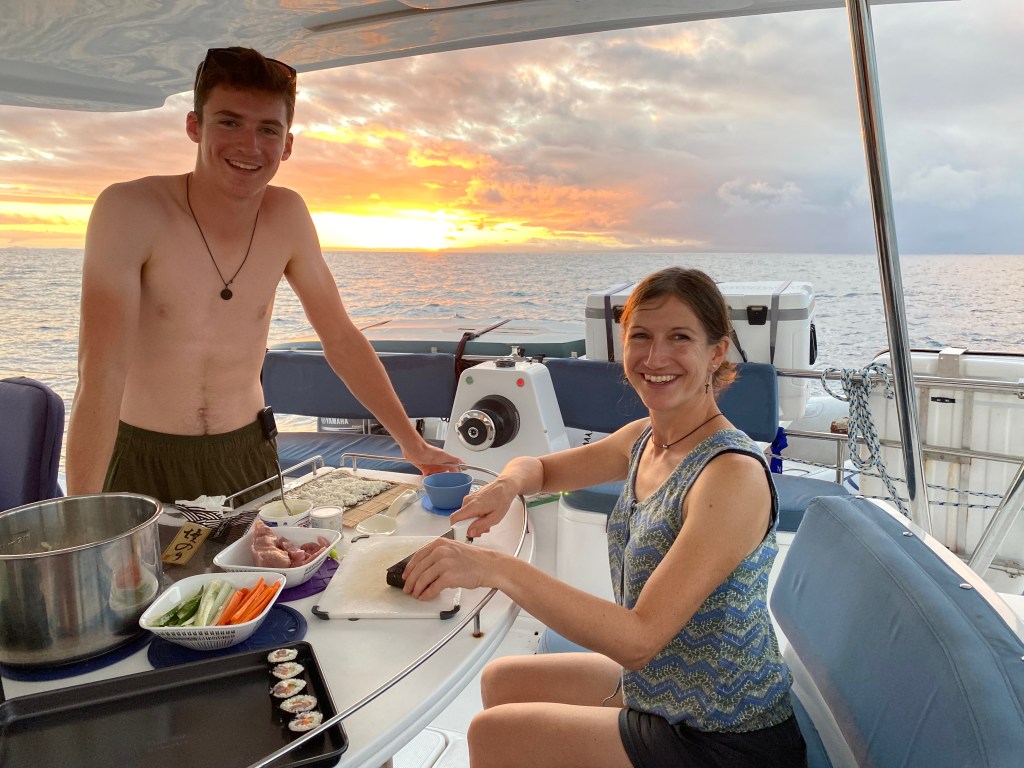
Calder has two fishing lines in the water and also is trailing his homemade teaser, had one hit but no fish on this passage. We need to make more room in our freezer anyway!
Early morning arrival to Fulaga, back to timing tides for passages into and out of lagoons. We watched the pass for a while to ensure no standing waves, watched a couple boats enter, then went for it.
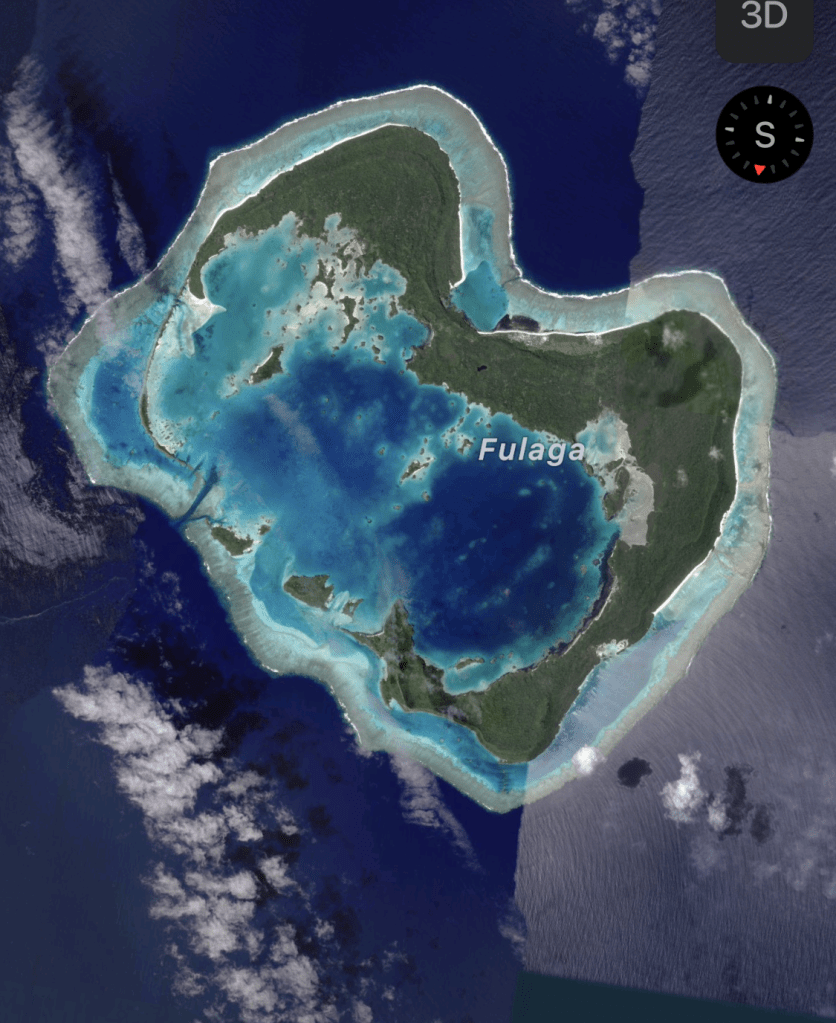
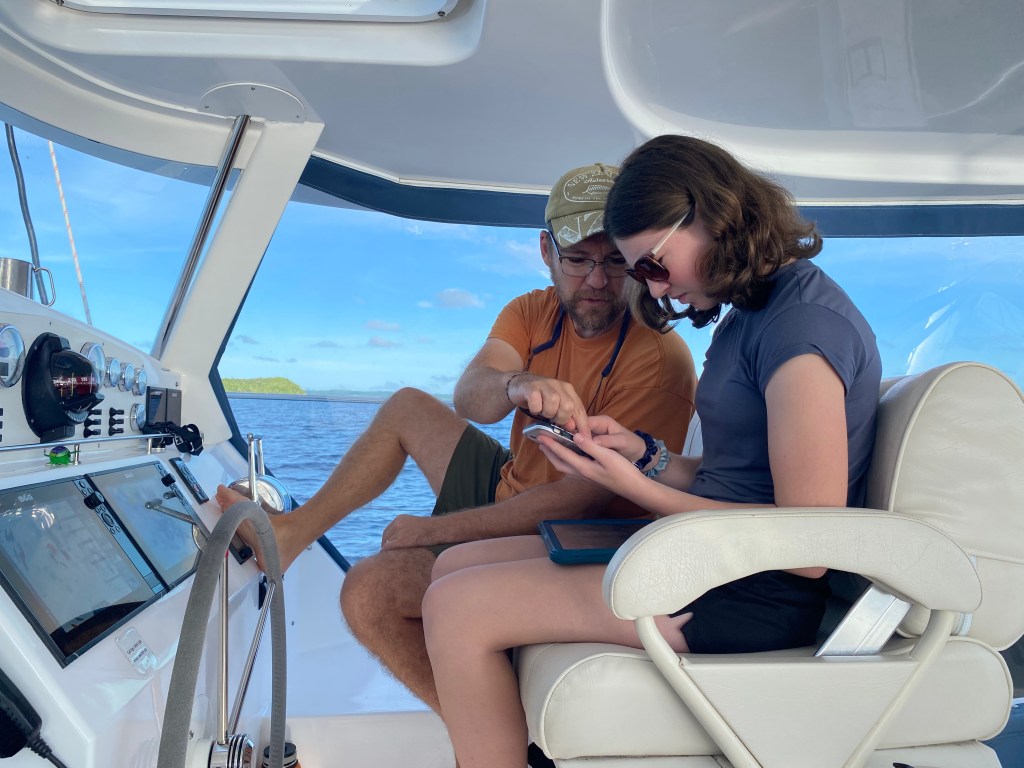
The water is so clear that at 60 feet we could look down at the coral we were moving over, stunning. Cora and Chris at the helm, using GPS and satellite imagery, and Calder and I on the bow with walkie talkies using “eyeball navigation” to look out for coral bommies and rocks.
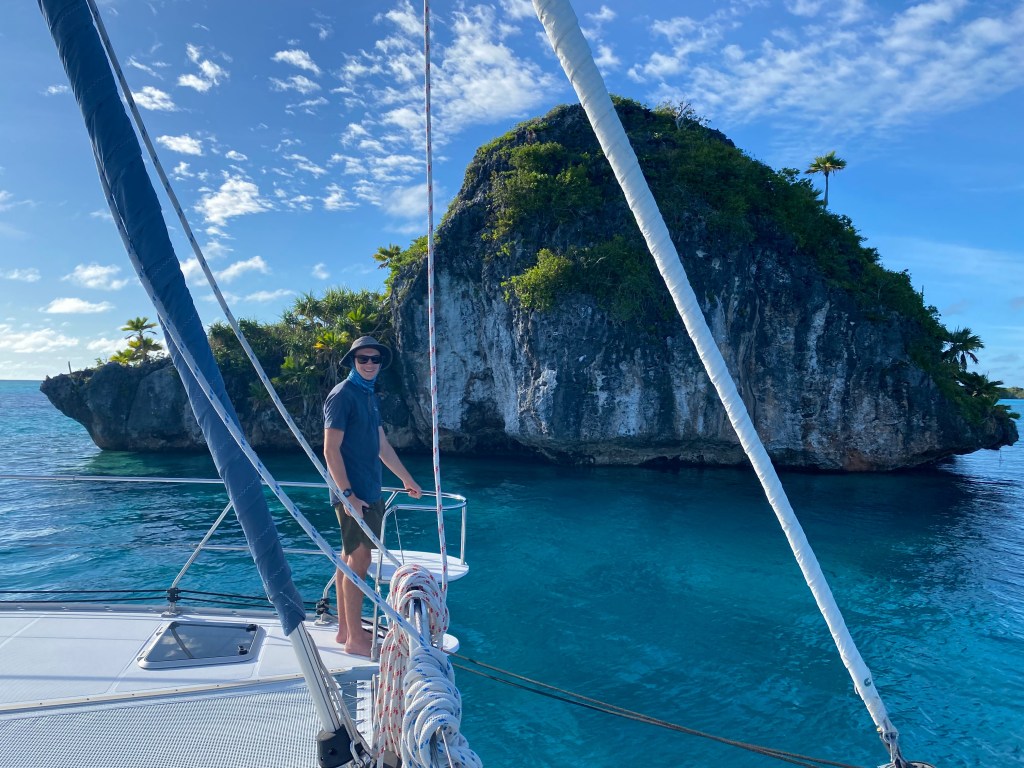
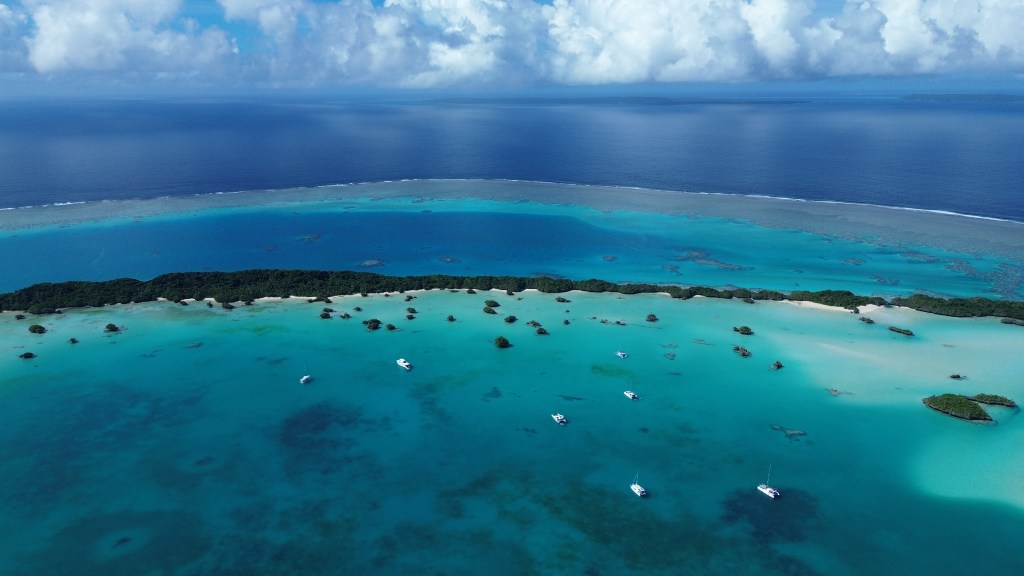
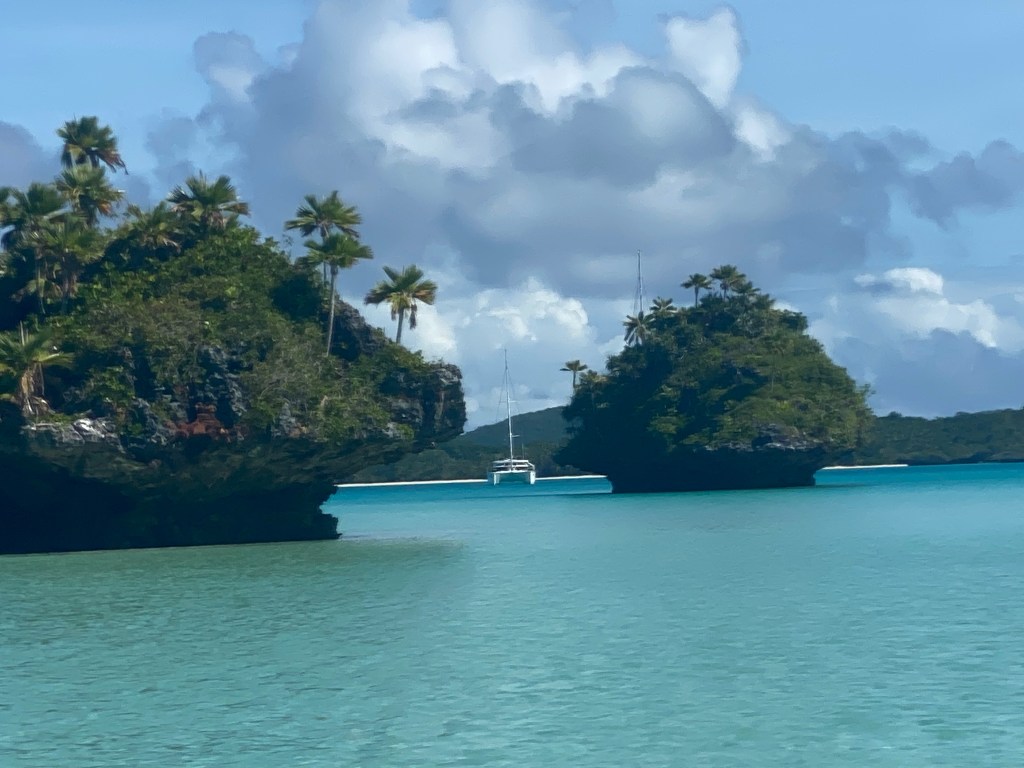
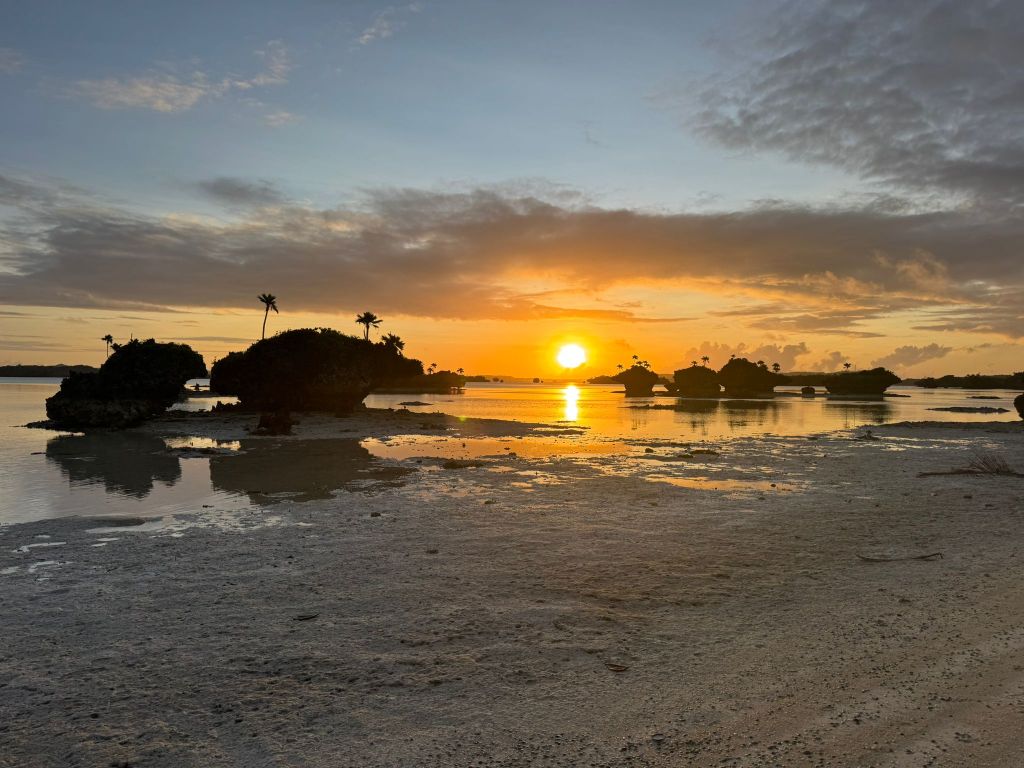
All went well and we anchored in paradise with friend boats. The landscape here is stunning – motus (small islands) of all sizes eroded by the sea creating “mushroom” type formations emerging from turquoise waters, the land a mix of beach, forest, and rock.
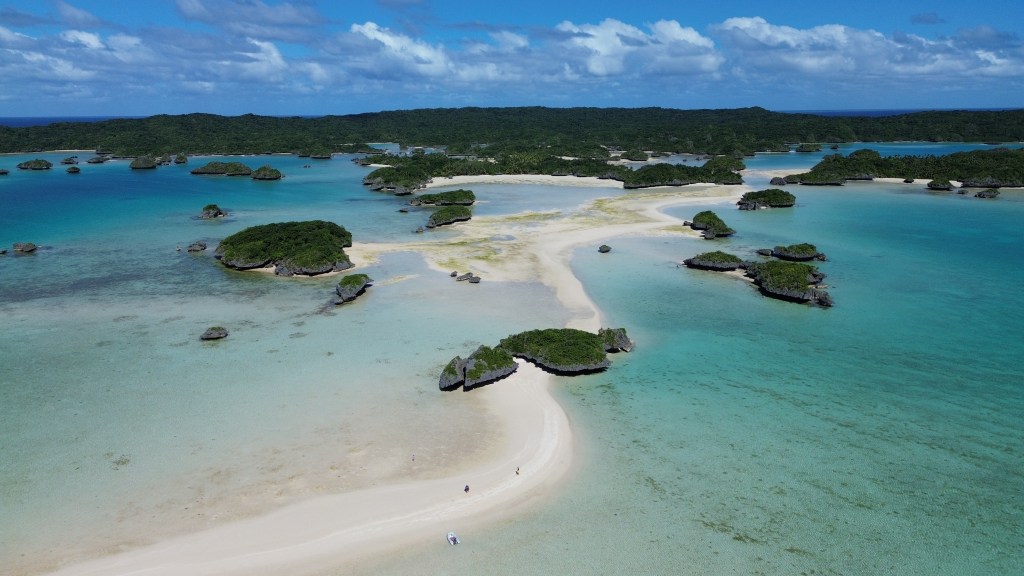
Fulaga (pronounced Fu-langa) is one of the most breathtaking and geologically unique islands in Fiji’s Lau Group. The island is a raised coral atoll, meaning it was once a submerged reef that was uplifted by tectonic forces, creating dramatic cliffs, sea caves, and a central lagoon teeming with marine life. Fulaga’s population of around 500 people lives in three villages—Muanaicake (the main village), Muanaira, and Naividamu.
Villagers live mostly off the land and sea, practicing subsistence fishing and farming, and maintaining strong ties to custom, clan, and church. The island’s isolation has helped preserve both its natural environment and its cultural heritage, making it a living example of sustainable island life and deep-rooted identity in the South Pacific.
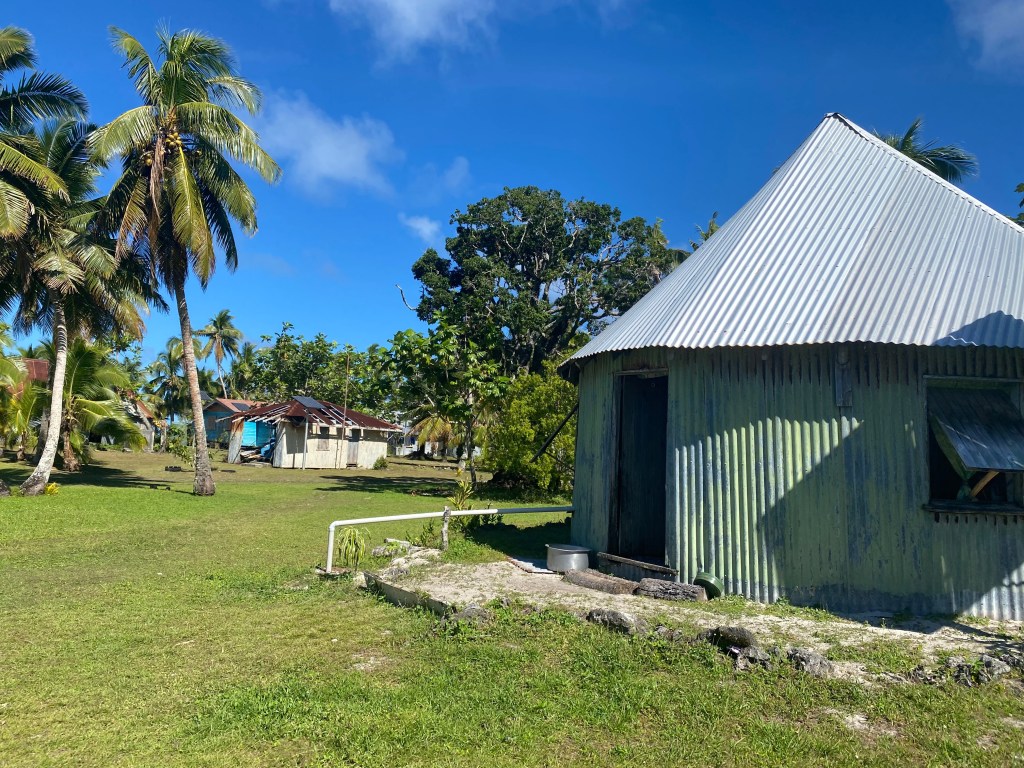
We have been fully welcomed by the people of Muanaicake village. We dinghied over to a beach landing and followed a jungle path about 15 minutes to the village, wearing our colorful sulas and bringing a gift of kava root for the chief.
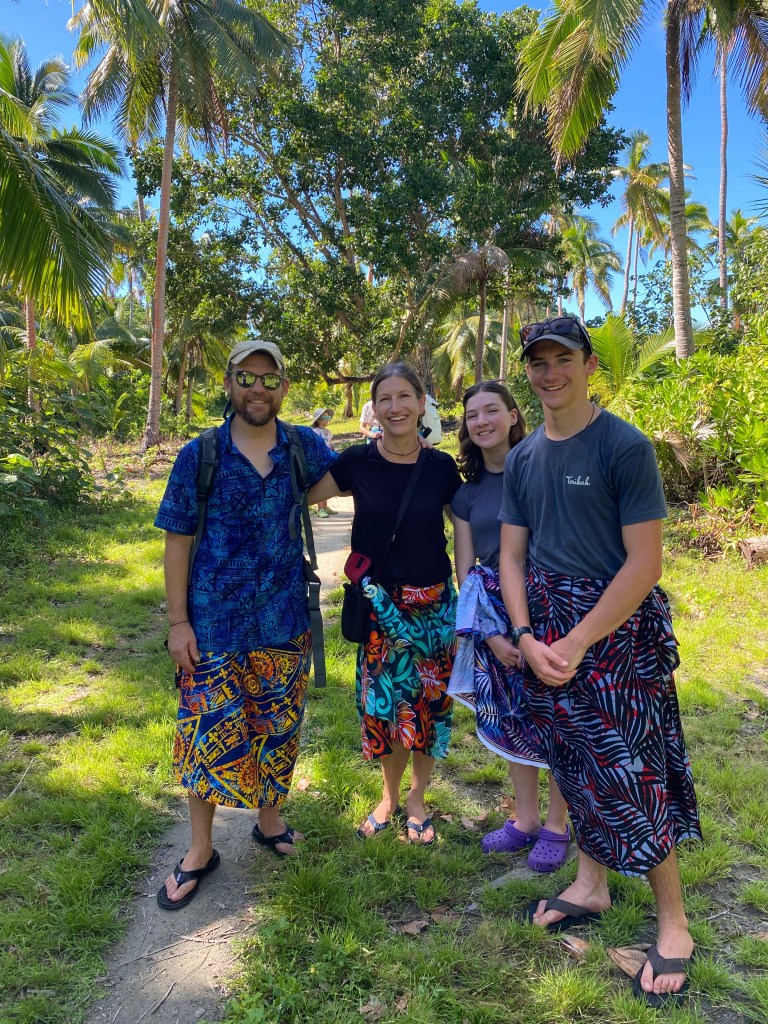
We were greeted by Seta, one of the local wood carvers, who gave us a tour of the village, everyone smiling and calling “Bula” to us. Carving is a main source of income for Fulaga and he showed us the homes of four different carvers with displays of various beautiful, intricate carvings from bowls to paddles to neck breakers (just what it sounds like). We also met the local “farmer” and purchased a basket of bananas.
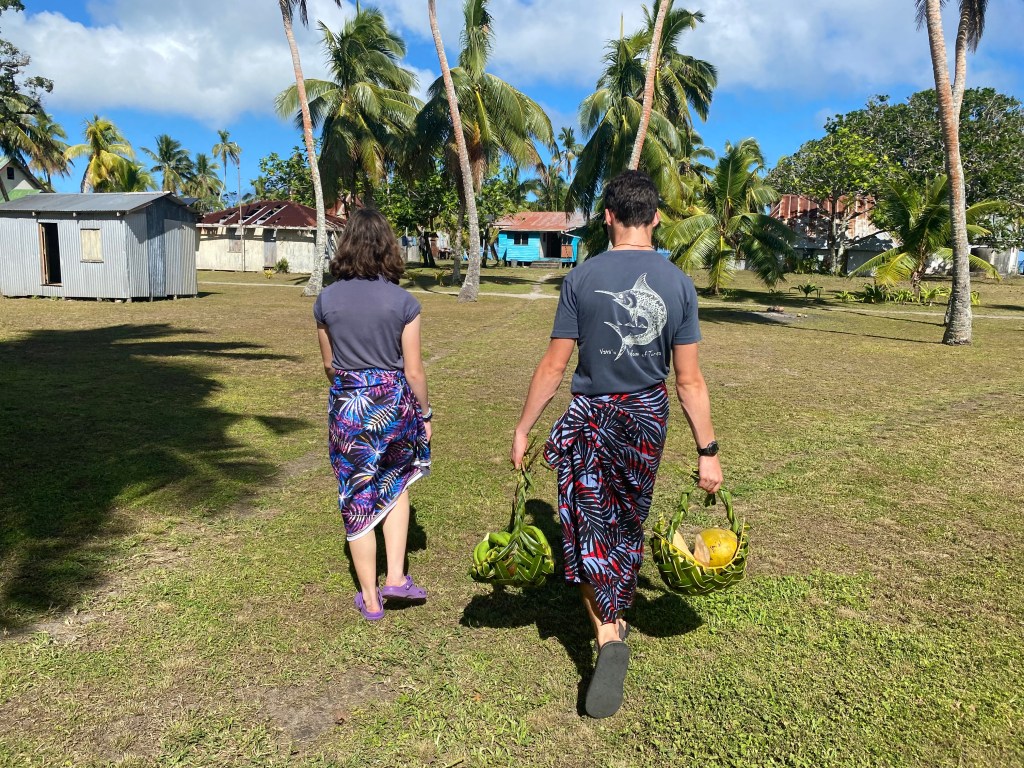
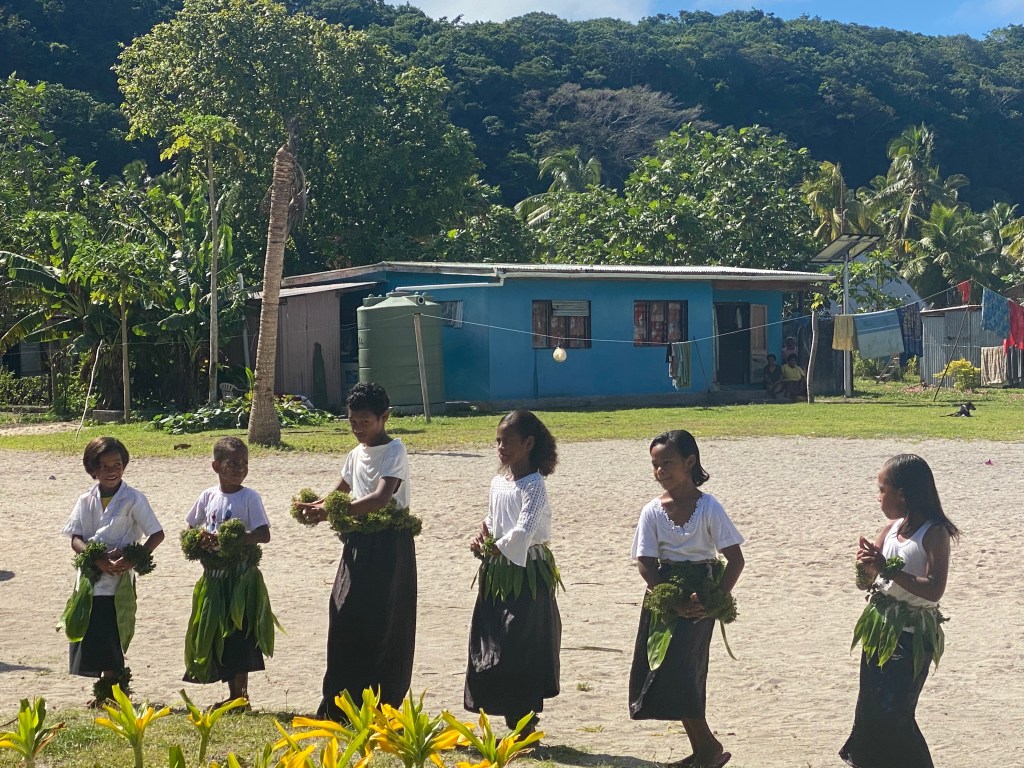
We arrived at the chief’s dwelling for the sevusevu, took off our shoes and entered, where Fijian was spoken. Then he spoke to us in English, outlining the rules of what we could not do on Sundays (water sports or other such activities) and that we would be left alone on our boats without locals coming out to ask for items such as kava, liquor, and smokes. We gave our gift of kava and $50 FJD (about $23 USD) for the community fund. He said that we were now part of the community and the land and lagoon were ours to enjoy. It felt very genuine and brought tears to my eyes to be welcomed so kindly. Over to the school where we watched the kids dance for a school holiday, so much laughter. This feels like a very vibrant joyful village.
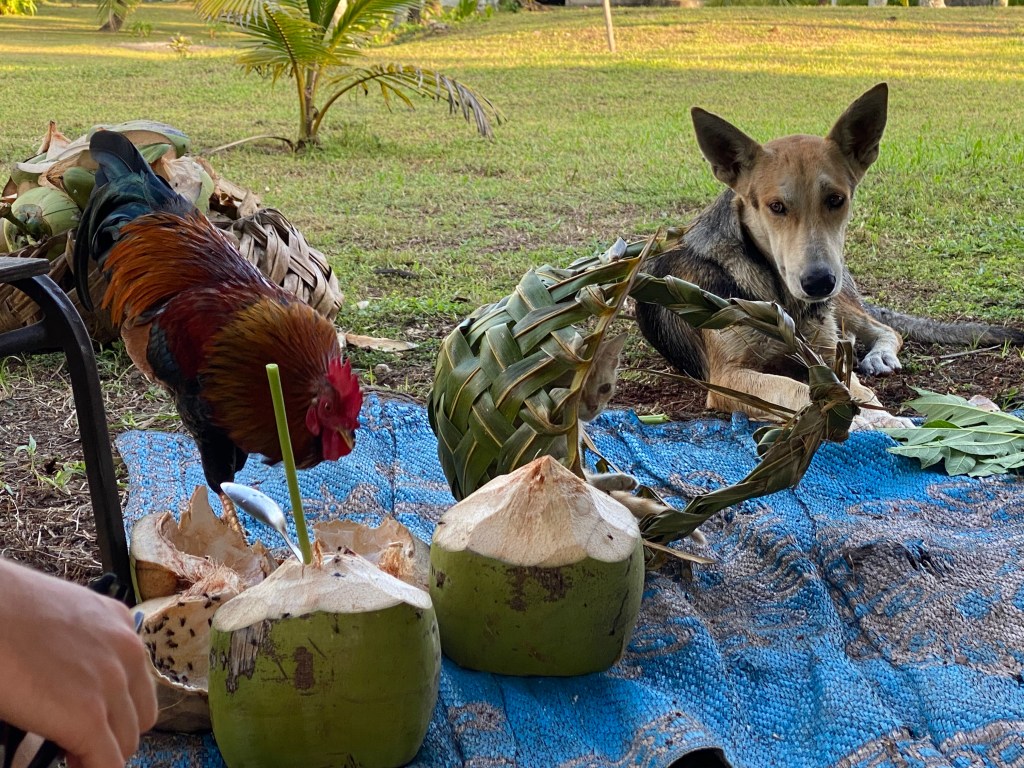
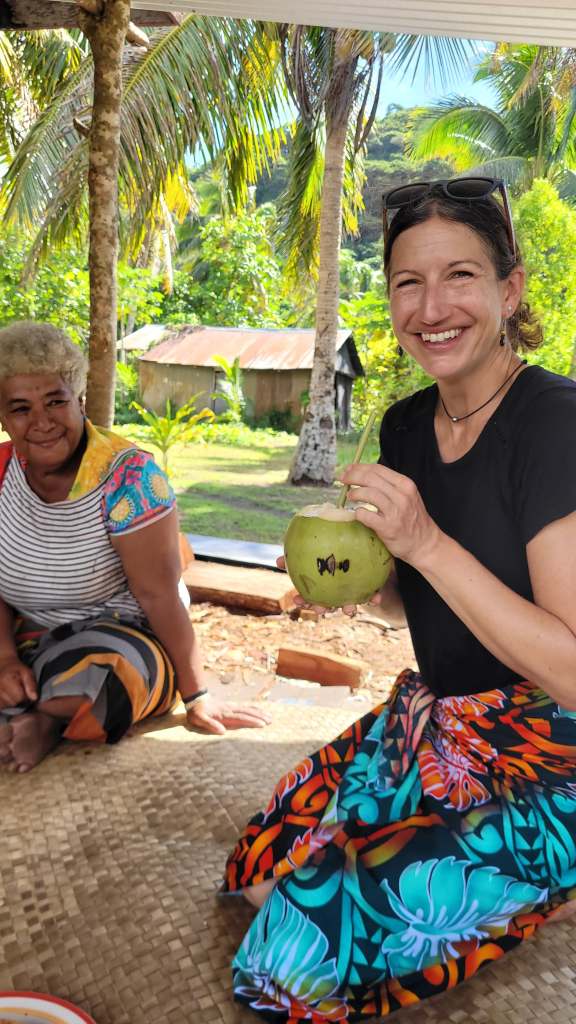
We were assigned a local host family, Miji, one of the local woodcarvers, and Lani, his wife. They also have their two grandchildren living with them until next year, when they leave for the capital city of Suva to start high school. We sat down on a mat outside their simple abode and they opened a coconut for a cool drink, sipped with a papaya stem straw, along with a plate of breadfruit, as they shared stories about their lives.

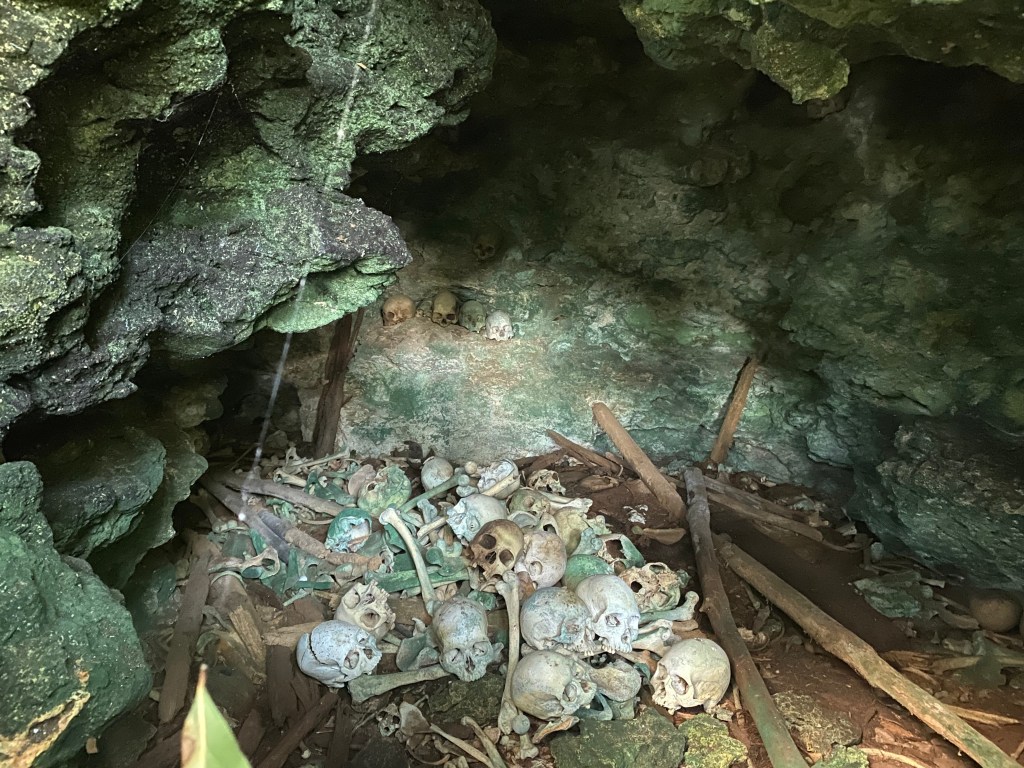
A couple days later we went back to the village to visit with our host family. Lani was out trying to spearfish octopus, so we spent time with Miji and their grandchildren. Their teenage grandchildren took us for a walk through the jungle (a bit of bushwacking) to the “bone cave,” which is just what it sounds like. You look through a hole in the volcanic rock and there are piles of bones with over 40 human skulls, once a burial location.
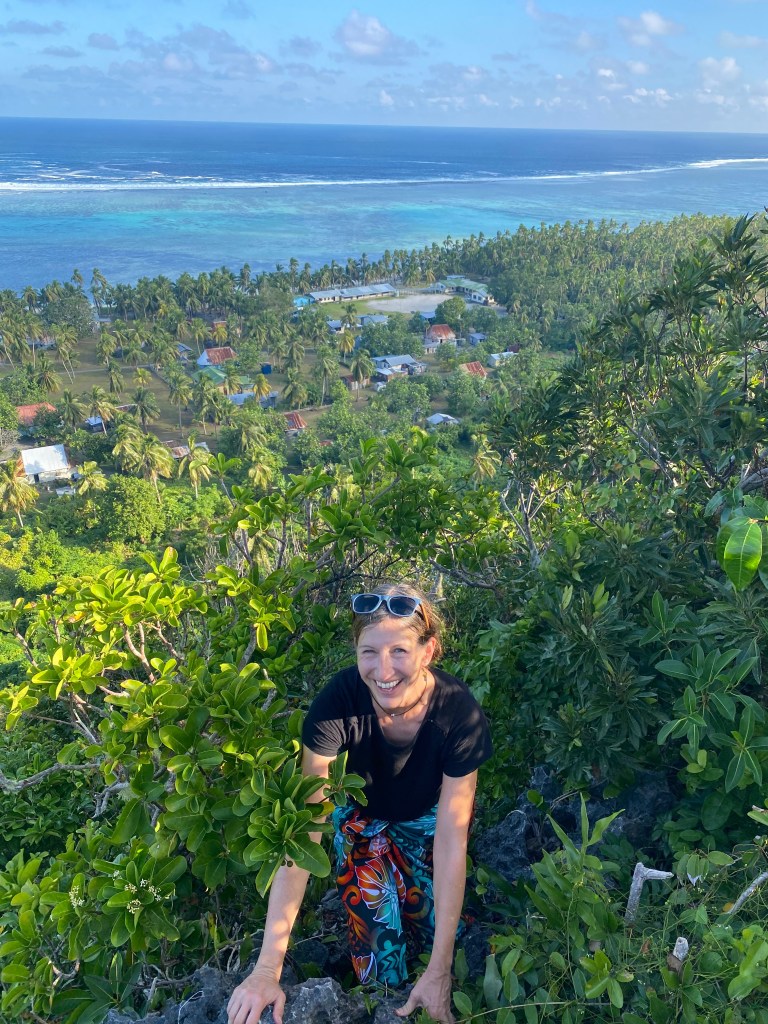
Further up, we look into the jungle where the old village used to be. Next stop, the look-out. This is no well-marked path; it is climbing steeply up sharp volcanic rocks to a stunning lookout of the entire island, lagoon, reef, and waters beyond. It would have been an excellent vantage point to see others approaching.
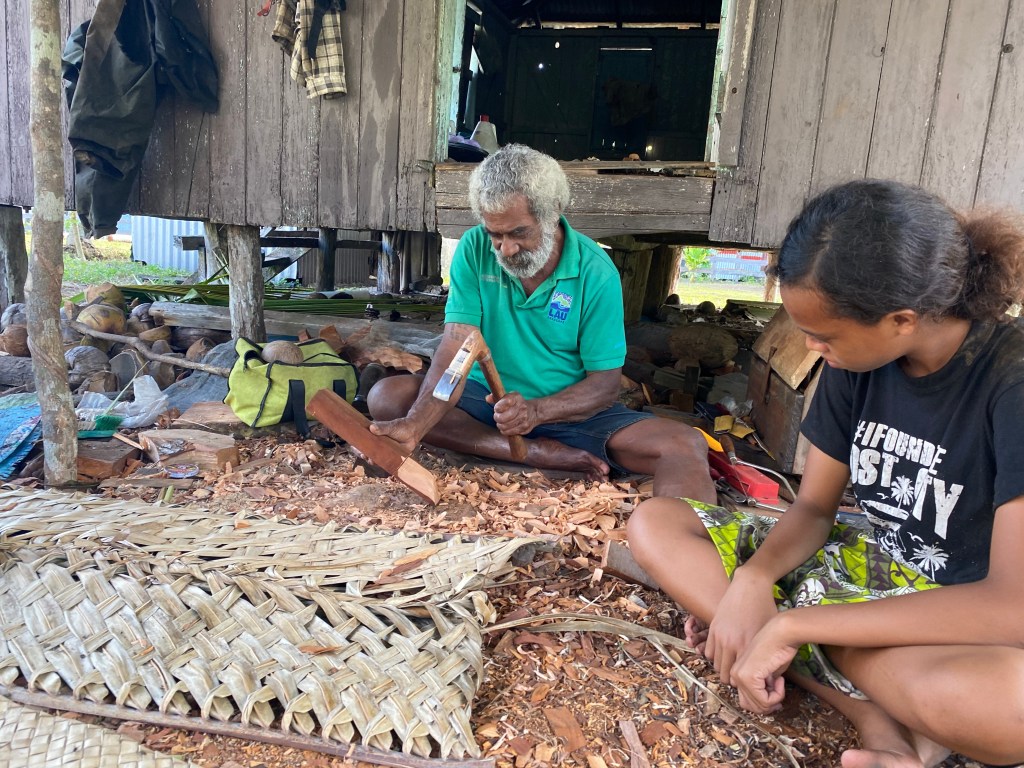
Back to the grass mat at the house, we sat down and enjoyed fresh coconuts while Miji showed us how he carves, taking a piece of mahogany and carving a turtle for Cora with adze and saws, using his foot as a vice grip.
The grandkids enjoyed the plate of chocolate chip cookies Cora and I baked. We also brought him a gift of kava root and he had this ground, wanting to introduce us to the beverage of kava, which we had not yet tried. He placed the ground up root into a cloth bag, then wrung it over and over again in a bin of water (similar to washing clothes), as the water turned a muddy brown. After doing this for about 15 minutes, he added more water and declared it good.
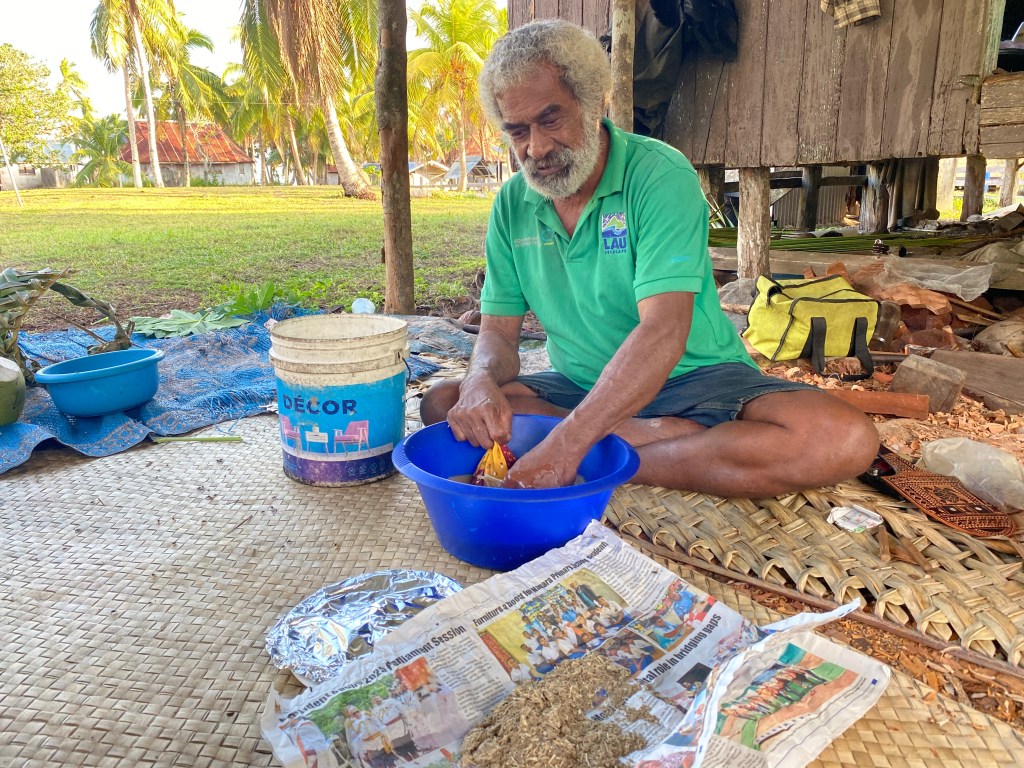
He had a few friends over and they showed us how to cup the hands together in a clapping sound one time before drinking it, say “Bula,” and then swig it down in our coconut cup. Then after, cupping hands together in a clap three times and handing it back. He joked that Chris would be the chief and got the first cup, a “high tide” pour to the top of the coconut. Calder and I had a “low tide” pour. Cora decided to pass, but enjoyed the kava circle experience.
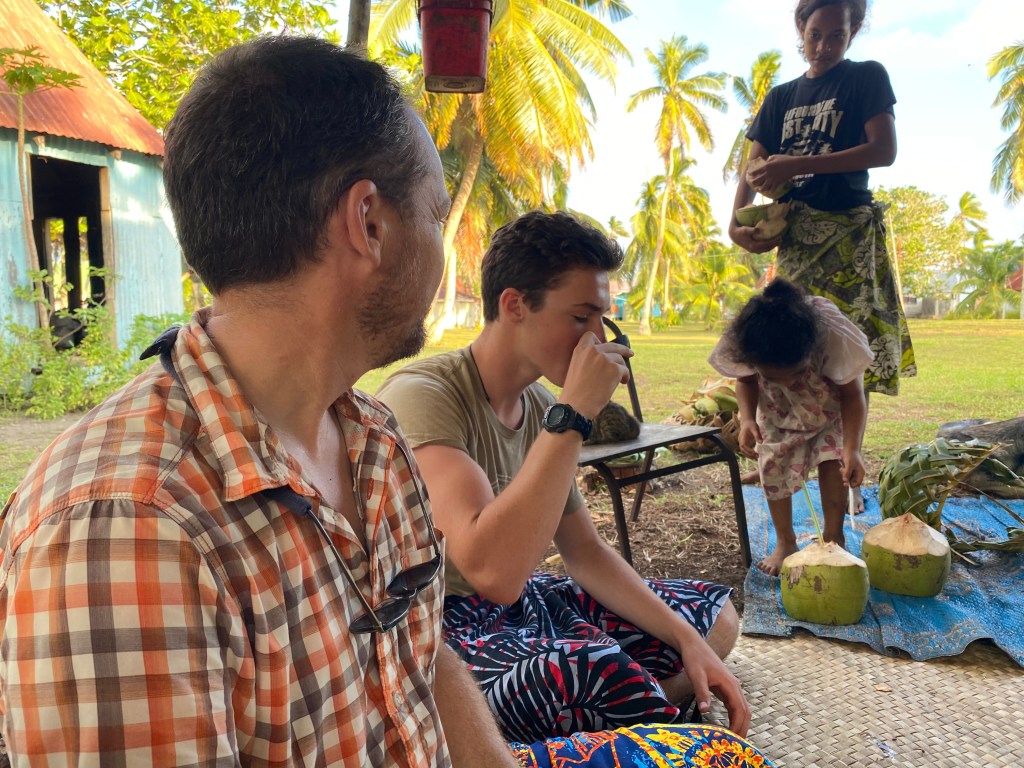
We had anticipated that it would taste like muddy water, but it actually had a spicy somewhat enjoyable flavor that numbed the tongue and mouth for a while. We sat around drinking kava and visiting for an hour, but had to get back to our boat before dark; they continued until it was gone long after we left. What an experience.
Enjoying our afternoon swims, back in the tropical waters, so refreshing. We enjoy beach fires and impromptu gatherings with other cruisers, paddleboarding dates, and snorkeling the pass (thousands of beautiful fish on healthy coral, reef sharks, turtles). The Tradewinds are back, which means wing foiling, Calder’s favorite sport.
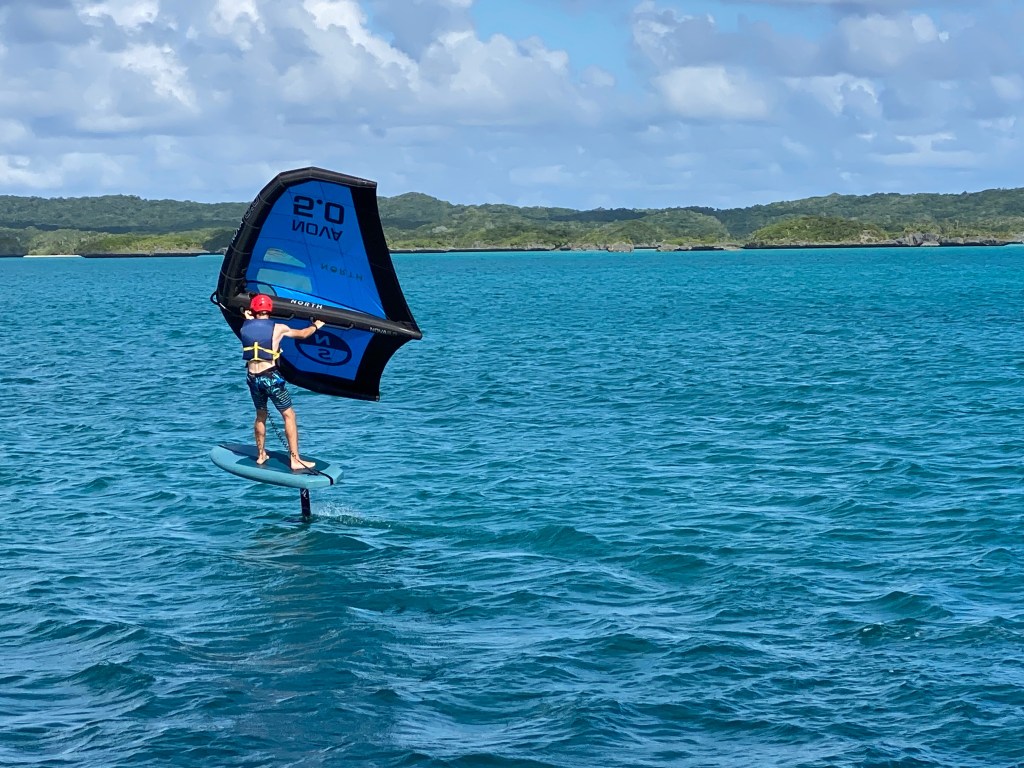
Chris and I have signed up for Calder’s Wing-Foiling school; he is such a patient teacher and we are making slow but steady progress. Our bodies are aching. We have also adopted a pet gecko. We’re not sure where he came from, but he’s a little guy that makes little poops on the ceiling of the boat.
Sunday was church at 10am at the Methodist Church in the village. Many of us cruisers dressed up and went to the service, all in Fijian with the booming voices singing together. After the village was hosting a lunch in the community hall in remembrance of four villagers that had passed this month; the spread was massive and we sat on the ground in front of rows of fish, cooked wild cabbage, pumpkin, cassava and coconut bread cooked in leaves in the earth oven. The chief offered his blessings, we feasted, and the kids played.
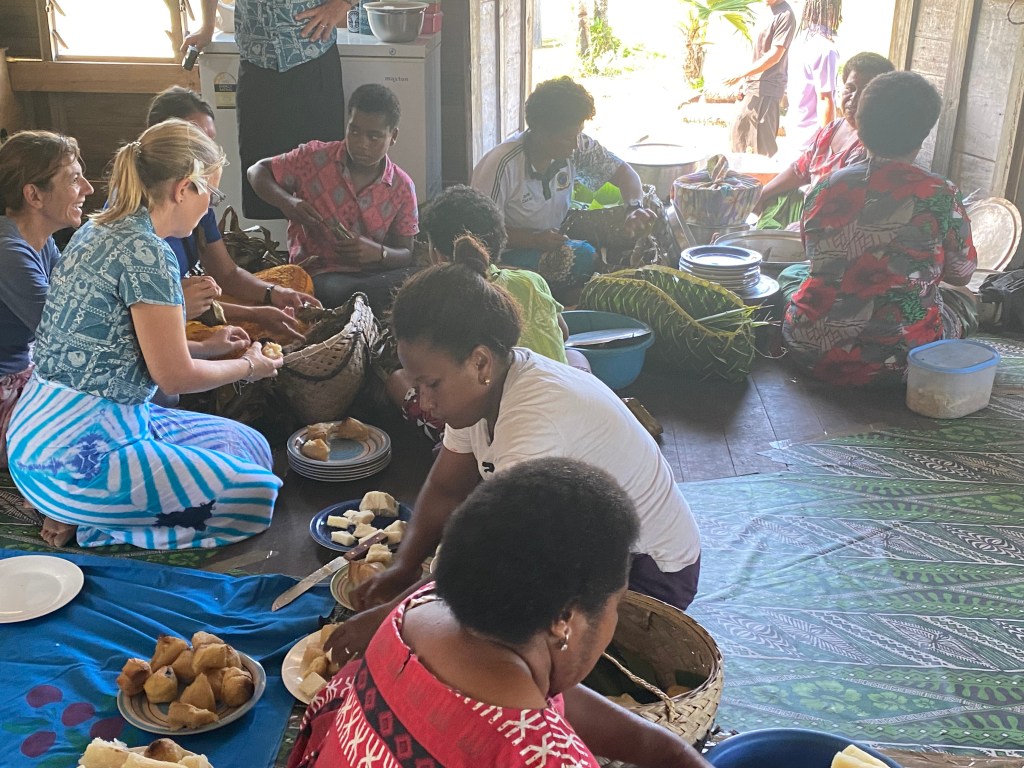
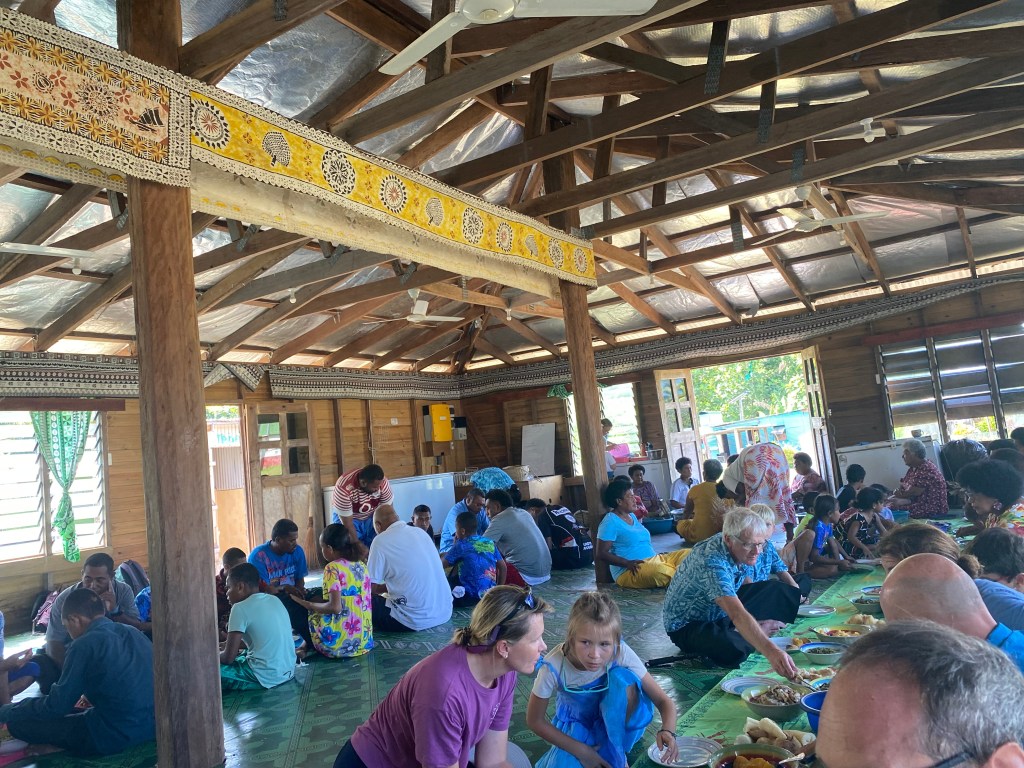
Afterwards, our host family gifted us food to take back to the boat for dinner – fish, 4 cooked mud crabs, cassava, coconut bread, and wild cabbage. Miji showed me a wound on his toe, a large ulcer that definitely needed medical attention, but admitted that he had not gone to the local nurse yet and asked what I could bring. The next day I stopped by the local clinic to talk to the nurse Fili about it and he asked me to see a couple of patients with him. We chatted about the foot and he agreed with what I was doing and ensured he would follow up as well.

We have decided to linger here in Fulaga a bit longer, to stay another week. These authentic cultural experiences are a big part of what make this lifestyle worth it. The cruising lifestyle is quite a bit of work, keeping the boat and crew doing well, logistics of daily life, always looking at the weather in detail daily, meeting new people then saying goodbye repeatedly. It’s not an extended vacation. But this lifestyle allows us to access places and people that can be reached no other way. When I see my kids sitting cross-legged on a mat as a Fijian chief offers his blessing, it is all worth it.
 SV Terikah Adventures
4 responses to “Fulaga, Lau Group: Part 1”
A very interesting island!
LikeLike
Yes, this has been a favorite of our families. The setting and the people.
LikeLike
Hello Jenn! I have not had one of your amazing emails in a while. Did I fall off the list? Please put me back on!Rozanne
Sent from Yahoo Mail for iPhone
LikeLike
Just added you! Glad you are enjoying our updates and hope you are well!
LikeLike