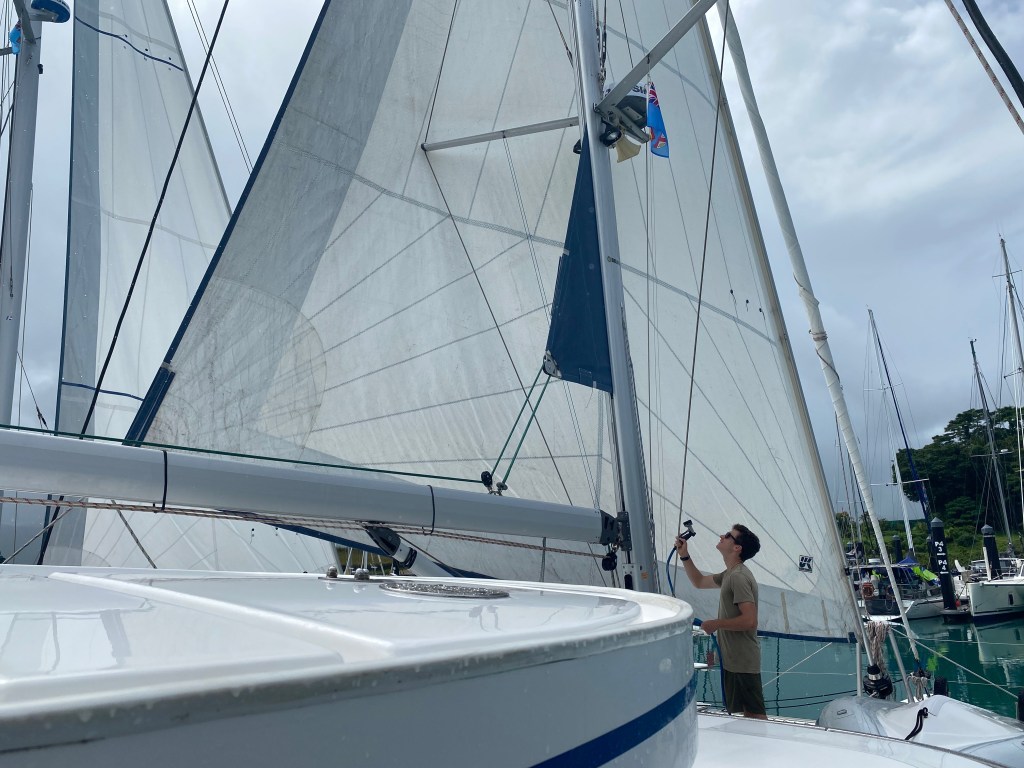
Our first impressions of Fiji – welcoming friendly people in a lush, beautiful landscape!
Tied up to the Customs Dock, we were visited first by the woman from the Ministry of Health, where she ensured we were not bringing in any “quarantainable disease,” presented us with our “Certificate of Pratique,” and advised us to lower our yellow Q-flag indicating to the other authorities that they could proceed with clearing us in.
Next, a dinghy arrived with a trio of women representing Customs, Immigration, and Biosecurity. After filling out more paperwork (over a bowl of cookies we put out – always welcomed!), we were given the “Authority to Disembark” and were untied to proceed to our slip at Nawi Island Marina where we would be for the next week, sorting our boat, getting fresh provisions, and waiting for the tradewinds to chill out to get down to a remote island group called the Lau Group. We celebrated our arrival as a family over dinner and drinks at the marina restaurant; why do we always crave burgers and fries after a long passage?
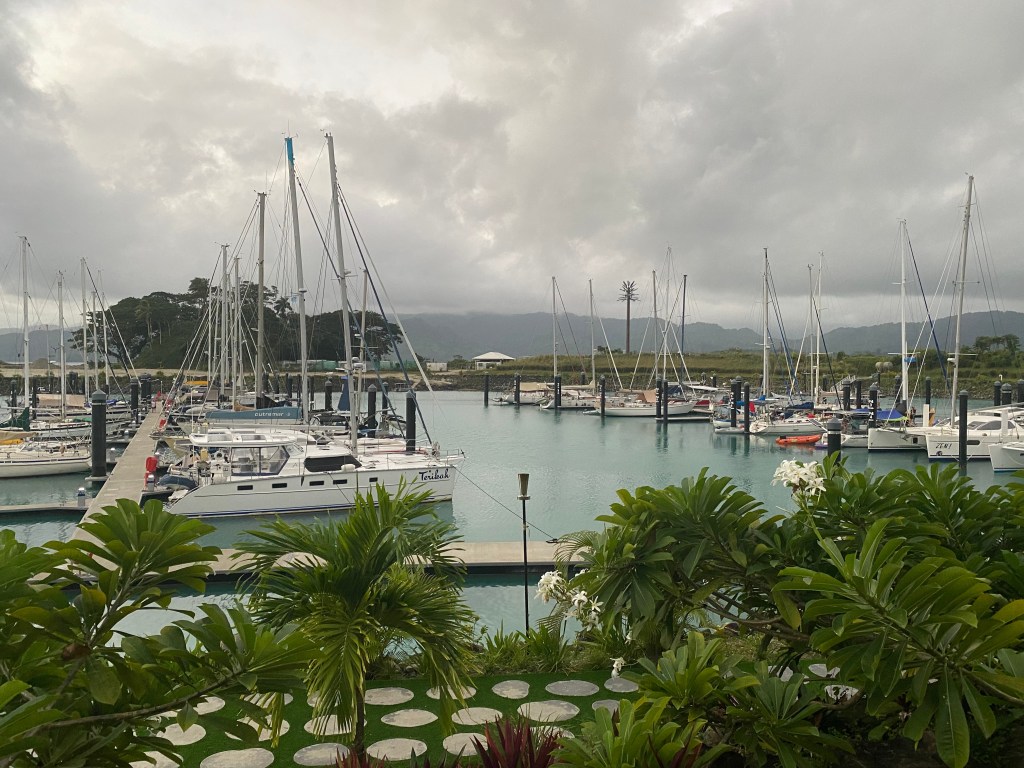
Nawi Island Marina is the fanciest marina we’ve stayed in…lushly manicured, a massive pool (with a bar in the water serving yummy drinks), two restaurants, luxurious showers, and even a massage studio on site. Geckos run about and bullfrogs line the paths at night. The marina is quite new, so satellite images show land where the marina is now, sitting on in ancient caldera. The local masseuse Maria gave me the most effective, strong-handed massages on my neck; it’s the first time my neck has been painfree since our jetboat accident. I had 3 massages for less than the price of one massage in the US and I learned about the Fiji culture as we visited during these times.
The comradery of people in a marina like this, sharing stories of passages, is enjoyable and done over days on the docks and in the pool. We heard stories of rough passages, boats breaking, and felt overall lucky at the state of our crew and boat. In retrospect, we feel like different passages have songs that go along with them, some of them playful, some exhilarating; some peaceful – this passage may have been a Nirvana or heavy metal song; we felt like we were in a mosh pit for 5 days. While cleaning, we noted that much of our blue side stripe was peeled off, a flying fish was on the very top of our cabin, some mild chafing on the lines, and the leech line of our mainsail was broken. All very minor.
Now at the dock with lots of fresh water available, we dove into a week of cleaning and boat projects. We have never had such a salt-covered boat and we set to tidying her up, including the salty sails.
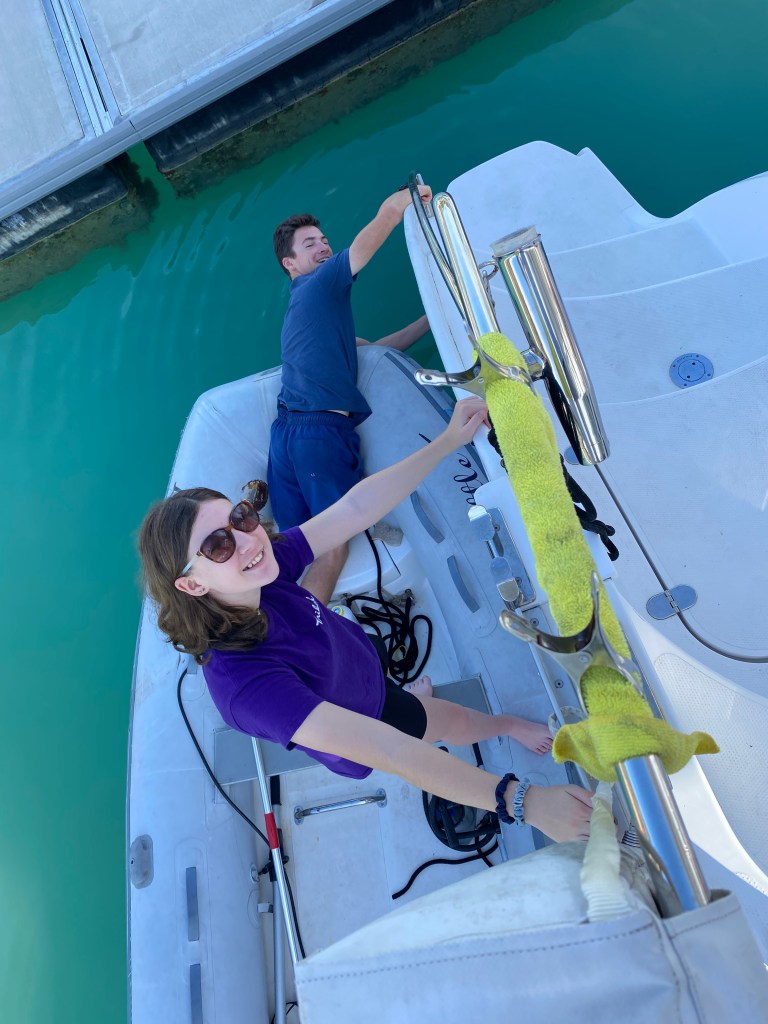
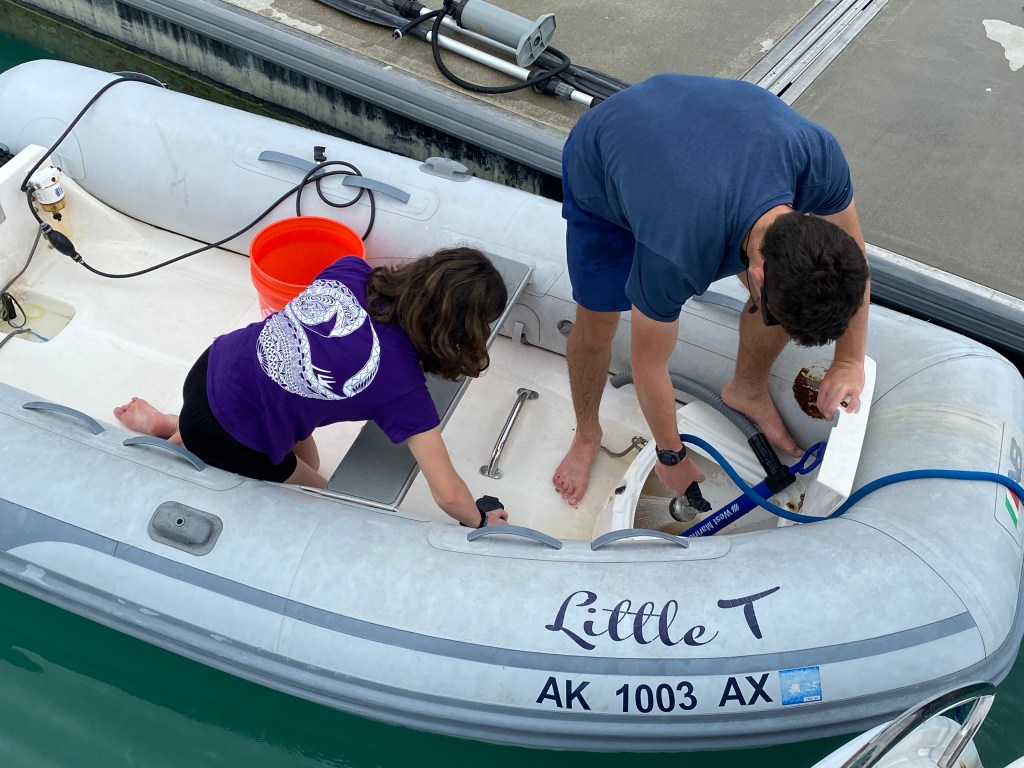
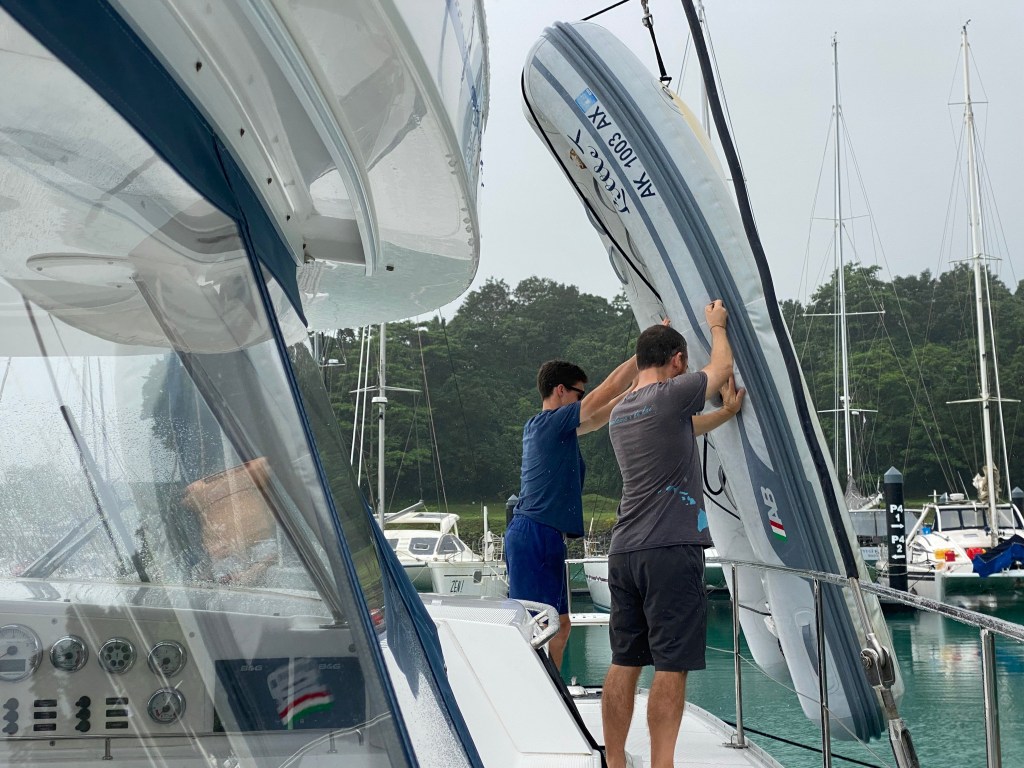
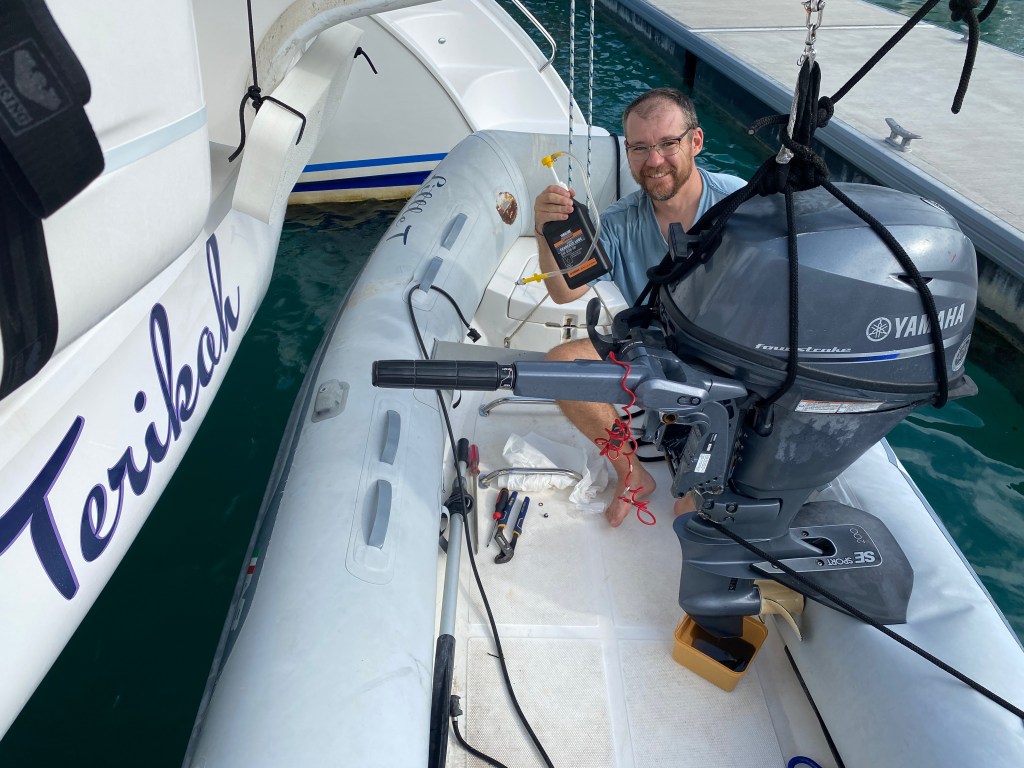
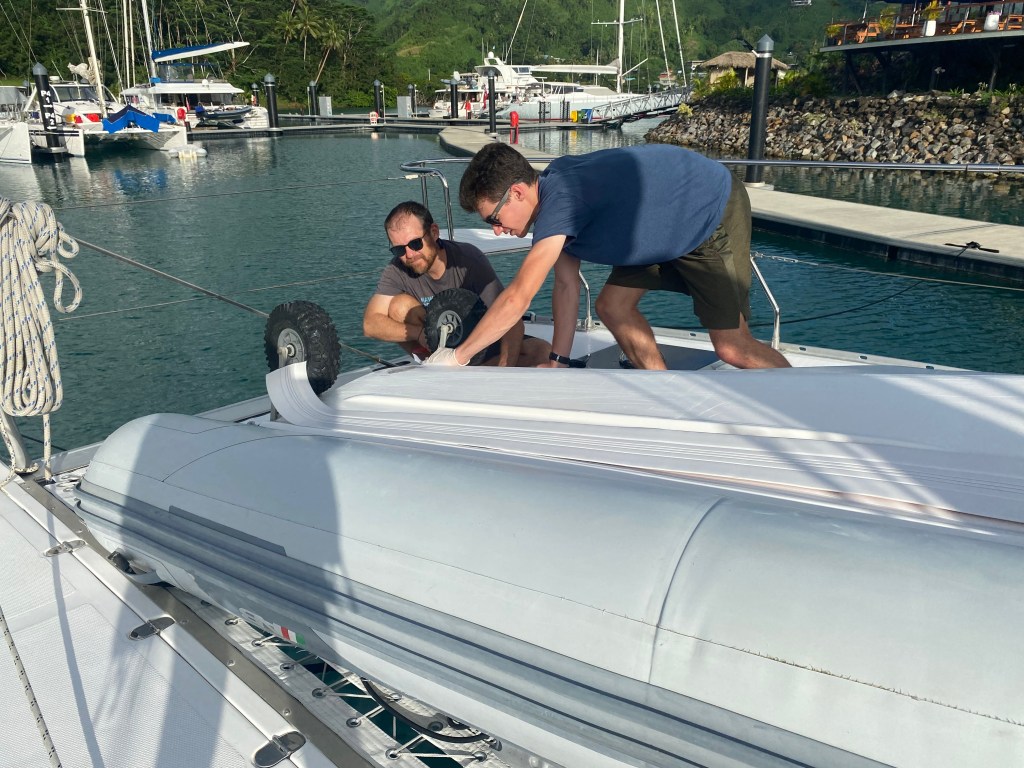
Cora and Calder scrubbed the dinghy, which was then hauled up on deck using a winch to patch a hole and place a keel saver (a protective strip for when we haul the boat up the beach). Oil was changed in the dink engine.
Calder and Chris installed a saltwater hose on the stern of the boat, a project that has been on the list for a long time. Cora and I cleaned the interior, even the walls and floor had a sheen of salty-oiliness to remove. Laundry was done.
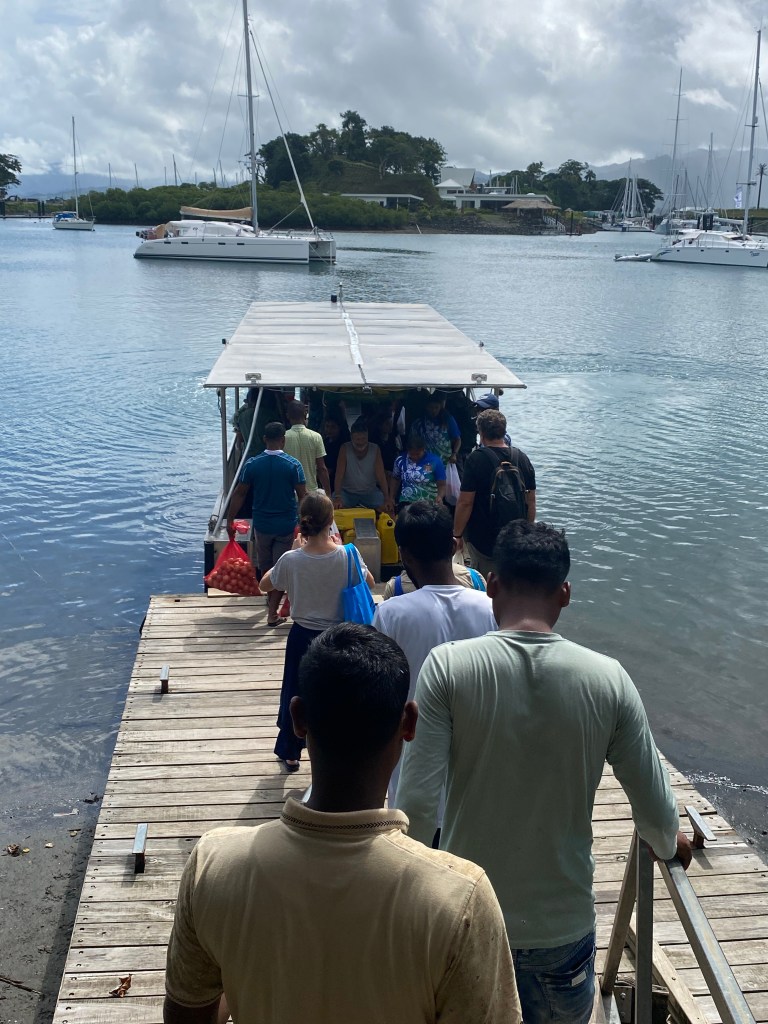
The marina is just across the channel from the town of Savusavu (located on the south coast of Vanua Levu) and there is a ferry that does a loop back and forth. Savusavu has a population of approximately 3,300 people.
The town’s cultural makeup is a blend of iTaukei (indigenous Fijians), Indo-Fijians, and a small number of expatriates and other Pacific Islanders. As of the most recent census data, approximately 37% of Fiji’s population is of Indian descent (commonly referred to as Indo-Fijians). Fiji has a large Indian population because the British brought indentured laborers from India between 1879 and 1916 to work on sugarcane plantations during colonial rule. After their contracts ended, many stayed and settled in Fiji, creating a lasting Indo-Fijian community that remains a significant part of the country’s population and culture today. This cultural diversity is reflected in the local cuisine and we went out for a delicious Indian meal.
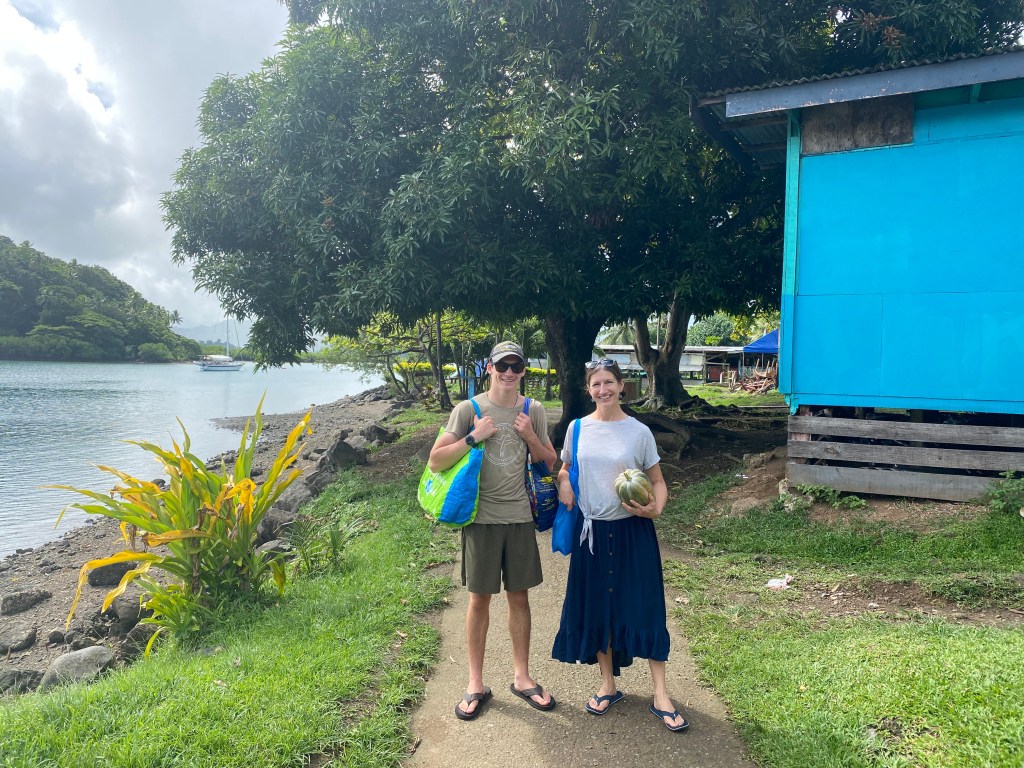
We stocked up on food at a local grocery store and the large, vibrant community market. We went to the Biosecurity and Immigration offices to pay our fees. Everywhere we walked, smiles and “Bula Bula!” called out to us.
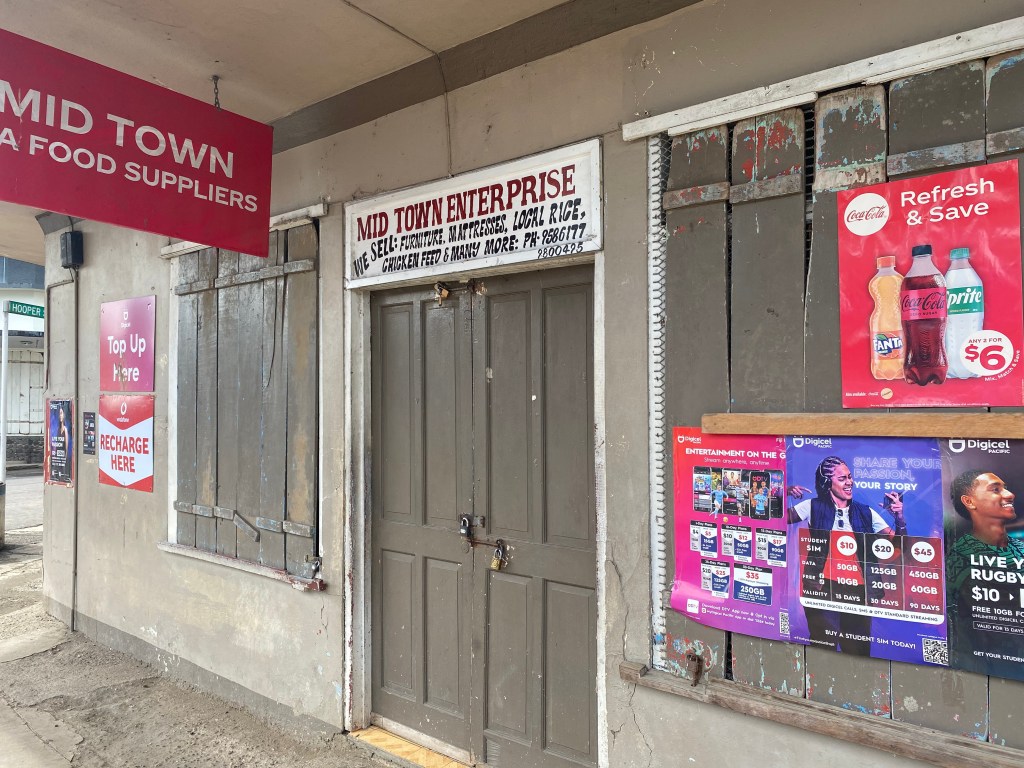
We are waiting for our Cruising Permit from Customs, which is processed in the capital city of Suva and sent here; this takes a while and is another reason we’ve been hanging out here.
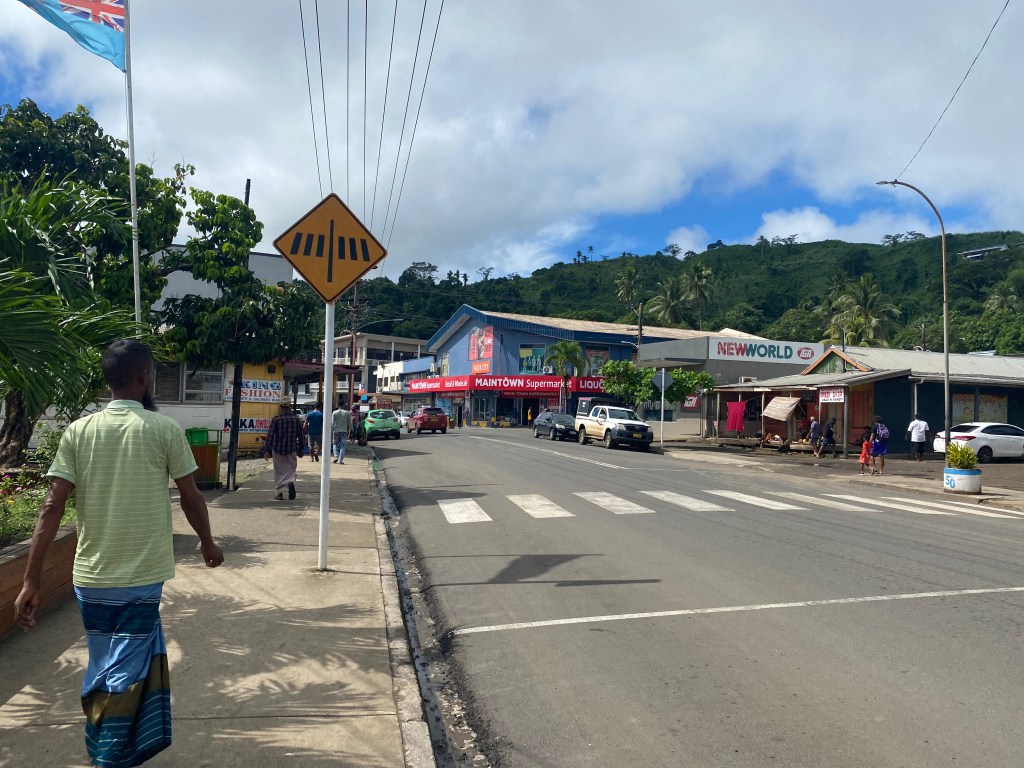
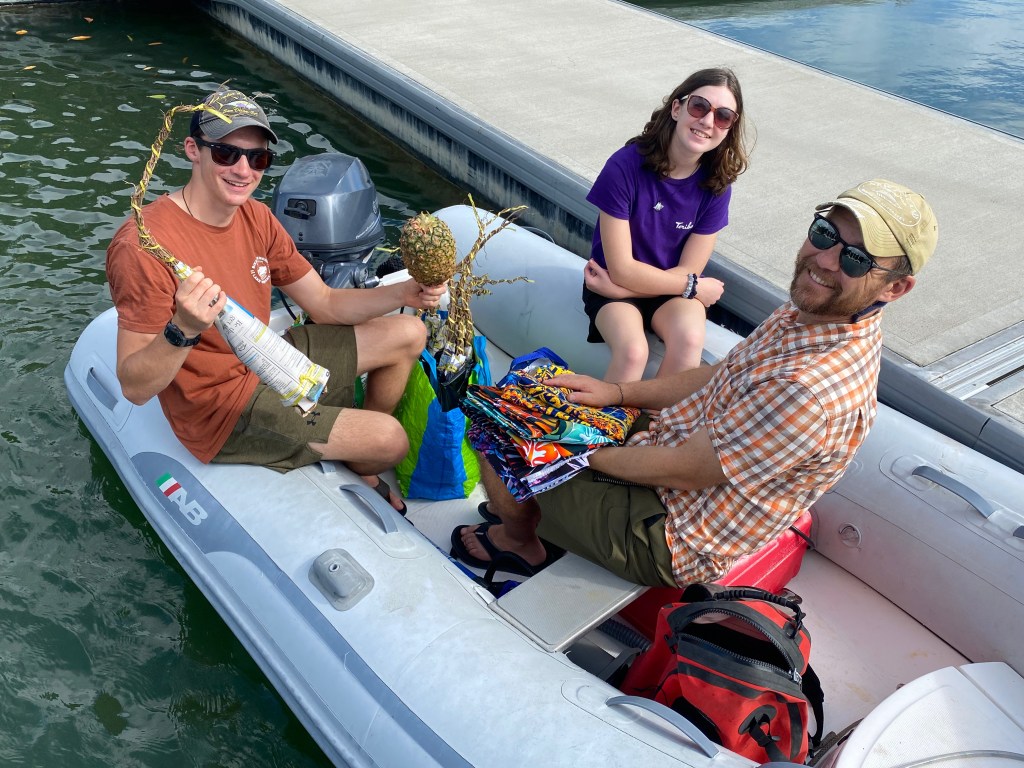
Our Cruising Permit came through at Customs today and we picked up the “necessities” for 6 weeks in the remote islands without needing to reprovision. First stop, the gas station to fill up our jerry jugs with gasoline for our dinghy, conveniently located next to the store we could buy Fiji Gold beer. Next, at Kings we each picked out a fabric that the woman hemmed for our sulus. A sulu is a traditional Fijian garment that resembles a wraparound skirt or sarong. It is worn by both men and women in Fiji and is an important part of Fijian cultural dress. Wearing a sulu is considered respectful, especially when visiting villages or attending formal events in Fiji. The wall of colorful fabrics was impressive and we each picked out one that spoke to us.
At another clothing store, Cora and I found skirts and dresses that appropriately covered our knees and the guys purchased some colorful tropical shirts. Last stop, the market where we purchased watermelons, cucumbers, limes, a pineapple, and 10 bundles of the kava root.
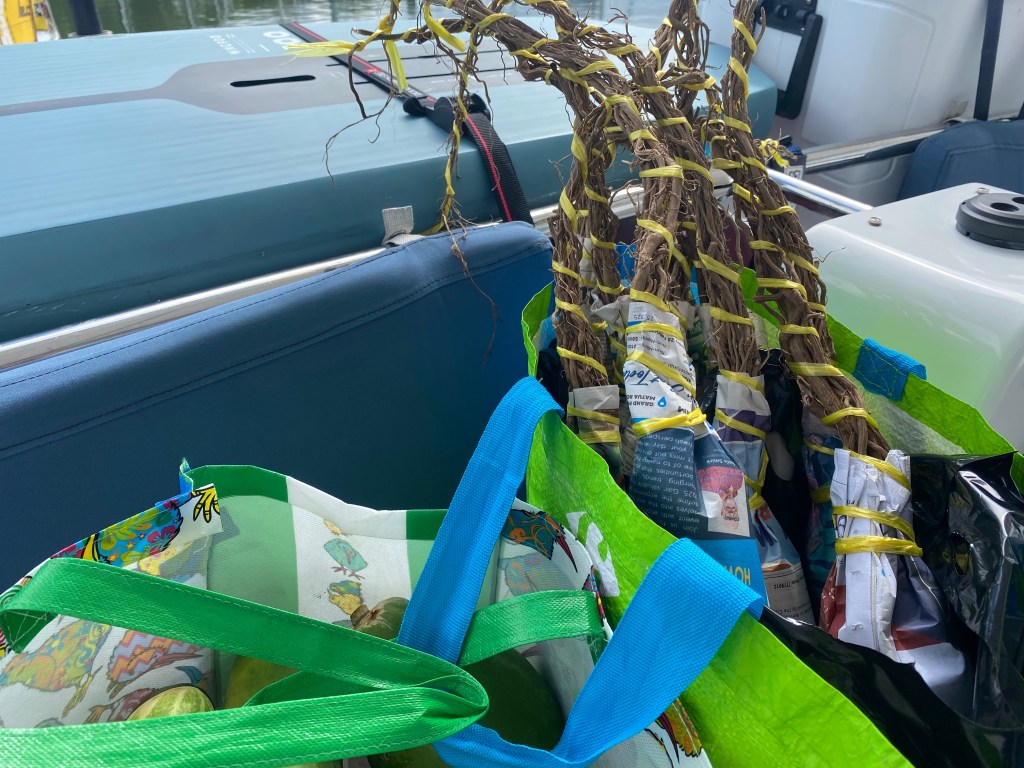
Bringing kava to rural village chiefs in Fiji is a deeply significant cultural gesture. It represents respect, goodwill, and a request for acceptance into the community. This act is often part of a traditional sevusevu ceremony, where visitors present kava root as a gift to the chief, seeking permission to enter the village or participate in its activities. We would be going to various villages and wanted to have on hand enough bundles. It is the most expensive item at the market, as we paid $300 FJD for the 10 bundles (about $140 USD), but is a vital part of honoring Fijian customs and leadership. We laid out our fruit and vegetables on the table, soaking the pineapple to get the ants out, not allowing any cardboard (cockroach hotels) in the boat. Back to the boat to fill up our water, get ready to move on, and enjoy one last drink at the pool bar.
After a week at Nawi Island Marina, we are off to explore remote Fiji.
Vinaka Vakalevu! (Thank you very much!)
 SV Terikah Adventures
2 responses to “BULA! (Our first week in Fiji)”
Wonderful! Love reading about the customs and languages of your travels. So much to learn and appreciate. Thank you for spreading such good will and love.
LikeLiked by 1 person
We can’t wait to see pictures of where we’re off to next. 😁😁
LikeLike