After a lovely morning drive along the coast, we caught the Interisland Ferry from Picton to Wellington.

Staying at the Agnes House Farm, a 1906 restored farm house full of character, we enjoyed the chooks who were hiding their eggs, aloof alpacas, native brush, and so much birdsong – happy to have the morepork (ruru) back! The Te Papa Tongarewa Museum of New Zealand in Wellington is excellent with a particularly impactful display on WW1 with massive strikingly realistic soldiers taking up an entire room, created by the famous Weta Workshop. Wētā Workshop is a world-renowned creative studio based in Wellington, New Zealand, known for its incredible work in film props, costumes, and special effects for movies like The Lord of the Rings, Chronicles of Narnia, and Avatar.

Our family went on a behind-the-scenes look at the artistry and craftsmanship that bring fantastical worlds to life, with interactive exhibits and hands-on displays, learning so much about film production, as well as seeing actual costumes and props from these films.

On our way out of town, I scoped out a locally owned bookstore, vibrant artist studio, and eclectic local foods store.
On to Tongariro National Park, located in the central North Island, New Zealand’s oldest national park and a UNESCO World Heritage site, recognized for both its cultural and natural significance. It’s home to three active volcanoes—Tongariro, Ngauruhoe, and Ruapehu—set within a striking alpine landscape of lava flows, craters, and emerald lakes. From our AirBnB, as we settled into a puzzle one evening with a wood-stove fire (such a joy for Chris to chop and burn wood again!); we had an excellent view of both Ngauruhoe (Mount Doom from LoTR) and Ruapehu (Mordor).
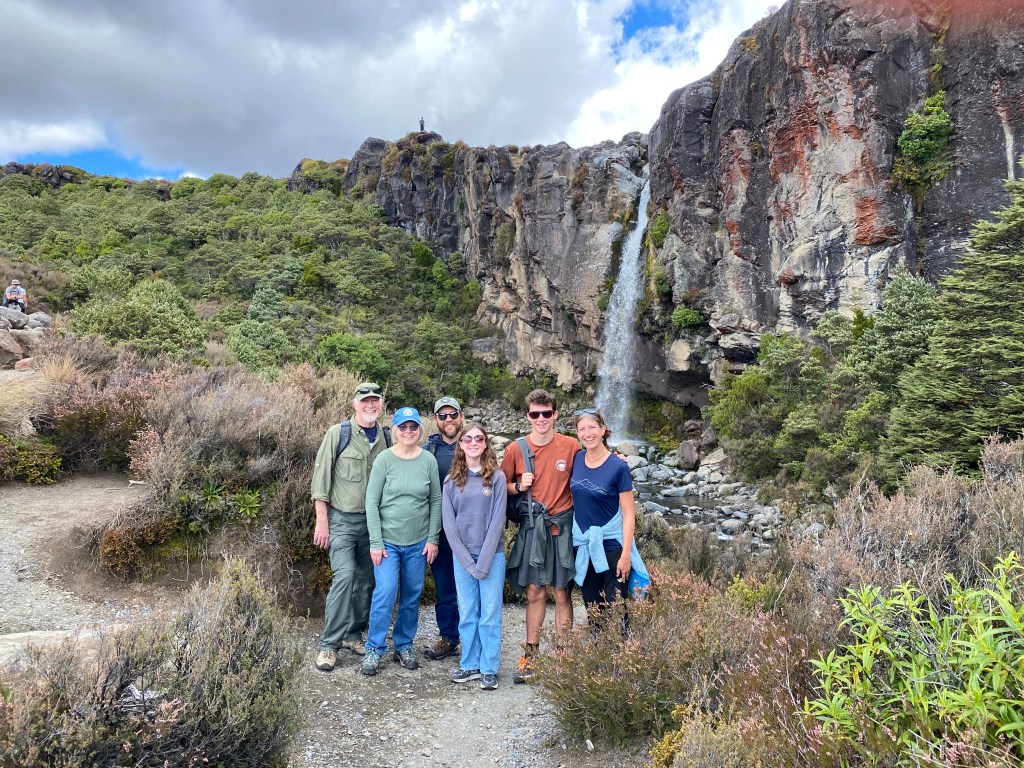
We all hiked to Taranaki Falls, as well as explored some shorter trails (Mounds Trail and Tawhai Falls Walk) along the way.

We drove up to Mount Ruapehu, Mordor’s desolate realm in LoTR, and explored this otherworldly terrain in the chilly air.

Yes, hats and puffy coats are out. So crazy that this is a ski resort with warnings about lahar flows (volcanic mud flow paths), flying hot rocks, and fast moving clouds of steam and hot ash. Photo evidence proves all are possible and happen somewhat regularly.

Onward from volcanoes to geothermal wonders! On our drive, we stopped at a lookout for the biggest lake in NZ, Lake Taupo, the site of the world’s most violent eruption in the last 5,000 years, shooting enough ash into the atmosphere for ancient Romans and Chinese to record unusual skies. The Lake formed during a super-eruption 26,500 years ago, which spurt 750 cu km of ash and pumice (making Krakatoa with its 8 cu km look like a mere pimple). The Taupo Volcanic Zone is one of the most active in the world with geothermal power contributing about 15% of the total electricity to NZ’s power grid.
After lunch in Taupo, we stopped at Huka Falls where the Waikato (NZ’s longest river) squeezes through a narrow chasm making a dramatic 11m drop into a surging crystal-blue pool at a rate of 220,000 L per second!
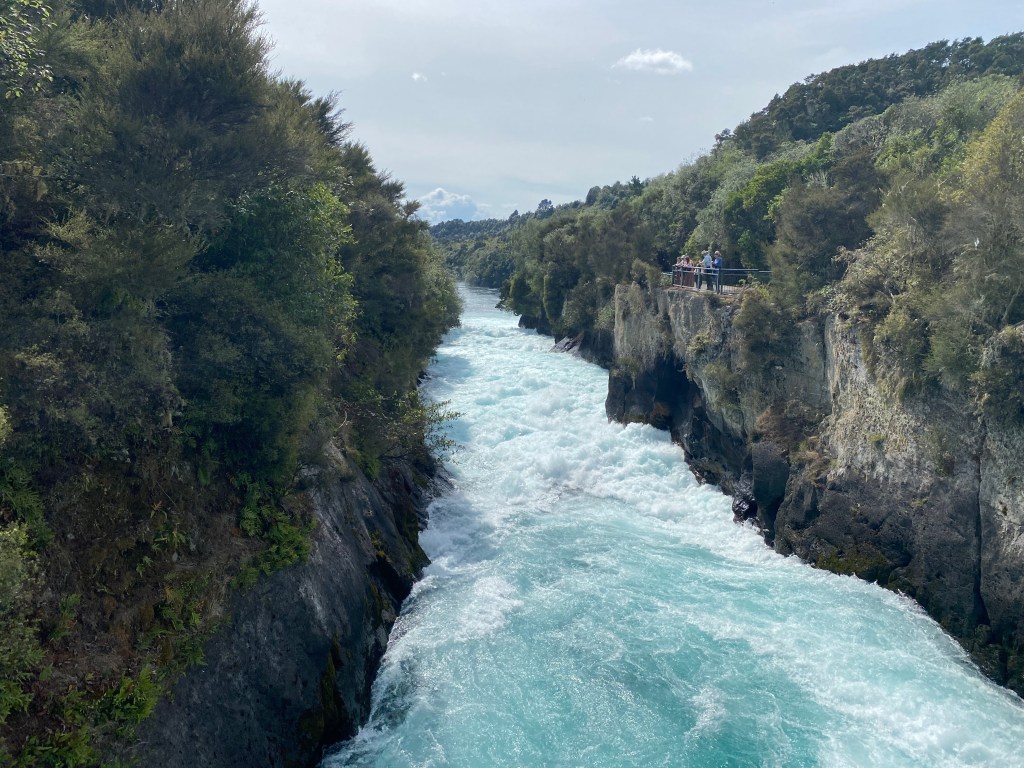
The name in Maori means “Great Body of Spray,” which was apparent standing on the footbridge overhead. Cora’s analogy was that it looked like blue cotton candy churning).
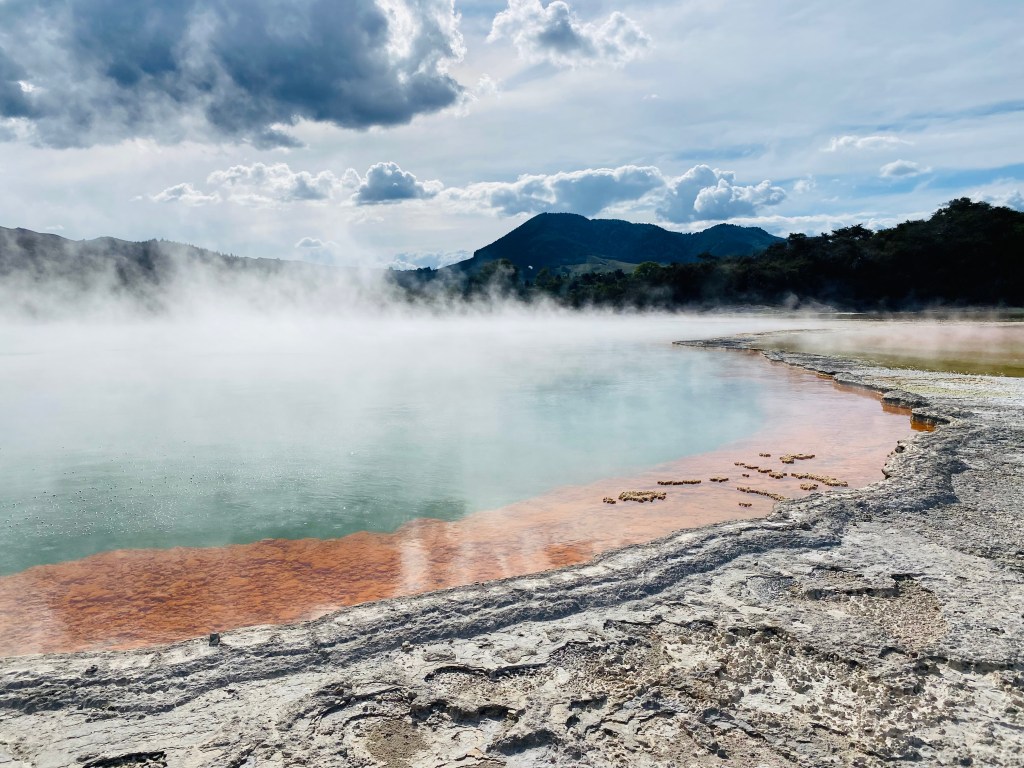
Next stop, Wai-O-Tapu (Sacred Waters) Thermal Wonderland, the most colorful of the region’s geothermal attractions with its orange-rimmed fizzing Champagne pool, and lemon-lime hued Roto Karikitea.
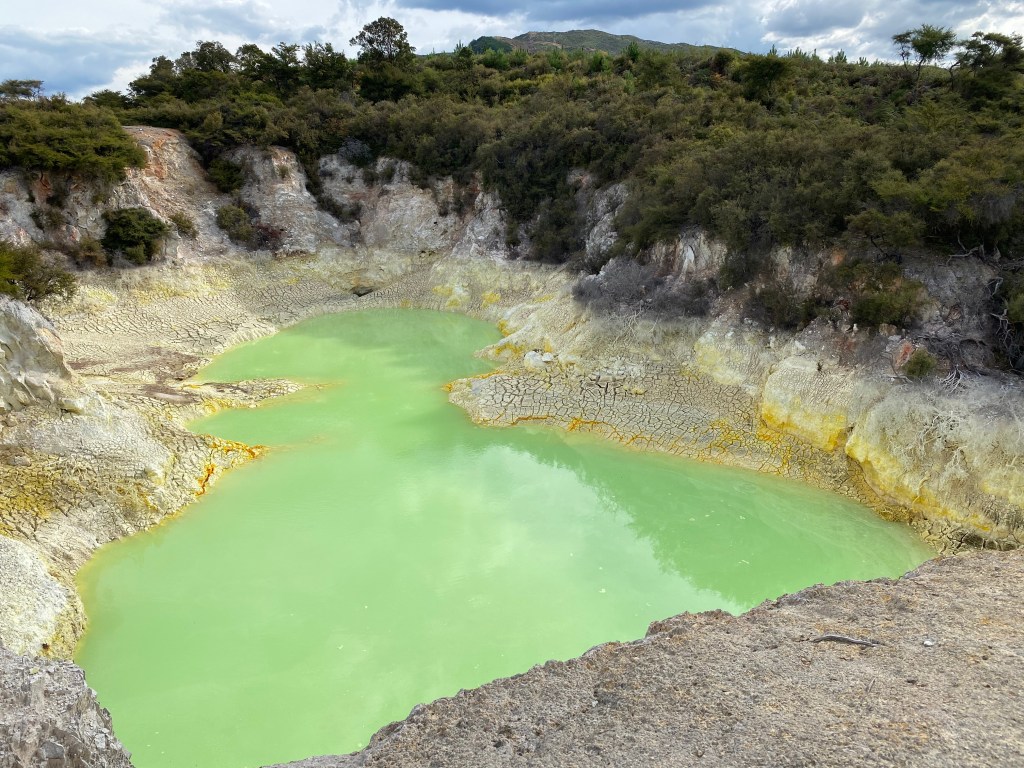
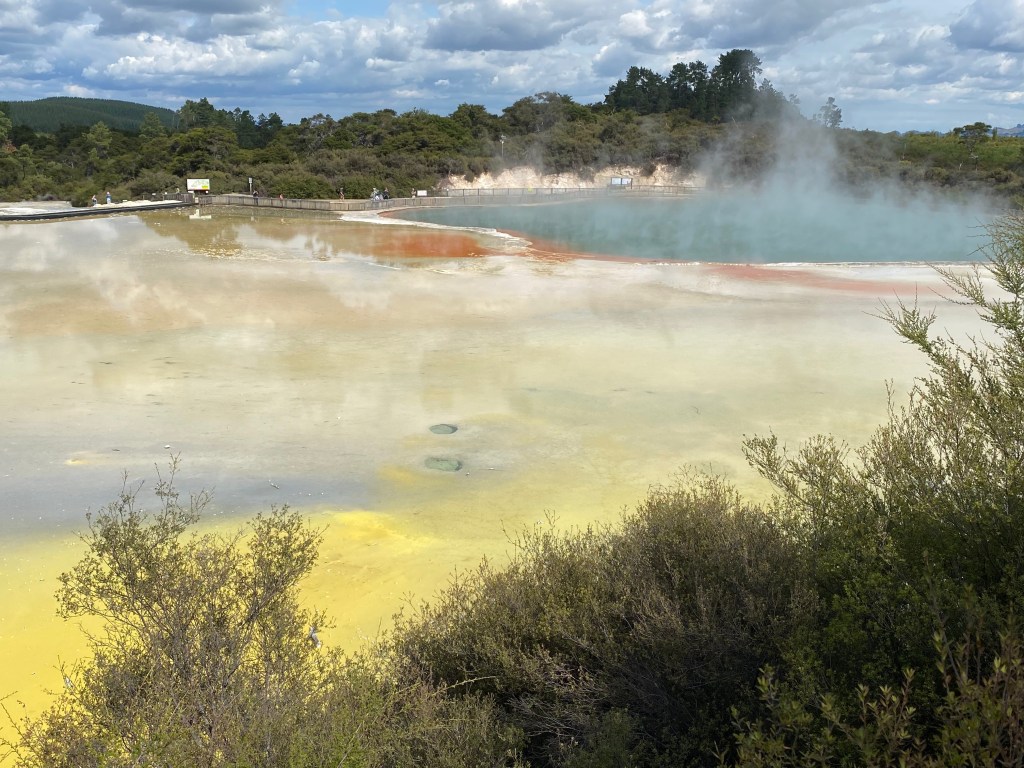
The purples of manganese oxide, the red browns of iron oxide, and the yellows of sulfur created quite the palette! This Reserve is part of the Maroa Caldera which was formed approximately 160,000 years ago, the largest area of surface thermal activity of any system within the Taupo Volcanic zone. We couldn’t stop laughing as we watched the active mud pits, tiny bubbles building up to a large muddy burp, each almost having a personality of its own. Some of the crater mudpit sounds were used as background in LoTR.

Our next AirBnB was near Lake Okareka, just outside the town of Rotorua, tucked up into trees. It was a perfect base for our exploration of the area, and to do another puzzle.

A walk around the lake was filled with close up bird song, as both the Bellbird and Tui seemed to be showing off their vocal skills. First stop, Whakarewarewa, the Living Māori Village, where Michael gave us a guided tour through the geothermal Māori village, showing how to use the steam box hangi to cook from the Earth, presenting us with freshly cooked corn on the cob straight from the steamy waters.

The geothermal features are still used today by Māori for cooking, drinking, bathing, and healing. Originally, the villagers “buried” their dead by letting them sink deep into the mud pits, which worked well. However, the missionaries recommended using burial in coffins below the Earth, only to watch these rise up from the ground from the active geothermal energy. So, now they use above ground tombs, a bit eerie to see steam coming up around and out of them.
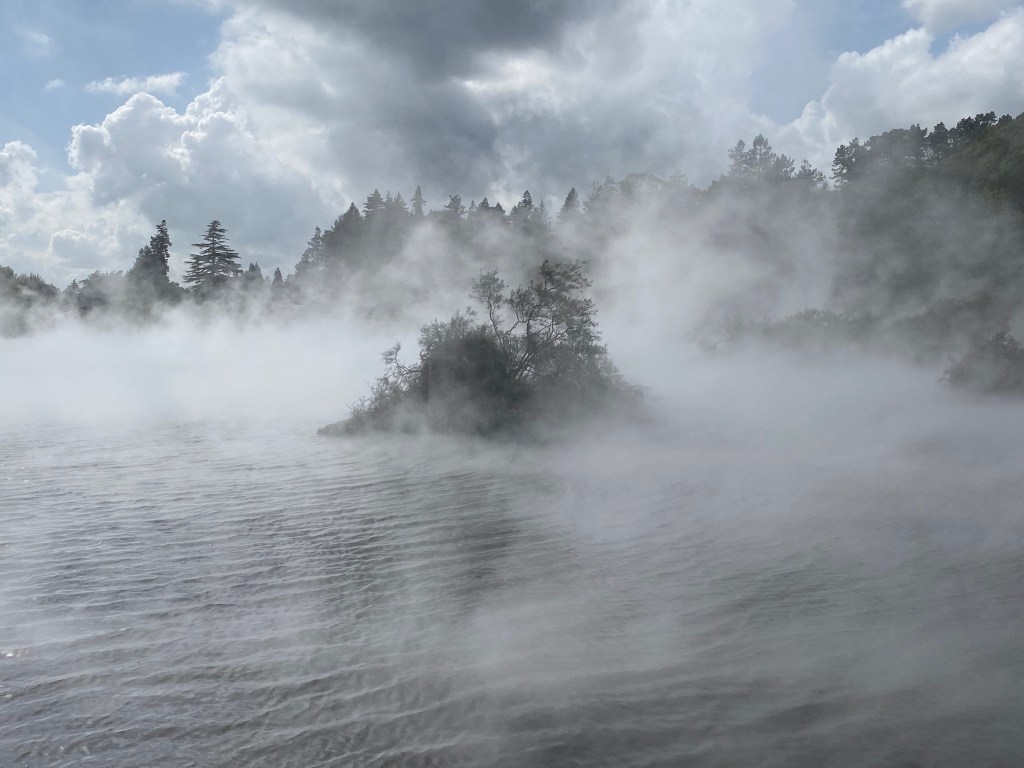
One awesome moment was when a tourist expressed to our Māori guide that she didn’t understand how he went to the monthly Catholic service and talked to nature. He simply said, “You’ll see me talk to nature soon.” At the end of our tour, he thanked us, opened his eyes wide and looked intensely up at the mighty Pohutu geyser. After a lengthy strong Māori song, slapped his leg, said “see you” and off he went. It was powerful and awesome to see his communication with these geothermal forces. After, we went on a walk through the geothermal areas, as well as attended their cultural performance including world famous haka (war song).

From a hillside, we could look out at the Māori village, steaming geothermal activity, juxtaposed against modern Rotorua office buildings and a jet flying overhead.

Calder and Cora were stoked to go mountain biking in the Redwoods Whakarewarewa Forest and we all pushed ourselves to try a few tracks that challenged us.
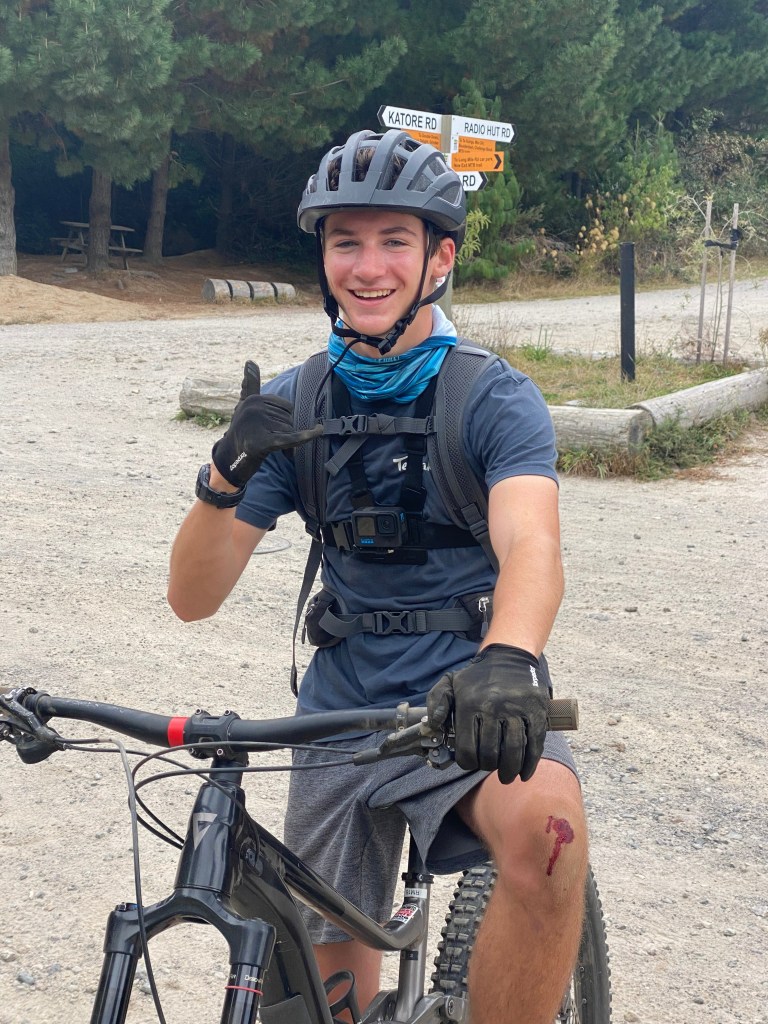
Biking amongst giant redwoods was remarkable and we ended with one bloody knee and four smiles, a success overall.

From 1899, 170 tree species were planted here to see which would be grown successfully for timber. Mighty Californian redwoods did quite well and we walked through the massive Redwood Memorial Grove.


At night, we walked elevated trails in the treetops in a magical experience of lit-up artwork magnifying the beauty of these trees.

Back to Auckland, where we hugged Gma/Gpa before they returned to Alaska, then off to Terikah in Opua, our car loaded to the brim.
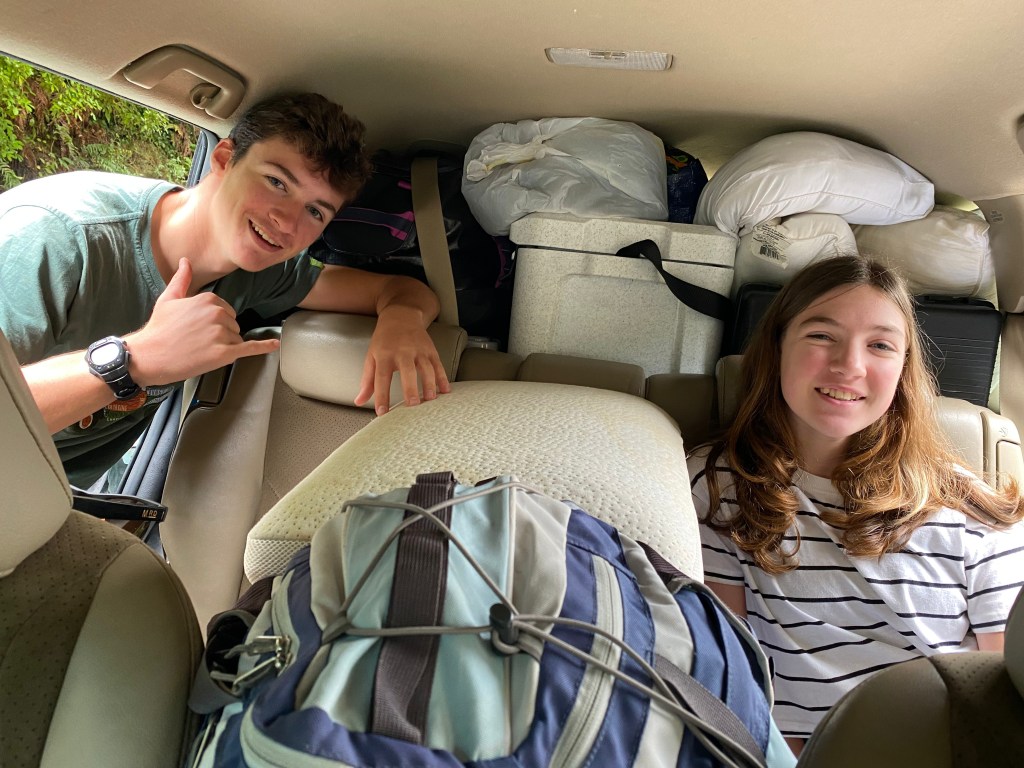
New Zealand, a “tiki tour” is a playful term for taking the scenic route—often with lots of spontaneous stops, detours, and exploring along the way. It’s less about getting from point A to point B quickly and more about enjoying the journey, often used to describe a meandering road trip or a relaxed wander full of unexpected adventures. What an amazing 2 month tiki tour we’ve had!

 SV Terikah Adventures
4 responses to “Wellington, Volcanoes, & Geothermal Wonders”
TERRY LOOKS LIKE HE IS DOING WELL. WHAT A GREAT ADVENTURE 👍 👌 TED
LikeLike
I am SOOO ready to go to New Zealand!
What an awesome “Tiki Tour”.
LikeLike
I am SOOO ready to go to New Zealand!
What an awesome “Tiki Tour”.
LikeLike
Hello from Idaho!
Enjoying your tiki adventures in NZ. I saved some of your wonderful geothermal pictures. They were amazing. Continue to be safe and your enjoyment and exploration is always evident.
Sending love,
Diane Weber
LikeLike