
One oft repeated phrases is “cruising is boat work in exotic locations.” Cruising also involves play and exploration in exotic locations, but there is a constant background of boat maintenance with intermittent large projects. I am taking a break from our regularly scheduled program of boat fun to bring you…boat work!
We pulled into Opua marina for 4 days, which turned into 13 days of work. The big project was changing our battery bank from AGM to lithium. Looking at our San Diego entry over a year ago, we had replaced our dead AGM batteries with new AGMs, unsure if we genuinely wanted to go the lithium route. Over our last year of cruising, we found it frustrating to be dependent on our generator for such critical functions as making fresh water, amidst only positive stories from other cruisers about their conversion to lithium. In New Zealand, we have access to experts and supplies and decided it was time to make this transition.

We changed to lithium in order to drastically improve accessible power in order to run all of our AC and DC loads and equipment without needing to run the generator. It allows Terikah to be more self-sufficient for a longer period of time, using energy more efficiently and utilizing solar to its max. We hired Cleagh Limited, and Matthew and Dean became part of the Terikah family, showing up at 8:30 daily, forcing Cora out of bed to head to the marina lounge to do school (early bird Calder was already up).

Chris worked closely with them, most days until 6:30pm. This work involved removing our old batteries, refitting with 1200 amp hours of Victron Lithium batteries, installing two inverter chargers, and all the associated wires, safety regulators, smart bussbars, and control panel. In addition, we put in new charge controllers on the alternators to improve their charging output when motoring. We rewired our electrical panel such that all the loads are running through the invertors and, as such, we can now use all our appliances through the batteries (with some limitations). Previously in order to make water we had to run the generator and now we are free of this. It felt vulnerable to have our fresh water source be dependent on a working generator, mainly on long passages. In the future, with a few more solar panels, we could potentially be generator free. The ultimate goal would be fully cruising and living on solar. When they left, Dean took our Christmas kauri tree (named Kevin) to plant in his yard, and we spent a full day putting our boat back in order.
The battery project meant no power, which meant no water on board or propane (the water pump and solenoid required electricity), so we were glamping on Terikah. Camp stove in the cockpit for cooking, hauling jugs of freshwater for drinking and cleaning, and headlamps for evenings. Thankfully, we have friends here who took pity and invited us for dinners– thanks Gambler, Waterdogs, and Milonga!
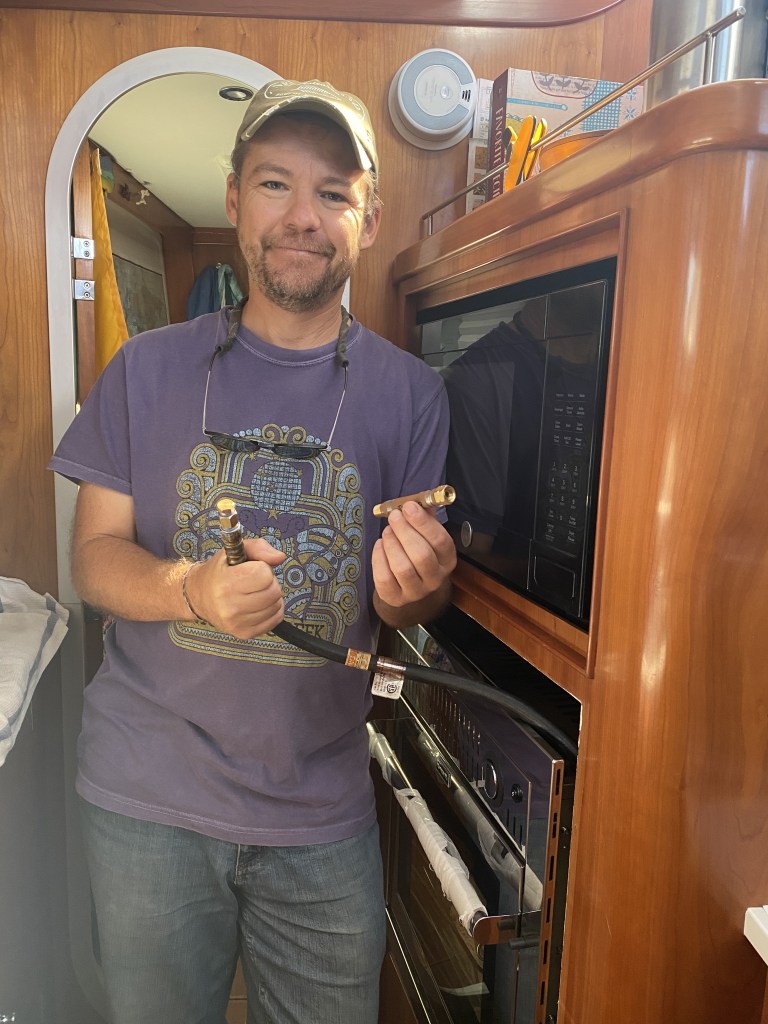
No rest for Chris as he hauled out our old finicky and dangerous propane oven and put in a new one, needing to MacGyver the fittings to make it work and do a bit of carpentry; the smell of chocolate cookies equating success!

On the homefront, we conquered piles of laundry in the laundromat, as we save the big loads like sheets for periods at the dock. The boat received a good cleaning, inside and out.
School continues on, taking up most mornings, this time in the marina lounge where we had access to electricity, out of the project-chaos of the boat. We do school year-round and sometimes on weekends, with breaks for passages underway and when friends or family visit. Afternoons on school days are usually free for exploration, hanging with friends, and cultural experiences. Cora is in 7th grade with the normal middle school classes. Calder is now in high school (9th grade) and is taking Composition, Honors Geometry, CAD (Computer Aided Design), Guitar, World History, and Biology. They are doing a mix of online classes and Oak Meadow curriculum.
I’m working one or two days weekly doing Telehealth consultations in Integrative Medicine through Petersburg Medical Center. Integrative medicine is a healthcare approach that combines conventional medicine with complementary therapies. It aims to treat the whole person by addressing physical, mental, emotional, and spiritual needs. I recently finished a 2-year Fellowship in Integrative Medicine and work with patients on nutrition (food as medicine), physical activity, mind-body practices and stress reduction, and choosing evidence-based supplements to meet their wellness goals. It is very satisfying and I can see patients from anywhere in Alaska, though currently most of my patients are from Petersburg.
So, we are all involved in our own types of work in beautiful locations, making this journey do-able.
Being in New Zealand long enough, I could witness changes on the same coastal walking trail one month later– Pohutukawa leaves of reds and oranges falling to the ground, flax plants dried up, and chorus circadas overpowering (as well as hitting me the side of the head as I walked). A sign along the trail stated “Plums – Koha,” and the man explained he had just picked them and the Māori word “Koha” just meant to give a gift/contribution for them. Sun-warmed fresh plums that burst when you bit them…yummy.

There was a weekend in the middle of the lithium work when we took the opportunity to head toward Auckland to get a cartop box and trailer hitch for our vehicle (for an upcoming road trip), make city purchases like new shoes for the kids, and to spend time with our good friends from SV Starry Knight that have stopped cruising and were flying out soon to their home in England.


We also took the opportunity to drop off our old inverter-charger to a cruising friend who needed it, via another cruiser in Aukland who we had never met who would pass it on. Cruisers have a way of getting goods here to there through other cruisers through a large network. We use WhatsApp groups of cruisers in various parts of the world to buy/sell parts, ask for advice, and plan social gatherings. Items also get passed across countries. For example, our friend Mike needed a part for his boat, which he ordered to the Marquesas. It didn’t get there before he left, so we picked it up. He was ahead of us, but we were able to pass it to another boat in the Society Islands who then gave it to him in Tonga. The lack of places to procure necessary parts makes this creativity necessary.
We took the opportunity to go up the Sky Tower, as I purchased tickets and our family hopped in the elevator before Chris (who’s afraid of heights) had time to think about stepping off.


The Sky Tower stands at 328 metres (over 1,076 feet) and has a fabulous view; volcanic mounds amongst the busy city. Auckland is known as the “City of Volcanoes” because it’s built on top of an active volcanic field of around 53 volcanic cones, many of which were formed within the last 100,000 years. The Auckland Volcanic Field is considered active, but the individual volcanoes are mostly dormant or extinct. The field is fed by magma that’s still active, so a future eruption could happen.
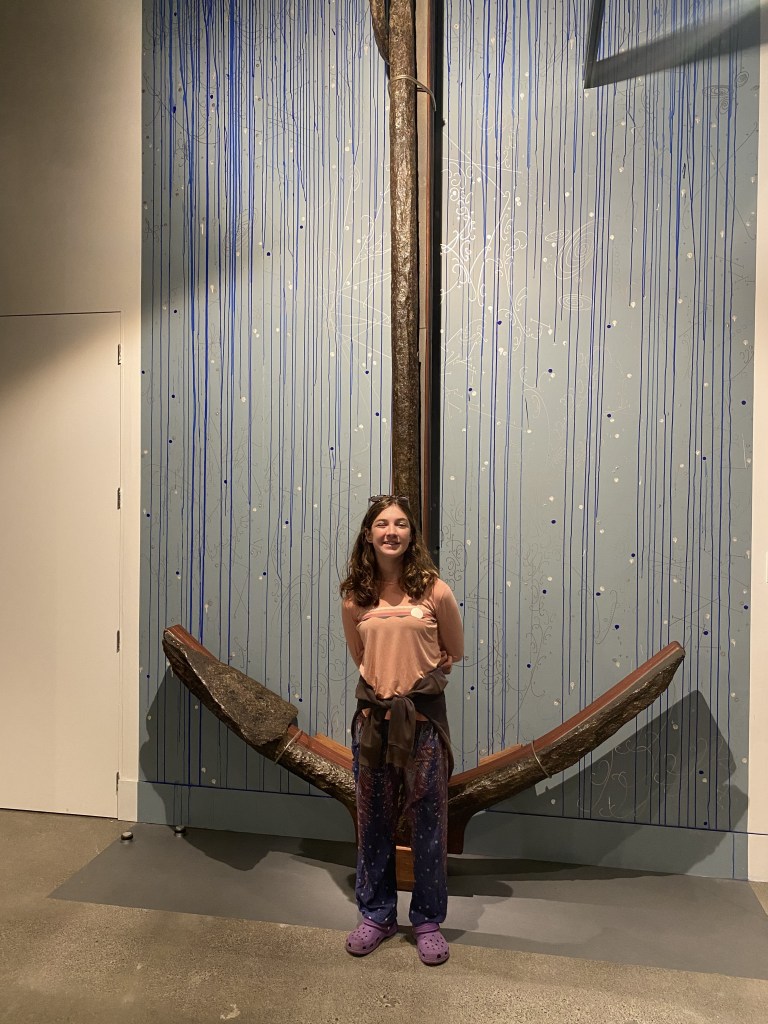
We also went to the Maritime Museum, an excellent museum with highlights of modern racing boat technology, as well as a chunk of iron ballast from Cpt James Cook’s HM Bark Endeavour and the anchor from the HMS Bounty.

We were excited to unexpectedly have a splendid view of SailGP (grand prix) from inside the upper level of the museum, which was taking place in Auckland! SailGP is a global sailing competition that features teams racing in high-performance catamarans. The races are known for being fast and intense, with teams competing in stadium-style venues around the world.

Teams race in identical F50 catamarans that have foiling designs that lift them out of the water, reducing drag and allowing them to reach speeds of up to 60 mph. Our entire family got caught up in the excitement.

We decided to head out on the water to test out our lithium system and, after working out a few tiny bugs, we have been exceptionally pleased with our decision. I often find Chris just staring at the electrical panel in glee. At anchor at Urupukupuku, the kids were invited to play games with local camping kiwi kids in the busy campground, as well as stay overnight. I am struck by the continued lack of boundaries that people put up between their tent and personal spaces, more tolerant of others in “their space,” a sense of global citizenship.
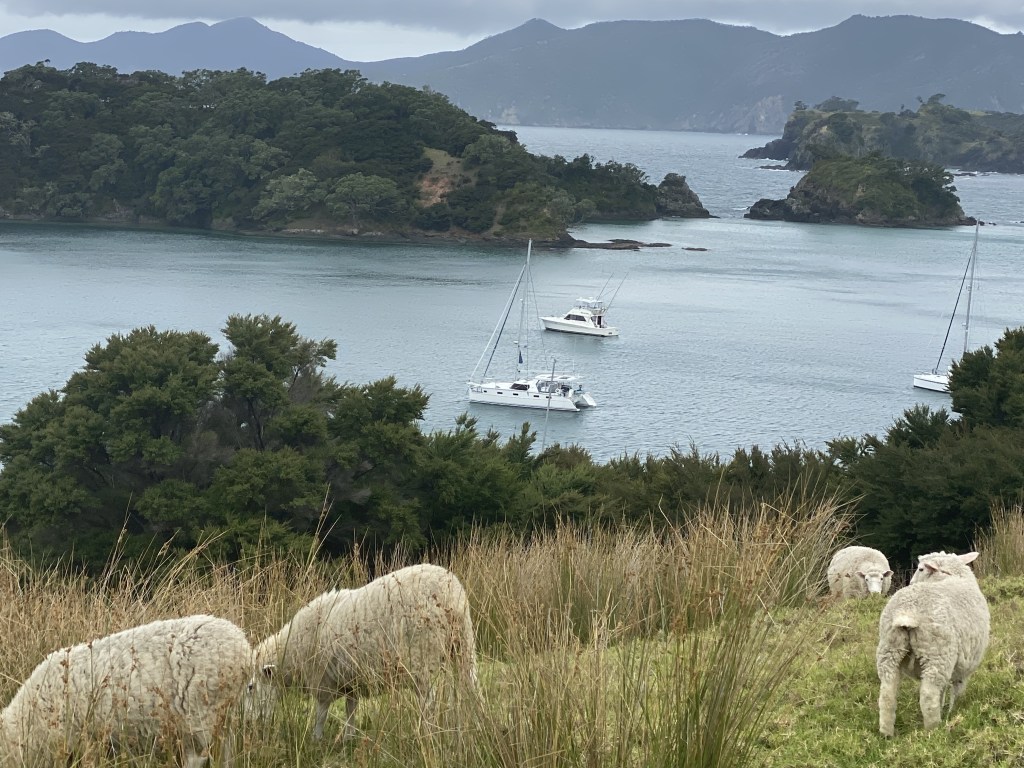
The next evening, the weather blew in with high winds, torrential rain, and light-up-the-sky lightening. Chris and I were up at night, checking our position, as well as the position of the many boats around us, ensuring no one was dragging. Sitting in the cockpit at 1 AM, Chris spotted a fishing boat go past, headed toward our friend’s boat and the rocks. On shore, we could see frantic campers looking for their boats and securing their camps. Chris and Calder (half-awake) jumped in our dinghy and grabbed the boat right before it went on the rocks, securing it. We had called our friend in a nearby boat to assist, and he dinked to shore to let the owner know we had their boat safely tied up. Instead of the relief expected, the frazzled man said, “Wait. That’s not my boat! My boat is still adrift!” He had the same experience with two other men, then loaded up the three guys and went into the stormy dark anchorage where they found their boats. Four boats saved in all, not a bad night. Chris up for a couple more hours, keeping an eye on the boats; we never dragged and the cup of morning coffee was met with calm.
We had planned to boat into Opua to do a car shuttle down to Marsden Cove, then move our boat south to a different marina. We anchored off Long Beach (near town of Russell) and, in doing so, discovered that our windlass was dying a rapid death. Chris, thankful that he had his brother deliver a spare windlass motor to Tonga when they visited (no one visits us without a suitcase of parts!) got to work. Expletives from the locker…the company had sent the wrong motor (24 V instead 12 V). He cleaned up the old one as best he could, also discovering that the seal failed and was letting water into the upper bearing; this windlass was on its last breath.

The windlass is one of our critical pieces of equipment on Terikah, releasing and hauling up the extremely heavy anchor and chain. Without it, we would have to set up a series of pulleys and blocks to get the anchor up every time we anchor. Our boat would not be going to Marsden; it would be staying in the closest marina (Opua) until Chris could get the parts.

This life is all about being flexible, never having a true schedule, and letting go of expectations of what is going to happen; it changes all the time. At times I wonder if all this change and uncertainty is good for the kids, hoping it teaches us all the art of patience and going with the flow of what life presents. Though frustrating at times, infuriating at others, we turned the lemons into lemon gelato on a hike into Russell and up to Flagstaff Hill as a family. Flagstaff Hill is the spot where in 1840, the first official flagstaff was erected after the signing of the Treaty of Waitangi. However, due to misunderstandings, the plaque went on to explain how the flagstaff kept getting cut down, re-erected repeatedly, until it finally stood in 1858.

We also discovered what a “naturist beach” is in New Zealand when we landed our dinghy there…it’s not just about nature.
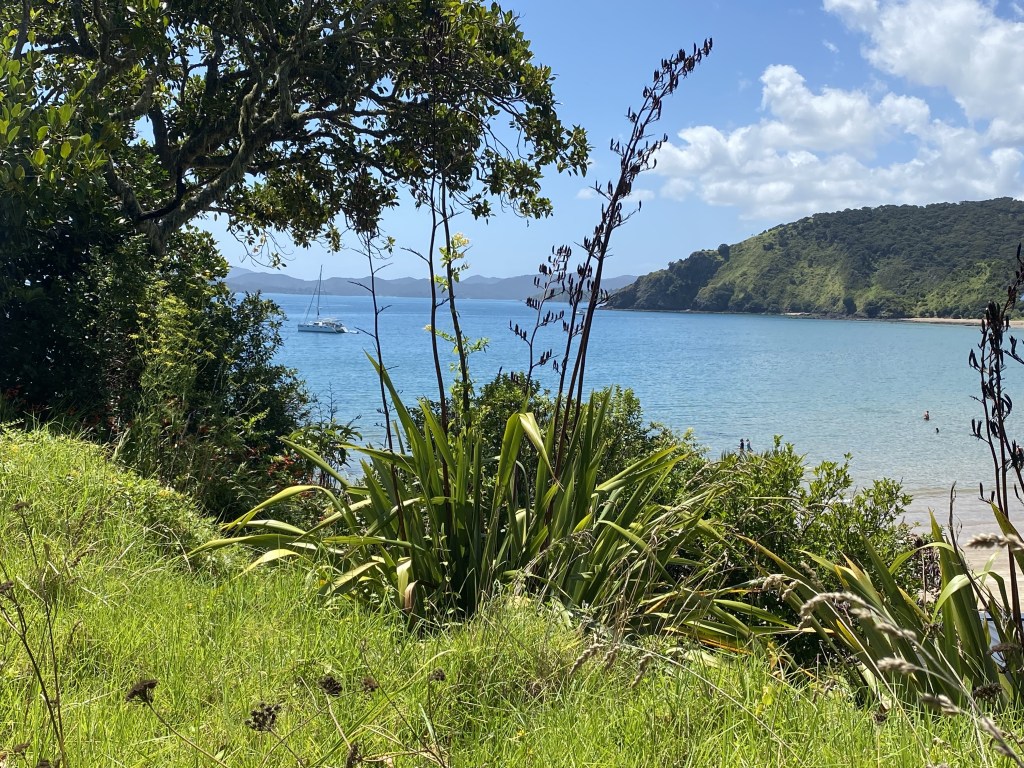
We decided we would stay put in the same anchorage until a slip opened up in Opua three days later, wanting to minimize use of our windlass. However, cruising friends understand cruising friends and Waterdogs invited us to raft up to them in beautiful Deep Water Cove. We crossed our fingers as we powered up the windlass…come on, one last time…it grinded and belched and died and came back alive and pulled through. Our anchor was up and we wouldn’t need to use it again until after the windlass was fixed. We secured ourselves like a barnacle on Waterdogs where we enjoyed Deep Water Cove for three nights, hiking out to the lighthouse, fishing with a local kiwi, working, doing school, and visiting.

Now we are back at the Opua dock, about to turn our ocean gypsie life into that of land gypsies in a 2 month long camping roadtrip.

 SV Terikah Adventures
4 responses to “Boatwork in Exotic Locations”
Just amazing to be able to see all of the places you all have explored during this journey. Our many thanks go out to you for running this blog of your adventures, expeditions, trials, and troubles. Thank you all and always be safe. Take care.
LikeLike
Wow. That sounds exhausting. And excellent. Great work all around. Thanks for sharing the adventure.
LikeLike
Awesome! Thanks for sharing about all the work that goes into your adventure.
The photos of Chris working in enclosed spaces brings back memories of the many times he would barricade me and others in the REI Rental closet with potent gas!😂
LikeLike
Cruising either teaches us to be resilient, or it sort those of us who are resilient by nature from those who are not. I think resilience is a terrific characteristic to have as one navigates “life,” because it rarely cooperates, and often throws wrenches in our besr-laid plans. (Plans are written in sand at low tide…)
We’ve often had our most fond “adventures” when we were unexpectedly stuck somewhere. You folks seem to be doing a fine job of exercising your resilience!
LikeLiked by 1 person