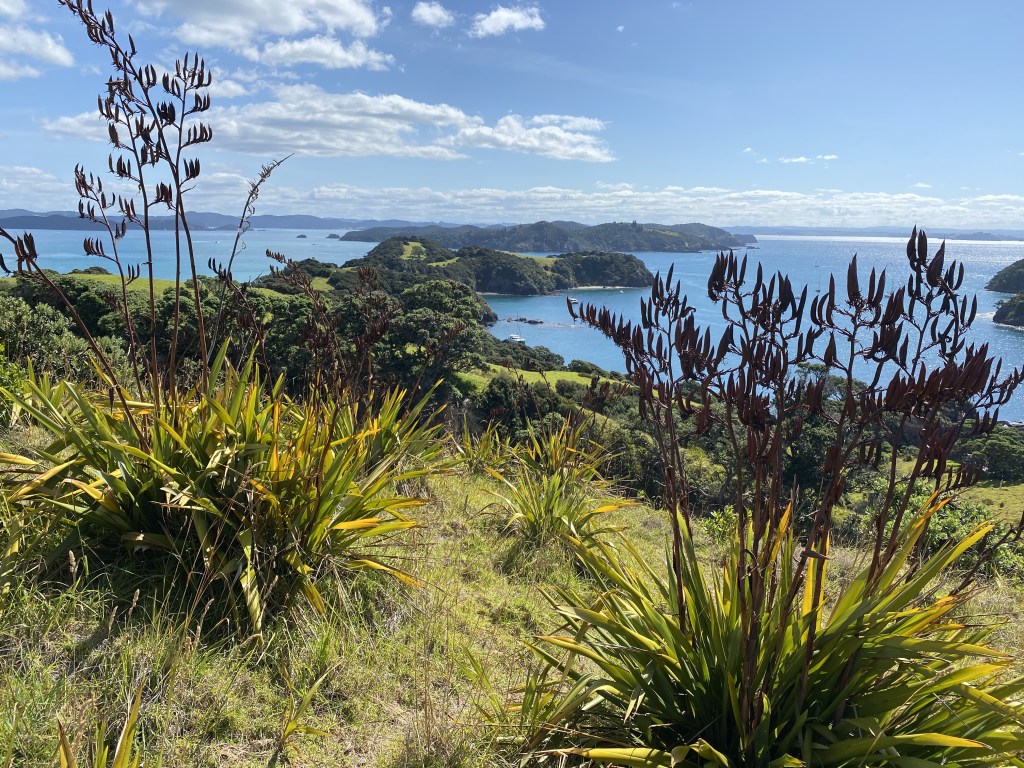
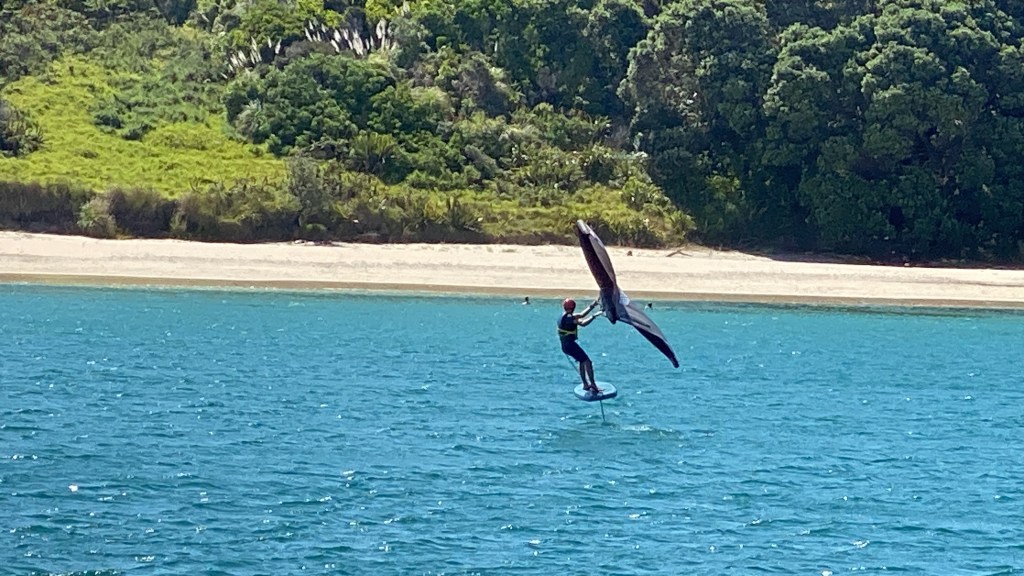
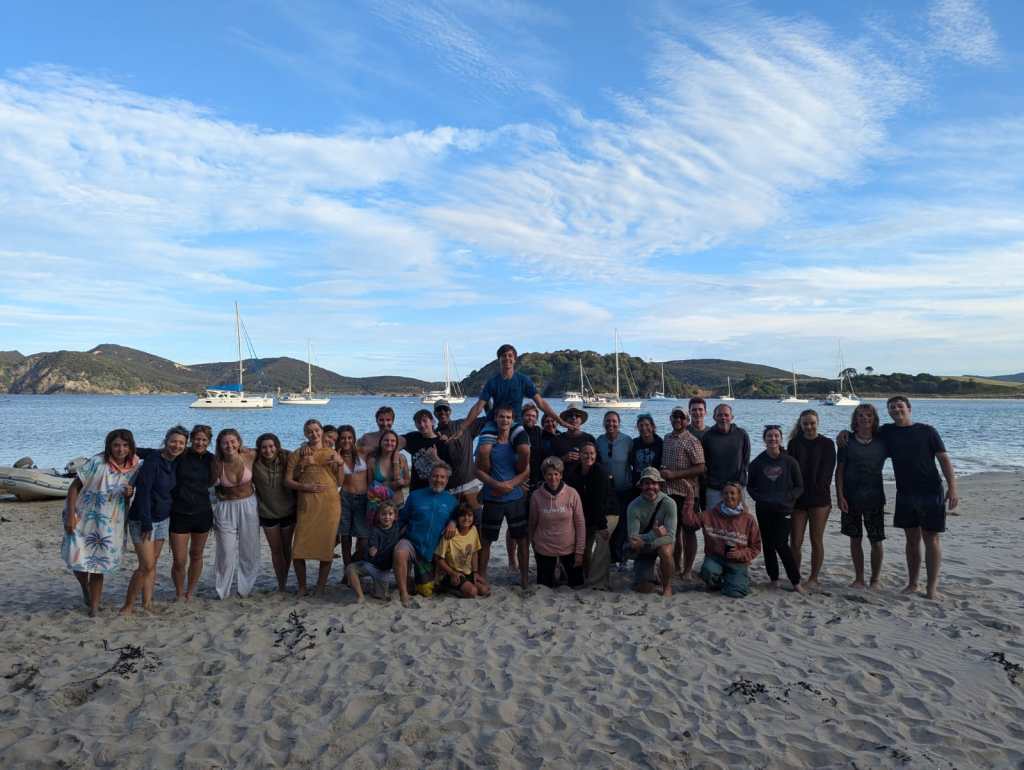
Matai Bay on the Kerikeri Peninsula, the furthest north we would venture in the Northland, turned out to be the perfect location for a New Year’s gathering for 8 kid boats, as well as a secure sandy anchorage for winds that hit 42 knots. Calder was stoked to wing foil daily.
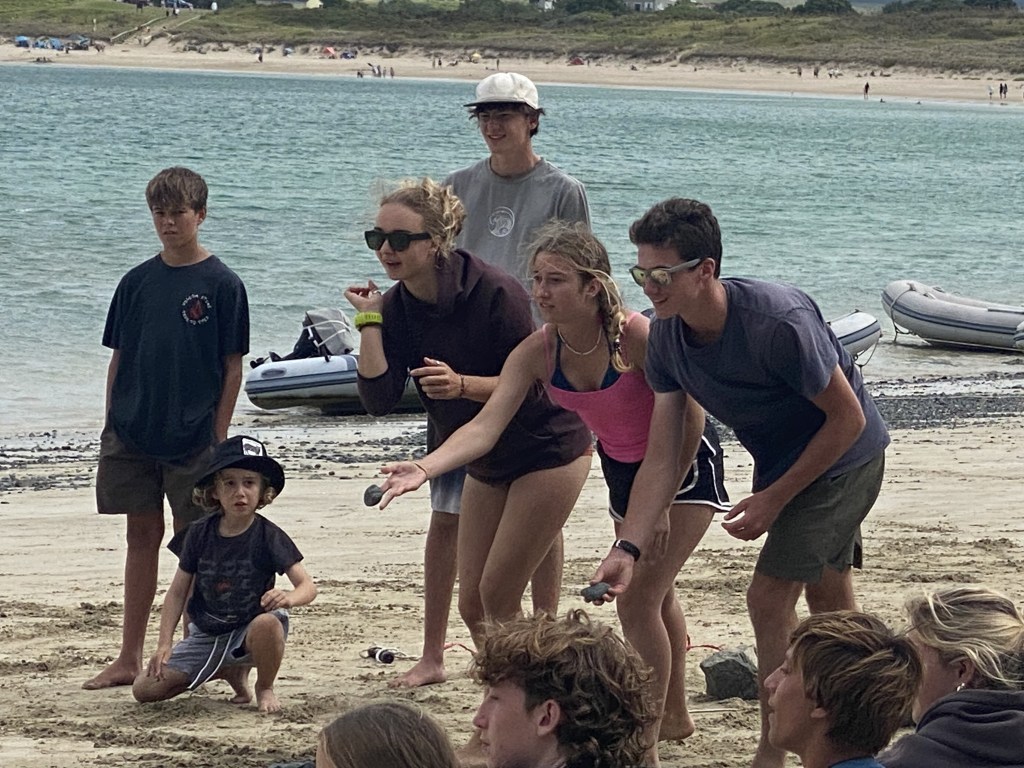
The beach was perfect for numerous birthday gatherings, beach volleyball, an obstacle course, and a Pirate Party (White Elephant) gift exchange.
The walking trails and beach were excellent for exercise, although it was sad to see the amount of European-introduced gorse, now one of the most widely recognized agricultural weeds in New Zealand.
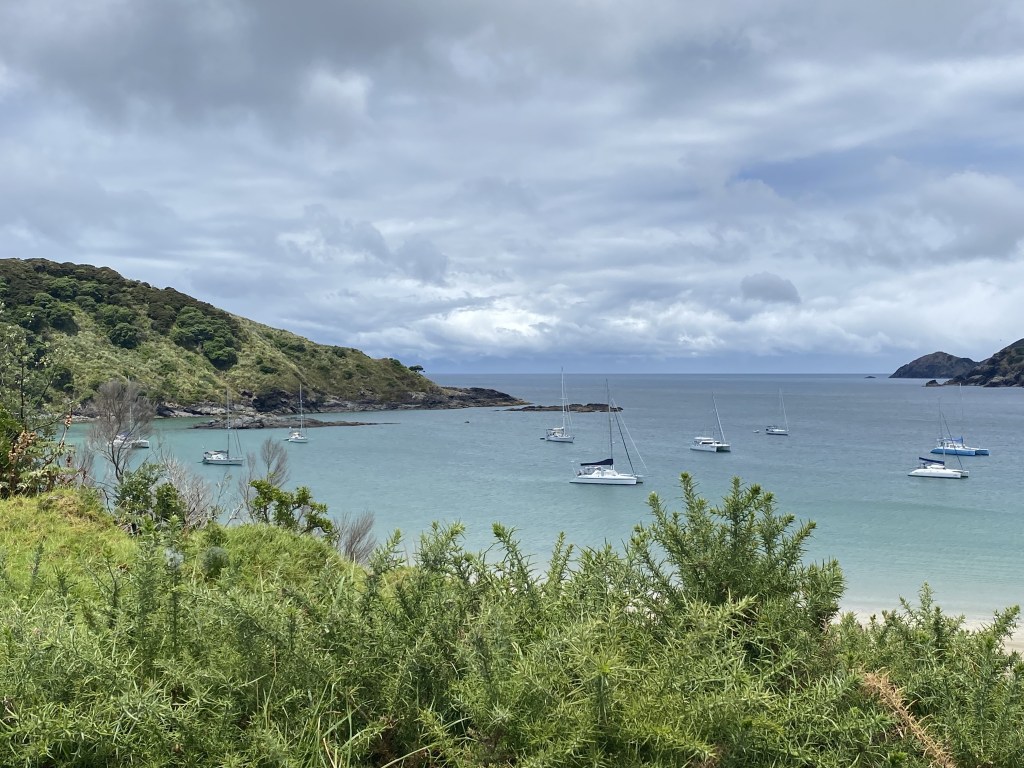
The NY Eve gatherings were held on boats, all the kids gathered on one boat and the adults on another. The countdown could be heard across the water with yelps and shouts.
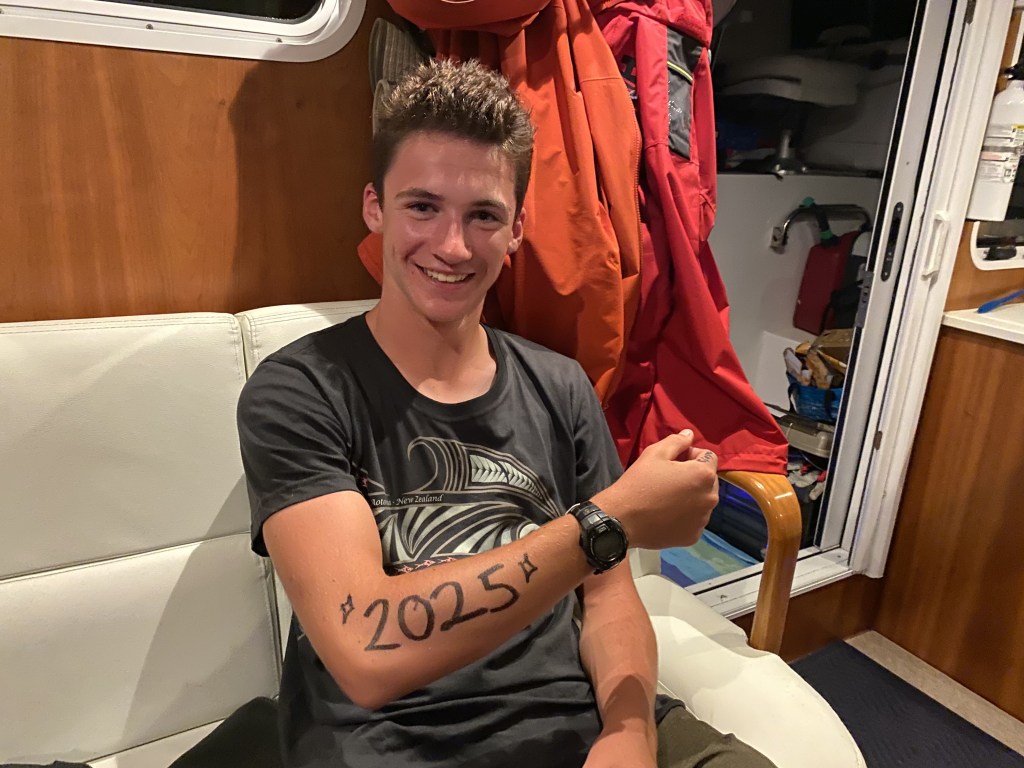
Mangonui, a small coastal town that retains a fishing-port feel, is lined with well-preserved historical buildings constructed in the days when the town was a centre of the whaling industry and exported flax, kauri wood and gum. We anchored overnight, replenishing our food stores and disposing of our trash, two tasks that needed desperately done on Terikah.
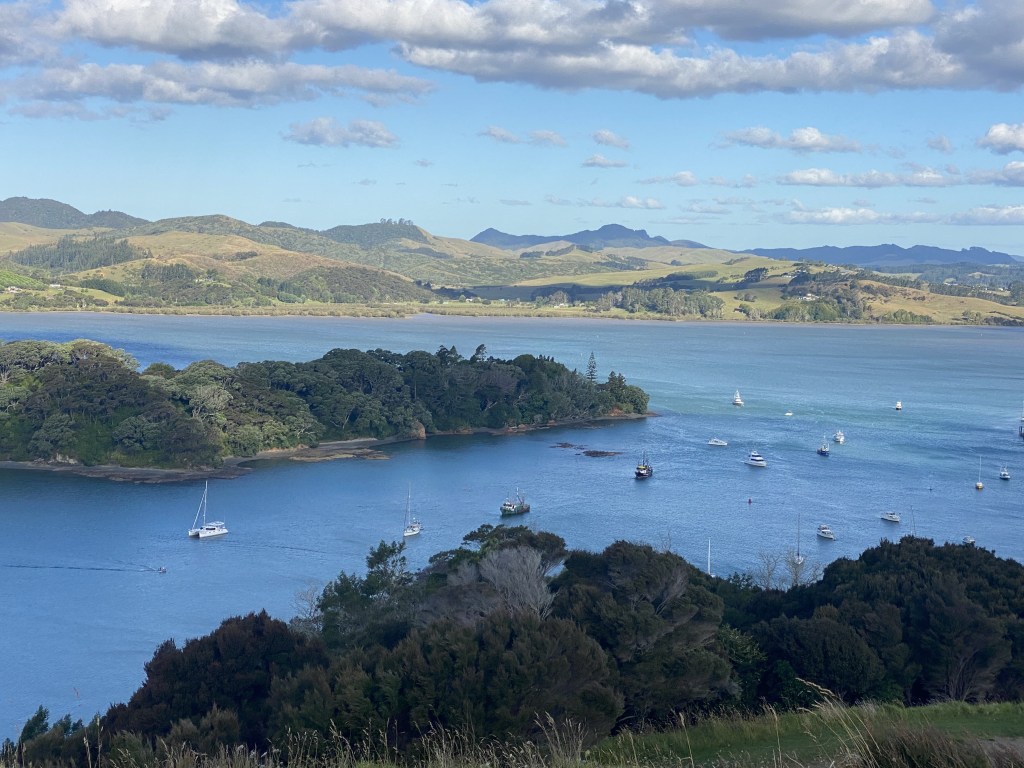
We also felt compelled to eat the famous Mangonui fish-n-chips (bluenose) at the chippery. We had to walk off the fish-n-chips, so we walked (with ice cream now in hand), to the trails of Rangikapiti Pa Historical Reserve, which has ancient Māori terracing and a spectacular view of Doubtless Bay. The word pā refers to any Māori village or defensive settlement, often with palisades and defensive terraces.
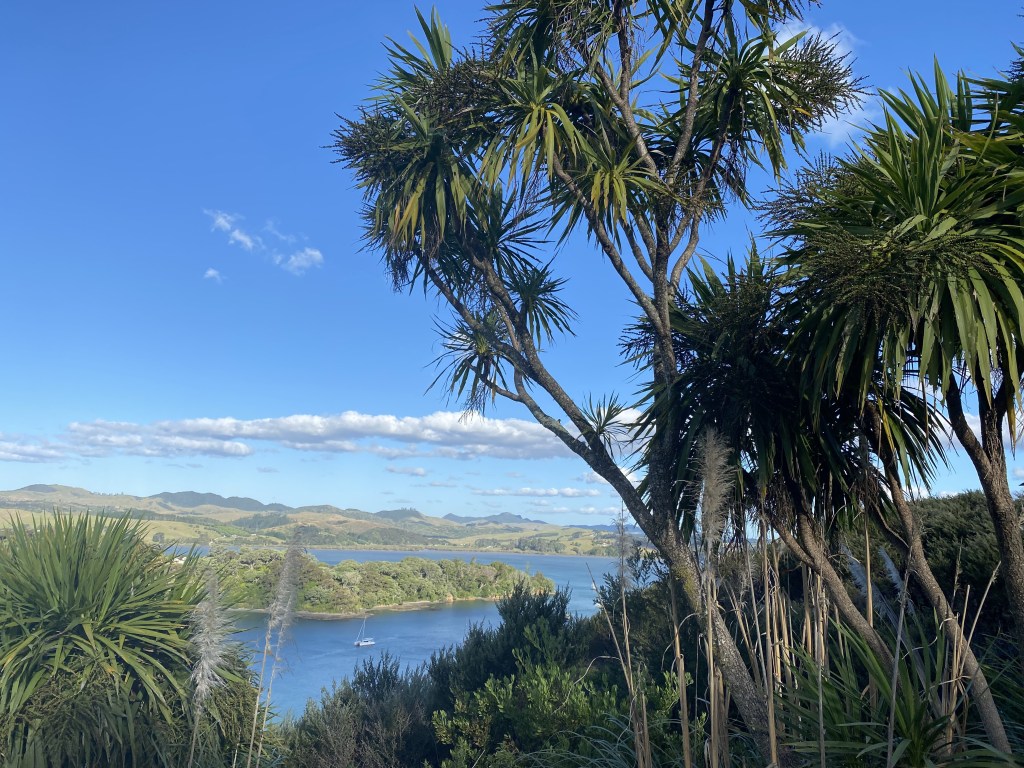
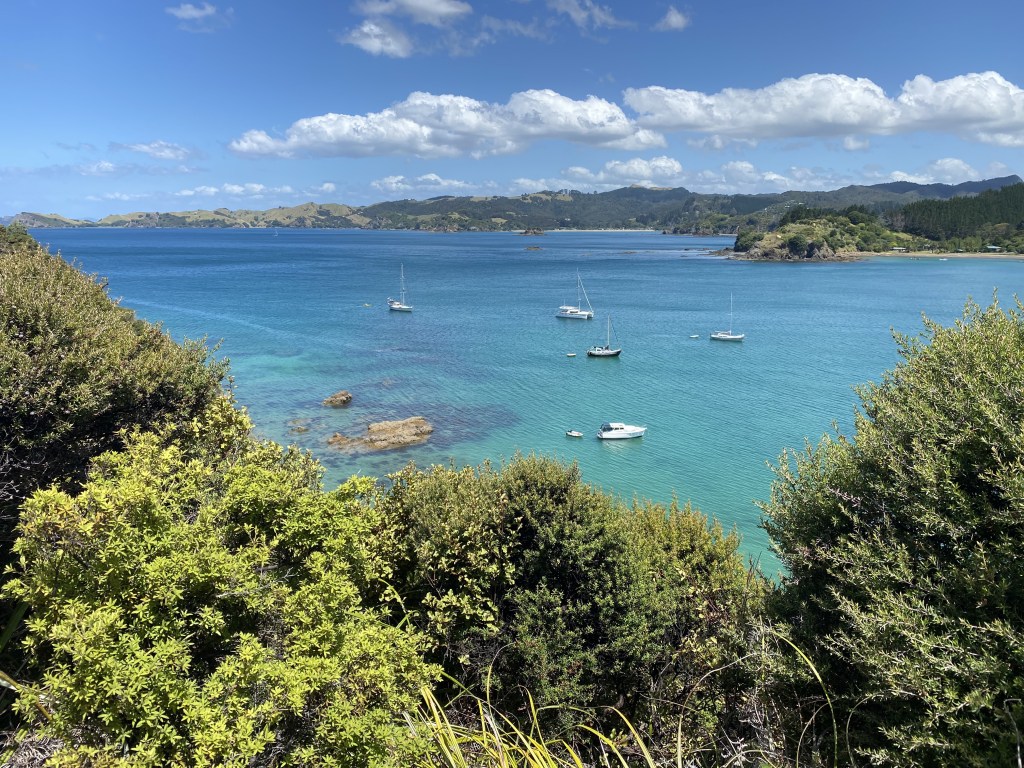
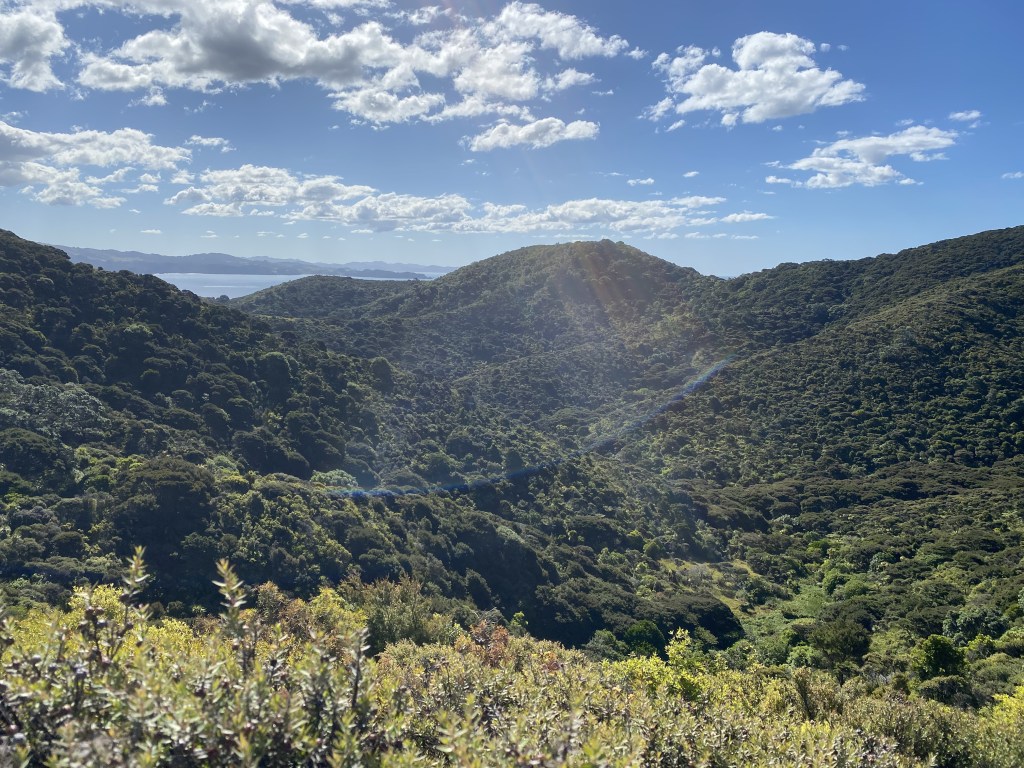
We moved further south to Mahinepua Bay, where there is a stunning walking trail through native forest out to the end of the peninsula, which we frequented during our couple nights here.
The posse of many boats had split directions and we found ourselves tired and recuperating from all the socialization. The Christmas before we left, I was gifted a sextant for Christmas with the goal of learning celestial navigation in all the “free time” I would have. That free time was eaten up by learning to sail our boat, passage-making, homeschooling, cooking, coordinating country paperwork, and other daily tasks. However, the quest to learn the sextant was sparked by a boating friend, a professional mariner, who offered to come over and introduce us to our sextant.
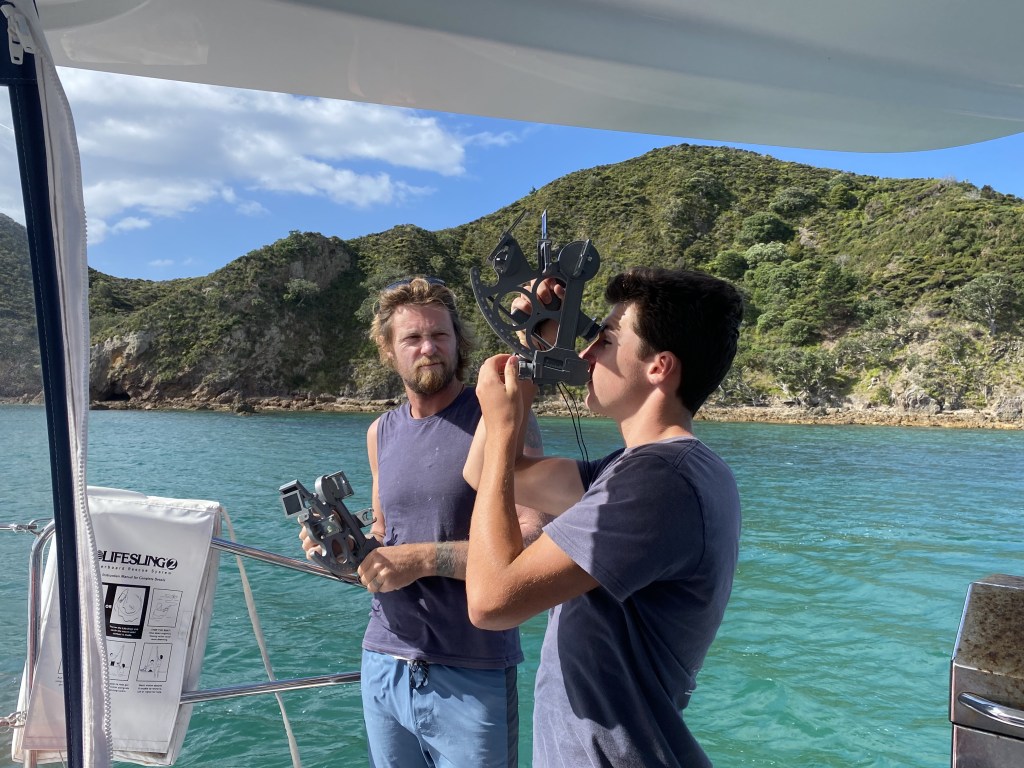
A sextant is a navigation tool that measures the angle between two objects, such as the horizon and a celestial body. It’s used in celestial navigation to determine latitude and longitude. Tyler (from SV Mara) came over and taught us how to hold the instrument, how to calibrate the mirrors, and how to take a sun sight, along with some theory behind it. We had an “ah ha” moment, as we “brought the sun down to the horizon” using the instrument. We have a long way to go, but these first steps are exciting and inspiring us to learn more.
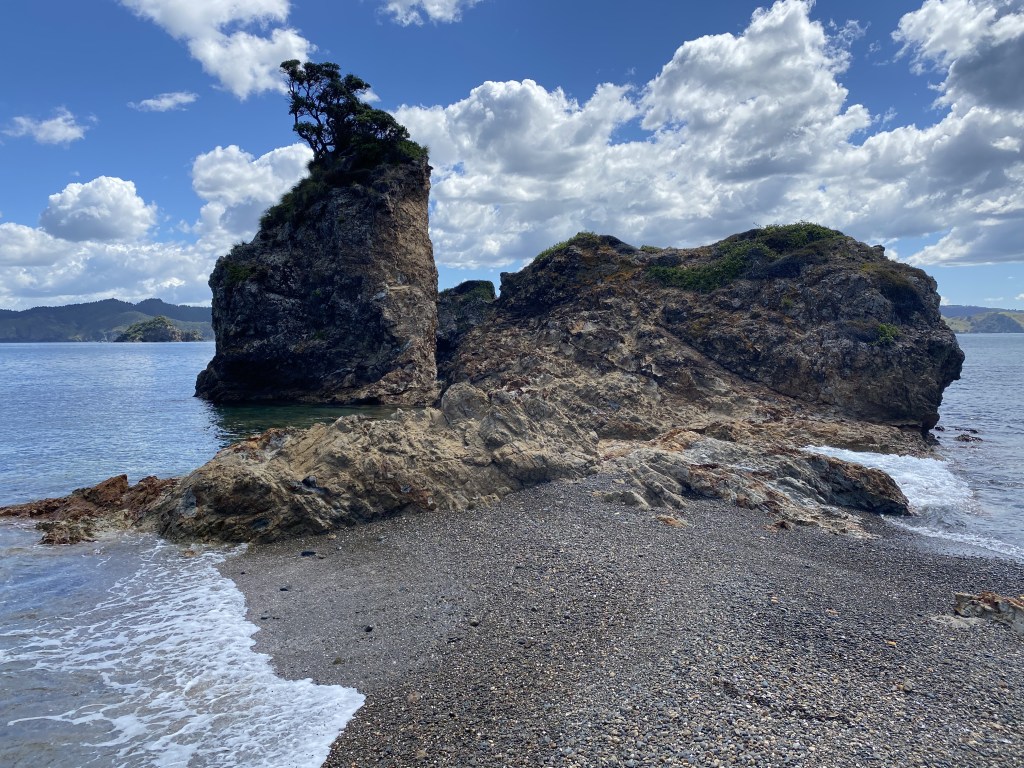
With the calm forecast, we took the opportunity to anchor near Motukawanui Island of the Cavalli Islands with its Alaskan-feeling rugged coastline and rocks, a nature reserve with a walking trail crossing it. The Cavallis were so named by Captain James Cook in 1769 during his first voyage of discovery. In his journal he recorded that some Māori “sold us some fish–Cavallys as they are called–which occasioned my giving the Islands the same name.” Cook probably meant trevally, which is abundant near the islands.
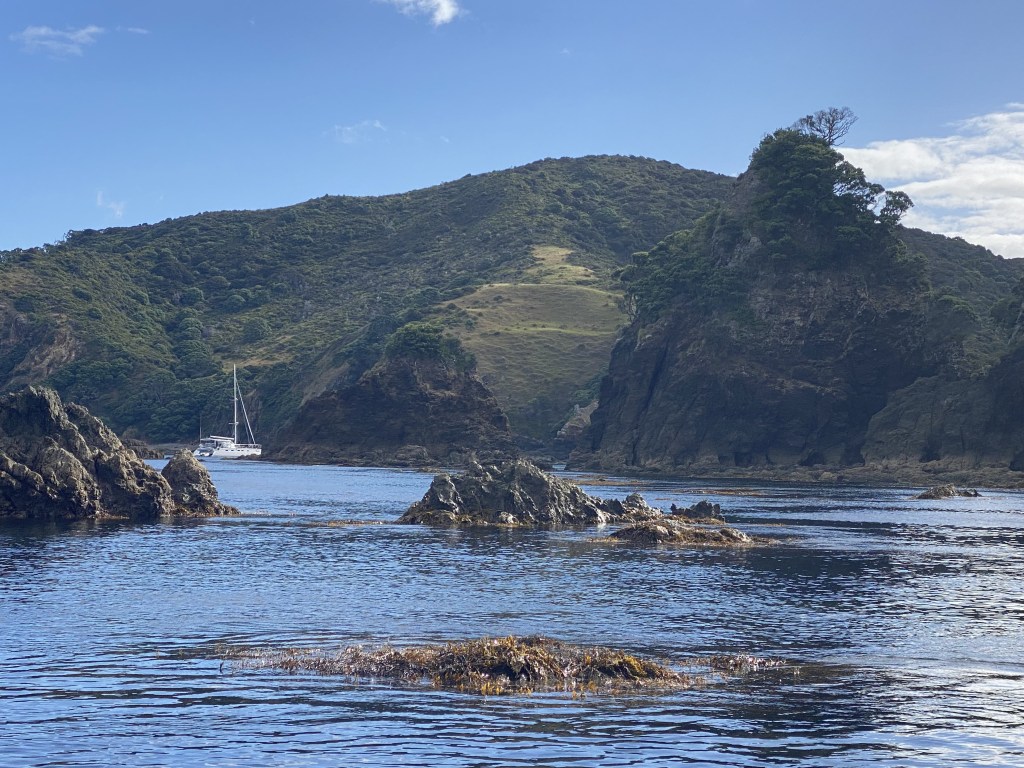
In our first anchorage, a flood of boats arrived at 2pm, making it quite tight… then all left by the evening and we found ourselves in a peaceful anchorage with rocky outcrops and no one on shore, overall striking. We dinghied over to a nearby beach, climbed a steep bluff to find the trail, sinking into spongy plants up to our knees (similar to muskeg, but dry) until we found the trail. This trail was unique, as we dipped into a darker forest area with the overwhelming sound of bug noise. Who was it?? It was the well named “chorus cicadas.” The sound of chorus cicadas is a familiar part of summer daytime in New Zealand. Vast numbers of individuals emerge around the same time and in the same place, and the combined volume of their calling is impressively loud, as the males call out to attract females. Cicadas that congregate together have the advantage of safety in numbers and it has been suggested their noise levels might be so off-putting that hungry birds stay away. We were definitely experiencing the surround sound experience of chorus circadas!
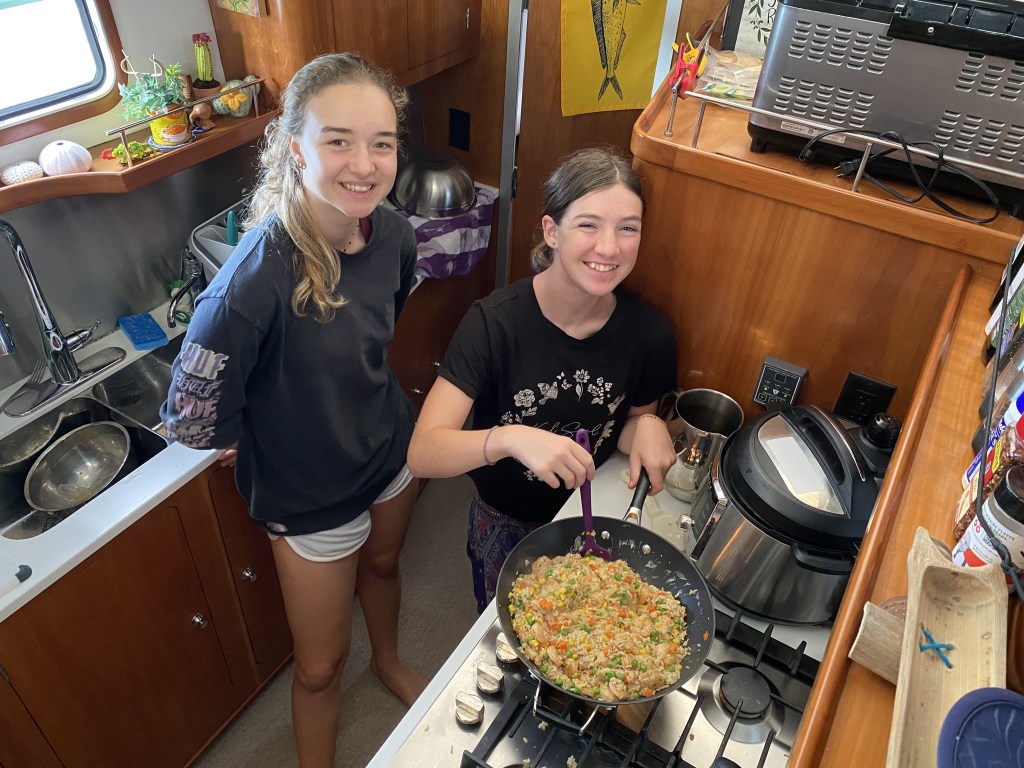
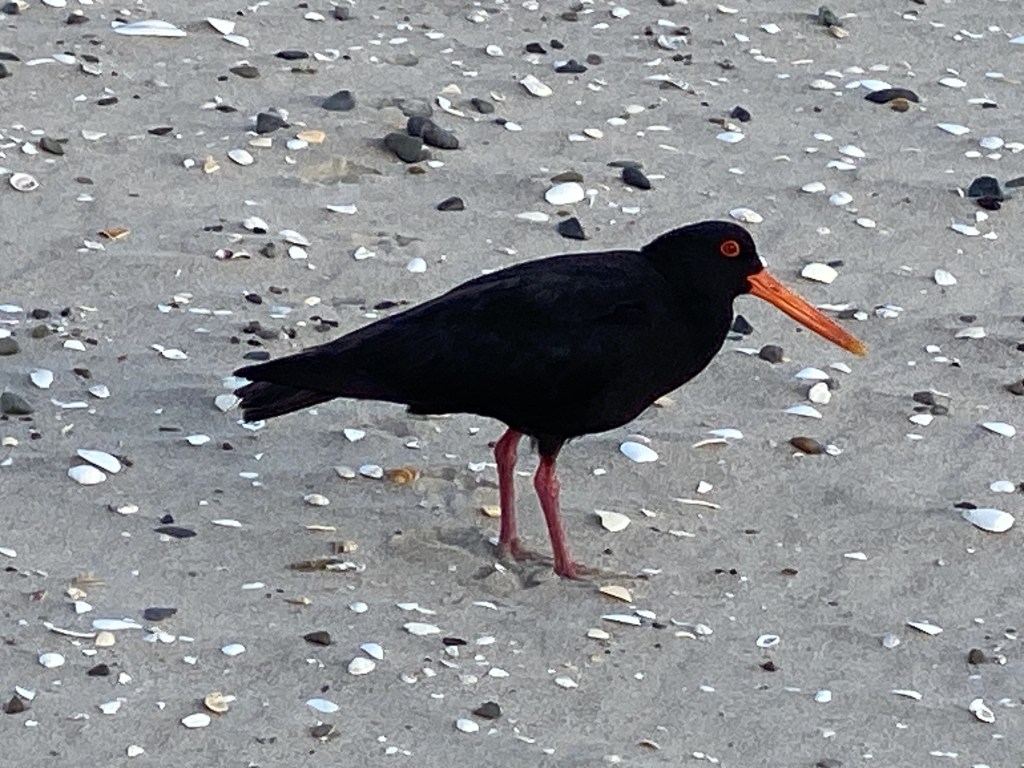
Swell coming in the next morning, Cora not excited about the boat movement while doing school, we motored to another nearby Cavalli Islands Bay (after another sextant lesson and taking a sun sight!). The wind shifted again, creating another uncomfortable motion; we moved again to a magical calm bay where we spent a couple nights. Ahhh, calm bliss. I enjoy hiking a trail repeatedly and just being in one place for a while – I sat and watched the oystercatchers eat, walked with rare dotterels on the beach, and chatted with a fellow rock collector/painter as we found perfectly rounded rocks.
I enjoy days bookended with meditation on the deck in the morning sun and stretching at night under the stars; this happens when we sit in one place for more than a night.
“You dang tunicates!” Chris curses loudly. I find myself laughing at phrases said on the boat. What is a tunicate and why would Chris curse this seemingly innocent transparent, tubular, gelatinous animal? Pelagic tunicates (known as salps) are barrel-shaped, free-floating tunicates that move by contracting their bodies, which causes water to pump through their bodies, feeding on phytoplankton. They can be seen at the surface, singly or in long, stringy colonies and can breed very quickly. When phytoplankton is abundant there are fairly short-lived blooms of salps, which eventually feed on most of the phytoplankton until there is no longer enough food to support the large numbers of salps. Interestingly, tunicates are considered to be the closest invertebrate relative to humans.
Back to Chris…we found ourselves in a bloom and, while making water, the tunicates were getting stuck in the strainers and filters, plugging up the entire system and causing it to overheat and stop. An unfortunate event for us, but worse for the tunicates. After a while, the problem was fixed, the large floating bloom moved on, and we were back making water. In the process, Chris found an oil leak from the engine, cleaned an oily bilge, discovered where the leak was, and ordered the parts needed to fix this. He also opened the inspection port into our keel (that he installed in the Marquesas) and found a dry port keel, but 3 gallons of water in our starboard keel…a mystery to be solved.
Mellow motor back south to the holiday-populated Bay of Islands where we tucked into a nook on the north end of Urupukapuka Island. We questioned our sanity when the swell and winds had us a bit tight with the rocky shoreline, but all was well and it felt like a haven amidst all the densely populated anchorages.
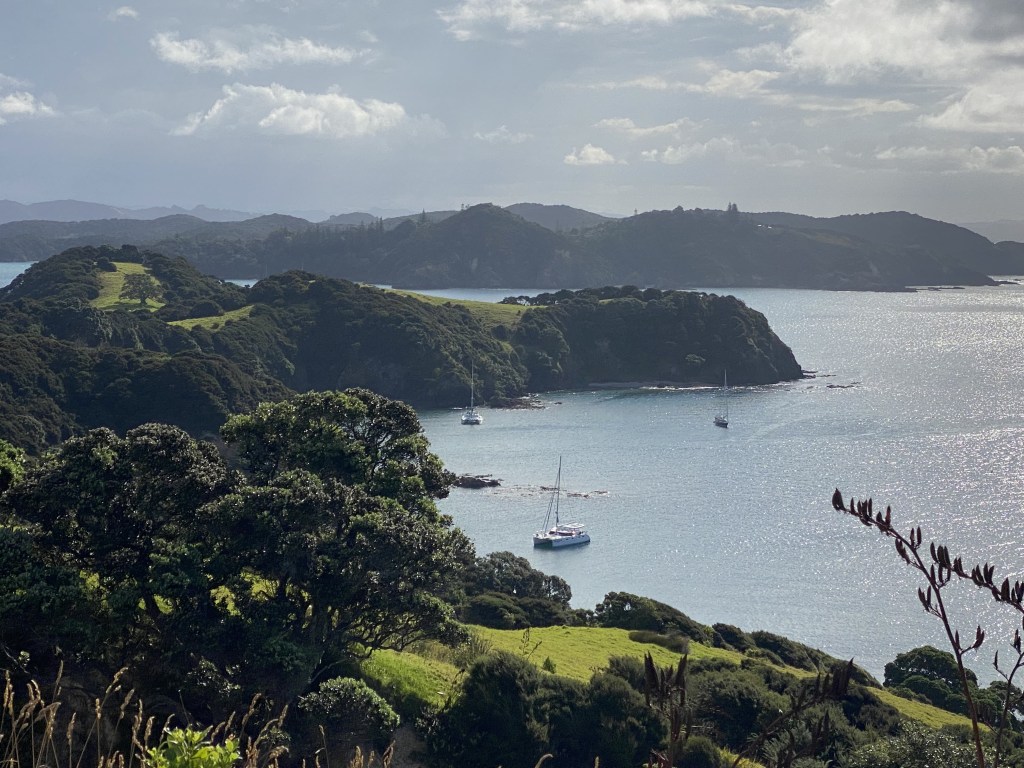
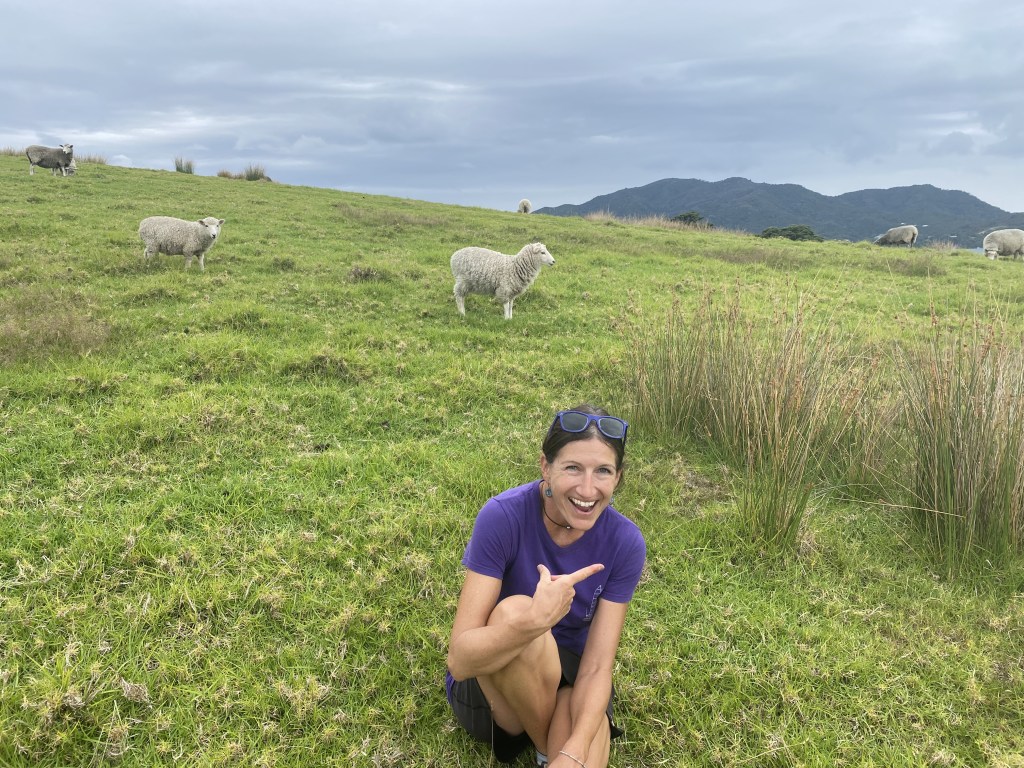
One of the largest islands, it has walking tracks that we explored, through manuka groves, along stunning cliffs, and across sandy beaches.
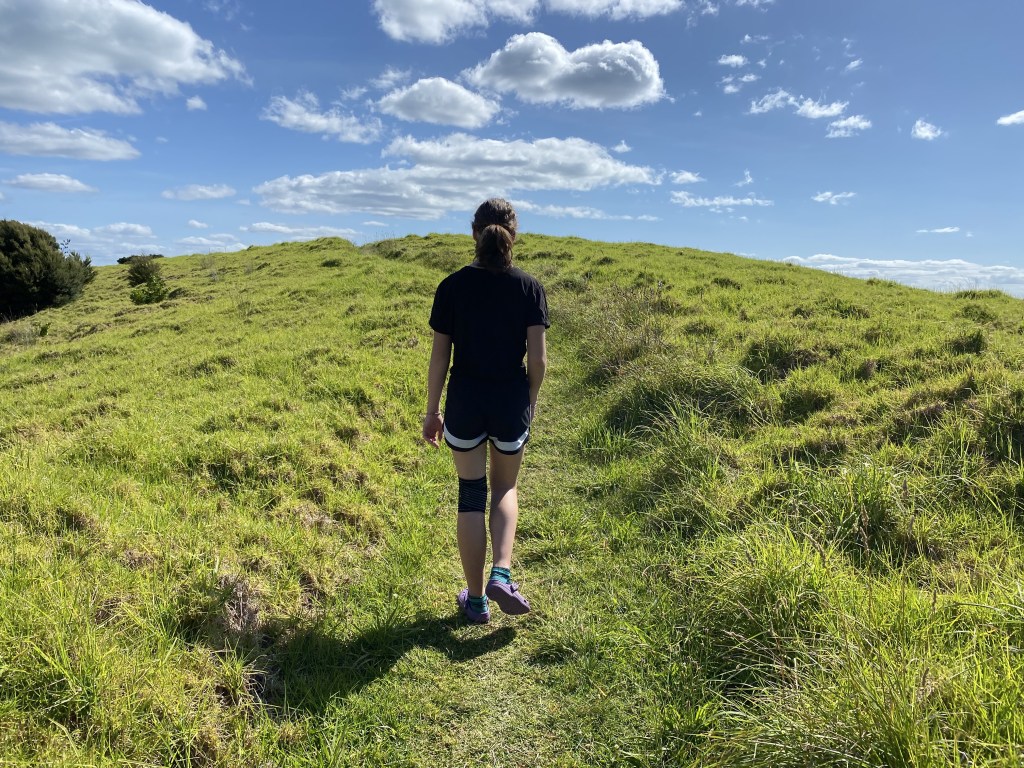
There is even a café in one cove where we enjoyed a late lunch while lounging in beanbags, trying to protect our chips from the stealthy banded rail who wanted to feed its chicks amongst aggressive silver gulls. Calder was convinced into the cool waters by his friends to go spearfishing for the first time, excited to bring home his first speared catch, a striped parore. We may need to invest in heavier wet suits with hoods if he wants to continue this form of fishing, which he said felt more like hunting. I thoroughly enjoy seeing our kids having these new experiences that push their comfort zones.
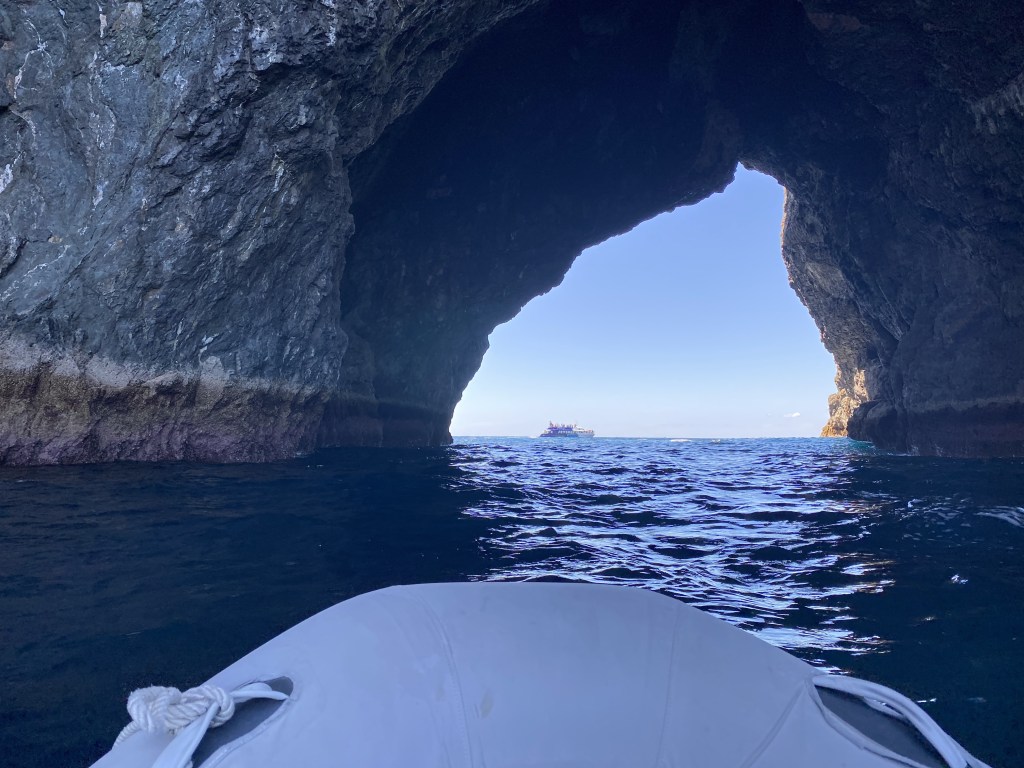
Amazed at how calm the open Pacific Ocean can be on our way to Hole in the Rock, rolling swells as we took turns running the dinghy into the cave and through the massive rock hole, while the other stayed on the boat floating without a good place to anchor.
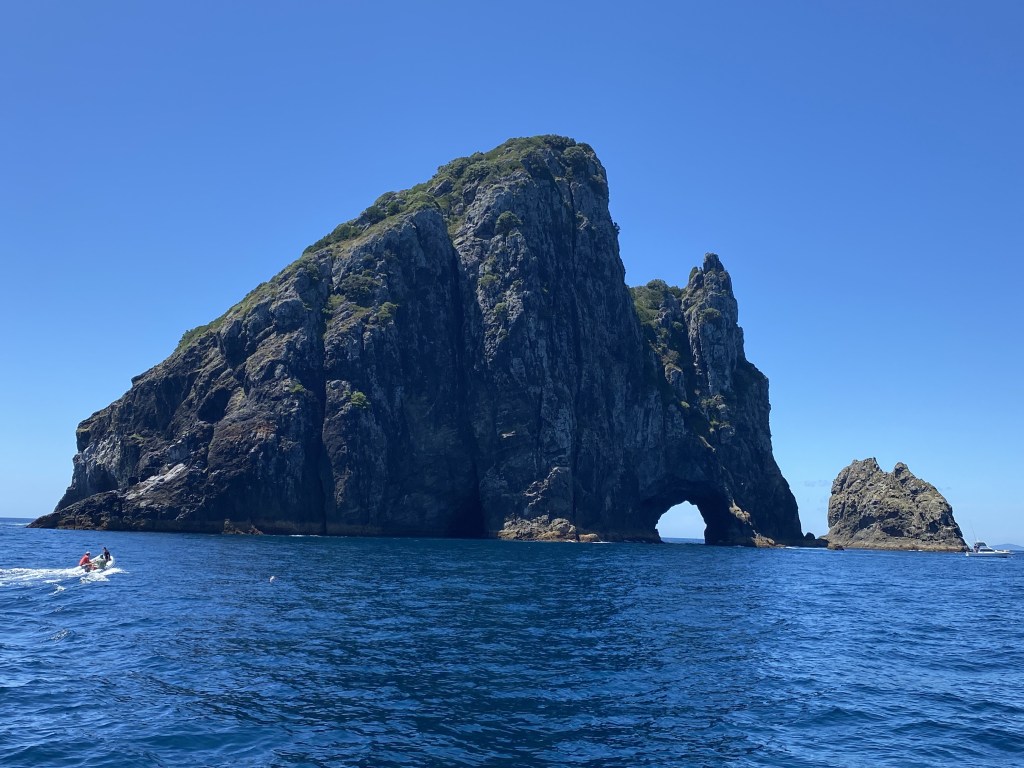
The Hole in the Rock (Motu Kokako) is located at the northern tip of Cape Brett in the Bay of Islands.
Over to Robertson Island (Motuarohia), very populated with boats and people until the magical hour of 5pm, when all the day boats leave and suddenly there are only three of us anchored.
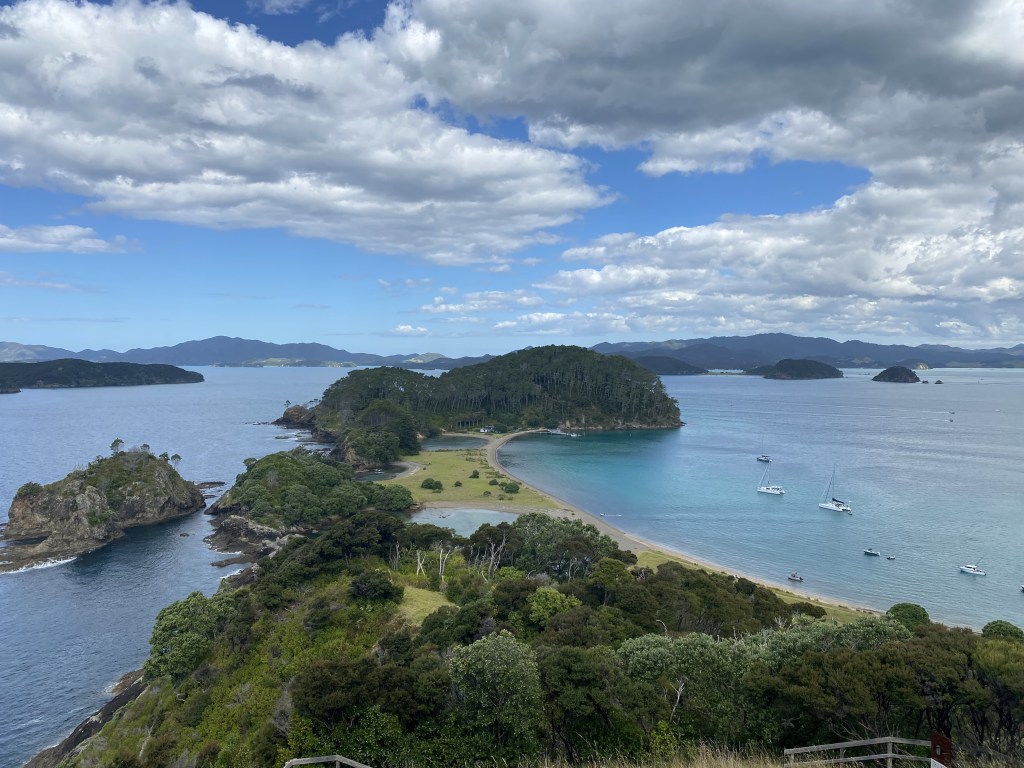
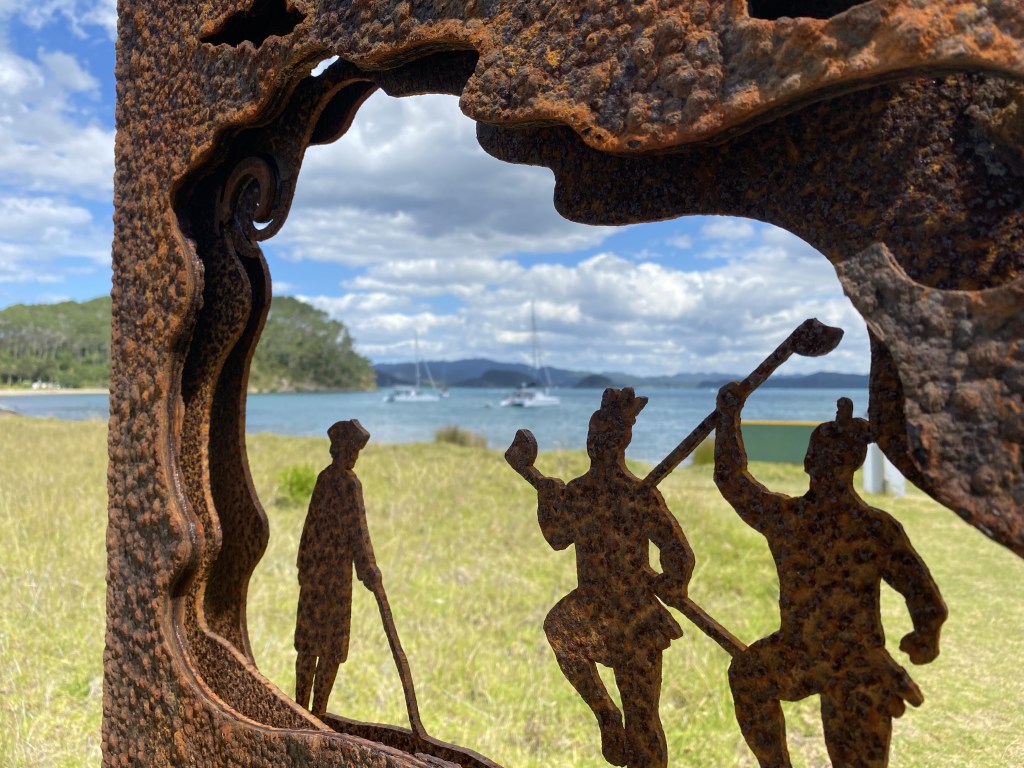
The short walk up the hill was lined with thought-provoking signs displaying what Cpt James Cook thought when he arrived to the island, juxtaposed with what the Māori were doing; an aggressive war stance…or a welcoming dance? The view from the top was stunning.
Time to head back to the marina for a major project and work, more on this next entry.
 SV Terikah Adventures
3 responses to “Northland New Zealand: New Year 2025”
Wonderful adventures 💖
LikeLike
Salps – a troller’s least favorite creature. They sometimes appear in Alaskan waters and one summer they were so bad that we couldn’t get the gear down before every hook, flasher, and hoochie was covered with gobs of them. Finally quit the trip early and went in to town until they had left the area. Good travels. Lila Trask
LikeLike
Happy New Year to you from the crew of MV ADVENTURES back home in Petersburg! For your clogging watermaker intake, we suggest that you check out: BUCK ALGONQUIN STRAINER PERFORATED STAINLESS STEEL SCREEN SURFACE MOUNT. It replaces the external “scoop” over the through-hull fitting, and with so many tiny holes and a larger surface area, it doesn’t have enough suction to hold critters like tunicates or jellyfish. We have them on the gen, air conditioning/heat pump, and watermaker intakes.
LikeLike