
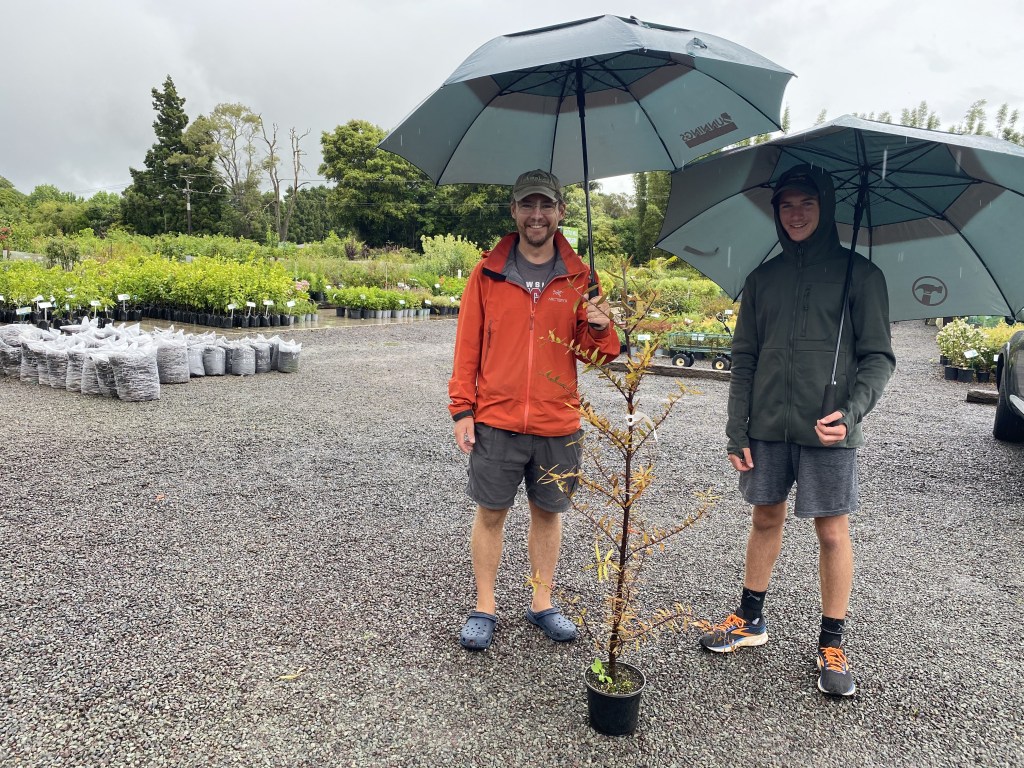
Who uses solar-powered Christmas lights? The southern hemisphere where it’s sunny summer in December! Christmas here is not commercialized (perhaps as it is a majority secular country? summertime?) and it is focused on spending time with family outdoors, camping and having a BBQ in the warm weather. We went to a Christmas parade in Paihia, reminiscent of our small-town Alaska parades, starting with the mandatory fire truck and ending with Santa, but all under the hot sun. At a local tree nursery, we picked out a living kauri tree for our Christmas tree, planning to plant it in the islands in the new year.
And we have a confession: We bought salmon…yes, we did… didn’t put up a fight and it tasted SO good. Another confession: We went to a salon for haircuts, not just our normal cockpit cut, and shocked the hairdresser, “What did you do to your hair!?” she asked me – the ocean and the sun are what we did.
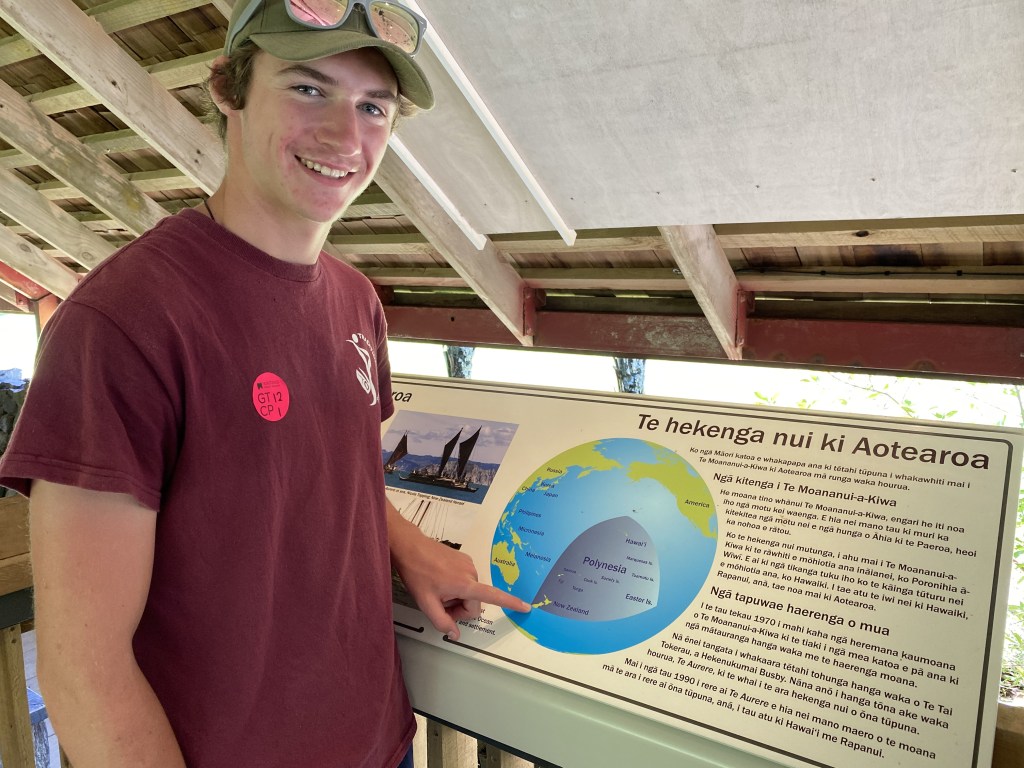
Off to the Waitangi Treaty Grounds, considered the most significant historical site in New Zealand, where the British Crown and native Maori people signed the Waitangi Treaty. This Treaty, also known as Te Tiriti o Waitangi, is a founding document of New Zealand that was signed on February 6, 1840, between the British Crown and over 500 Māori chiefs at this location in the Bay of Islands.
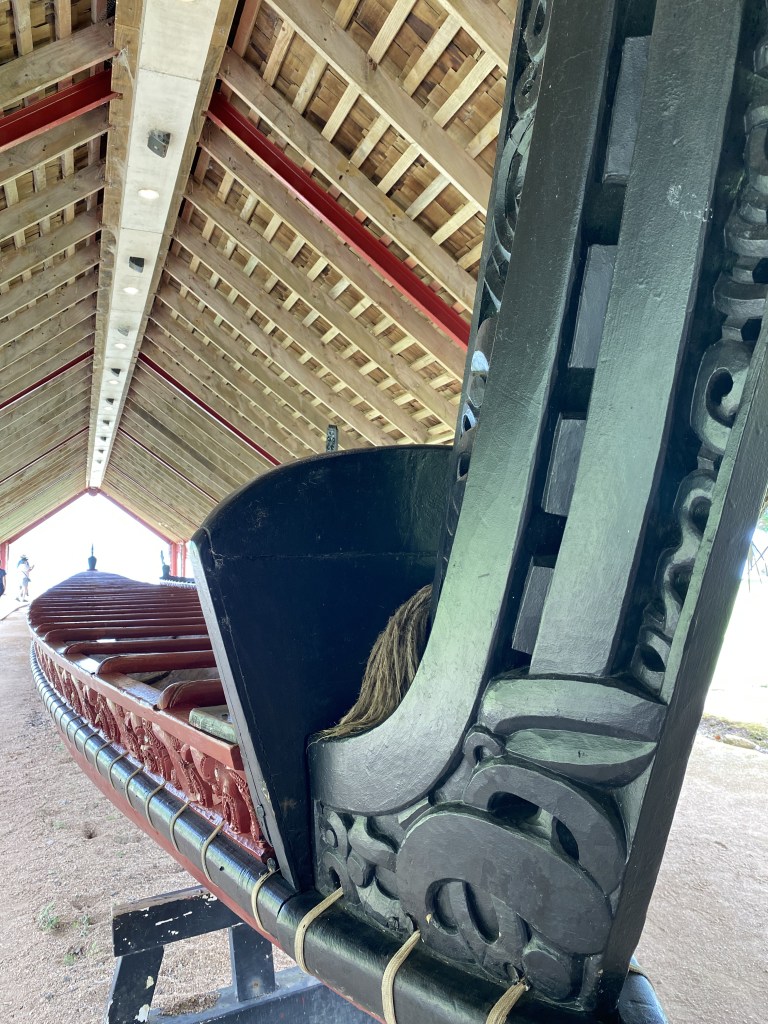
the largest in the world
The treaty’s purpose was to establish a government, protect Māori rights, and maintain peace and order. However, the treaty was written in two versions, one in Māori and one in English, and the English version is not an exact translation of the Māori version.
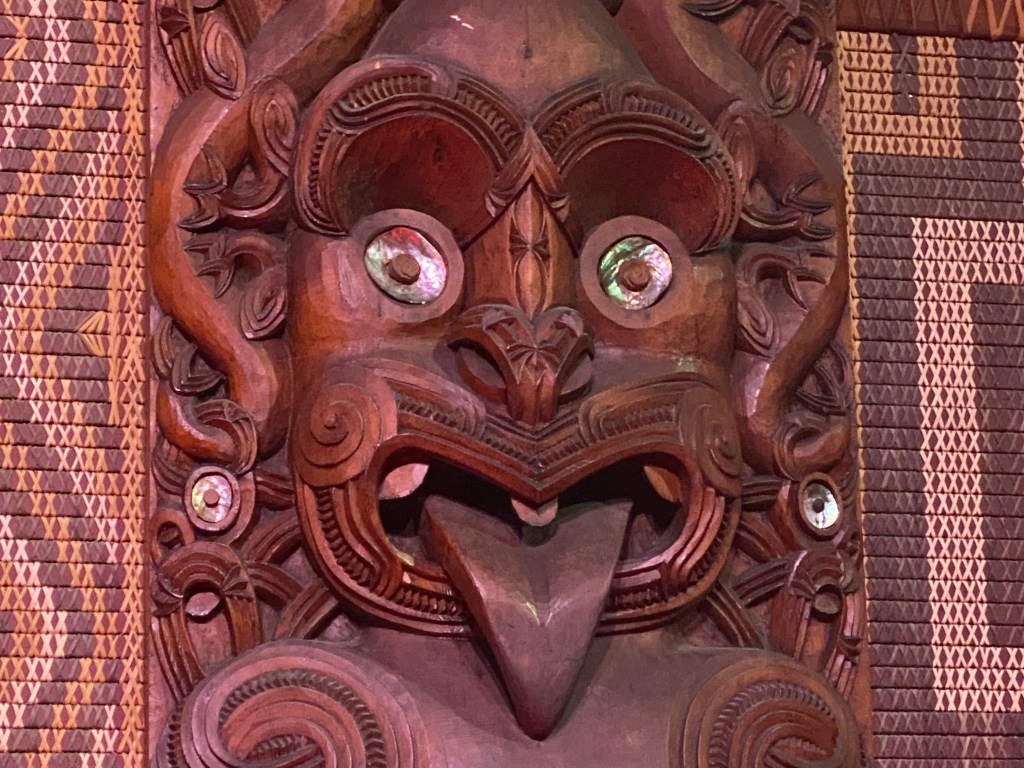
The Crown guaranteed Māori full citizenship rights, protection of their status and interests, and the ability to continue living in New Zealand as Māori. The Crown was given the right to govern New Zealand and represent the interests of all New Zealanders. The treaty confirmed the Maori chiefs’ right to exercise chieftainship and gave the Crown governance over the land. However, the treaty’s founding promises have not always been honored, and different understandings of the treaty have led to conflict.
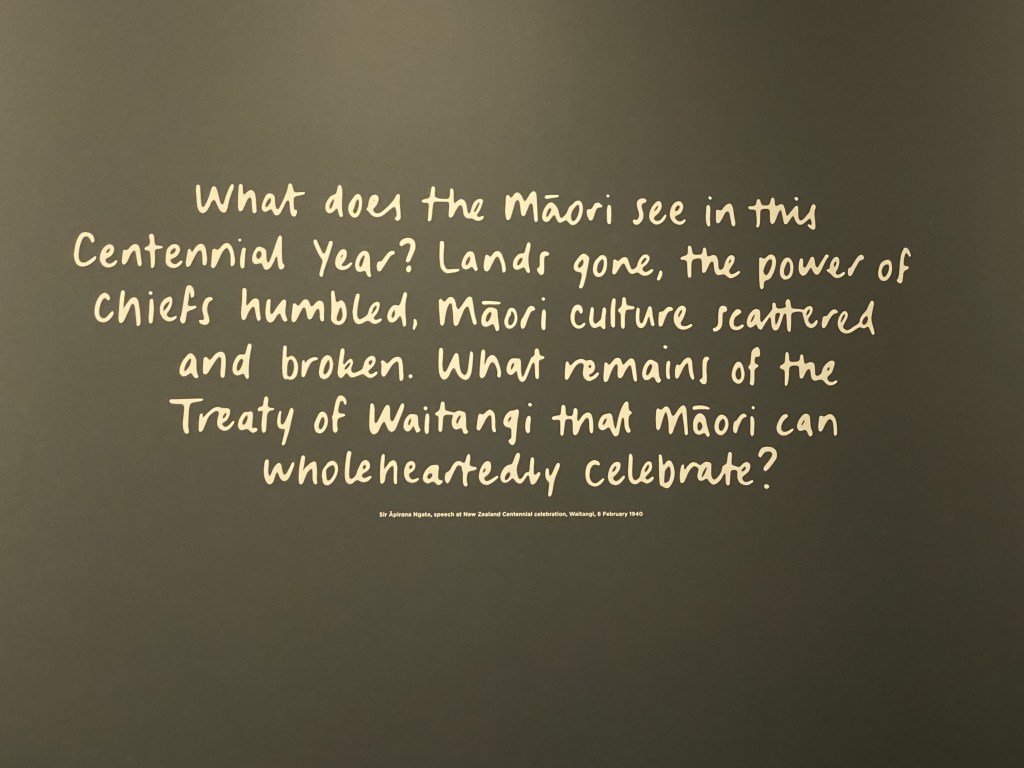
Proposed changes to the Treaty are currently under debate in the Parliament of New Zealand. And, as you will see at the end of this entry, issues regarding land rights are still ongoing today and laden with emotion. Highlights of the Treaty Grounds for us were an excellent walking tour, the waka taua (largest ceremonial war canoe in the world), and the cultural dance show.

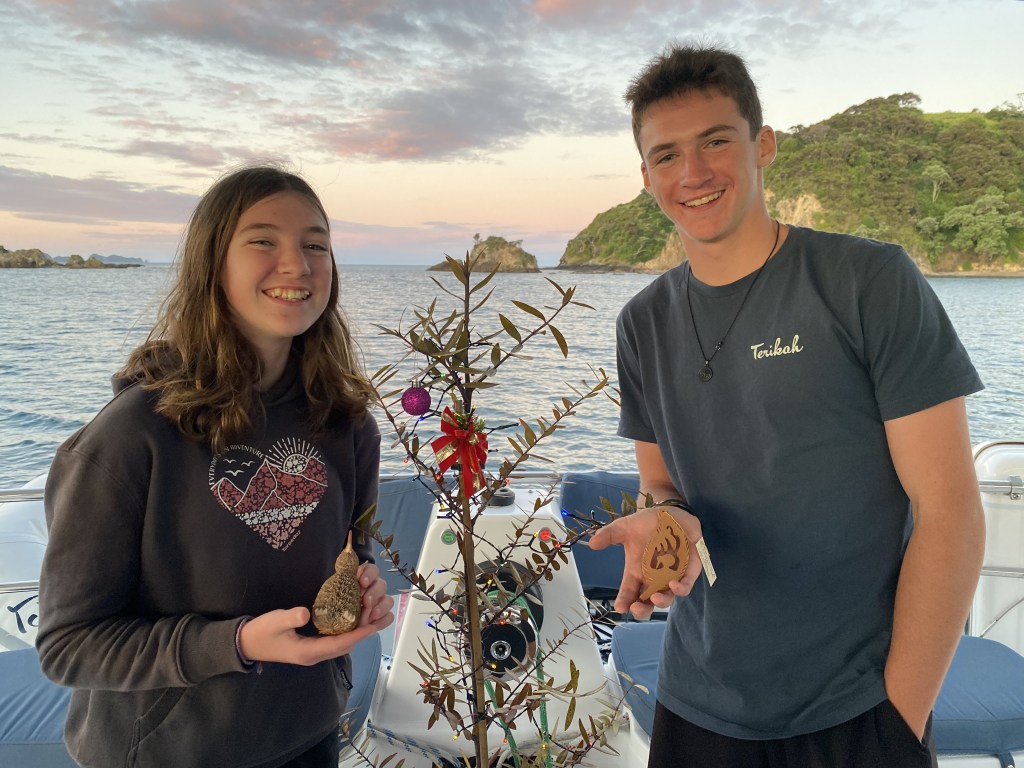
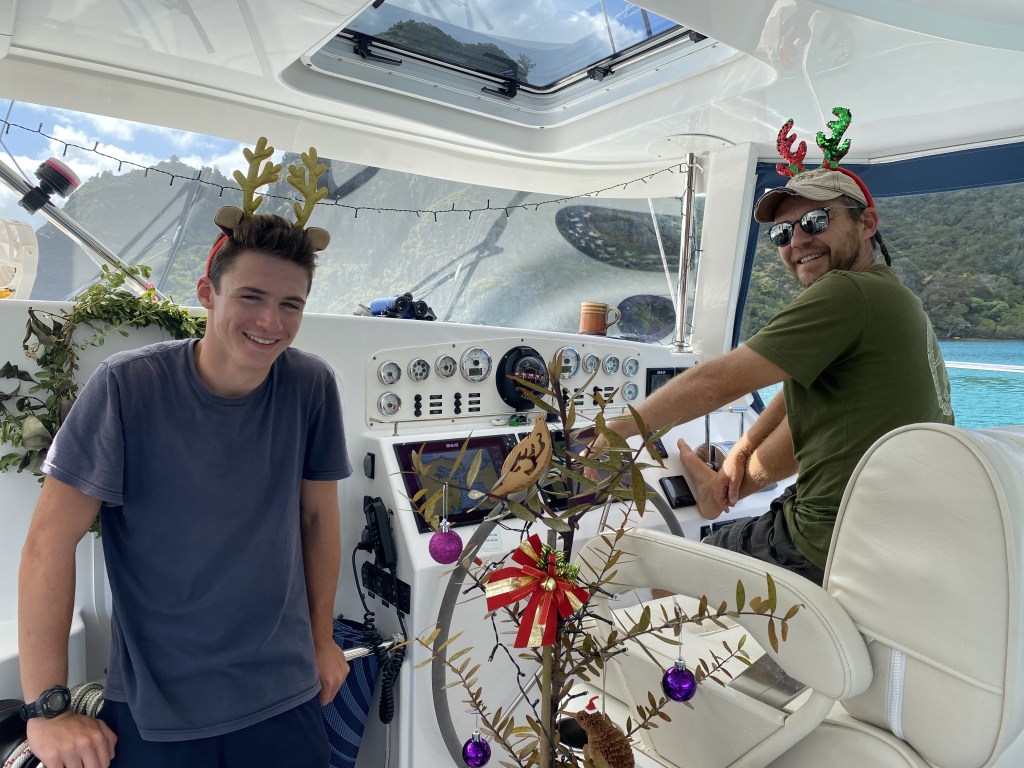
Our time at the Opua dock had come to an end and we pulled our barnacle selves off the dock to explore the Northland by sea. Opua sits up a river and, in preparation for a longer day tomorrow, we did a short 5 miles out of the river to Tapaka Point to anchor for the night. Our boat looks festive with Christmas lights, our decorated kauri tree with new kiwi ornaments, and a wreath I made of local tree cuttings. We get more homesick this time of year, sentimental, and it doesn’t feel quite right to be in a warm climate.
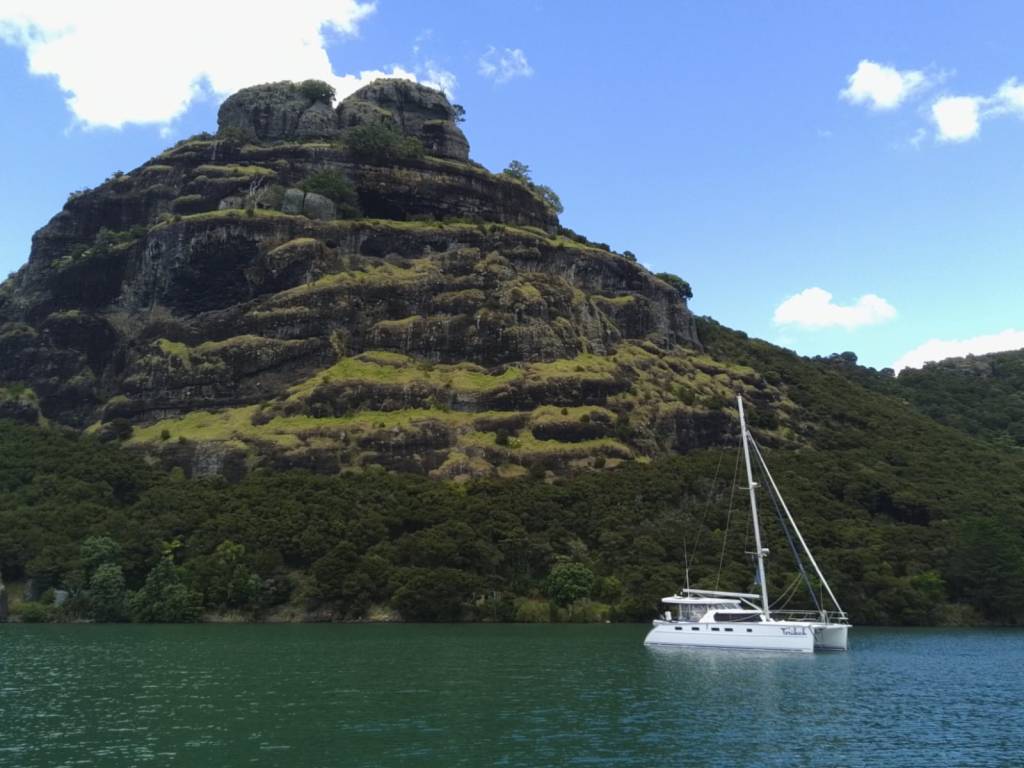
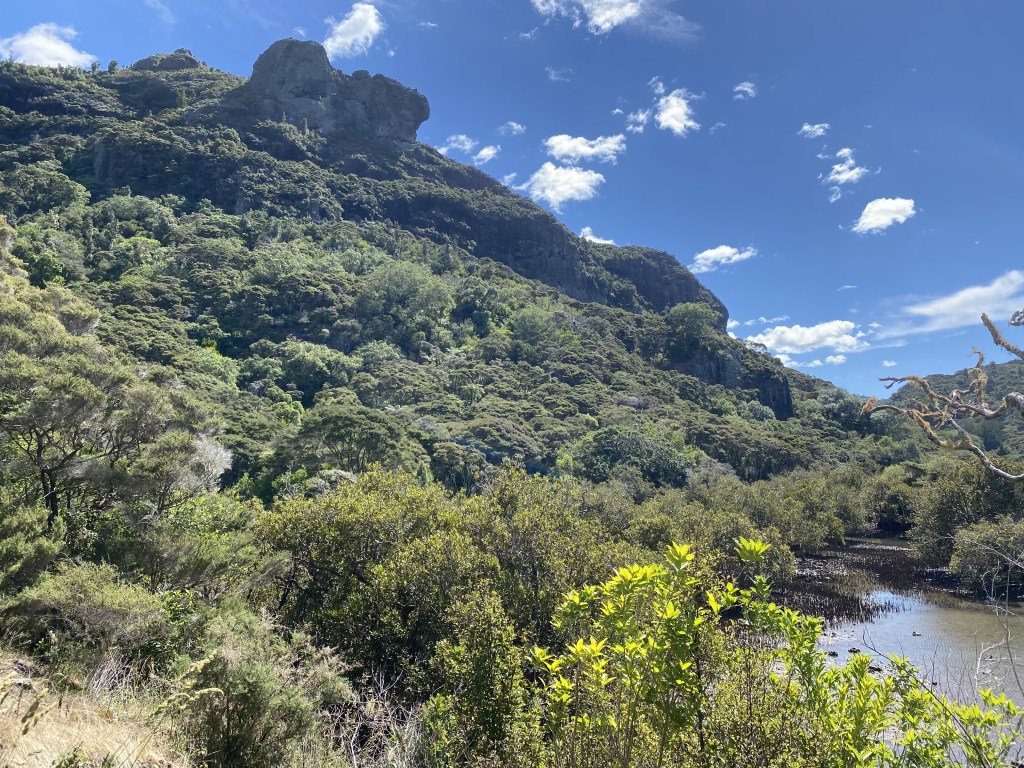
Our goal for the holidays was to go north to Whangoaroa Harbour, a well-protected harbour with volcanic features. Anchor down after a stellar sail north to Te Rere Bay, next to a volcanic formation that looked like a pile of pancakes.
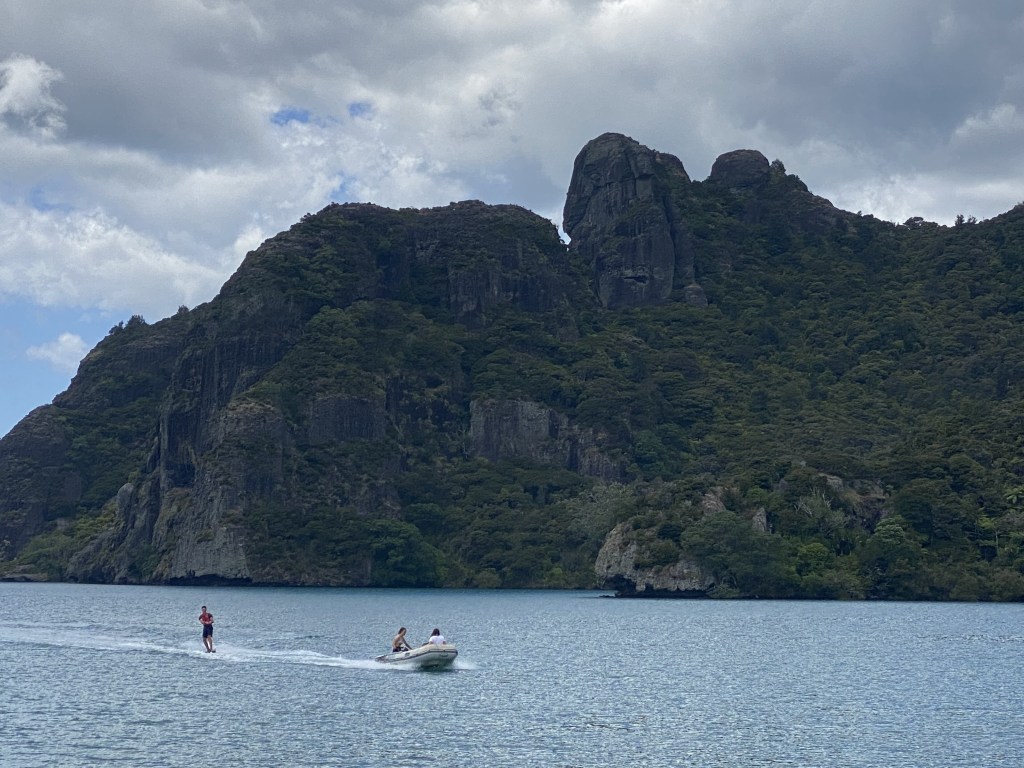
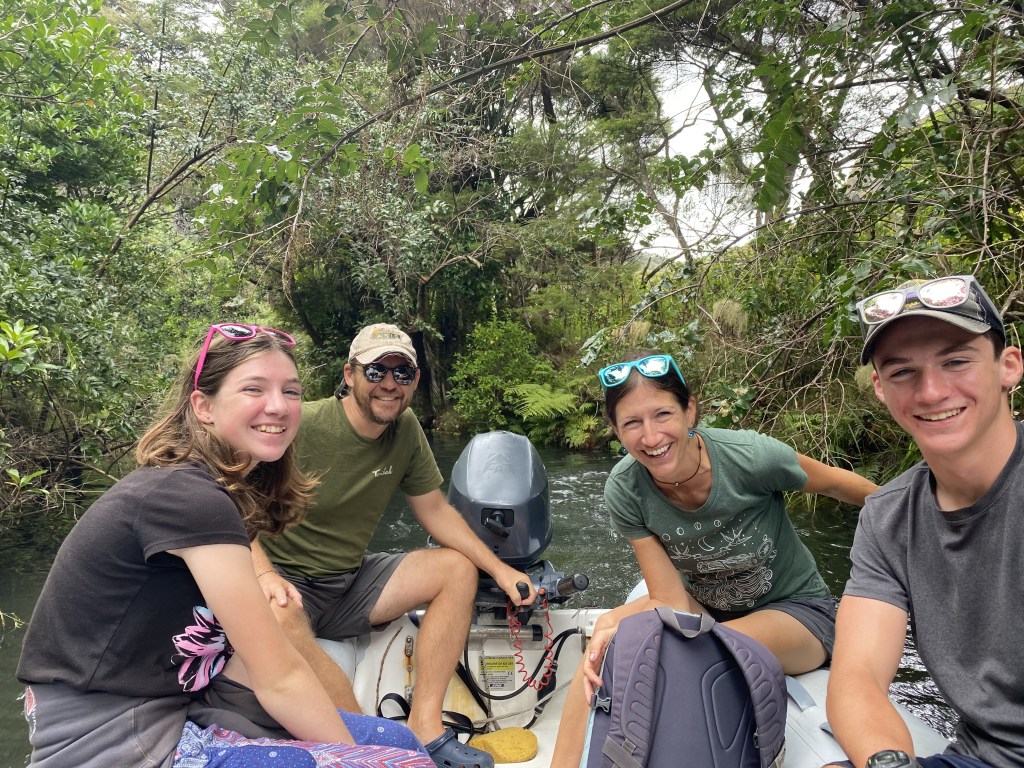
We spent the next few days hiking along river to Totara North, climbs up a rock wall to stellar views at prominent Duke’s Nose (Calder barefoot?!), dinghy explorations on a rising tide into river mangrove fun, and water sports and games for the kids.

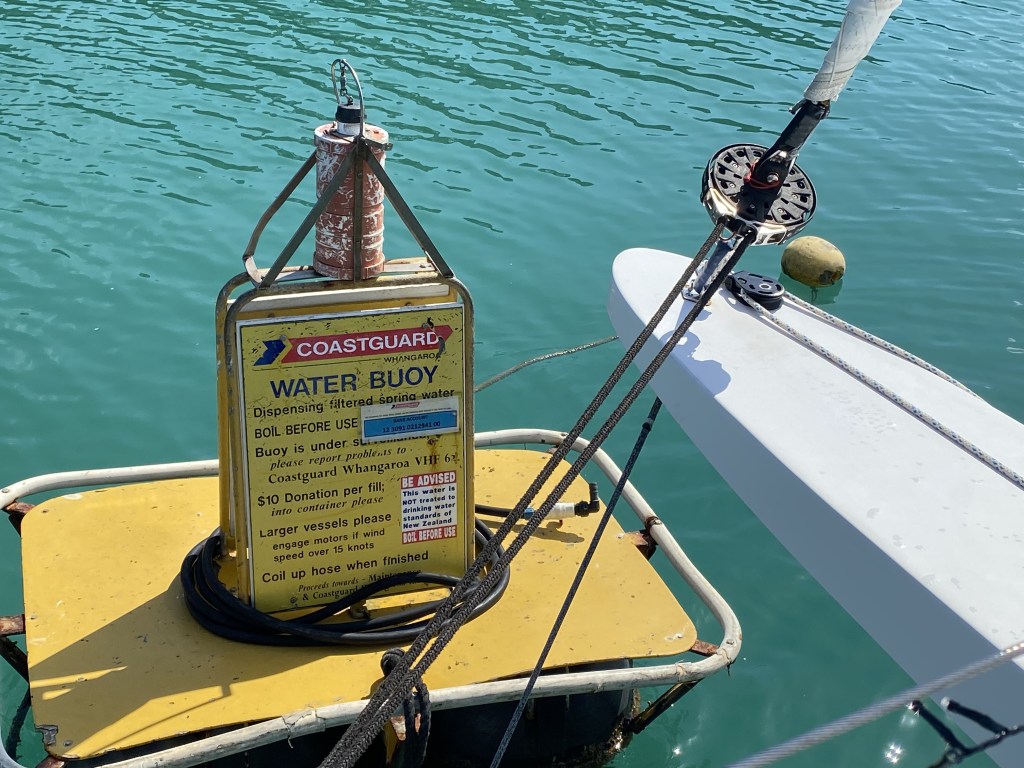
In a neighboring bay, we filled up our water tanks and took luxurious long showers where New Zealand had floated a “water bouey” for people to tie up to for fresh spring water.
Moved over to Waitepipi Bay for a Christmas Eve gathering and feast on the property of a native tree nursery, where we made a donation to use the grass lawn. We were impressed by the Secret Santa creativity that the 11 kids demonstrated, from wood carvings and felted bumblebees to paracord baskets and perfumes. At our gathering of cruising families, countries represented included Canada, France, Australia, and the USA.
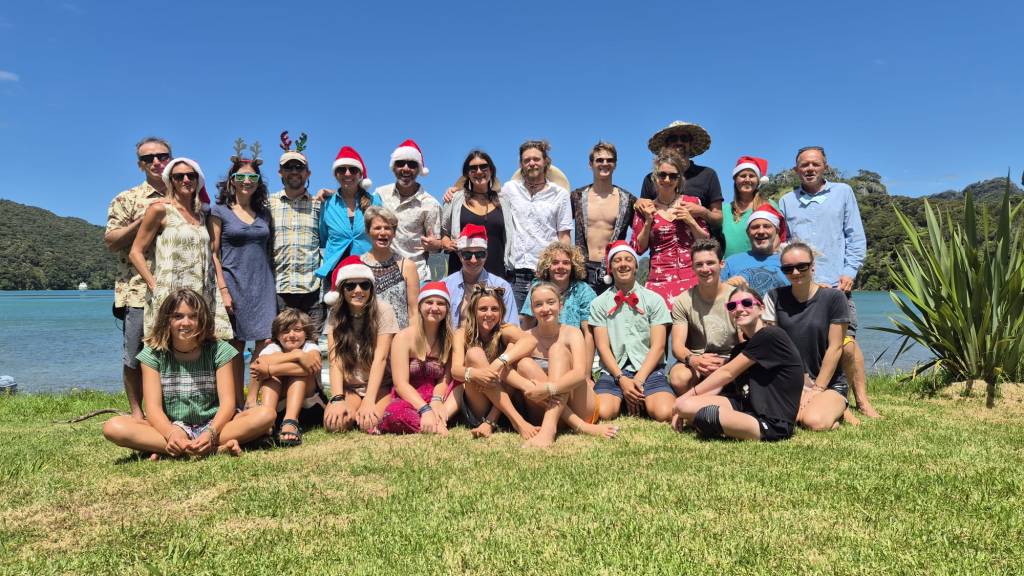
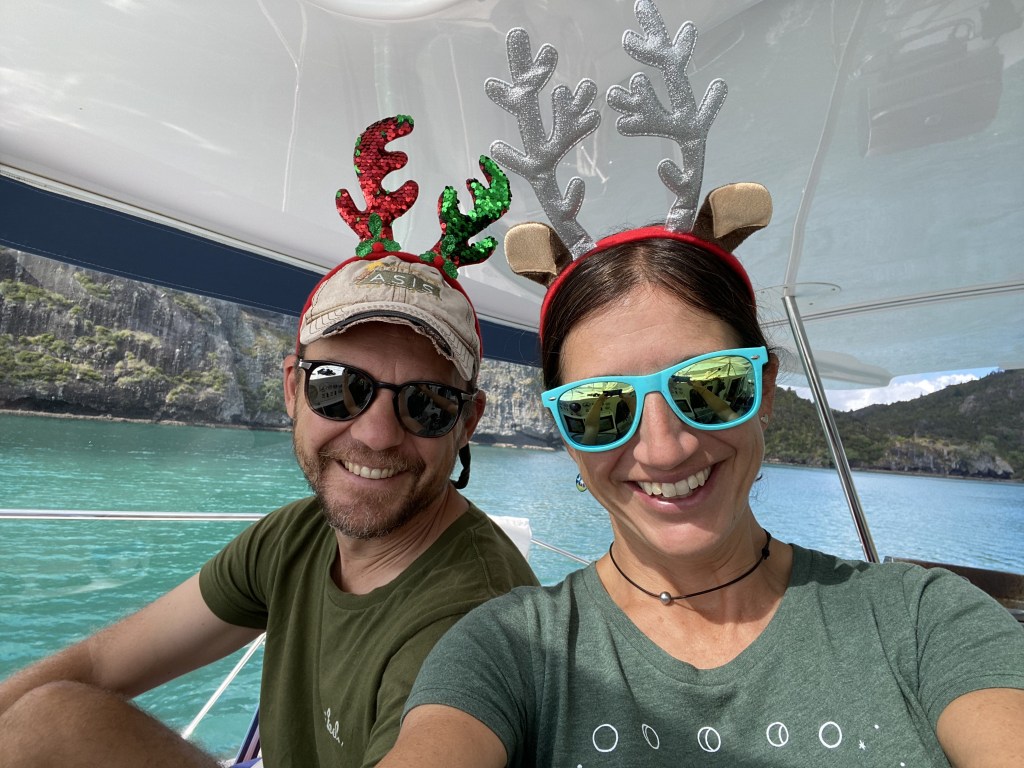
Mellow Christmas day on board with presents, games, a big dinner and vineyard Reisling, and Cora and my first New Zealand swim (it was COLD).

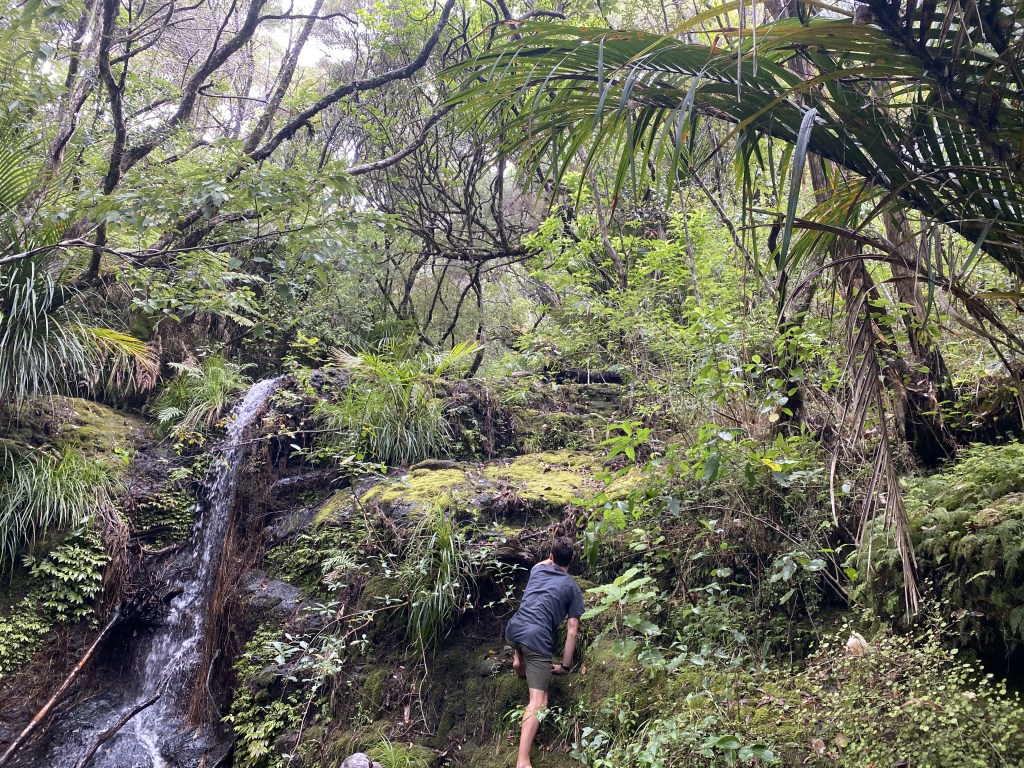
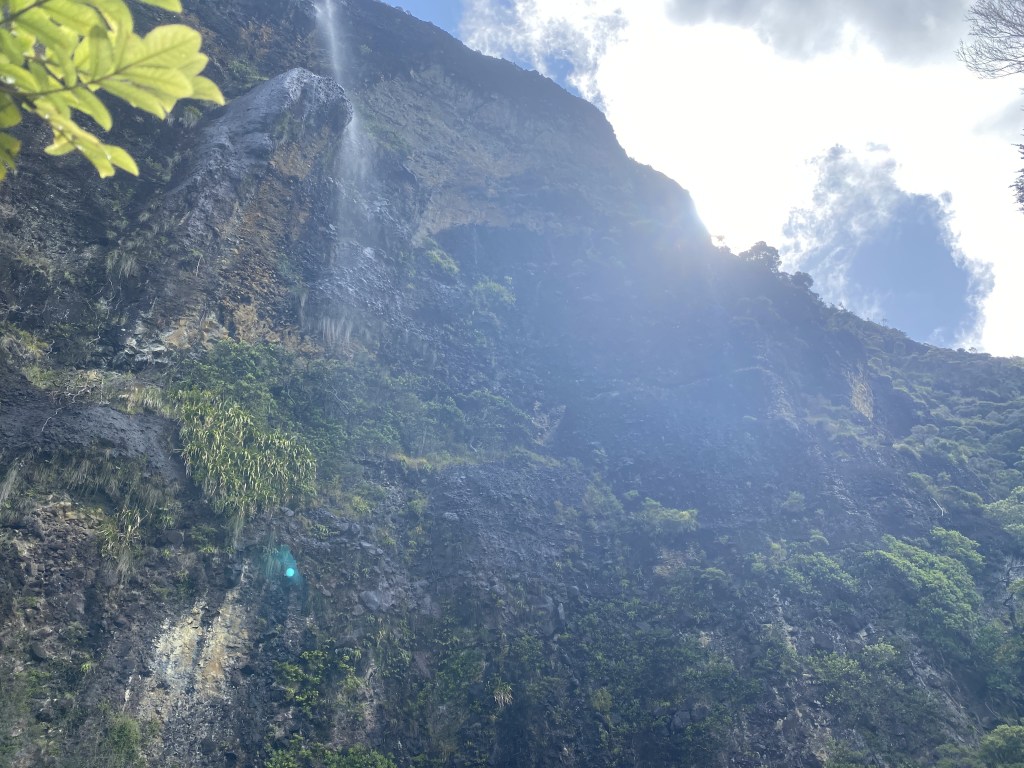
Before moving on, we dinghied back to Te Rere Bay for a Wairakau Stream waterfall “walk,” that turned into bouldering upriver and trail-finding adventure, culminating in a large rock wall with a tendril of water flowing down.
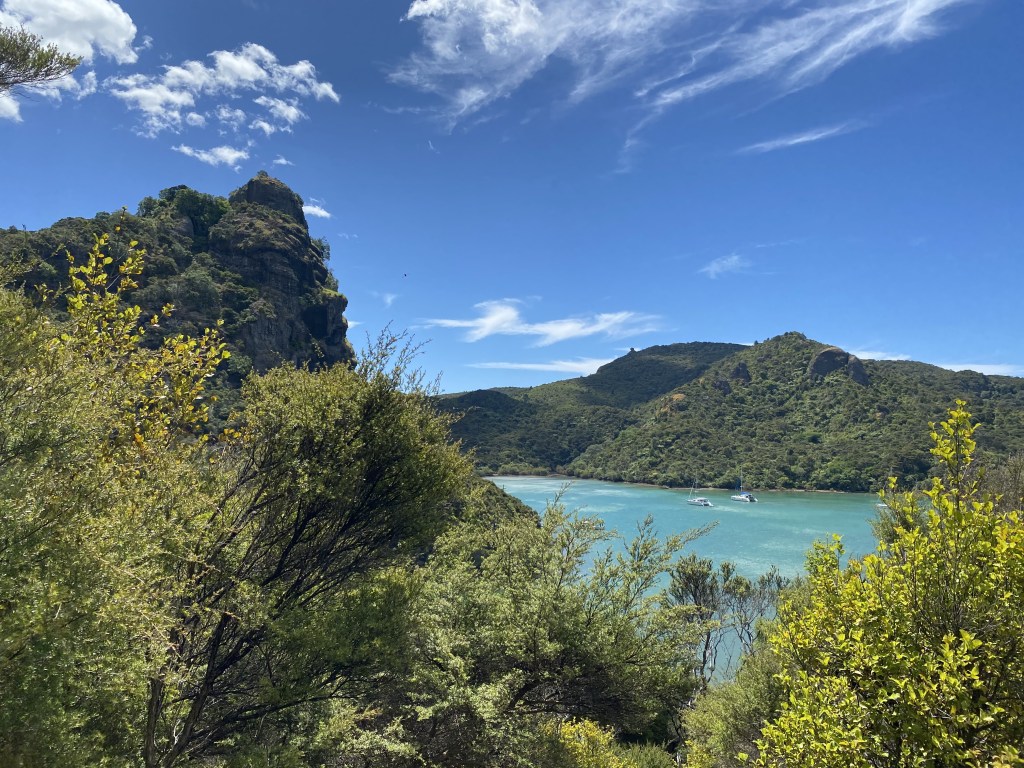
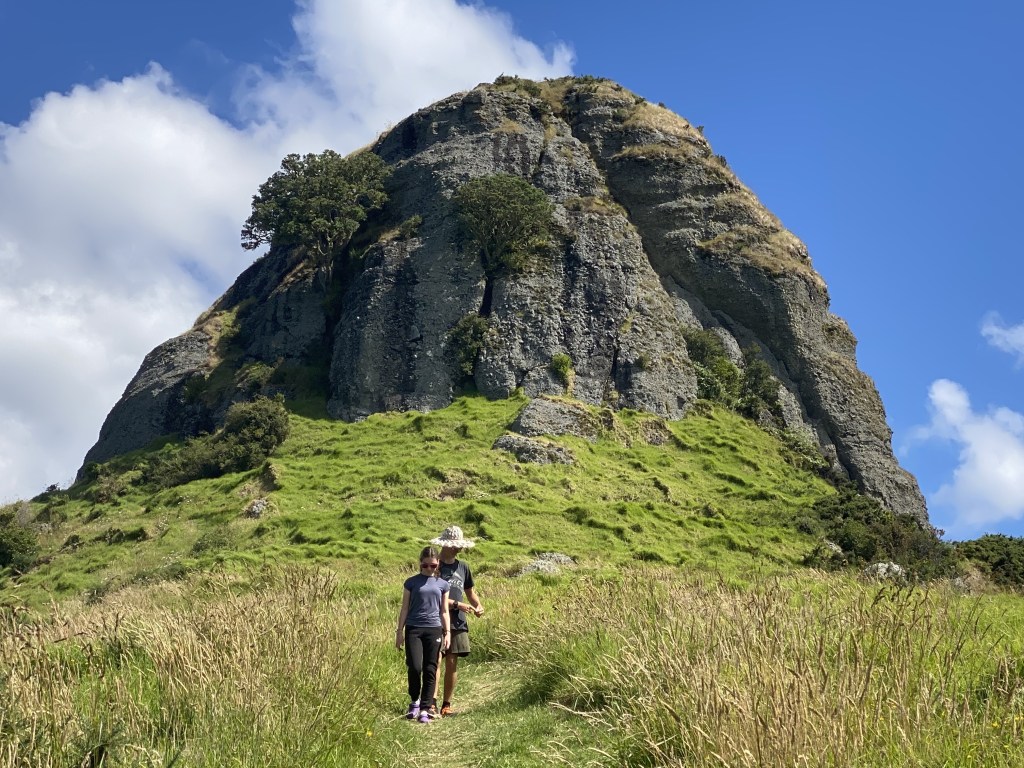
Spent the next two windy nights (up to 36 knots) tucked securely and calmly inside Waitapu Bay. One of the cruisers had a car parked nearby and we loaded up for a grocery run – after a boat ride, dinghy ride, car ride, dinghy ride, and sail; I was back at Terikah with 5 big bags of groceries. We hiked up Ohakiri (St. Paul’s Rock), up through manuka bush to the top of a volcanic plug, greeted with 360 views of the surrounding area. My highlight was watching Cora push through, even pulling herself up the last 30m with a chain, with her knee injury; I watched the look of determination come across her face.
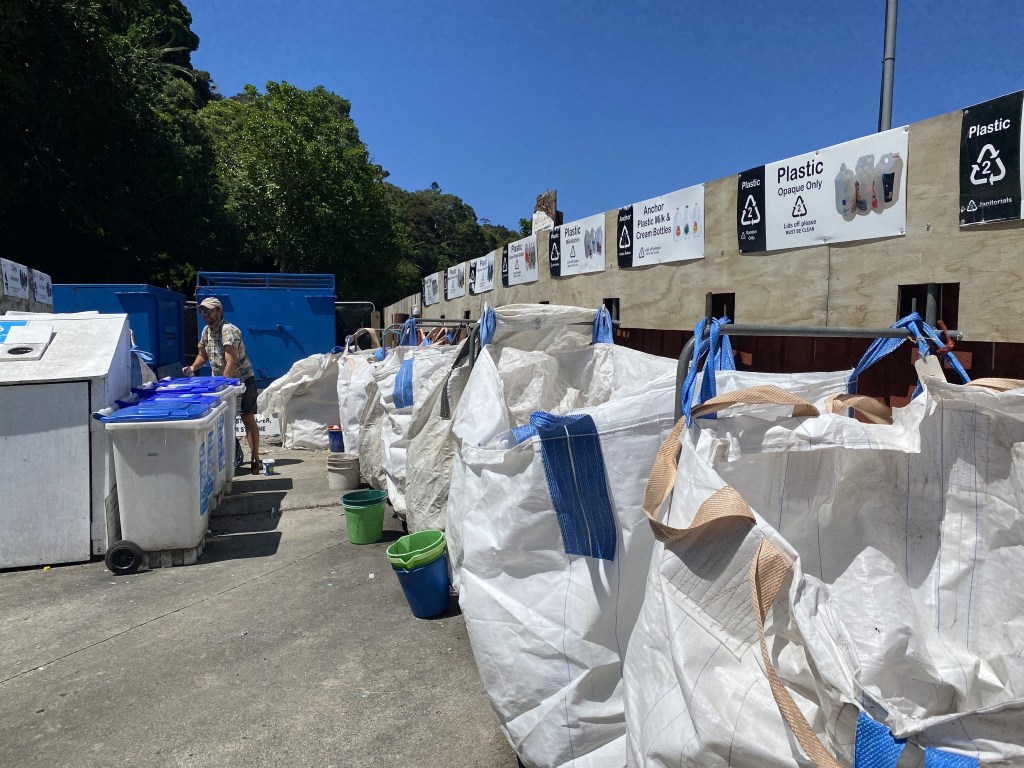
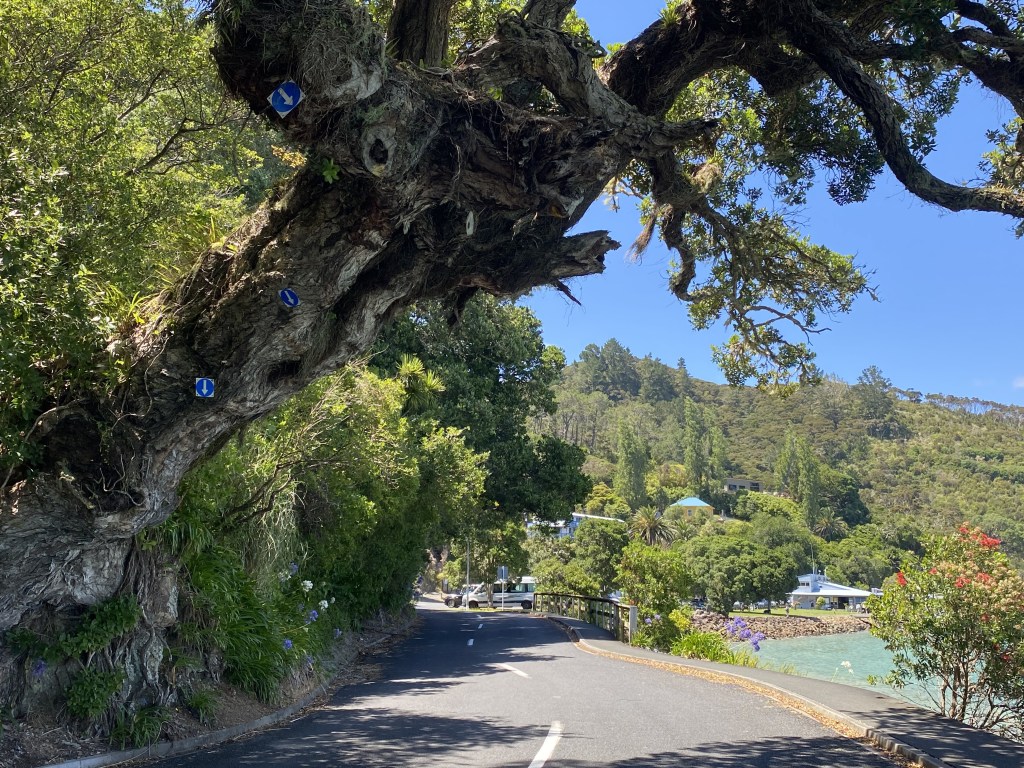
There are many demonstrations of New Zealand’s priorities here, from a mega recycling complex in this remote setting to the massive, beautiful tree hanging over the road with warning arrows on it rather than cutting it down.
Our quest to find a New Year’s anchorage with a nice beach with 8 family boats met mixed welcome and resistance from locals. We first anchored in Waimahana Bay, a clover-shaped bay where one clover leaf was unpopulated and appeared to be a good beach to use for our gathering. The other two leaves were populated with people having holiday fun, as it is the biggest summer holiday of the year here. After a bit, two jet skis with adults and children motored rapid circles around us, first seeming playful, then seeming a bit more aggressive. One of the cruising boat moms dinghied over to talk to the locals; we were informed that these were Māori lands and that we were unwelcome here and should leave. As visitors in foreign lands, when locals ask you to leave, you leave.
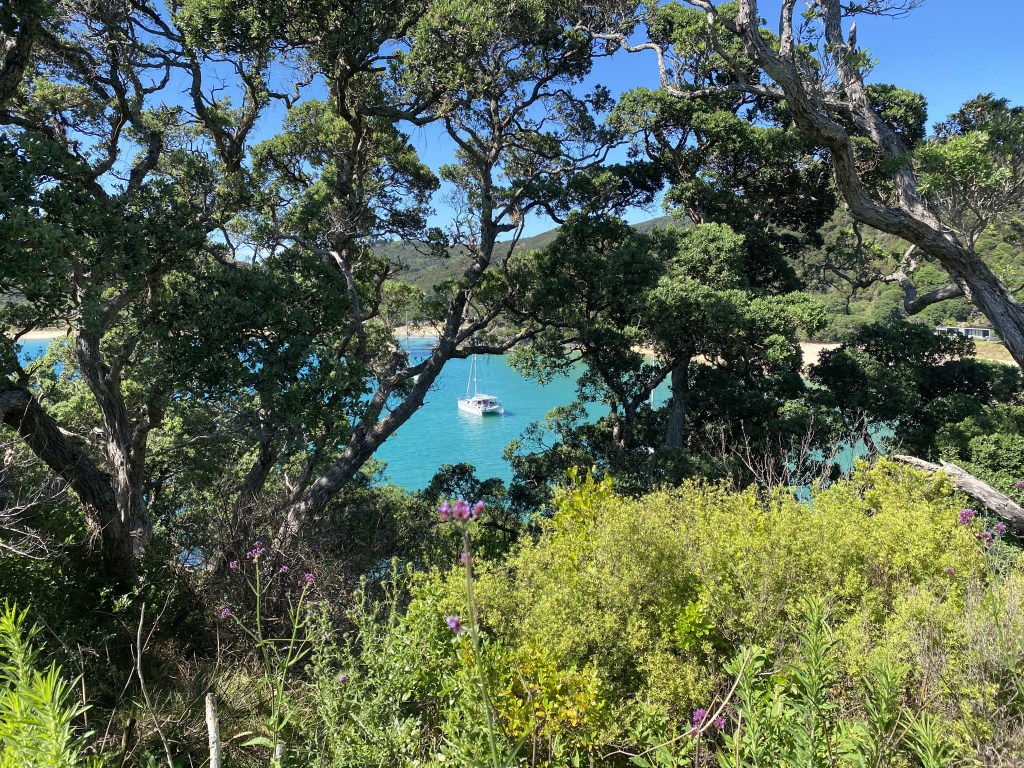
We moved two miles further north into Taemaro Bay and anchored off the unpopulated region of the bay. Looking for an area to gather, one of the boat dads was welcomed by some to use the beach, as it was also Māori land and we needed permission. However, another person, seemingly with alcohol-fueled anger, said we were not welcome and pulled the kill switch wire out of the engine on the dinghy and pushed it into the ocean along with cursing. As it was late and getting dark, we stayed the night with plans to move on in the morning.
This is the first time during our year of cruising that we’ve been met with such outright disdain for our presence. In Mexico, we were welcomed, though didn’t stay in some locations due to theft and safety issues. We had no issues in the Marquesas or Tuamotus. In the Society Islands, cruising boats are becoming less welcomed and we did experience small encounters with jet skis intentionally going too close, as well as having one local informing us that we needed to move to an approved area. In Niue we had no issues. In Tonga, we paid for the right to anchor in certain locations but were always welcomed. In New Zealand, we have been impressed with the hospitality of the local people, so this was a bit of a shock.
However, to put this in context, the lands we were anchored in front of are indeed Māori owned lands. We anchored with a crowd of 8 boats in their “front yard” during the biggest summer holiday of the year. Yes, ocean waters are for all and it is illegal to run people out of an anchorage. However, we thought about how we would feel if during our only short summer vacation at our cabin in Idaho, a large group of boats anchored in front of our one small piece of property. And the Māori do indeed have only one small piece of property, currently about 6% of New Zealand land, though they make up 18% of the population.
Here’s a bit of history lesson of land loss for the Māori on the North Island of Aotearoa: In 1860 Māori held about 80% of the land in the North Island. Much of the 6 million or so acres owned by Europeans had been bought by the British Crown. From 1840 and 1860, the Crown had the exclusive right to purchase land from Māori (as agreed to in the Treaty of Waitangi). The New Zealand Wars of the 1860s provided the chance to gain more Māori land for the growing number of European settlers. The Native Land Court led to a further 8 million acres passing to European ownership by 1890. By 1890 Māori held about 40% of the land in the North Island. This was roughly half what they held 30 years before. In 1910 this was down to 27% of the land of the North Island and by 1939 Māori held about 9% of the land of the North Island. Land passed from Māori to Europeans through various Māori land boards and trustees. In 2000 Māori held only a fraction of the land of the North Island — as little as 4%. Land is now being returned to the Mauri through recommendations of The Waitangi Tribunal, a standing commission of inquiry. It makes recommendations on claims brought by Māori relating to legislation, policies, actions or omissions of the Crown that are alleged to breach the promises made in the Treaty of Waitangi. Today, Māori owns 12.7% of the North Island and makes up about 20% of the North island population.
Now back to our story – In retrospect, we wish we had known of the status of this land, but it wasn’t recorded in any of our cruising resources, though we found later there was local knowledge of not anchoring in these site. We have added to some of those cruising resources. It would be nice if there was a system in place to allow us to stay, but we also understand that they may simply want their space to themselves. It speaks to the ongoing tensions that do exist here and how the Treaty of Waitangi’s discussion of land and ownership are living issues today, not just relics of a museum.
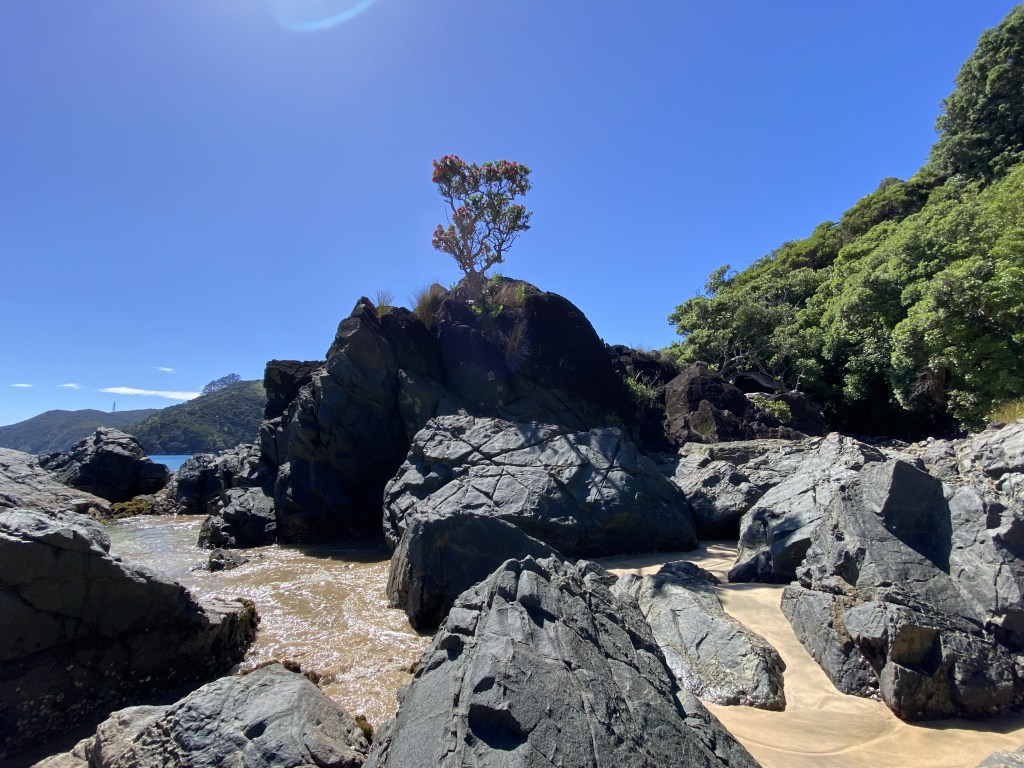
Now we are on our way today to Matai Bay on the Kerikeri Peninsula, a known Department of Conservation site, which appears to offer a beach for a New Year’s party and good protection for upcoming winds. Tight-hauled sailing with up to 33 knots wind as we cross Doubtless Bay, a few small tuna caught and released along the way, we head into our New Year’s anchorage.
 SV Terikah Adventures
5 responses to “Christmas & Maori Lands”
Happy New Year!
LikeLike
Hi Jen, Happy New Year to you and your family! I was waiting and waiting for your post. I am always concerned about your safety. What an adventure and what an experience for your family. You are creating and living out memories. This is so important as I hear the boys talk about their Dad and their experiences growing up.
I’m doing ok. Some gastrointestinal problems. Jon checked with AI and it’s called gastrocolic reflux. I do have the symptoms. I am having a colonoscopy on Friday.
I’ll be starting PT this month. My spine has so many issues that the only somewhat relief is Tramadol er, hydrocodone, and tylenol. I have pain just standing. I haven’t driven for a while because it’s hard to get the walker in and out of the car. I take Assist to Transport to get around.
On the bright side I thank God every night for the things I have accomplished. Currently I am sorting and purging my sweaters. Next is the underwear drawer. 🥰
I love you guys “From a Distance”
Aunt Lyn
LikeLike
happy new year! wishing you all joy and good health. Thank you for sharing your adventures. Beautifully written and interesting.
LikeLike
Happy New Year to the Hyer Family! What a great way to teach your children about the rest of the world. I think a semester abroad should compulsory for high-school aged kids, or at least part of the college experience. Soooo much we could learn from other countries! And the water buoy – how cool is that? Looking forward to you next post..
Tammy
LikeLike
It was fun to see your Christmas celebration and now the New Year 2025 is here. When are your plans for return? Guess I will wait for those plans to be announced!
Take care, Diane W.
LikeLike