
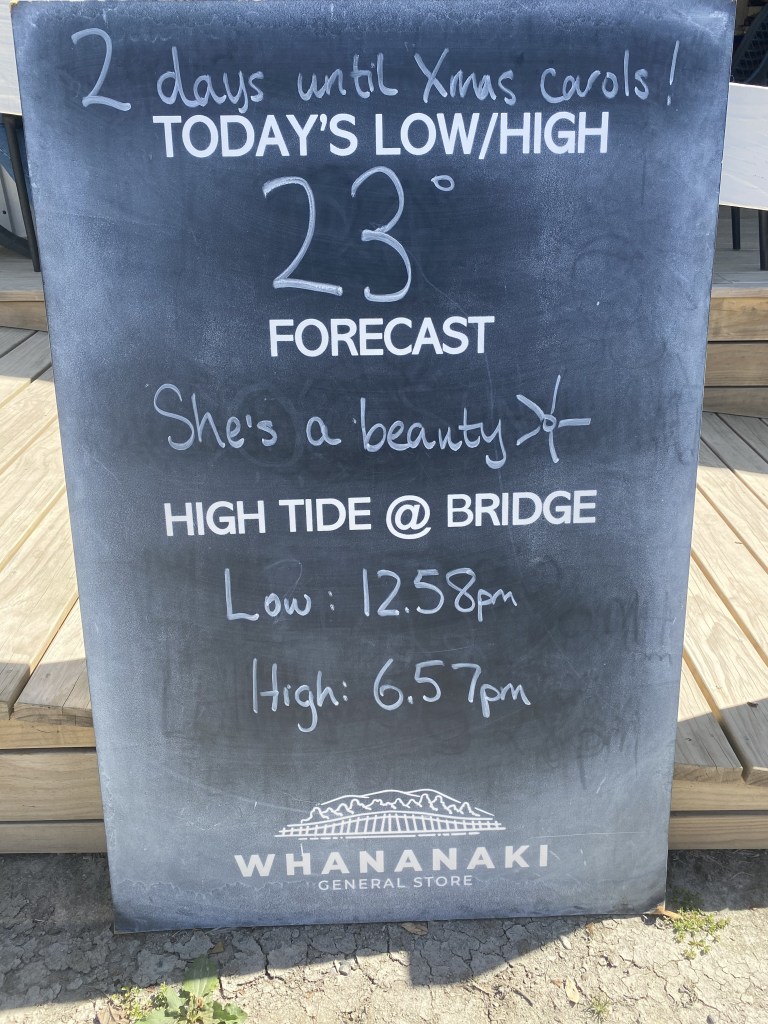
We kicked off December by a “shake-down” camping overnight to nearby Whananaki. We walked the “Longest Footbridge in the Southern Hemisphere” at 395 metres, which was constructed in 1947, enabling the children living in Whananki South to attend school in Whananaki North. Previously the schoolteacher rowed a boat across the estuary twice a day to ferry the children across.
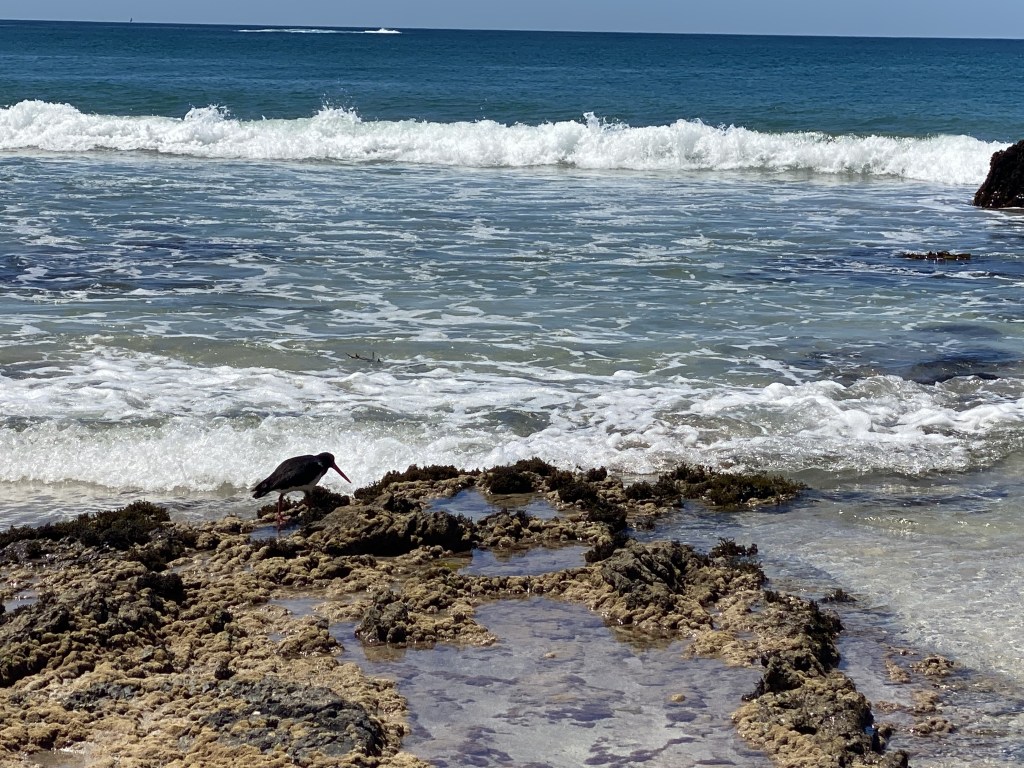
More new birds of New Zealand for us, from the dotterel to the variable oystercatcher. There are very strict rules on dogs here, mostly not allowed at all in wilderness areas, in order to protect the bird population.
Finding our perfect spot to tent at Motutara Farm could be compared to finding the perfect anchoring spot, wanting good holding but not too close to neighbors with a great view. We set our anchor at Site 8 on the top of Barron’s Bluff overlooking the coastline and beach, Poor Knights Islands to our east.

We walked through Motutara Recreation Reserve and on Barrons Beach, amazing views fringed by beautiful red pohutukawa flowers.

We had enjoyed our traditional Thanksgiving feast the prior night (Thursday here), but realized that our true American Thanksgiving date feast ended up being Mountain House camping dinners at our tent site!
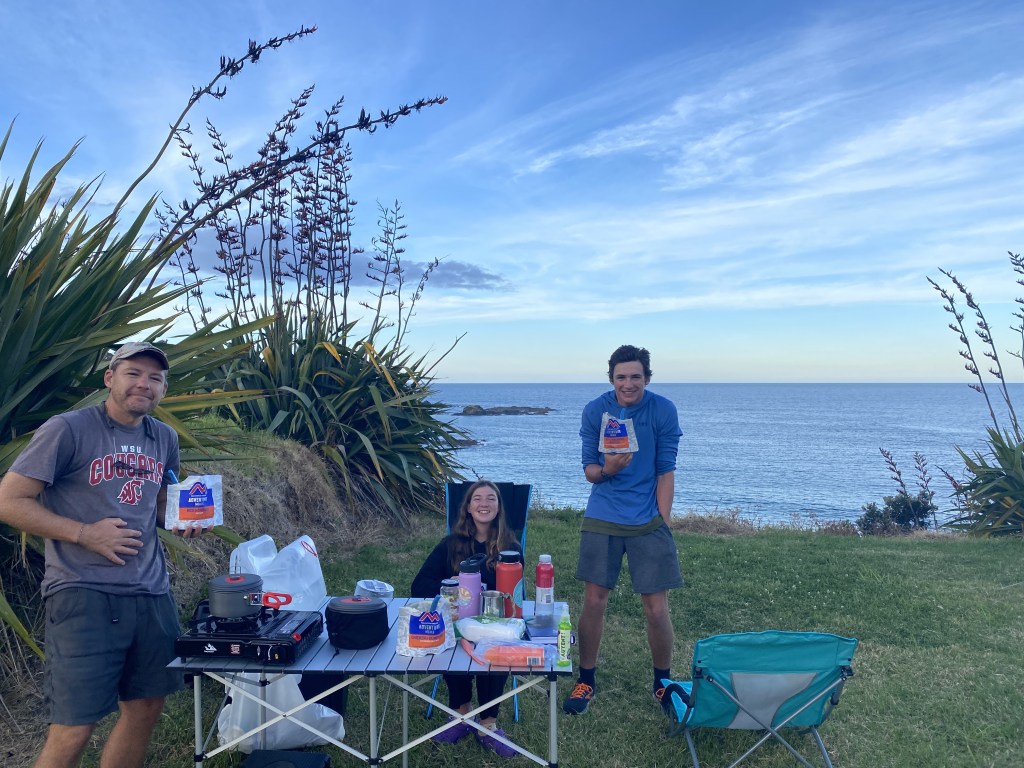
We discovered items we needed for future trips – a cooler to keep food cold, a sleeping mat that held air for Chris. It was a mellow night, playing card games and Yahtzee, reading books and drawing, watching quail families with 12 tiny chicks and bunnies hop about. We left a night earlier than planned due to rain coming in (and uncertainty about our gear being waterproof),but called the overnight a success. More tent camping to come!

Nestled amongst the limestone formations in Waiōmio Valley, the Kawiti Glowworm Cave guided tour led us on a wooden boardwalk through a 200-meter limestone cave system. Once inside, the lights were dimmed and, as our eyes adjusted, the ceiling filled with bright white, blue, and green constellations – a milky way. There were thousands of glow worms spread across the ceiling surrounded by breathtaking stalactites and stalagmites. With galaxies of glowworms above, our guide explained the life cycle of the New Zealand Glowworm (Arachnocampa Luminosa) and the intricate webs used to catch their prey. Arachnocampa Luminosa glowworm is a transparent larva of the Fungus Gnat. It has a 4-stage life cycle of about one year from egg to adult fly. Each glowworm grows from 2mm to 40mm long and has a bright green/blue bioluminescent taillight. The process of glowworm glowing happens from an enzyme reaction including luciferase and various other chemicals. The Arachnocampa Luminosa glowworm is unique to New Zealand and thrives in damp, humid, dark environments like caves. Their glow lures insects up toward a pretend night sky, ensnaring them in their sticky long fishing lines. When they are hungrier, they glow brighter to attract more prey. Who knew that a group of carnivorous Fungus Gnat maggots could be so magical?!
Onto Cora’s repeatedly dislocated knee…NZ even makes getting an MRI a great experience, with the MRI machine designed a camper, the floor painted a carpet of grass, the ceiling overhead the daytime sky with sun through the local trees. We met with an orthopedist who gave us excellent news that she did not need surgery, but rather lots of physiotherapy. We were feeling optimistic, but then met with the physiotherapist who felt she needed surgery. Diving into the studies, it looks 50/50 for her case and it seems like avoiding surgery at this point is a good idea while her bones are maturing. We are doing exercises and having her push it a bit more on the trails.

The Bay of Islands, where we have our boat, is composed of more than 140 islands. We pulled ourselves off the Opua dock for an outing to Waiwhapuka Bay on Moturua Island, the swell of the open ocean surprising us with how accustomed we had become to not moving.
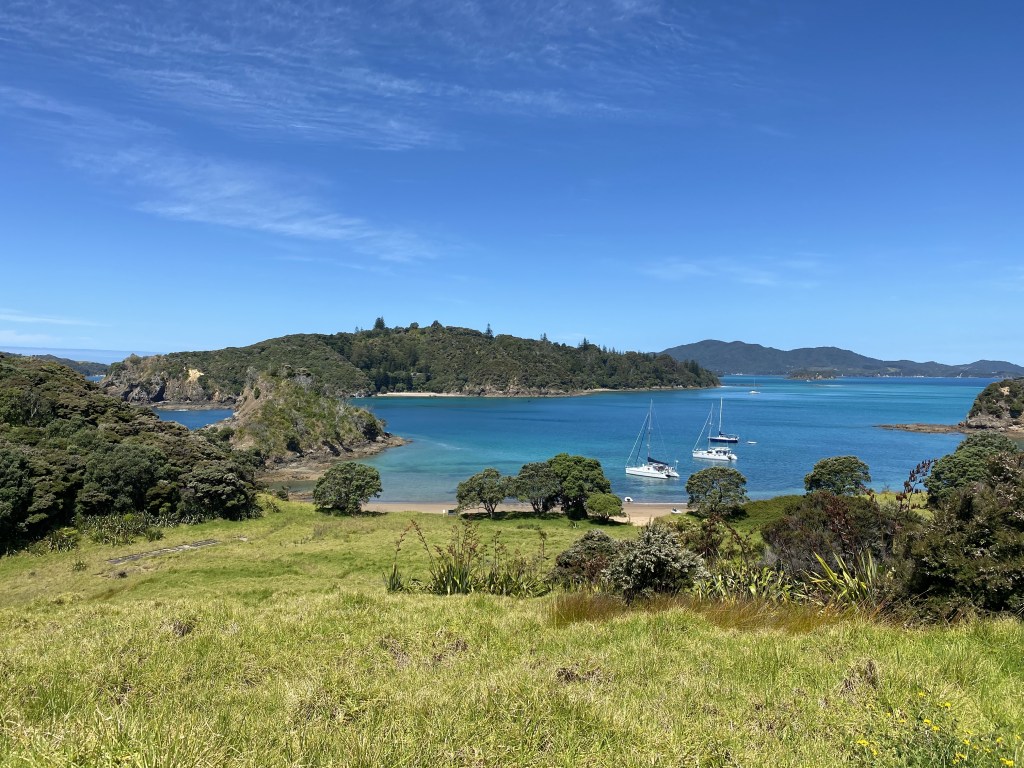
This DOC (Department of Conservation) island has a 4.6km walking track that loops around the island that we enjoyed repeatedly, passing through manuka tree groves, crossing sandy beaches, and past WW2 gun installations.


Moturua has a long history of Māori settlement, early European explorers, and the Navy during WW2. More recently, thanks to Project Island Song, Moturua has thriving populations of native birds including kiwi, kakariki (NZ parakeet), and saddleback. Project Island Song is a pest-free wildlife sanctuary covering the seven major islands in the eastern Bay of Islands – now 15 years pest free with 8 new endangered species reintroduced.
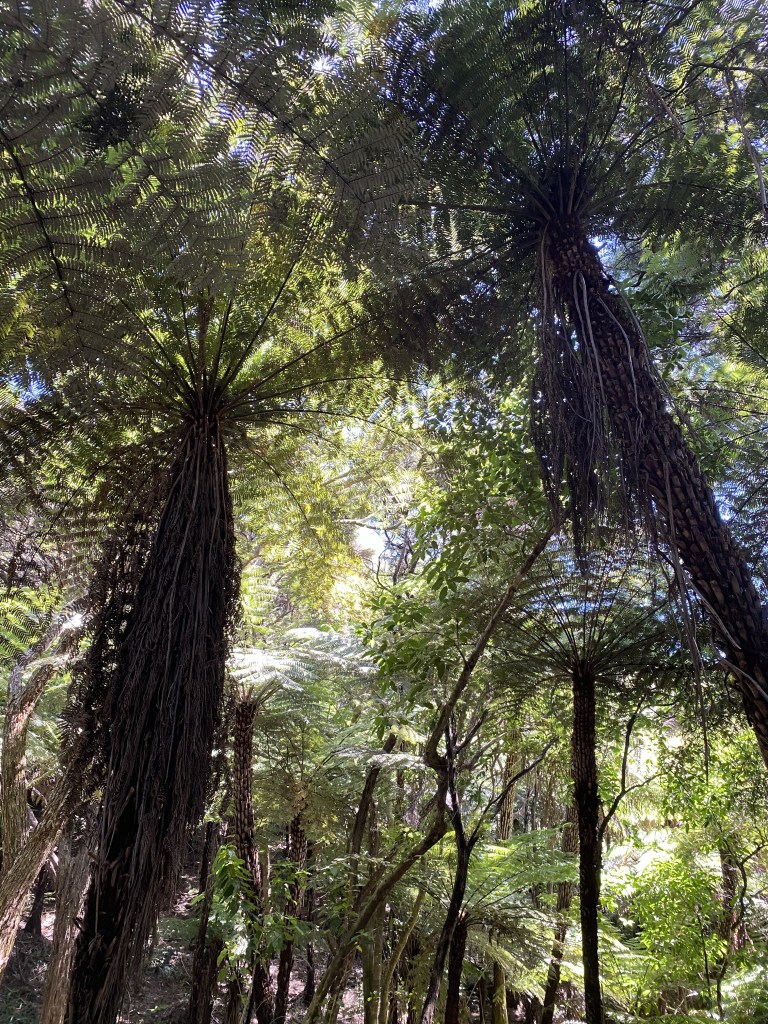
As I walked on my own, I felt free of predators myself with the absence of bear, though still catching myself looking around with the crack of a stick in the woods. It is freeing not to carry bearspray while hiking and to get lost in the birdsong. In the middle of the night, as I was drifting off to sleep, I heard a kiwi bird call for the first time. Waking up to sun and more bird song; this location reminds me of the Gulf Islands of British Columbia Canada (with addition of tropical plants and parakeets!). Chris and Calder are learning to fish for the new fish species here, but no luck so far.

We stayed for a few nights, too beautiful to move on and we have met a new friend boat from Canada that has been cruising with their kids for 7 years. Meeting new boats out here is such an interesting process, like dating in many ways, as you ensure that everyone gets along and might enjoy each other’s company while navigating different cultures and ages of children. It can be exhausting at times, meeting so many new people, saying goodbye, starting over again; but the people out here can be truly amazing and are an integral part of the enjoyment of cruising life.
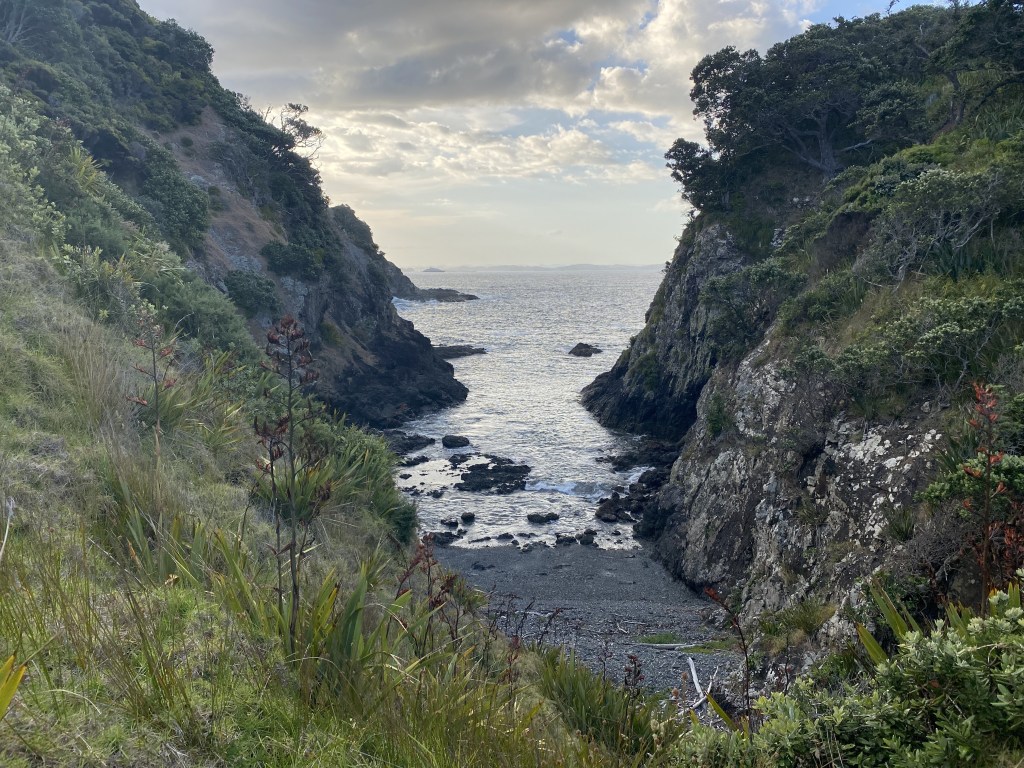
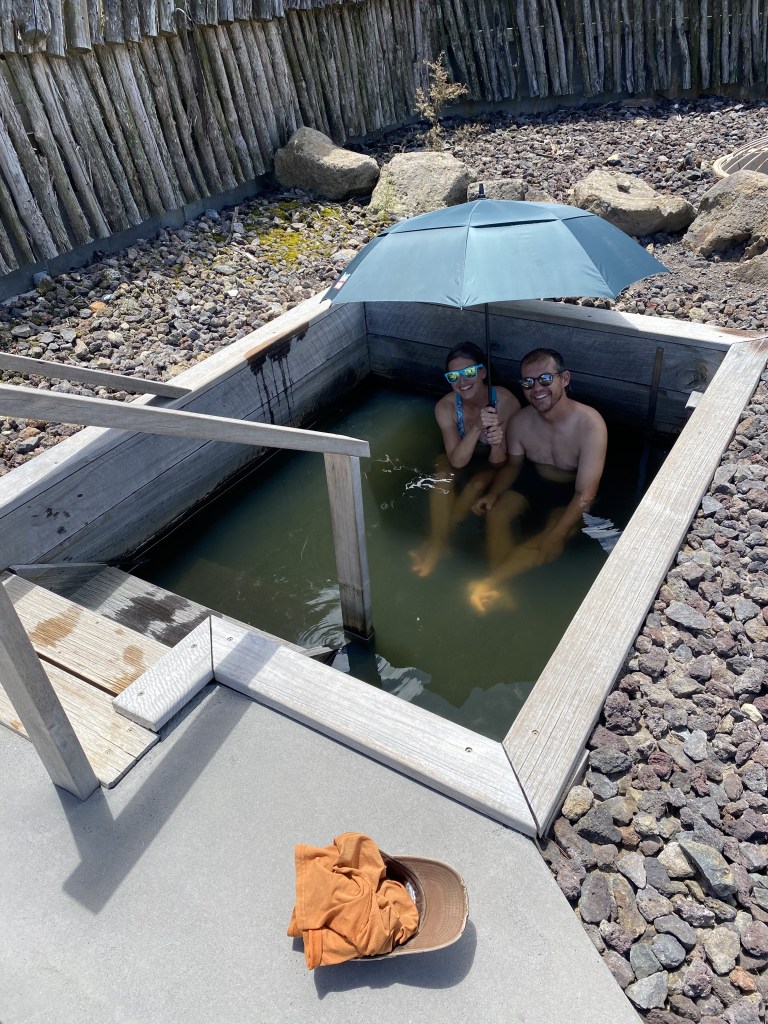
Next up, more camping! We went to the west coast for a 3-night tent camping trip with our friends from SV Gambler to the Kauri Coast to marvel at the kauri forests, one of the great natural highlights of New Zealand. On the way, we did a somewhat hilarious stop at Ngawha Hot Springs on a hot afternoon, the clerk laughing at us and handing us umbrellas to stay out of the sun while soaking in the springs. Three of the pools were closed due to being too hot, but we did withstand the 42 degree C pool briefly. The unfiltered, mineral rich waters continuously bubble up from deep within the earth.
After lunch at a local roadhouse, we drove a VERY windy road (“not recommended for tourists” the sign read) with sheep crossing, pheasants flying out, and banked curves to our destination.
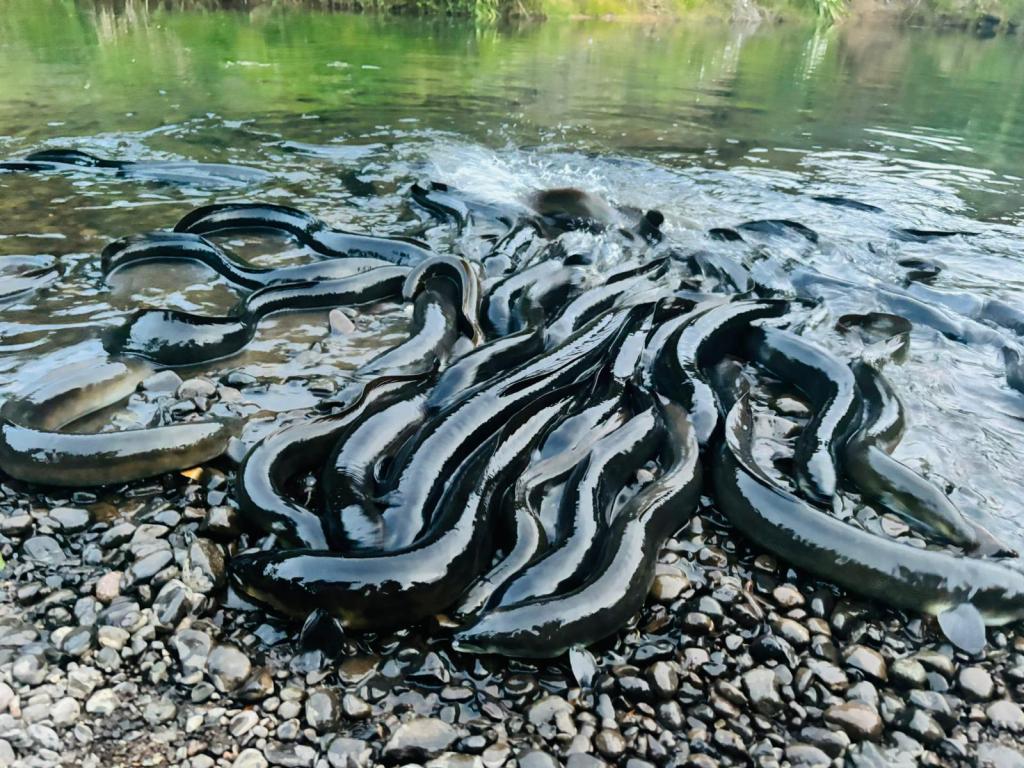
Two nights spent at the Kauri Coast Top 10 Holiday Park, with writhing masses of eels devouring our chicken scraps and glowworms on the hillside.

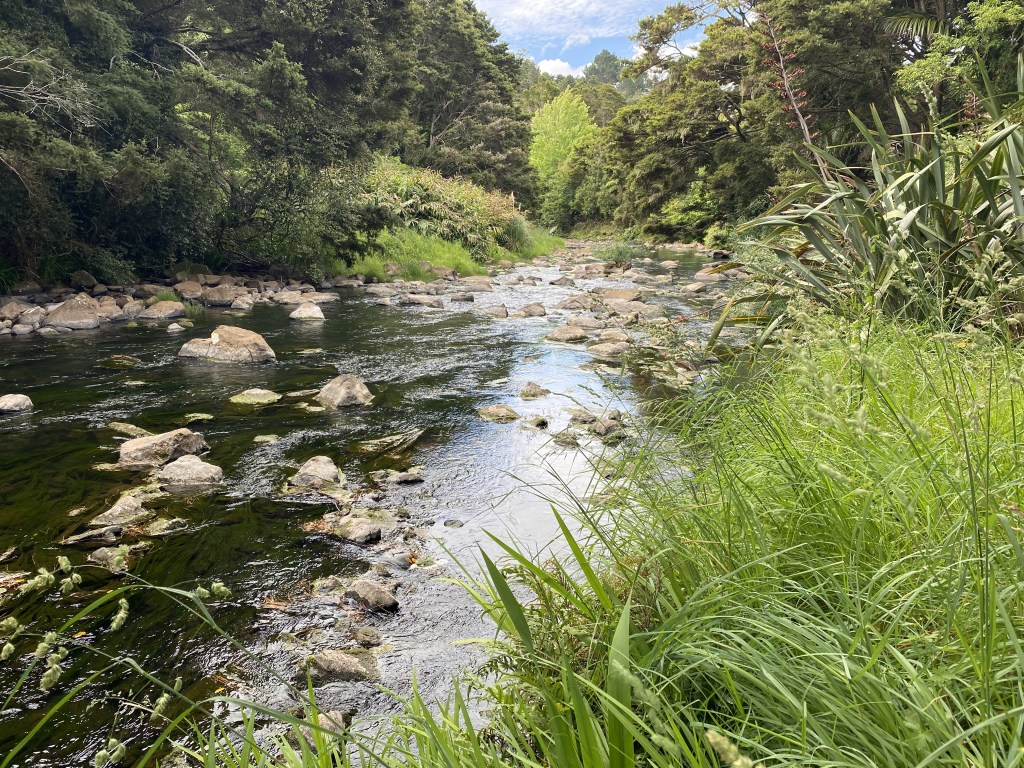
I fell asleep to river sounds, kids laughing in their tent, and a kiwi calling out.

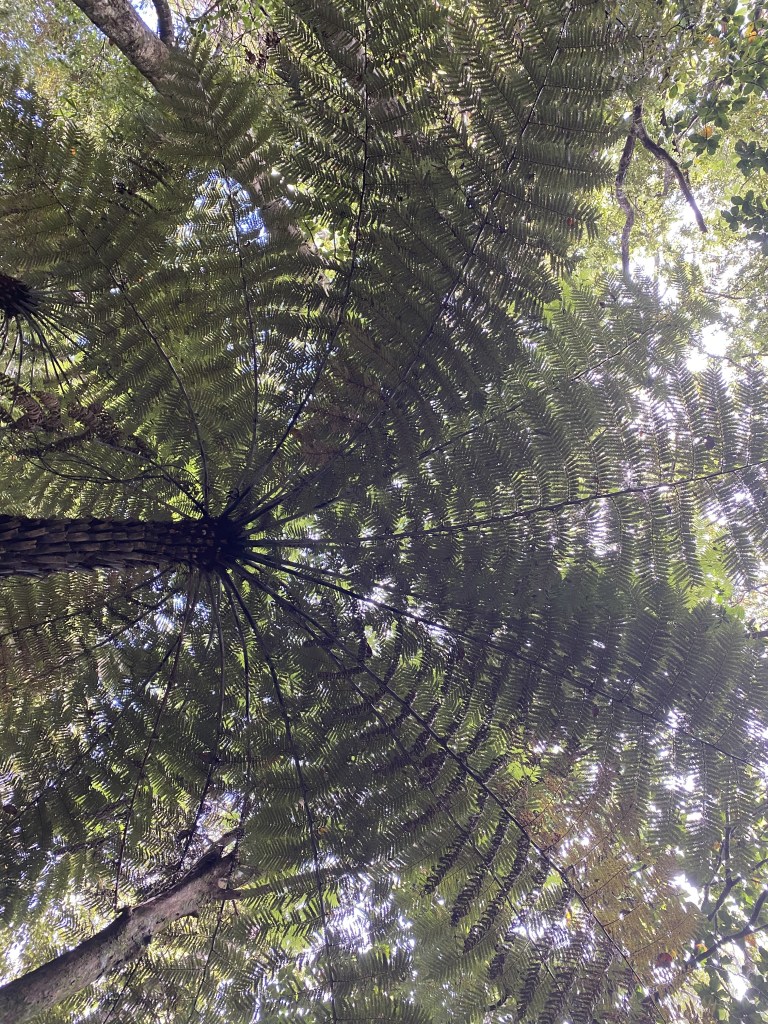
The next day, we explored the 586-hectre stand of old growth forest at Trounson Kauri Park, winding trails through the ancient forest, pausing to take in the oldest at 1,200 years old as well as the Four Sisters (two pairs of trees with conjoined trunks).

Kauri, part of the conifer family, are among the world’s mightiest trees, growing to over 50m tall, living for over 2,000 years. Māori used kauri timber for boat building, carving, and building houses. The gum was used as a fire starter and for chewing.

However, the arrival of European settlers in the 1700s saw the decimation of these forests for both the raw materials and for the land for farmland. Only 1-3% of kauri forests survive today in comparison to 1820. This park has been subject to active predator eradication since 1995 and has become an important mainland refuge for threatened native bird species. There were signs posted to warn of the various traps and chemicals being used to rid the area of the main predators of possum, rats, and stoats.

Dogs are also a huge issue here, as kiwi smell good to dogs and run when chased (they can’t fly) and, not having a breastbone, can die from just a playful nudge. The brown kiwi, which can live up to 40-65 years old, has an average age of only 14 in Northland due to predators.

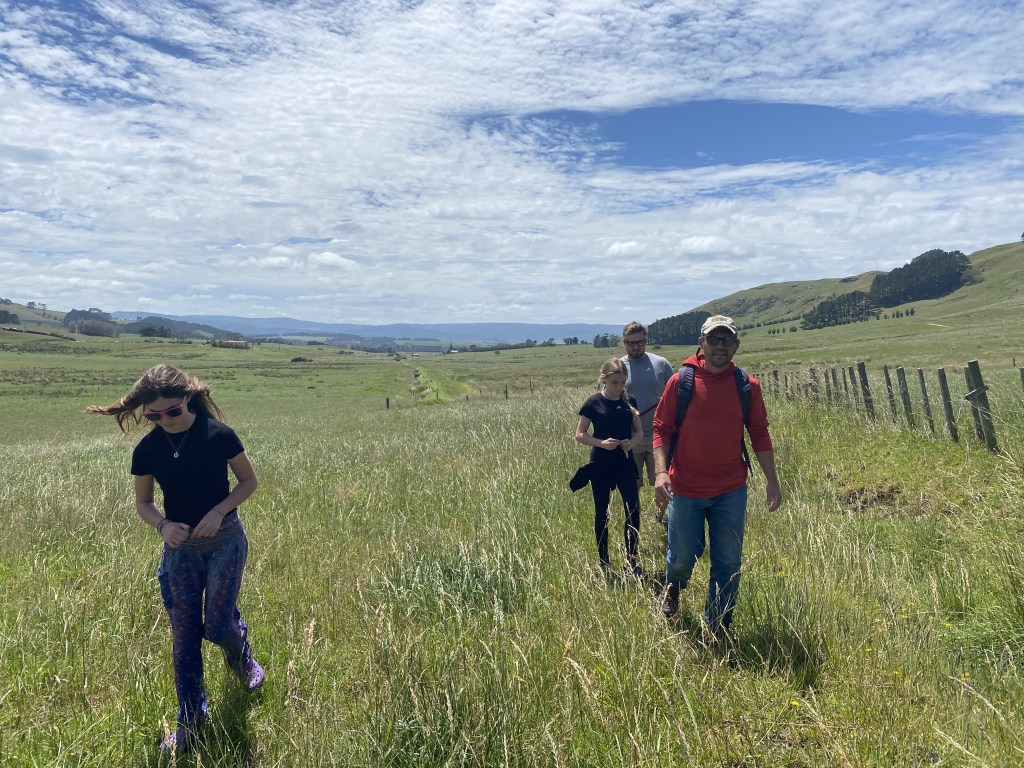
We tried to do the Maunganui Bluff Walk, but the large divots in the dried mud made for a potentially ankle-twisting journey that was not kind to Cora’s knee. We moved on and took a meander around Lake Waikare, the smallest of the three Kai Iwi Lakes.
That night, we returned to the park for a self-guided night walk to look for kiwi birds, knowing that it was rare to actually see a nocturnal kiwi in the dense brush. It is estimated that only one in ten New Zealanders have seen a kiwi in the wild, despite its iconic status. Creeping along in the dark as a quiet group with a few red spotlights, we’d stop and listen for the telltale rustle of a kiwi looking for worms. We heard a few of them, but could not spot them. They are extremely shy and will flee from unusual sights and sounds. Finally, we saw one lit up in the red, looking for his evening meal; what a treat!
I purchased a Kauri bowl at Katui Kauri Gum Store, where the owner explained her process of digging up chunks of gum (resin) from these trees and hand-sanding it with sandpaper and water to a shine. Huge stumps and logs are laboriously winched from local swamps and transformed by craft people into unique products. My bowl was milled and spun from remnants of these huge trees that are 30,000-50,000 years old.
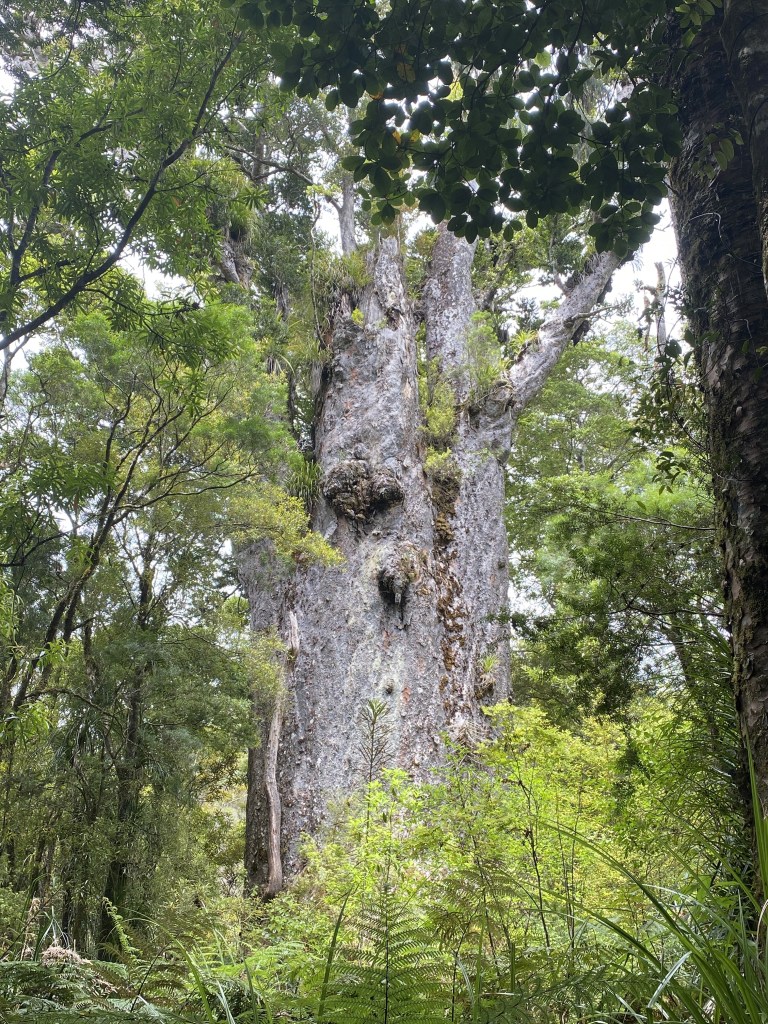
The Waipoua Forest is a forest sanctuary, established in 1952, the largest remnant of the once-extensive kauri forests. As we drove the winding forest road, we wound through these impressive trees that flanked each side of the road. Control of the forest has been returned to Te Roroa (the local iwi, similar to tribe) as part of a settlement for Crown breaches of the Treaty of Waitangi. We walked through the forest to Te Matua Ngahere, the Father of the Forest. This magnificent kauri is the second largest kauri tree in the world (30m tall and girth of 16.4m, the fattest living kauri), but he is the oldest at an estimated 3,000 years. I just sat there in awe, looking at this giant friend in contemplation of all he has seen.
Driving on, we crested over the hill and reached the stunning Hokianga Harbor where yellow sand dunes meet the Tasman Sea at the mouth of the harbor. A short walk (Signal Station track at the Arai-te-uru Reserve) led to the site of an old signal station built to assist ships making the treacherous passage into the Hokianga, providing an excellent viewpoint over the harbor.

Isolated, predominantly Māori communities, nestle around the harbor’s many inlets, as they have done for centuries. We enjoyed the much raved-about fish-n-chips (blue warehou) at Opo’s Takeaway in Opononi, before stopping into the Visitor Centre to inquire about options to set up our tent for the night.
The Tourist Info Center recommended Okopako Lodge property as a good place to pitch a tent and we found ourselves perched on a nice grass outcropping in a rural farm setting with gardens and native forest around.

The owner humored us with talking about his off grid living, gardening, and the freezer full of possums that he’s shot (possums are super destructive here and a target of predator eradication) and uses as fertilizer for his fruit trees. We fell asleep listening to the songs of Morepork (owls that make a call that sounds like “more pork”) and woke to the early songs of noisy Tui drunk on nectar. We also found that our relatively cheap tents are pretty dang waterproof.
Much to my kid’s dismay, I dragged them out looking for rocks again, this time spherical boulders known as concretions. We found the Koutu Boulders on the beach, formed by the accumulation of sedimentary material around a central nucleus.

According to some tribal traditions, the first Polynesian navigator to discover New Zealand was Kupe arriving to Hokianga Harbor (meaning returning place). In Māori myth, Kupe was a fisherman and chief from Hawaiki who was looking for an octopus that was eating his bait. Manea Footprints of Kupe on the shores of the Hokianga Harbour, shares the stories and traditions of the great ancestor, Kupe.

We experienced a multisensory encounter of guided storytelling that started with the blowing of the pūtātara, a type of conch shell trumpet, and continued with displays of carving, music, and film mixed with live performances and interactive wind, water, and even octopus tendrils tickling our legs.
We stopped into Rawene (NZ’s third European settlement) for lunch at the Boatshed Café overlooking the harbor in a historic boat shed where we had the best Flat White ever with an excellent meal. As we were leaving near closing time, the chef ran after us with a bag of delicious baked goods: “If you want them, have them, otherwise it’s going to the pigs.” Yes, we are happy to be those pigs.

We wandered into a Puzzle Shop, where the owner not only sells puzzles and games, but also has a collection of games from around the world in his museum room and creates his own award-winning games. What a find right before Christmas; there’s always room for games on board Terikah. The last stop was a fruit stand, where an eccentric man who I could barely understand said to me in his strong kiwi accent, “You touch it, you buy it love.” I had an odd yellow fruit in my hand that I had never seen and replied, “Sounds good, but what is it and how do I eat it?” It turned out to be a Mountain Paw Paw, likely an acquired taste.
Back to the Bay of Island Marina, we settled in for local adventures. I walked the pohutukawa-lined trail from Opua to Paihia along the coastline; so many trails that I’m happily watching my weekly step average increase!


As we move into the Christmas holidays we look forward to more Aotearoa land and sea adventures as a family.

 SV Terikah Adventures
5 responses to “Camping & Anchoring in Northland, New Zealand”
Kiwis, eels, glow worms and ancient kauri trees. What a different world you are discovering! The possums and stoats are certainly a problem but Jeanie’s possum/merino wool sweater from NZ is the softest and warmest that you could imagine. Merry Christmas! More Mountain House for dinner?
LikeLiked by 1 person
I want a possum sweater! Yes, more Mountain House to be had in the near future. Miss you guys!
LikeLike
Merry Christmas to the Hyer family!
We’d like to thank you for sharing your trip with us. We’ve really enjoyed learning about all the places you have gone; then researching all the different places. It’s been awesome! Hope Cora’s knee is getting better. Robbie had a few ski racers who had problems with their knees. Always a touchy issue.
Have a happy holiday season.
Best wishes,
Elaine and Robbie Garrett
LikeLike
Happy holidays to you both as well!
LikeLike
I continue to enjoy your posts and pictures so very much. Hope you had a special Christmas and HAPPY NEW YEAR! ( I am not sure when that is in NZ)
Diane
LikeLiked by 1 person