
Wednesday, November 6, 2024: Passage Tonga to New Zealand Day 1
10:20am and anchor up in Tonga for the last time. We are out here with other boats taking this weather window. Today is supposed to be sporty and it’s not disappointing – average winds 23, beam seas 1.5-2 meters, hauling along at 9 knots triple reefed. A lone bird follows us for a while. We are all out in the cockpit, watching the waves and clouds. Cora is watching a movie, helps her the first couple days to feel okay. Lots of boat movement. Giddy up! Calder hesitant to fish, as would be challenging to get one on board and filet it.
We are about 300 miles from Minerva Reef, undecided on whether we’ll stop or keep going, all depends on the weather. Minerva Reef has no land to walk, but a good night’s sleep before moving on would be welcome. Why is this a challenging passage? Due to alternating low and high pressure systems that march along the southern hemisphere, the need to use these to our advantage, and the importance of not getting into a squash zone between two systems.
Our group of three buddy boats discuss whether we should go north or south around Hunga Tonga-Hunga Ha’apai, but then laugh as we realized that if it should erupt again, it wouldn’t matter if we were 5 miles north or south!

The January 2022 eruption of Hunga Tonga-Hunga is quite notable as far as a world event. It displaced 2.4 cubic miles of debris and generated the largest atmospheric explosion recorded by modern instrumentation. It caused tsunamis as far as Peru with run-up waves up to 148 feet. Explosions were heard throughout the world, with a series of bangs heard in Anchorage, Alaska (5,800 miles away).
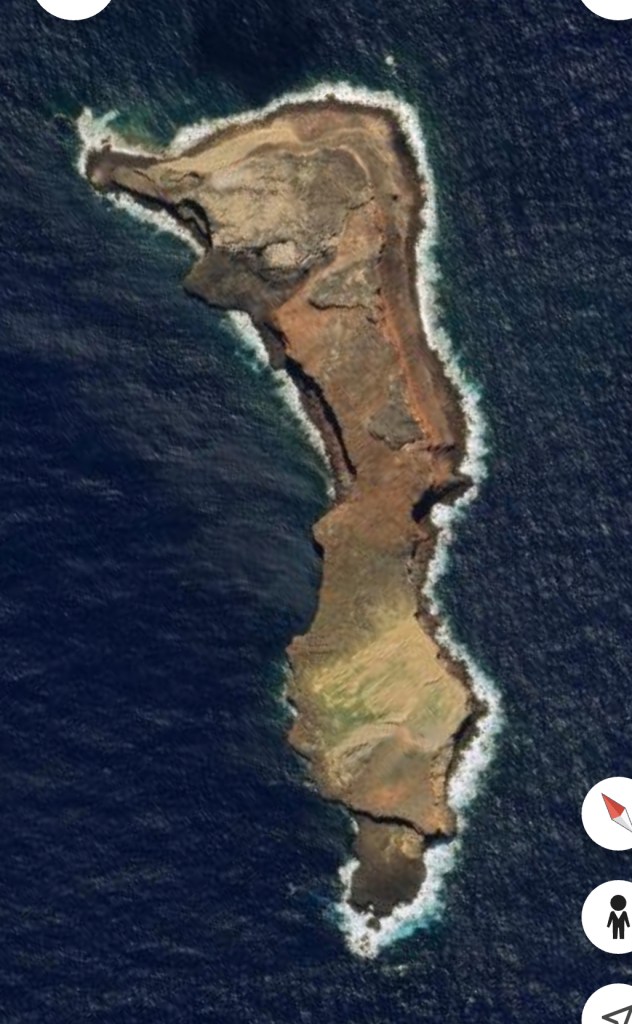

Atmospheric shock waves propagated round the globe, going around the globe as many as 4 times in some locations. The displaced water from the explosion in our stratosphere will continue to be there until 2032. It caused a rapid and significant depletion of the ozone layer, up to 7% over large areas of the Southern Hemisphere. So, does it matter which way we go around this napping giant? Likely not. If there was a good anchorage there, perhaps it would be time to roast some marshmallows?
With all the movement, meals were simple – oatmeal for breakfast, PB&J sandwiches for lunch with our allotted fruit, and the kids were excited to eat their freeze-dried Mountain House meals for dinner. We have had these on board since the US and kids said it made them feel like they were camping back home.
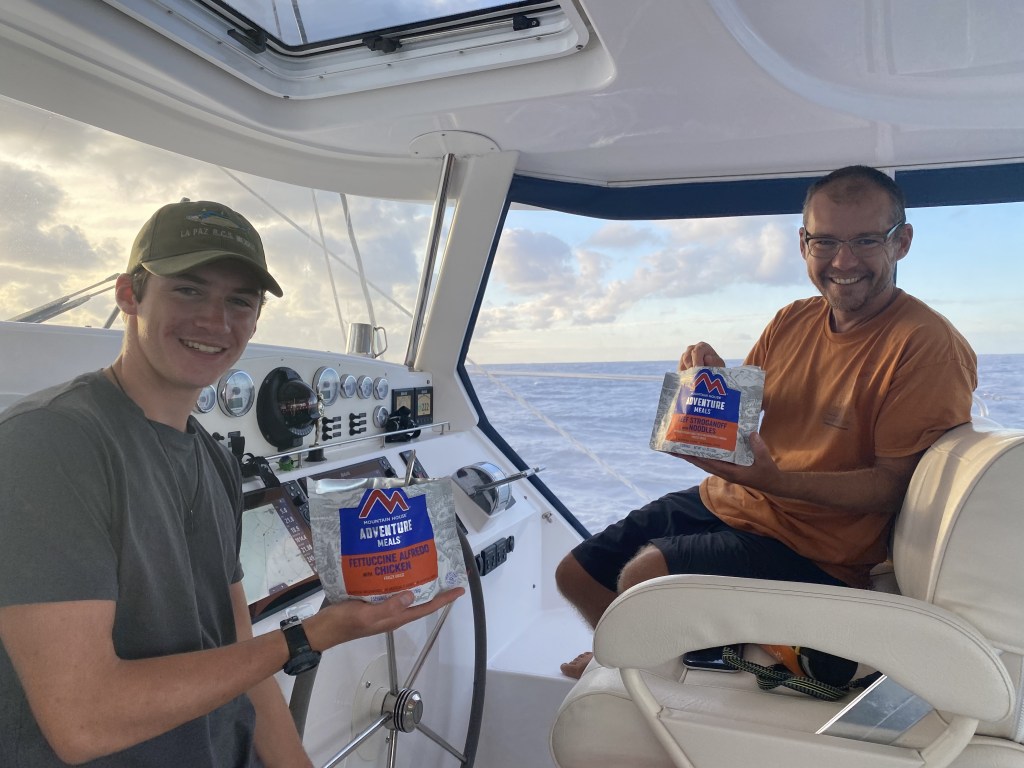
Winds continue to build, along with seas; the boat is handling it excellently but is very wet. We added another reef in our genoa and now have a double reefed main and double reefed genoa, but still cruise along at an average of 8. Anther notable, we wore hoodies and pants to do watch, getting cooler. Overnight, it felt like riding a mechanical bull, as large swells would slam the boat at unexpected intervals, the sliver of the moon providing very little light to give warning. But we made our best 24 hours yet of distance covered in Terikah, about 180 miles!
 SV Terikah Adventures
8 responses to “Day 1: Passage Tonga to NZ”
Keeping you in my thoughts as you make this passage. It always seemed an intimidating one, although we didn’t go to New Zealand since we had a cat onboard. Hope your sporty seas mellow out and you have an uneventful passage!
LikeLike
Totally intimidating! We are half way there, rough passage, but safe. Loving our boat.
LikeLiked by 1 person
a
LikeLike
(2nd try)
Looking at my South Pacific map it looks like you could navigate to NZ using only your fathometer (or 6 miles of string and lead weight) by following the Tonga and Kermadec trenches. Sort of like following the channel up the Stikine, gotta learn to read the water! Fantastic geology below, 2 continents trying to shove each other of of the way.
First snow on top of PSG Mt today. Good sailing! John
LikeLiked by 1 person
Love this idea and visual. Isn’t it interesting to think of the geology below?
LikeLike
sending love from Merlin. Can’t wait to read all the updates!
LikeLiked by 1 person
So sorry amazing watching your Journey of a Lifetime!!
Thank you for sharing!!
Karen Hempstead and Stephen Smith
Kilroy neighbors
Sent from my Verizon, Samsung Galaxy smartphone
Get Outlook for Androidhttps://aka.ms/AAb9ysg
LikeLiked by 1 person
Ooooops, typo, shouldn’t say “sorry”
So so amazing!
Sent from my Verizon, Samsung Galaxy smartphone
Get Outlook for Androidhttps://aka.ms/AAb9ysg
LikeLike