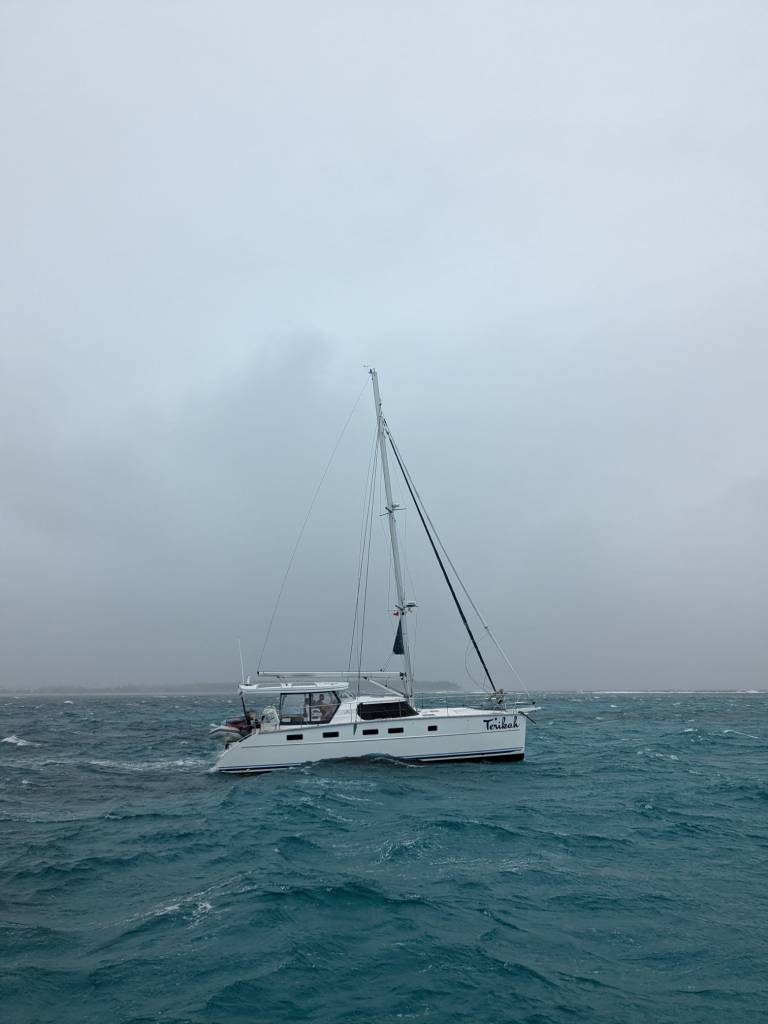
Back to the Ha’apai Group in Tonga for another week of adventures; this one topped off with 52 knots of wind…read on!
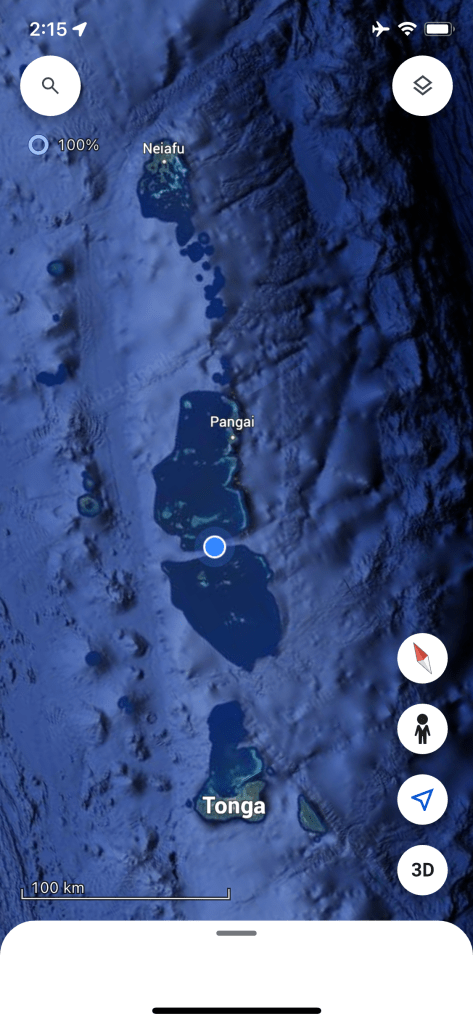
Our arrival to the Ha’apai was just after sunset, as we wove between coral bommies at a snail’s pace in the dark, trusting in the track we had created our last time to the Ha’appai North Anchorage. The next morning we took Terikah to the main town of Pangai to complete our check-in, as in Tonga one needs to check in/out of each island group.
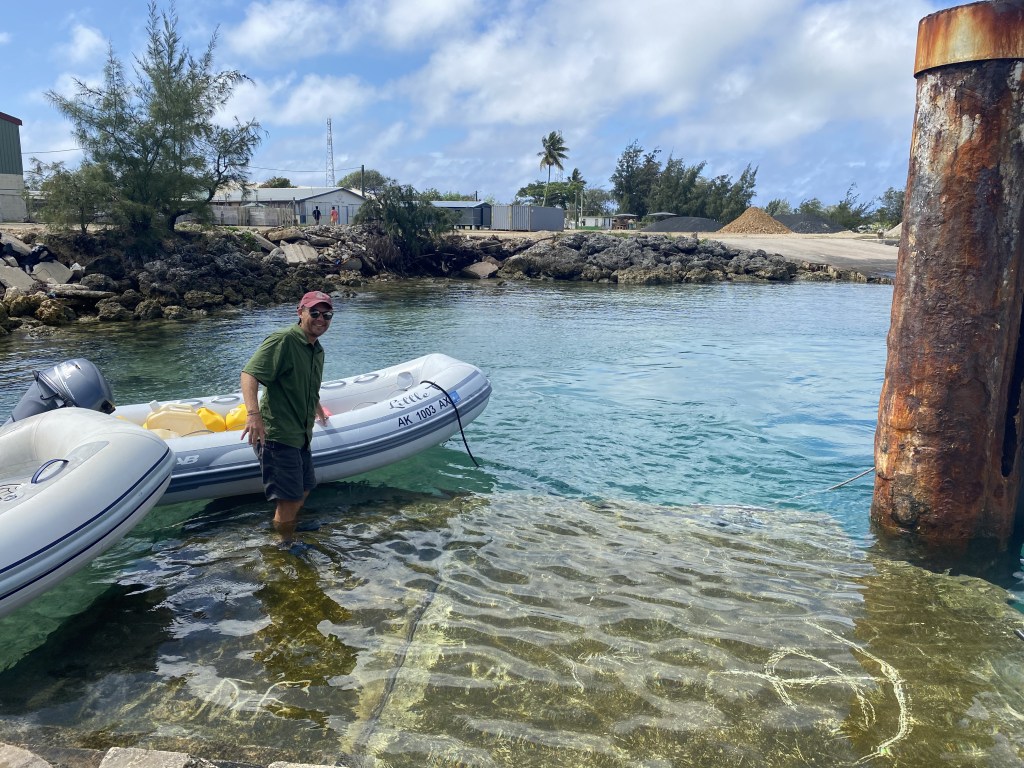
Finding the Customs woman gone, we chatted with a woman who worked at the local Red Cross office after she tracked the Customs official down for us (who was in a meeting). It was fascinating to learn of the work of the Red Cross here, visiting remote islands to create tsunami evacuation plans and teaching basic first aid. All around are signs of the damage of past cyclones and tsunamis. It’s a good reminder of why we are heading south to New Zealand; the storm season starts here in November.
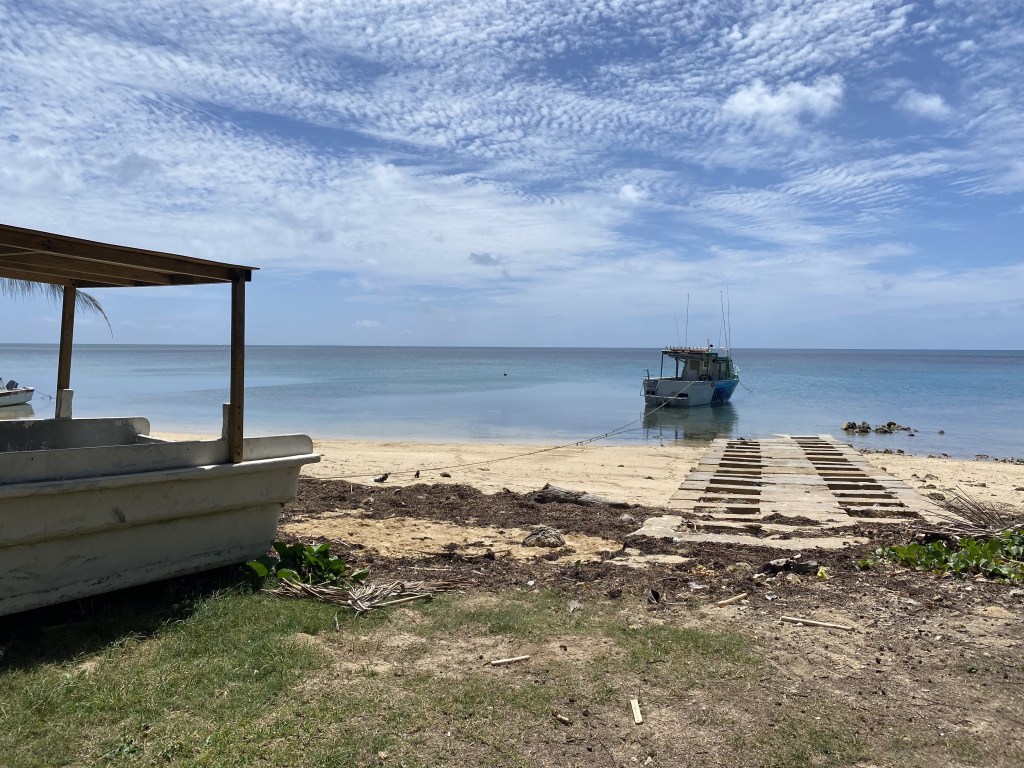
Most recently, the eruption of the Hunga-Tonga-Hunga-Ha’apai volcano on January 15, 2022 was the largest recorded since the eruption of Krakatoa in 1883. The eruption triggered tsunami waves of up to 15 meters which struck the west coast of Ha’apai.
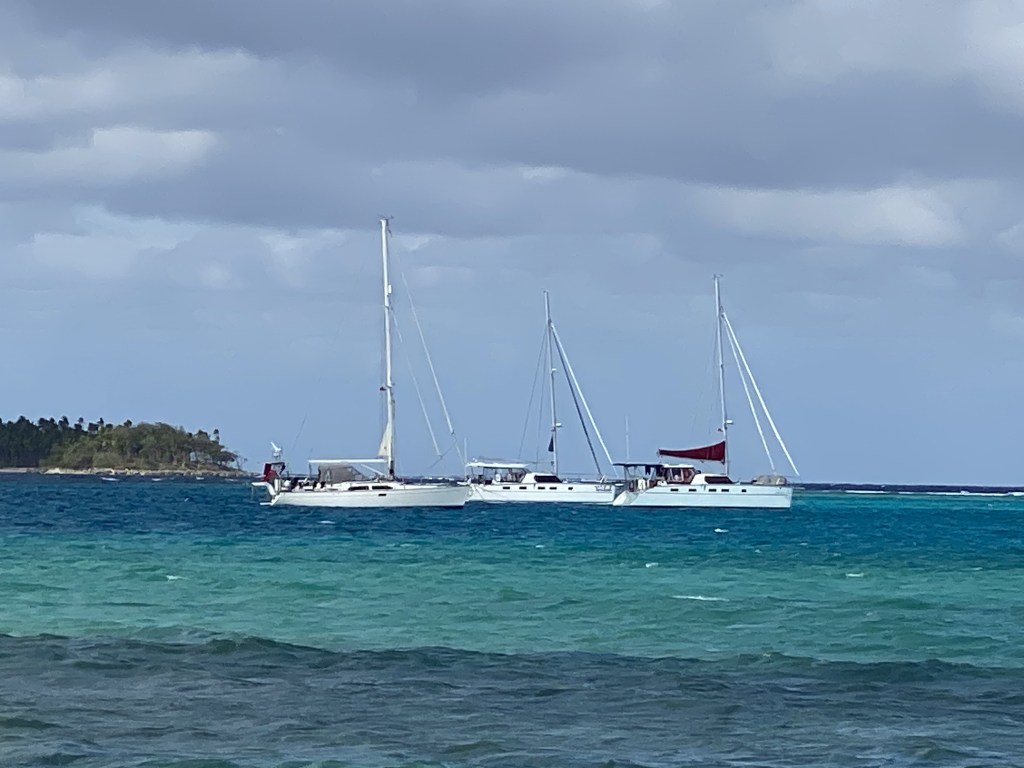
Back to the Ha’apai North Anchorage, we enjoyed a fish feed with the two other boats we will be traveling with to New Zealand, Gambler and Linnaea (also an Antares catamaran). Gambler had caught and wrestled a marlin up onto their monohull and shared this, along with our dogtooth tuna. We ate fish until we couldn’t anymore, saving some for lunch the next day. We enjoyed stellar snorkeling here, from baby clownfish to a leopard shark just chilling on the bottom (we named him Stan). The beach provided wood for a fire, as bats flew overhead.
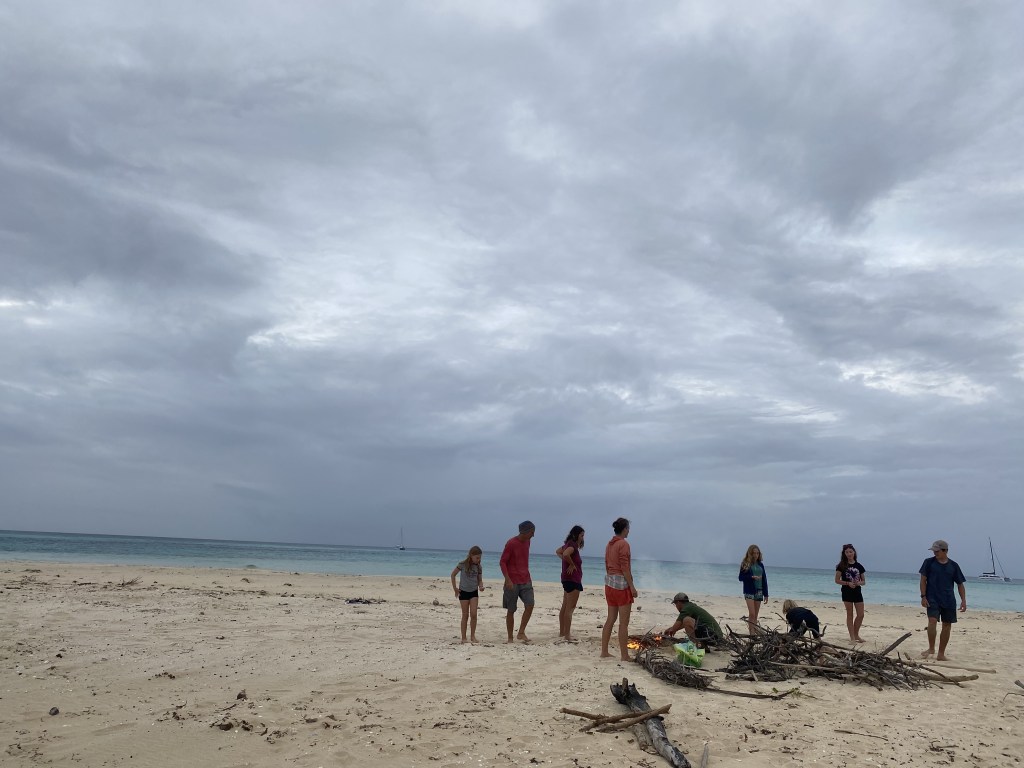
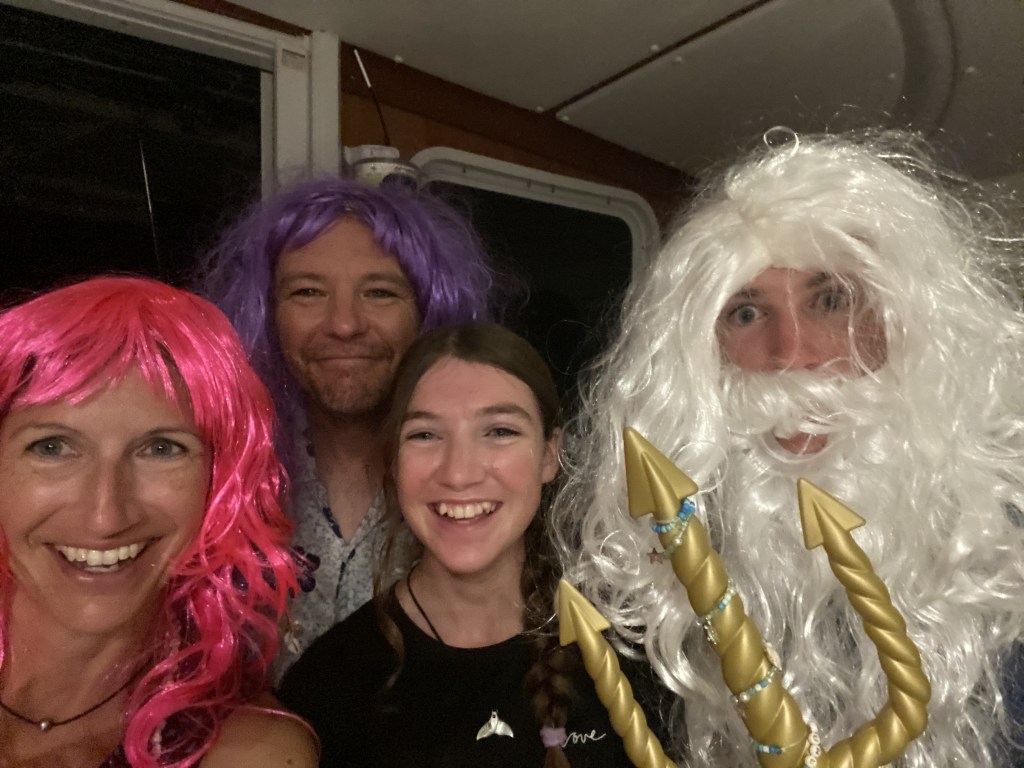
Moved a bit south to Uoleva Island, where we celebrated Halloween with pumpkin pancakes, pizza dinner and dancing at SV Linnaea, crazy wigs (from a Tongan grocery store?!), and some silly trick-or-treating on board.
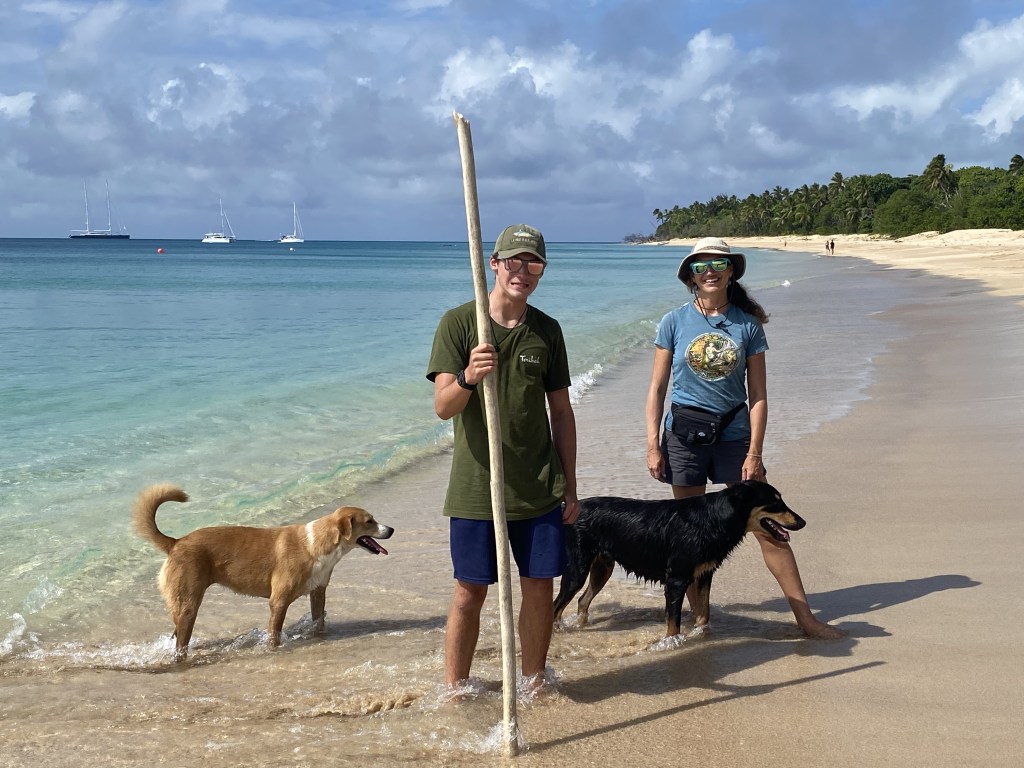
The days are spent doing school, working on jobs for the passage, and enjoying where we are. We are reading aloud Mutiny on the Bounty, as the mutiny on the HMS Bounty took place in the South Pacific Ocean on April 28, 1789, in the waters between Tofua and Kao in this very Ha’apai group of Tonga. We took a long walk on the perfect crescent beach of Uoleva Island, followed by a family swim and time on deck together at night.
We had a hilarious moment when Cora, using a Nightsky App, pointed down and said, “The North Star is right under the boat!” (on the other side of the Earth from us!). I dove into the piles of New Zealand Customs and Immigration paperwork and Biosecurity checklists, as a weather window to New Zealand is on the horizon. We checked out of the country for the hefty fee of…20 TOP (about $8 US?!) and used every last bit of money to fill up our spare diesel containers in case we, or another boat along the way, might need it. Cora and I were a bit disappointed that our spare money was used on diesel and not passage treats.
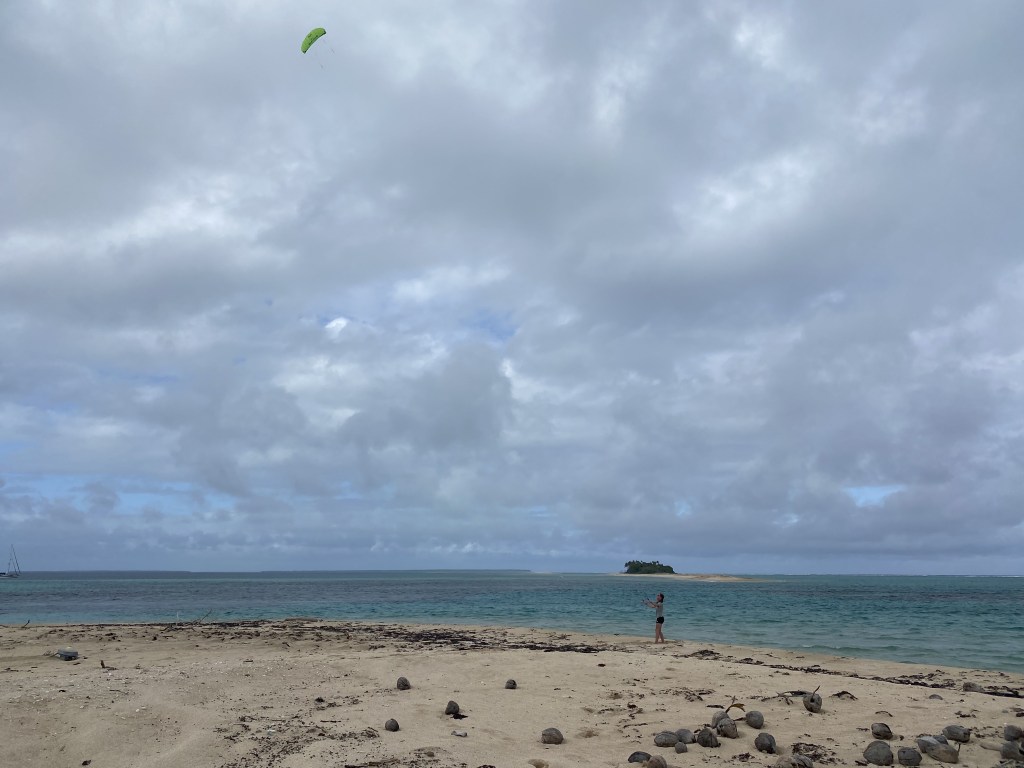
We moved along south in the island group to Uonukuhahake Island, where brisk winds made for fun trick-kite flying, a good beach walk and shell finding, and the boys took apart a stranded fishing beacon that had washed up.
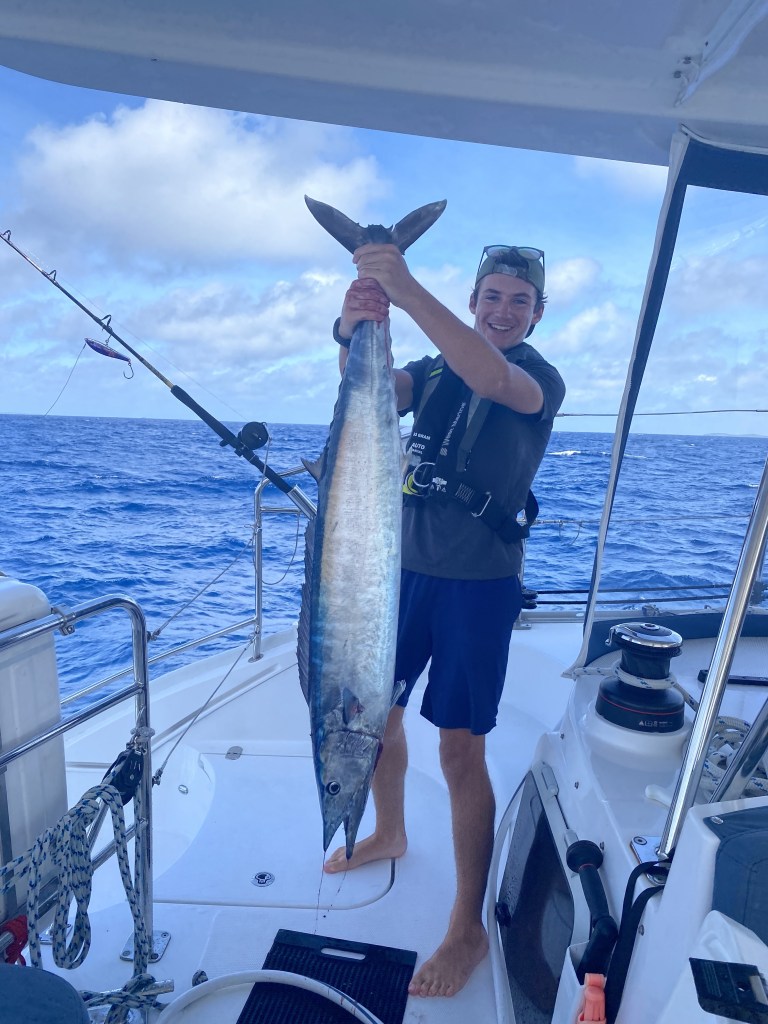
Fantastic 27-mile sail to Nomuka Iki Island, spent much of the day between 7-10 knots of speed! As we exited an ocean trench into shallower (200 feet) waters, Calder got his line out and caught a lovely wahoo! Our freezer had been empty, so this was a wonderful pre-passage gift.
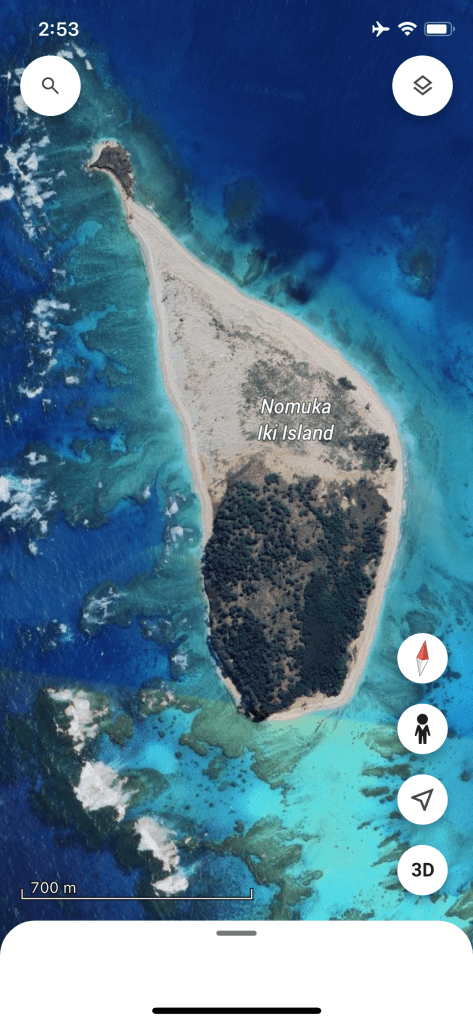
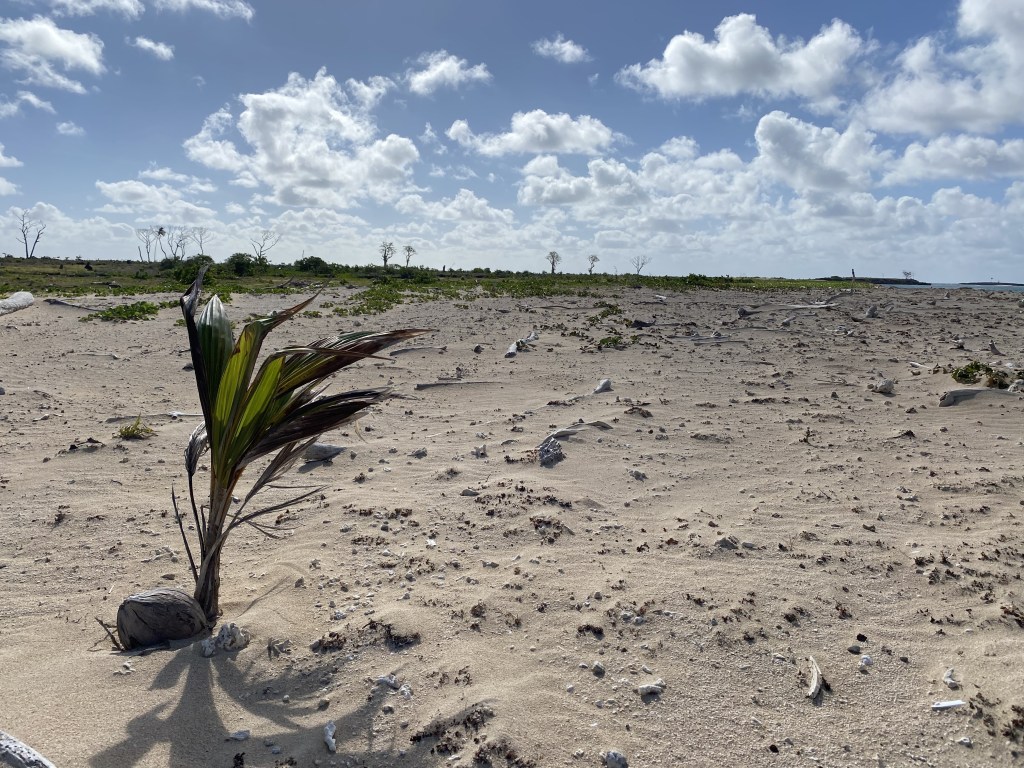
Nomuka Iki Island is apocalyptic – skeleton trees on a scraped island from the tsunami.
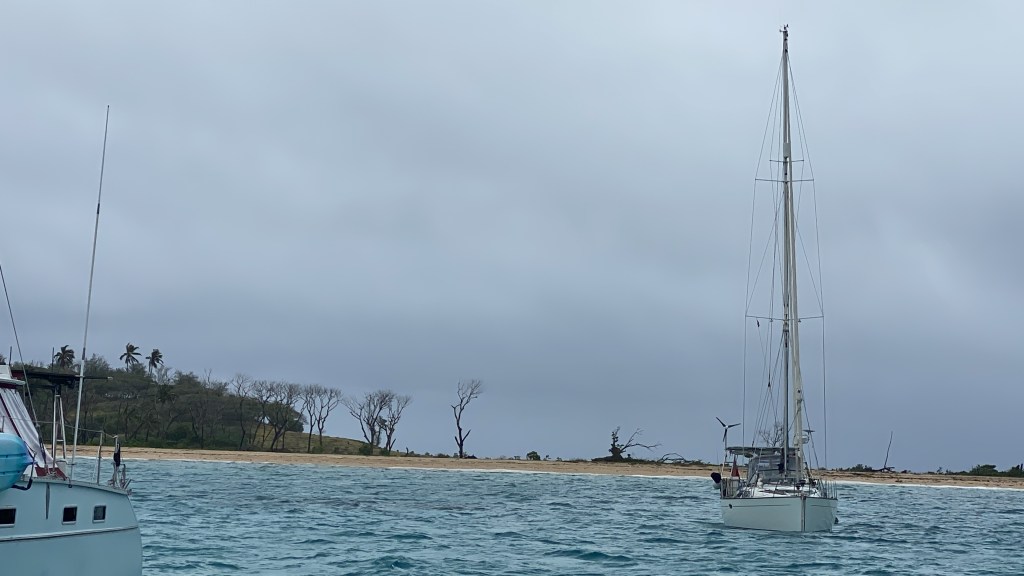
Rain settled in, wind howled, and it became dark during the day. These remote Pacific island communities are so vulnerable to extreme forces of nature.
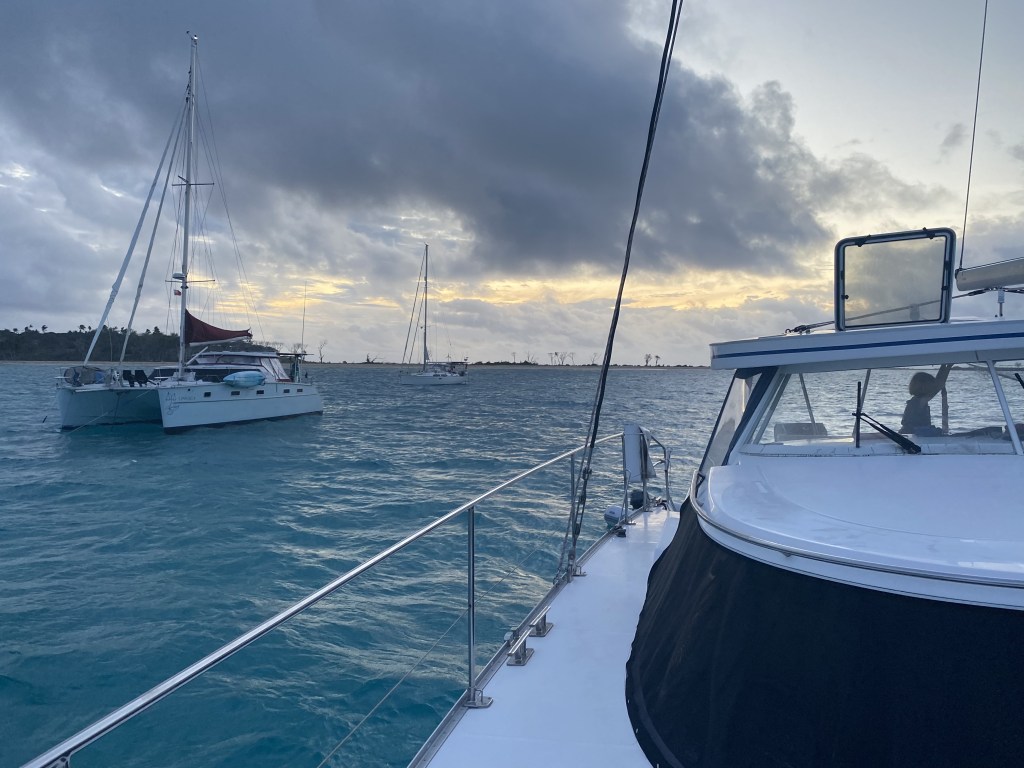
All we can talk about is the weather, weather, weather; when to leave for New Zealand? We can see the SPCZ (South Pacific Convergence Zone) barreling from Fiji toward Tonga, and there are reinforced trade winds starting Saturday that even have a name – the Bogi Walu (8 day blow). I feel anxious, unsettled, and sit down to do a guided meditation…it starts about feeling the firmness and solidity of earth, as I sit rocking on the ocean in our boat. Unsettled, anxious, trying to enjoy the moment, finding myself being short with my family. We analyze the weather over and over again.
The next day, as I’m seeing patients via Telehealth down in the boat, I hear wind start to pick up quickly, then excited voices above. I finish my visit, then head topsides; we have been slammed by the front of a low-pressure system, pounding rain, dark skies, and quickly building wind. Chris turns on the engines and powers forward to take strain off the anchor; at the helm for hours in our anchorage.
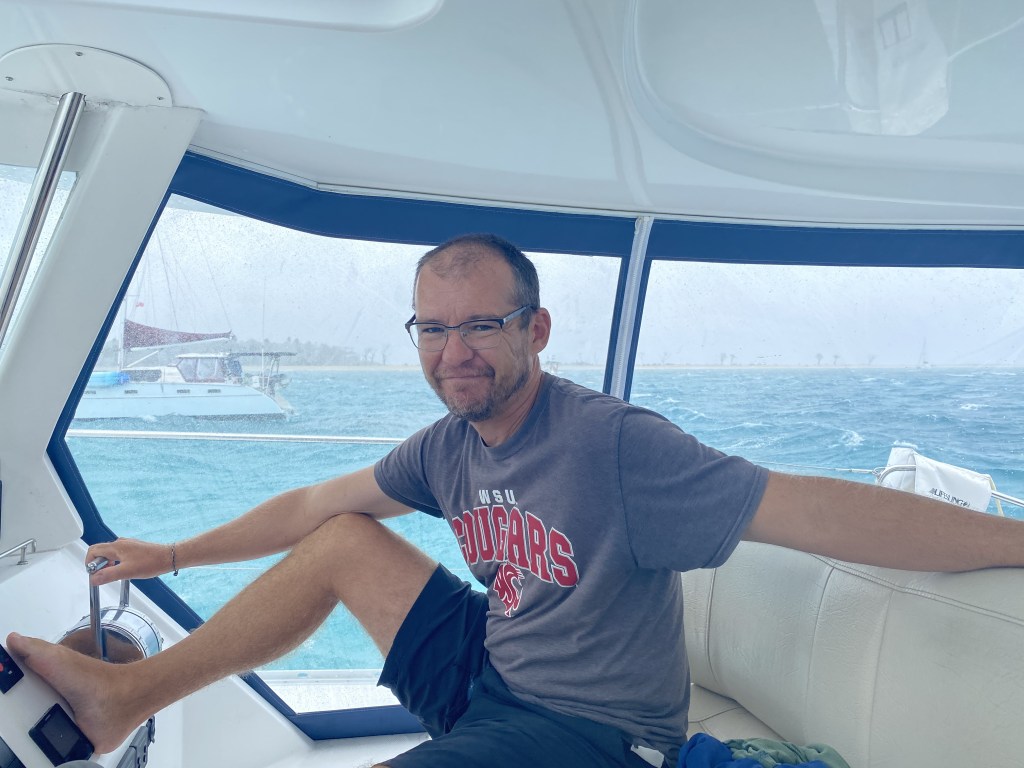
Gusts up to 52 knots, as the tops of waves are shed in sheets of sea foam. This is the most wind Terikah has seen. We don’t feel afraid, as our anchor is holding well and it is daytime. Chris hangs out at the helm for hours. I’ve made a rule of no telehealth visits underway (I get a bit ill), but how about in an anchorage that feels like we are underway? We exchange jokes in camaraderie with our friends on neighboring boats. After a while, the front of the low pressure system moves on, with decreasing winds and waves through the night. We have experienced low pressure fronts before, but this one stands out. (video below does not open in email link; go to actual Blog to watch)
Low pressure systems have lower pressure in the center than the surrounding areas. Winds blow towards the low pressure (sometimes in big gusts), causing air to rise. As the air rises, it cools and the water vapor in it condenses into clouds and precipitation (and add convection – lightening – to the mix). Good times. Jamie (of Sailing Totem) gave us these wonderful words, “Weather acclimation is best done incrementally. Today you ticked up a notch and did just fine!”
We have been busy getting ready for our passage to New Zealand. After reviewing the weather this morning, talking with our weather routers and buddy boats; it appears we have an excellent window starting tomorrow. I got busy prepping passage food, sending out our Float Plan, and sending documents to New Zealand. Chris did a rig inspection and Calder built a soft shackle out of Dyneema to attach the Code Zero to the bowsprit, as the old one had signs of wear. We got the drogue ready, set up jacklines, stowed gear, secured the dinghy, and cleaned.
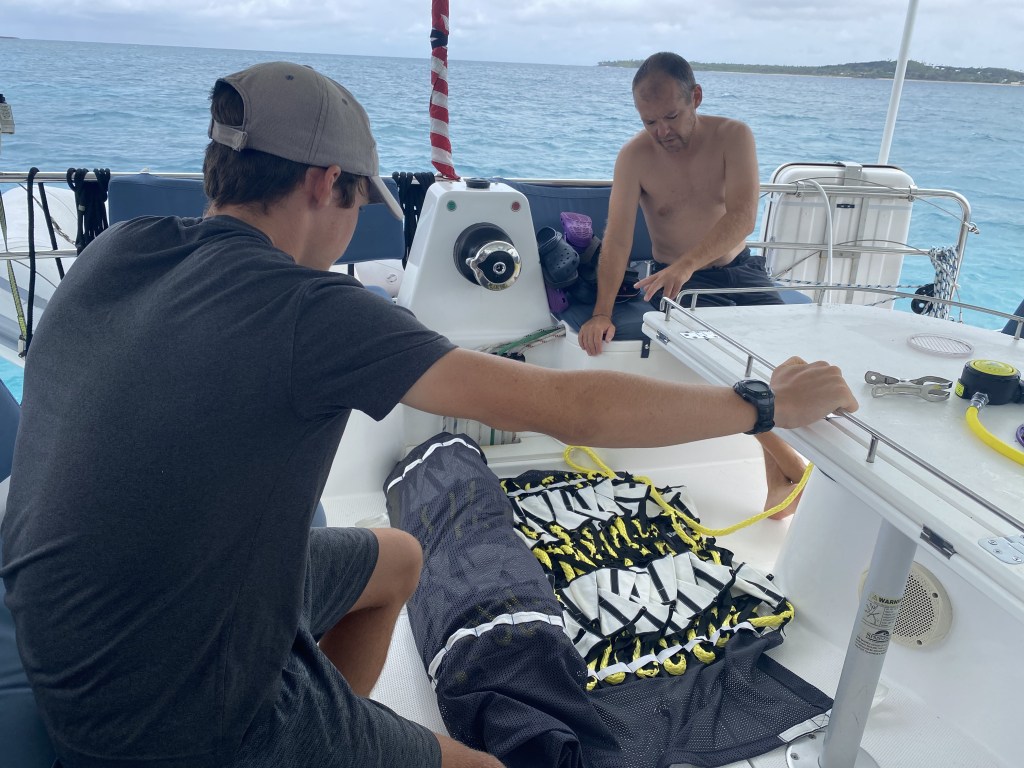
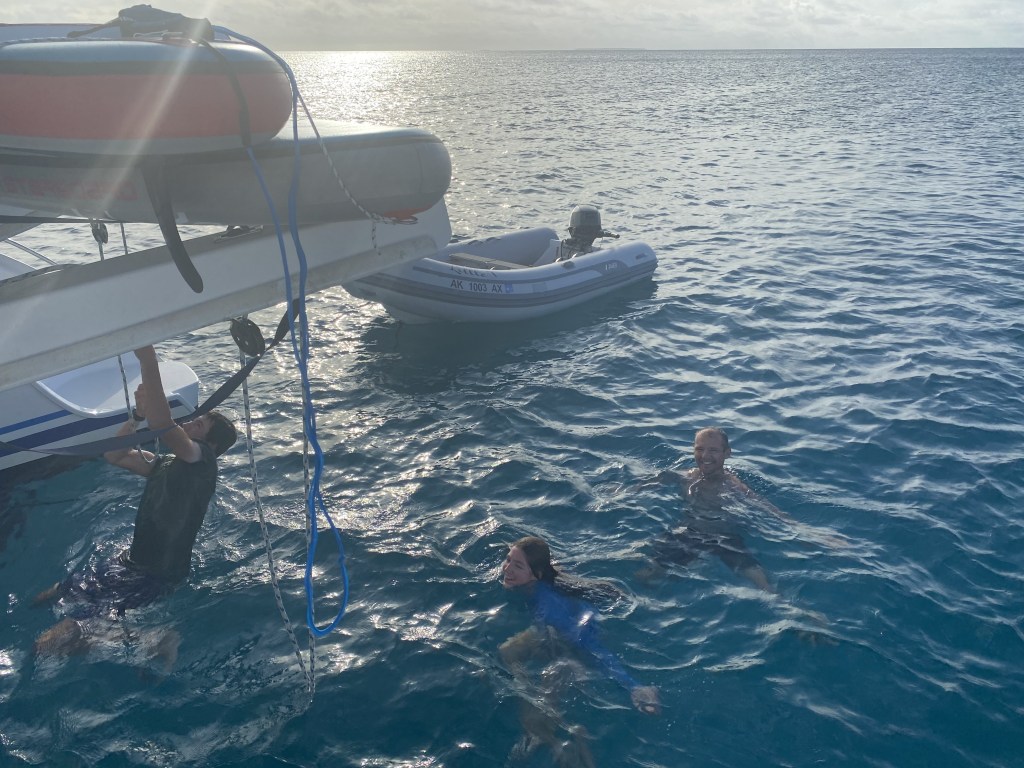
We snuck in a shore walk, last time barefoot in the sand for a while, and a final ocean bath before bed.
We leave this morning in an hour. This is potentially one of our most technical passages and I hope to write regularly; I hope my entries for this passage are very boring.
 SV Terikah Adventures
6 responses to “Goodbye Tonga”
Safe passage! Love reading your blog. Beautiful wahoo!!!
LikeLike
you guys are so adorable ! Good luck with your passage to new Zealand. You got this!
LikeLike
I’m proud of your family for careful and safe travels! Aunt Lyn
LikeLiked by 1 person
Safe travels to you guys! Glad you have that weather window and some buddies to sail with. Looking forward to updates on your journey.
LikeLike
I have not been keeping up with comments, sorry! (I’m not sure if I’m doing it right.) But know as soon as your blog shows up, I drop everything and read with envy and excitement. I’m traveling with you every nautical mile.
LikeLike
Thanks John! So glad you are following along with us. Keeps us connected to our lovely home town of Petersburg.
LikeLike