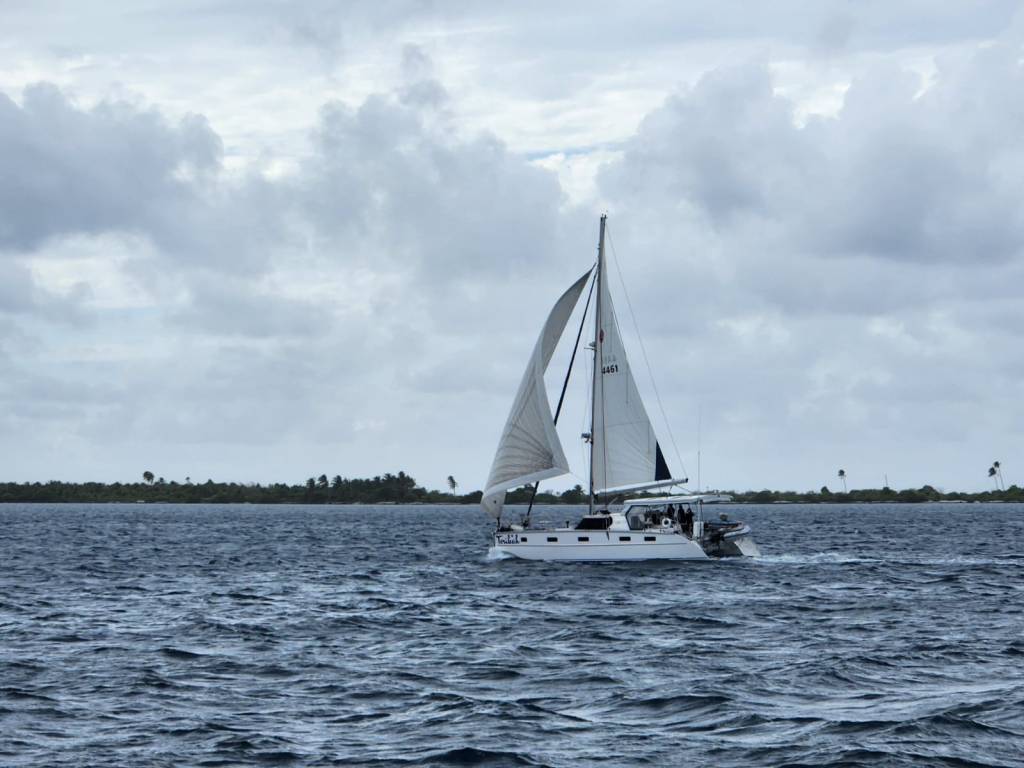
Hirifa anchorage is the perfect place to weather a storm, which is why we moved and, ultimately, stayed put here for 10 days, much longer than anticipated. First, the SPCZ (South Pacific Convergence Zone) was coming much too close, with it gusts of unpredictable winds and squalls. Second, there was a major high and low pressure system and the Tuamotus were smack dab in the middle of a squash zone. With squash zone events, the windiest and wettest weather often coincides and lingers for days in a similar flow. This meant reinforced trade winds predicted up to 40 knots with seas building and close together. It was time to get cozy in Hirifa; another 60 boats had the same idea.
So, how did we get ready for this event? First, we contemplated whether this was indeed the best anchorage or if we should move to a different atoll, wanting to move on and see another atoll. We got together with the crew of another two boats who use the same weather help (Sailing Totem) and did a ZOOM call to discuss the weather; how awesome is this technology out here? Yes, we all agreed; we would stay put in Hirifa.

We helped each other move to new positions closer to the shore, with fewer coral bommies and to cut down on wind chop in the protection of the palms. We set our anchors firmly, along with setting up floats to hold up the chain, and a tandem anchor off the main anchor. Our anchoring procedure to get all 3 boats set up took us over 4 hours and involved people working from the boats, the dinghies, and the water.
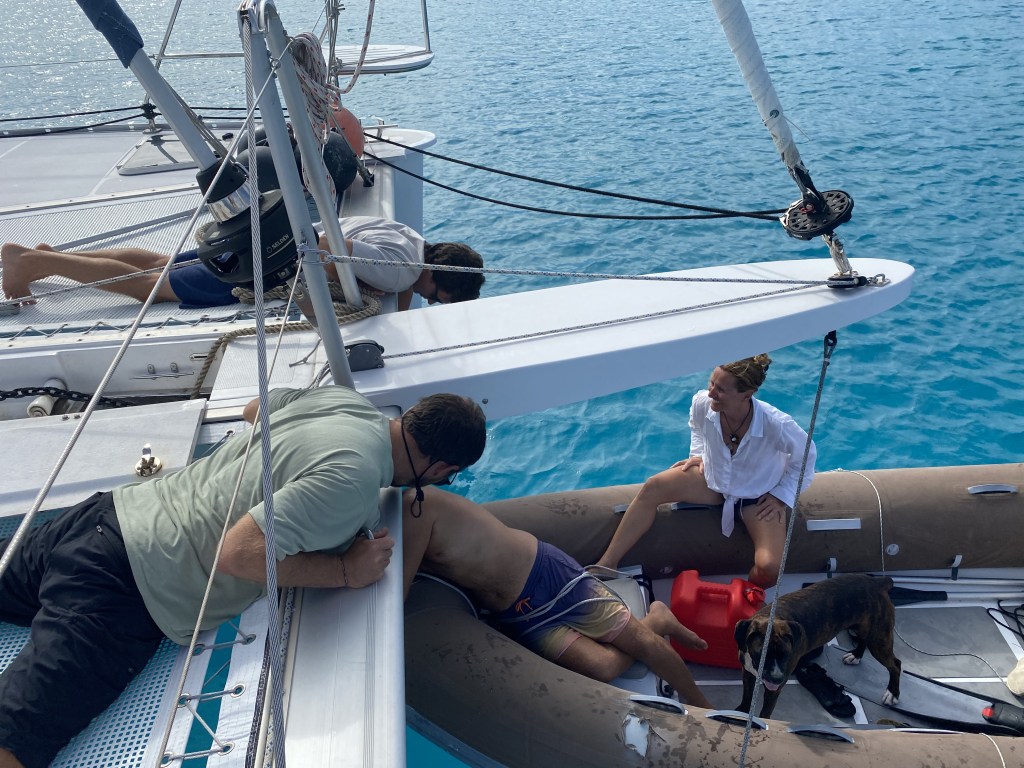
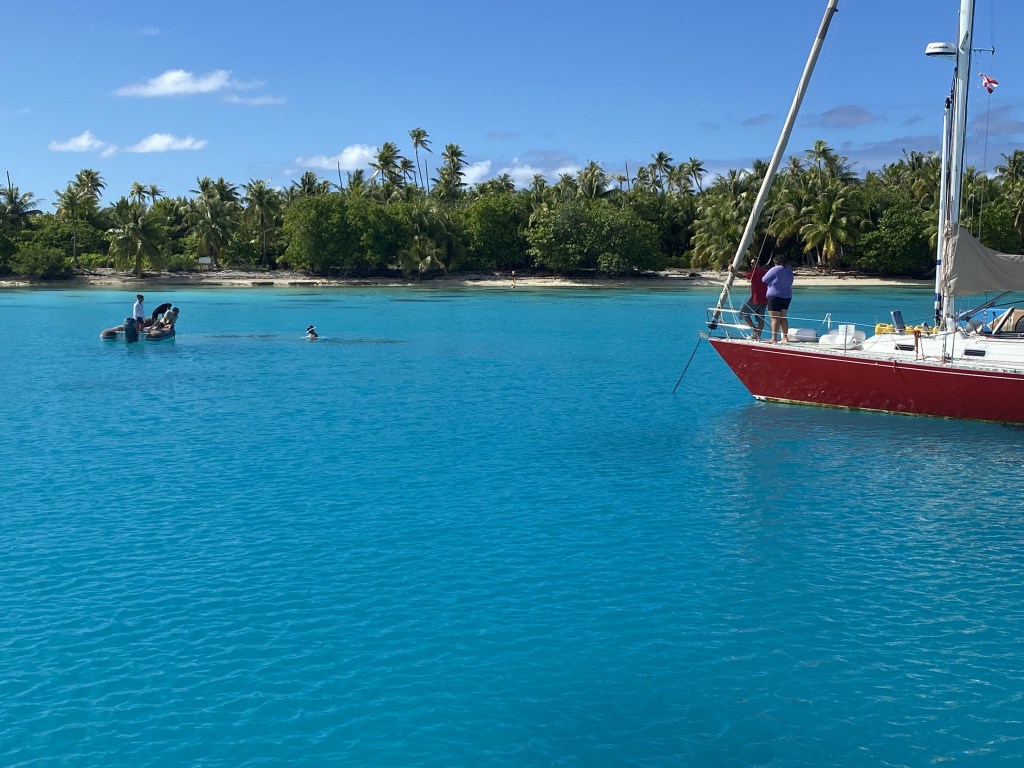
The nice thing about Hirifa is that the protection means we can still play amongst the winds. In fact, when life gives you wind…it’s time to work on our wind sport skills! Between the different boats in the anchorage, there were foil boards, tow lines, helmets, and wings. We would go out with groups of people in the dinghy to assist the beginning foilers. We also did tow-foiling, which is towing the foil board behind the dinghy. It is such a wild feeling to get the board up on foil, above the waves and chop, so smooth.


All of us made progress daily, moving from kneeling, to standing, to foiling. I had one notable moment when I finally stood up on the board for about a minute and had a ray leap out of the water in front of me; of course that ray was so proud of me! Much laughter, much falling, and SO fun. I think some new gear is in the future for us in Tahiti.
So, what else did we do to pass the time for 10 days in Hirifa? School and boatwork in the mornings. Kids would pick up other kids in the dinghies and go to shore to play and practice the slack line between trees (Chris and I would find ourselves stranded on the boat; our teens out with our “car”).
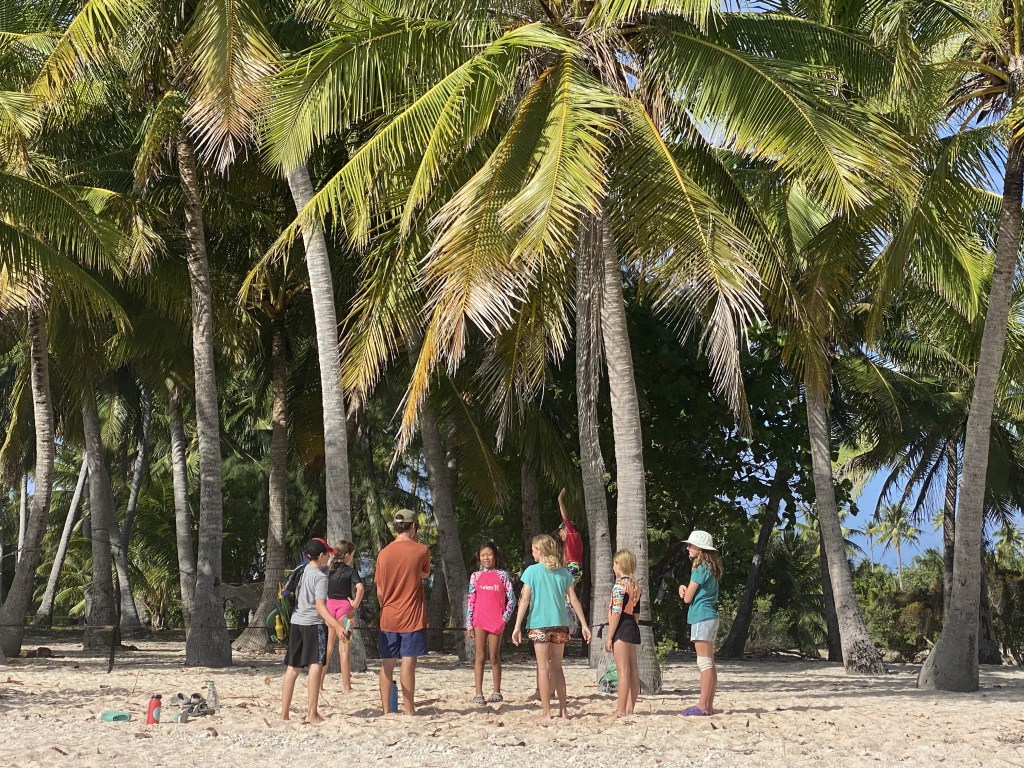
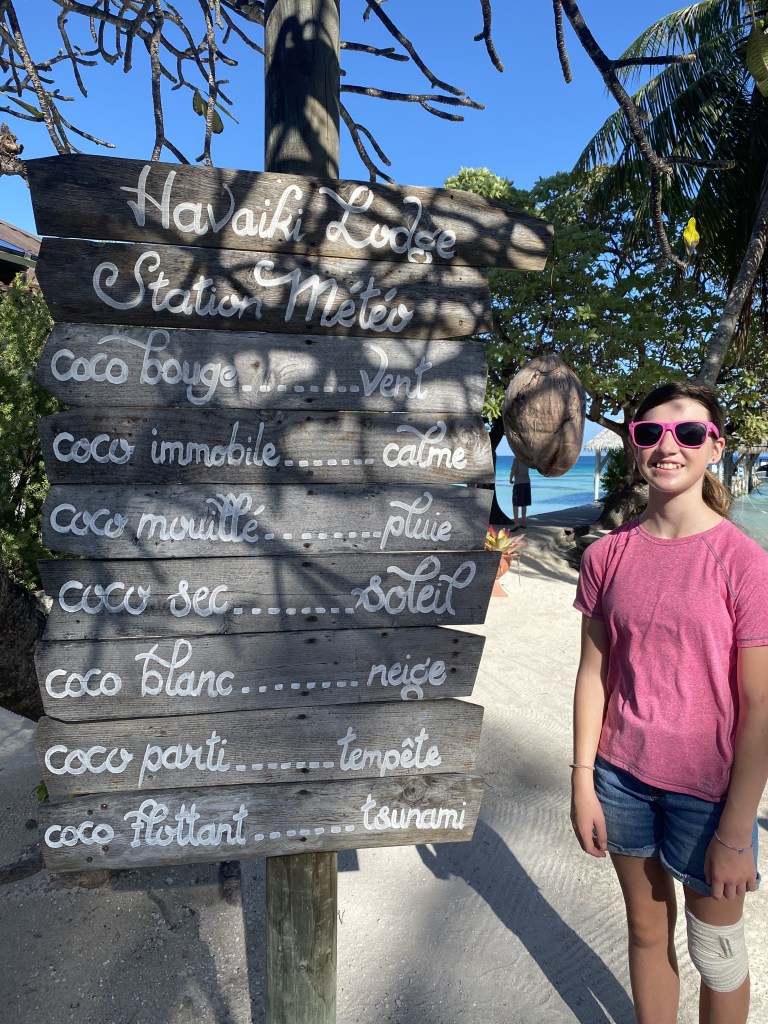
Caught up on laundry and cleaning. A haircut for Calder. Took the dinghy to a nearby beach resort for fancy drinks. Game nights, sharing meals, and movie night on neighboring boats. Shared happy hours with other boats and did boat tours (got to see another Antares catamaran and compare notes). We went swimming, a massive manta ray visiting Terikah, doing summersaults under our boat while she fed. Visited a nearby small resort that had a bar for beverages and an “outing.” The kids were offered the amazing opportunity to do an hourlong SCUBA experience with certified adults on a friend boat. Calder loved the way it felt. Cora, sadly, could not equilibrate her ears and, after, I discovered had an ear infection and is now on antibiotics. Poor Cora between her knee and ears can’t be super active or put her head underwater too much.
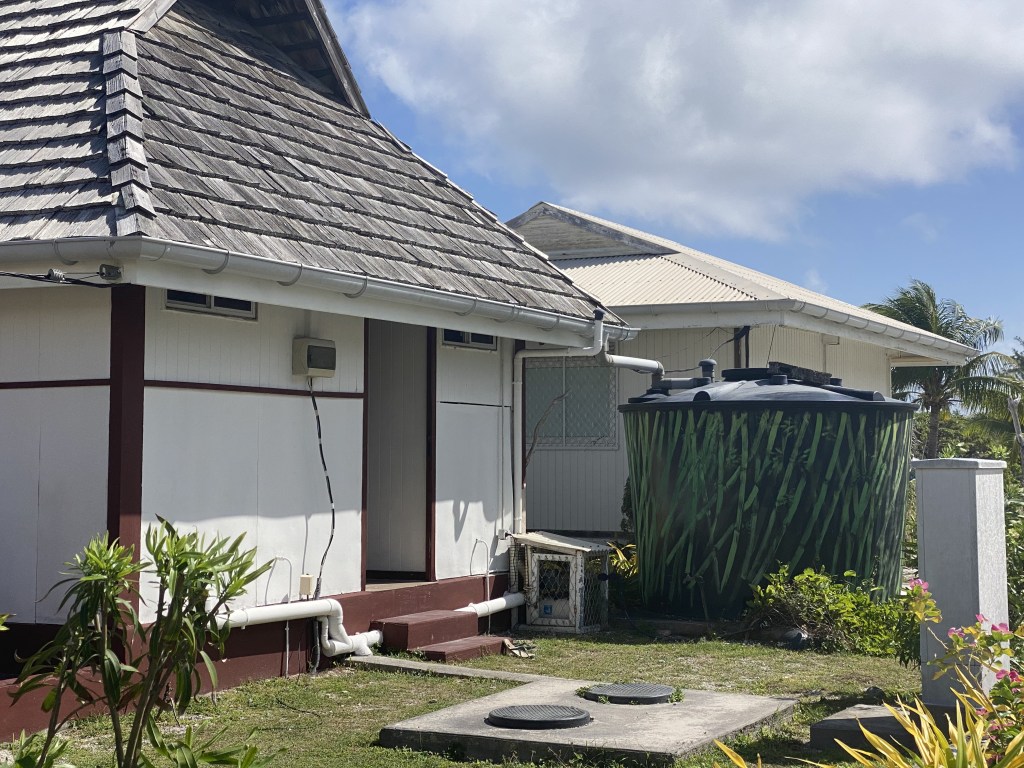
Food became interesting, as most of us were out of fresh produce (though I still had some fresh fruit from the Marquesas) and were making “bilge dinners,” finding various canned foods in storage (that we had bought for just this purpose). We were warned to think of the Tuamotus as a month-long passage when it came to provisioning and had done just that. We were lucky to have frozen wahoo and veggies left, but even that eventually was used up. We also discovered the dreaded weevils in our rice, freezing the bag to kill them and picking them out by hand. It’s important not to put any food scraps (or any waste) in these enclosed beautiful atolls. Therefore, when we ate our produce, we put the compost in a ziplock bag in our fridge to keep odor and bugs away. By the end of our time here, we had more bags of food scraps than actual food in our fridge! The boats discussed with each other creative meals they were preparing. My family had many stir-fries and quinoa bowls. One day when I told Cora she needed more veg, she went down below, cracked open a can of corn, and gobbled it up. Calder has been processing piles of coconuts, coconut water chillin’ in the fridge. “This coconut is giving me a run for my money,” Calder stated as he walks past determinedly with a drill and drill bits. Hilarious. Tahiti will be an excellent place to stock up on food for the next leg of our journey.
As for the weather, we saw a max gust of 40.7, but mostly upper 20’s and low 30’s. We had some impressive rain squalls. However, Chris slept surprisingly well for such weather, as we were firmly set in an excellent anchorage. We had some squalls with torrential rains roll through, one when we were all on the beach, hiding under palms; after it passed, we decided to chill in a large hammock for a while and kids kept playing.
We enjoyed wandering across the motus to the outer side of the atoll to look at the massive waves and be thankful that we were tucked securely inside the atoll.
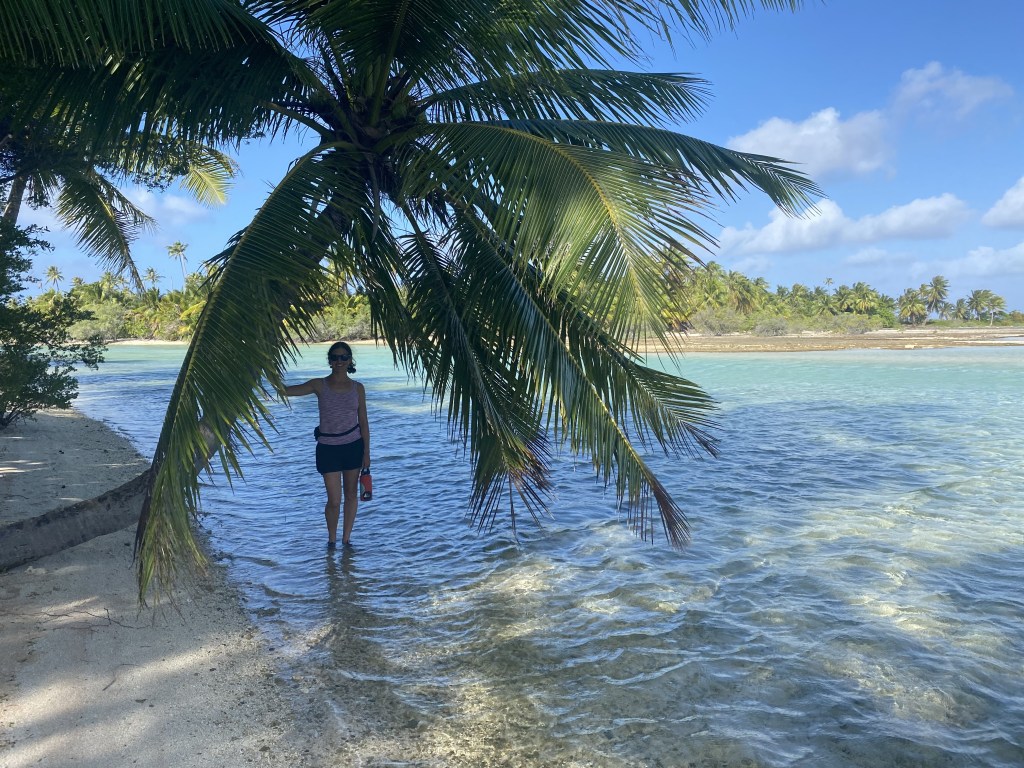
“Strolling the length of even a largish motu, you eventually come to a place where you can see water on both sides. At such moments it becomes breathtakingly clear that the ground beneath your feet is not really land in the way that most people understand it, but rather the tip on an undersea world that has temporarily emerged from the ocean (Sea People by Christina Thompson).”
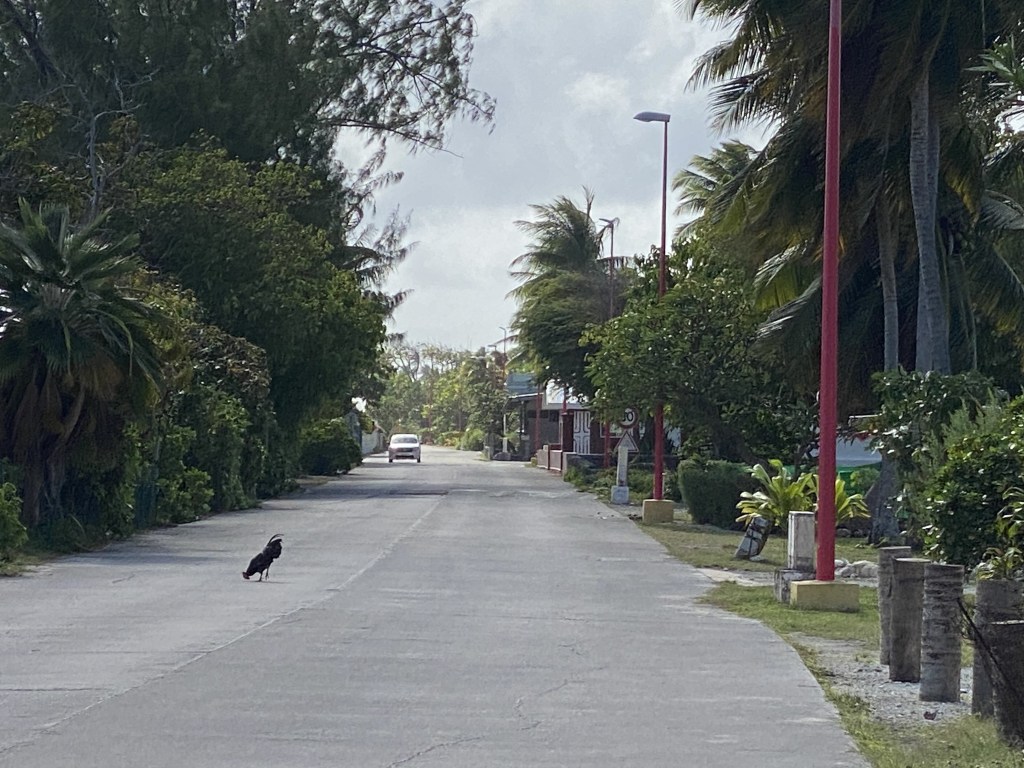
After being “stuck” in Hirifa for 10 days, it was time to move along, even just the 30 miles up to the North Fakarava main village of Rotoava, where most of Fakarava’s 837 inhabitants reside. The sail up was awesome; just purely for the fact that we sailed quickly inside an atoll. All wind and no waves! We would have been too nervous to do this before with all the coral bommies, but now felt more comfortable and had a great sail on the calm lagoon waters. We anchored in the semi-rolly anchorage then went to town to explore, getting groceries and gasoline for the dinghy.
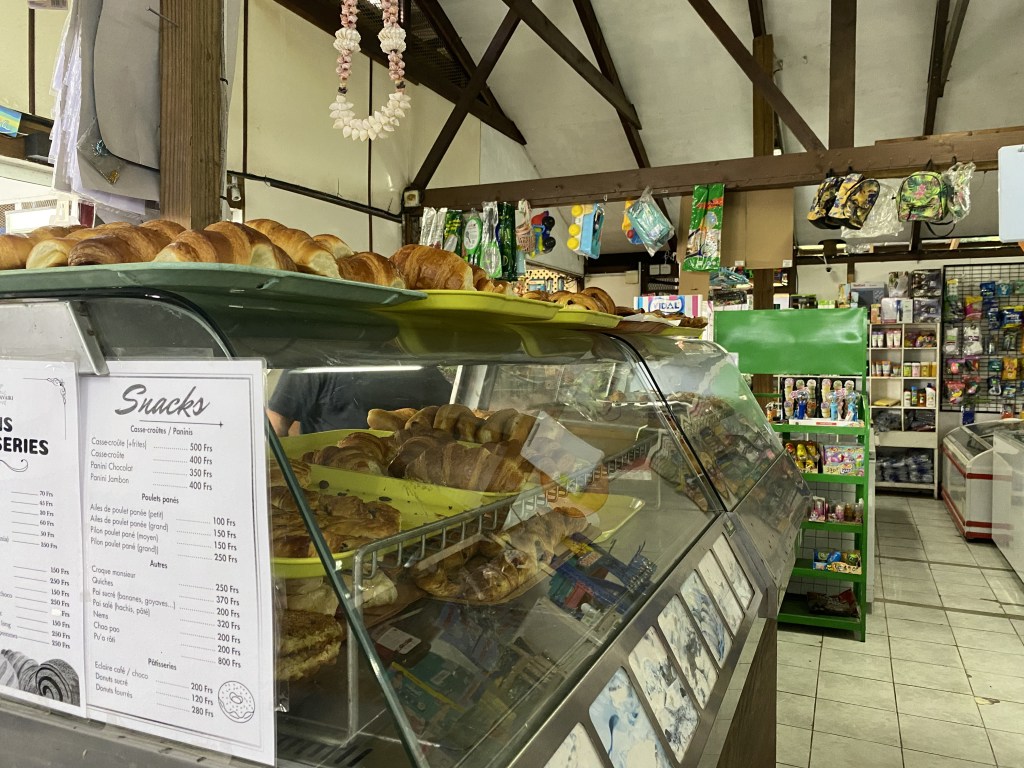
The next morning, up early to get our French bakery treats before walking to the Pearl Farm tour.
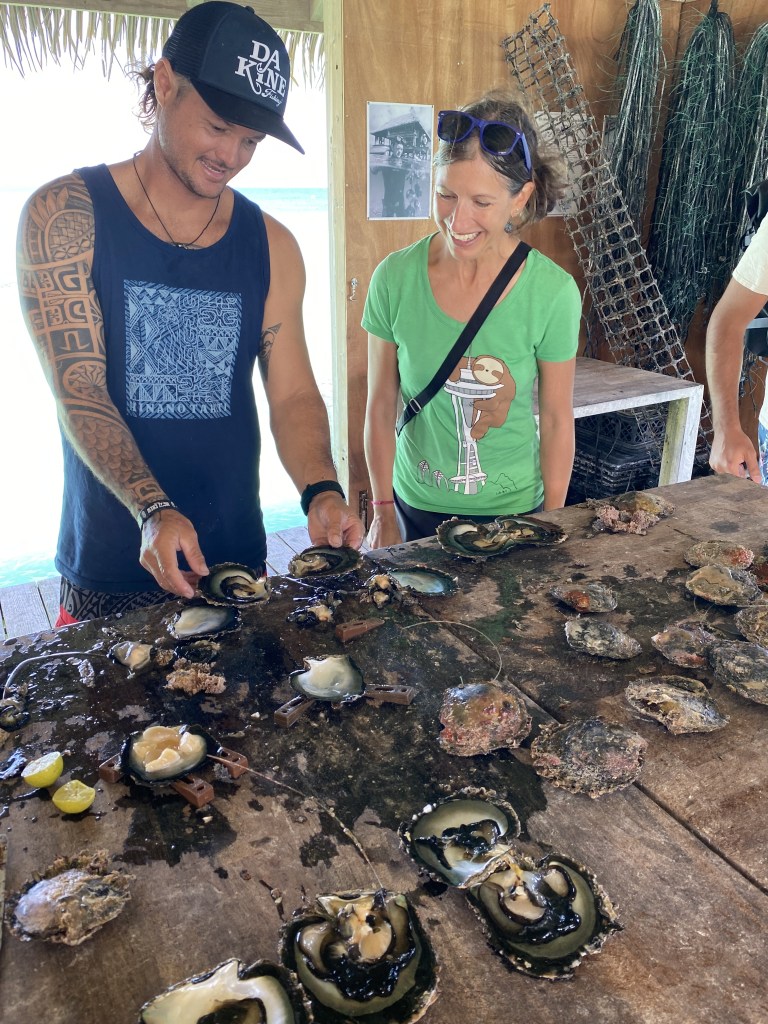
The tour demonstrated the entire process of producing the black pearls of Fakarava, ending with us each picking an oyster to see what pearl we could take home, which we now are wearing on our necks.
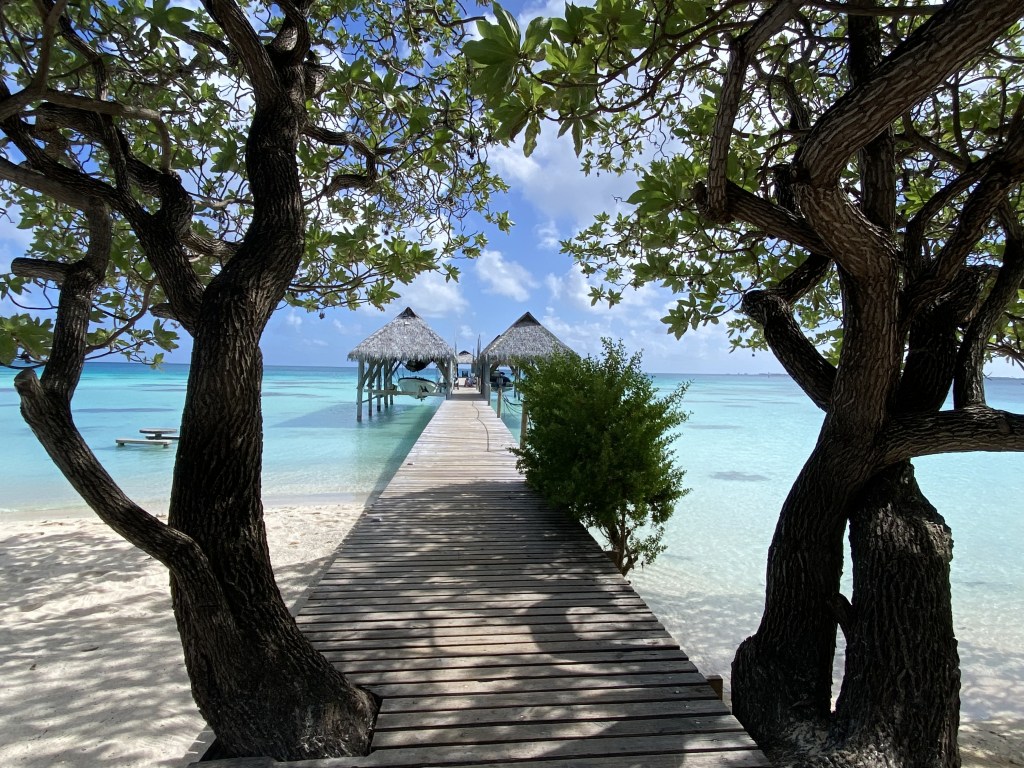


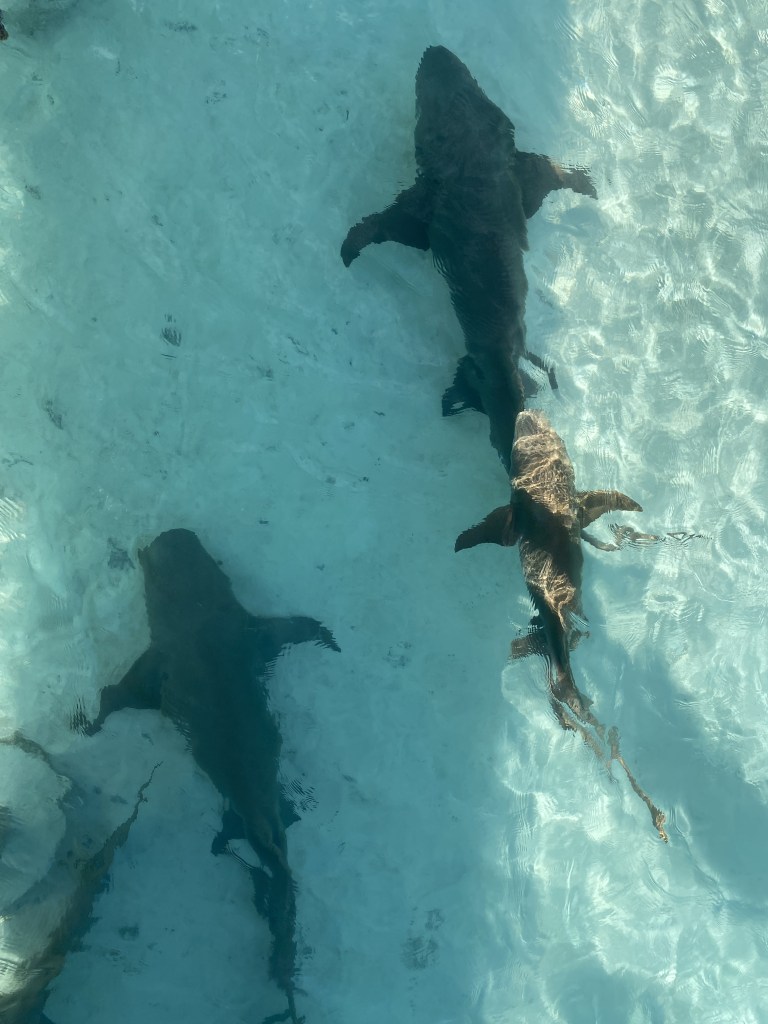
We sat at a table with our feet in the water, watching nurse sharks nearby; enjoyed poison cru and coconuts for lunch.
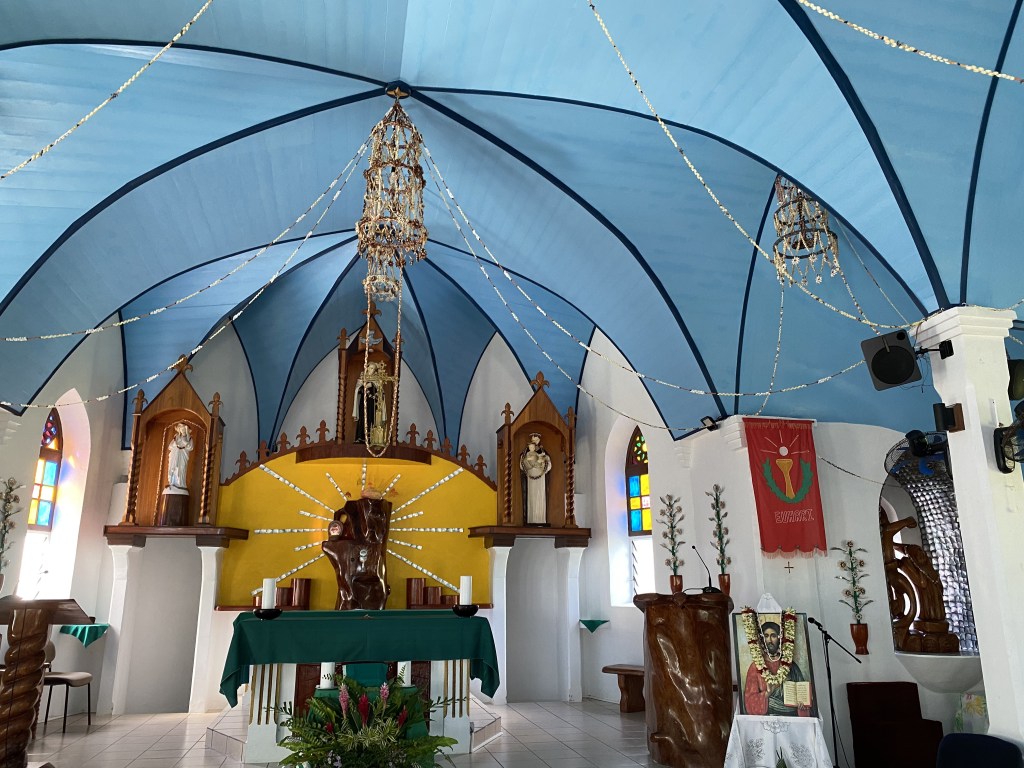
On our walk back, we strolled into the local Catholic Church with all its shell garlands and oyster accents; again the melding of traditional Tuamotu culture with the church imagery.
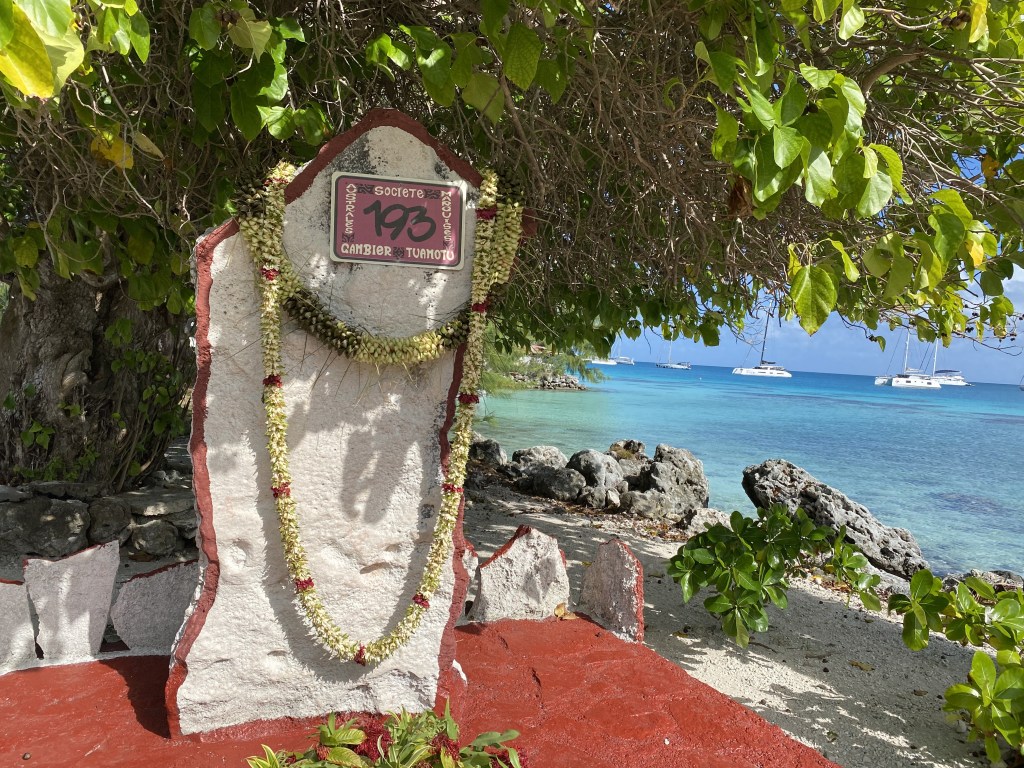
We also stopped by the 193 memorial in honor of those who have developed illnesses, specifically leukemia and other cancers, from the radiation from the French’s 193 nuclear tests in the South Pacific from 1966 to 1996. These were quite large explosions; some were 200 times the strength of Hiroshima and Nagasaki. Sobering.
We decided to stay one more night to let the seas calm further; we have a very short window of decreasing seas and winds before they kick up again. The next day we did a “Hyer wander” out the motu toward the airport, also finding the Topaka tower, a lighthouse built in 1957 by men experienced with lime-based construction (coral powder). It was used as a visual landmark for fishermen and boaters in the past. We also found another smaller tower that we were determined to find, much to the kids’ dismay as we veered from the main trail. That evening, some of the adults went out for a “fancy” dinner at the resort; it’s always a treat to go out for dinner (says me…the cook).


The night before the 255 nm passage to Papeete, Tahiti, both Cora and I developed a GI illness that normally would have postponed the trip. However, this was the only brief weather window we were seeing and on we went. Our exit out the pass was uneventful, chunky in the middle, but we stayed closer to the side.

Cora and I were pretty useless the first 24 hours. Initially, the seas started out a solid 2 meters with winds averaging 20 knots. Then, the last quarter of passage, we continued to see winds and seastate decrease and motored the last 11 hours. So excited when we saw fish jumping and bird activity; Calder cast directly into the mass and caught a lovely small tuna. Our first freshly caught fish for over a month, as we’ve been in the atolls and not fishing. At sunrise, after 48 hours underway – Papeete, Tahiti – into view.
Got out of town on a boat goin’ to Southern islands
Sailing a reach before a followin’ sea
She was makin’ for the trades on the outside
And the downhill run to Papeete (Southern Cross song).
 SV Terikah Adventures
2 responses to “Fakarava Part 2: Life in the Squash Zone”
Hope you and Cora are feeling well again! Dick and I love your blog about your adventures and the pictures of you all embracing life! The foils are incredible – they look like magic that far above the water. Safe travels! Patti and Dick
LikeLiked by 1 person
Hello, Hyers!
<
div>
<
div>Again, we are amazed with your travel and discoveries along the way—wh
LikeLike