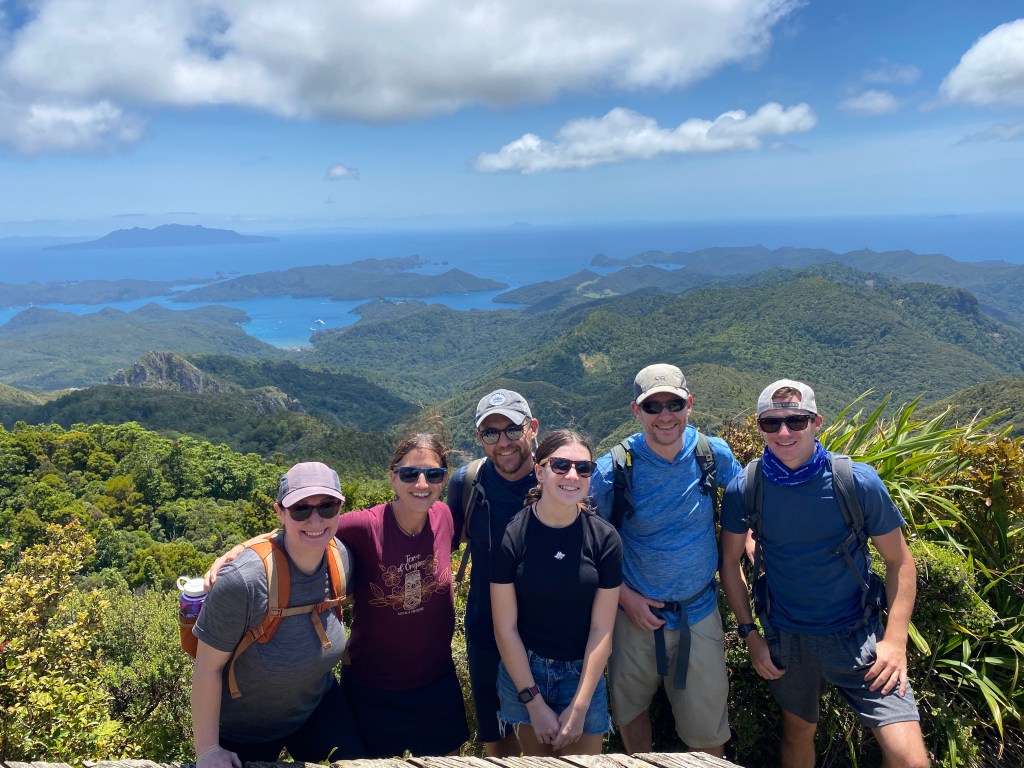
We are so excited to have Uncle Travis (the famous Little T) and his partner Sarah from Fairbanks here with us for a couple weeks on board Terikah. Almost not making it out due to cold temperatures in Fairbanks, by the time they landed in Auckland they had swung from minus 50 degrees F in Fairbanks to 70 degrees here (a mere 120-degree difference!). Without further ado, here is the play-by-play of their 5-Star vacation with Terikah Tours:
Day 1: The day started with a trip to the bakery for famous New Zealand pies. Then underway for a beautiful downwind sail under Code Zero the 43 nm to Aotea (Great Barrier Island), where we tucked through the narrow pass at slack tide into protected Port Fitzroy with its many anchorages. We anchored at Kaiarara Bay for an evening dinner of lamb steaks; a flock of kaka (large NZ parrot) screeching loudly as they found their way acrobatically through the trees for the evening. There are quite a few local boats here, as this is their main summer vacation, as well as a massive luxury yacht with its daily helicopter exploration.
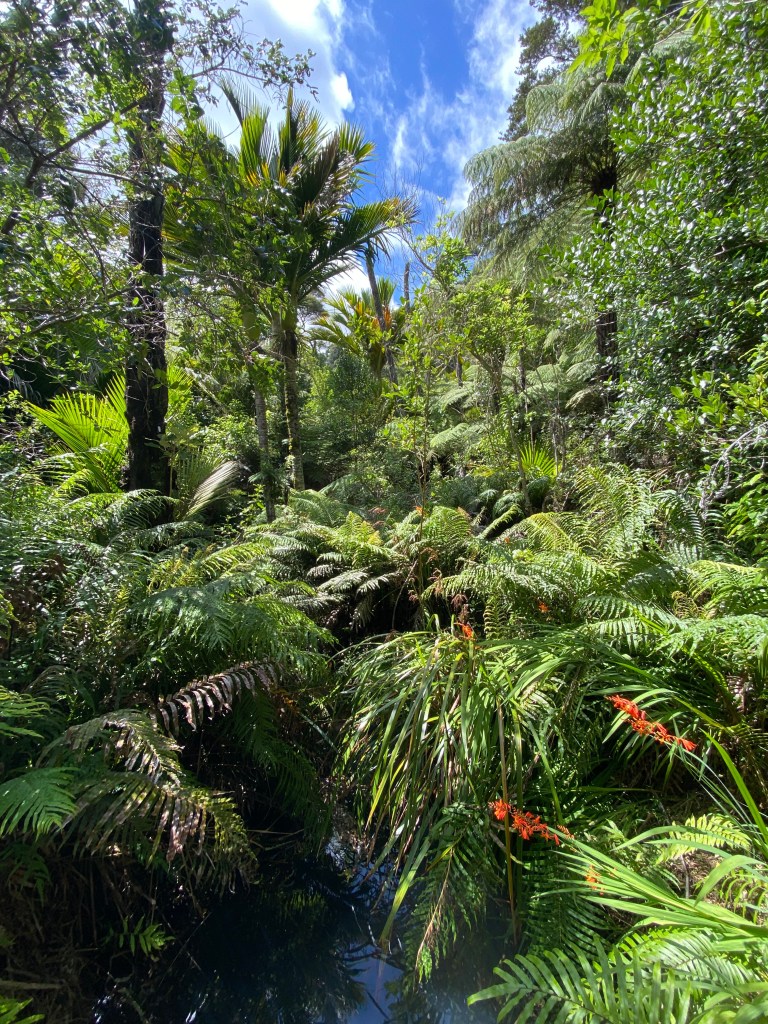
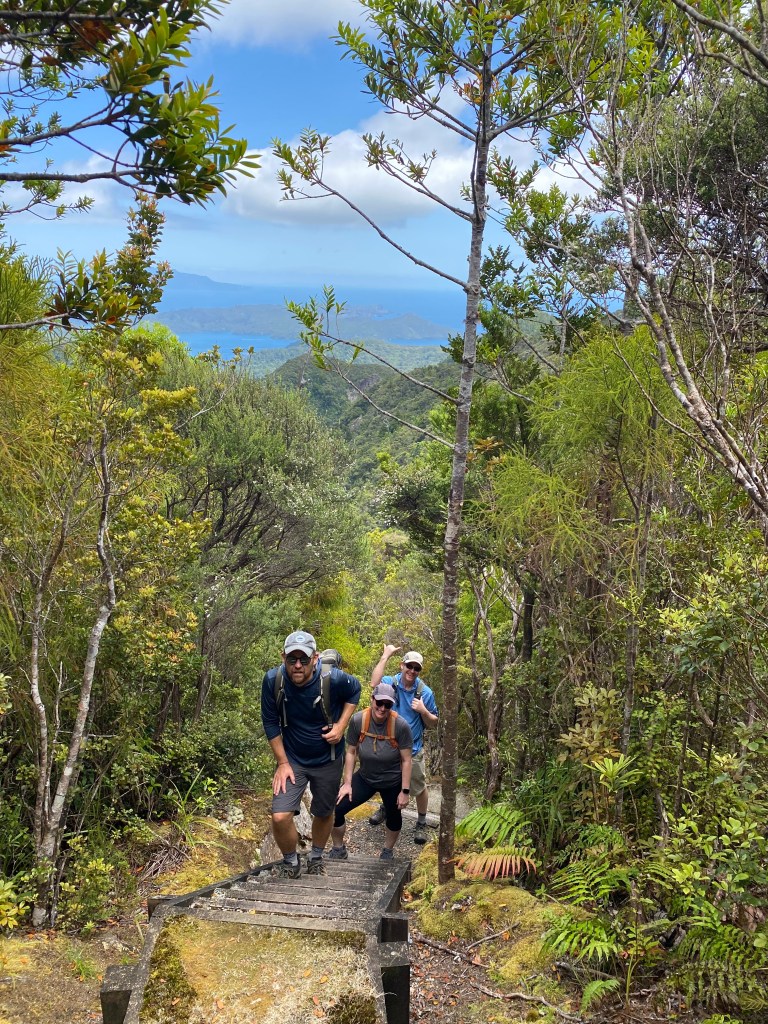
Day 2: After breakfast, we set out on the daylong 15km hike along the Kiwiriki Trail to the Hirakimata Summit (Mount Hobson) with over 2,000 stair steps up then down.
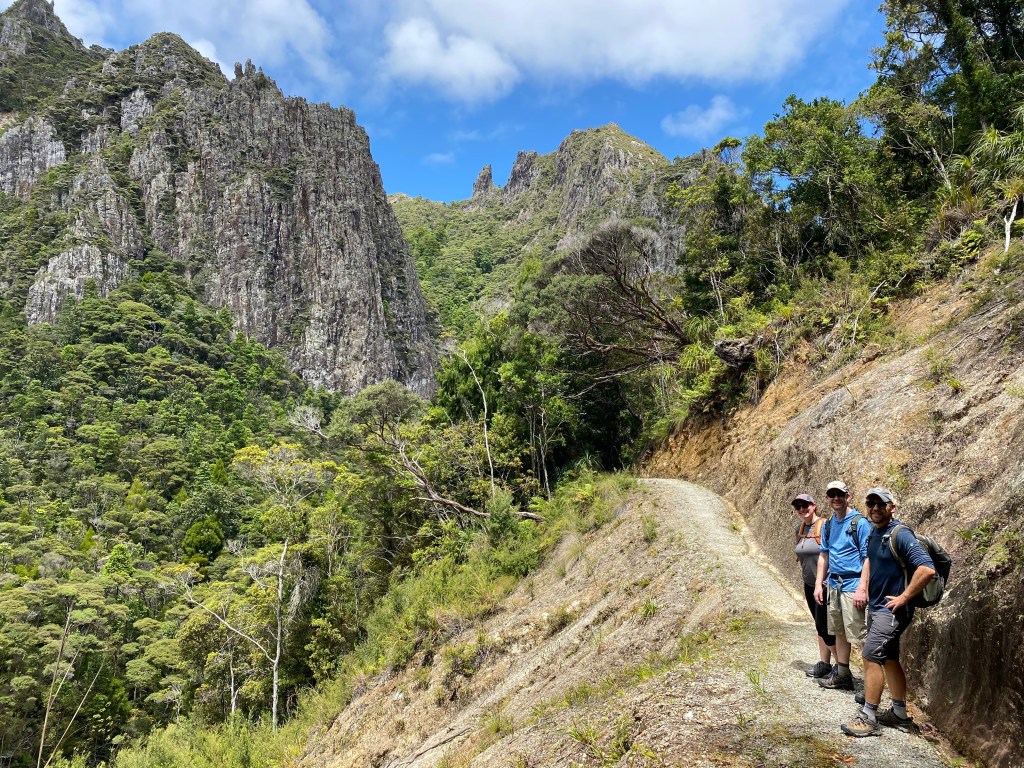
We decided to start our guests off on the most challenging of the hikes we would be doing, which we all felt the next day!
The tree-fern lined hike took us over suspension bridges, past the 1927 Lower Kauri Dam, the remains of a dam built to hold back the vast weight of water and kauri tree logs, which would then be tripped, driving the logs down to the sea. “The logs would rip up any trees in their path and you could hear the roar they made miles away. As they tore the valley sides the ground would shake under you (George Murray).” Less than 1% of the original kauri forests that once covered northern New Zealand have survived. Since the 1940’s the forest has been protected and allowed to regenerate.
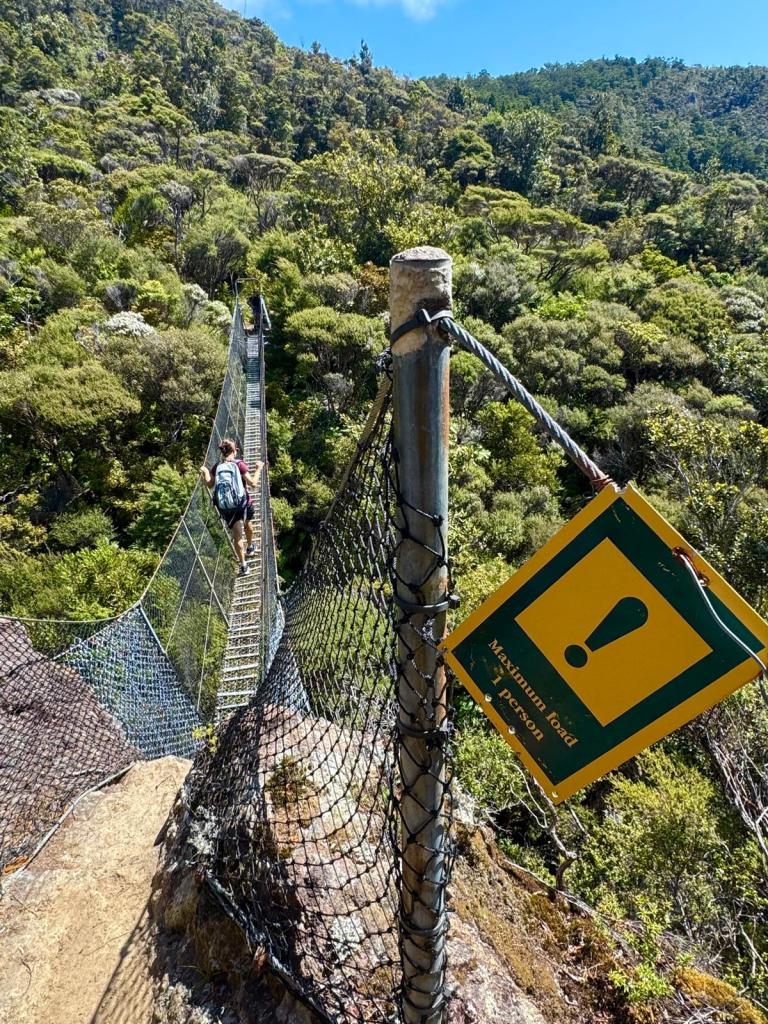
Hirakimata is made of ancient greywacke sandstone, formed from deep-sea sediments around 140–200 million years ago, later uplifted and sculpted into the steep walls and rugged forms we hiked through. It felt great to sit at the top, enjoy our lunch on the windy sunny summit. Back at the boat, we had fun fishing for snapper, Kawhi, and bait fish.
Day 3: After a slow morning of pancake brunch, feeling the effects of the many stairs climbed, we pulled up anchor and meandered to Kiwiriki Bay. A leisurely walk turned into a bit of a brushy slog, the trail not the typical NZ well-groomed experience, but beautiful nonetheless. Off in the dinghy to catch some fish for dinner. Success – red snapper fish tacos! Uncle Trav heard his first kiwi and ruru at night.
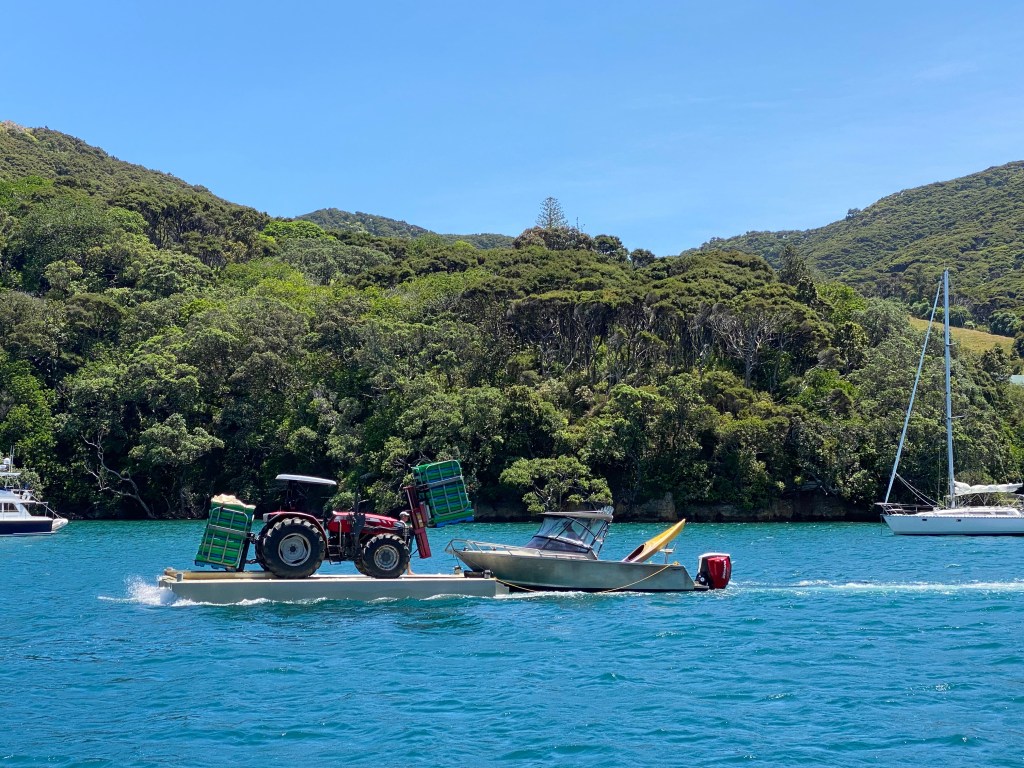
Day 4: Over to Port Fitzroy, where Chris anchored us just off the main wharf.
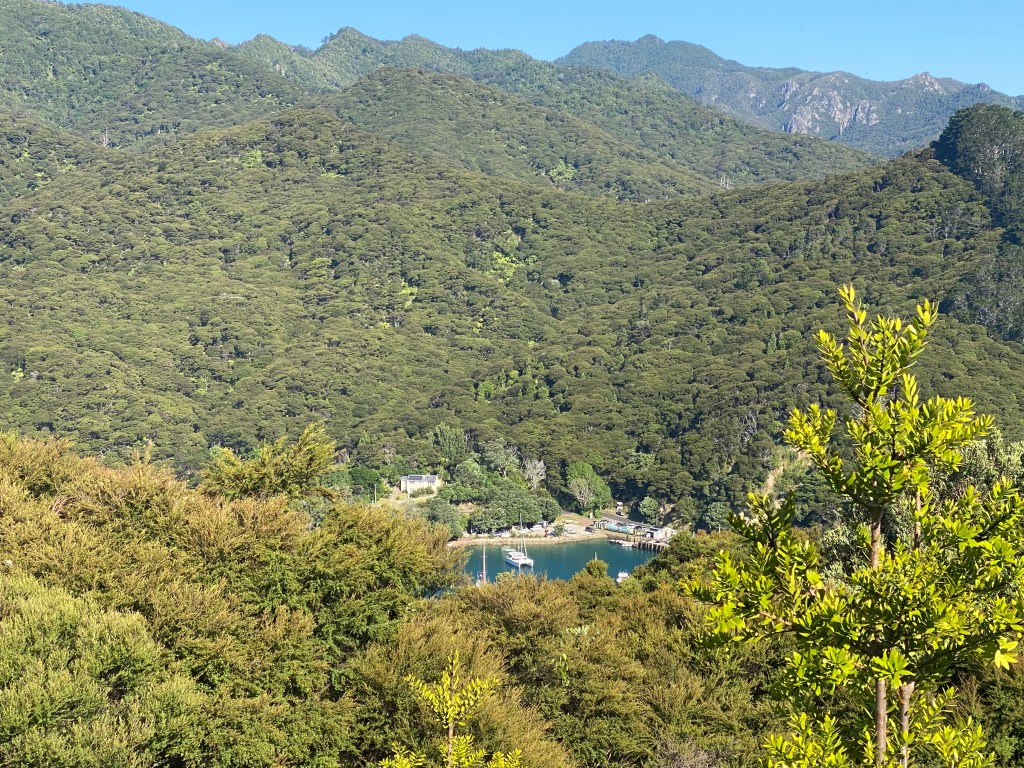
A sign welcomed us: “Aotea Great Barrier Island is off the grid, a natural biodiversity hostpot, free of stoats, possums, Norway rats, and stress.” Aotea is home to about 1,000 year-round residents who live without main power, rely on solar and rainwater, and live an overall self-sufficient way of life.
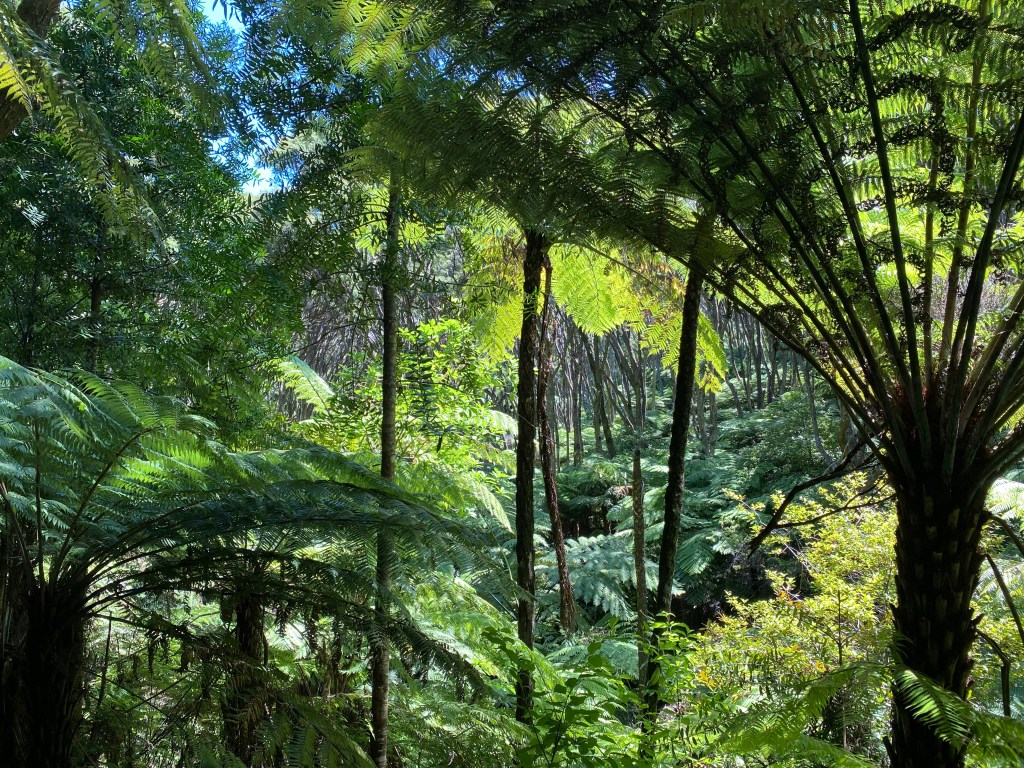
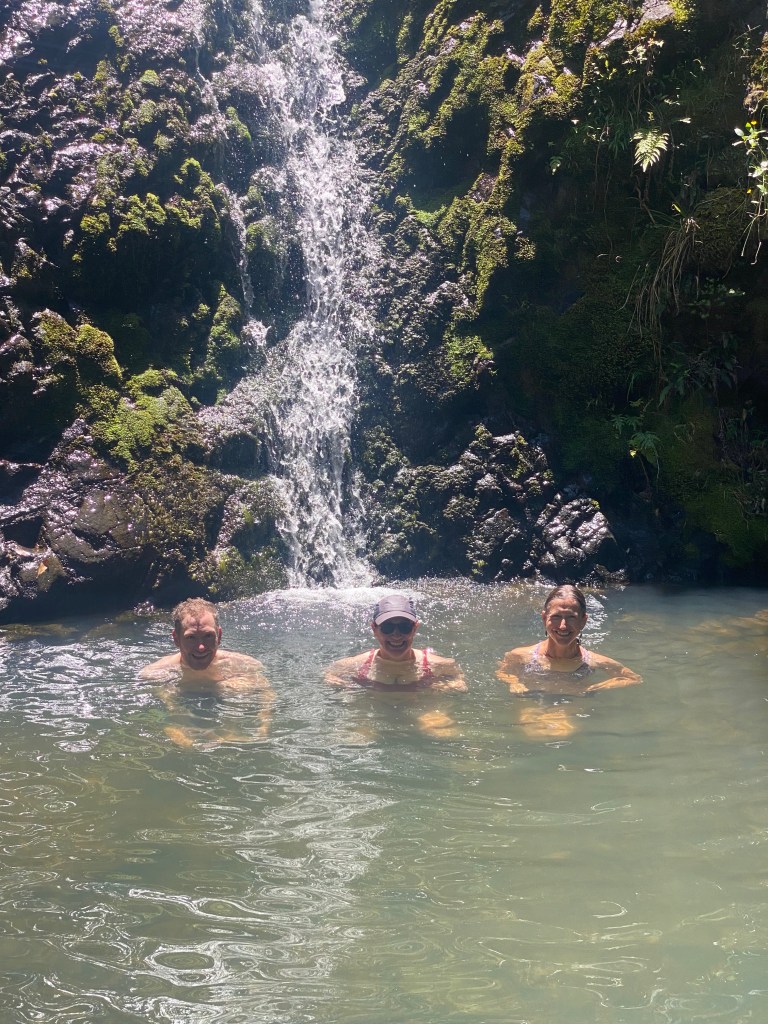
We walked Bridle Track to a refreshing (cold!) waterfall swim, loud cicadas bouncing off us in their mating frenzy.
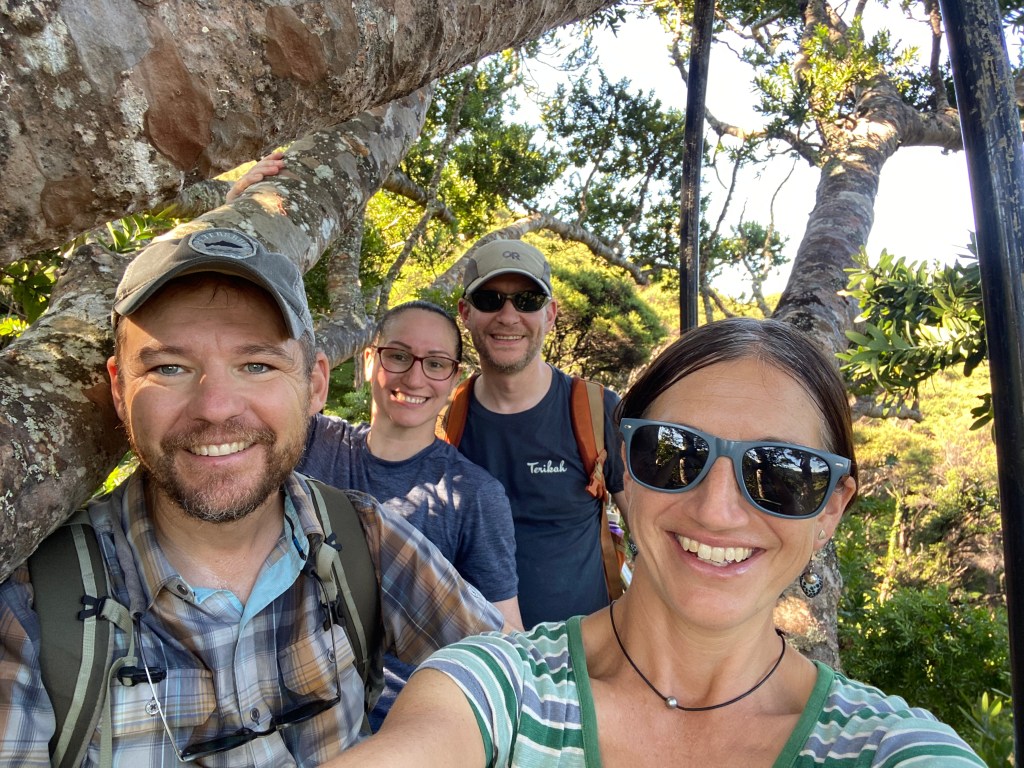
Then to Glenfern Sanctuary where we walked the forest loop where we could take a suspension bridge into the crown of a 600+ year old kauri tree.
We were glad, after our dinner of fried fish burgers (served on two pieces of fry bread), that we had gotten some exercise in today!
Day 5: Filled up on water that is sourced from a nearby stream at the small wharf and stopped by the famous Smokehouse Bay and had a wee walk to some red cliffs, but did not stay as it was too crowded with plans to hopefully come back this season. We then ironically moved the boat to the red cliffs anchorage we had just hiked to (Onerua or Red Cliff Bay), where we caught many snapper near the mussel farm.
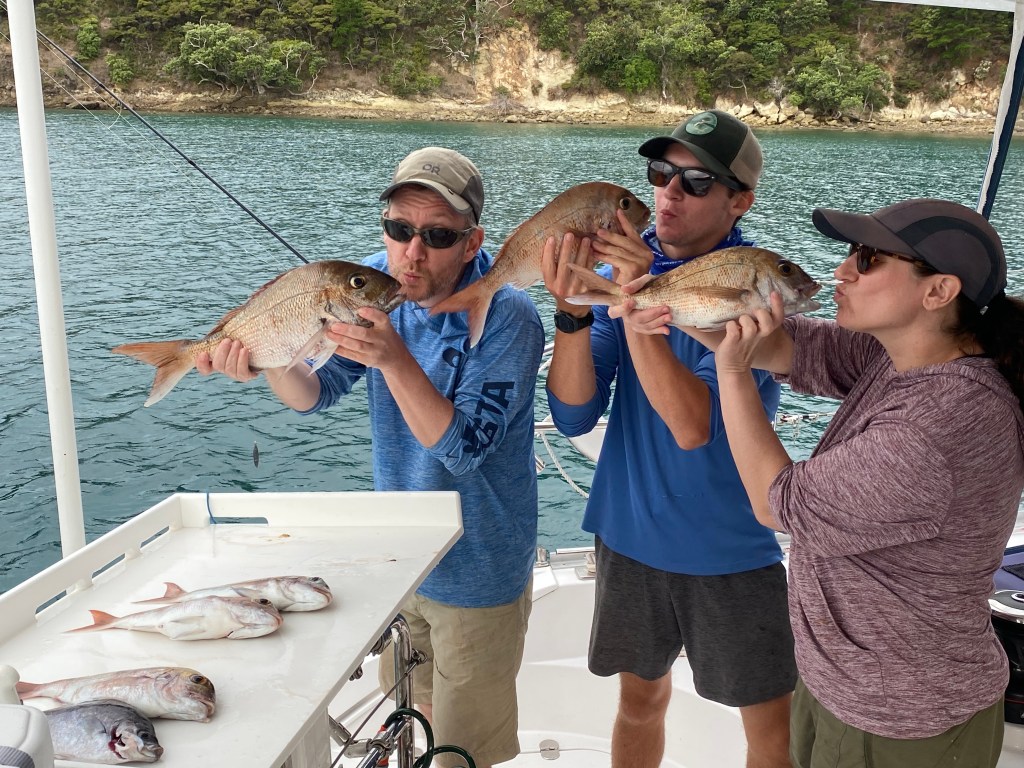
While cleaning the fish off the back of the boat, a massive bronze whaler shark snatched up the scraps with a flourish. For dinner, we had a large kahawai that Calder caught.
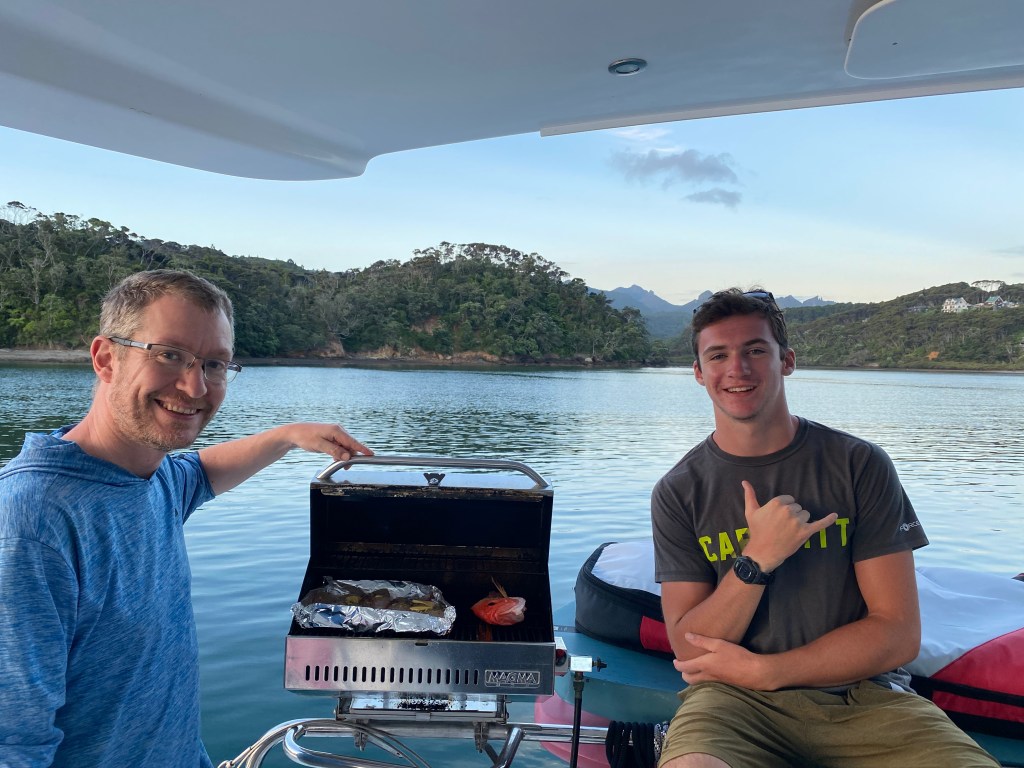
Day 6: These ridiculously flat calm ocean days always find us declaring, “The Pacific Ocean can be like this?!” Yes, Pacific means peaceful, but it rarely is quite this placid. We floated about, jigging out the back of the boat and caught two new fish for us – a red snapper and NZ Trevally. Moving along, we could not figure out the white colored cliffs we were seeing; it was a massive gannet nesting area with thousands of nests and black naked newborns without their white feathers yet. Into Whangaparapara, a town with a fascinating history ranging from the largest logging operation in New Zealand to local whaling, once a center of resource extraction, now committed to regeneration of local flora. Enjoyed an evening of fresh trevally, red snapper, and laughter.
Day 7: Today was another big hiking day, starting out on the roads (also considered hiking pathways here), gladly accepting a ride from a local in the back of his truck for the last mile to the actual trailhead.
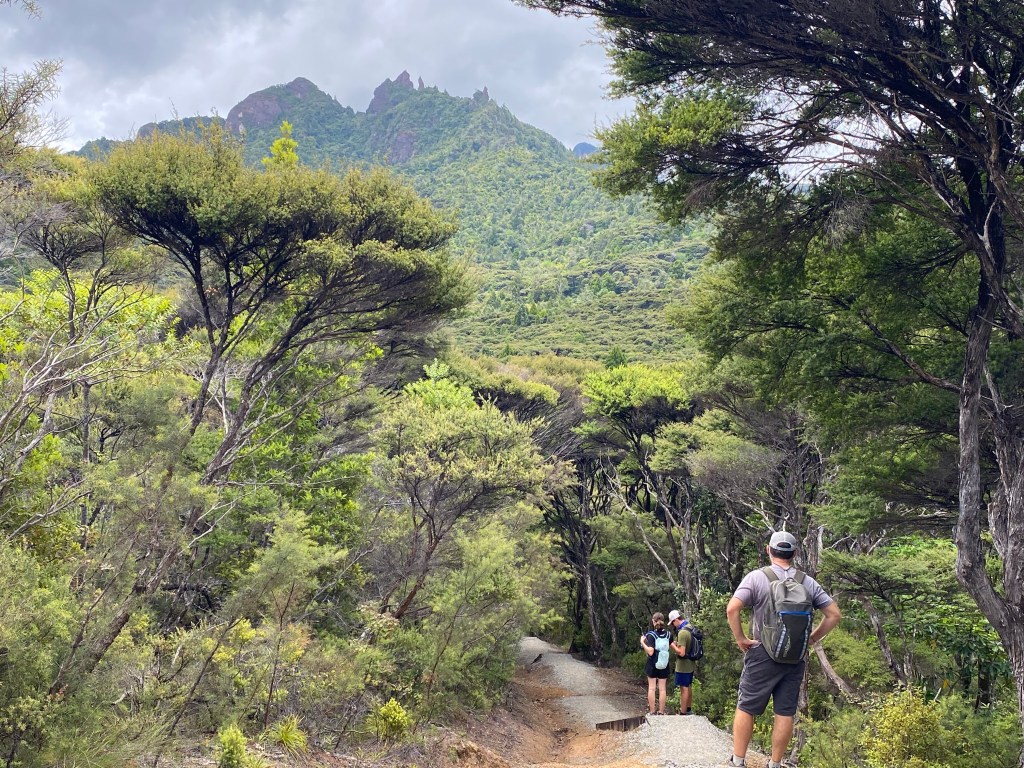
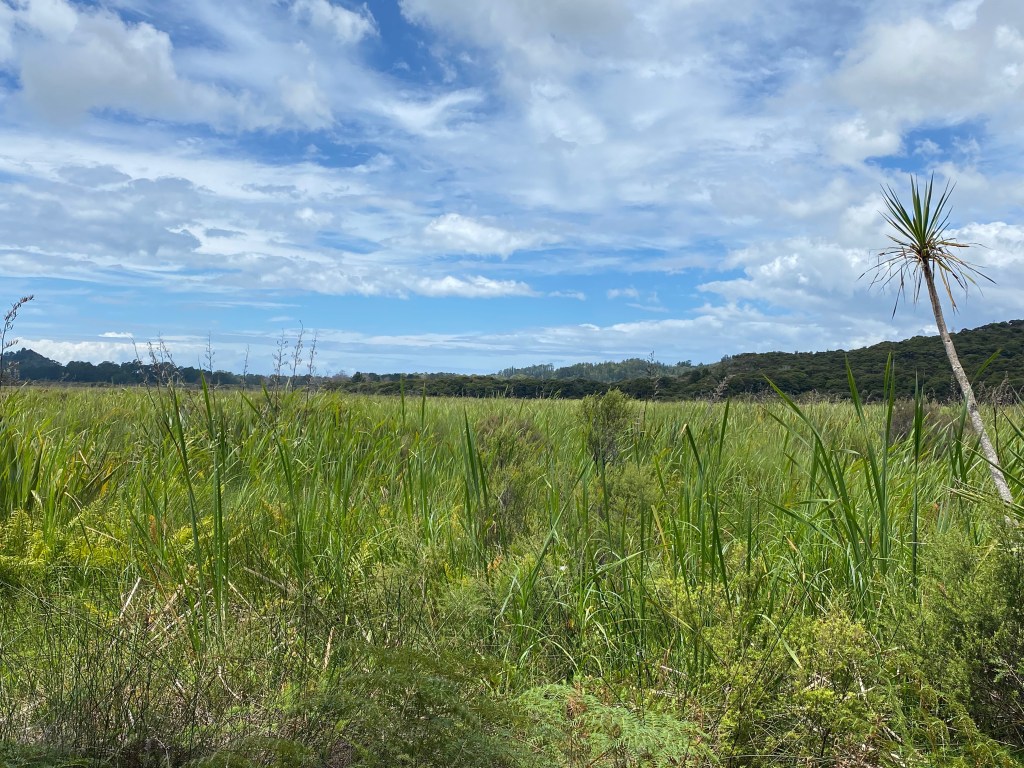
Trails we hiked took us through a wetlands, a former timber settlement, and along a logging tramline.
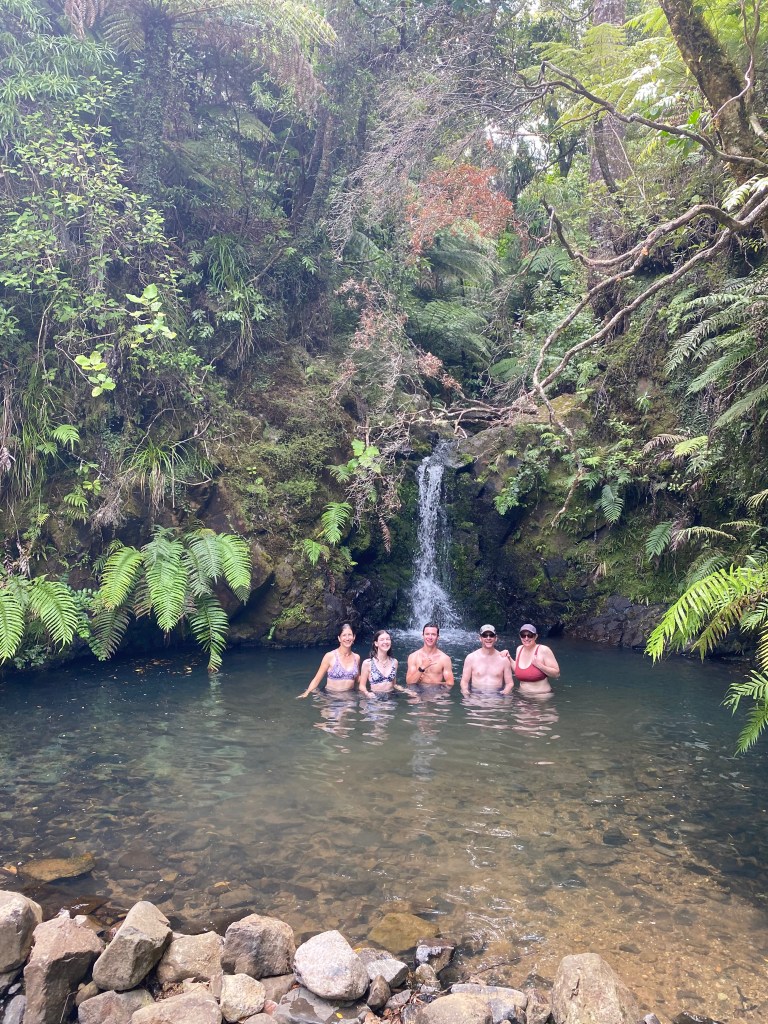
The heat of the day made the lowkey Kaitoke Hot Springs less inviting for more than a quick wade, then onto Kauri Falls for a refreshing dip.
Lamb burgers for dinner back on Terikah.
Day 8: Off toward Coromandel Peninsula after filling water at the wharf. We tucked into the beautiful niche of Elephant Cove on Happy Jack Island, which unfortunately turned into Sleepless Jack Island as gusts swirled in overnight, spinning us around and around. As Chris and I were up in the night checking our position, we were treated to a show of lightening and the bioluminescence of waves hitting the rocky shoreline. We had the place to ourselves.
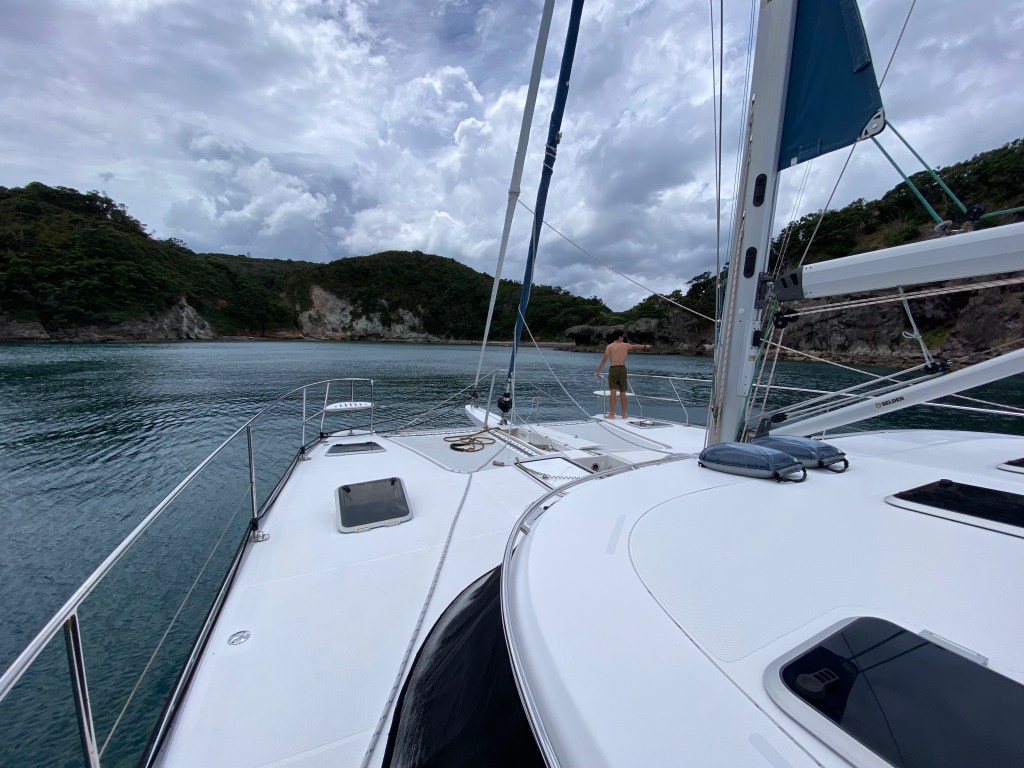
Day 9: Anchored in the shallows in front of Coromandel Town, where we motored up the tide-dependent creek by dink for a walk up to the Pa Lookout, grocery shopping, and dinner that included the local specialty green-mussels.
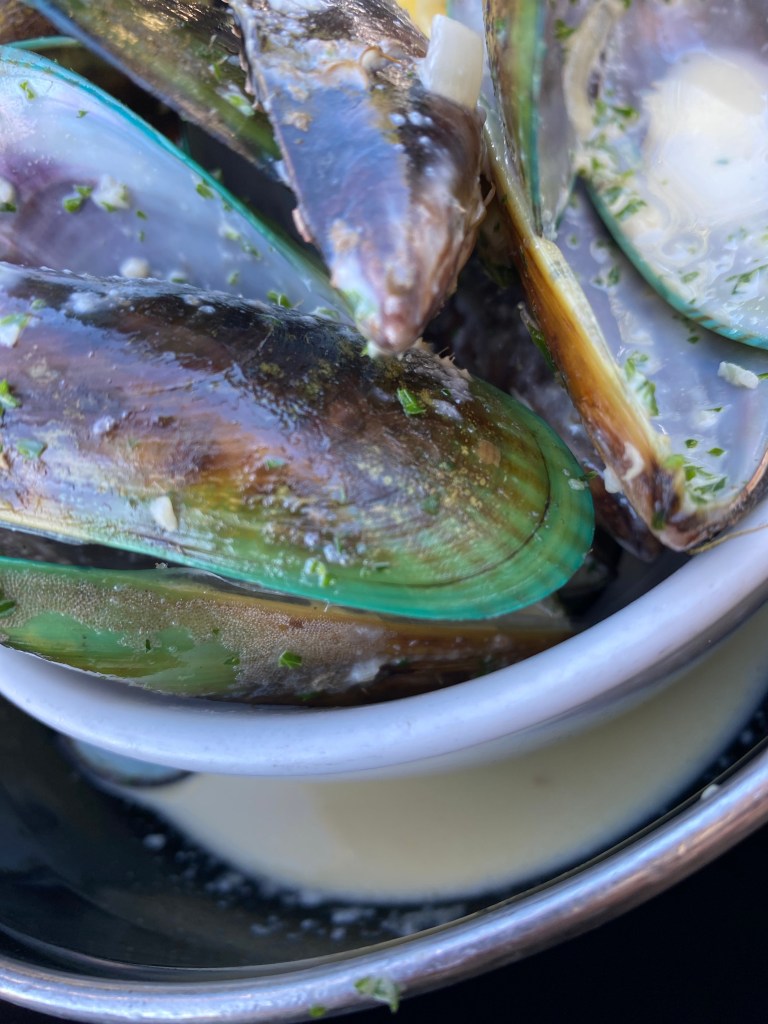
We had a comical very wet dinghy ride (loaded with groceries) in Little T; Chris and Trav were pumping up the deflating dinghy tubes with air, as well as pumping out water coming in over the transom. Cora and I sopping wet, but we’re topped up on food for another couple of weeks of adventures!
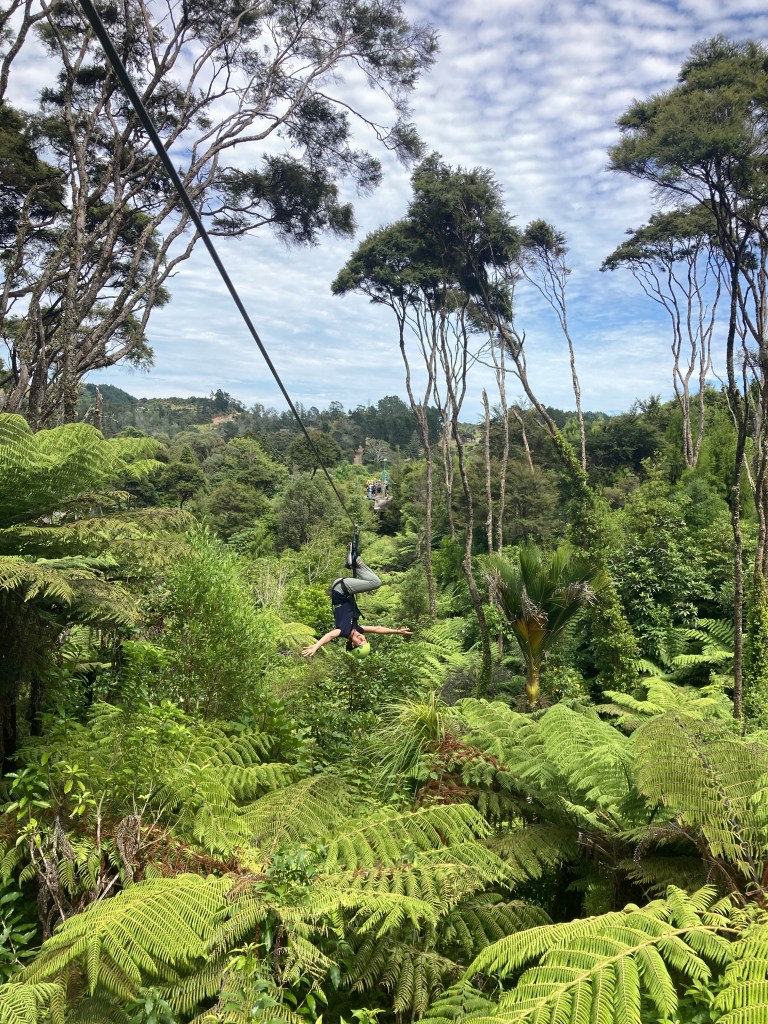
Day 10: Woke up early for ziplining at Driving Creek Conservation Park, where we took a small narrow gauge train to the top and worked our way over the fern forest.
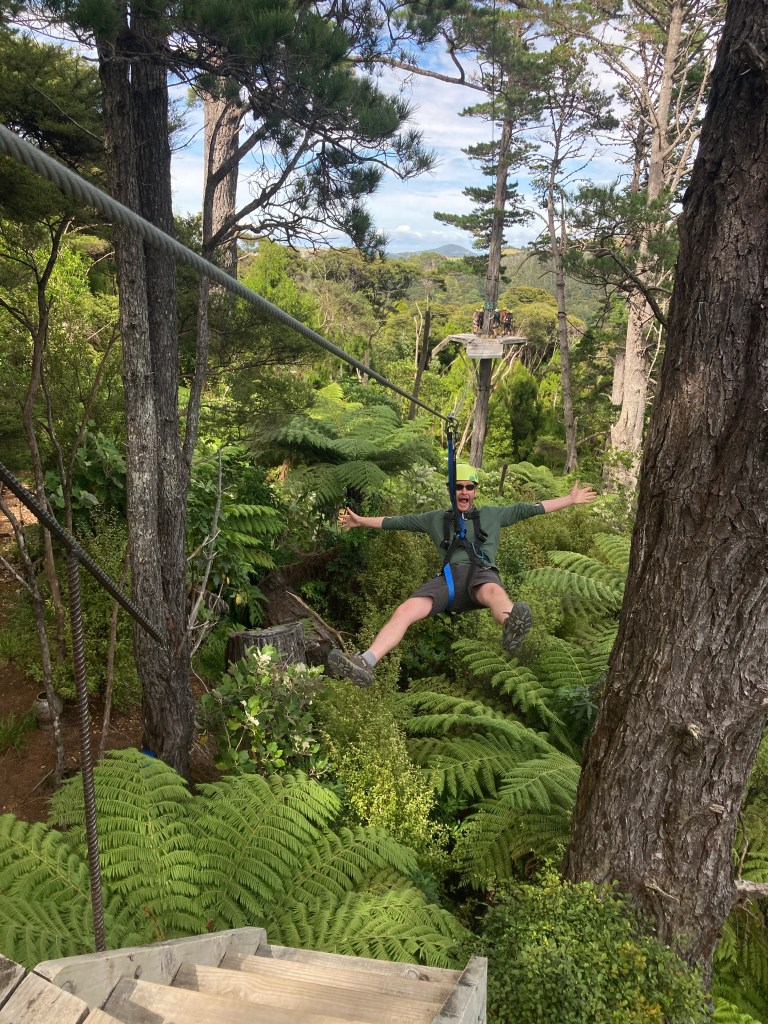
We’ve done a few ziplines before but this was the first one where we could (and did) go upside down, a different view of the world!
We entered single-file into a small old mine tunnel to look for weta, a large flightless cricket-like insect. Weta have been around long enough to see dinosaurs come and go and to evolve into more than 100 different species, all of them endemic to New Zealand. Looking at the walls closely of the tight dirt tunnel and not seeing any weta, voices ahead of us got excited and said to get out, back up! We looked up and the ceiling close to our heads was covered in weta. We were “stuck” in town with our dinghy in the muck, waiting for the tide to come in-using the time to go for a walk, eat ice cream, and sample local micro-brew beer. Tough life. Tide back in, on our way by 5pm to the island of Rotoroa, enjoyed snapper dinner and our backgammon tourney on arrival.
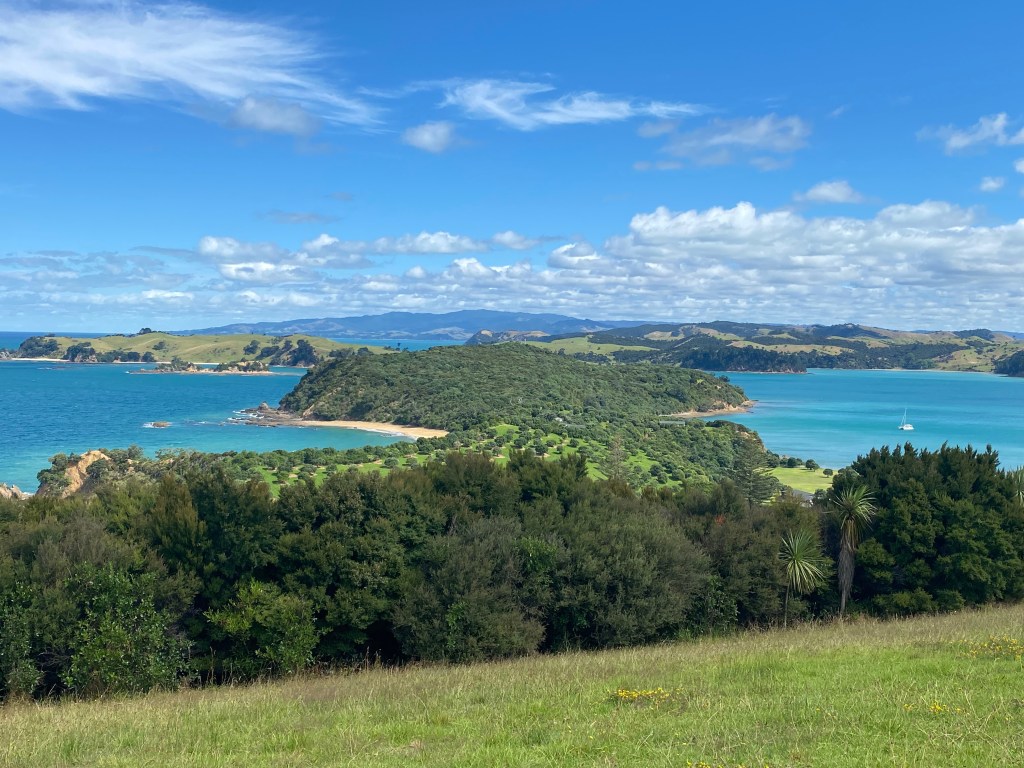
Day 11: After a rainy windy morning, we were off to explore Rotoroa (an Island of Restoration), where the takahē has been introduced. Once thought extinct, the takahē is a rare, flightless New Zealand bird brought back from the brink after its dramatic rediscovery in 1948, now surviving thanks to intensive conservation efforts. We were lucky to see numerous takahē and even a fluffy chick, their big wings flapping in the winds without the strength to keep them down or fly.
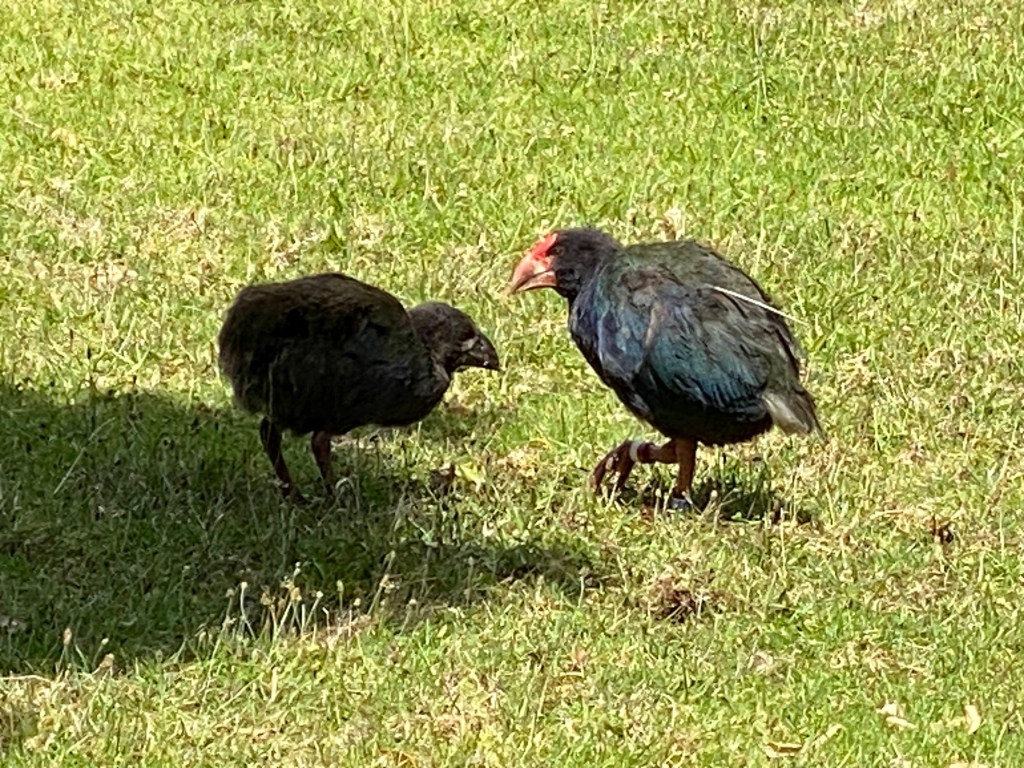
The island has quite the history, as a “Certified Inebriates’ Home” in 1911 – a mix of farm colony, retreat, and prison where people were committed for at least a year. It is still owned by the Salvation Army and the old buildings (jail cells, housing, and churches) remain among the thriving reforestation project. Stunned by the past misunderstanding of alcoholism, it was shocking to see a jailhouse “built to contain and dry out rebellious drunkards on their arrival.”
Days 12-17: There is a big low-pressure system coming in soon with the possibility of it earning a Cyclone name. We had to laugh when we read the report from a weather router that stated: “Wind accumulation shows tracks of wind associated with Lows L1 and L2. Northern NZ seems to be a place to AVOID this week.” Hmmm, we are firmly in Northern NZ with no plans or options to leave. We have guests coming and going this week and Waiheke Island Marina would be a perfect location to be “storm-ready” and put them on a ferry for their flights in Auckland. The marina had plenty of room, so tied up safely with extra fenders and lines, our toe-railing taking a bit of a beating on the windy docking. Waiheke Island is home to about 9,000 year-round residents and is famed for its sun-soaked hills dotted with around 30 boutique vineyards; with Terikah secure, it was time to sample some grape juice.
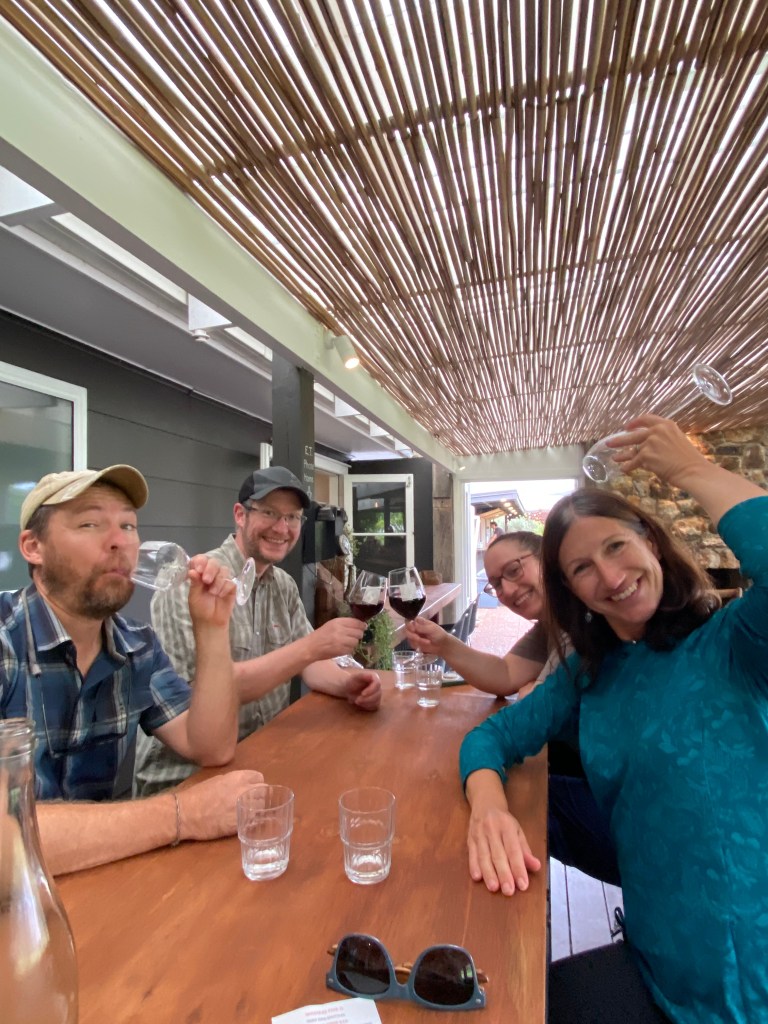
That night, after dark, we walked out on the breakwater with our red torches and saw little blue penguins (korora) coming out of the water for the night. The world’s smallest penguins…super cute!
We spent the next few rainy, windy days playing games, watching NZ movies (Hunt for the Wilderpeople, Pork Pie), boat projects (patching Little T, fixing the wipers). Cora and I ventured out on the rainiest day, taking the bus to town for a date of thrift-store shopping and lunch. There is SO much rain, resulting in numerous landslides, one deadly on the recently-visited Coromandel Peninsula.
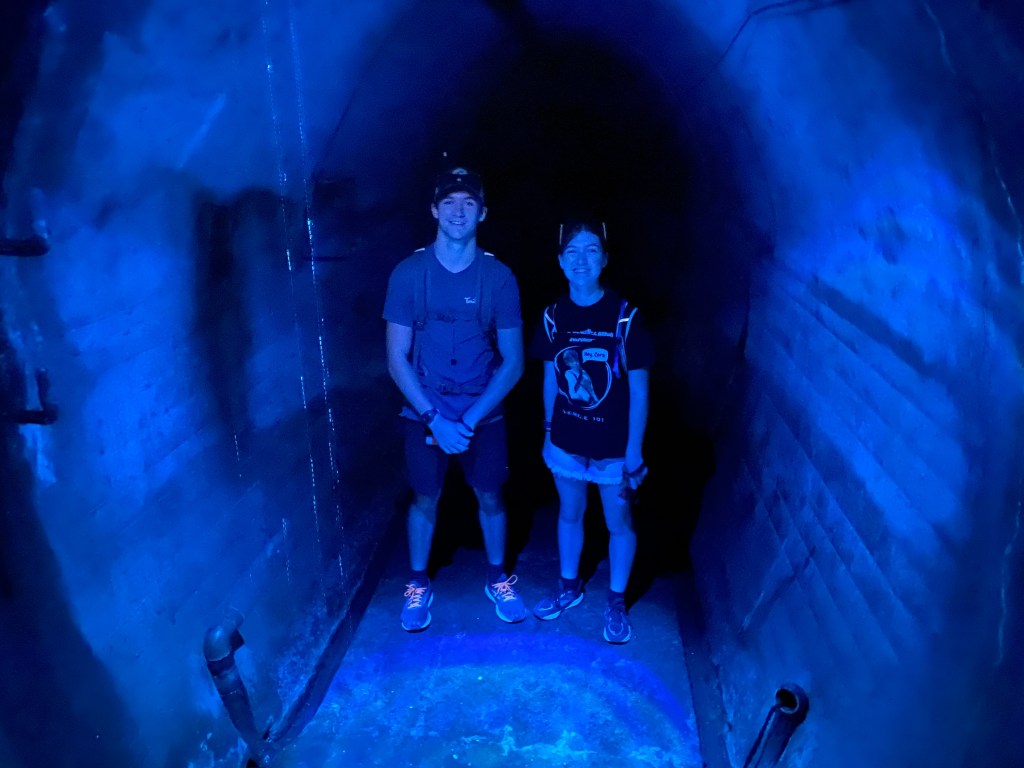
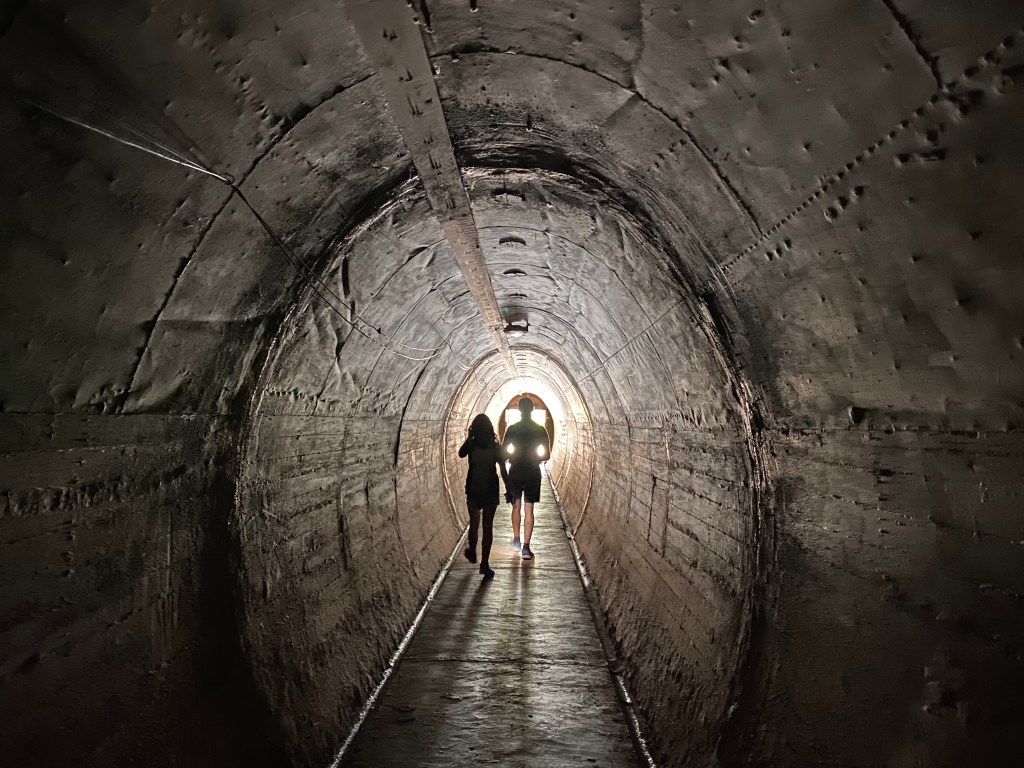
We rented a car for the day to explore the island on Uncle Trav’s last day with us. Out to Stony Batter Historic Reserve where we toured the old WW2 tunnels and gun emplacements, awesomely eerie with some sections remaining raw earth while other areas turned into underground art galleries with creative lighting and incense.
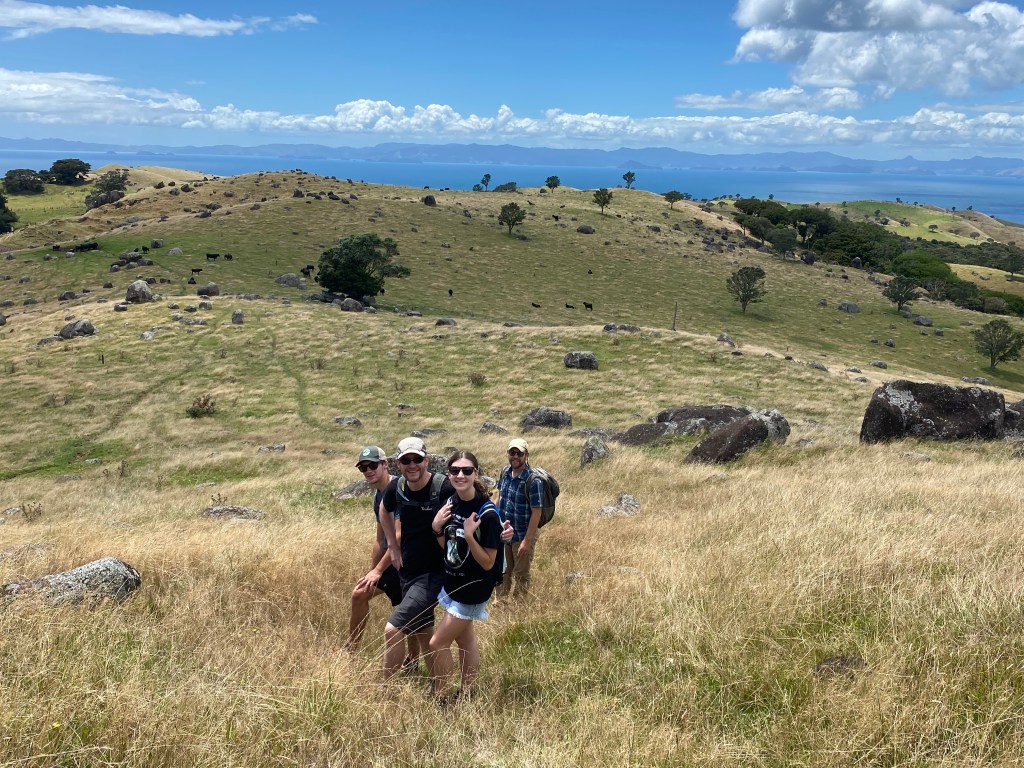
We trekked amongst massive fluted lava flow boulders, dodging cow patties, protective cow mamas, and a big bull that we detoured around.
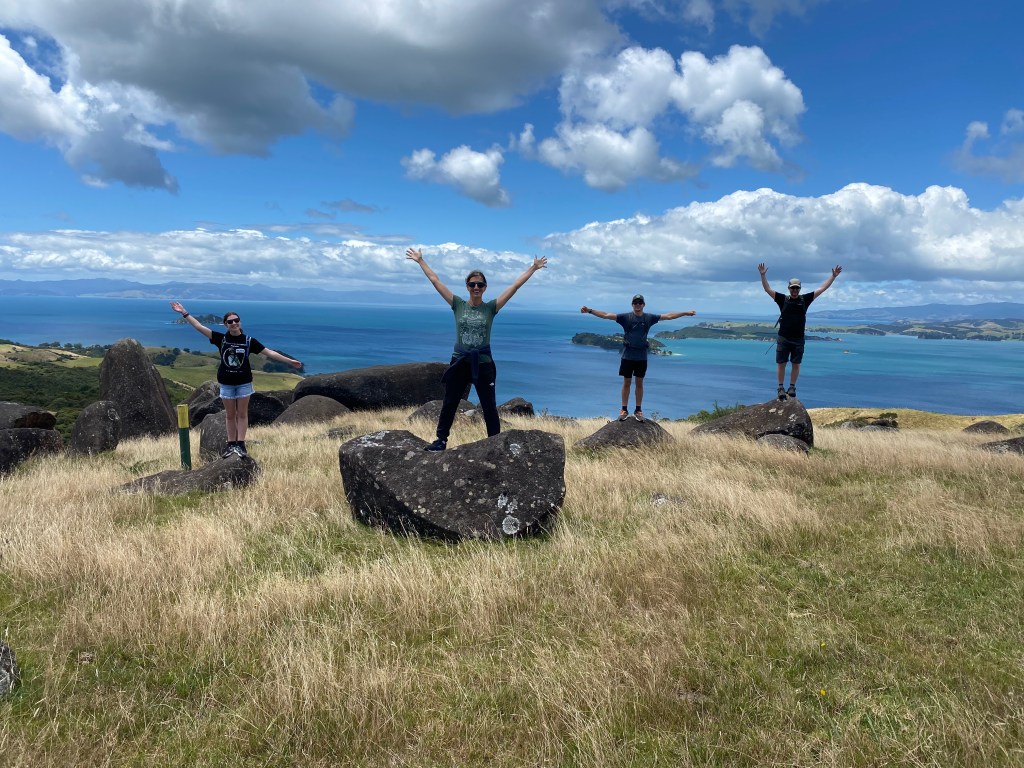
We enjoyed a charcuterie lunch on a lawn blanket at the Italian vineyard Casita Miro, tasted various olive oils at Allpress Olive Oil, hiked Whakanewha Regional Park Cascades walk, and finished the night again with little blue penguins.
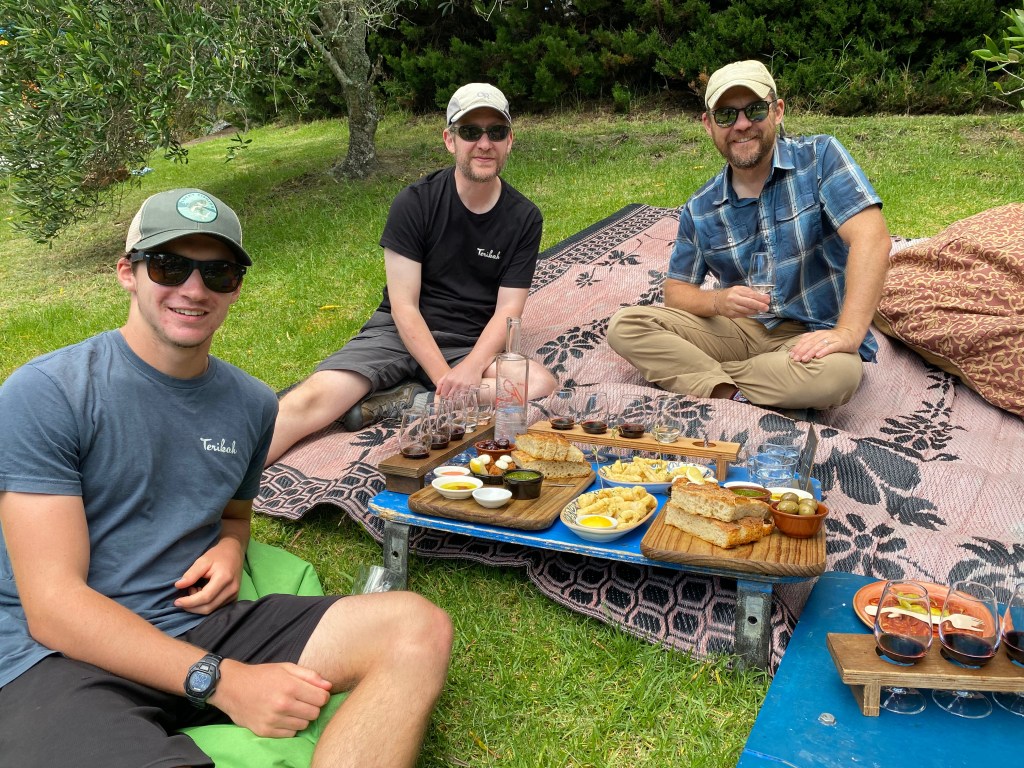
Another windy day as we finished our cribbage tourney and worked on a NZ fish puzzle, the boat surging in the slip with lines stretching taut. Just as the last puzzle piece is frantically placed, Trav catches the ferry from Waiheke to Auckland for his evening flight to Alaska via Hawaii.
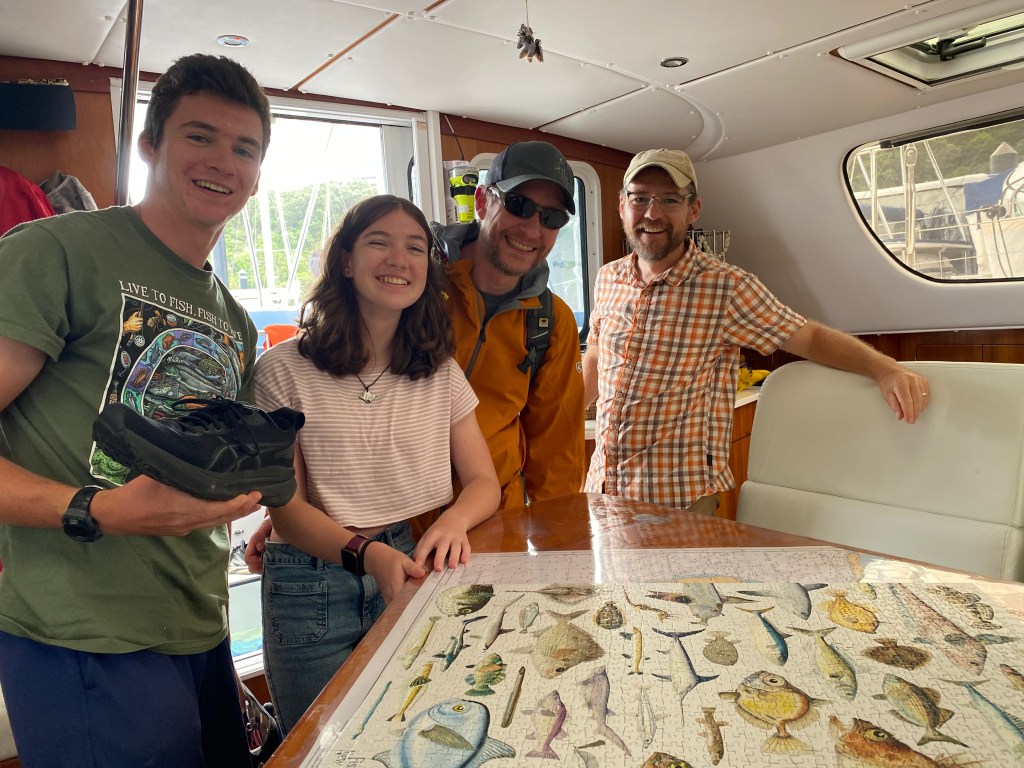
Laundry done, fridge full, and awaiting our next guest, Lauren from SV Waterdogs. As you can see, Terikah is a fun vessel to visit and we welcome family and friends to join us on our adventure!
 SV Terikah Adventures
One response to “Terikah Tours with Little T”
Sounds exciting. A lot done in a short period of time. Enjoy your adventures.
LikeLiked by 1 person