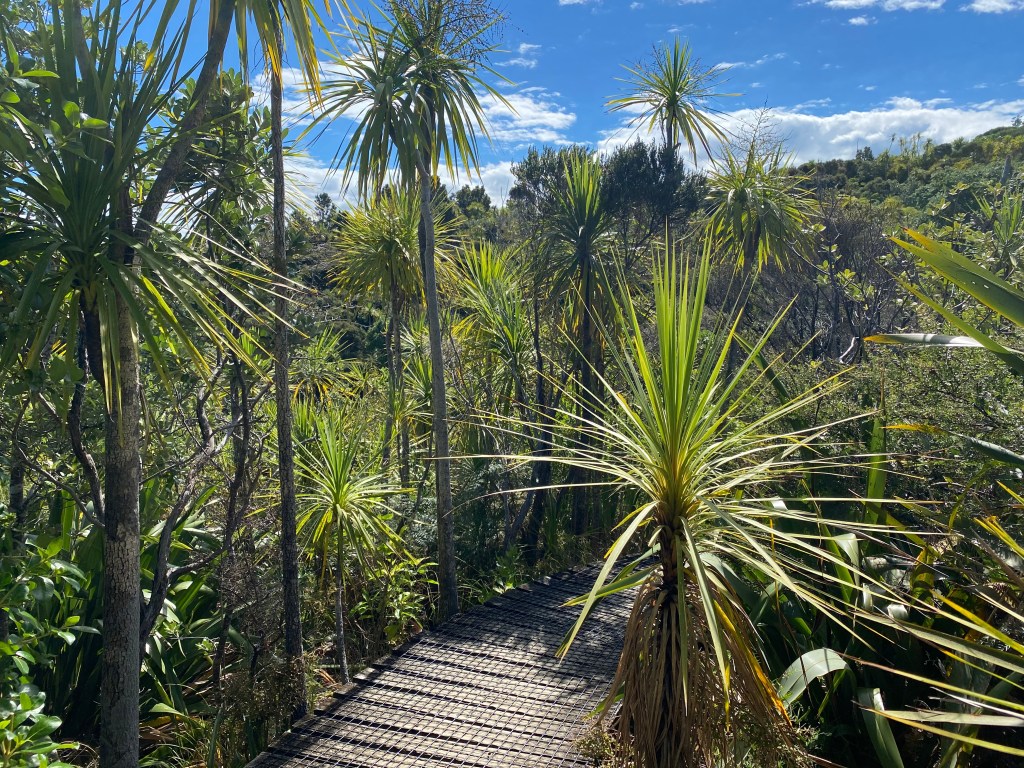
Looking at the big weather coming up, we decided to anchor in well-protected Bon Accord Harbour of Kawau Island, arriving late and anchoring (and re-anchoring) for the upcoming storm.
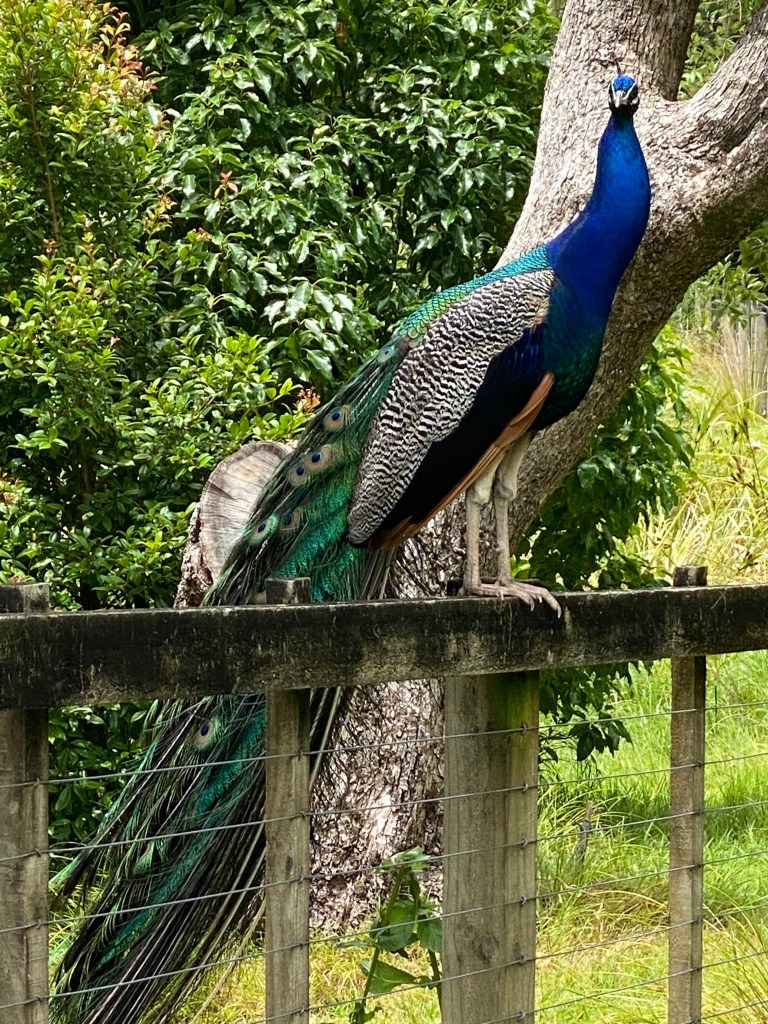
We took a day to explore the trails out of Schoolhouse Bay to the Mansion House and Old Coppermine. Sir George Grey developed the Mansion House and its gardens and surrounding lands in the manner of a grand Victoria Estate, introducing wallabies (which they are currently trying to exterminate), peacocks (still wandering around the ground), and other exotic animals (such as a zebra that didn’t fair well in the NZ winter).
A woman working at the Mansion desk is one of the 80 full-time locals here. I picked up a book of local writing and have enjoyed a glimpse into the remote island life here. We continued on the track following the original route used by copper miners to get to work. Copper was discovered on Kawau in 1844 and a mine opened in the same year and, by the end of the decade, there were about 300 people living here, all involved in the copper industry.
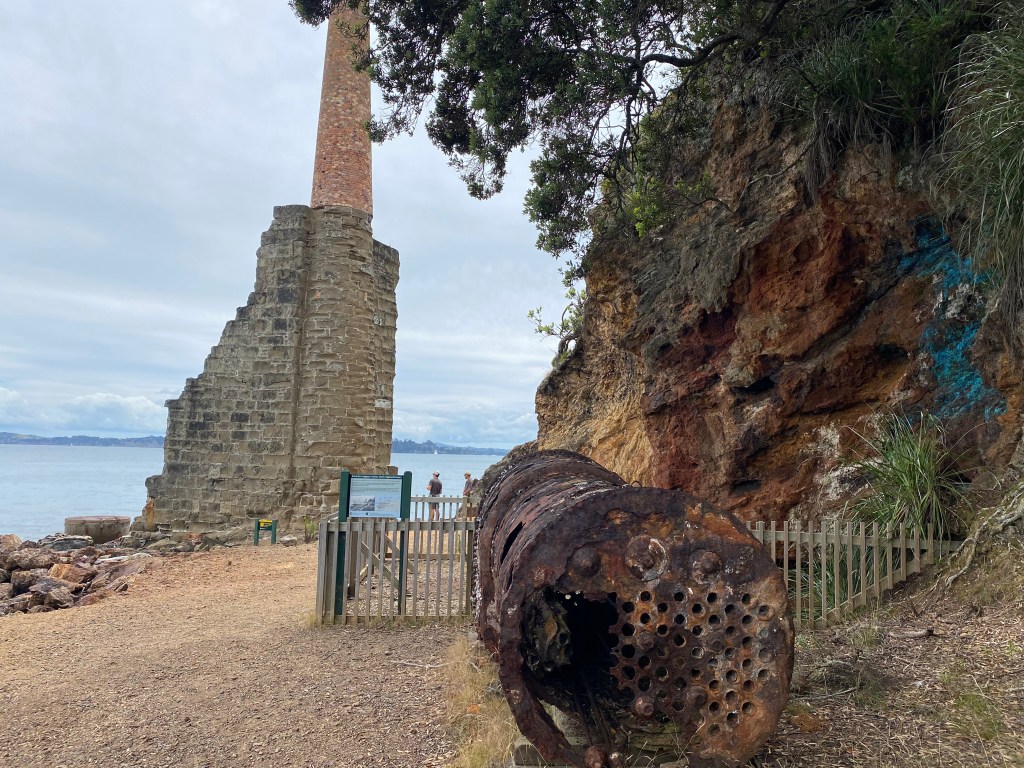
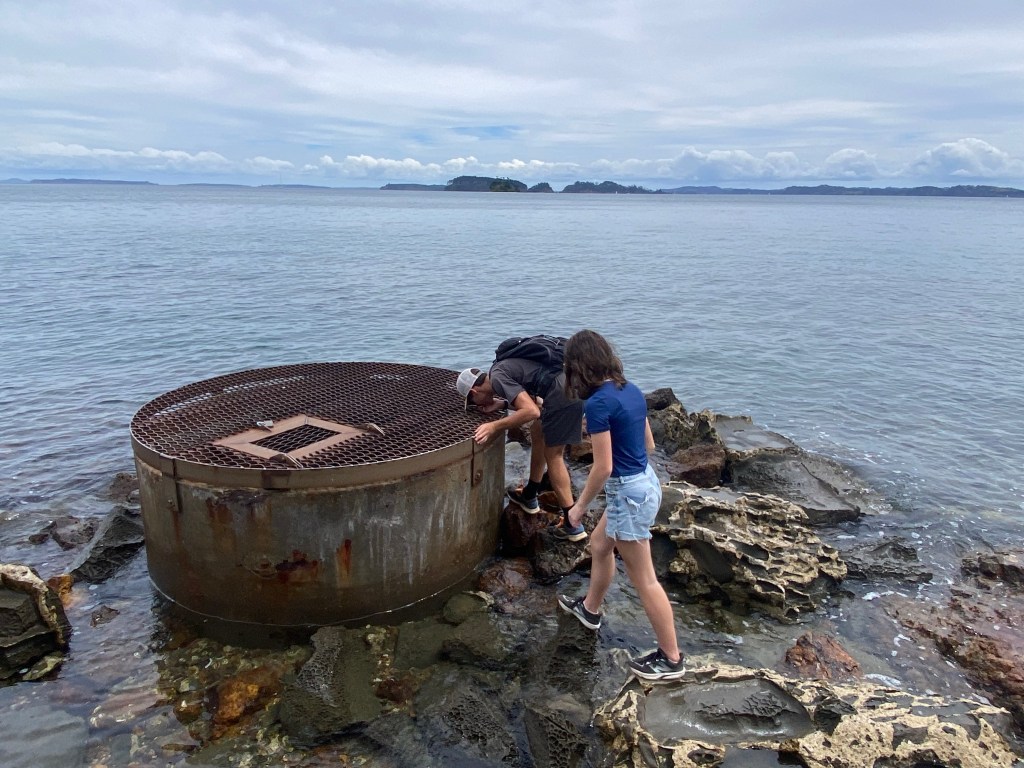
Flooding forced work to cease in 1851. Baffling was that most of the mine workings were deep underground below sea level! A large pump was needed to evacuate the shafts of seawater, with the engine house (1854) and a closed off shaft remaining in ruins that we visited. We could also enter a few of the entrances of the old mine shafts, eerie to think of working in such a location.
Next over to the Smelting House Ruins, one of NZ’s oldest industrial sites (1849) with the ruins of the house and the roasting pits. The copper ore mined on Kawau had to be smelted on the island because its highly combustible nature made it too dangerous to transport by ship to the processing facilities in the northern hemisphere. We got a bit lost on a hike, but eventually made our way out of the brush for dinner at the Kawau Boating Club.
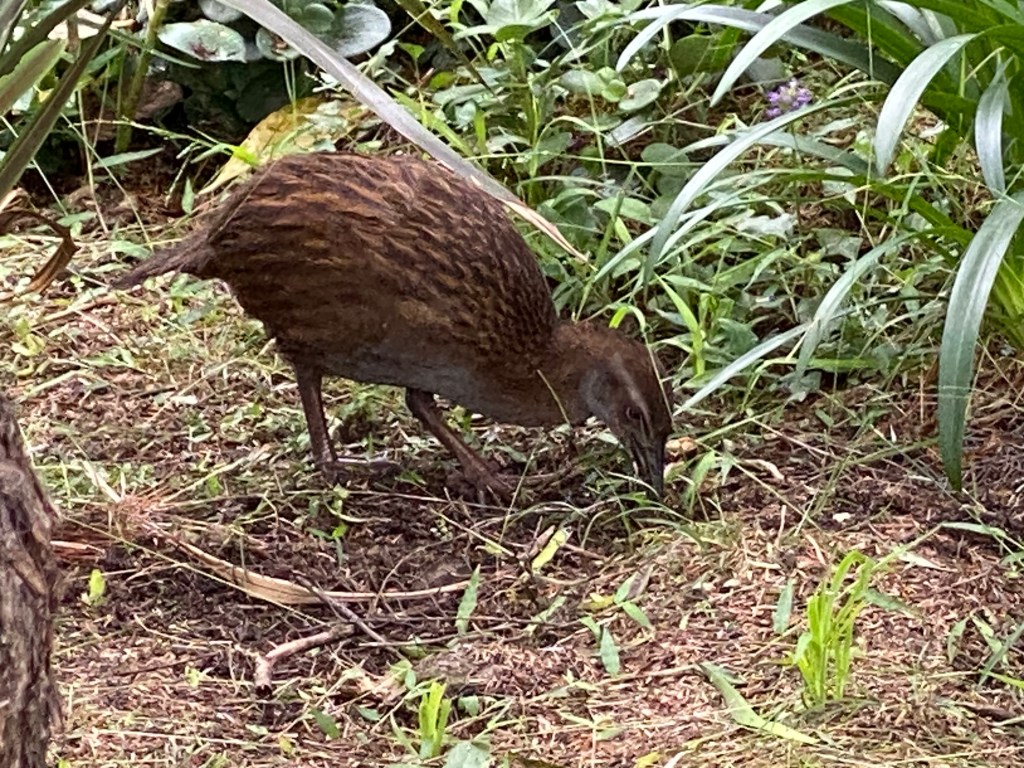
Though historically interesting, what I love most about this island is the North Island weka, a flightless bird that was recently considered endangered. Weka are now classified as At Risk-Recovering in New Zealand, with Kawau Island supporting one of the country’s largest and most secure populations after a release of birds back in 1976 —estimated at over 1,000 birds (about 80% of the population). These are cheeky birds with quite the personality and a great song at dawn and dusk.
Okay, enough fun. Now, on to gale/storm preparation. A gale is winds from 34 to 47 knots, while a storm is stronger, from 48 to 63 knots. Looking ahead we saw a gnarly low-pressure system with gusts forecast up to 48 knots on the horizon. There are some things in our control. We look for a protected anchorage, then choose an anchor spot to protect us from the worst winds. We put out enough chain and ensure we are stuck firmly, making sure we have enough “space” on the water away from other boats. We took our Code Zero down, no reason for it to get flogged, and cleaned the decks of anything that might bang or blow away. We secured the dinghy to the boat. Having done all that, the weather remains out of our control, as do other boat’s preparations around us.
Calder had a session of gusty wing-foiling before tucking in for the evening’s big winds. In the middle of the night, Chris and I heard shouts and went topsides to see a power boat drag into a sailboat downwind next to us. The man on the sailboat said, “Hey mate, I think you may have caught our chain,” politeness even in the midst of a potential crisis. They got it all sorted. Looking around at night at all the moving lights on boats, mainly as some boats “sail” on their anchor going back and forth, is very disorienting. The biggest gust we saw was 37 and all was well.
On New Year’s Eve, we went for an after-dinner hike, read funny memories of 2025, watched family video snippets (of the 4 countries we traveled this year – Fiji, NZ, New Caledonia, and the USA), stayed up late watching Ted Lasso, and made it to midnight, as we listened to the locals’ comical shouts and cheers around us in the anchorage echoing off the waters.
After 5 nights at Kawau and the weather a bit more settled, it was time to move along. We spent one night anchored off Motuketekete, exploring the beach and shipwreck off the neighboring Moturekareka.
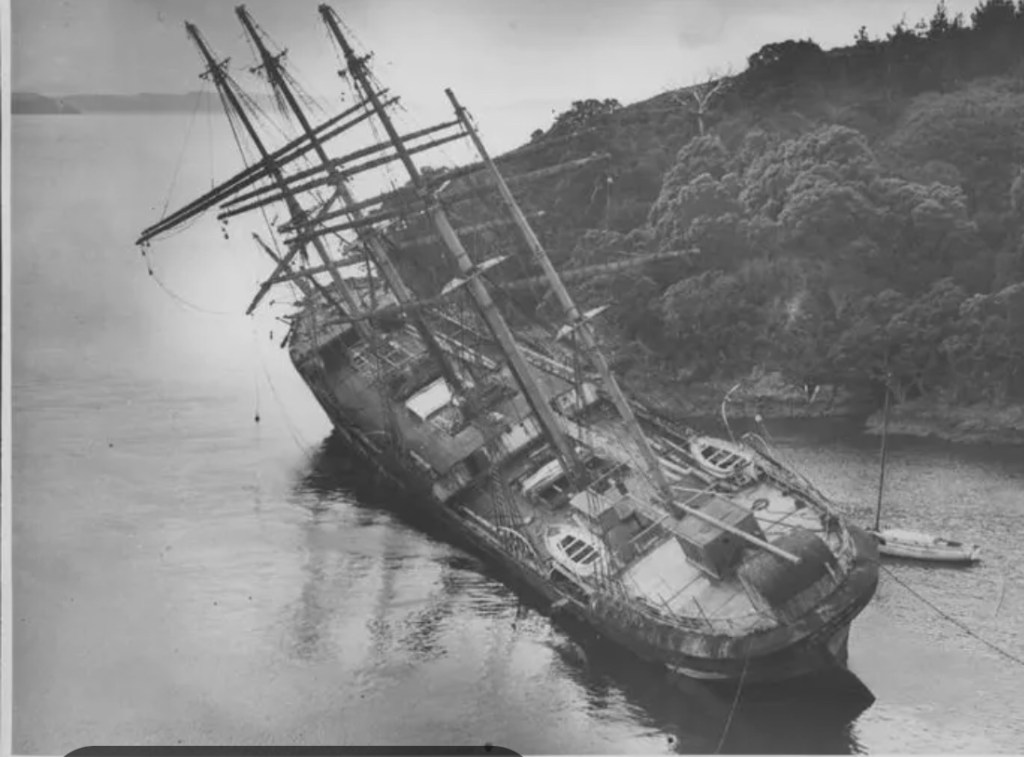
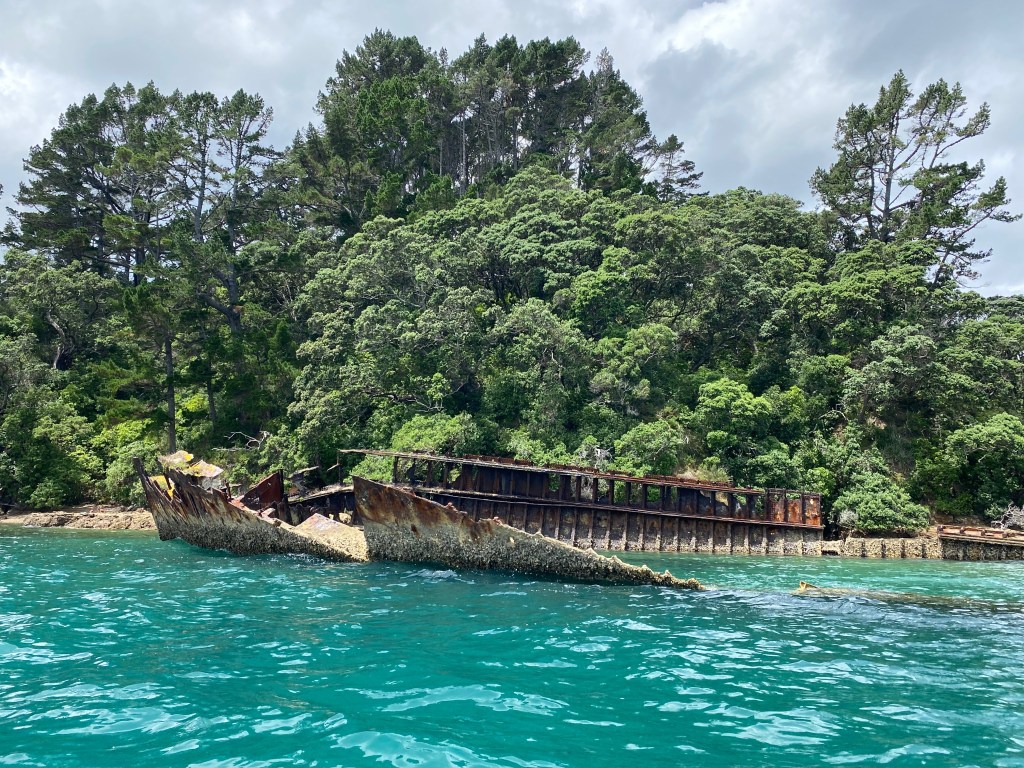
An entrepreneur had planned to take the 1880s-built Rewa (a 3,000 tonne, three-masted sailing ship) out as an offshore luxury gambling den, but ended up putting it on the rocks instead. As night fell, we had the anchorage to ourselves.
As we move around the Hauraki Gulf, we follow the new rules around the invasive seaweed Caulerpa, expanding high-protection marine areas, with strict biosecurity measures. Caulerpa is a fast-spreading tropical seaweed that smothers seafloor habitats, displaces native species, and is nearly impossible to remove once established, making prevention critical as we travel these waters.
Moved next door to pest-free Motuora Island Scenic Reserve where we hiked the many trails between thunderstorms, even getting charged by a territorial kereru (massive wood pigeon).
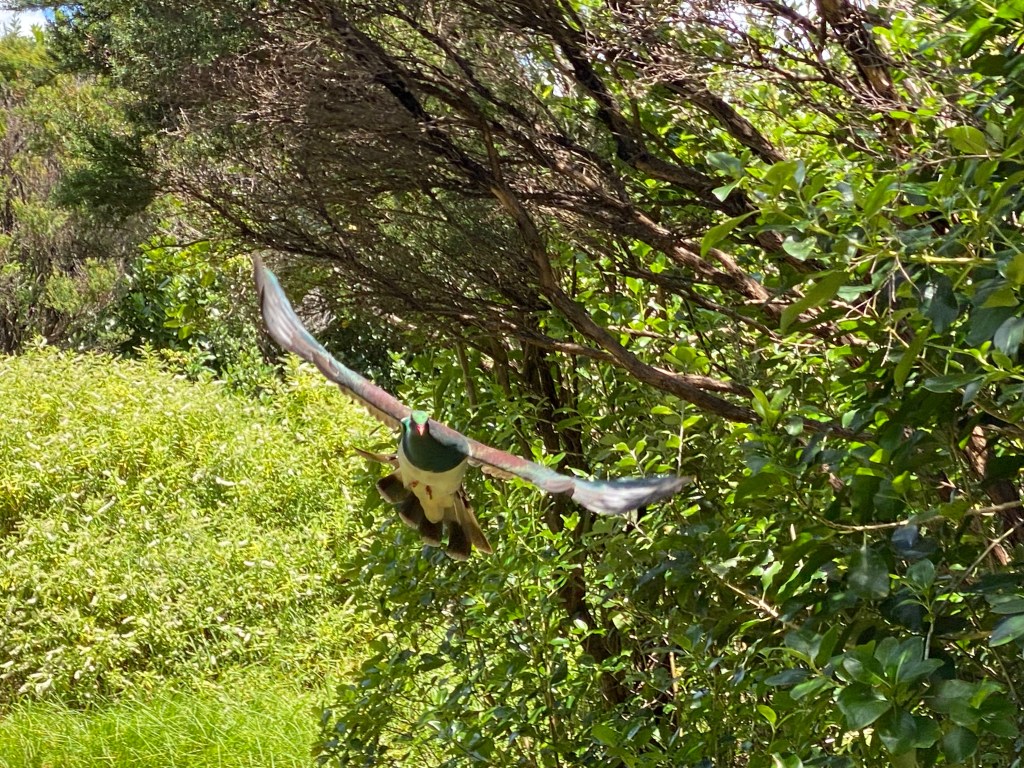
Motuora was once grazed farmland, but since the early 2000s it has been replanted with native forest and made predator-free, transforming it back into a safe haven for native wildlife.

As part of this restoration, kiwi are translocated here for the first 6-12 months of their life (serves as a kiwi “cache”) before being released to other locations.

We had to laugh at ourselves when we watched gannets nesting for quite some time, only to find that they were decoys to lure in other gannets! That night, the full moon on the water was peaceful.

On our way to the next location, we were flagged down by locals adrift in a small power boat, launched our dinghy to run them over some fuel.
Next on to Tiritiri Matangi, a pest-free island that is about 20 years further along in native forest restoration than Moturora, but with even more birdlife that is sent to other islands and the mainland. The people of New Zealand move their birds around, removing birds from one location while they get rid of predators, then moving them back to their now predator-free island. Tiritiri Matangi is being used as a breeding ground for endemic birds then moved to other locations. I cannot express how much I love the magical bird island of this open sanctuary, returning to its original state of coastal forest and ringing with the calls of birds.

After human influence, by 1971, only 6% of the original bush remained; this island is a labor of love from the first replanting in 1984 and it shows, now categorized as a scientific reserve and also open to the public to see and join “conservation in action.” We took a night walk, slowly creeping along the trails listening for kiwi, so close to three of them but never able to see them with our red spotlight, awesome sensory experience, nevertheless.
The next day, Chris and I explored the historical lighthouse (1864), contemplating the days of fog horns and hanging flags to communicate with incoming boats to Auckland. The lighthouse was built with prefabricated cast iron sections from England and is currently the oldest operational lighthouse in New Zealand.

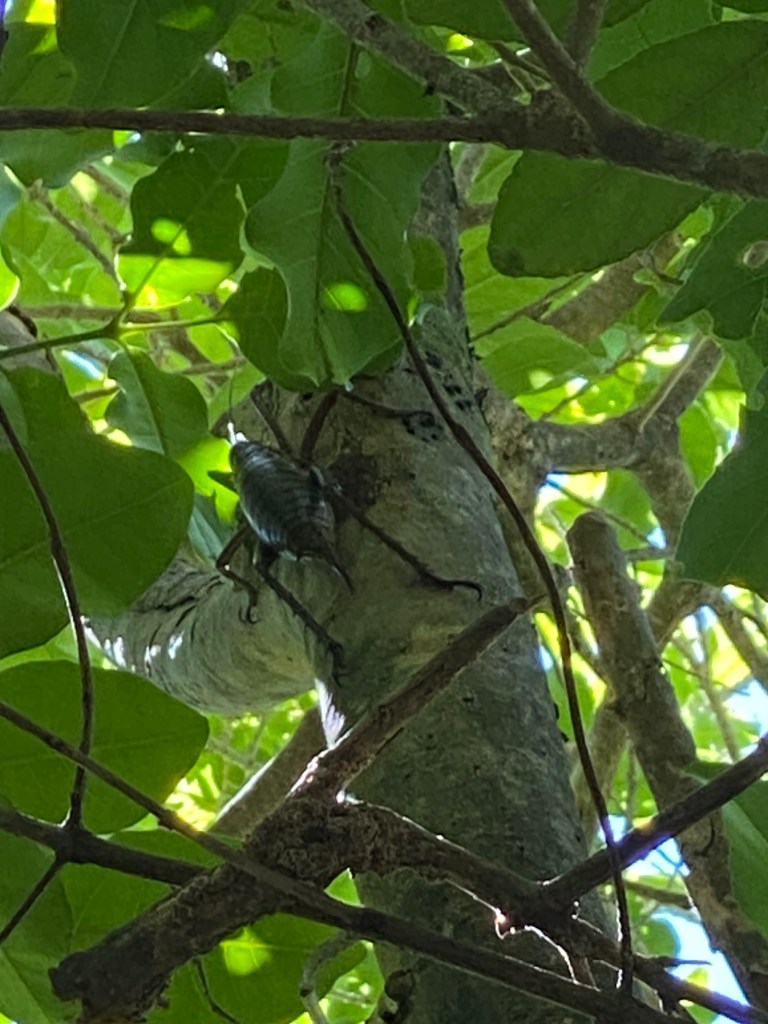
Stumbling across a tour group paused on the trail taking photos, we had the opportunity to see a very large weta. A wētā is a uniquely New Zealand insect, often as big as a hand (up to 10cm long), flightless, spiny-legged, and rare in many areas, making it one of the country’s most distinctive and fascinating native invertebrates.
Into Gulf Harbour Marina for a few nights to reprovision, do a mega boat clean (inside and out), and get ready for adventures with visiting family.
 SV Terikah Adventures