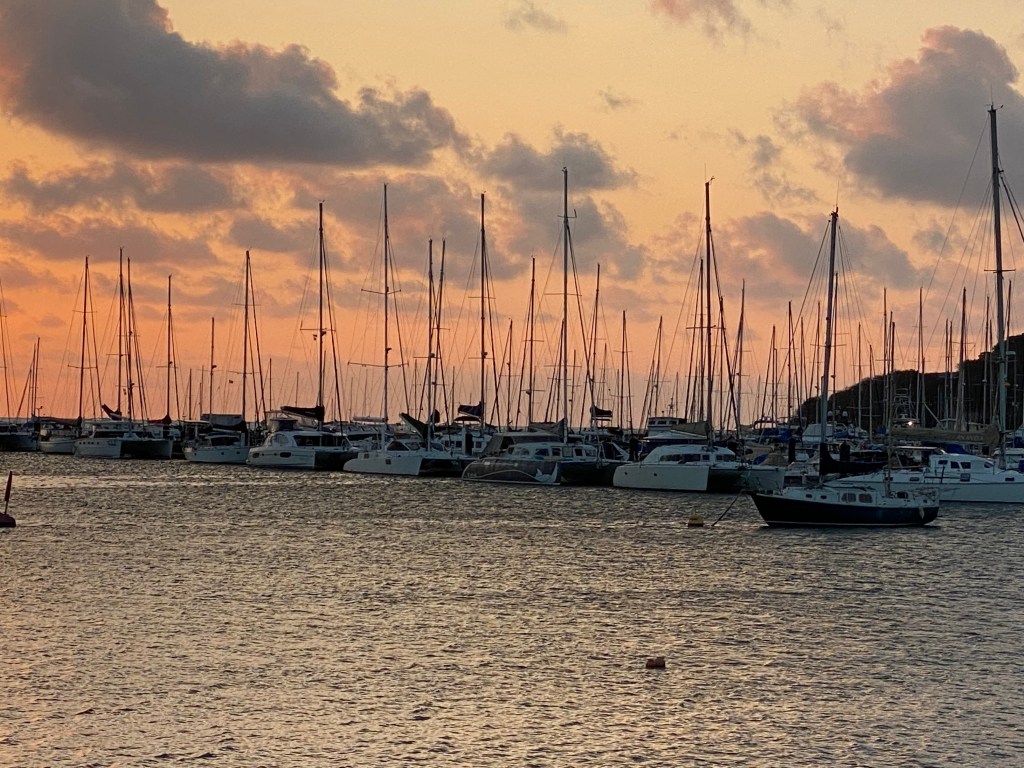
New Caledonia is a place of mind-bending contrasts — somehow both French and Oceanian, European and Melanesian. Floating in the middle of the Coral Sea, it’s a French overseas territory whose main island, Grande Terre, stretches 400 kilometers in length, a rugged spine of mountains running like a backbone through the center. Along its edges lies the world’s largest lagoon — a UNESCO World Heritage Site that spans more than 24,000 square kilometers. Inland, the landscape shifts to red-soil plateaus scarred by nickel mining, the only export.
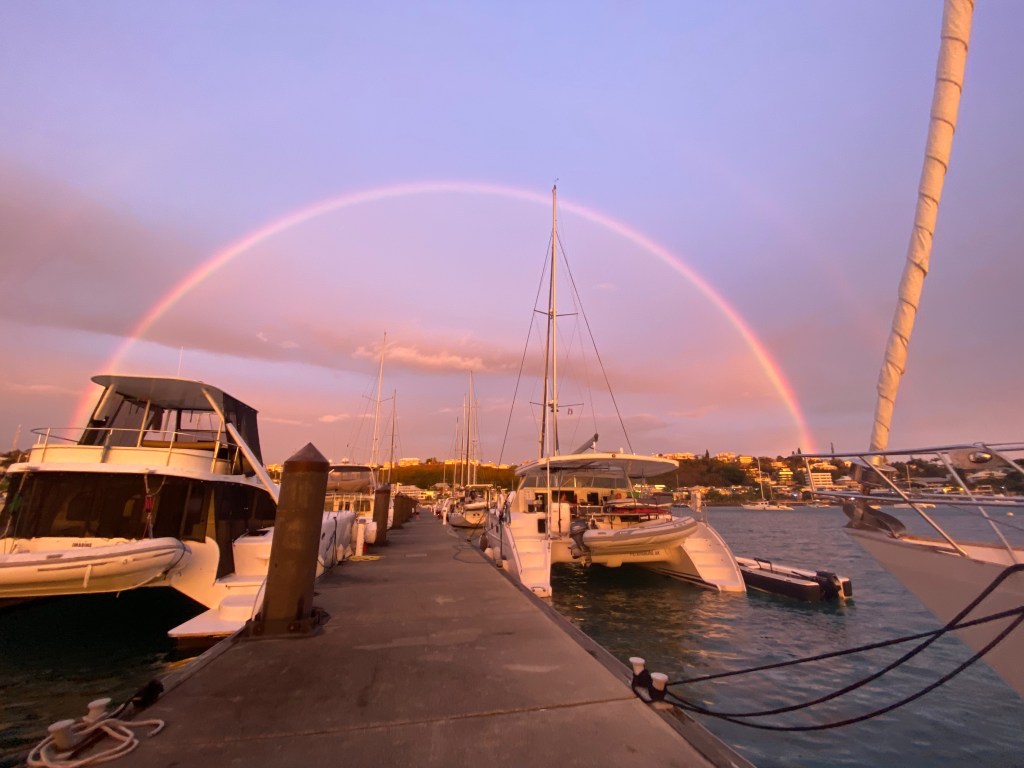
Beneath the surface beauty, there’s an uneasiness here — politics with calls for independence, a slow, ongoing civil war. Last year’s riots still fresh in people’s minds, tourism down, people leaving. The Kanak people — the island’s Indigenous Melanesian community — keep their traditions alive in the more remote locations, while French influence is strong in the city’s restaurants, bakeries, and language. In Nouméa, the capital, this duality hums all around us: police sirens on palm-lined boulevards, croissants beside pamplemousse, espresso blending with sea air. Beyond the city, red peaks rise above turquoise reefs — a land of contrasts. I’ve never experienced a place quite like this. I’m trying to find some understanding during our limited time here.
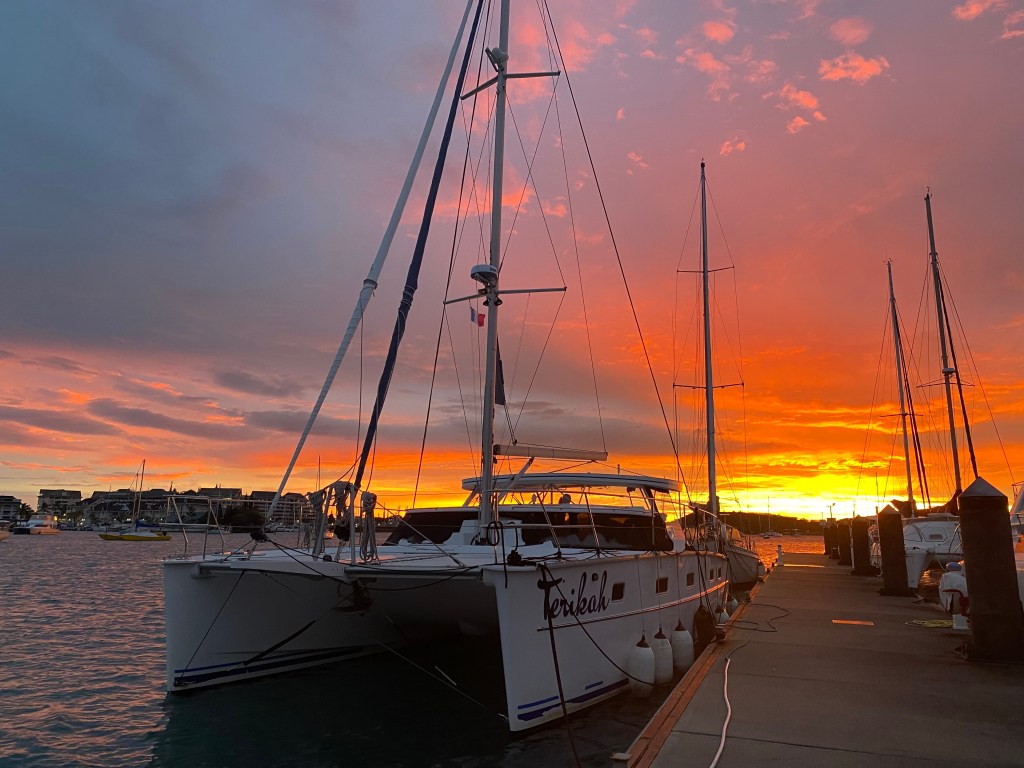
We pulled into the capital city of Noumea on Terikah; is this what the Med feels like? Tried to go out for a celebratory French dinner but, as is likely the case in France itself, places don’t open until 7pm for dinner. We ended up eating a charcuterie style dinner out (included a little lightbulb filled with a tomato cream drink that had us laughing to the point of tears) with some delicious French wine.
Being in port is a mix of work (75%) and exploration (25%), as we clean the boat inside and out, reprovision (amazed at the grocery store wall of French cheeses and mold-rimmed salamis), do laundry, and catch up on school, work, and sleep. With daily stops to the walkable Patisserie/Boulangerie of course!


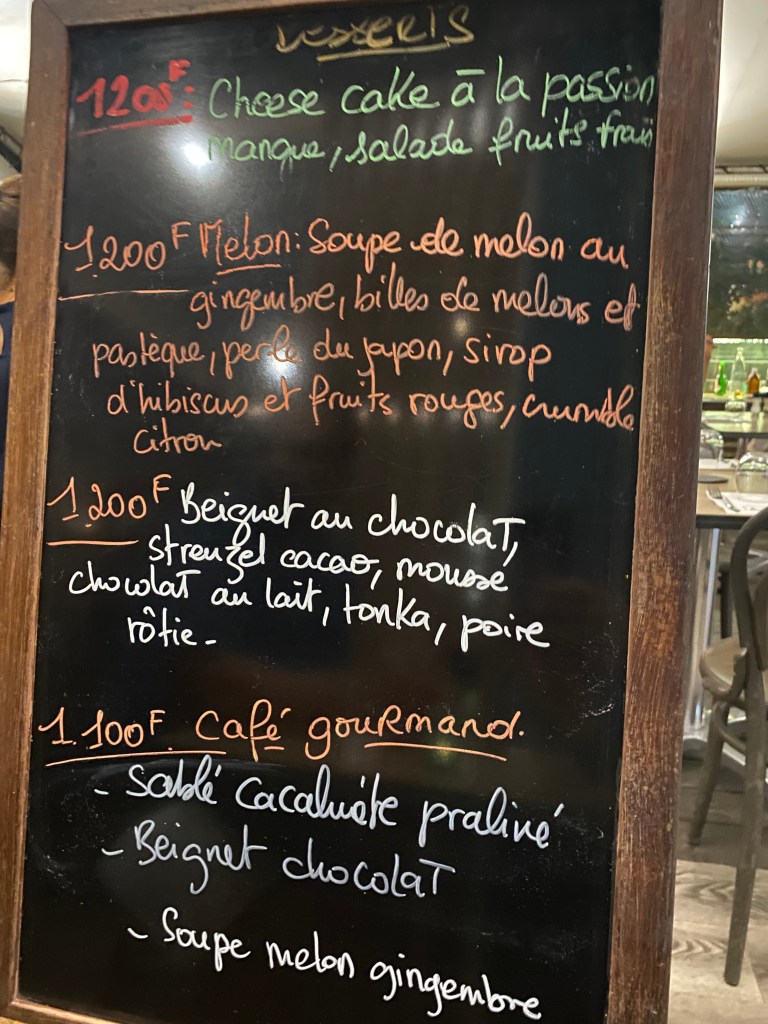
New Caledonia continues to be…unexpected. It is very French here, unlike French Polynesia, which felt more Polynesian. The baguettes here are warm, crusty, and covered in seeds; as opposed to the mass-produced white baguettes of French Polynesia (which still were fab at the time). Chris and I went out for a dinner at Au P’tit Café, the chalkboards brought to our table to order from with delights of filet de saumonee a la planche and beignet au chocolat.
In the midst of these delicacies, there is a deep divide between upper and lower classes, similar to US cities, with homeless people bathing in public fountains just outside the nicest French restaurants. Our fancy French lunch at Marmute with cruising friends was amidst buildings with steel fences topped with razor wire. It is considered very expensive to live here, the groceries for us similar to rural Alaskan prices, as almost everything is imported from France with some from Australia.

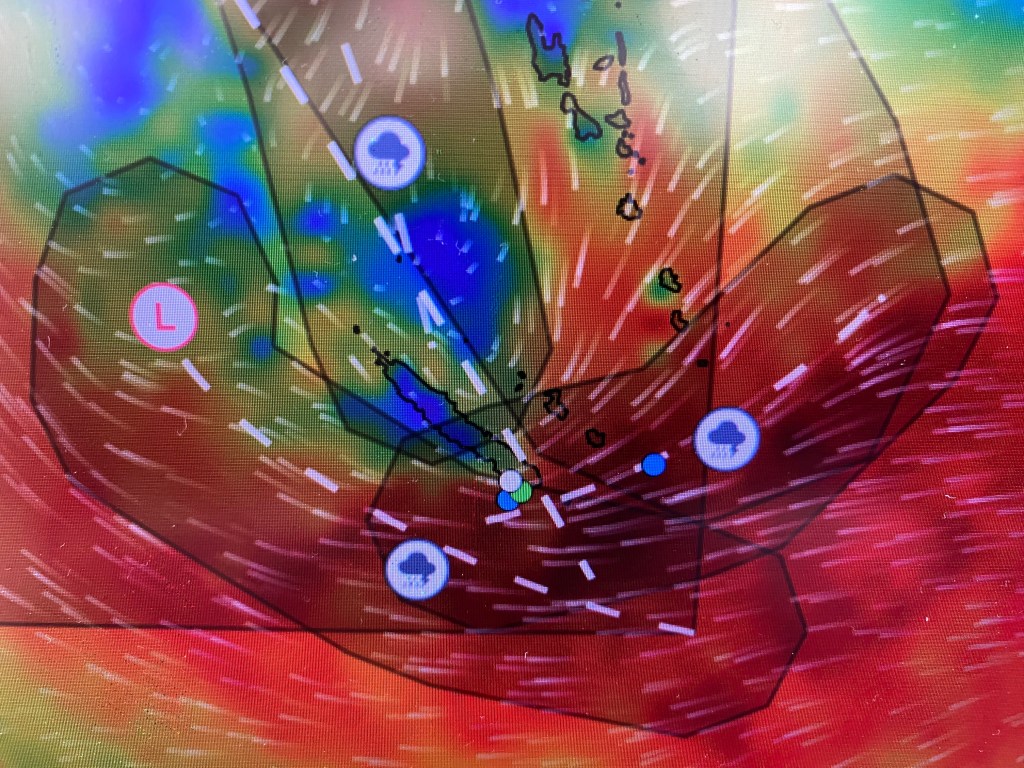
We find ourselves happily tied up to the dock, as the SPCZ (South Pacific Convergence Zone) with its high CAPE and thunderstorms squats on our heads. The SPCZ is a persistent band of low-pressure and convective activity stretching from the Coral Sea toward French Polynesia, and high CAPE (Convective Available Potential Energy) in this region indicates a strongly unstable atmosphere capable of fueling intense thunderstorms and tropical cyclones. We are in Noumea for a full week, with work and school in the mornings, croissants mid-morning, and afternoons to explore.
We took taxis to the Tjibaou Cultural Center, walking a trail that introduced us to endemic plants and the Kanak origin story. The Kanak are the Indigenous Melanesian people of New Caledonia. They’ve lived on the archipelago for over 3,000 years, long before European arrival.
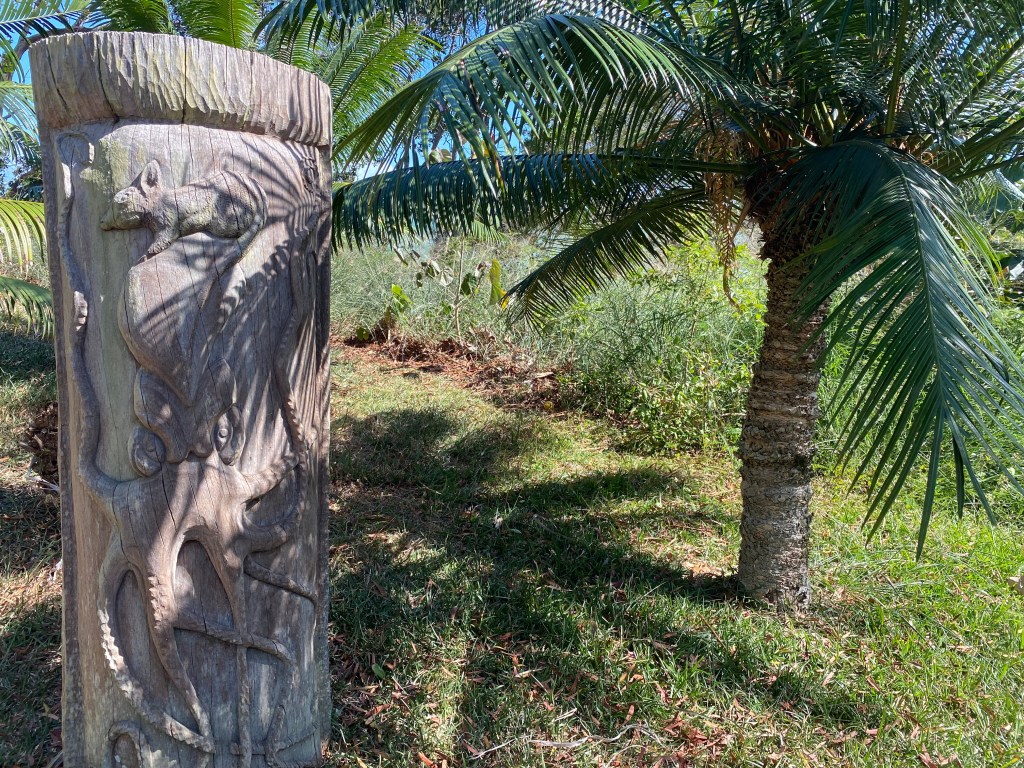
At the entry to the park, the lovely Kanak women explained the park and talked about New Caledonia becoming “Kanaky, meaning the land of human beings, when we are independent” – not if, but when. Kanaky is the Indigenous Kanak name for New Caledonia, derived from kanak, meaning “human being” in many Pacific languages. For Kanak leaders and many supporters, “Kanaky” is not just a name — it’s an aspiration for full recognition of Indigenous sovereignty and cultural dignity. Her explanation and determination was very moving. She explained how the indigenous peoples have very separate languages and traditions here, which makes the quest toward independence challenging, though they are now coming together more under a common purpose. Later, she stated bluntly, “When the French arrived, they destroyed everything.”
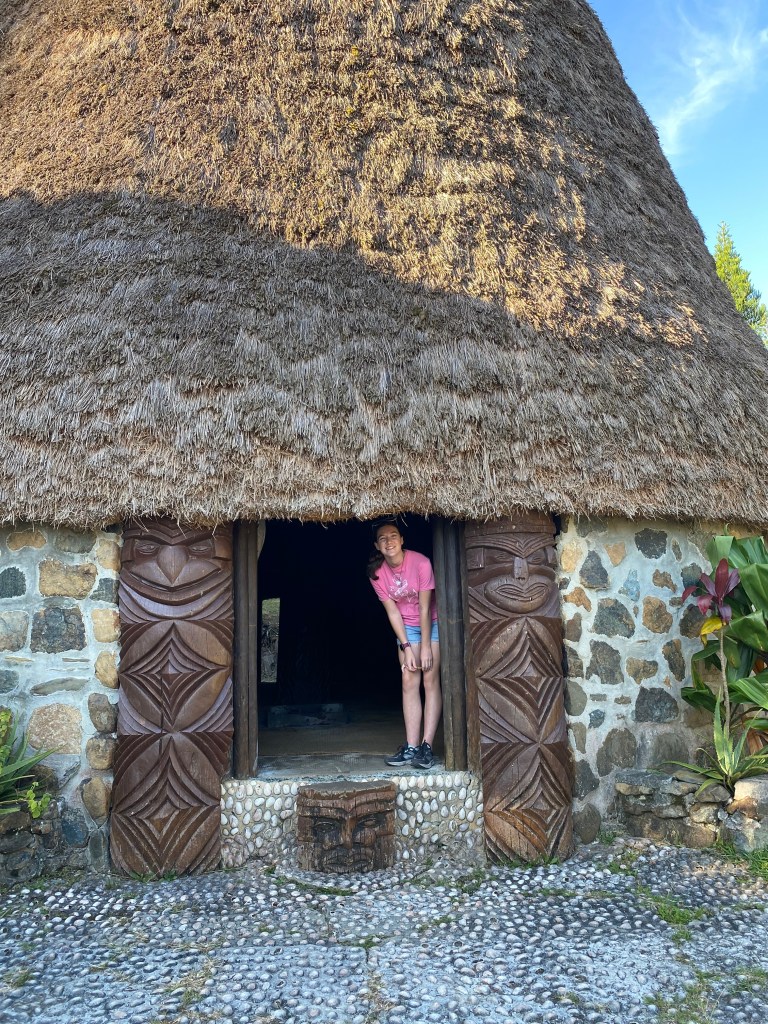
The Tjibaou Cultural Center, designed by architect Renzo Piano merges traditional forms with modern architecture. The ten great huts capture the predominant tradewinds, as well as correspond to the correct Kanak hut shape.

Each hut has a different display, both modern and traditional, as well as a curated library of indigenous resources of New Caledonia.

The center is named after Jean-Marie Tjibauou, a visionary Kanak leader and independence advocate who championed cultural revival and self-determination for his people, becoming a symbol of reconciliation before his assassination in 1989.
“I am a passenger, but I must do everything in my power, everything I can do, so that the country I leave to my sons is the most beautiful country, a country rich in thought, in wisdom, in flowers, in food (Jean-Marie Tjibaou).”

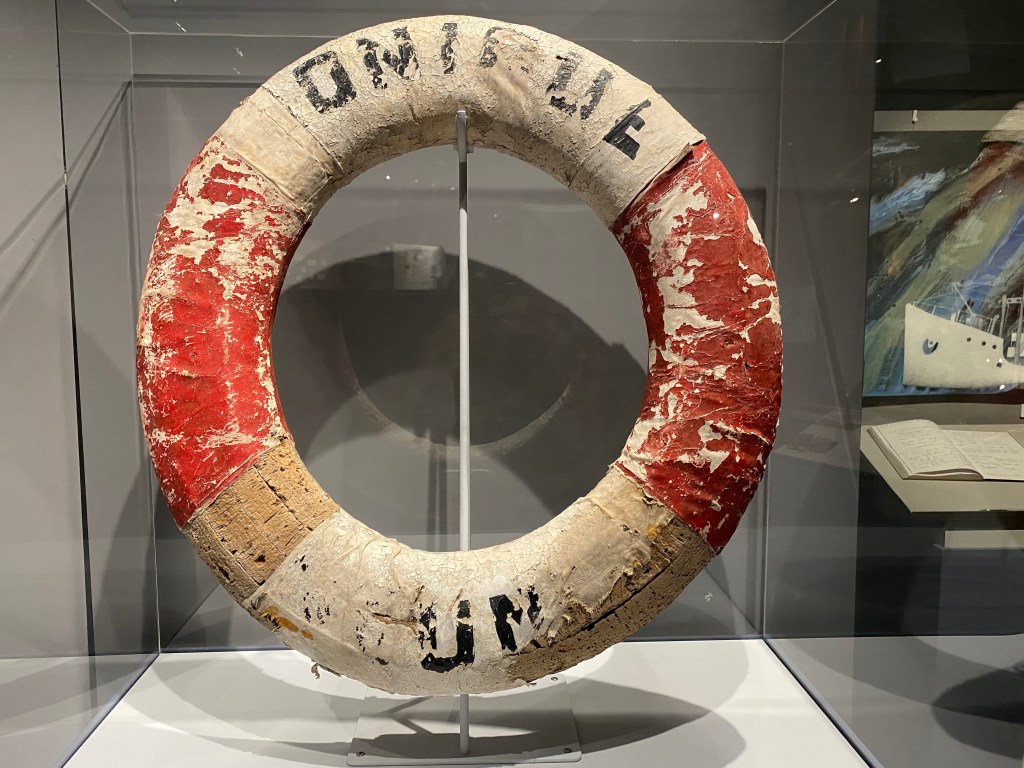
Another afternoon was spent at the Maritime Museum where we learned about the exploitation of natural resources (namely nickel), the original people’s journey from SE Asia and the western Pacific 3,000 years ago in outrigger canoes, and the mysterious disappearance of a ship (La Monique) that led to safety changes in shipping regulations and communications.
I have been intrigued by the diverse population that I see in New Caledonia and one display put some of the pieces together – convicts sent here from various locations (including North Africa) as a cheap form of labor (becoming the most numerous settlers), natives of New Hebrides (now Vanuatu) paid a few trinkets or firearms to induce them to come and work (called blackbirding), indentured Vietnamese immigrants. Sadly, natives from the Loyalty Islands were taken from here to Australia to work as well. Further altering the country, in 1942 the Poppy Force entered Noumea Harbour with over 1 million American troops (along with Australian and New Zealand soldiers) using the location as a logistics center. I’m pulling together bits of history, trying to form some understanding of this complex and beautiful country.

Chris and I went for a welk to Citron Bay, where locals swim in an enclosed shark netting, which we’ve never seen before. Shark-netting and culling measures at Citron Bay were introduced after a surge in shark attacks including a fatal incident in 2023. Studies show that from 1958 to 2020, New Caledonia recorded 67 shark-attack cases (13 of them fatal) with the species most often implicated being the Tiger shark in 20 attacks (8 fatal) and the Bull shark in 14 attacks (2 fatal). In response, authorities culled an estimated 83 tiger sharks and 44 bull sharks in 2023 before a court ruling ordered a halt to preventive culling for lack of scientific impact assessment. As for the Hyer family swimming here, we are avoiding murky waters and swimming at dusk and dawn, though there is a little nervous edge that wasn’t there in other reef shark dominated waters. Honestly, we haven’t been in the water yet.
Chris and I enjoyed savory crepes from a beachside stand at Citron Bay, followed by the best gelato we’ve had since leaving San Diego two years ago.

The weather improving, after one week here in the capital city of Noumea, we untie from the dock to explore some of the more remote settings of New Caledonia.

 SV Terikah Adventures