
Heading north to the Dunedin area, we parked for the night at a beachside Freedom Camp near the end of the Otago Peninsula, where we spotted a male sea lion resting in the sand during our evening walk. One of the highlights of our trip was a nighttime little blue penguin tour—there’s nothing cuter than watching a raft of these tiny penguins swim ashore, then waddle up to their nests!

As the world’s smallest penguins, they came within a meter of us, gathering and preening under the glow of the Southern Cross in a perfectly clear sky. It was an unforgettable experience.
The next day, we took Cora for a follow-up wrist X-ray after her accident—thankfully, no fracture!
Up the coast, we walked around and posed with the Moeraki Boulders, spherical concretions scattered across the beach that inspired playfulness and curiosity.
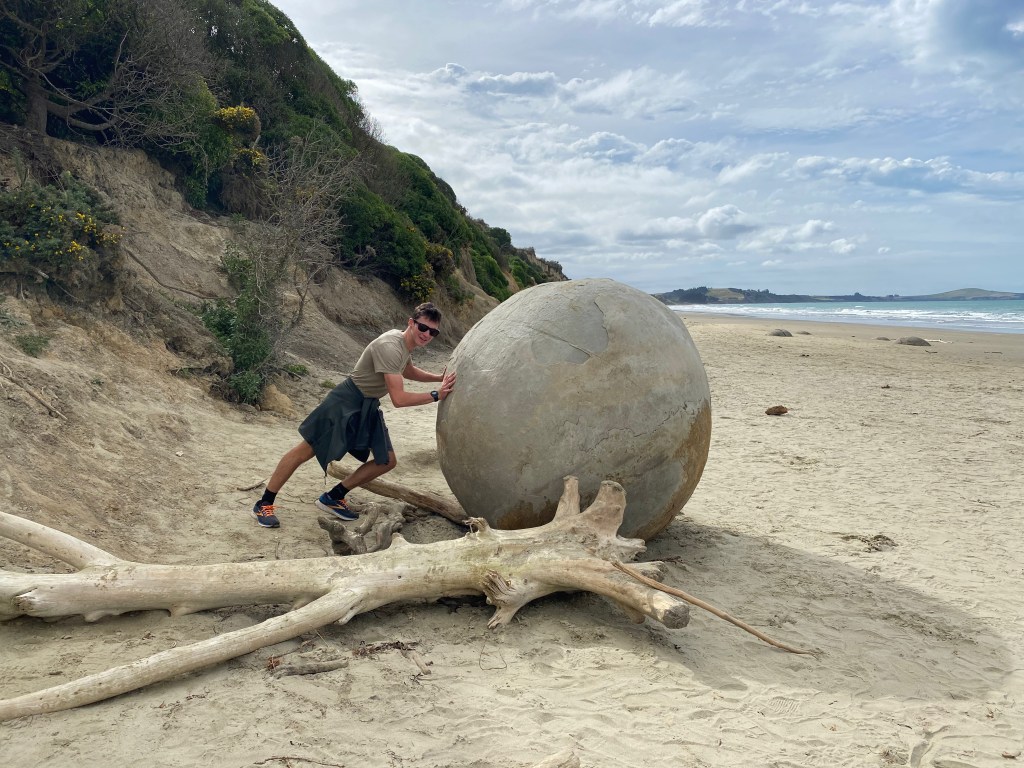

Concretions are compact, often spherical masses of mineral matter that form within sedimentary rock or soil. They develop when minerals precipitate around a nucleus, such as a fossil, shell fragment, or organic material, over time.
Tucked into the Oamaru Top 10 Holiday Park, where we walked the public gardens before calling it a night. There is a neat Old Victorian Precinct to be explored, as well as go to Steampunk HQ.

Steampunk HQ is an immersive and retro-futuristic sci-fi art installment of movies, sculpture, and sound. What?!
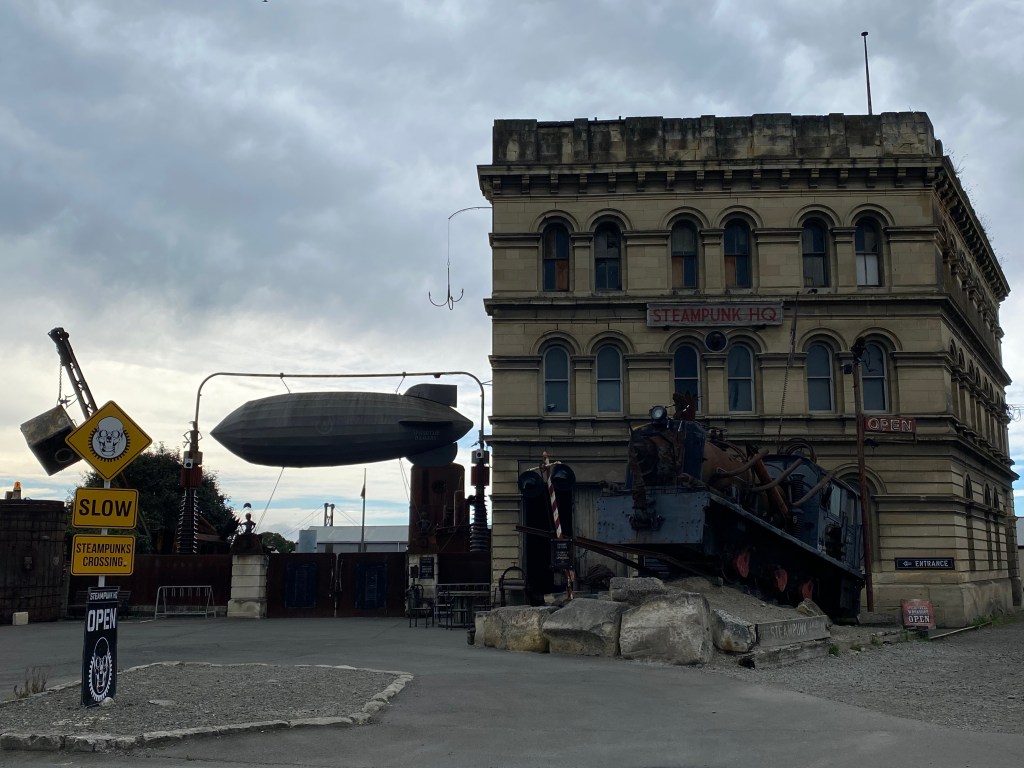
Steampunk is a quirky and fun genre of science fiction that features steam-powered technology, often set in an alternate futuristic version of 19th century Victorian England. What?! Okay, think HG Wells and Dr.Who.
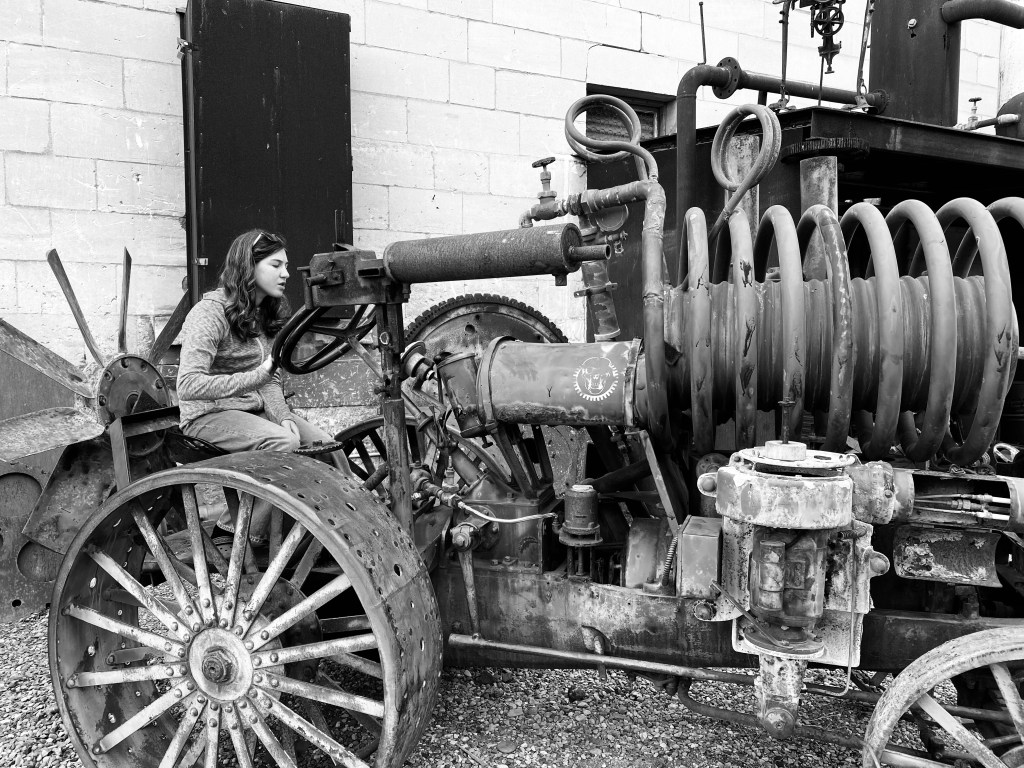
In an old historic building we explored curious contraptions and secrets, trinkets and curious, fantastic engines, as well as creatures and visual transmissions from other realms. We found ourselves in a portal of light and mirrors, sitting in a metal train in the yard and playing the organ in a labyrinthine time traveler’s vessel, now stranded in the heart of Oamaru’s Victorian Precinct.

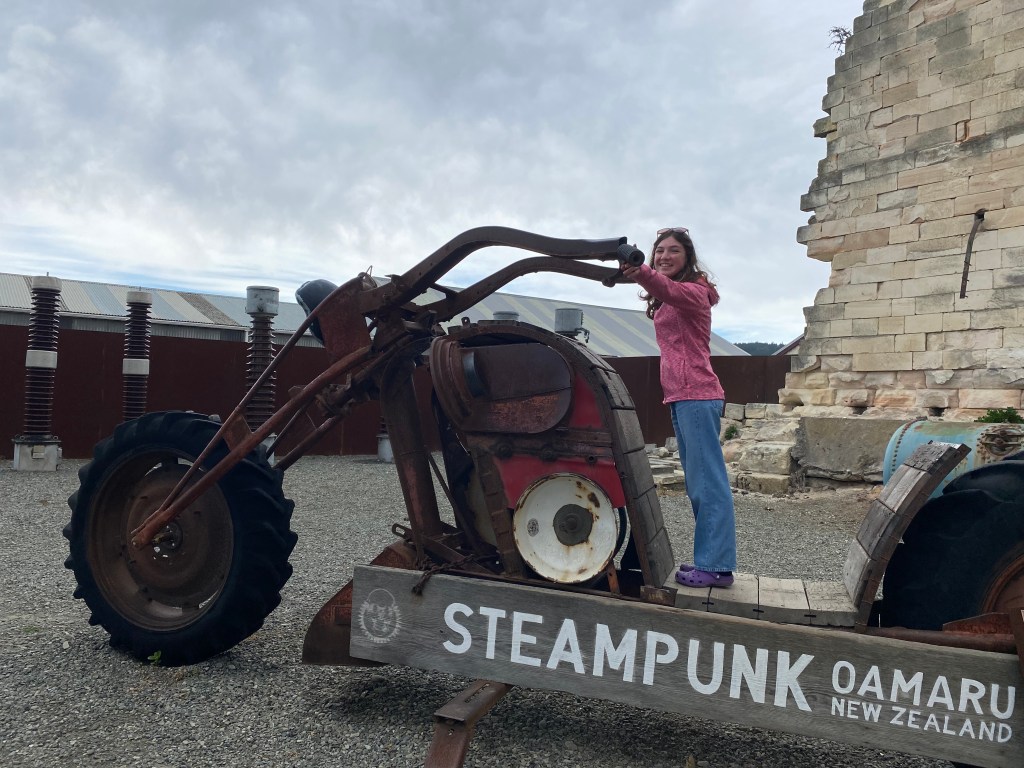
A waterfront playground displayed originality from the massive metal bike as part of the swing structure, a giant hamster wheel (where I may have flopped), and a sky-high steep slide with a metal elephant looking on.

The sheltered harbor is inviting, making us wonder: what if we returned for one more cyclone season and explored the New Zealand coast by boat?
Heading inland, we explored (and played around) Elephant Rocks—impressive limestone formations scattered across a farm field, famously featured as Aslan’s Camp in The Chronicles of Narnia (2005).
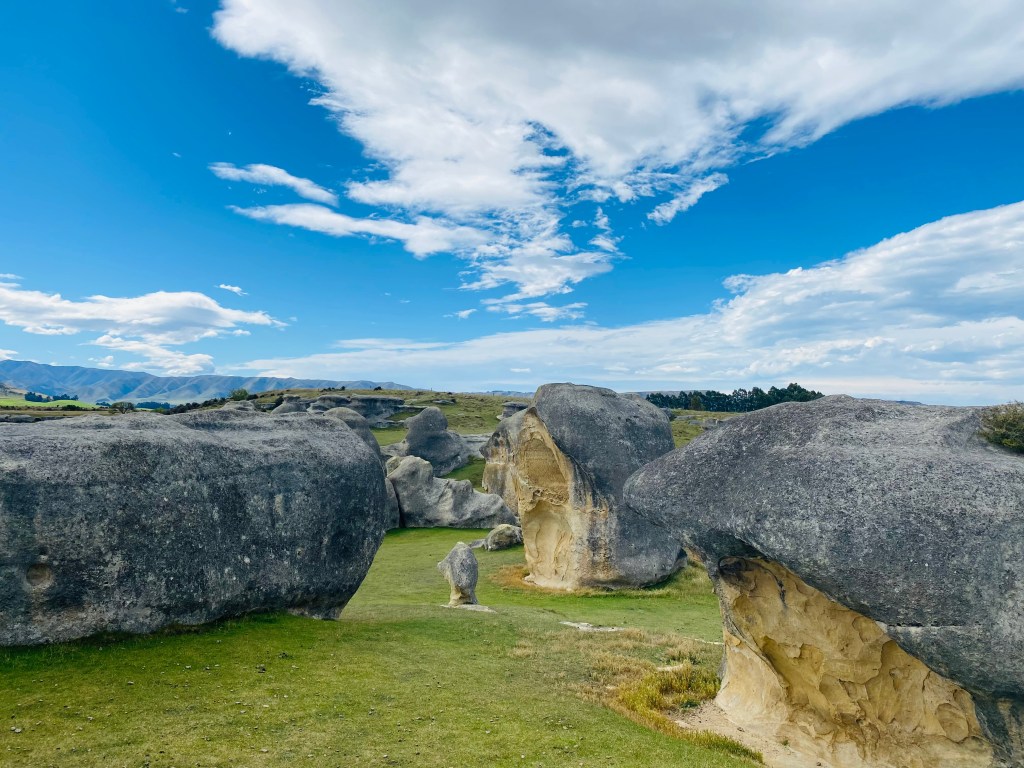

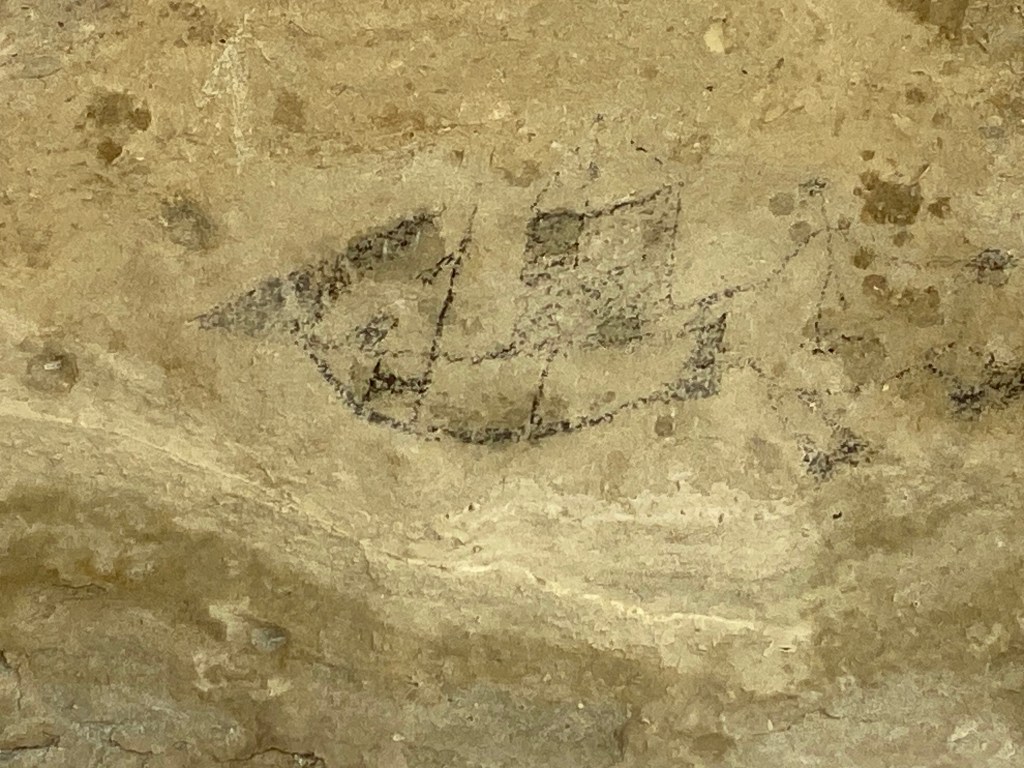
These rocks were formed through millions of years of weathering and erosion, where softer limestone layers were worn away, leaving behind the large, rounded boulders that resemble elephants. We also viewed Māori cliff paintings, created with charcoal and ochre, though sadly, some had been vandalized.
Instead of pushing on, we were drawn to Parsons Rock Recreation Reserve on Lake Aviemore, where we found a peaceful campsite nestled among warm-scented pines, reminding us of our family’s rural cabin in Idaho.
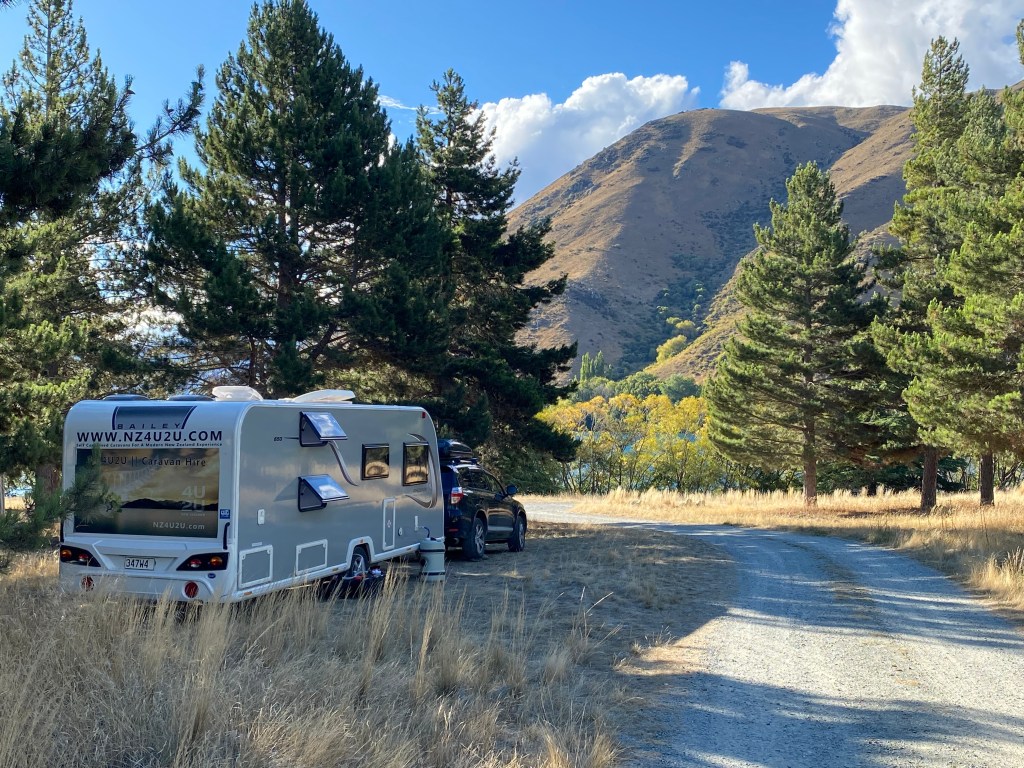
Many sites here seem to be used by local Kiwis for longer stays over holidays and weekends, but on a quiet weekday, it felt like a “ghost campground”—empty and still.
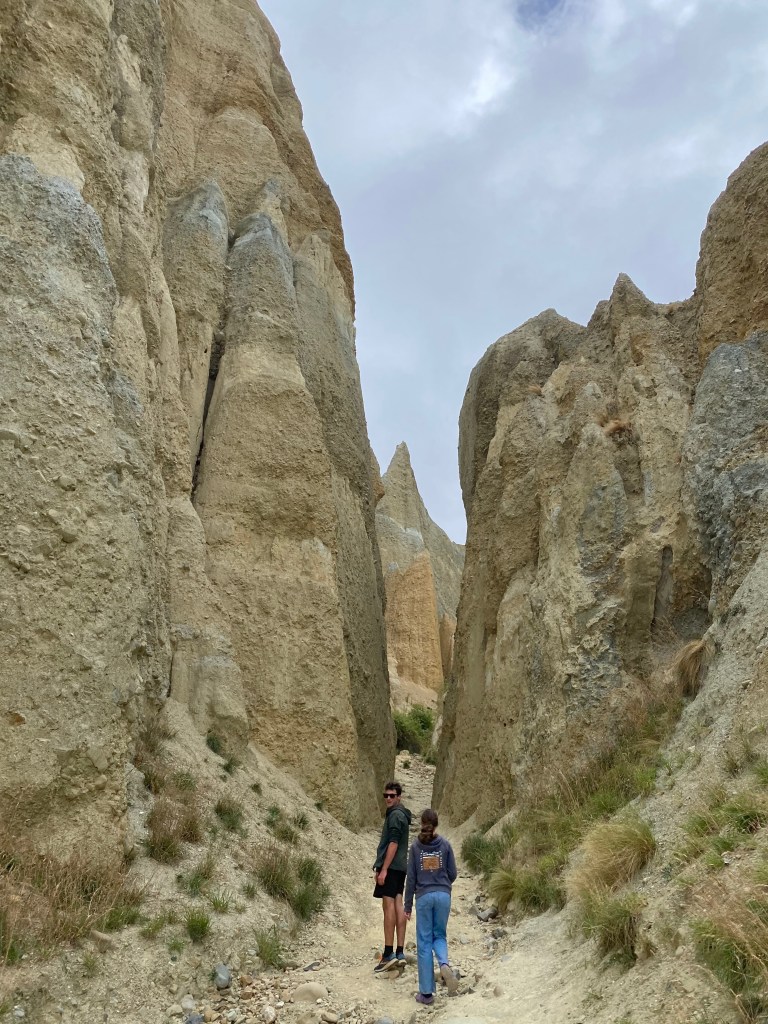
Hiked around the Omarana Clay Cliffs for a bit, Chris nervous about the active erosion going on around and above us, visible cracks in the cliffs, as well as rocks all about. I think we may be a bit shy about risk-taking at this moment, as we scurried through the tight places quickly.
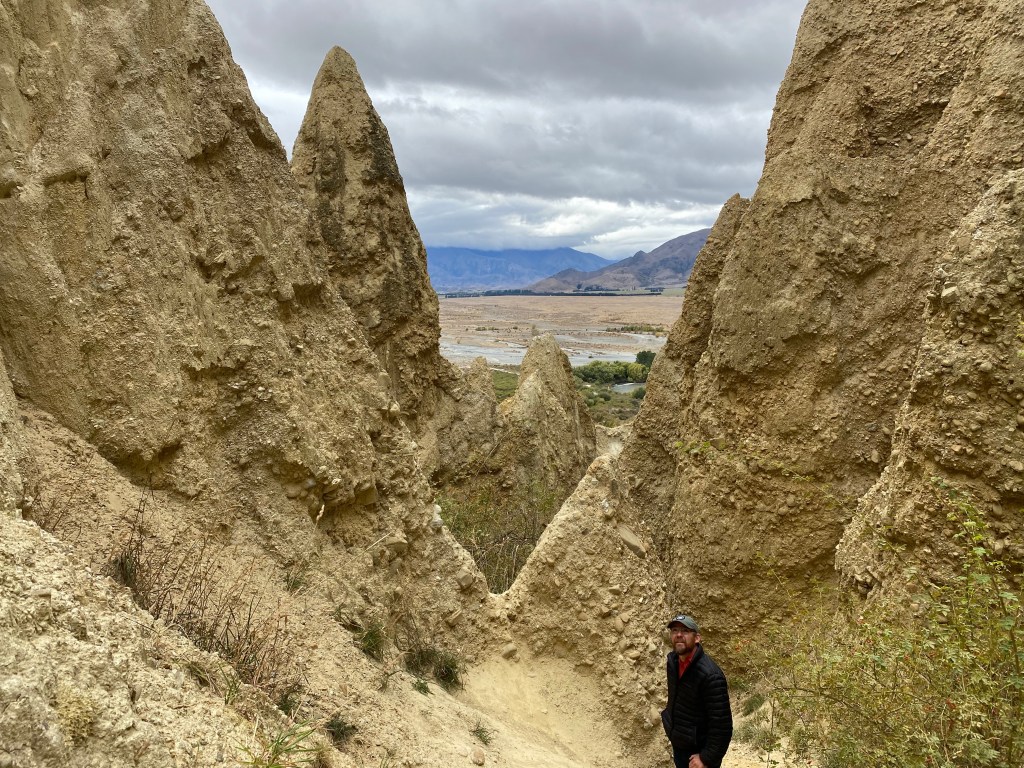
These towering cliffs are made of grey/white sandstone and claystone formed in an ancient lake that once existed here, with yellow and brown layers of gravel conglomerate deposited by an ancient river. The erosive action of wind and rain over thousands of years has eaten into these sedimentary layers, producing spectacular formations.
Onward to Pelennor Fields, just outside Twizel—the site of the epic battle scene in The Lord of the Rings, filmed in the spring of 2000. This location saw the biggest day of filming, with over 1,000 cast and crew members and more than 280 horses bringing the clash between Minas Tirith and the forces of Mordor to life.


Unable to get any closer than the roadside, we parked, ate our lunch, and watched a flock of sheep (or were they orcs?) charge across the field—an amusingly fitting scene for such a legendary battleground.
Aoraki/Mt. Cook National Park is a highlight of any trip to New Zealand, and we were thrilled to have three full days to explore, hoping the often-cloud-shrouded peak would make an appearance. Standing tall at 3,724 meters (12,218 feet), Aoraki/Mt. Cook is the highest peak in New Zealand and a majestic sight in the Southern Alps.

The Visitor Center and Museum were absolutely stunning—we could have easily spent more than the 1.5 hours we had there. The stories of the region’s rich climbing history were particularly impactful, with contemplative spaces featuring poignant quotes, beautiful artwork, and binders honoring those who had perished on these mountainsides—some with empty sleeves, awaiting future stories.

A follow-up film about mountain rescue teams made the risks of this landscape feel even more real. The hour-long documentary followed a gripping and emotional rescue, only for the climber to tragically pass away the next day. A sobering reminder of the mountain’s power, it left us with a deep sense of respect as we prepared to set off on some serious hiking.
We hiked to the Tasman Glacier Lookout and Blue Lake (which, despite its name, is actually green), tackled the stunning yet crowded Hooker Valley Track—where lines formed at its swing bridges—and started the stair climb of the Sealy Tarns Track before it finally defeated us.


Hooker Valley was our first experience with true hiking traffic jams. At first, it was frustrating, but then we realized how incredible it is that such an accessible trail allows everyone—from kids to elders—to experience this remote, powerful landscape.
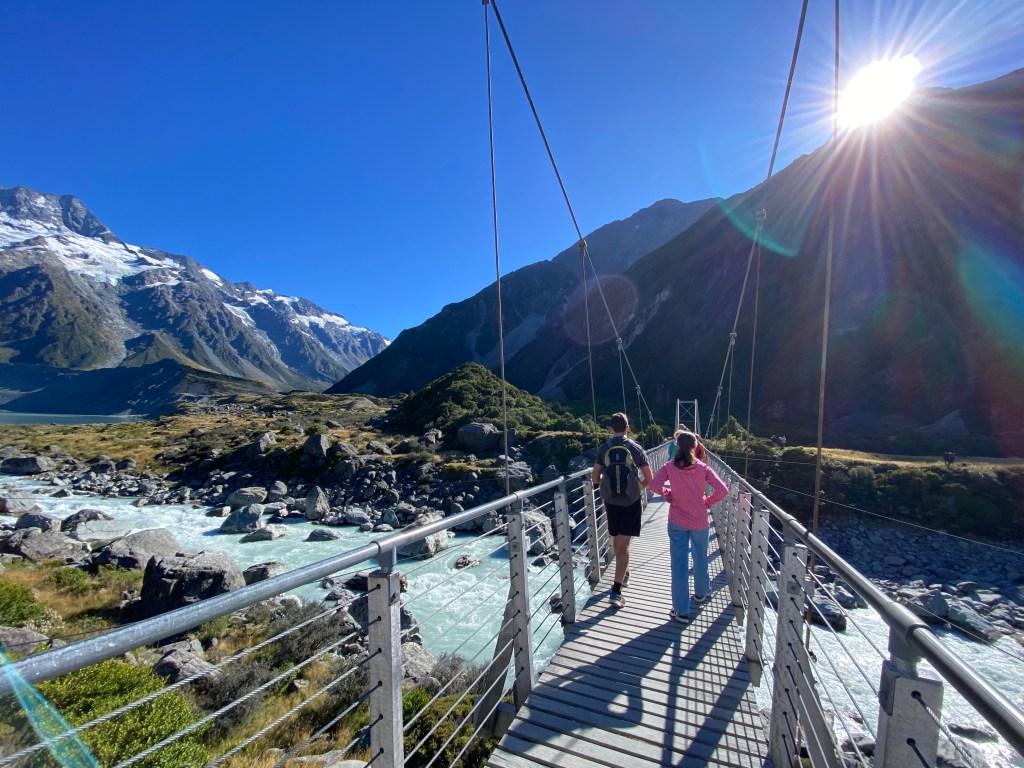
Sir Edmund Hillary once said, “It is an act of worship just to sit and look at a high mountain.” Indeed, it is.

After watching a documentary on Sir Edmund, we set out on the Kea Point Lookout Trail in the golden evening light. Today was a 30,000+ step day—definitely making up for our time on the ocean.

As I watch my monthly and yearly step count climb, I feel like we’re back in the game, our bodies feeling stronger, all of us earning an A+ in Physical Education.

NZ Marine Investigations reached out to check on our physical and mental recovery from the jetboat accident. It was reassuring for all of us to talk through our healing. The investigator emphasized avoiding “what if” thinking and reminded us that each of us has our own unique experience of the accident—encouraging us not to let others’ stories shape our own. The conversation made me appreciate just how open our relationship is with our kids. We’ve shared our thoughts and feelings along the way, navigating this recovery together.
We set off, stopping at NZ Alpine Lavendar where we had to try lavender ice cream, then at Alpine Salmon to buy a chunk of freshwater king salmon for dinner (we are desperate for salmon!).
At the Lake Pukaki Overnight Freedom Camping spot that night, I couldn’t help but smile as I listened to the mix of languages around us.

The lake’s striking turquoise blue comes from the mineral-rich rock flour suspended in the water, ground up by ice moving along the glacial beds. It serves as the primary storage lake for the six hydropower stations on the Waitaki River hydro scheme. We wandered around the outlet, marveling at the thunderous rush of water flowing out.

In the evening, Chris looked up and said, “What’s going on with the moon?” It was a full lunar eclipse (blood moon) underway. Many of the campers, us included, were drawn up to the top of a nearby hill to watch, one camper playing some new age music in the background that seemed to fit the scene. Stunning.

We have had two total eclipses in this one year, the full solar eclipse in the path of totality on our crossing, followed by this full blood moon on the shores of Lake Pukaki.
On our last night in the caravan, we hauled it up a gravel road into Waitohi Bush Reserve, settling on a hill surrounded by a remnant of native podocarp-broadleaf forest—the kind that once blanketed vast areas of South Canterbury. As we wandered down a little-used trail into the dense brush, the air filled with the calls of bellbirds, while fantails flitted toward us, snatching insects from the air.

Onto Christchurch to drop off one caravan and pick up two Alaskan grandparents!

 SV Terikah Adventures