
As much as my pictures may show lovely scenes; cruising is not all sandy beaches, palm trees, and unicorns (though it is at times). Before we left, we noted fresh water on Cora’s shelf where fresh water ought not to be – we have a leak somewhere to sleuth. Bringing up the anchor in Raroia, our windlass (the electric winch that pulls the anchor) started to wiggle and spit out metal shards…hmmm….then the chain stripper (the piece of metal that diverts the chain out of the gypsy so it doesn’t wrap and jam back on itself) wiggled its way almost out. Chris removed it entirely, the only option at the time, and we now have to hold the chain out as we pull it up to ensure it doesn’t jam. We will order the part which will arrive with friends in about 4 weeks.
We continued across the atoll to the exit pass. We arrived at the estimated low tide, right on time, but there was a huge tide rip with standing waves and our friends, who went through this wash machine, reported 6 knots with them and a rough ride. Another friend boat went and reported back that they agreed we should wait just a bit longer, so we did. Another hour later and the conditions were choppy, but much improved.

On our way to Makemo, messages flash on our screen…Auto Pilot Off Course…No Auto Pilot Computer…Over Rudder Limit…the auto pilot goes out intermittently at first, then stops working altogether. We are trying to get the sails up and take advantage of the wind; Chris is inside working on electronics, checking fuses, connections, and various computer settings. Some success (though we know this is temporary and he will be digging in more). Then buzzers go off – it is our bilge alarms, which are set to go off if we have any water in our bilge activating the pump. We have not one, but two, leaky raw water pumps on our engines. The leak is slow and we can easily keep up, but the buzzer is annoying and the fix looks to be a total rebuild or replacement.
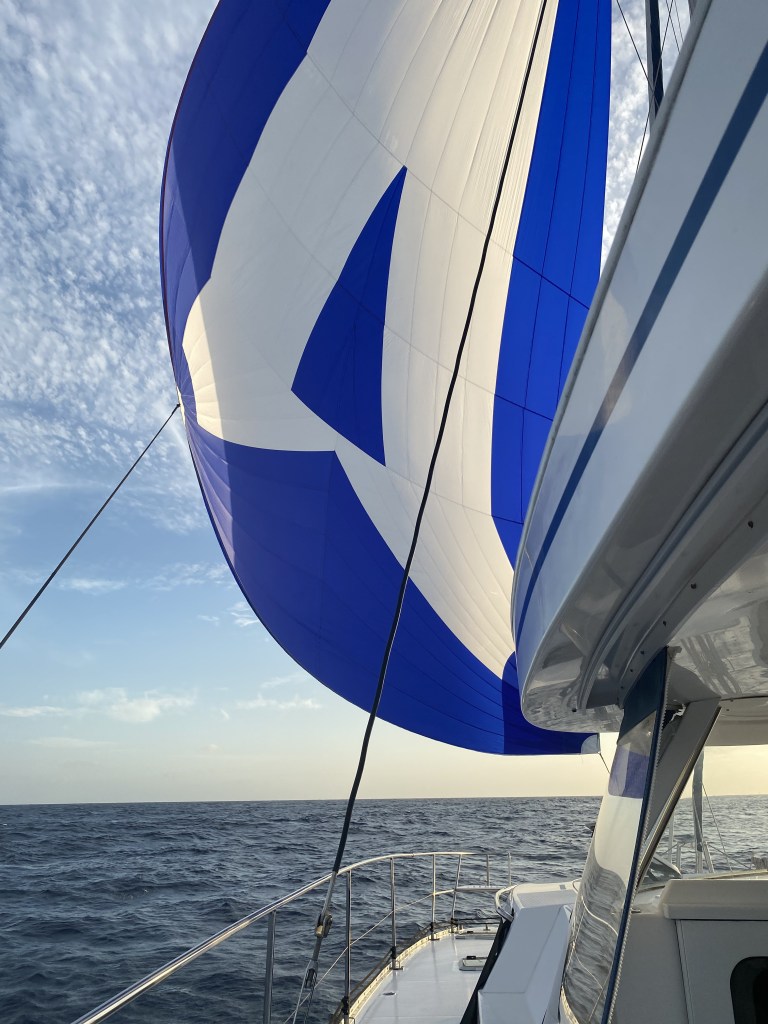
Meanwhile, we lost our sea legs entirely in the calm lagoon and the wonky motion of the boat is leaving all of us a bit (Calder) or a lot (Chris, Jen, Cora) green. No one slept well. The night was intermittent shifts, then periods of laying down to feel better, then up at the helm again. Calder was the champ, taking a large middle of the night shift, listening to music while monitoring and adjusting our course. As said by Captain Jack Sparrow, “Problems arose, ensued, were overcome,” which may be a great motto for cruising. We had left Raroia with 3 buddy boats, fun to see them leaving in a row and all lined up around us in the night on our AIS.
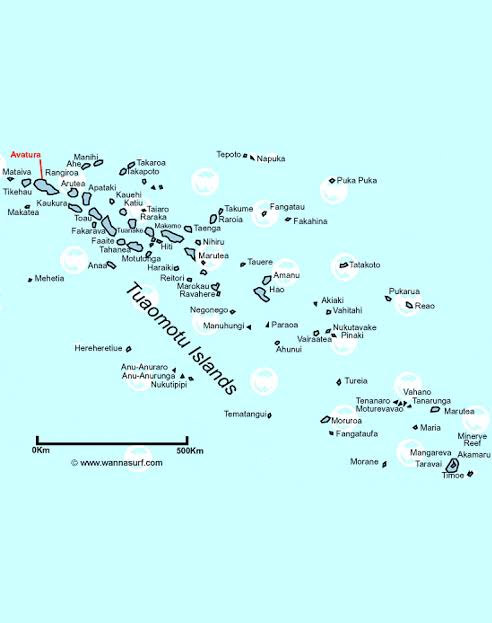
That all being said, we timed the entrance to Makemo atoll perfectly and had an uneventful motor through the coral bommies to our anchorage. Makemo is one of the larger atolls (about 40 miles long and 10 miles wide), and one of the most productive with a larger village and numerous copra farms.
Arrival brought a new adventure in anchoring – floating the anchor chain. We motored around for at least 30 minutes to find a good patch of sand between low coral bommies to set our anchor. We then attached hard floats to the anchor chain in increments to keep the chain floating above the coral, protecting the coral and keeping us from wrapping around it and getting caught.

It took us a bit, but the anchor set well and snorkeling on it demonstrated that it was laid out wonderfully.

Naptime for us, while Cora and Calder went to explore by dinghy in search of the perfect place to camp. We woke up, went for a refreshing swim and visited with other boat families on shore at the future camping site. Within the space of 24 hours, I went from lying on my back ill-feeling and questioning what I was doing out on the Pacific, to sleeping peacefully in a calm anchorage, surrounded by my family and other cruisers, perfectly content with life.
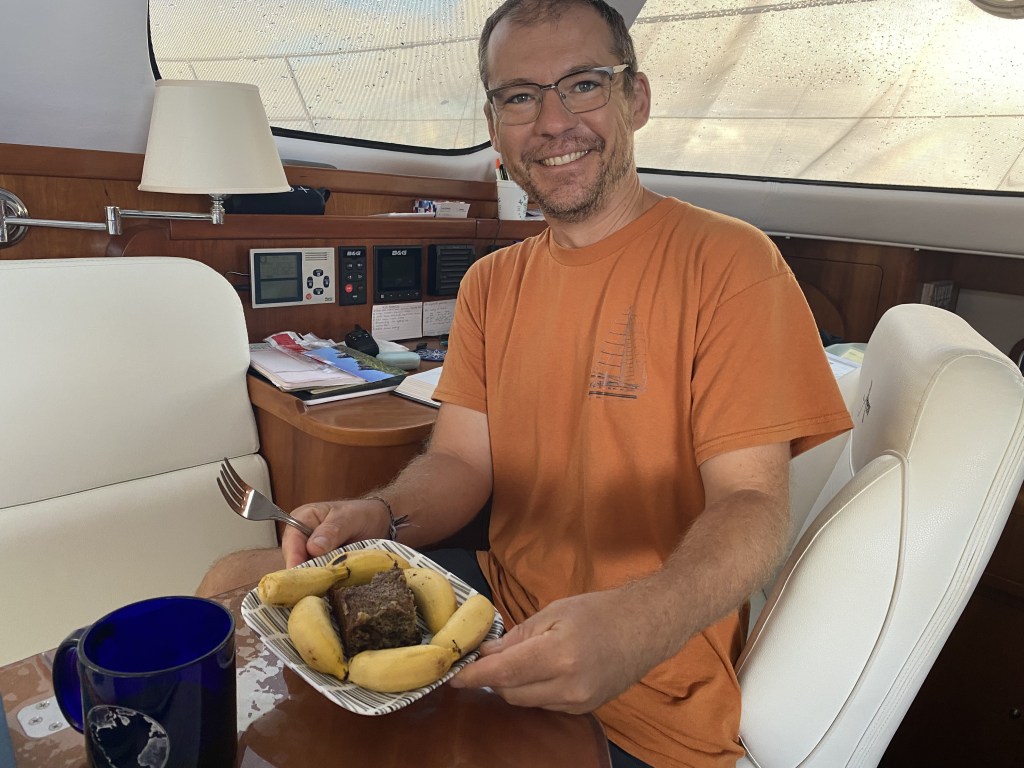
The next day, winds and rains heavy in the morning. When life gives you loads of rain…you can fill your freshwater tanks and find leaky areas. When life gives you piles of suddenly ripe bananas…you can make banana bread. And this is what we did with our morning.
In the afternoon, I went for a walk on the outer ocean side of the atoll, piles of plastic trash sad to see.

Looking out from this little coral atoll with the Pacific all around; I felt quite tiny. Chris stayed back at the boat, sleuthing out and fixing leaks; success! The major leaks originated at the lower corners of the windshield, where the original sealant had failed. It had leaked through the ceiling, down the wall, and into two cabinets in Cora’s room.

The kids (with other boat kids from Washington state, England, and South Africa) got busy getting their camping site ready on a motu. I’ll have Calder tell the story of their camping experience:

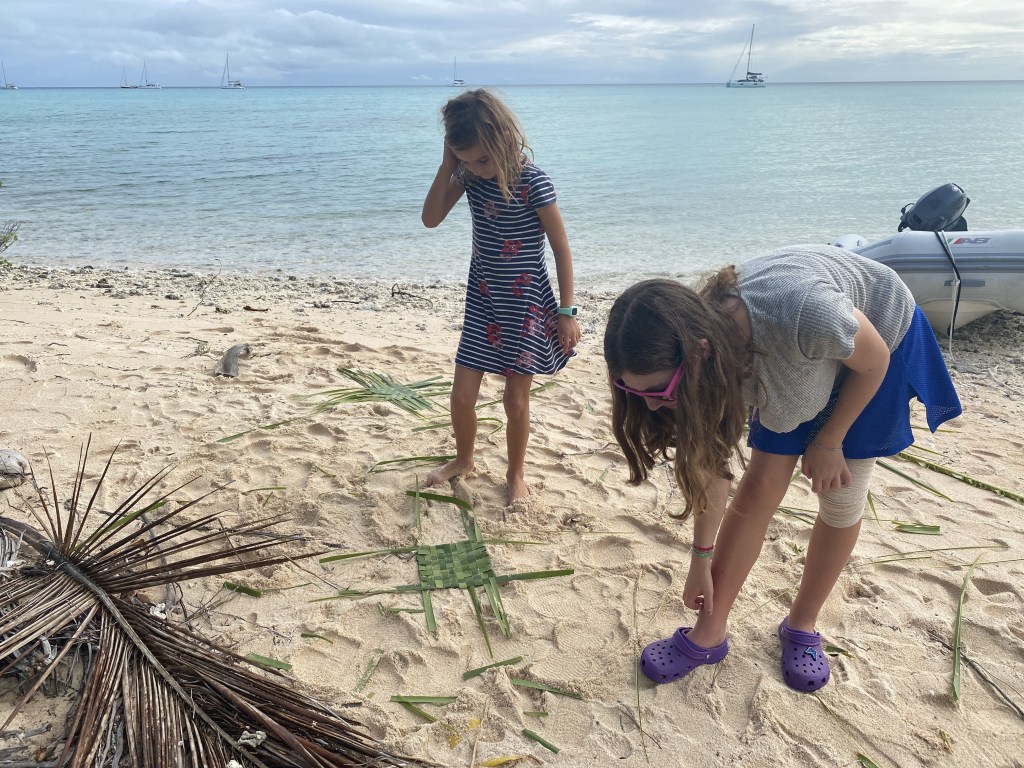
After anchoring and having lunch, Cora and I went to shore to find a good camping spot for the kid boats in the anchorage and us. We found one very fast and, soon, all the kids were building a shelter. Unfortunately, due to high swell, the water level rose higher than the high-tide line and took our first shelter. The next day we built an elaborate campsite and a large shelter, planning to spend the next night out. Right at the time we had chosen to start our campout, 4 dinghies left the boats almost down to the second. We harvested coconuts, set up hammocks, made a fire to cook wahoo and bread dough, and the younger kids went tribal, chasing each other with sticks and yelling, “SACRIFICE!” Luckily, no sacrifices were made. From my hammock, I could look through the shrubs at night and see the Southern Cross. In the morning, we packed up camp, trying to leave no trace but we left our coconut lined paths throughout the palms. This camp-out felt very normal amongst the new and different experiences of this trip. (Calder)

The adults stopped by the kid site to visit and say goodnight, so awesome to see the hammocks strung between tropical trees, coconut-lined paths, a palm frond shelter, a fire keeping the bugs away, and happy kids. It was a highlight for many of the kids, Calder and Cora included, of the journey thus far.

Tired from the sleep out (not so sure much sleep was had), we jumped into the ocean to wake up before diving into a school morning. We were able to find some time to tackle 3 loads of laundry; which can only be done when the generator is going, when there are lighter winds, and the sun is out with low chance of rain. We are lucky to have a small washing machine on board, but this runs off our generator and takes about 1 hour per load to wash. We dry our clothes on the rails to save energy and run time on the equipment; the pesky rain squall that comes through when drying laundry gets all us into action, rapidly bringing in our clothes. We succeeded with only one brief drizzle.
After working, time to explore this atoll by dinghy and foot, marveling at how life springs up on this speck in the Pacific Ocean; limited in plant species and beautifully rugged. The air smells of sweet flowers and palm smoke from the copra farms.

As I make dinner at night, I have to laugh at my ingredients lined up, a cornucopia of French labels, Spanish labels, and English labels with most of the English labels from San Diego (where we started) or New Zealand (where most of the food is shipped from to French Polynesia).
Trying to time the next passage, only 50nm away, is tricky due to it being just a few too many miles for us to ensure a daylight departure from here and daylight entrance through the next pass. In other words, it’s a bit too long to do in a daytime passage, but a bit too short to do over a painfully longer time. We’d have to clip along at a speed of around 7 knots, which is do-able in the right conditions, or slow down to about 3 knots over a longer time. We’ve decided to take the time pressure off and go for a slow sail overnight. If we get there early, we’ll just have to wait outside the atoll. This seems better to us then trying to race over, mainly when the winds are predicted to be up and down. The low-lying southern side allows swells to come over, forming strong outgoing currents. We hope our exit out of here later today is not too feisty! Now, time to bake some banana bread and make dinner ahead for the passage, as well as fix our freezer fan and clean the bottom before getting underway.
 SV Terikah Adventures
One response to “Makemo: Adventures in Anchoring & Camping Out”
Where on earth can you see Unicorns? My daughter would pass out. I think the method of anchoring that protects the coral is a heroic idea, I am so glad that someone thought of that. This method should have a really cool name, like the ‘Color-Guard Float Anchor’.
LikeLike