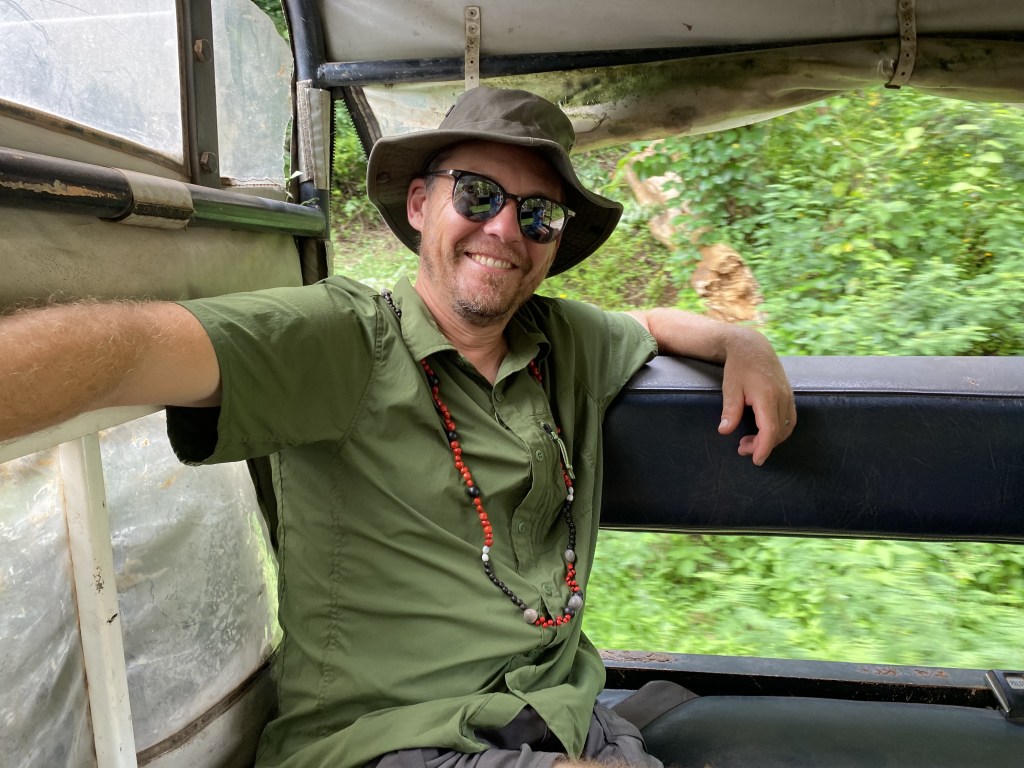
Cruising is best balanced with 50% work and 50% play; today was a day of play, a land tour with Kaoha Excursion Yoan (WhatsApp: 689-87-200-459) on Hiva Oa, which we highly recommend. This all-day tour was in a 4-door diesel manual transmission Toyota Hilux open back canvas-covered rig with double-bench seats (vehicle details from an enthralled Calder and Chris who are trying to figure out how to get this vehicle to Pburg).
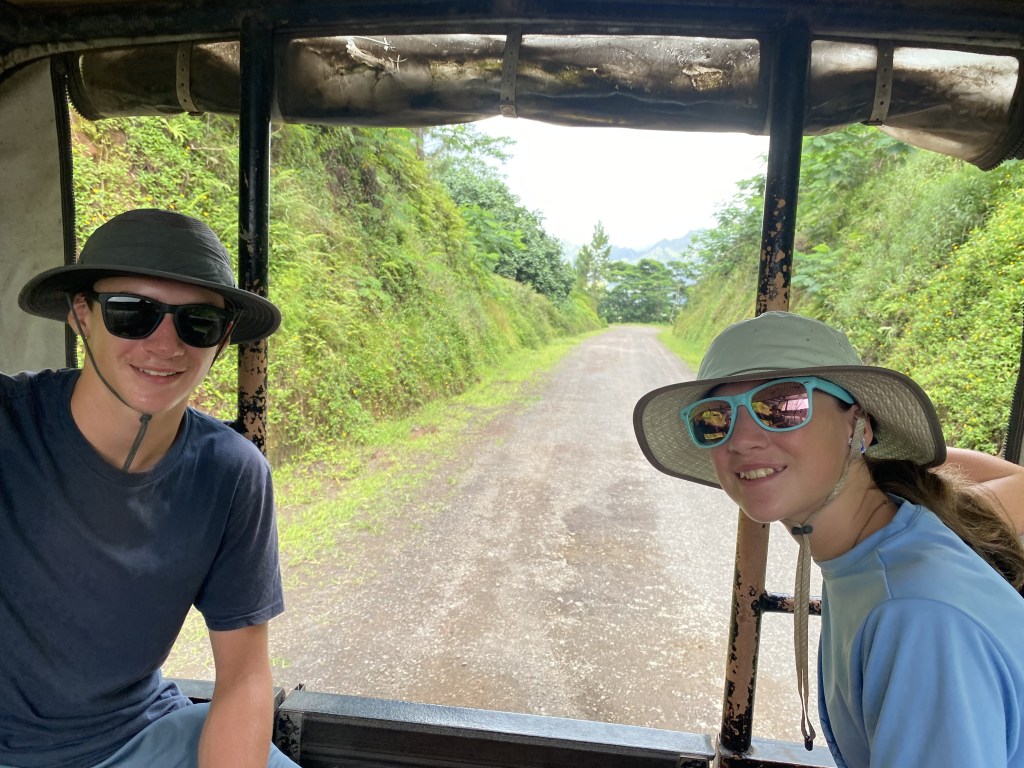
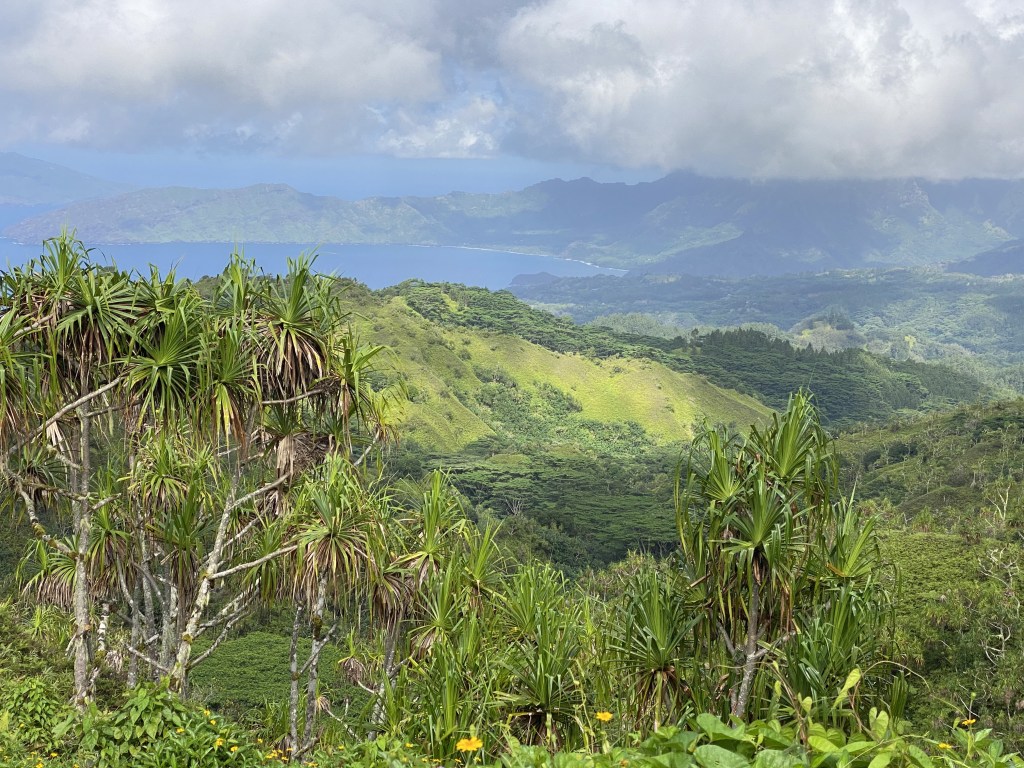
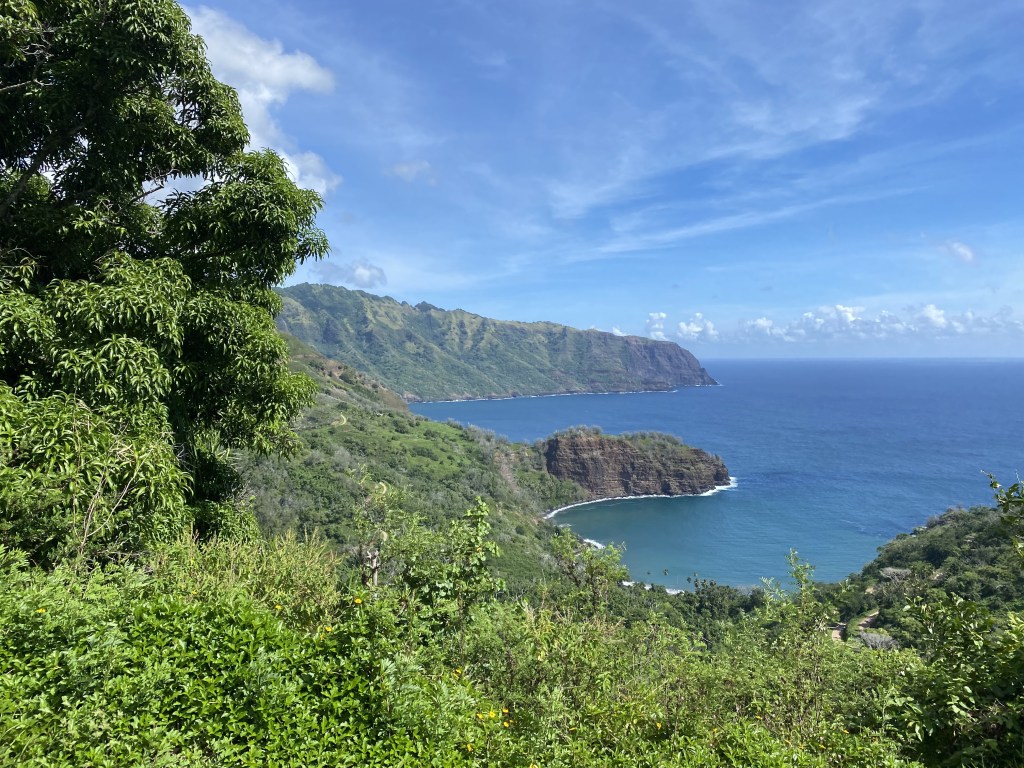
Lush green fringed serpentine roads along turquoise bays, winding around tendrils of steep lava valleys, from Atuona northeast through the island villages of Anahi, Nahoe, Eiaone, and ending in Puamau. Stopping along the way to awe at vistas, we learned so much from Yoan (fluent in French, English, and German) about the culture of these islands we are growing to love with the exceptionally generous Marquesan people. The roads were mostly paved about 3 years ago. Along the way, there were many goats and we saw a topic bird with its long white tailfeather trailing behind.
We pulled off at the workshop of a master carver (of both local woods and basalt stone), learning the process of harvesting the wood, drying the wood, and carving the tikis and other artwork. The gracious carver let us watch him work in his open shop perched in the breeze, using a combination of traditional tools and electric tools. Nothing there was for sale, as he is the artist commissioned for many larger projects in the islands, and was simply and graciously sharing his art with us that he learned from his grandfather and has now taught his son.
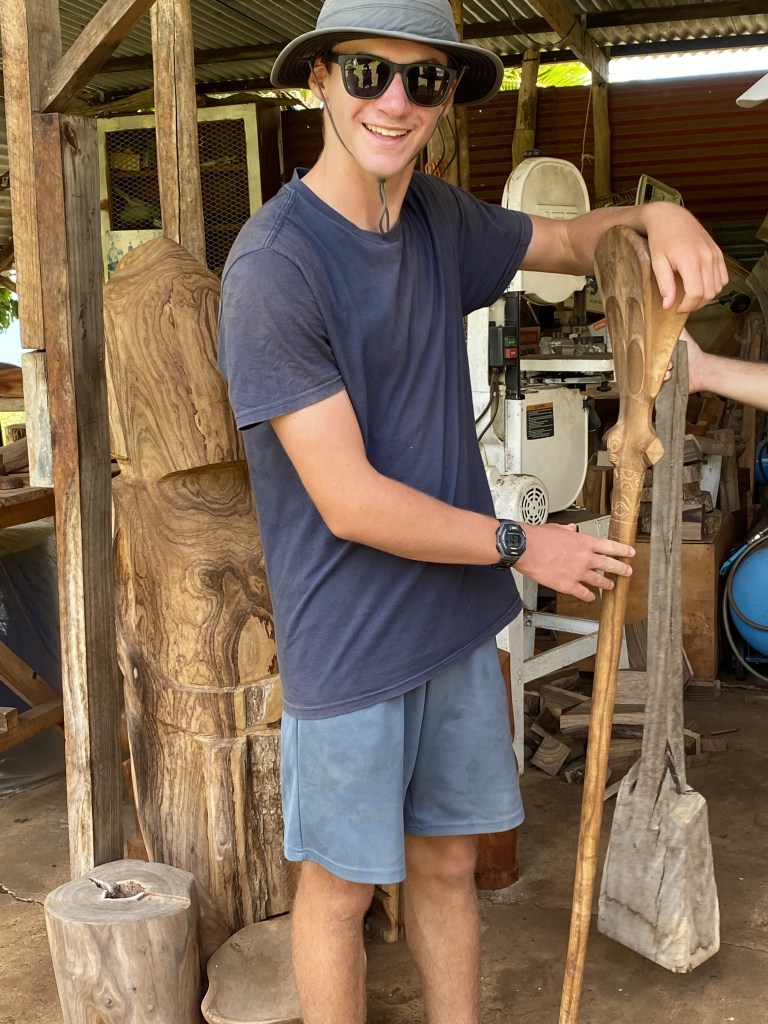
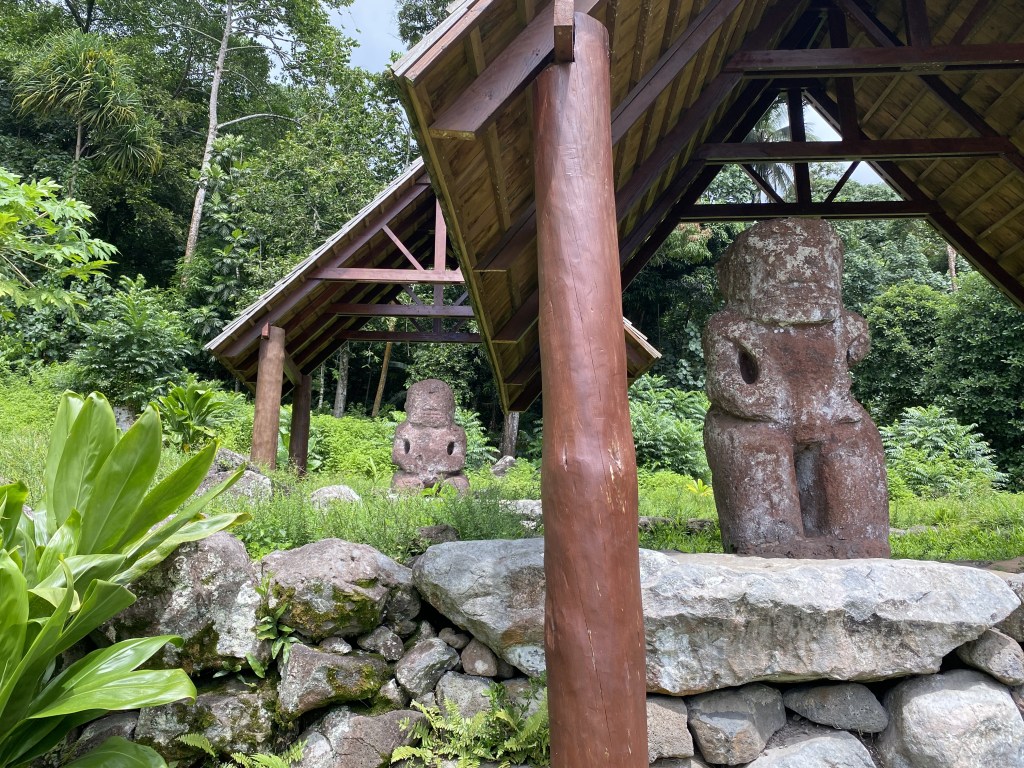
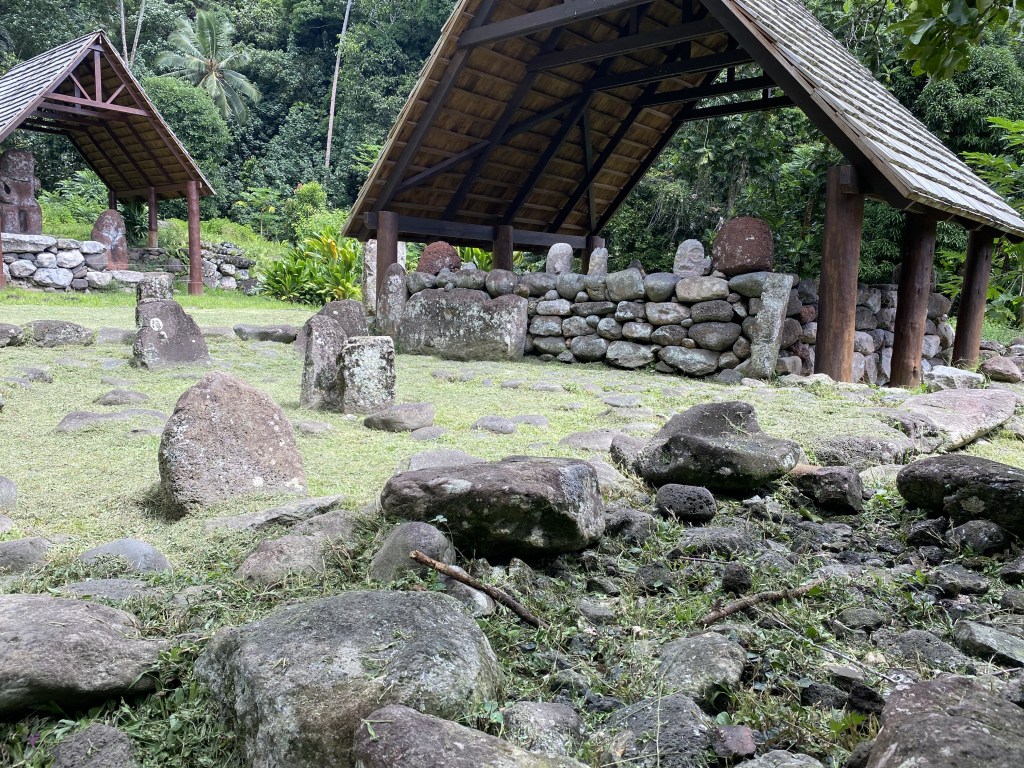
On to the “main event,” Iipona, one of the best-preserved archeological sites in French Polynesia with five monumental tiki. Tiki are carved humanlike statues, the height of which varies from 1-3m. First, there was a reclining tiki; some experts believe it represents a woman giving birth, however there is a petroglyph of a dog/goat/llama on the bottom that is unclear in its meaning. Next, standing at 2.67 m is the largest ancient tiki in French Polynesia, named after a warrior chief renowned for his strength (photo at start of this entry). Next to him on a lower platform, missing it’s head, is another large tiki. Further back is a tiki sitting with her legs stretched out, likely the warrior chief’s wife. Finally, the fifth tiki, is a female with clear hands and smaller size. The site is considered a me’ae, places of worship and human sacrifice with access restricted to a few priests or chiefs endowed with mana (spiritual power). Also visible were pae pae, platforms of stone blocks on which ha’e (human habitations) were built. On one platform were several chunks of phallic stones which were indeed, phallic. The missionaries believed the display of the penis on tiki was immoral and broke them off, casting them into the nearby river. Many, many years later, these were recovered from the river and are now on display. Now, tiki artists, like the one we met earlier today have started to display the male tiki in all his glory, actually enlarging the phallic symbol even more than in the initial tiki.
After Iipona, we purchased some colorful seed necklaces from a nearby artist stand, then went to lunch at Chez Marie-Antoinette where we had a delicious traditional Marquesan lunch including coconut-tuna poisson cru, wild boar with vegetables, coconut milk goat, and fried breadfruit. We honestly loved every dish they served and could not decide our favorite.
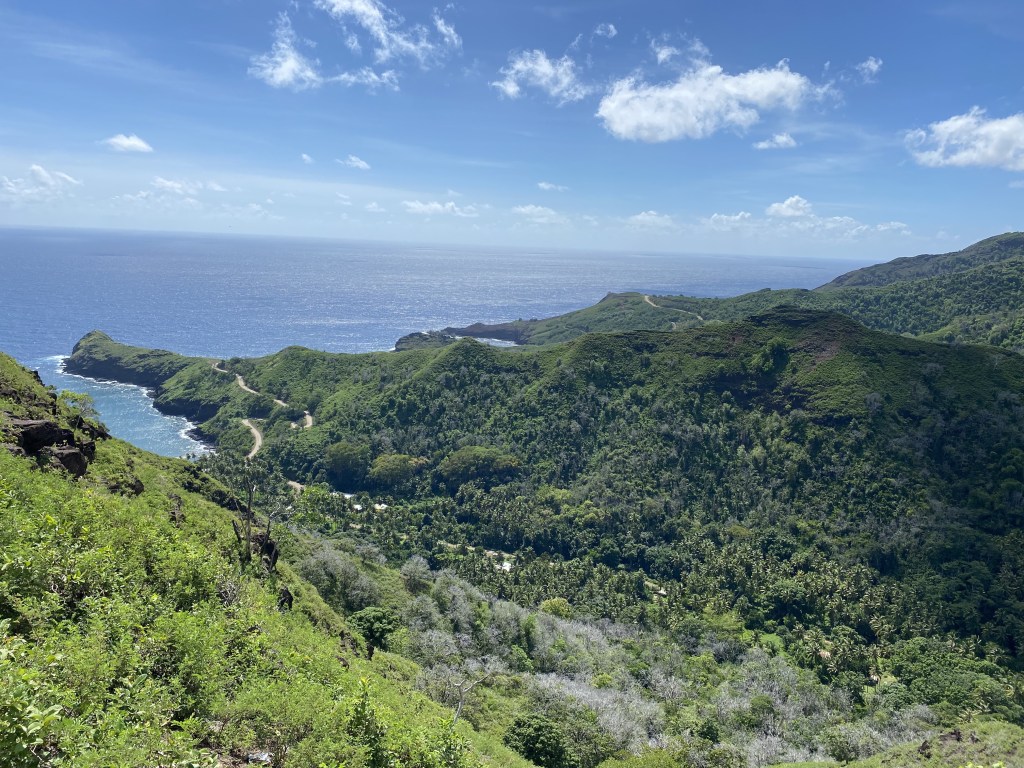
There were many parallels between our island life in Petersburg (and other remote Alaskan communities) and life on Hiva Oa. Joan talked about the difficulty in getting food here by barge 1-2 times/month and the expensive grocery stores (except for French subsidized foods, such as our yummy cheap baguettes). This leads to subsistence as primary for food, from hunting goats and boar to spear-fishing, as well as eating the abundant fruits of the lands. Water is natural spring water. Dealing with trash is an issue on an island (gets burned). Flights do not always get in and pilots need special training due to winds, clouds, squalls. The children can stay in their small villages until about age 12, when they leave to a larger village (or island) for secondary school. Energy here is diesel, but they are starting to use some hydropower.
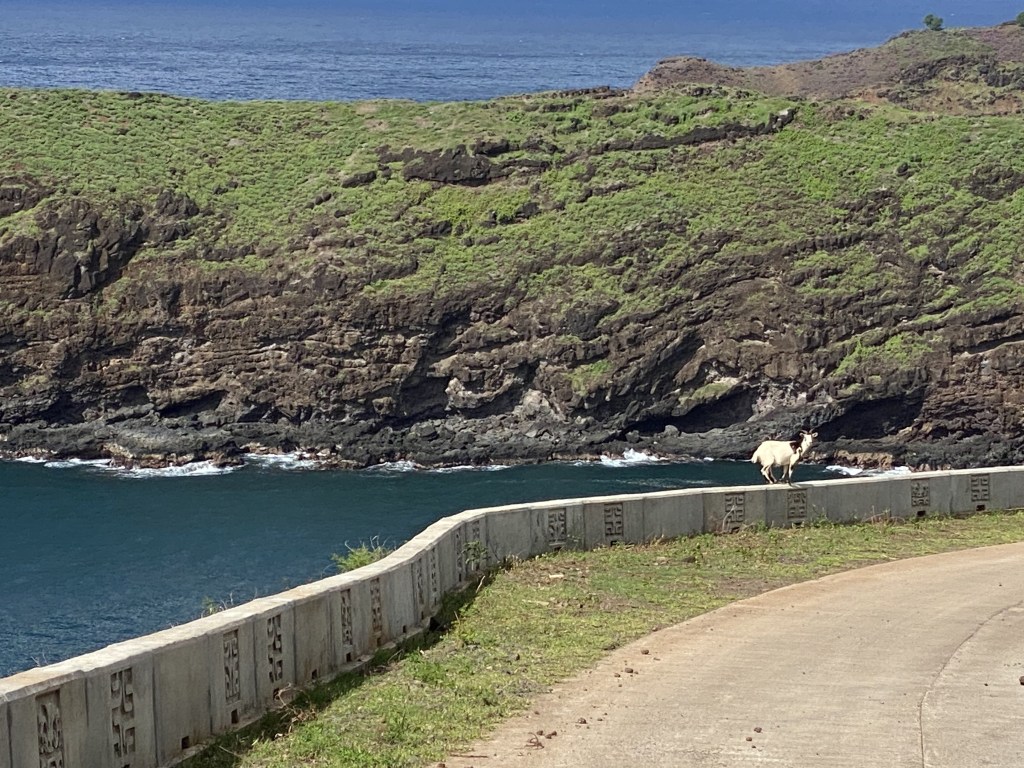
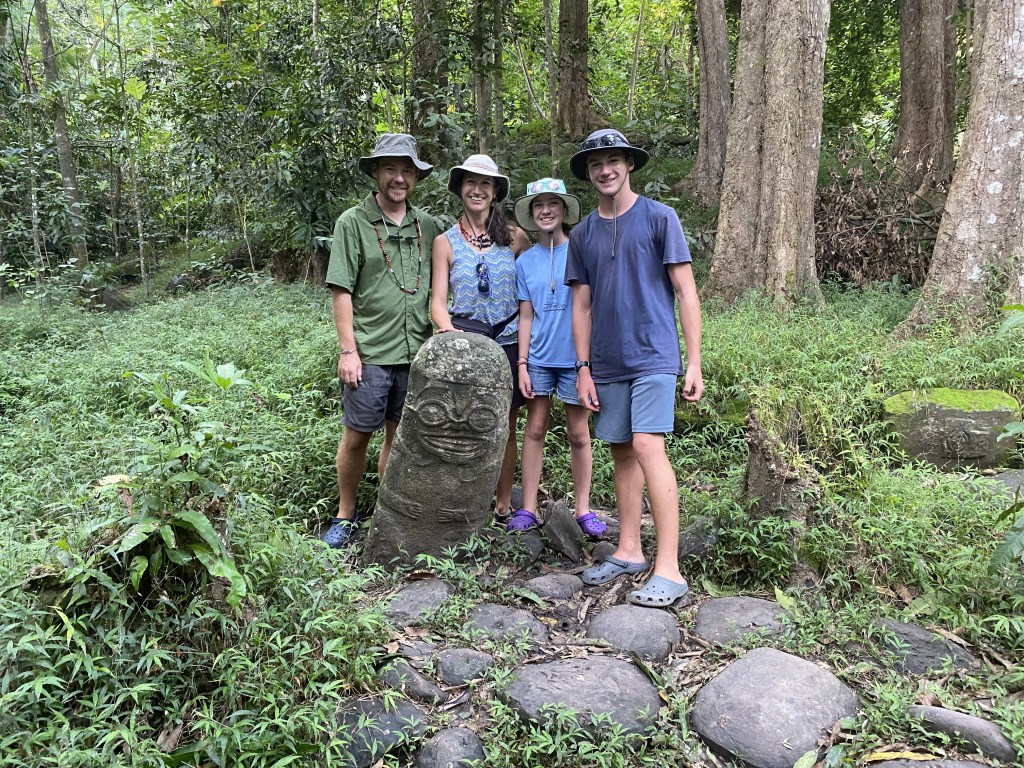
On our drive back, contented with yummy food in our stomachs and the intoxicating scenery, we made one final stop. After pulling over, we walked down the road and through the woods to the “smiling tiki,” who is actually believed to be a wise female spiritual leader speaking (not really smiling). Next to her, a feminine petroglyph could be seen. As we heard mangos falling around us, Yoan showed us how to protect our heads when walking through mango groves, though he cautioned us to move quickly past breadfruit trees that can be vicious when they fall.
Now, back at the boat, we just watched a 243-foot landing craft weave around the numerous anchored sailboats in the crowded harbor, drop off a massive excavator at the small boat ramp, then somehow turn around to fuel up, then leave. That captain is a boss. Our bananas are ripening quickly and Calder can’t keep up; looks like banana bread, banana pancakes, and smoothies are in our near future.
 SV Terikah Adventures